You notice it in ordinary moments first. A dark shirt that suddenly shows flakes at the shoulders. A shower drain that seems to collect more hair than it used to. Then the scalp starts demanding attention too. Itch, tightness, redness, that urge to scratch even though you know it’s only making things worse.
That combination unsettles a lot of men. Hair loss already puts you on edge. Add dandruff or seborrheic irritation, and every wash feels like a trade-off. Clean the scalp and risk drying it out. Leave it alone and deal with flakes, itch, and breakage.
Nioxin scalp recovery sits in that space. It isn’t a miracle regrowth treatment. It’s a scalp-focused system meant to calm the irritation, control dandruff, and create a better environment for the hair you still have. That distinction matters, especially if you’re also thinking about more powerful interventions like PRP.
That Itch You Can't Ignore and the Hair You Can't Lose
A common pattern goes like this. A man starts noticing thinning at the temples or crown, then somewhere along the line the scalp becomes part of the problem. It gets flaky. It feels sore after washing. He scratches during the day without thinking about it, then later sees more broken hairs on the sink.
That’s usually the point where panic buying starts. Growth shampoos, anti-dandruff shampoos, scalp scrubs, oils, serums. Most men aren’t looking for luxury here. They want the itching to stop and they want to stop feeling like every shower is costing them more hair.

If that sounds familiar, it helps to separate two problems that often show up together. One is male pattern hair loss. The other is a damaged or inflamed scalp environment. They overlap, but they aren’t the same thing. A practical explainer on why your scalp might be itchy and how to stop it can help you spot some of the common triggers behind the irritation itself.
When irritation adds to shedding
An itchy scalp doesn’t automatically mean you’re going bald. But persistent scratching, flakes, and inflammation can make an already stressful hair loss situation look worse. Hair can snap. Fragile strands can shed more easily. Some men also start washing too aggressively, which keeps the cycle going.
If you’re dealing with both, the right starting point is often scalp control, not scalp denial. That’s where itchy scalp and hair loss becomes a useful framework. Fix the irritation first, then judge what’s left of the actual hair loss problem.
A healthier scalp won’t change your genetics, but it can stop your scalp from making a bad situation worse.
What Nioxin Scalp Recovery Actually Does for You
Think of nioxin scalp recovery like fixing the soil before expecting anything to grow well in it. If the scalp is flaky, irritated, and dry, the immediate job isn’t to chase new growth claims. The immediate job is to make the scalp less hostile.
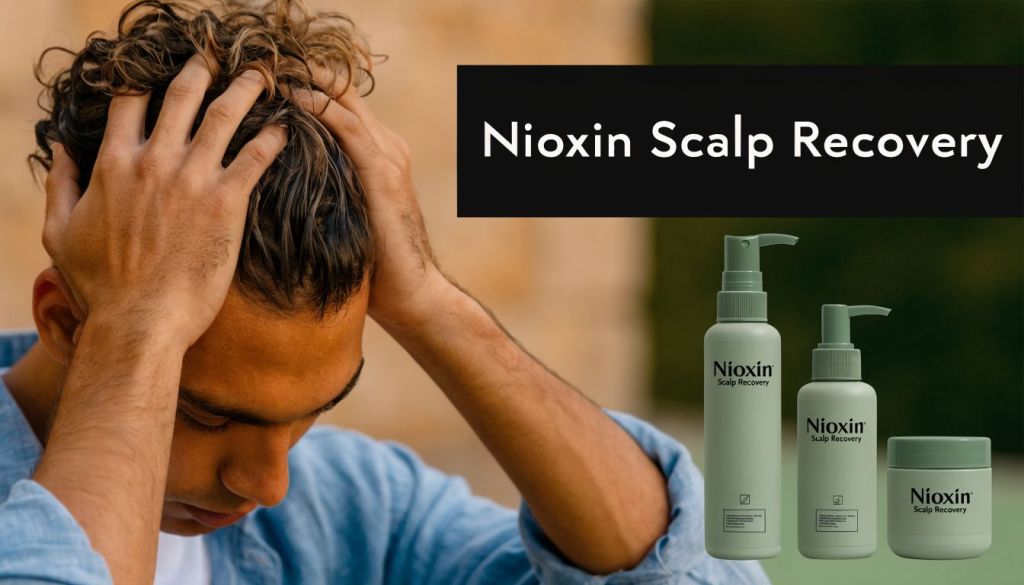
The system is built around three products used together: Purifying Shampoo, Moisturizing Conditioner, and Soothing Serum. Each one has a different role, but they all point in the same direction. Less dandruff. Less itch. Better moisture balance. Less breakage triggered by an unhappy scalp.
The strongest concrete piece of that system is the shampoo. Nioxin Scalp Recovery System incorporates 1% Pyrithione Zinc in its Purifying Shampoo as the active anti-dandruff ingredient, designed to combat dandruff, itching, and flaking from the first use according to the Nioxin scalp recovery cleanser product page.
What each step is there to do
- Purifying Shampoo tackles dandruff and scalp debris first. This is the treatment step that does the heavy lifting when flakes and itching are active.
- Moisturizing Conditioner follows with the job many men skip, which is calming down the dryness that can come after cleansing.
- Soothing Serum gives you a leave-on layer of support for the areas that stay irritated between washes.
Used together, the system is trying to interrupt a familiar chain reaction: dandruff leads to itch, itch leads to scratching, scratching leads to breakage and more visible shedding.
What it is not
Expectations need to stay realistic. Nioxin scalp recovery is not a DHT treatment. It doesn’t do the job of finasteride, minoxidil, or a procedural option. It’s a support tool. A useful one, in the right person.
That matters if you’ve been comparing anti-dandruff shampoos and wondering how this differs from other scalp-directed options. If you want a broader look at medicated shampoo strategy in thinning hair, ketoconazole shampoo for hair loss is worth understanding alongside this category.
Practical rule: If your main complaint is flakes, itch, and irritation, nioxin scalp recovery makes sense. If your main complaint is a receding hairline, it shouldn’t be your only plan.
The Scalp-Soothing Science Inside the Bottle
Nioxin’s scalp recovery line is easiest to understand when you stop reading it as a “hair growth” product and start reading it as a scalp-control formula. The science is mostly about reducing the things that inflame the scalp and trigger scratching, flaking, and discomfort.

Pyrithione zinc does the core work
The key active is Pyrithione Zinc, often shortened to ZPT. In this system, it’s the anti-dandruff engine. The product line uses ZPT-NIODerma Technology, featuring Pyrithione Zinc and green tea extract, and the system is described as achieving 100% dandruff elimination from the first use by targeting Malassezia fungi according to the Nioxin scalp recovery system kit listing.
That fungal target matters because dandruff often isn’t just “dry skin.” In many men, it’s tied to scalp imbalance involving Malassezia. When that gets under control, the scalp usually becomes less reactive.
The support ingredients matter too
ZPT is the treatment anchor, but it isn’t doing everything by itself.
- Green tea extract supports the formula with antioxidant activity.
- Wild mint oil adds a soothing, cooling feel and is tied to scalp comfort.
- The same product information notes that wild mint oil can reduce hair fall associated with itching by up to 20 to 30% in user trials in the linked source above.
That last point is important because it explains where some of the “hair loss help” feeling comes from. If fewer hairs are being dislodged by scratching and irritation, shedding can improve. That’s not the same thing as reversing androgenetic alopecia, but it’s still useful.
Why men with thinning notice the difference
Men with visible thinning often feel scalp irritation more intensely for a simple reason. There’s less hair to disguise flaking, redness, and scalp shine. A small amount of dandruff can suddenly look like a major issue.
When a medicated scalp system reduces itch and restores comfort, the immediate payoff is often cosmetic and behavioral. You stop scratching. You stop over-washing. You stop switching products every few days.
Here’s the simple mechanism in plain language:
- Control the fungal driver of dandruff
- Lower scalp irritation
- Reduce scratching-related breakage and hair fall
- Make the hair that remains look cleaner, calmer, and fuller
For men trying to understand the link between chronic scalp irritation and ongoing shedding, inflammation and hair loss is one of the more useful ways to frame the issue.
Calm scalps behave better. They don’t tempt you to scratch, they tolerate treatment better, and they make it easier to judge what your real hair loss pattern actually is.
Is Nioxin a Real Solution for Male Pattern Baldness
The honest answer is no, not by itself.
Nioxin scalp recovery can be a good supportive treatment for a man with male pattern baldness, especially if dandruff, itch, or scalp dryness are making the situation worse. But it is not a direct treatment for androgenetic alopecia. It doesn’t block DHT. It doesn’t reverse follicle miniaturization. It doesn’t replace proven medical or procedural treatment when the issue is progressive pattern loss.
That said, dismissing it completely would be a mistake. A scalp that’s inflamed and constantly scratched is not helping you hold onto fragile hair.
Where it helps
The strongest supportive angle here is scalp barrier support. The system uses niacinamide and peppermint oil to improve the scalp’s moisture barrier, and brand information states it can restore moisture balance in 90% of users after 2 weeks while reducing breakage from itchy scalps, according to the Nioxin scalp recovery conditioner page.
That matters in male pattern baldness because scratching and irritation can add another layer of shedding. The same source notes that chronic scratching can contribute 15 to 25% additional telogen effluvium in this context. That doesn’t mean itch caused your male pattern baldness. It means it can pile onto it.
Where men get misled
A lot of men hear phrases like “thicker-looking hair” or “increased strand diameter” and assume they’ve found a regrowth product. That’s not what’s happening. Better scalp condition can improve how the hair feels, looks, and behaves. It can make fine hair appear fuller. It can reduce breakage. Those are real wins.
They’re just not the same as changing the underlying biology of male pattern baldness.
| What It Does | What It Doesn't Do |
|---|---|
| Controls dandruff and flaking | Stop DHT-driven miniaturization |
| Soothes itch and scalp discomfort | Regrow lost follicles on its own |
| Helps reduce breakage linked to scratching | Replace finasteride, minoxidil, or PRP |
| Improves scalp moisture balance | Cure androgenetic alopecia |
| Can make existing hair look healthier and fuller | Guarantee long-term density preservation |
The better way to think about it
For men with androgenetic alopecia, nioxin scalp recovery works best as a foundation product. It clears noise from the picture. If your scalp is no longer red, flaky, and irritated, you can make better treatment decisions. You can also judge your baseline more accurately.
If you need a refresher on the actual condition behind progressive thinning, what is androgenetic alopecia gives the proper frame.
If your scalp is the problem, this system can help. If your follicles are shrinking because of genetics, you’ll need more than this.
How to Pair Nioxin with Your PRP Treatment Plan
The situation becomes more nuanced. In practice, the idea of combining nioxin scalp recovery with PRP makes sense on paper. A calmer scalp should be easier to work on, easier to monitor, and possibly a better environment for any treatment plan that depends on scalp health.
But the evidence is incomplete. That has to be said clearly.

Where the combination can make sense
Men seeking PRP often arrive with more than one issue at once. They have patterned thinning, yes, but many also have scale, redness, or an itchy scalp they’ve ignored for months. From a clinical logic standpoint, getting dandruff under control before a PRP cycle is reasonable. It reduces background irritation and makes the scalp easier to assess.
That doesn’t mean the two treatments have proven synergy. It means scalp stabilization is often a sensible housekeeping step before you invest time and money into an advanced treatment plan.
If you’re still budgeting the bigger picture, understanding PRP treatment costs can help you decide whether improving scalp health first is worth doing before committing to procedures.
The data gap you should know about
The problem is simple. Nioxin’s active ingredients are not clinically tested for synergy with PRP, and some commentary has raised the possibility that certain harsher ingredients could interfere with recovery or blunt outcomes. The key point is that no studies confirm whether using Nioxin before or after PRP risks suboptimal regrowth, as discussed in this review of whether Nioxin really helps with hair loss.
That leaves men in a gray zone. There’s a plausible reason to use it. There’s also a reasonable argument for caution around treatment timing.
A practical framework I’d use
If a man has active dandruff or obvious scalp irritation and is preparing for PRP, I’d think in phases instead of trying to run everything aggressively at once.
- Before PRP starts. Use scalp recovery to settle flaking and itch, especially if the scalp looks inflamed or uncomfortable.
- Right around treatment sessions. Be conservative. Freshly treated scalp skin doesn’t need unnecessary irritation.
- After the scalp has settled. Resume only if the product is clearly helping symptoms and not causing extra sensitivity.
Here’s a simple way to think about the trade-off.
| Situation | Better move |
|---|---|
| Active dandruff, obvious itch, not yet in PRP | Prioritize scalp control first |
| PRP scheduled soon, scalp currently calm | Don’t experiment with too many actives |
| Scalp gets irritated easily after procedures | Restart gently and only when comfortable |
| Using Nioxin causes stinging or prolonged dryness | Pull back and reassess with your clinician |
A short clinical overview can also help ground the decision before timing products around injections:
What works and what doesn't
What works is using nioxin scalp recovery with a clear purpose. Calm an itchy, flaky scalp. Reduce scratching. Get the skin into better condition.
What doesn’t work is expecting it to amplify PRP by default, or assuming “more scalp treatment” automatically means “better PRP response.” Sometimes less is smarter, especially around procedures.
Don’t confuse logical pairing with proven pairing. A cleaner, calmer scalp may support your overall plan, but that isn’t the same as evidence that the combination improves PRP results.
Your Practical Guide to Using the Nioxin System
A medicated scalp system only works if you use it correctly and long enough to judge it fairly. Many men underuse the shampoo, skip the conditioner, or treat the serum like an optional extra. Then they decide it didn’t work.
The routine that makes the most sense
Start with the Purifying Shampoo and massage it into the scalp, not just through the hair. The product guidance emphasizes leaving it on for 1 to 3 minutes before rinsing so the active ingredients have time to work, as noted on the earlier linked Nioxin product information.
Follow with the Moisturizing Conditioner. This step matters more than many men think, because a dandruff-focused routine can backfire if the scalp feels stripped after cleansing. Then apply the Soothing Serum to the areas that tend to stay itchy or flaky.
What to expect and when
The expectation gap is where a lot of people quit too early. Product pages say dandruff relief can start from the first use, but there are no official timelines for hair fall reduction. The more realistic expectation is immediate help with itch and flaking, while reduced shedding from breakage may take several weeks of consistent use, according to the Ulta listing for the scalp recovery system.
That timeline difference matters if you’re also comparing this with procedural treatment. PRP is usually discussed on a longer runway, with visible changes often benchmarked around month four or five in the same source.
Small details that improve the experience
- Use your fingertips, not your nails when massaging the shampoo in.
- Apply to the scalp first, especially if your hair is longer and product tends to stay on the strands.
- Stay consistent long enough to judge whether your scalp is calmer and whether scratch-related shedding is easing.
- Don’t keep adding other harsh scalp products at the same time, because then you won’t know what’s helping or irritating you.
For men trying to tighten up the rest of their routine, scalp care for men is a useful companion read.
The Verdict on Nioxin and Your Next Steps
Nioxin scalp recovery is worth considering if your scalp is itchy, flaky, and clearly aggravating your hair situation. In that role, it does something practical. It helps control dandruff, calm irritation, and reduce the kind of scratching and breakage that can make thinning look worse than it already is.
What it won’t do is act as a stand-alone fix for male pattern baldness. If your main problem is progressive recession or crown thinning, this system belongs in the support category, not the lead-treatment category.
The decision is pretty straightforward.
If your biggest complaint is scalp discomfort, flakes, and visible irritation, nioxin scalp recovery is a sensible first step. If your biggest complaint is ongoing androgenetic alopecia, use it to stabilize the scalp while you build a more complete plan around proven hair loss treatments, including PRP if you’re an appropriate candidate.
That's the value here. Not hype. Not a miracle bottle. Just a targeted way to make the scalp less of an obstacle.
If you're sorting out whether your next move should be better scalp care, PRP, or a combination of both, PRP For HairLoss is a solid place to keep researching. It’s built for men dealing with male pattern baldness and offers practical guidance on PRP, scalp issues, and how to make sense of treatment options without the usual fluff.


Leave a comment