If you've ever found yourself staring at flakes on your shirt and a few too many hairs in the drain, you've probably wondered if they're connected. Let's get right to it: a dry scalp, on its own, isn't going to cause the kind of permanent balding that runs in families. But—and this is a big but—it can absolutely create a situation that leads to temporary hair thinning.
The Connection Between Dry Scalp and Hair Loss
The real villain here isn't the dryness itself. It’s the intense, maddening itch that usually tags along for the ride. That itch kicks off a destructive little cycle: you feel an urge to scratch, you scratch, and that scratching damages both your scalp and the hair follicles living in it.
Think of your scalp like the soil in a garden. If that soil is constantly irritated, inflamed, and physically disturbed, the plants—your hair—are going to have a tough time staying rooted. This is pretty much what's happening when you're constantly scratching an already unhappy scalp.
The Itch-Scratch-Shed Cycle
Scratching an itchy scalp does a lot more than just provide a moment of relief. It creates tiny tears in the skin and puts a ton of physical stress on the hair shaft, right at the root. All that friction can literally pull hairs out before their time, leading to shedding that you can see and feel.
This kind of hair loss looks very different from something like male pattern baldness, which is all about genetics and hormones. Hair thinning from a dry, itchy scalp is typically scattered all over, not focused in a predictable receding hairline or a bald spot on the crown. To get a better handle on this, you can learn more by exploring the link between dandruff and hair loss in our guide.
Key Takeaway: The main connection between a dry scalp and hair loss is the "itch-scratch-shed" cycle. The physical damage from scratching disrupts hair follicles, causing them to shed prematurely and leading to temporary thinning.
This isn't some rare problem, either. A global survey revealed that a staggering 47.03% of people pointed to dry or damaged hair as their main scalp concern—even more than those who cited hair loss itself. This just goes to show how common scalp irritation is, and it sets the stage for potential hair thinning if it isn't dealt with.
Dry Scalp Thinning vs Male Pattern Baldness At a Glance
It’s surprisingly easy to confuse hair shedding from a dry scalp with the early signs of genetic hair loss. This quick table breaks down the key differences to help you figure out what you're dealing with.
| Symptom | Dry Scalp-Related Hair Loss | Male Pattern Baldness (MPB) |
|---|---|---|
| Pattern | Diffuse, scattered thinning all over the scalp. | Follows a predictable pattern (receding hairline, thinning crown). |
| Associated Symptoms | Itching, flakes, redness, and scalp irritation are very common. | Typically no itching or flaking; the scalp looks healthy. |
| Hair Miniaturization | Hairs fall out at full thickness; no change in hair shaft diameter. | Hairs gradually become finer and shorter before falling out. |
| Reversibility | Generally reversible once the underlying scalp condition is treated. | Progressive and permanent without medical intervention. |
| Main Cause | Inflammation and physical damage from scratching. | Genetic predisposition and sensitivity to the hormone DHT. |
Understanding these distinctions is the first step. While scalp-related thinning is frustrating, the good news is that it’s often something you can fix by getting your scalp back to a healthy state.
Identifying the Root Causes of Your Dry Scalp
That dry, itchy scalp you're dealing with? It’s more than just an annoyance. Think of it as a signal flare from your body, telling you something isn't quite right. While it might be as simple as a reaction to dry winter air, persistent flaking and irritation often point to a specific, underlying condition that's making life difficult for your hair follicles.
Getting to the bottom of what's really going on is the first step toward finding relief. Let's dig into the usual suspects.
Common Scalp Conditions to Know
Not all flakes are created equal. Their color, texture, and the other symptoms that come with them can give you powerful clues about what’s happening on your scalp. Here are the main issues that can cause both dryness and, if left unchecked, potential hair thinning.
Seborrheic Dermatitis: This is one of the most common causes of stubborn dandruff. It typically shows up as greasy, yellowish flakes on a red, oily scalp. Interestingly, it's linked to an overgrowth of a yeast called Malassezia that normally lives on our skin. You can learn more about what is seborrheic dermatitis and how it affects the scalp in our detailed guide.
Psoriasis: This is an autoimmune condition that puts skin cell production into overdrive. This creates thick, silvery scales and dry, red patches that can feel pretty sore. When it appears on the scalp, the intense itching can easily lead to hair shedding from all the scratching.
Contact Dermatitis: Did you recently try a new shampoo, hair dye, or styling gel? If so, you might be having an allergic reaction. Contact dermatitis triggers an itchy, red rash—and sometimes even blisters—when your skin comes into contact with an ingredient it sees as an enemy.
What do all of these conditions have in common? Inflammation.
Think of chronic inflammation as your scalp’s alarm system being stuck in the "on" position. This constant state of alert creates a hostile environment for healthy hair growth.
When your scalp is inflamed, it can choke off blood flow and the critical nutrients your hair follicles need to survive. This weakens them over time, making them much more likely to shed hair prematurely.
The follicle is supposed to be a secure anchor for each hair strand. But with persistent inflammation, it's like trying to grow a plant in toxic soil that’s constantly being disturbed. It just won't thrive.
By figuring out what's truly causing the irritation, you can stop treating just the symptom (the flakes) and start tackling the root of the problem. This is the key to breaking the vicious cycle of inflammation and scratching that can lead to hair loss. Once you know what you’re up against, you can finally give your scalp the peace it needs and your hair the healthy foundation to grow strong.
The Itch-Scratch-Shed Vicious Cycle
So, how exactly does an itchy scalp make you lose hair? It's not the dryness itself but a frustrating chain reaction I like to call the 'Itch-Scratch-Shed Cycle.' This is the mechanical process that directly links that maddening scalp irritation to seeing more hair in your brush.
It all kicks off with an underlying problem—like one of the scalp conditions we just talked about—that triggers a persistent, nagging itch. Instinctively, you scratch. And while it brings a moment of sweet relief, you're actually doing more harm than good.
How Scratching Wreaks Havoc on Your Hair
Every time you give in to that urge to scratch, you're creating micro-trauma on the surface of your scalp. This friction doesn't just irritate the skin; it puts direct, physical stress on your hair follicles.
Think of it like wiggling a young plant back and forth in the soil. At first, it stays put. But if you keep at it, you'll eventually weaken the roots so much that it comes right out. That's pretty much what's happening to your hair.
The constant pulling and rubbing can physically dislodge hairs or force them prematurely from their growth phase (anagen) into the shedding phase (telogen). This isn't your normal, healthy shedding—it's hair loss triggered by trauma.
And this is a bigger deal than you might think. Surveys show that 15.90% of men struggle with a persistent itchy scalp and dandruff, and even more—22.80%—directly point to scalp damage as a reason for their thinning hair.
The Vicious Cycle: It starts with an underlying condition that causes an itch. Scratching provides temporary relief but damages the scalp and follicles, causing hair to shed. This damage and inflammation often make the scalp even itchier, and the cycle spirals.
Understanding this is the first step to breaking free. The hair loss is a symptom of the scratching, not a direct result of the scalp condition itself.
The infographic below highlights some common culprits that get this whole process started.
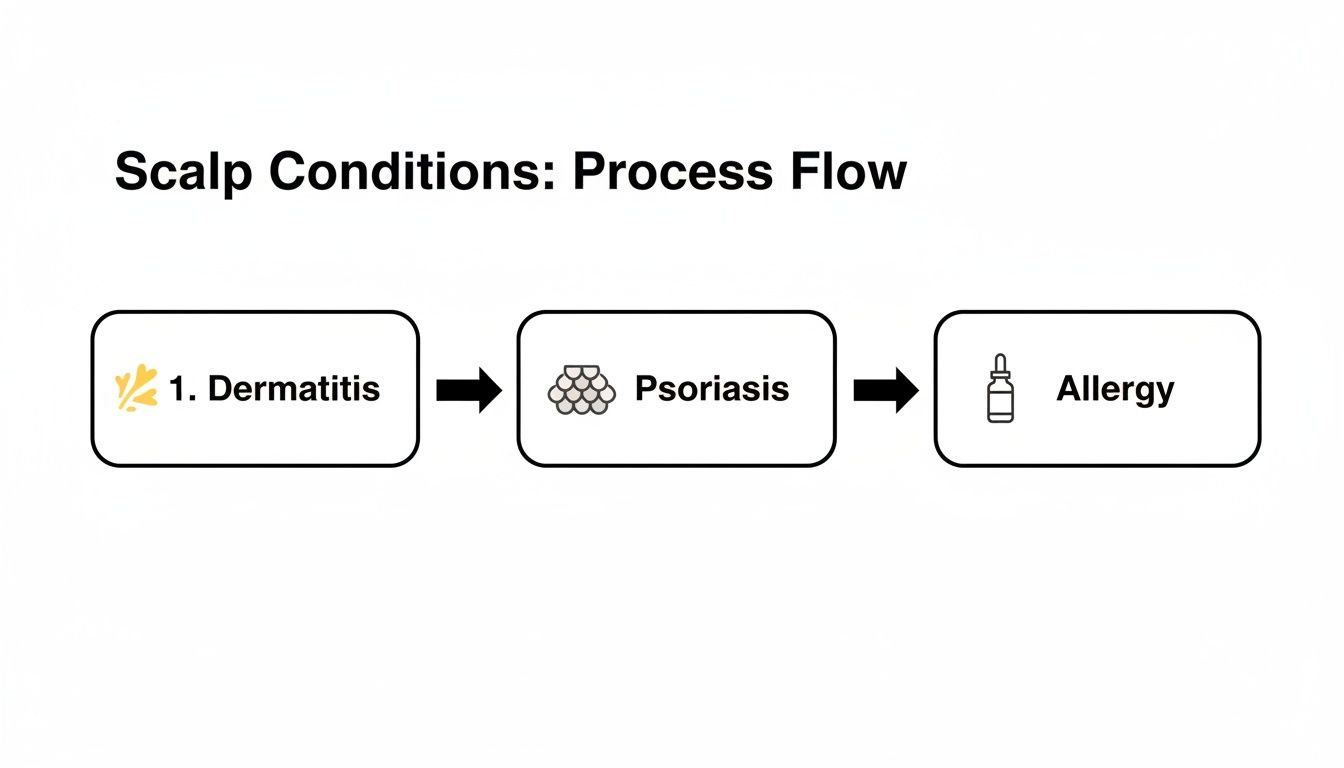
As you can see, things like dermatitis, psoriasis, and even simple allergic reactions are often the initial trigger that gets the cycle going.
Breaking the Cycle Is Everything
Here's the best part: this type of hair loss is often completely reversible. Unlike genetic hair loss where the follicles progressively shrink, hair loss from scratching is purely due to temporary, physical damage.
Once you get to the bottom of what's causing the itch and treat it, the cycle breaks.
Without that constant need to scratch, the inflammation goes down, your scalp can finally heal, and your hair follicles get back to their normal, healthy growth pattern. You really can get back in control. For a more detailed look at this connection, our guide on itchy scalp and hair loss is a great next step.
Dry Scalp Thinning or Male Pattern Baldness?
It’s the question that can keep you up at night: is this hair in my brush a temporary problem from a flaky, itchy scalp, or is it the first sign of something more permanent, like Male Pattern Baldness (MPB)? Figuring out the difference is everything, because the game plan for each is completely different.
Getting it wrong means wasting time, money, and a lot of emotional energy. One is a scalp health issue you can often fix, while the other is a genetic journey. Let’s break down the signs so you can get a clearer picture of what’s going on up there.
The Telltale Signs of Each Condition
The biggest clue is the pattern of the hair loss. When an irritated, dry scalp is the culprit, the thinning tends to be diffuse. In other words, it's scattered all over. You might just feel like your hair is less dense everywhere, without a specific bald spot forming. This almost always comes with the classic symptoms of itching, visible flakes, or redness.
Male Pattern Baldness, on the other hand, follows a very predictable script.
Male Pattern Baldness isn't a random event. It's a structured process, dictated mostly by your genetics and the hormone dihydrotestosterone (DHT), which methodically shrinks certain hair follicles until they can no longer grow hair.
This genetically-driven thinning almost always shows up in two key areas, either separately or at the same time:
- A Receding Hairline: The hair at your temples starts to thin and pull back, often carving out a distinct "M" shape.
- Thinning at the Crown: A bald spot begins to appear and expand on the top-back of your head (the vertex).
If you want to explore different types of shedding patterns in more detail, our guide comparing Telogen Effluvium vs Male Pattern Baldness is a great resource.
Genetics and Hormones: The Real Drivers of MPB
If your hair loss perfectly matches that classic MPB pattern, the root cause isn't a dry scalp—it's your DNA. This is an incredibly common reality for men. In fact, it affects about two-thirds of American men by age 35 and a staggering 85% by the time they hit 50.
What's interesting is how varied the experience can be. For instance, research on baldness statistics shows that only 18.50% of men report hair loss specifically concentrated at the crown, and just 7.90% notice shedding more than 100 hairs a day. It’s not a one-size-fits-all condition.
Here’s the bottom line: If your hair is thinning in a defined pattern (receding hairline or crown) but your scalp feels relatively normal, you're almost certainly looking at Male Pattern Baldness. But if the thinning is widespread and your scalp is constantly itchy, flaky, and irritated, the problem is very likely your scalp's health—and that's a much more treatable issue. Knowing this lets you stop guessing and start seeking the right kind of solution.
Your Action Plan for a Healthy Scalp
Alright, it’s time to get proactive about your scalp's health. You can absolutely break that frustrating itch-scratch cycle, calm the inflammation, and create an environment where your hair can actually flourish. This isn't about some over-the-top, complicated regimen; it's about making a few smart, consistent choices that build a solid foundation for healthy hair.
Think of it as hitting the reset button on your scalp. Small, steady steps can bring big relief and get your hair growth moving in the right direction again.
Smart Changes to Your Shower Routine
Your first line of defense is right there in your shower. The products you use and your technique can either be a source of soothing relief or the very thing making the irritation worse. A great place to start is by taking a hard look at your shampoo's ingredient list.
Many common shampoos are packed with harsh sulfates (like sodium lauryl sulfate) that are great at cleaning but terrible for a sensitive scalp. They strip away all the natural, protective oils, leaving your skin feeling tight, dry, and even more vulnerable. Switching to a sulfate-free formula is a simple change with a massive impact.
From there, you can get more specific with ingredients that target the root of the problem:
- Ketoconazole: This is an antifungal powerhouse. It’s fantastic for tackling the yeast overgrowth that's often behind seborrheic dermatitis and really stubborn dandruff.
- Salicylic Acid: Think of this as a gentle chemical exfoliant for your scalp. It helps break down and lift away those thick, stubborn scales you see with psoriasis or severe flaking.
- Tar-based Shampoos: A bit old-school but effective, these work by slowing down the hyper-speed skin cell production that causes the build-up in conditions like psoriasis.
How you wash is just as important as what you wash with. Always stick to lukewarm water—hot water feels good, but it strips oils and can dial up inflammation. And please, use the soft pads of your fingertips to massage in shampoo, not your nails. Scratching just creates more damage. If you're unsure about frequency, learning how often to wash thinning hair can help you find that perfect sweet spot.
Lifestyle Adjustments for Lasting Scalp Health
What happens outside the shower is just as critical for your scalp's well-being. Your scalp is often a mirror reflecting your overall health, so a few tweaks to your daily habits can make a profound difference.
Your scalp is skin. Just like the skin on your face, it needs hydration, proper nutrition, and less stress to be at its best. Ignoring these fundamentals can show up directly as dryness and inflammation on your head.
Start from the inside out by making sure you're drinking enough water all day. Your diet is another huge piece of the puzzle. Try to work in foods rich in omega-3 fatty acids (think salmon, walnuts, and flaxseeds) to help combat inflammation, along with vitamins like Biotin and Vitamin E that are essential for healthy skin and hair.
Finally, you have to get a handle on stress. Chronic stress triggers a cascade of inflammatory responses in the body, and your scalp is a common place for that to manifest. Whether it’s exercise, meditation, or just carving out time for a hobby you love, finding a healthy outlet is non-negotiable. For some direct, topical relief, remember that aloe vera helps with dry skin, and its soothing, moisturizing properties are just as beneficial for an irritated scalp.
When It's Time to Call in a Professional for Your Hair Loss
If you've been consistent with medicated shampoos and made lifestyle tweaks but you're still dealing with a relentlessly itchy scalp or thinning hair, that's a sign. It's time to bring in the experts. Home remedies are a great first line of defense, but they aren’t always enough.
Think of it like trying to fix a persistent car engine problem with a basic toolkit. You can handle the simple stuff, but for a complex issue under the hood, you need a mechanic with specialized diagnostic tools. When your scalp issues don't resolve, a dermatologist is that specialist.
Red Flags That Mean You Should See a Dermatologist
Don't wait until you're at your wit's end to book an appointment. Getting professional help sooner rather than later can stop further damage and get you on the right track much faster. Here are the clear signals that it’s time for a professional diagnosis:
- No Change After 4-6 Weeks: You've been diligently using the right products, but the flaking, itching, or hair fall hasn't improved one bit.
- Painful Sores or Lesions: Your scalp has developed open sores, crusty patches, or painful bumps that just won't heal.
- Severe Inflammation: The redness on your scalp is widespread, intense, or comes with a burning sensation.
- Sudden or Alarming Shedding: You're seeing a dramatic increase in hair loss—clumps in the shower drain or on your brush that feel way beyond your normal.
Exploring Advanced Treatments Like PRP
When your scalp needs a more powerful intervention, a dermatologist may recommend advanced therapies. For those looking at next-level treatments, professional options like Enriched Plasma Therapy are worth exploring, as they tap into your body's own regenerative abilities.
A leading treatment in this field is Platelet-Rich Plasma (PRP) therapy. It's a remarkably straightforward process with impressive results. A small amount of your own blood is drawn and spun in a centrifuge to isolate and concentrate the platelets—your body's natural healing and growth agents.
This platelet-rich "liquid gold" is then carefully injected back into the areas of your scalp that need it most. The idea is to deliver a potent cocktail of growth factors directly to your struggling hair follicles. If chronic dryness and inflammation are putting your hair under stress, PRP can help revive those follicles. And if you're curious, you can discover more insights about baldness statistics and treatments on market.us.
Think of PRP therapy as a specialized reinforcement crew for your scalp. It helps calm the chronic inflammation that often comes with conditions like seborrheic dermatitis, boosts blood flow to the hair roots, and gives them the jolt they need to start producing stronger, healthier hair again.
A Few Common Questions About Dry Scalp and Hair Loss
When you're dealing with scalp issues, you're bound to have questions. Let's tackle some of the most common ones that come up when people connect a dry, itchy scalp to thinning hair.
Can Coconut Oil Fix My Dry Scalp and Hair Loss?
Coconut oil is a fantastic natural moisturizer, but it's not a silver bullet. If you're dealing with simple dryness, it can definitely provide some soothing relief.
But here's the catch: if the root cause is something like seborrheic dermatitis, applying coconut oil might actually make things worse. Why? Because it can feed the very yeast that's causing the inflammation and flaking in the first place. It also won't do a thing to stop progressive hair loss like male pattern baldness.
How Fast Will My Hair Grow Back After I Treat My Scalp?
This is the big question, and the answer requires a bit of patience. If your hair thinning was purely a side effect of scratching an inflamed scalp, you can typically expect to see new growth within 3 to 6 months after getting the underlying condition under control.
Remember, healthy hair only grows about half an inch per month. This timeline assumes the hair follicles weren't permanently damaged from scarring or affected by an underlying condition like androgenetic alopecia.
Is Dandruff the Same Thing as a Dry Scalp?
It’s easy to mix these two up, but they are fundamentally different. Think of it this way: a dry scalp is dehydrated—it lacks moisture, which leads to small, dry, white flakes.
Dandruff, on the other hand, is usually an issue of too much oil. It’s often caused by an overgrowth of yeast on the scalp, which leads to irritation and larger, oilier flakes that can be yellowish in color.
 PRP For Hairloss
Leave a comment