When you're dealing with thinning hair, the general rule of thumb is to wash it 2-3 times per week. This frequency usually strikes the perfect balance, keeping your scalp clean and healthy without stripping away the natural oils that your hair desperately needs to stay strong.
Finding Your Personal Washing Rhythm
It's a classic catch-22 for anyone with thinning hair: "Am I washing too often, or not enough?" Seeing a clump of hair in the shower drain can be alarming, making you think that washing is the enemy. But more often than not, the real issue is an unhealthy scalp, not the act of washing itself.
Those hairs you see after a shower? They were probably already on their way out as part of their natural growth cycle. It helps to have a baseline of what's typical, and understanding how much daily hair loss is normal can really put things into perspective.
The Dangers of Going to Extremes
When your hair is already feeling fragile, your washing routine becomes a delicate balancing act. Tipping the scales too far in either direction can spell trouble.
-
Over-washing: Think of your scalp's natural oils (sebum) as its built-in conditioner. Washing every day can strip this protective layer away, leaving your scalp dry and irritated. In response, your scalp might panic and go into oil-production overdrive, making your hair look greasy and flat.
-
Under-washing: On the flip side, skipping wash days for too long lets oil, dead skin cells, and styling products pile up. This gunk can clog your hair follicles, create inflammation, and ultimately suffocate the very roots you're trying to nurture.
Your goal isn't to stick to some rigid, arbitrary schedule. It’s about creating a routine that listens to your scalp's needs and provides the best possible environment for healthy hair to grow.
Finding that sweet spot is everything. Most hair experts land on washing about 2-3 times per week as the ideal frequency for thinning hair. It's enough to clear out the bad stuff (buildup) without getting rid of the good stuff (protective oils).
Ultimately, your hair and scalp will tell you what they need. The perfect frequency is a personal thing, and it's all about learning to read the signals and adjust as you go.
Decoding Your Scalp's Unique Needs
To figure out the right washing schedule for thinning hair, you have to become a bit of a detective. There's no magic number that works for everyone because your scalp has its own unique personality, just like the skin on your face. So, the first step is to forget about universal rules and start paying attention to what your own body is telling you.
Think of your scalp's oil production in the same way you think about your facial skin. Is it naturally oily, making your hair look greasy just a day after you wash it? Or is it on the drier side, often feeling tight or getting flaky? Some people even have a combination scalp—oily at the roots but dry at the ends.
This natural oil, called sebum, is the most critical piece of the puzzle. An oily scalp almost always needs more frequent washing to keep hair follicles clear. When sebum builds up, it can clog those follicles and get in the way of healthy hair growth.
How Hair Texture Changes the Game
Once you’ve got a handle on your scalp's oil situation, the next clue is your hair's texture. The actual structure of your hair strands acts like a highway for sebum, controlling how fast that oil travels from your scalp down to your ends.
- Fine, Straight Hair: Oil zips down these smooth, narrow strands with no problem. This is why if you have fine hair, you might feel like it looks greasy and weighed down just a day or two after washing.
- Wavy or Curly Hair: The twists and turns in these hair types create more of an obstacle course for oil. It takes longer for sebum to coat the hair, which means you can usually go longer between washes.
- Coily or Kinky Hair: With very tight coils and bends, it's incredibly difficult for scalp oil to make its way down the hair shaft. This hair type tends to be naturally drier and does best with much less frequent washing to hold onto essential moisture.
This isn't just an observation; it's a global pattern. People with thin, fine hair, more common in some European and East Asian populations, often wash their hair every 1-2 days because the oil shows up so quickly. On the flip side, those with thicker, curlier hair, prevalent in many African and Latin American communities, might wash only once a week or even every other week. You can read more about how hair type influences washing habits on MedicalNewsToday.com.
The Impact of Your Lifestyle and Products
Beyond your natural biology, your day-to-day habits have a major say in your washing schedule. What you do and what you put on your hair adds another layer to the equation, directly affecting how clean your scalp feels.
An active lifestyle means more sweat. If you’re hitting the gym, going for a run, or have a physically demanding job, that sweat will mix with oil and create a film on your scalp. If you don't wash it away regularly, this environment can lead to irritation and buildup.
Then there are the styling products. Gels, mousses, hairsprays, and even dry shampoo don't just vanish into thin air. They leave behind residue that builds up over time, which can block follicles and cause scalp issues.
An excessively oily or flaky scalp can sometimes be a sign of an underlying condition. If you notice persistent itching, inflammation, or stubborn dandruff, you may be dealing with a common issue like seborrheic dermatitis. You can learn more by reading about what is seborrheic dermatitis and how it's treated.
Ultimately, your ideal wash schedule is a direct response to all these factors combined. Once you understand your personal scalp type, hair texture, and daily habits, you can stop guessing and start creating a routine that truly supports a healthy environment for your hair.
Building Your Personal Hair Washing Routine
Knowing why you should wash your hair a certain way is one thing, but actually putting that knowledge into practice is where the real magic happens. So, let's get practical and map out some solid starting points for your own routine.
Think of these as well-tested blueprints, not strict rules. The ultimate goal is to find a rhythm that works for your scalp and hair, and then learn to listen to what they're telling you so you can make adjustments along the way.
Routines for Different Profiles
Your scalp's natural oil production and your daily life are the biggest factors in figuring out your ideal schedule. Here are a few common scenarios and my go-to recommendations for getting started.
-
For the Oily Scalp and Fine Hair Type: Does your hair feel greasy less than 24 hours after a wash? You're in this camp. The key here is managing oil without completely stripping your scalp and causing it to dry out. A great place to start is washing every other day using a gentle, sulfate-free shampoo. This keeps that follicle-clogging sebum under control without sending your scalp into panic mode.
-
For the Dry, Sensitive Scalp Type: If your scalp often feels tight, itchy, or you see a bit of flakiness, less is definitely more. Washing too often will just make the irritation worse. I'd suggest starting with just 2-3 washes per week with a really nourishing, hydrating shampoo. On your off days, you're letting your scalp’s own natural oils do their conditioning work.
To find a product that’s right for you, we put together a guide on choosing the best shampoo for thinning hair that dives deep into the kinds of ingredients that help create a healthy scalp.
- For the Active Lifestyle: Hitting the gym every day or have a job that makes you sweat? That buildup of sweat and oil isn't great for your follicles. You might feel the need to wash daily, but a full-on shampoo every single time can be overkill.
Here's a strategy I recommend: alternate your washing style. One day, use your gentle shampoo for a full cleanse. The next, just rinse thoroughly with water or try a co-wash (a cleansing conditioner) to get rid of sweat without stripping away natural oils. This keeps your scalp clean without the risk of over-drying.
This simple visual breaks down how your unique mix of scalp oil, hair texture, and lifestyle points to your ideal washing frequency.
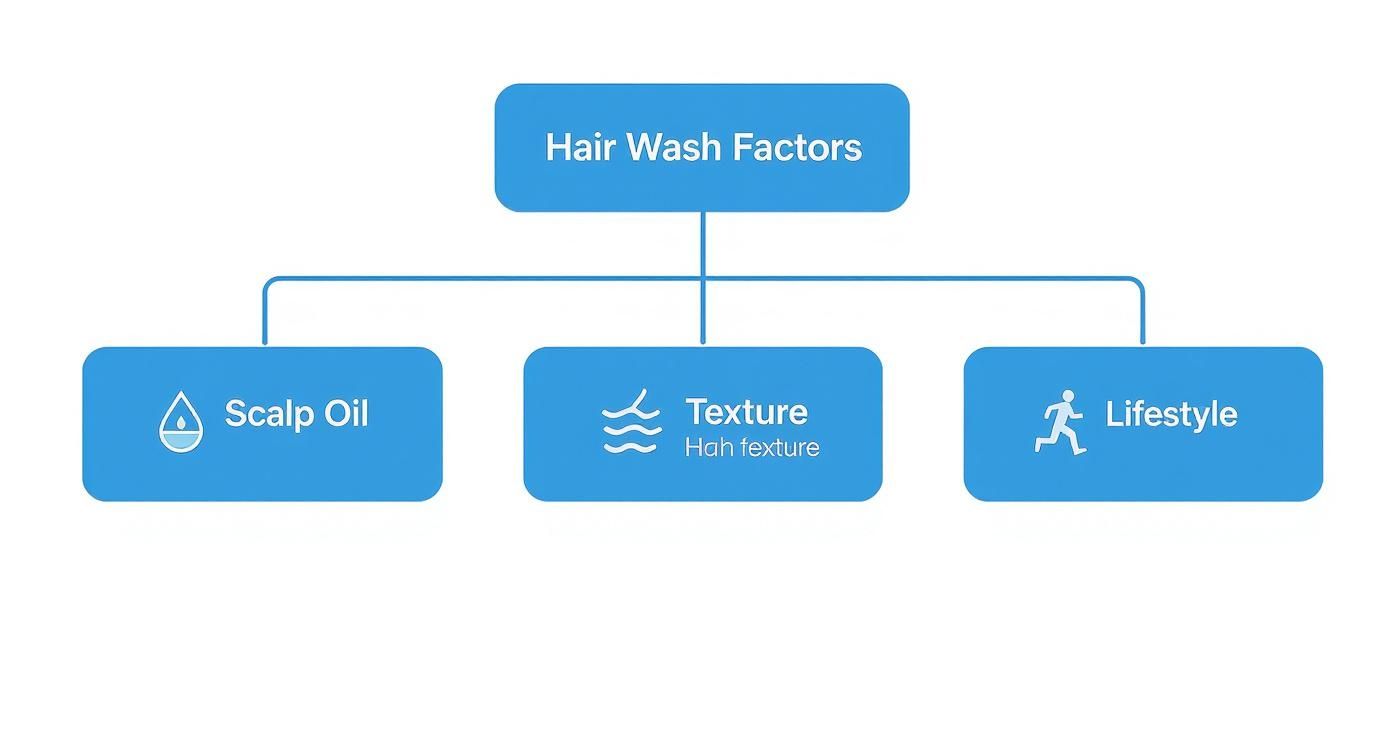
As you can see, there’s no single right answer. It’s all about finding a personalized solution. Start with the routine that seems like the closest fit for you, pay attention to how your hair and scalp feel over the next couple of weeks, and don't hesitate to tweak things until you hit that perfect balance.
Mastering a Gentle Hair Washing Technique
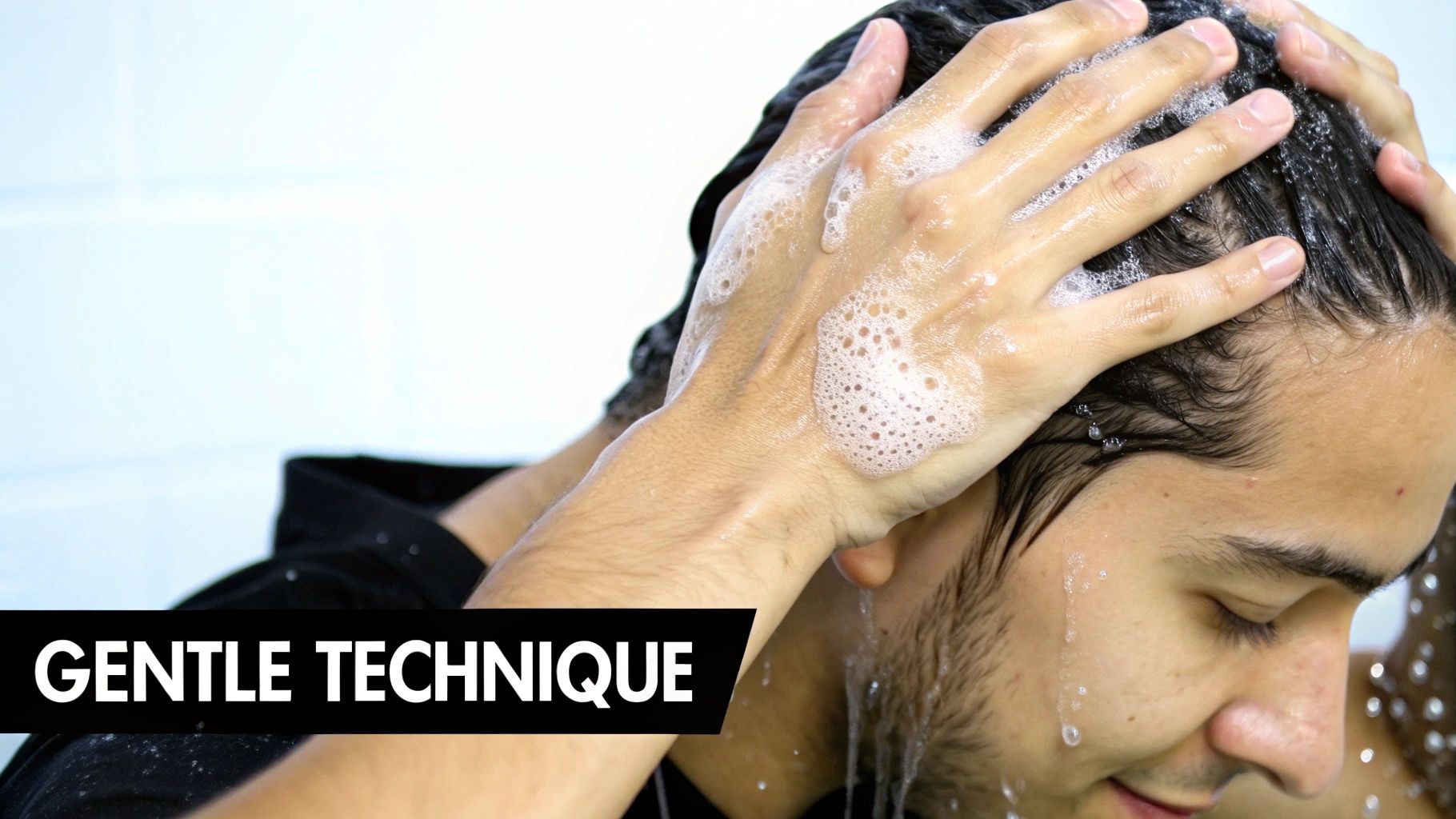
When you're dealing with thinning hair, how you wash it is just as important as how often. Being rough or rushing through the process can cause real, physical damage and breakage, which is the last thing you want. The idea is to make every wash a gentle, almost therapeutic routine that supports your scalp and protects every last strand.
It all starts with something simple: the water temperature. A steaming hot shower might feel amazing, but it's terrible for your scalp. Hot water strips away the natural oils that protect your skin, leading to dryness and irritation. Always stick to lukewarm water—it cleans effectively without compromising your scalp's natural moisture barrier.
Your Step-By-Step Gentle Wash Guide
Adopting a more mindful washing technique doesn't have to take any longer, but the payoff is huge. A few small tweaks can drastically reduce the strain on your hair follicles. Here's a simple, effective process to get you started:
-
Prep the Lather First
Don't just squeeze a blob of shampoo directly onto your head. Put a small amount in your palms, add a splash of water, and rub your hands together to build up a nice lather before it even touches your hair. This helps the shampoo spread evenly instead of getting concentrated in one area. -
Focus on the Scalp
Your scalp is ground zero for oil, sweat, and product buildup, so that's where your attention should be. Apply the shampoo you just lathered up directly to your scalp, not the ends of your hair. As you rinse, the suds will run down and gently clean the rest of your hair without you having to scrub it. -
Use Fingertips, Not Nails
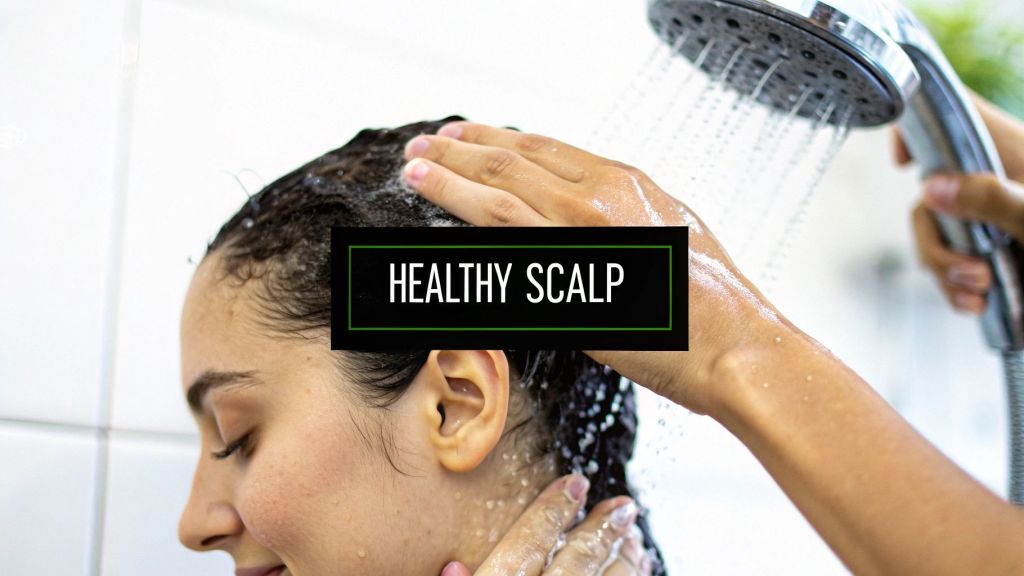
This is a golden rule for thinning hair. Your fingernails can easily scratch your scalp and snap fragile hairs right at the root. Instead, use the soft pads of your fingertips to gently massage the shampoo into your scalp with small, circular motions. It feels great, cleanses effectively, and helps boost blood flow to the follicles.
This gentle massage is more than just a cleaning step; it's a vital part of promoting a healthy scalp environment. That increased circulation helps deliver essential nutrients right where they're needed—the hair roots. In fact, many people have found that a consistent and proper massage technique can be a powerful tool, and you can explore more about the benefits of a dedicated scalp massage for hair growth.
Once you're done massaging, make sure to rinse thoroughly. I mean, really rinse, until the water runs completely clear. Any shampoo left behind can weigh down fine hair and irritate your scalp.
The Post-Wash Cooldown
Remember, your hair is at its absolute weakest when it's wet. Vigorously rubbing it with a standard bath towel is a recipe for breakage and frizz.
Instead, gently squeeze the excess water out with your hands. Then, carefully pat or blot your hair dry with a soft microfiber towel or even an old, clean cotton t-shirt. It’s a small change that makes a big difference in preventing damage to the hair's cuticle.
Choosing Products That Nurture Your Scalp
The bottles lined up in your shower can be either your greatest allies or quiet saboteurs in the fight against thinning hair. Picking the right products is a true game-changer, elevating a simple wash into a targeted scalp treatment. It all comes down to looking past the flashy marketing claims on the front and learning to read the ingredient list on the back.
Many popular shampoos rely on harsh detergents like sulfates to create that thick, satisfying lather we've been taught to associate with "clean." But for a sensitive scalp already dealing with thinning, these chemicals are often far too aggressive. They can strip away the natural oils your scalp desperately needs for protection and moisture.
Silicones are another ingredient to be wary of. While they can give your hair that instantly silky, smooth feeling, heavier silicones build up over time. This residue can weigh down fine hair and, worse, potentially clog follicles—the last thing you want when you're trying to create a healthy environment for hair growth.
Ingredients to Actively Look For
Instead of just playing defense and avoiding the bad stuff, let's talk about the powerhouse ingredients you should actively seek out. These are the components that help create a balanced, stimulated, and healthy scalp. It's time to think of your shampoo as more than just a cleanser; it's a delivery system for beneficial ingredients.
Some of the most effective ingredients include:
- Ketoconazole: This antifungal agent is fantastic for tackling scalp inflammation and dandruff. By calming things down and creating a healthier scalp environment, it helps set the stage for better hair growth.
- Caffeine: Just like your morning cup of coffee, caffeine can give your scalp a much-needed jolt. When applied topically, it has been shown to help stimulate blood flow to the hair follicles, which is essential for delivering nutrients where they're needed most.
- Biotin: Often called Vitamin B7, biotin is a key player in producing keratin—the very protein that makes up your hair. Having biotin in your products helps support the strength and structural integrity of every single strand.
When your goal is to nurture a healthy scalp, the right ingredients are non-negotiable. They shift your shampoo from a simple soap to a strategic tool that actively supports your hair's foundation.
Making the Right Choice for Your Scalp
Once you understand what these ingredients do, you can make much smarter choices in the haircare aisle. For instance, if you're constantly dealing with a flaky or itchy scalp, a shampoo with ketoconazole could make a world of difference. You can learn more about how a ketoconazole shampoo can help with hair loss by reducing scalp inflammation and DHT.
Ultimately, your ideal shampoo and conditioner are the ones that gently clean your hair while delivering targeted, beneficial ingredients right to the scalp. By being a little more selective, you can turn a daily chore into a proactive step toward healthier, fuller-looking hair.
Recognizing When to Adjust Your Routine
Your ideal washing routine isn’t something you figure out once and then set on autopilot. It needs to evolve. Think of it as a constant conversation with your scalp—it's always sending you feedback about what it needs. Learning to interpret those signals is the real secret to maintaining a healthy environment for your hair to thrive.
Ignoring these clues is like driving with the check-engine light on. You might get away with it for a bit, but eventually, it'll cause problems. These signs are your personal guide, helping you fine-tune how often you should be washing your thinning hair.
The Telltale Signs of Over-Washing
It’s easy to think that “cleaner is better,” but washing too often can backfire by stripping away the natural oils (sebum) that protect your scalp and hydrate your hair. If you’re overdoing it, your scalp will definitely let you know.
Keep an eye out for these classic indicators:
- A Dry, Itchy Scalp: Does your scalp feel tight, flaky, or just plain irritated, especially right after you wash it? That's a huge red flag that you're stripping away its protective barrier.
- Brittle, Flyaway Hair: When hair strands lose their natural oils, they also lose moisture and flexibility. This makes them weak, prone to snapping, and full of static.
- A "Rebound" Effect: Here’s the irony—a scalp that’s been stripped too clean can panic and go into oil-production overdrive to compensate. The result? Your hair gets greasy even faster than before.
Is It Time to Wash More Often?
On the flip side, not washing enough can be just as damaging. An accumulation of oil, dead skin cells, and product residue can clog hair follicles and create an unhealthy scalp environment that stifles growth.
Greasy roots showing up just a day or two after washing is the most obvious sign. You might also notice your hair feels heavy, limp, and lifeless, or even an increase in shedding. This isn't just a hunch; buildup can physically interfere with the hair's growth cycle.
There's solid science to back this up, too. A 2021 study found that people who washed their hair less often reported more scalp sensitivity, which can lead to more fragile hair. If you're curious, you can dig into the full study findings on scalp health to see just how much frequency matters.
By learning to speak your scalp's language—knowing the difference between happy and distressed—you can stop following a rigid schedule and start responding to what your hair actually needs. Making small, informed adjustments is the key to keeping your hair and scalp in their best possible shape.
Common Questions About Washing Thinning Hair
Even with the best game plan, a few tricky questions always seem to surface. Let's clear the air and tackle some of the most common worries people have about washing thinning hair.
Does Seeing Hair In The Drain Mean I'm Washing Too Much?
Not usually, no. It’s alarming to see hair in the drain, but it's important to remember that shedding is a completely normal part of the hair growth cycle. We all lose between 50-100 hairs a day, and a lot of them just happen to come out when we're in the shower.
What you're seeing is simply the collection of hairs that were already ready to fall out. A clean, healthy scalp is the best foundation you can give for new growth, so don't let the fear of shedding keep you from washing your hair properly.
Can I Use Dry Shampoo To Wash Less?
Think of dry shampoo as a temporary fix, not a replacement for a real wash. It's fantastic for soaking up a bit of oil when you're short on time, but it is not a substitute for shampoo and water.
Dry shampoo doesn't actually clean anything; it just masks the grease. If you lean on it too heavily, you risk a nasty buildup of product, sweat, and oil that can clog up your follicles and irritate your scalp. Use it for emergencies, but don't make it part of your regular routine.
A great rule of thumb is to adjust your routine with the seasons. You'll likely sweat more in the summer, which might mean you need to wash more often. In contrast, the dry winter air could mean washing a bit less to avoid irritating your scalp. Ultimately, your scalp will tell you what it needs.
Ready to take control of your hair's health? Explore in-depth articles, expert advice, and resources on male pattern baldness and treatments like PRP at PRP For HairLoss. Visit us at https://prpforhairloss.com to learn more.


Leave a Reply