Using a derma roller for hair loss is all about creating tiny, controlled injuries on the scalp. I know that sounds a little strange, but this process, called microneedling, is fantastic for waking up dormant follicles and strengthening the hair you already have. It works by boosting blood flow, kicking growth factors into high gear, and seriously improving how well your scalp absorbs topical treatments.
How Derma Rolling Actually Revitalizes Your Hair Follicles
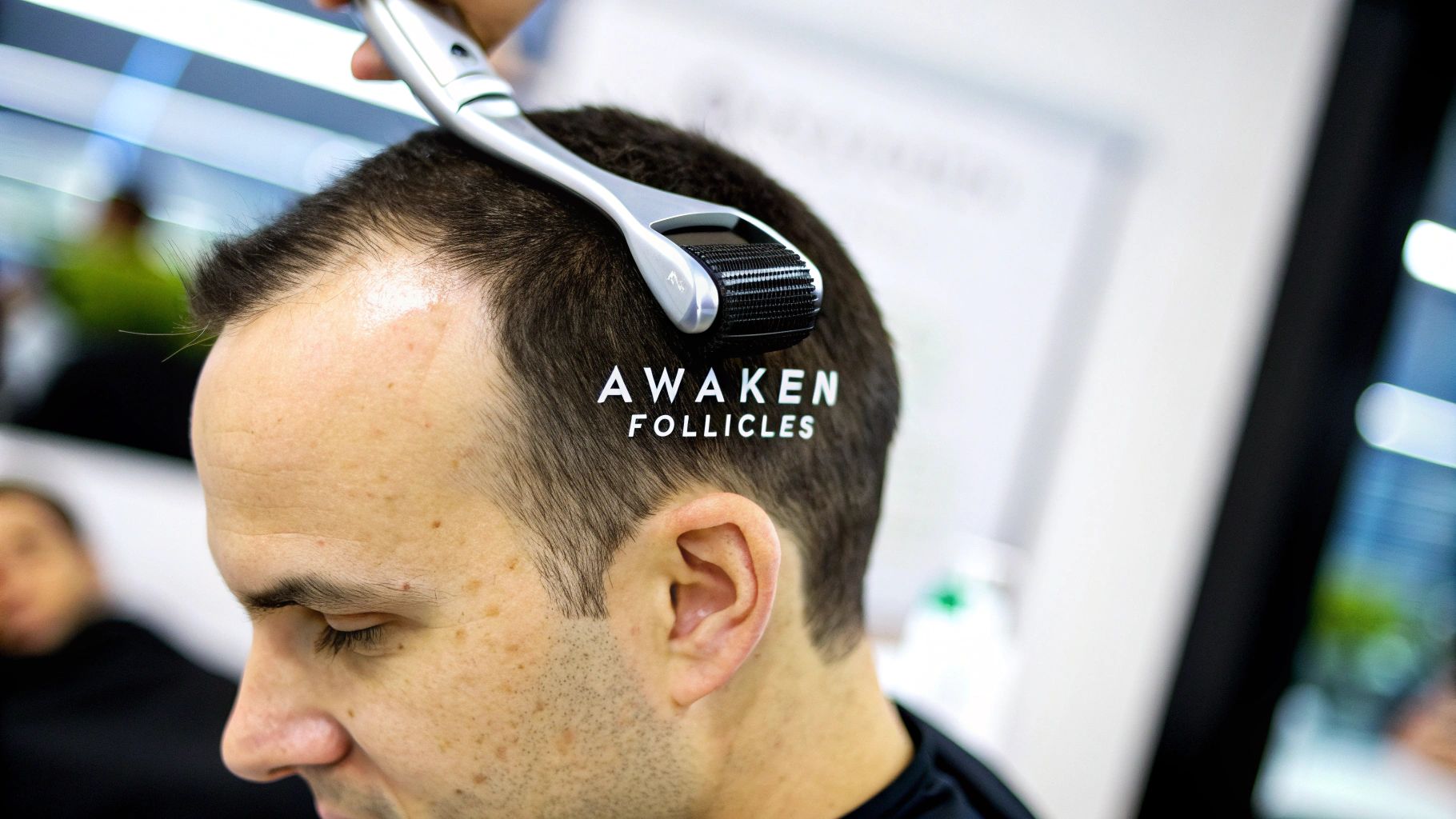
Before you start, it’s good to understand why this simple tool can be so effective. Derma rolling isn’t some gimmick; it taps directly into your body's own natural healing powers. As you roll the device across your scalp, its tiny needles create thousands of microscopic punctures.
Your body sees these punctures as tiny wounds and immediately switches on its repair systems. This is exactly the response we're looking for.
The Science Behind Scalp Stimulation
This controlled "injury" sets off a chain reaction of biological processes that are incredibly beneficial for your hair follicles. Think of it like a reset button for a sluggish system. The main perks are:
- Better Blood Flow: Those micro-injuries tell your body to rush more nutrient- and oxygen-rich blood to the area, giving your hair follicles the fuel they desperately need to thrive.
- A Rush of Growth Factors: Your body releases things like platelet-derived growth factor (PDGF) and epidermal growth factor (EGF). These are essential for cell regeneration and play a direct role in managing the hair growth cycle.
- Waking Up Stem Cells: Research suggests microneedling can activate stem cells within the hair follicle, which can push dormant follicles back into their active growth phase.
This multi-pronged attack helps fortify the hair you have while creating a much healthier environment for new growth to begin. To give your body even more of the building blocks it needs, think about adding supplements like collagen peptides to your daily routine.
A Powerful Amplifier for Your Topical Treatments
Maybe the biggest win for derma rolling is how it supercharges topical treatments like minoxidil. The micro-channels created by the needles act like express lanes, letting serums and solutions get past the tough outer layer of the skin and penetrate way deeper. This drastically increases their absorption, and in turn, their effectiveness.
The real magic happens when you combine derma rolling with a proven topical. You're not just applying a treatment to the surface; you're delivering it directly to the structures that need it most.
A landmark study from 2013 really drove this point home. Researchers tracked 100 men with male pattern baldness for 12 weeks. The results were night and day.
Derma Roller with Minoxidil vs Minoxidil Alone
Here's a quick look at the 12-week results, showing just how much of a difference adding a derma roller can make.
| Treatment Group | Average Hair Count Increase | Patient-Reported Improvement (>50%) |
|---|---|---|
| Minoxidil Alone | 22.2 hairs | 4.5% |
| Derma Roller + Minoxidil | 91.4 hairs | 82% |
The group using minoxidil alone saw a modest increase of about 22 hairs. But the group that added weekly 1.5mm derma roller sessions to their minoxidil routine saw their hair count jump by an average of 91 hairs. That's over four times the growth, with a massive 82% of men in that group reporting more than 50% improvement.
This proves that knowing how to use a derma roller for hair isn't just about the rolling itself—it's about turning a decent routine into a truly powerful one. For a closer look at the biology of hair growth, check out our guide on how to stimulate hair follicles.
Picking the Right Derma Roller for Your Scalp
Choosing the right derma roller is probably the most critical decision you'll make when you start microneedling. It’s not just about what works—it’s about what’s safe. Using the wrong tool can do more harm than good, so let's walk through how to pick the right one.
There are a ton of options out there, and it's easy to get lost in the noise. But honestly, it all boils down to three things: what the needles are made of, how long they are, and how many of them are on the roller. Get these right, and you're good to go.
Needle Material: Go for Titanium
You’ll see two main types of needles: stainless steel and titanium. While stainless steel is super hygienic and what pros often use, titanium is the gold standard for at-home use.
Why? Durability. Titanium needles are just tougher and stay sharp much longer. A dull needle is your worst enemy—it drags and tears the skin instead of making clean, tiny punctures. Since you'll be using this tool over and over, that resilience is non-negotiable for safety and effectiveness.
Needle Length: Match it to Your Goal
The length of the needles dictates what the derma roller actually does for your scalp. This isn't a one-size-fits-all situation; different lengths have entirely different jobs.
-
0.5mm: This is your perfect starting point. A 0.5mm needle roller is mainly for boosting the absorption of topicals like minoxidil. It’s gentle enough that you can use it 2-3 times per week without much fuss.
-
1.0mm to 1.5mm: Now we're talking about actually stimulating new growth. Needles in this range are long enough to kickstart the wound-healing process that gets collagen production and hair follicle stem cells firing. Because it's a more intense treatment, you should only use a roller this size once every 1-2 weeks to give your scalp time to fully recover.
My advice? Start with a 0.5mm roller. Get a feel for the technique, see how your scalp handles it, and then think about graduating to the longer, more therapeutic needles once you're comfortable.
Your scalp's health is paramount. Before you start any new routine, make sure there isn't an underlying issue at play. It's worth taking a moment to learn about the various scalp conditions that cause hair loss so you know what to look for.
Needle Count: Why 540 is the Magic Number
The last piece of the puzzle is the needle count. It might seem like more needles would be better, but that's a common misconception. For treating the scalp, a roller with around 540 needles really hits the sweet spot.
This count gives you great coverage without packing the needles so tightly that they can't penetrate the skin properly. If there are too many, you end up just pressing against the skin instead of puncturing it, which defeats the whole purpose. Stick to this number, and you'll get the gentle, consistent pressure needed for real results.
A Practical Guide to Your Derma Rolling Routine
So you've got your derma roller. Now for the important part: learning how to use it correctly. Nailing your technique is everything when it comes to seeing results and—more importantly—keeping your scalp healthy and safe. Think of this as your hands-on guide to getting it right.
We'll walk through the whole process, from prepping your roller to the critical aftercare steps. Remember, consistency is going to beat intensity every single time.
Essential Prep Work Before You Roll
Proper preparation is non-negotiable. Seriously. If you skip these first steps, you're essentially inviting bacteria into the tiny channels you’re about to create on your scalp. That can lead to irritation or even an infection, which will set you back big time.
First off, always start with a clean slate. Wash your hair with a gentle, sulfate-free shampoo to remove any oil, dirt, or product buildup. Before you start rolling, make sure your hair and scalp are completely dry. Rolling on a wet scalp can feel a lot more sensitive.
Next up is the most crucial step: sanitization. Your derma roller needs to be sterilized before every single use. No exceptions.
- Sanitize Your Roller: Let the roller head soak in 70% isopropyl alcohol for about 5-10 minutes. This specific concentration is actually more effective at killing germs than higher percentages.
- Air Dry: After its bath, let the roller air dry completely in its protective case. Whatever you do, don't try to wipe the needles with a towel. You risk damaging the delicate tips or leaving tiny fibers behind.
This simple hygiene routine is your best defense against unwanted side effects.
Mastering the Rolling Technique
With your scalp clean and your roller sanitized, you're ready to go. The trick here is applying just the right amount of pressure and using a systematic pattern for even coverage. You want to avoid causing any real trauma to the skin.
You're aiming for a slight prickling or tingling sensation. It should be just enough to know it's working, but it should never be painful. If you see any blood, you are pressing way too hard. This is all about stimulation, not abrasion.
On each area you’re treating—like the crown or your temples—follow this pattern:
- Gently roll vertically from front to back, covering the whole section 4-5 times.
- Be sure to lift the roller off your scalp after each pass before starting the next one.
- Next, roll horizontally across that same area 4-5 times, again lifting between each pass.
- Finally, do the same thing diagonally in both directions, completing 4-5 passes each way.
Lifting the roller between direction changes is a small but critical detail. It prevents you from dragging the needles sideways and creating larger, tear-shaped channels, which can lead to scarring. Always lift, place, and roll.
This visual guide breaks down what to look for when picking out your roller, from the material to the needle size, so you know you're starting with the right tool.
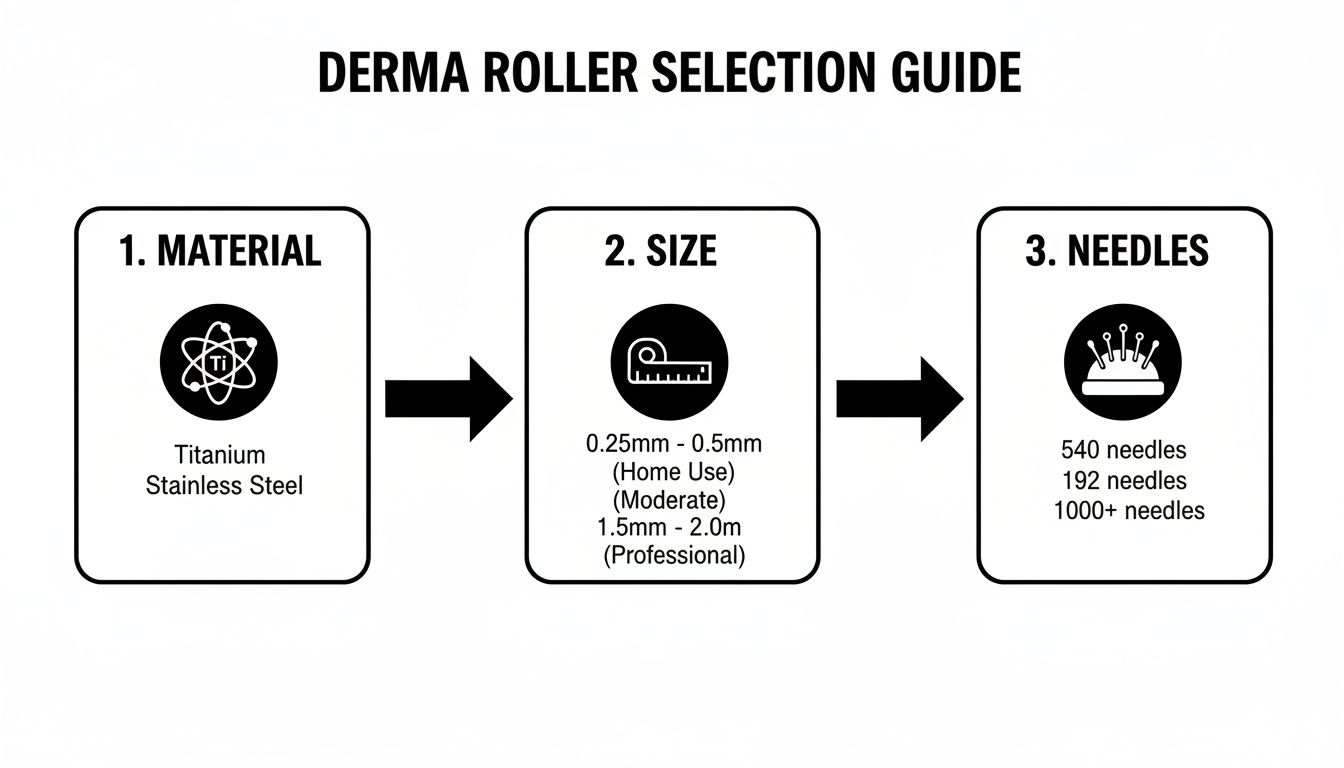
As the guide highlights, choosing durable titanium needles and the right length for your goals are foundational steps to take before you even start rolling.
How Often Should You Derma Roll?
The frequency of your sessions depends entirely on the needle size you're using. Longer needles create deeper micro-injuries that require more time to heal. Overdoing it is a recipe for inflammation and can actually work against your hair growth goals.
Here’s a practical breakdown to keep you on a safe and effective schedule.
Sample Weekly Derma Rolling Schedule
Use this sample schedule based on needle size to build a consistent and safe routine. Following a structured plan is key to achieving results without over-treating the scalp.
| Needle Size | Recommended Frequency | Post-Rolling Wait Time (Before Minoxidil) |
|---|---|---|
| 0.25mm | 2-3 times per week | Wait 30 minutes to 1 hour |
| 0.5mm | 1-2 times per week | Wait at least 12-24 hours |
| 1.0mm | Once every 1-2 weeks | Wait a full 24 hours |
| 1.5mm | Once every 3-4 weeks (at most) | Wait a full 24 hours |
This schedule provides a solid framework. The most important thing is to pay attention to how your scalp feels and adjust if you notice any prolonged redness or irritation. Recovery is just as important as the treatment itself.
Your Post-Rolling Protocol
What you do after you finish rolling is just as vital as the session itself. Your scalp is now in a hyper-absorbent state and needs to be treated with care. The first thing you should do is sanitize your roller again with isopropyl alcohol, let it air dry, and put it away safely.
Now for the big question most guys have: When can I apply my minoxidil or other hair growth serums? The answer is simple: wait.
If you apply a potent topical like minoxidil right after using a derma roller (especially with needles 1.0mm or longer), you’re asking for trouble. It can cause some pretty significant irritation, burning, and even too much systemic absorption. You have to give your scalp a little time to begin the healing process.
A 24-hour waiting period is the gold standard. This gives the micro-channels enough time to partially close, which drastically reduces the risk of a bad reaction but still allows for enhanced absorption when you apply your treatment the next day. This one-two punch is backed by solid evidence.
For example, a 2021 meta-analysis showed that while microneedling alone is a great way to boost hair count, its real power is unlocked when you pair it correctly with topicals. The research found that combining microneedling with minoxidil led to a significant increase of about 7.63 hairs per area more than what microneedling could do on its own. You can read the full research about these hair growth findings to dig into the data yourself.
Aftercare and Sidestepping Common Mistakes
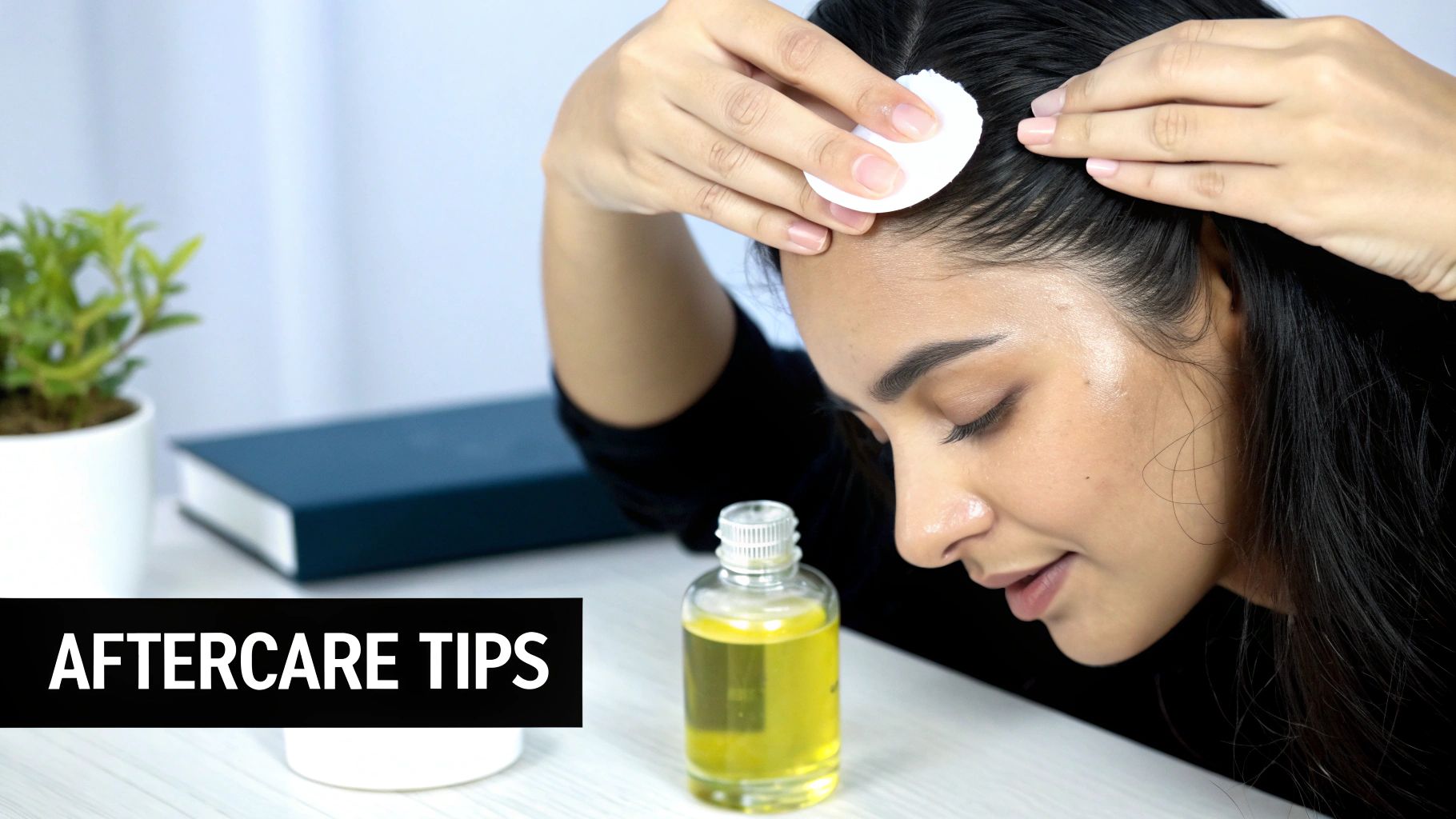
What you do after you put the derma roller down is just as important as the rolling session itself. Your scalp is now primed, sensitive, and ready to absorb whatever you put on it. Proper aftercare isn't just a suggestion—it's essential for getting results and avoiding problems.
Right after you finish, you'll likely notice some redness and feel a mild, sunburn-like tingle. Don't worry, that's a good thing. It means you’ve successfully stimulated the scalp. This redness should fade within a few hours to a day, and the key now is to be gentle and let your body's natural healing process kick in.
Immediate Aftercare Your Scalp Needs
Before you do anything for your scalp, take care of your tool. Give that derma roller another good soak in 70% isopropyl alcohol for about 5-10 minutes. Let it air dry completely before popping it back in its protective case. This step is non-negotiable for preventing bacteria buildup.
Now, for your scalp. For the next 24 hours, the guiding principle is "less is more." Your only job is to keep the area clean and avoid anything that could cause irritation.
- Avoid Harsh Products: Stay away from any hair products that contain alcohol, sulfates, or heavy fragrances. These can seriously sting and dry out your freshly treated scalp.
- Stay Out of the Sun: Your scalp is extra vulnerable to UV rays right now. If you have to go outside, wear a hat.
- Skip the Gym: Hold off on any intense workouts, saunas, or steam rooms for a day. Sweat can carry bacteria directly into those new micro-channels, which is a recipe for irritation.
The big question everyone asks is about minoxidil. Never apply it right after rolling, especially with needles longer than 0.5mm. You need to wait at least 24 hours. Applying it too soon can cause way too much of it to absorb, leading to some pretty severe irritation and side effects.
Sidestepping the Most Common Derma Rolling Mistakes
It’s easy to get a little overeager when you're looking for results, but that’s exactly where most guys go wrong. Getting derailed is often a matter of a few simple missteps, so knowing what not to do is just as important as knowing what to do.
The number one error I see is rolling too often. Your scalp needs time to heal and regenerate. Constantly creating micro-injuries without giving it that recovery window just leads to chronic inflammation, which can actually harm your follicles and make hair loss worse. Stick to the frequency schedule for your needle size.
Another classic mistake is pressing way too hard. You’re not trying to punish your scalp into growing hair. The goal here is gentle stimulation, not painful abrasion. If you're seeing more than just a little pinpoint bleeding, you've gone too far. A light, consistent pressure is all you need to get the job done right.
And of course, there’s hygiene. Using a dirty roller is just asking for trouble. You’re opening tiny channels in your skin, so an unsterilized tool can easily lead to a nasty infection that will set your progress back and might even require a doctor's visit. Always, always sterilize before and after every single use.
Finally, know when to stop. If your scalp gets persistently itchy, flaky, or develops sores, take a break from rolling immediately. For a deeper dive into maintaining a healthy scalp foundation, our guide to men’s scalp care has some great information.
Knowing When to Replace Your Derma Roller
This is a step so many people completely forget. Those tiny needles get dull over time, and a dull needle doesn’t puncture the skin cleanly—it tears it. This causes more trauma than necessary, hurts more, and can even lead to scarring.
As a solid rule of thumb, plan to replace your derma roller after about 10-15 uses. This ensures the needles stay sharp and effective. And if you ever drop it, even from a short distance, toss it out. A single bent needle can do real damage, so it’s just not worth the risk.
Amplifying Results with Clinical Treatments Like PRP
Consistent at-home derma rolling is a fantastic foundation for fighting hair loss, but sometimes you need to bring in the big guns. Think of your home routine as the daily workout and clean diet, while clinical treatments are the intense, targeted training sessions that can seriously accelerate your progress.
For men who want to get more aggressive in their fight for hair restoration, pairing microneedling with professional treatments can be a total game-changer.
One of the best partners for derma rolling is Platelet-Rich Plasma (PRP) therapy. This isn't just another cream or serum. PRP is a medical treatment that harnesses your body's own powerful healing factors, concentrates them, and puts them to work directly on your hair follicles.
The Synergistic Power of Derma Rolling and PRP
So, why do these two work so well together? It’s a classic one-two punch.
Your at-home derma rolling sessions create the initial stimulation. You're waking up the scalp, improving blood flow, and kicking off that crucial wound-healing response we've been talking about.
PRP then swoops in to deliver a super-concentrated dose of growth factors right where they're needed most. The procedure involves a simple blood draw, spinning it in a centrifuge to isolate the platelets, and then injecting this "liquid gold" back into your scalp.
Here’s an easy way to think about it: your derma roller is like tilling the soil and preparing it for planting. PRP therapy is the high-potency fertilizer that gives the seeds everything they need to sprout and grow strong. The two approaches are perfectly complementary.
When to Seriously Consider a Combined Approach
While anyone can benefit, combining at-home derma rolling with in-clinic PRP is especially smart in a few key scenarios. It’s for when you want to move beyond just maintaining and make a real push for regrowth.
This combined approach is often recommended for:
- Men with more advanced hair loss: If you're dealing with significant thinning at the crown or a noticeably receding hairline, PRP provides a much more powerful stimulus than at-home treatments can deliver on their own.
- Guys who have hit a plateau: Maybe you saw some good initial results with minoxidil and your derma roller, but things have stalled out. Adding PRP can often break through that plateau by giving your follicles a new and powerful signal to grow.
- Anyone seeking faster, more dramatic results: If your goal is to see a bigger change in a shorter amount of time, pairing a potent clinical treatment with your consistent home care is the most direct way to get there.
A multi-faceted plan is always more effective than relying on a single tool. Combining the consistency of at-home care with the targeted power of clinical treatments like PRP creates a comprehensive strategy that addresses hair loss from multiple angles.
This approach really gives you the best of both worlds. You get the day-in, day-out benefits of your own routine, which are then supercharged by the periodic, high-impact boost from a professional treatment.
To get a better handle on how the medical procedure works, you can learn more about platelet-rich plasma therapy for hair and decide if it’s the right move for you.
Building Your Full Hair Restoration Toolkit
A powerful hair growth plan is about more than just microneedling and trips to the clinic. Every piece of your routine contributes, from the supplements you might take to the products you use in the shower. A solid daily regimen ensures your scalp is always an optimal environment for growth.
Beyond clinical options, even your choice of shampoo can make a difference. Check out the best Japanese shampoo for hair loss to see how specialized formulas can support follicle health.
By integrating smart product choices with your derma rolling and potential clinical treatments, you build a truly robust system for fighting back against hair loss.
Got Questions About Derma Rolling for Hair? We’ve Got Answers.
Jumping into a new routine always brings up a few questions. That's a good thing—it means you're taking it seriously. Let's tackle some of the most common things guys wonder about when they first start using a derma roller for hair loss.
Is This Going to Hurt?
Honestly, "pain" isn't the right word. Most guys describe it as a slight prickling or tingling feeling, especially if you're using needles under 1.0mm. Think of it this way: if it truly hurts, you're pressing way too hard.
It’s completely normal for your scalp to feel warm and look a little pink, almost like a mild sunburn, for a few hours afterward. That’s actually a sign you’ve done it right and stimulated the skin. Just be sure to never roll over any active breakouts, sores, or inflamed skin.
How Long Before I Actually See Results?
This is where patience becomes your superpower. You need to give it time. Based on what we see clinically and in studies, the earliest positive signs—like less hair in the drain or some new, fine vellus hairs—often show up around the 8 to 12-week mark.
But for a visible difference in density and thickness, you've got to be in it for the long haul. Give it at least 6 months of consistent use. Remember, sticking to a regular, safe schedule is what gets you results, not going harder in any single session.
Think of it like hitting the gym. You won't look like a new person after two weeks, but after six months of consistent workouts, the progress is undeniable. The exact same principle applies to waking up your hair follicles.
Can a Derma Roller Actually Regrow Hair on a Bald Spot?
This is a great question, and the answer really depends on the state of the follicles. A derma roller is fantastic at stimulating follicles that are weak, shrinking, or just sleeping (dormant).
If you have a spot that's been slick-bald for years, the follicles there might be gone for good—a process called fibrosis. But if that thinning spot still has some of that light, fuzzy "peach fuzz," you're in a great position. That's a clear sign the follicles are just dormant, not dead. Microneedling has a real shot at kicking them back into gear. If you're dealing with a more advanced situation, you might want to learn if dead follicles can be revived through other clinical approaches.
When Is It Time to See a Doctor?
Getting a proper diagnosis from a dermatologist before you start is always the smartest move. It confirms you’re dealing with male pattern baldness and not something else that needs a different treatment.
You should absolutely book an appointment with a professional if you run into any of these issues:
- Signs of Infection: Any lasting pain, swelling, or pus after a session is a red flag.
- Sudden or Patchy Hair Loss: If your shedding suddenly gets much worse or you lose hair in clumps.
- Zero Improvement: If you’ve been doing everything right for 6 to 9 months and see absolutely no change.
A doctor can also talk to you about powerful prescription treatments or in-office procedures that can supercharge your at-home derma rolling routine for a more aggressive fight against hair loss.
At PRP For HairLoss, we know that having the right information is the first step toward getting your confidence back. A smart derma rolling plan can be a powerful part of your hair restoration strategy. Find more expert guides and explore advanced treatments at https://prpforhairloss.com.
 PRP For Hairloss
Leave a comment