Absolutely, inflammation can directly cause hair loss. It creates a hostile environment around your hair follicles, disrupting their natural growth cycle and forcing them into a premature shedding phase. Over time, this internal “fire” leads to noticeable thinning and much weaker regrowth.
The Hidden Threat to Your Hair Follicles
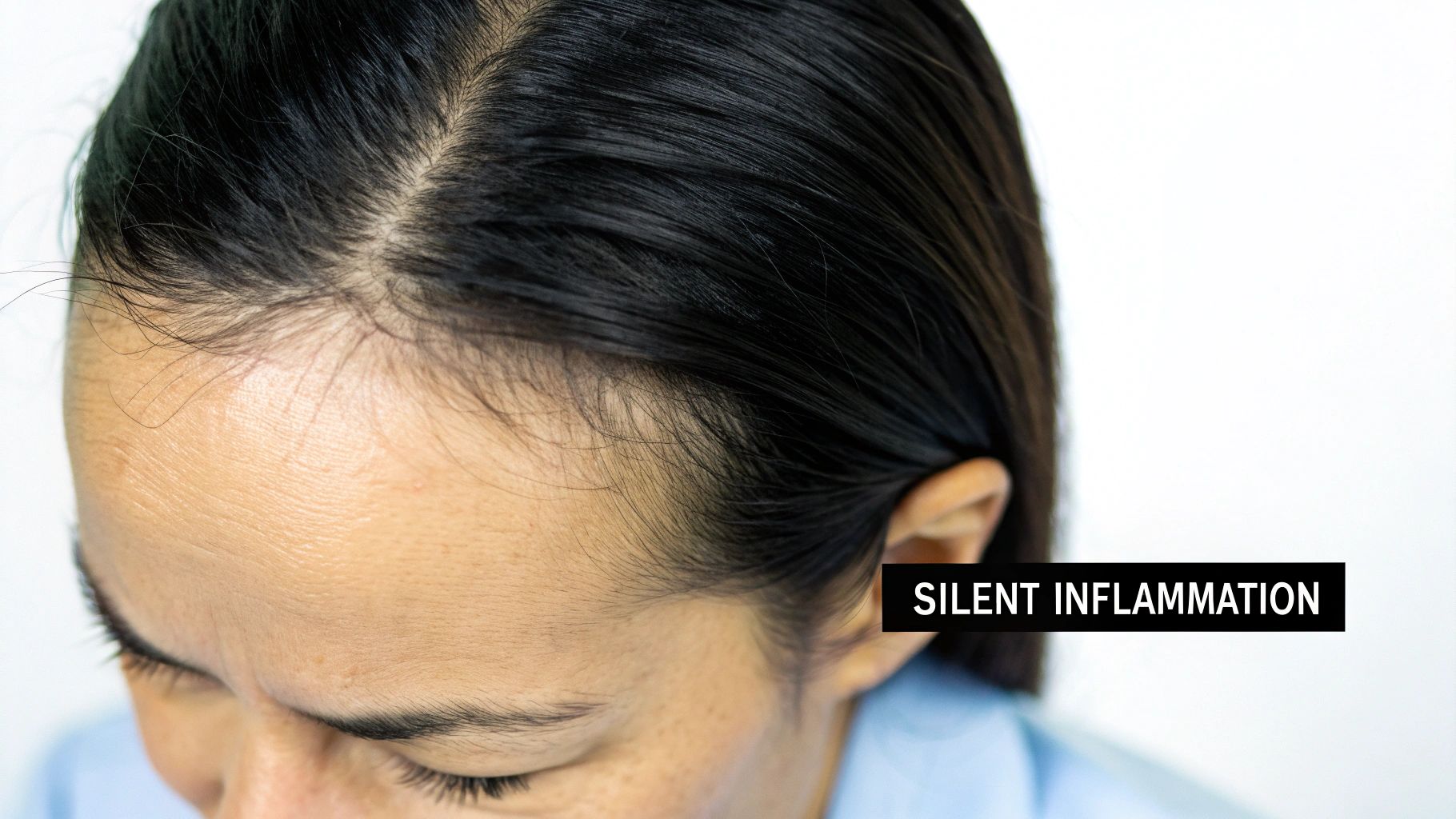
When you see more hair in the shower drain or notice a thinning spot in the mirror, your mind probably jumps to genetics or just getting older. And while those are definitely big players, there's often a more subtle and powerful process at work: chronic, low-grade inflammation simmering just below the surface of your scalp.
Think of it as a constant, unseen stressor on your hair follicles. This isn't about an obvious rash or an infection you can see. It's a persistent, internal irritation that quietly sabotages your hair's ability to grow, gradually weakening the very foundation of healthy hair.
How Inflammation Sabotages Hair Growth
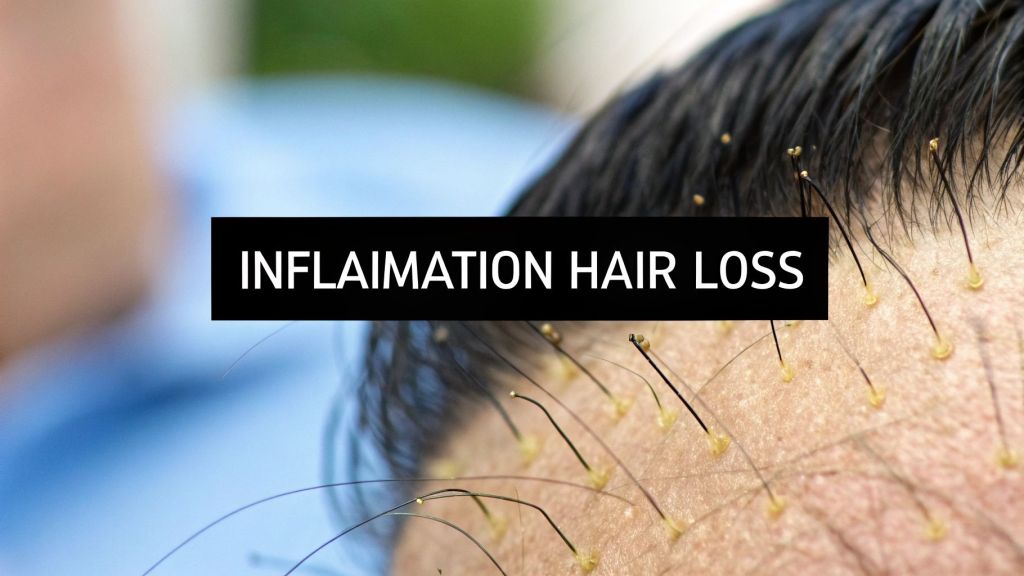
Your body's inflammatory response is normally a good thing—it’s how you heal from an injury. The problem starts when this system gets stuck in the "on" position, creating a state of chronic inflammation that can wreak havoc everywhere, including on your hair. This is the core mechanism behind inflammation hair loss, where the body’s own defense system turns against its hair follicles.
This isn't just a theory; it's a growing area of medical focus. Look at alopecia areata, an autoimmune condition fueled by intense inflammation around the follicles. Globally, the number of cases jumped from 20.43 million in 1990 to 30.89 million in 2021—that's a staggering 51% increase. This rise, especially noticeable in men between 30 and 49, highlights just how profoundly inflammatory processes can impact hair health. You can read the full research on this trend and its implications.
The key takeaway is that your hair loss might be a symptom of a larger internal issue. By addressing the underlying inflammation, you move beyond just treating the symptom and start tackling the root cause of the problem.
This biological disruption often triggers a process called hair follicle miniaturization, where follicles shrink over time and produce progressively thinner, weaker hairs. Understanding that you can actively manage this internal environment is the first step toward finding solutions that genuinely help your hair thrive again.
To understand how inflammation wreaks havoc on your hair, think of your hair follicle as a tiny, high-tech factory. In a healthy scalp, this factory runs on a precise schedule, methodically moving through cycles of growing, resting, and shedding. But when inflammation shows up, it's like a constant protest outside the factory gates, disrupting every part of the operation.
Your immune system is designed to protect you, and inflammation is one of its primary tools. When it senses a threat—be it an injury, infection, or even stress—it sends out inflammatory cells. The problem is, sometimes this system goes into overdrive, creating a state of chronic, low-grade inflammation. This persistent biological "red alert" creates a hostile environment around the delicate hair follicle, scrambling the signals that tell it what to do.
This constant disruption pushes follicles out of their active growth phase and prematurely into the shedding phase. It's a classic case of mistaken identity; the body is essentially attacking its own healthy tissue, and your hair follicles get caught in the crossfire.
How Inflammation Sabotages the Growth Phase
The most important part of your hair’s life is the anagen phase—the active growing stage. This is when the follicle is busy producing the hair shaft. On a healthy scalp, this phase can last for 2 to 7 years, which is what allows hair to grow long and strong.
Inflammation throws a wrench directly into this crucial process. The inflammatory messengers released by the immune system can physically shrink the hair follicle, a process known as miniaturization. This not only cuts the anagen phase short but also chokes off the follicle's ability to produce a healthy, thick strand of hair.
The result? You start seeing more hair in the drain, and the hair that does grow back comes in finer, weaker, and sometimes less pigmented than before.
Chronic inflammation puts your hair follicles into a constant state of defense. They become so preoccupied with fending off the inflammatory attack that they can no longer do their main job: growing hair.
The Vicious Cycle of Hair Loss
This isn't just a one-time event. Inflammation can trigger a frustrating, self-perpetuating cycle of damage and loss. As more follicles are forced into the shedding phase, your overall hair density thins out.
Imagine trying to plant a garden in soil that's been contaminated. It doesn't matter how good your seeds are; the toxic environment makes it nearly impossible for anything to take root and flourish. Your scalp is no different. A follicle surrounded by inflammation struggles to re-enter a productive growth phase.
This is a core concept in understanding hair health. For a more in-depth look at the specific stages, you can explore the complete hair growth cycle in our detailed guide.
This ongoing sabotage is why you see a progressive thinning over time. You're not just losing hair; you're losing the quality of your hair. Each growth cycle produces a slightly weaker strand than the one before it. Breaking this cycle is the key to effectively treating inflammation-related hair loss.
Reading the Warning Signs of Inflammatory Hair Loss
Learning to spot the early signals of inflammatory hair loss is a bit like becoming a detective for your own scalp. It’s not just about counting the hairs in the shower drain; it’s about paying attention to the more subtle clues that hint at an underlying problem.
Think of your scalp as the soil from which your hair grows. When that soil is irritated and inflamed, it’s not going to be a healthy environment for growth. The first signs are often things you feel long before you see any significant thinning.
This flowchart maps out the basic process: a healthy follicle leads to growth, but an unhealthy one can trigger inflammation, leading to shedding.
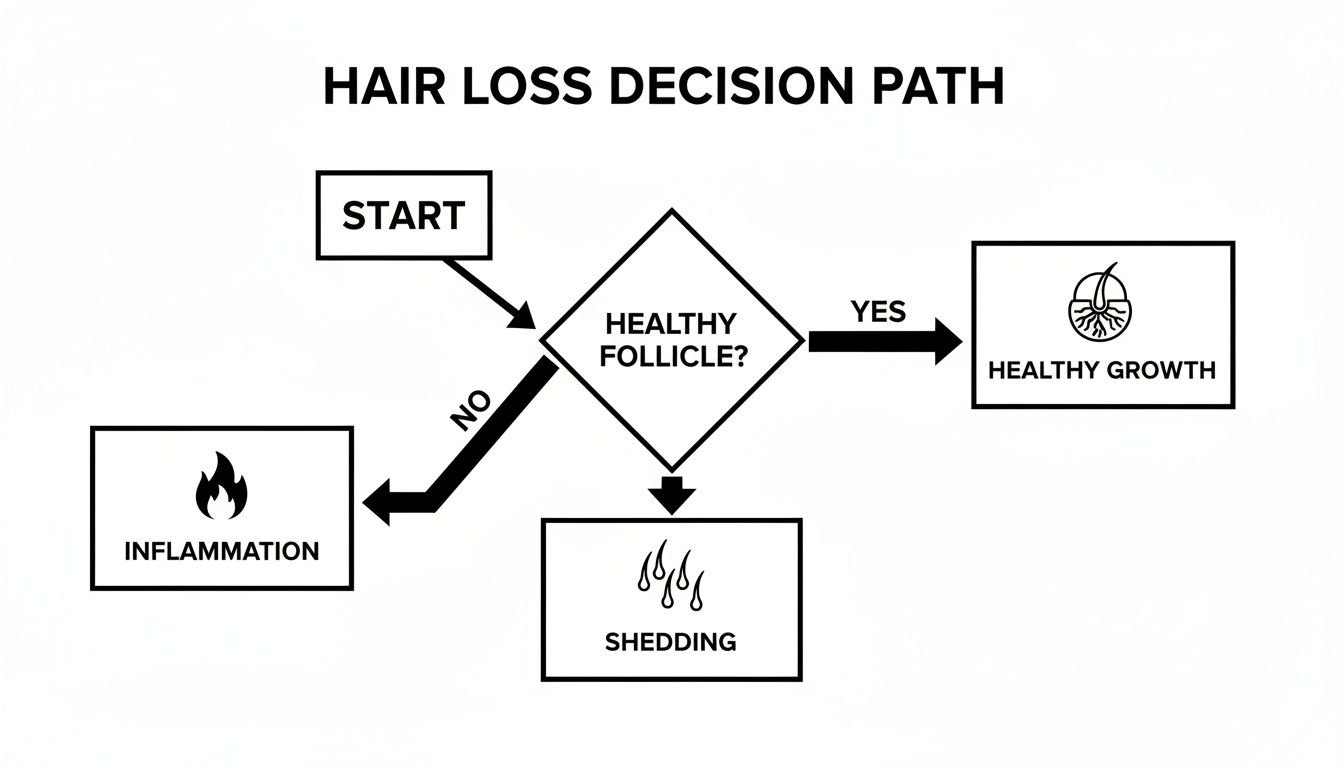
As you can see, once inflammation enters the picture, it interrupts the natural growth cycle and kicks the hair into a shedding phase.
Listening to Your Scalp
Long before you notice widespread hair loss, your scalp often tries to send out distress signals. It's crucial not to ignore them.
- Persistent Itchiness: A nagging, constant itch that regular washing doesn't solve is a classic symptom. For a closer look, our guide on itchy scalp and hair loss goes into more detail.
- Redness or Discoloration: Grab a mirror and take a good look under bright light. Patches of redness or any unusual coloring are strong indicators of active inflammation.
- Tenderness or Pain: Does your scalp feel sore when you touch it? A tender or even a slight burning sensation is a major red flag.
- Flaking or Scaling: While many people chalk it up to dandruff, excessive flaking can also be a direct sign of an inflammatory condition brewing on the scalp.
These symptoms mean your body's immune system is in overdrive right where your hair follicles are trying to grow, creating a hostile environment. This isn't just an isolated issue; it's a growing global concern.
Between 1990 and 2019, the global incidence of alopecia areata—a condition where the immune system attacks hair follicles—jumped by an astounding 49.14%. Cases climbed from around 21.7 million to 32.4 million. This type of hair loss, which affects roughly 2% of people worldwide, is especially concerning for men aged 30-49 who might already be worried about male pattern baldness. In countries like Israel, clinic visits for hair loss shot up from 1.24% to 9.44% between 2010 and 2020, mirroring a worldwide trend. You can discover more insights about these global hair loss trends.
Distinguishing between the symptoms of inflammatory hair loss and typical genetic balding can be tricky, but knowing the key differences empowers you to seek the right help.
Inflammatory Hair Loss vs Male Pattern Baldness: A Quick Comparison
| Symptom or Characteristic | Typical Male Pattern Baldness | Potential Inflammatory Hair Loss |
|---|---|---|
| Pace of Loss | Slow, predictable pattern (receding hairline, crown thinning) | Often rapid, may occur in patches or diffusely |
| Scalp Sensation | Usually no pain or itching | Often accompanied by itching, burning, or tenderness |
| Scalp Appearance | Looks healthy, skin is normal color | May show redness, scaling, or small pustules |
| Type of Shedding | Gradual thinning of hairs over time | Sudden shedding of a large number of hairs |
The key takeaway is that male pattern baldness is typically a silent process, whereas inflammatory hair loss often comes with physical symptoms you can see and feel on your scalp.
Scarring vs Non-Scarring Alopecia
It's critical to figure out which type of inflammatory hair loss you might be dealing with because it directly impacts the potential for regrowth. The difference boils down to one crucial question: is the hair follicle being permanently destroyed?
Non-Scarring Alopecia: Think of this as the hair follicles being put to sleep. The inflammation makes them go dormant, but they're still alive. If you can get the inflammation under control, these follicles can be woken up to start growing hair again.
Scarring Alopecia: This is a much more serious situation. Here, the inflammation is so severe that it completely destroys the hair follicle and replaces it with scar tissue. Once the follicle is gone, the hair loss is permanent.
This is exactly why catching it early is so important. By treating the inflammation before it can cause irreversible damage, you give yourself the best possible shot at getting your hair back.
Uncovering the Triggers Behind Scalp Inflammation
Scalp inflammation doesn't just happen. It's an SOS signal from your body, a direct response to something that has knocked it off balance. Many of the culprits are actually woven into our daily lives, quietly fueling the inflammatory fire that can lead to hair loss.
When you start connecting the dots between your habits and your scalp's health, the problem feels a lot less like a mystery. It’s not just random bad luck; it's a biological reaction. Figuring out what’s causing that reaction is the first real step toward getting things back under control.
Internal vs. External Culprits
Think of inflammation like a fire. To put it out for good, you need to know what’s fueling it. For scalp inflammation, the triggers generally fall into two camps: internal factors (what’s going on inside your body) and external factors (what your body is being exposed to).
More often than not, it isn't just one single thing. It’s usually a combination of factors working in tandem to create a hostile environment for your hair follicles. That’s why pinpointing the root cause is such a critical part of any effective treatment plan.
Your scalp is a barometer for your internal health. An inflamed scalp is often a reflection of systemic inflammation throughout your body, triggered by diet, stress, or underlying health issues.
Let's break down some of the most common things that can set off the inflammatory response that leads to thinning and hair loss.
Common Triggers of Scalp Inflammation
A whole range of things can provoke your immune system into turning against your hair follicles. Here are some of the most frequent offenders:
- Chronic Stress: Never underestimate the physical toll of mental stress. It floods your system with cortisol, a hormone that, in high amounts, is a major driver of inflammation. This can shock a huge number of hair follicles into the shedding phase all at once.
- Poor Diet: What you put on your plate has a direct line to your body's inflammation levels. Diets heavy in processed foods, sugar, and unhealthy fats can create a constant state of low-grade inflammation that absolutely affects your scalp.
- Autoimmune Conditions: With conditions like alopecia areata or lupus, the immune system gets its wires crossed and mistakenly attacks healthy hair follicles. This is a classic example of how internal issues cause inflammation hair loss.
- Scalp Infections: When fungi or bacteria set up shop on the scalp, they can trigger a powerful, localized inflammatory response. Things like folliculitis (inflamed hair follicles) or seborrheic dermatitis create an unhealthy environment where hair struggles to grow. For a closer look, you can explore various scalp conditions that cause hair loss in our guide.
- Environmental Stressors: Exposure to everyday things like pollution, harsh chemicals in hair products, and even sun damage can irritate the scalp. Over time, this constant irritation can build into chronic inflammation that weakens hair follicles from the root.
Identifying your personal triggers is the name of the game. It’s what allows you to stop just chasing symptoms and start addressing the real problem. By making targeted changes to your diet, stress management, and scalp care, you can create a much healthier internal environment. This proactive approach not only helps on its own but also makes professional treatments far more effective at calming inflammation and kickstarting new growth.
How PRP Therapy Calms Scalp Inflammation

When you realize what’s triggering your hair loss, the next logical step is to find a solution that does more than just mask the symptoms. You need to get to the root of the problem—that hostile, inflamed environment on your scalp. This is where Platelet-Rich Plasma (PRP) therapy comes in, not as a quick fix, but as a way to help your body heal itself and tackle that inflammation head-on.
PRP isn't some synthetic drug or harsh chemical. The treatment harnesses the powerful healing factors that are already inside your own blood. By isolating these components and reintroducing them directly to the scalp, PRP therapy works to actively dial down the inflammatory processes that are suffocating your hair follicles.
It's a bit like sending in a team of highly skilled peacekeepers to a conflict zone. Your platelets are the peacekeepers, and they arrive with a clear mission: de-escalate the fight, repair the damage, and restore order so that normal activity—in this case, hair growth—can finally resume.
The Science Behind PRP and Inflammation Control
The real power of PRP lies in its incredibly high concentration of platelets and the growth factors they contain. Think about what happens when you get a cut; your body naturally sends a rush of platelets to the area to stop the bleeding and kick off the healing process. PRP therapy takes that same biological response and focuses it right where you need it most: your scalp.
Here’s a quick look at how it works:
- A small amount of your blood is drawn, no different than a standard blood test.
- That blood is spun in a centrifuge, a machine that separates it into different layers.
- This step isolates the platelets, creating a plasma that is 5 to 10 times richer in growth factors than your regular blood.
- This concentrated "liquid gold" is then carefully injected into the areas of your scalp where hair is thinning.
As soon as it's injected, this army of growth factors gets straight to work. They send out powerful signals that help regulate your immune response, essentially telling the inflammatory cells to back off. Quieting that inflammation is the critical first step in allowing damaged follicles to recover and get back to their job of growing hair. If you want to dive deeper into the full mechanism, you can learn more about how PRP works in our detailed guide.
This approach is particularly promising when you see the scale of the issue. Conditions like alopecia areata, which are driven by inflammation, affect around 160 million people worldwide, with a prevalence that holds steady at about 2%. Scientific research consistently highlights platelet concentrates as a leading field of study for reducing scalp inflammation and encouraging follicles to regenerate, making it a targeted, non-surgical option for men.
What a Real PRP Treatment Plan Looks Like
PRP therapy isn’t a one-and-done deal. It’s a structured plan that builds on itself over time. For men grappling with inflammation hair loss, a typical protocol is designed to first calm the existing inflammation and then kickstart a new, healthier growth phase.
A standard treatment schedule starts with a series of sessions to gain momentum.
The goal of PRP is to fundamentally change the scalp environment from hostile to hospitable. By calming inflammation, it gives your hair follicles a fighting chance not just to survive, but to thrive again.
Most experts suggest an initial "loading phase" of three to four treatments, spaced about a month apart. This consistency ensures the scalp gets a steady supply of the growth factors it needs to finally break that inflammatory cycle.
After that initial series, maintenance sessions are usually scheduled every four to six months. These follow-ups are crucial for protecting your results and keeping any underlying inflammation from flaring up again. It’s all about playing the long game to maintain your hair's health.
Setting Realistic Expectations for Results
So, what can you actually expect to see, and how long does it take? The results from PRP show up gradually because the therapy works with your body's own natural hair growth cycle. This is a biological process, not an instant cosmetic procedure.
- Initial Phase (1-3 Months): The very first sign that things are working is often a reduction in hair shedding. Before you even see new growth, you'll probably notice less hair in the shower drain. This is a great indicator that the inflammation is subsiding and your follicles are stabilizing.
- Growth Phase (3-6 Months): Around this time, you might start seeing the first signs of new hair. These early hairs are often very fine and light, sometimes called "vellus" hairs. With continued treatment, they can mature into the thicker, healthier terminal hairs you're looking for.
- Maturation Phase (6-12 Months): By this point, you should see a tangible improvement in hair density and thickness. The full impact of your initial treatment series is usually most visible around the one-year mark.
PRP offers a scientifically-backed way to fight inflammation where it starts, creating the right foundation for hair to grow back stronger. If you're curious about what else is out there, you might also want to explore other regenerative treatments like polynucleotides, which also work to improve scalp health and encourage cell regeneration.
Your Proactive Plan for a Healthier Scalp
While clinical treatments are fantastic for managing inflammation hair loss, the choices you make every single day are your true first line of defense. A healthier scalp really does start from within, and you can begin laying a stronger foundation for your hair's future today.
Think of it like this: professional treatments like PRP work far better when they have a healthy canvas to work on. When you actively lower systemic inflammation through your lifestyle, you’re not just crossing your fingers and hoping for the best. You're creating the ideal conditions for those treatments to deliver incredible results.
This isn’t about a massive, overnight overhaul. It's about making smart, sustainable changes that put you in the driver's seat of your hair restoration journey.
Fuel Your Scalp with Anti-Inflammatory Nutrition
What you eat has a direct, profound impact on your body’s inflammation levels. A diet heavy in sugar, processed foods, and unhealthy fats is like pouring gasoline on an inflammatory fire. The real goal is to do the complete opposite: cool everything down with the right nutrients.
Start by consciously bringing more anti-inflammatory foods into your meals. These are foods packed with the antioxidants and healthy fats that help calm down an overactive immune response.
Here are a few simple swaps to get you started:
- Healthy Fats: Add foods rich in omega-3 fatty acids, like salmon, walnuts, and flaxseeds. These are famous for their ability to fight inflammation.
- Colorful Produce: Load up on leafy greens like spinach and kale, as well as berries and other brightly colored fruits and vegetables. They are antioxidant powerhouses.
- Lean Proteins: Choose chicken, turkey, and legumes over red and processed meats, which can actually promote inflammation.
Developing a proactive plan for a healthier scalp often involves bigger lifestyle shifts and understanding how to manage your body's inflammatory responses. To get a broader view on this, consider reading about how to reduce inflammation for better health.
Master Your Stress Response
Chronic stress is one of the biggest, sneakiest triggers of scalp inflammation. When you're constantly stressed out, your body is pumping out cortisol. This hormone directly fuels the inflammatory cycle and can shove your hair follicles into a premature shedding phase.
Finding effective ways to manage stress isn't a luxury—it's an absolute necessity for scalp health. You don't need to meditate for an hour a day to see real benefits. Small, consistent practices can make a world of difference.
Taking control of your diet and stress levels is about more than just general wellness. It’s a targeted strategy to create a less inflammatory, more hair-friendly internal environment.
Try weaving one of these simple techniques into your day:
- Mindful Breathing: Just take five minutes to focus on slow, deep breaths. It’s a remarkably fast way to lower cortisol levels.
- Regular Exercise: Even a brisk 20-minute walk can significantly cut down on both stress and inflammation.
- Digital Detox: Set aside a little time each day to unplug from screens, which are often a huge source of mental overload.
By combining these proactive lifestyle adjustments with targeted clinical treatments, you create a powerful, two-pronged attack against inflammation. You’re giving your hair the best possible chance to truly thrive.
Common Questions on Inflammation and Hair Loss
As you start to connect the dots between inflammation and hair loss, it's completely normal for questions to pop up. Let's walk through some of the most common ones people ask to help clear up any lingering confusion.
Think of this as a quick Q&A to solidify your understanding. My goal is to make sure you feel confident about what's happening and what you can do about it.
Can Stress Alone Really Cause This Type of Hair Loss?
You bet it can. Chronic stress is a major-league inflammation trigger. When your body is in a constant state of "fight or flight," it floods your system with cortisol, a stress hormone that's highly inflammatory. This can directly disrupt the hair growth cycle.
For a lot of guys, managing stress is just as important as any topical treatment or procedure. When you lower that baseline inflammation, you give your hair follicles a much better environment to do their job.
Is Hair Loss from Inflammation Permanent?
This is the million-dollar question, and the honest answer is: it depends entirely on the type of inflammation you're dealing with.
In most non-scarring cases, like Telogen Effluvium often brought on by stress or a poor diet, the hair follicles aren't dead—they're just dormant. Once you get the inflammation under control, those follicles can wake up and start growing hair again. The hair loss is often reversible.
But in scarring alopecias, the inflammation is so aggressive that it permanently destroys the hair follicle, replacing it with scar tissue. This is exactly why getting a proper diagnosis from a professional as early as possible is so crucial.
How Do I Know if PRP Is the Right Choice for Me?
PRP therapy tends to work best when inflammation is a key reason behind your hair loss. Its power lies in its anti-inflammatory properties and the growth factors that can help heal the scalp environment right at the source.
But the only way to know for sure is to sit down with a hair loss specialist. They'll do a full scalp evaluation, figure out exactly what's causing your hair to thin, and tell you straight up if PRP is a good fit for your specific situation. That initial consultation is key to making sure you're putting your time and money into a treatment that actually has a shot at working for you.
At PRP For HairLoss, we’re focused on providing clear, evidence-based information to help you make empowered decisions about your hair health. To keep learning, feel free to explore more of our resources at https://prpforhairloss.com.
 PRP For Hairloss
Leave a comment