The Hidden Truth About Hair Follicle Miniaturization
Imagine your healthy hair follicles as bustling factories, working diligently beneath your scalp. Each of these factories has a single, vital mission: to produce a strong, thick, and richly colored strand of hair. For years, they operate in a reliable cycle of growing, transitioning, and resting, all to maintain a full head of hair. But what if these factories began to systematically downsize? This is the essence of hair follicle miniaturization.
Unlike the sudden hair loss you might experience from a stressful event—which is like a factory shutting down overnight—miniaturization is a slow, methodical shrinking process. The factory's machinery gets smaller, its production line becomes less efficient, and the quality of the final product, the hair strand, steadily declines. This slow-motion decline is the central mechanism behind pattern hair loss, yet it often goes unnoticed until the factory's output has dwindled significantly. You don't see the factory shrinking, but you eventually notice its products are no longer what they used to be.
The Biology Behind the Shrinkage
At its core, hair follicle miniaturization is the biological process where large, healthy terminal hair follicles (which produce thick, visible hair) are gradually replaced by smaller, weaker vellus hair follicles (the kind responsible for fine "peach fuzz"). This isn't an overnight switch. Instead, with each new hair growth cycle, the follicle shrinks a little more.
This shrinkage has a direct impact on the hair growth cycle. The anagen (growth) phase gets shorter, while the telogen (resting) phase becomes longer. This means your hair has less time to grow long and strong before it sheds, and it takes longer for a new, even weaker hair to take its place.
The image below shows a cross-section of a healthy hair follicle, revealing the intricate structure responsible for building each strand.
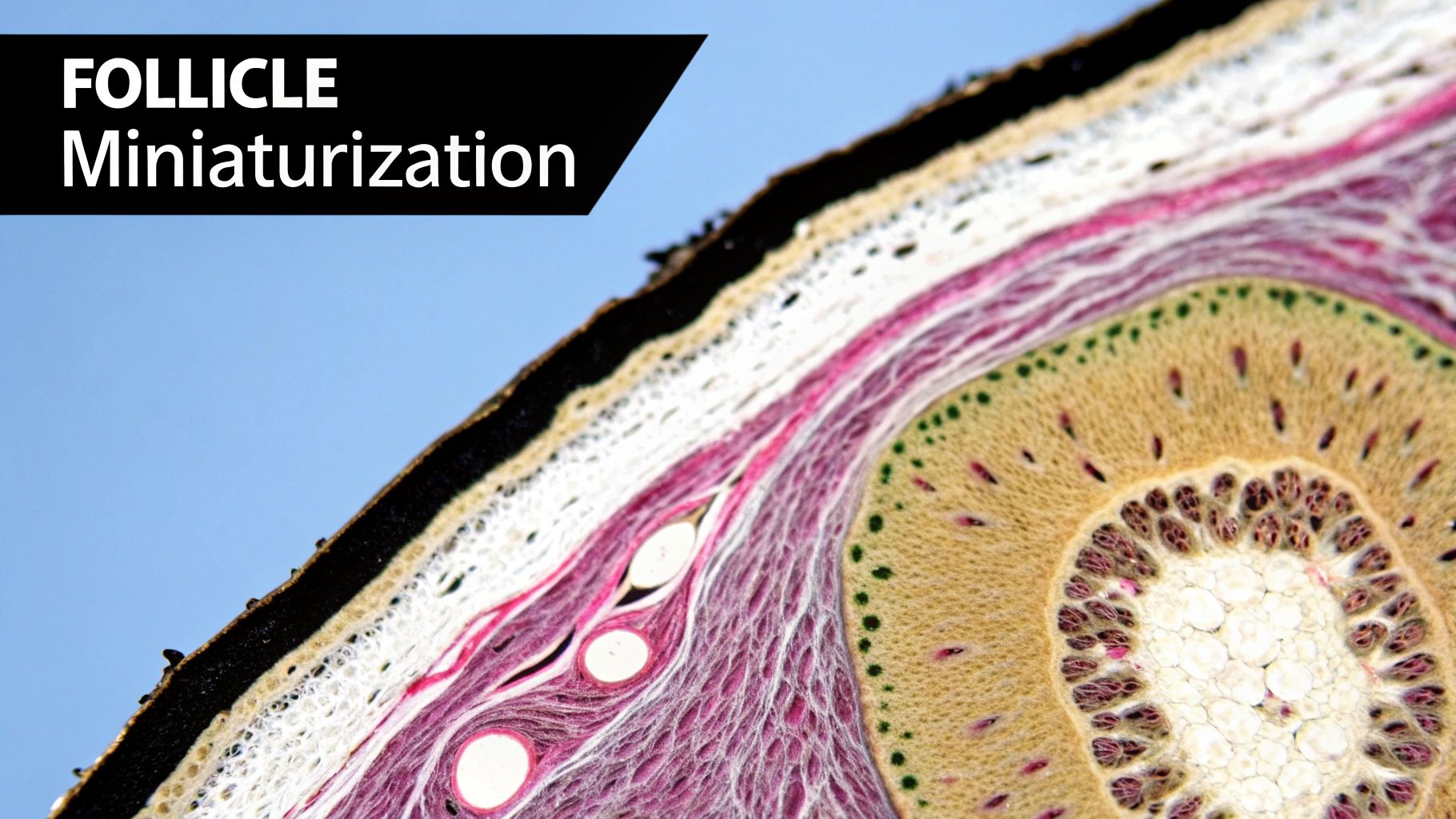
During miniaturization, this entire structure begins to weaken and contract, compromising its ability to produce robust hair.
Why Does This Happen?
The fate of these follicular factories is largely sealed by genetics and hormones. In individuals with a predisposition to pattern baldness, certain follicles are genetically programmed to be overly sensitive to a hormone called dihydrotestosterone (DHT). It's this sensitivity that acts as the trigger for the downsizing process. Over time, this hormonal influence leads to the familiar patterns of thinning hair on the hairline or crown.
This phenomenon is a primary driver of pattern hair loss in both men and women, and its likelihood increases with age. Researchers have even identified specific "tracks" of hair follicle miniaturization, which explains why thinning often follows a predictable path across the scalp. As we get older, the number of these miniaturized follicles tends to grow, contributing to a less dense look. You can find more information on the progression and prevalence of this condition by exploring recent studies on the topic.
How DHT Hijacks Your Hair Follicles
To get to the bottom of hair follicle miniaturization, we first need to identify the main culprit: a powerful hormone called dihydrotestosterone (DHT). Imagine DHT as an aggressive new manager taking over the "hair factory" on your scalp. While testosterone is the well-known parent hormone, it’s the conversion of testosterone into DHT that triggers miniaturization in people with a genetic sensitivity. This change happens thanks to an enzyme known as 5-alpha reductase.
For most hair follicles on your body, this hormonal process is perfectly normal. However, on specific areas of the scalp—like the hairline, temples, and crown—the follicles are genetically programmed to be vulnerable. They are packed with androgen receptors, which act like perfect docking stations for DHT. When DHT locks onto these receptors, it sends a destructive signal, essentially telling the follicle to shrink and wind down production.

This hormonal takeover does more than just make the follicle smaller; it disrupts the entire hair growth cycle. The productive anagen (growth) phase gets cut short, while the dormant telogen (resting) phase becomes longer. The outcome? Hairs have less time to grow long and strong before they fall out, and the follicle takes longer to start growing a new one. With every cycle, the new hair emerges finer, shorter, and lighter in color.
The Genetic Lottery of DHT Sensitivity
Ever wonder why pattern baldness hits the front and top of the head but usually leaves the back and sides untouched? The answer is all about the genetic placement of these sensitive follicles. The hair on the back and sides of your head has very few DHT receptors, making it naturally resistant to DHT's shrinking effect. This is precisely why this area is the go-to donor site for hair transplants—these follicles are genetically built to last.
This difference in regional sensitivity creates the classic patterns we see in male hair loss. You can think of your scalp as having a pre-drawn map of vulnerable zones, determined entirely by your DNA. The table below breaks down how different parts of the scalp typically react to DHT.
DHT Sensitivity Across Different Scalp Regions
Comparison of DHT receptor density and hair loss progression patterns across various areas of the scalp
| Scalp Region | DHT Receptor Density | Miniaturization Risk | Typical Timeline |
|---|---|---|---|
| Hairline & Temples | Very High | Highest | Often the first area to show signs of thinning. |
| Crown (Vertex) | High | High | A common spot where progressive hair loss becomes noticeable. |
| Mid-Scalp | Moderate | Moderate | Usually begins to thin after the hairline or crown. |
| Back & Sides | Very Low | Lowest | Typically stays dense and is rarely affected by miniaturization. |
This table clearly shows why the back and sides of the head are considered the "safe zone" in androgenetic alopecia. The high concentration of DHT receptors in the frontal and crown regions makes them the primary targets for hair loss.
This transformation is a slow burn. A thick, healthy terminal hair doesn't turn into a wispy vellus hair in a single cycle. Instead, this change unfolds over many growth cycles, often taking years to become obvious. This gradual process is what makes hair follicle miniaturization so sneaky. You may not notice the subtle changes from one month to the next, but over time, the collective result becomes a visible reality. Understanding this mechanism is the first step toward finding effective treatments that can interrupt the process, either by blocking DHT or by stimulating the weakened follicles to fight back.
The Progressive Stages Of Hair Follicle Miniaturization
Hair follicle miniaturization doesn't happen overnight. It’s a slow, progressive decline that unfolds in predictable stages, much like watching a healthy tree gradually weaken over several seasons. Think of it as a continuum, starting with barely noticeable changes and ending with follicles that can no longer produce visible hair. Understanding this timeline is crucial because intervention is most effective when started early.
The infographic below offers a clear visual timeline of how a follicle transforms through the key stages of miniaturization.
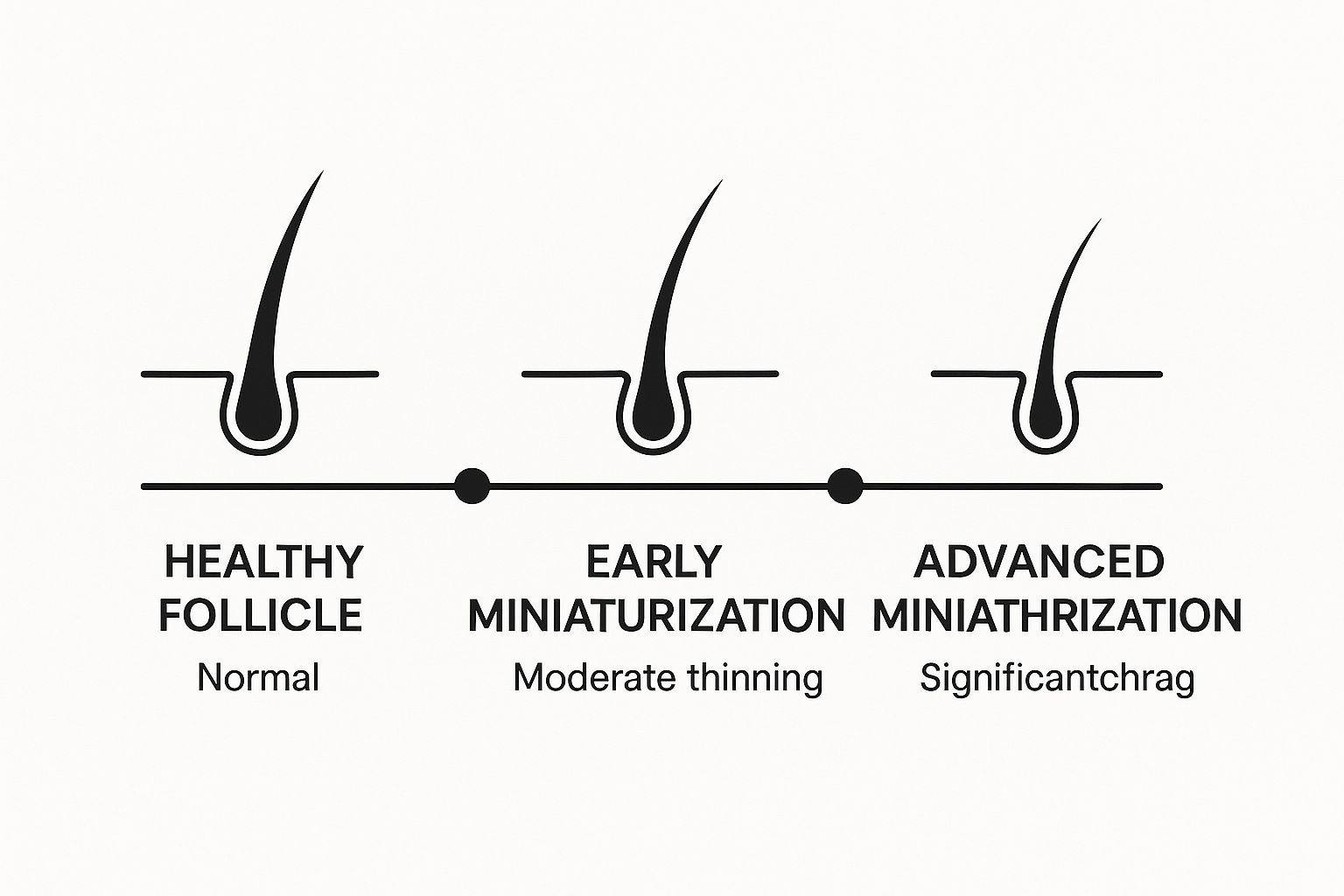
As the visualization shows, the process is defined by a steady shrinkage of the follicle, which directly impacts the hair it produces. This gradual decline can be broken down into distinct phases, each with its own set of characteristics. To better understand this progression, the table below outlines the key attributes of each stage.
Hair Miniaturization Stages and Characteristics
Detailed breakdown of each miniaturization stage with measurable characteristics and visual indicators
| Stage | Hair Diameter | Growth Phase Duration | Visibility | Treatment Response |
|---|---|---|---|---|
| Stage 1: Subtle Onset | Minimal decrease (<20%) | Slightly shorter anagen (growth) phase | No visible thinning; may feel slightly less dense | Excellent; highly responsive to early intervention |
| Stage 2: Early/Moderate | Noticeable thinning (20-50% reduction) | Significantly shorter anagen phase | Visible thinning, wider part, more scalp showing | Good; can often slow, stop, or partially reverse |
| Stage 3: Advanced | Drastic reduction (>50%); vellus-like | Very short anagen phase; follicle may become dormant | Obvious thinning or baldness; "peach fuzz" hair | Challenging; focus is on preserving remaining follicles |
This table shows a clear pattern: as the follicle shrinks, the hair it produces becomes weaker and the potential for successful treatment diminishes. Now, let's explore what each stage looks and feels like in more detail.
Stage 1: The Subtle Onset
The first stage of hair follicle miniaturization is the hardest to detect. Here, healthy terminal follicles begin their slow descent. The changes are minimal, and most people don’t notice them.
- Hair Characteristics: The diameter of some hair strands may decrease slightly. The hair’s growth (anagen) phase shortens a little, meaning it might not grow as long as it once did before shedding.
- Visual Cues: There are virtually no visible signs of thinning or hair loss at this point. Your hair part looks normal, and scalp visibility is unchanged. It’s a silent, internal process.
This initial phase is where the battle against miniaturization truly begins, even though the signs are hidden from the naked eye. The key change is the introduction of slight inconsistencies in hair thickness across the scalp.
Stage 2: Early to Moderate Miniaturization
This is the stage where you might start to feel a difference. The process is no longer silent; it’s beginning to produce noticeable effects that a keen observer can identify. This is often the point when people first suspect something is wrong.
- Hair Characteristics: Hairs produced by affected follicles are now visibly thinner and often shorter than their healthy neighbors. They may also appear less pigmented. The growth cycle is significantly disrupted, with a much shorter anagen phase.
- Visual Cues: You may notice your hair feels less dense or full. Your part might look slightly wider, or you might see more scalp under direct light. Hairstyles that once worked well may now fall flat or seem less cooperative.
From a clinical standpoint, hair follicle miniaturization is closely tied to changes in hair density and diameter. As follicles shrink, the diversity in hair strand thickness increases. This means you have a mix of thick, healthy hairs alongside a growing number of thin, weaker ones. You can discover more about this relationship from dermatological research published in JAMA.
Stage 3: Advanced Miniaturization and Dormancy
In the final stage, the affected follicles have shrunk dramatically. They have essentially regressed from being robust terminal hair factories into producing fine, almost invisible vellus-like hairs. At this point, cosmetic changes are obvious.
- Hair Characteristics: The hairs are extremely fine, short, and often colorless, resembling "peach fuzz." Many follicles may enter a prolonged state of dormancy or stop producing hair altogether.
- Visual Cues: Significant thinning is apparent, often revealing large areas of the scalp. The classic patterns of androgenetic alopecia, like a receding hairline or a bald spot on the crown, are fully established.
Once follicles reach this advanced stage, reviving them becomes much more difficult. This is why recognizing the signs in Stage 2 is so important. Intervening before follicles become dormant dramatically increases the chances of slowing or even reversing the miniaturization process.
Early Warning Signs Most People Miss
Most people only sound the alarm on hair loss when it becomes undeniable—a hairline that’s clearly beating a retreat or a thinning crown that shines under the light. But hair follicle miniaturization doesn't happen overnight. It sends subtle signals long before the changes are obvious to others. Learning to spot these early clues is like being a detective on a case; catching them early gives you a major head start on taking action.

The first hints are rarely about how much hair you find in the shower drain. Instead, they’re about the quality and behavior of the hair still on your head. Think of it as a healthy, dense forest slowly being replaced by a mix of strong, mature trees and tiny, struggling saplings. You have to look past the shed hairs and tune into these more nuanced changes.
Changes in Hair Texture and Feel
One of the most telling early signs of hair follicle miniaturization is a noticeable difference in how your hair feels. This isn't something you can easily see in a photo, but it's something you'll feel when you run your fingers through your hair.
- Softer, Finer Strands: As follicles begin to shrink, the hairs they produce become thinner and less substantial. You might notice that the hair at your temples or on your crown feels unusually soft or "wispy" compared to the thicker, coarser hair at the back and sides of your head.
- Reduced Density: Does your ponytail feel less bulky? Does your hair seem to lack its usual volume, even if you aren't seeing massive amounts of shedding? This sensation of less substance is a direct result of individual hair shafts shrinking in diameter.
These textural shifts mean that hairstyles that once held all day might now go limp or lose shape quickly. Your hair might feel less manageable, not because of your styling products, but because its very foundation is changing.
Alterations in Shedding and Scalp Visibility
While losing 50 to 100 hairs per day is perfectly normal, miniaturization disrupts the natural replacement cycle. The new hairs that grow back are weaker and finer, which leads to a gradual loss of overall hair mass. This creates a couple of key visual cues to watch for.
- A Wider Part Line: This is a classic early sign, particularly for women. When you part your hair, take a close look. Does the line of scalp showing through seem wider than it used to? This is often one of the first areas where diminished hair volume becomes apparent.
- Increased Scalp Visibility Under Light: Pay attention to how your hair looks under bright overhead lighting or in direct sunlight. If you can see more of your scalp than before, it’s a strong indicator that your hair coverage is becoming less dense. This allows more light to reach the scalp, making the thinning more obvious and pointing directly to progressing hair follicle miniaturization.
By paying attention to these subtle shifts, you can catch the issue in its beginning stages, when treatments have the best chance of stopping and even reversing the process. When you become a better observer of your own hair, you can move from a position of reaction to one of proactive, informed action.
Who Gets Hair Follicle Miniaturization And When
Figuring out who is most susceptible to hair follicle miniaturization and when it usually starts is a bit like reading the risk factors on a medical chart—it provides critical context for your own hair health journey. While it's often seen as a men's issue, this gradual shrinking of hair follicles affects a wide range of people, though the patterns and timelines can look very different. Your personal risk is largely shaped by a trio of factors: genetics, age, and even ethnicity.
The Role of Genetics and Gender
The single biggest factor in whether you'll experience hair follicle miniaturization is your genetic makeup. If male or female pattern baldness is a common feature on your family tree, your odds are higher. This is because your genes determine how sensitive your hair follicles are to DHT. This sensitivity isn't just a male trait; women are also significantly affected. While men often see distinct patterns like a receding hairline or a bald spot on the crown, women typically experience a more diffuse thinning, often first noticed as a widening part line.
Numerically, while men are affected more frequently, women also face significant hair loss from miniaturization. Studies show that 6% of women under 50 and a striking 30-40% of women over 70 deal with this condition, which is defined by hair becoming thinner and weaker as the follicles shrink. You can explore more about these demographic findings to see how common this is across different age groups.
When Does It Typically Start?
The onset of hair follicle miniaturization isn't pinned to a specific age. Instead, it occurs within a wide window that is heavily influenced by your genetic blueprint.
- Early Onset (Teens and 20s): For those with a strong genetic tendency, the process can start not long after puberty. It's not unusual for men in their early 20s to spot the first signs of thinning at their temples or crown.
- Common Onset (30s and 40s): The majority of people will begin to see noticeable changes in their 30s or 40s. The process is often so gradual that it can be overlooked for years before it becomes an obvious concern.
- Late Onset (50s and Beyond): Some individuals may not see significant miniaturization until they are well into their 50s or 60s. At this stage, the thinning is often slower and less aggressive.
It's also important to remember that lifestyle choices can shift this timeline. Factors like chronic stress, a poor diet, and certain environmental exposures can potentially speed up the process, making miniaturization appear earlier than your genetics alone would suggest. By understanding these risk factors, you can make better-informed decisions about when to start monitoring your hair health and consider taking preventative steps.
Treatment Options That Actually Work Against Miniaturization
The world of treatments for hair follicle miniaturization has come a long way, offering real hope and effective solutions. Think of tackling this issue like a complex repair job—you need a specific set of tools, and often, using several in combination yields the best results. The main objective is to stop the shrinking process, re-energize weakened follicles, and foster a healthier scalp environment for robust hair growth.
Let's explore the proven treatments that can make a genuine impact.
Foundational FDA-Approved Medications
For many years, two medications have served as the bedrock of hair loss treatment. They work by targeting the miniaturization process from different angles.
-
Finasteride (DHT Blocker): Picture finasteride as a personal bodyguard for your hair follicles. Its primary role is to block an enzyme called 5-alpha reductase. This enzyme is the culprit that converts testosterone into DHT, the hormone notorious for shrinking follicles. By slashing DHT levels in the scalp by as much as 60-70%, finasteride shields susceptible follicles from this hormonal assault. This action can slow, halt, and in some cases, even reverse miniaturization, often resulting in visibly thicker hair within 6 to 12 months of consistent use.
-
Minoxidil (Topical Stimulant): If finasteride is the bodyguard, then minoxidil is the dedicated nutrient delivery service. Its hair-growing properties were actually discovered by chance when it was being used as a blood pressure medication. When applied to the scalp, minoxidil is thought to work by widening the blood vessels around the follicles, which boosts blood flow and the delivery of essential nutrients. It also helps extend the anagen (growth) phase of the hair cycle, giving weakened follicles the resources and time needed to produce stronger, healthier hair strands.
Modern and Regenerative Therapies
Moving beyond daily medications, newer therapies have emerged that focus on healing and regenerating the follicle at a cellular level. As awareness of hair follicle miniaturization grows, so does the innovation in treatment. While older methods centered on promoting growth, these advanced therapies aim to fix the shrinking process itself. You can discover more about the evolution of hair loss treatments and how scientific understanding has progressed.
Low-Level Laser Therapy (LLLT)
Often delivered through convenient caps or combs, low-level laser therapy uses specific wavelengths of red light to energize the cells inside your follicles. This light is absorbed by the cells, helping to kickstart their metabolism and improve circulation. The outcome is a better-fed follicle that’s more resilient against miniaturization and more capable of producing healthy hair.
Platelet-Rich Plasma (PRP) Therapy
PRP therapy is a fascinating approach that uses your body's own healing powers. It starts with drawing a small sample of your blood, which is then spun in a centrifuge to concentrate the platelets. These platelets are packed with powerful growth factors. This "liquid gold" is then carefully injected into the areas of your scalp where miniaturization is happening. These growth factors act like a potent wake-up call for sleepy or shrinking follicles, signaling them to repair and regenerate, which can lead to a noticeable increase in hair thickness and density.
A well-rounded plan for managing hair follicle miniaturization often involves looking at your body’s internal environment. Maintaining hormonal balance is a key piece of the puzzle, and you can explore natural options like the top hormone balance supplements to support your overall wellness. By combining proven medications with these modern therapies, you can build a strong defense against follicle shrinkage and work toward a healthier future for your hair.
Your Action Plan For Healthier Hair Moving Forward
Knowing what's happening to your hair is one thing, but turning that knowledge into action is what truly matters. Now that you understand the science behind hair follicle miniaturization, it’s time to create a personal roadmap to get your hair health back on track. Think of this plan as a GPS, guiding you with clear steps based on where you are now and where you want to go. The most important first step is to approach this with confidence, not panic.
By planning carefully and acting consistently, you can often slow, stop, and in many cases, noticeably reverse the effects of miniaturization.
Assess Your Current Stage
The first step in any journey is to figure out your starting point. You need to take an honest look at the current state of your hair. This doesn't require complex tools, just a bit of careful observation.
- Take objective photos: Use the same lighting and angles to take pictures of your hairline, crown, and part line each month. This creates a visual diary that helps you track any changes over time.
- Evaluate hair quality: Pay close attention to the texture of your hair. Does the hair at your temples or on your crown feel thinner or softer than the hair at the back of your head? This change in texture is a classic sign of active miniaturization.
- Monitor scalp visibility: Check how much of your scalp you can see under a bright light. Seeing more scalp is often an early indicator of thinning, even before it becomes obvious to others.
Create A Realistic Treatment Strategy
With a clear baseline established, the next move is to choose your tools. A successful plan often combines different methods that align with your lifestyle, budget, and how much time you can commit. Remember, the best strategy is one you can stick with consistently.
- Consult a Professional: A dermatologist or a specialist in hair loss can give you a definite diagnosis. They often use a device called a trichoscope to directly measure follicle miniaturization. This professional insight is incredibly valuable.
- Consider Proven Treatments: Talk to your doctor about established options like finasteride, minoxidil, and regenerative treatments such as Platelet-Rich Plasma (PRP). Each of these addresses the issue from a unique angle.
- Set Realistic Timelines: Real improvements don’t happen overnight. Most treatments require at least 4-6 months to show the first signs of progress, with the best results often taking a year or more. Patience and consistency are your most powerful allies in this process.
Track Your Progress And Adjust
Your action plan isn't set in stone; it's a dynamic guide that should evolve with you. Regularly checking your progress helps you see what's working and when it might be time for a change. Your main goal is to increase the number of healthy, growing follicles. This is crucial because clinical studies confirm a direct link between higher hair density and a greater number of anagen (growing) follicles. In contrast, a higher count of miniaturized follicles is tied to lower overall density. To better understand how follicle health influences visible hair thickness, you can review the findings from this dermatological research.
Ultimately, restoring your hair health is a marathon, not a sprint. By understanding the process, building a smart plan, and staying committed, you can effectively combat hair follicle miniaturization.
Ready to explore one of the most promising regenerative treatments available? Check out our in-depth guides on Platelet-Rich Plasma therapy to see how it could become a key part of your action plan. Visit us at PRP For Hairloss to get started.


Leave a Reply