If you’re on the hunt for the best shower filter for hair loss, you’ve probably waded through a swamp of technical terms like KDF and carbon media. Before we dive into the hardware, let’s get real about why the water coming out of your shower might be a secret enemy in the fight to keep your hair. This isn't just about buying a new gadget; it’s about changing the very environment your hair has to survive in, day in and day out.
The Hidden Stressor in Your Shower Water
Most of us know that gut-punch feeling—seeing way more hair than you’d like circling the drain or stuck in your comb. We're quick to blame genetics or stress, but a huge contributor to thinning hair is literally flowing right over your head every single morning: your shower water.
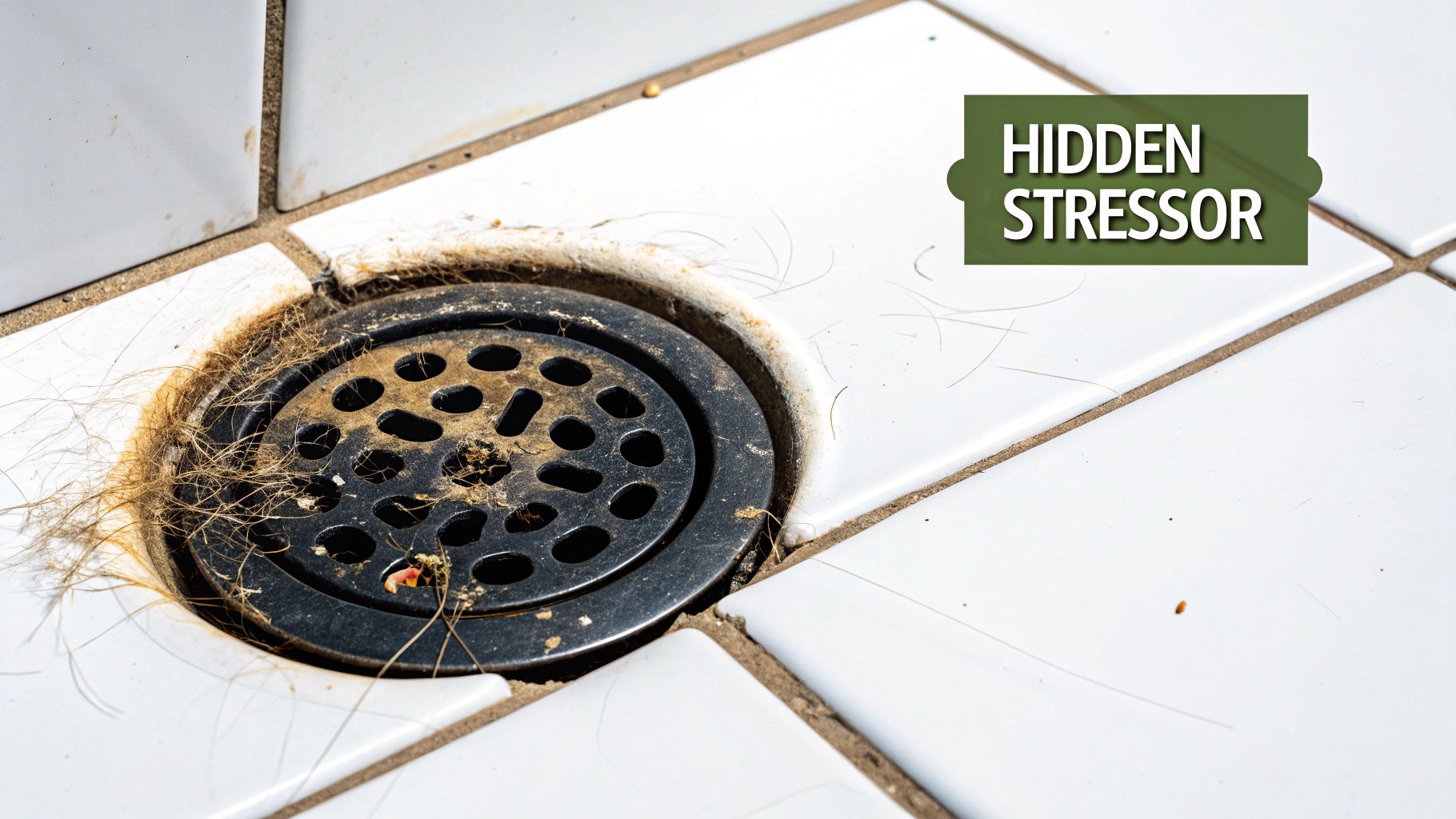
The water spraying from your showerhead is almost never just pure H2O. Depending on where you live, it’s often a cocktail of minerals and sanitizing chemicals that can be incredibly harsh on your scalp and hair follicles. It's like trying to grow a killer garden with contaminated, nutrient-poor soil—you’re fighting an uphill battle right from the get-go.
How Your Water Undermines Hair Health
Two of the biggest culprits are hard water minerals (calcium and magnesium) and chlorine, the disinfectant used to treat pretty much all municipal water. This duo creates a hostile environment, especially for hair that's already vulnerable to thinning.
-
Mineral Buildup: You know that chalky, white film that appears on your shower door? That's limescale, and believe me, it’s doing the same thing to your hair and scalp. This mineral crust builds up, clogging follicles and literally suffocating new growth. It also wraps around each hair strand, leaving it stiff, brittle, and way more likely to snap.
-
Chemical Stripping: Chlorine is great at killing bacteria in the water supply. The problem is, it can't tell the difference between bad microbes and the natural oils (sebum) that protect your hair and scalp. It strips this crucial barrier away, leaving you with a dry, itchy scalp and hair that feels like straw. You can get the full story on how chlorine exposure contributes to hair damage in our detailed guide.
This isn't just some theory. The damage is real and you can feel it. Your hair gets weaker, your scalp gets irritated, and any hair thinning you're already dealing with can start to look a lot worse.
The Impact of Common Water Contaminants
Let's break down the main offenders in your tap water and how they specifically mess with your hair, making thinning more obvious.
Table: Water Contaminants and Their Impact on Your Hair
| Contaminant | How It Damages Hair | Visible Signs |
|---|---|---|
| Chlorine | Strips natural oils, making hair dry and brittle. It can also oxidize hair color. | Dullness, frizz, straw-like texture, itchy scalp. |
| Hard Water Minerals (Calcium & Magnesium) | Creates mineral buildup (scale) that clogs follicles and coats the hair shaft. | Limp or weighed-down hair, difficulty lathering shampoo. |
| Heavy Metals (Lead, Copper) | Can interfere with hair protein structure and contribute to oxidative stress. | Discoloration (especially in lighter hair), increased breakage. |
| Sediment | Physical particles that can irritate the scalp and contribute to buildup. | Gritty feeling, scalp irritation, dull appearance. |
By taking care of these contaminants, you’re not just washing your hair—you're creating a healthier foundation for it to actually grow.
Real-World Impact on Hair Shedding
Let's be clear: a shower filter isn't a miracle cure for male pattern baldness. But it is a vital defensive strategy. By taking these daily aggressors out of the equation, you give your hair a fighting chance and help any other treatments you're using work way more effectively.
The evidence is pretty compelling. One 12-week study showed just how powerful a simple switch to a filtered shower head can be. An incredible 81% of participants reported a noticeable reduction in hair fall, with the average drop in shedding hitting 46%. For any guy watching his hairline, that's a massive improvement.
How Shower Filter Technology Actually Works
Stepping into the world of shower filters can feel a bit like learning a new language. You’ll see terms thrown around like KDF, activated carbon, and calcium sulfite, but what do they really do? Let's cut through the jargon and get straight to what’s happening inside these devices.
Think of a shower filter as a bouncer at a club, standing between the city water pipe and your hair. As water flows through, it has to pass several checkpoints—layers of different filter media. Each layer has one specific job: to grab, neutralize, or block the contaminants known to be harsh on your hair and scalp.
The Workhorses of Water Filtration
The best filters don't just use one trick. They rely on a multi-stage process where different materials work as a team. This layered approach is what makes them truly effective.
The two most common and important players you’ll find are KDF (Kinetic Degradation Fluxion) and Activated Carbon.
-
KDF Media: The Heavy Metal Magnet. KDF is a clever mix of high-purity copper and zinc granules. Through an electrochemical reaction, it acts almost like a magnet for certain contaminants. As water passes over it, KDF creates a tiny electrical charge that turns things like chlorine and heavy metals (lead, mercury) into harmless, soluble forms that just wash away.
-
Activated Carbon: The Contaminant Sponge. When we talk about carbon filtration technology, we're talking about a material with an incredibly porous surface. Imagine a sponge with millions of microscopic nooks and crannies. This huge surface area is perfect for adsorbing—or binding to—chlorine and other chemical compounds, effectively pulling them right out of the water.
These two materials make a powerful team. KDF works especially well in hot water (where carbon’s effectiveness can sometimes drop off) and it also has the added benefit of stopping bacteria and algae from growing inside the filter itself.
The Role of Certification and Performance
Not all filters are created equal, and that's where independent certifications come in. Seeing an NSF-42 certification on a filter is a huge green flag. It means the device has been rigorously tested and proven to consistently reduce chlorine, even after thousands of gallons have passed through it. The result is better moisture retention for your hair and a healthier scalp.
This is especially important for men dealing with male pattern baldness, where hair follicles are already under a lot of stress. Chlorine is known to cause protein oxidation, which can weaken already vulnerable hair and speed up breakage. Folks who use certified filters often report a real difference in how their hair feels—softer, less frizzy, and with a calmer, less irritated scalp.
"A quality shower filter fundamentally changes the environment your hair has to endure. It's not about adding something beneficial; it's about removing the daily damage from chlorine and mineral buildup that you've become accustomed to."
Other Key Filtration Players
While KDF and activated carbon are the stars of the show, other materials often play important supporting roles.
| Filtration Media | Primary Function | Why It Matters for Hair |
|---|---|---|
| Calcium Sulfite | Highly efficient at removing chlorine in both hot and cold water. | Provides reliable chlorine protection across all shower temperatures, preventing dryness and brittleness. |
| Vitamin C | Neutralizes chlorine and chloramine on contact. | Instantly de-chlorinates water, which is great for sensitive scalps and preserving color-treated hair. |
| Mineral Spheres | Can add beneficial minerals back into the water and help balance pH. | Aims to make water "softer" and less harsh, which may reduce scalp irritation and improve hair texture. |
| Sediment Filters | Capture physical particles like rust, sand, and dirt. | Prevents abrasive particles from irritating the scalp, which is vital for maintaining a healthy growth environment. |
Once you understand these parts, you can see past the marketing hype. A filter built with multiple stages—including KDF, activated carbon, and maybe calcium sulfite—is designed to tackle the most common culprits behind bad hair days. The goal is to stop problems like dryness, buildup, and chemical irritation right at the source. This is a critical step, since so many hair health frustrations can be tied to underlying scalp conditions that cause hair loss, which are often made worse by poor water quality. By choosing a filter with the right technology, you’re creating a much better foundation for healthy hair.
Choosing the Right Shower Filter for Your Needs
Alright, let's get down to brass tacks. We've covered the science; now it's time to pick the right tool for the job. Choosing the best shower filter for your hair loss concerns isn't about guesswork—it's about matching the right technology to your specific water situation.
First things first, you need to play detective. What’s actually in your water? You can get a pretty good idea without any fancy lab equipment. Does your bathroom smell like a public pool after you run a hot shower? That’s the classic calling card of high chlorine levels.
Next, look for the physical clues. See that chalky, white gunk building up on your shower head and glass doors? That's limescale, a sure sign of hard water. Simply by observing, you can start to figure out if your main enemy is a chemical like chlorine or a mineral overload from hard water.
Decoding Certifications: What Matters Most
When you start browsing filters, you'll see acronyms like "NSF Certified" thrown around. Don't dismiss this as marketing jargon. These certifications are your proof that a filter actually does what it promises. Think of it as an independent inspection that verifies the product's claims.
There are two big ones you should really pay attention to:
- NSF/ANSI 42: This certification targets "Aesthetic Effects." In plain English, it means the filter is proven to reduce that chlorine taste and smell. For your hair, this is huge—it confirms the filter removes the very chemical that strips away natural oils and makes hair brittle.
- NSF/ANSI 177: This one is designed specifically for shower filters. It certifies the unit's ability to reduce free available chlorine, which means the water hitting your scalp is going to be significantly less harsh.
Seeing one or both of these on the box gives you real peace of mind. It means the filter has passed tough, third-party tests to back up its chlorine-reduction claims, which is exactly what you want when you're trying to protect thinning hair.
Filter Lifespan and Cost Over Time
A cheap filter might look tempting on the shelf, but if you're swapping out the cartridge every month, those costs sneak up on you. A filter’s lifespan is one of the most practical things to look at.
Most cartridges are rated for a certain number of gallons, which usually translates into a few months of use. The industry standard to aim for is around 10,000 gallons, which gets the average household about six months of service.
Opting for a filter with a longer-lasting cartridge doesn't just save you money in the long run; it's also less hassle. It’s a small detail that makes a big difference for anyone wanting an effective, low-maintenance part of their hair care routine.
This flowchart can help you visualize which filter type is the best match for your primary water problem.
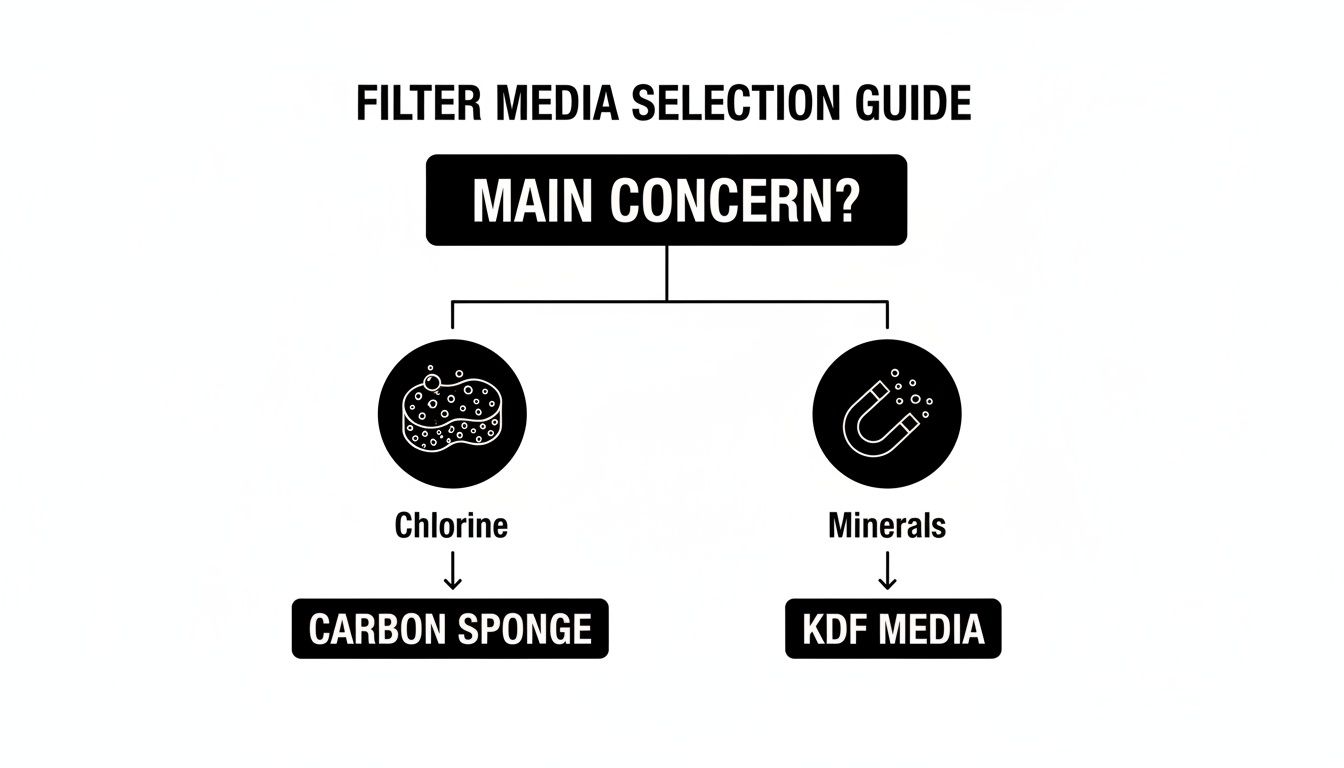
As you can see, if chlorine is your main problem, a carbon-based filter is a solid choice. But if you’re dealing with hard water minerals and potential heavy metals, you'll want something with KDF media.
Don't Sacrifice Water Pressure
One of the biggest worries people have is that a filter will turn their powerful shower into a pathetic drizzle. It’s a legitimate concern—nobody wants to trade healthier hair for a lousy shower experience. Luckily, good manufacturers have already figured this out.
The standard flow rate for showerheads in the U.S. is 2.5 gallons per minute (GPM). Look for filters specifically designed to work at or near this rate without a noticeable drop. Honestly, one of the best ways to vet this is to read recent user reviews. They’ll tell you the real story about a filter’s performance.
A well-designed shower filter should be unnoticeable in terms of flow. Its presence should be felt in the quality of your hair and skin, not in the strength of the water stream hitting your back.
Shower Filter Feature Checklist
To simplify your decision, I’ve put together this quick-glance table. It breaks down the most common filter types by the features that matter most, helping you line up your needs and budget with the right product.
| Feature | Basic Carbon Filter | KDF + Carbon Filter | Vitamin C Filter | What to Look For |
|---|---|---|---|---|
| Chlorine Removal | Good, especially in cold water. | Excellent in hot and cold water. | Excellent for chlorine & chloramine. | NSF/ANSI 42 or 177 certification for proven removal. |
| Hard Water Minerals | No effect. | Reduces scale buildup. | No effect. | A filter containing KDF media is best for this issue. |
| Heavy Metals | Limited removal. | Very effective. | No effect. | Look for KDF-55 media, which targets lead and mercury. |
| Lifespan | 3-4 months. | 6+ months. | 2-3 months. | A filter that lasts at least six months or 10,000 gallons. |
| Cost | Low initial cost. | Higher initial cost. | Moderate initial cost. | Balance the upfront price with the cost of replacement cartridges. |
Ultimately, making a smart choice means looking past the price tag. For any guy serious about protecting his hair, a multi-stage filter combining KDF and carbon is almost always the best investment because it tackles the widest array of damaging contaminants.
Of course, a filter sets the stage, but what you do on it matters, too. Pairing filtered water with a quality shampoo, like one of the best shampoos for thinning hair, can really maximize your efforts.
At the end of the day, picking the right shower filter comes down to knowing your water and zeroing in on the features that fix your specific issues. For a deeper dive, it never hurts to check out expert advice on water filter selection from a trusted source. With the right information, you can choose a filter that becomes a true cornerstone of your hair health strategy.
Simple Installation and Upkeep for Lasting Results
Worried you’ll need to call a plumber just to get cleaner shower water? Don't be. Most modern shower filters are designed for a quick, do-it-yourself setup. The whole process is usually a straightforward, five-minute job that requires no special tools—just your own two hands.
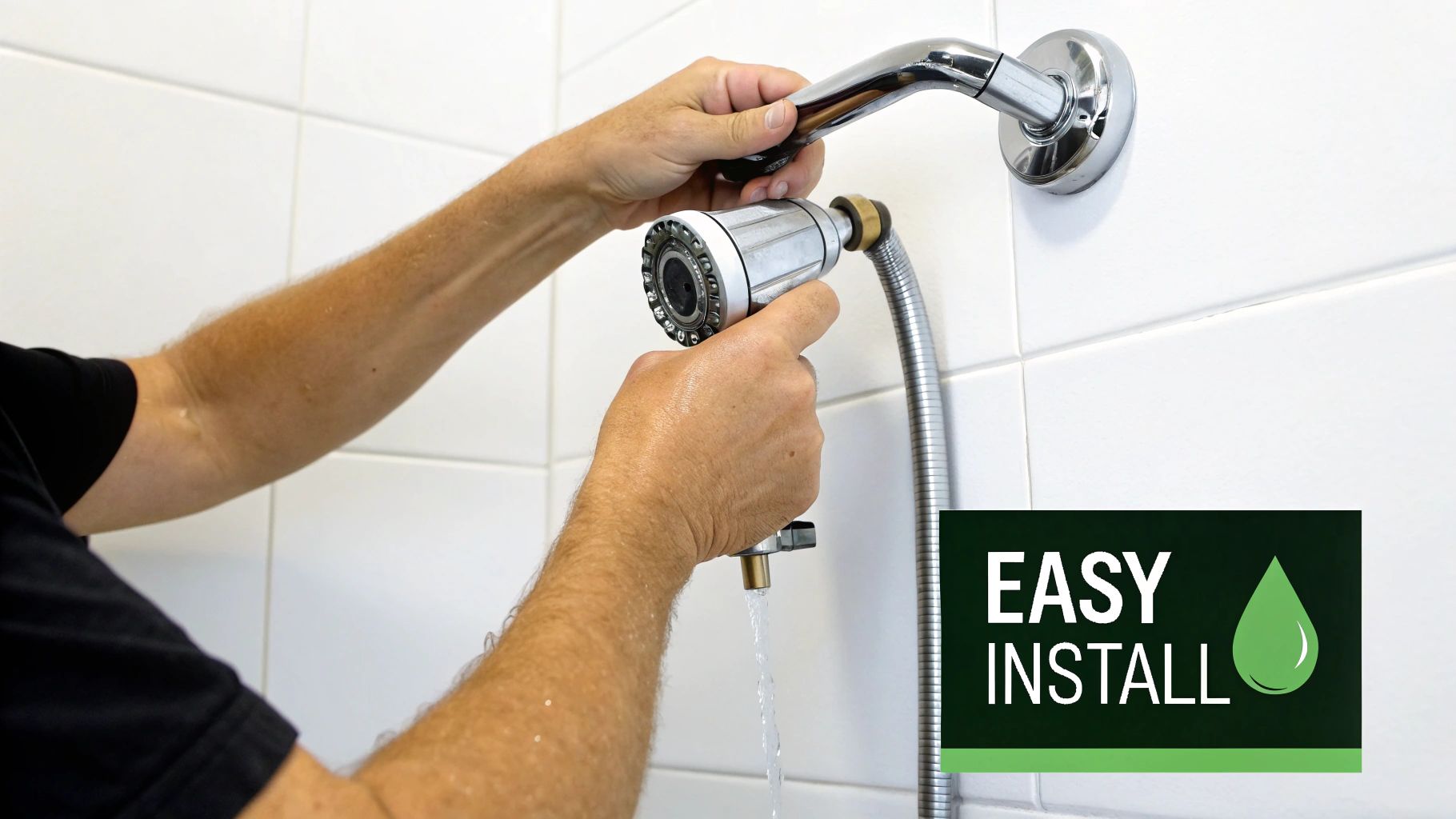
This simplicity is completely intentional. Manufacturers know a complicated installation is a major turn-off, so they’ve made it as simple as screwing in a lightbulb. You can be on your way to a better shower in less time than it takes to brew a pot of coffee.
Your Five-Minute Filter Installation Guide
Getting your new filter up and running is incredibly easy. Just follow these simple steps, and you'll be all set.
- Unscrew Your Showerhead: Twist your existing showerhead counter-clockwise to remove it from the shower arm (the pipe coming out of the wall).
- Attach the New Filter: Take your new shower filter and screw it clockwise onto the shower arm until it’s snug. Hand-tightening is usually all you need.
- Reattach Your Showerhead: Now, screw your original showerhead onto the other end of the filter.
- Check for Leaks: Turn on the water briefly to make sure there are no drips. If you spot a small leak, wrap a little plumber's tape (often included in the box) around the threads for a tighter seal.
That’s really it. No wrenches, no drills, and no frustrated sighs required.
Why Regular Maintenance is So Important
Now that your filter is installed, let's talk about the single most important part of owning one: upkeep. Think of the filter cartridge like the oil filter in your car. It works hard trapping all the gunk and contaminants, but eventually, it gets full and just can't do its job effectively anymore.
An old, expired filter isn't just useless; it can actually be worse than having no filter at all. Once the filtration media is saturated, it can stop working or, in some cases, release a concentrated burst of the very contaminants it was meant to capture. This process is called "dumping," and it can expose your hair and scalp to an even higher dose of chemicals than you'd get from regular tap water.
Neglecting to change your filter cartridge is like letting a dam overflow. All the trapped chlorine and mineral sediment can get released at once, completely undoing all the benefits you invested in.
To maintain the best shower filter for hair loss, consistent cartridge replacement is non-negotiable. Most quality filters last around six months or for 10,000 gallons of water. The easiest way to stay on track is to set a recurring reminder on your phone the day you install a new one.
This simple habit ensures your filter keeps protecting your hair, wash after wash. When you're dealing with thinning hair, every detail in your routine matters, including knowing how often to wash thinning hair to minimize stress on the follicles. A well-maintained filter guarantees every one of those washes is a clean one.
Boosting Your Overall Hair Health Routine
Think of a shower filter as less of a magic bullet and more of a force multiplier. It's the one change that makes everything else you're doing for your hair work better. I often tell my clients to imagine their scalp as a garden. You wouldn't plant expensive seeds in soil that's full of rocks and weeds, would you? Installing a filter is like clearing that ground first.
It just creates a much healthier, less stressful environment for your hair follicles. A scalp that isn't constantly fighting off chlorine irritation or suffocating under a blanket of mineral scale is going to be far more receptive to the good stuff.
Creating a Better Foundation for Treatments
This is especially true if you're using serious treatments like minoxidil or finasteride. The condition of your scalp is everything when it comes to getting your money's worth from these products.
- Improved Absorption: When your scalp isn't caked with limescale and leftover shampoo gunk, the active ingredients in your treatments can actually get down to the follicles where they need to be.
- Reduced Inflammation: Chlorine and hard water are notorious irritants. They can cause a low-grade inflammation that you might not even notice, aside from some redness or itchiness. Removing them calms everything down, which is critical when you're trying to combat hair thinning.
What you get is a powerful synergistic effect. The filter preps the scalp, and your treatments can finally get to work on a clean, receptive canvas. This simple step can genuinely amplify their benefits.
The Visible Benefits You'll Notice
Beyond all the science, the part you'll actually care about is what you see in the mirror. These are the tangible changes that tell you you've made a smart move for your hair.
For men dealing with pattern baldness, the logic is pretty straightforward, especially when 81% of filtered shower users reported less shedding. Unfiltered water lets minerals and chemicals build up, which can kickstart dandruff and inflammation—two things that can absolutely speed up how fast follicles go dormant. Chlorine from your evening shower strips away protective oils overnight, leaving you with flaky buildup by morning. It’s a vicious cycle. But a good filter can stop it cold; some models have been tested to show 100% chlorine removal. The result? A calmer, more hydrated scalp and hair that just looks fuller. You can learn more about how filtered water improves hair health at aquasana.com.
You can realistically expect to see:
- Reduced Frizz: Without hard water minerals roughing up your hair's outer layer, the cuticle can lie flat. That means smoother, less frizzy hair.
- Less Scalp Itch: When you stop blasting your scalp with drying agents like chlorine, it can finally hold onto its natural moisture. Goodbye, persistent itch.
- Softer Texture: After just a few washes, you'll likely notice your hair feels significantly softer and is easier to manage.
A Comprehensive Approach to Hair Health
The best shower filter for hair loss is a fantastic ally, but it works best as part of a team. It's your defensive line, protecting your hair from daily damage and letting your offensive strategies—your treatments and nutrition—score the points.
A shower filter isn't the cure, but it's the critical first step. It stops the daily damage, giving your hair a fighting chance and making every other product and treatment you use work that much harder.
When you combine filtered water on the outside with a nutrient-rich diet on the inside, you get a powerful two-pronged attack. If you’re looking to support your hair from every possible angle, our guide on the best foods for hair growth is a great place to start.
By looking at a filter as the starting point, you're no longer just reacting to hair loss. You're proactively building a healthier foundation for your hair to thrive. It’s a single change that has the power to elevate your entire hair health game.
Common Questions About Shower Filters and Hair Loss
Even with all the science, it's normal to have some practical questions pop up. Let's get straight to the point and tackle the most common ones I hear from men trying to protect their hair.
Can a Shower Filter Stop Male Pattern Baldness?
Let’s be crystal clear on this one: no, a shower filter will not stop or reverse genetic hair loss. Male pattern baldness is driven primarily by DHT and your genetics, and a water filter simply can't change your DNA.
But that's not the whole story. A good filter plays a crucial supportive role. It gets rid of the external troublemakers—like chlorine and hard water minerals—that weaken your hair and irritate your scalp day after day. Think of it as taking unnecessary stress off your follicles.
It's all about protecting what you have. The filter helps you hold on to the health and strength of your existing hair, which can slow down breakage and help it look fuller. Plus, if you're using treatments like minoxidil, you're giving them a clean, calm scalp to work on, which can only help their effectiveness.
How Do I Know if I Have Hard Water?
You don't need a chemistry set for this. Your bathroom is probably already telling you everything you need to know. Hard water leaves behind some pretty obvious clues once you know what to look for.
Here are the biggest signs:
- White, Chalky Residue: Notice that stubborn, chalky film on your showerhead, faucets, or glass doors? That’s limescale, the calling card of hard water.
- Dry, Brittle Hair: If your hair just feels rough, tangled, and straw-like right after you wash it, hard water is a very likely culprit.
- Poor Lather: Does your shampoo or soap struggle to work up a good foam? Minerals in hard water get in the way of soap doing its job.
If you want a definitive answer, you can grab some inexpensive water test strips online. You can also check your local municipality's website for their annual water quality report, which will lay out the mineral content for your area.
Will a Shower Filter Hurt My Water Pressure?
This is a totally fair question—nobody wants to trade a good shower for a weak trickle. The good news is that most quality filters are designed specifically to prevent this.
Reputable brands build their filters to maintain a strong flow, typically right around the standard 2.0 to 2.5 gallons per minute (GPM). A well-made filter should be something you don't even notice.
The real mark of a great shower filter is that you forget it's there—until you feel the difference in your hair and skin. You shouldn't have to sacrifice your shower experience for cleaner water.
Where you might hit a snag is with cheap, poorly designed filters. They can clog up faster and just aren't built to handle a strong flow. The easiest way to avoid this is to stick with an established brand and read recent reviews where people specifically talk about water pressure.
Is a Whole-House Filter a Better Option?
A whole-house system is a fantastic investment for your home's water quality in general, but it might be overkill if your main concern is hair health. For a guy focused specifically on protecting his hair, a dedicated shower filter is a much more targeted and affordable solution.
Here’s why a shower-specific filter usually makes more sense for this purpose:
- Cost-Effectiveness: A top-notch shower filter costs a tiny fraction of a whole-house system. It solves the immediate problem without a major financial hit.
- Optimized for Hot Water: Shower filters are built with materials like KDF that are especially good at removing chlorine from hot, steamy water—exactly when your hair is most vulnerable.
- Targeted Solution: It stops the problem right where it happens. Chlorine does its worst damage to hair when it's vaporized in a hot shower, so filtering at the point of use is incredibly effective.
For these reasons, starting with a shower filter is the most practical and efficient first step you can take to improve your hair's environment.
At PRP For HairLoss, we believe that creating the right environment is the foundation of any successful hair health strategy. A shower filter is a simple, powerful tool that stops daily damage at the source. To learn more about advanced treatments and strategies for combating male pattern baldness, explore the resources available at https://prpforhairloss.com.
 PRP For Hairloss
Leave a comment