When you're standing in the shampoo aisle trying to find something for thinning hair, the sheer number of options can feel pretty overwhelming. But here's the secret: the best ones aren't about miracle cures. They're all about creating a healthy, supportive environment for your hair to thrive, starting with your scalp.
Think of it less like a magic potion and more like preparing fertile ground for a garden. You need the right conditions for growth.
Understanding Your Journey with Thinning Hair
Catching a glimpse of more hair in your brush or circling the shower drain can be a jarring experience, but you're definitely not alone. It's a common concern that has sparked a huge industry. In fact, the global market for hair thinning treatments was valued at a staggering USD 1.51 billion in 2024 and is projected to hit USD 2.75 billion by 2030.
All that growth means a flood of products on the market, which can lead to a lot of confusion. My goal here is to help you cut through that noise and find what actually works.
The path to fuller, healthier-looking hair often starts with one simple change: what you're using in the shower. The right shampoo is more than just a cleanser—it's the first line of defense for your scalp's entire ecosystem.
Choosing the right shampoo is a critical first step. It's about laying a solid foundation for the hair you currently have while fostering an environment where new growth can flourish. Before you even start looking at bottles, it's a good idea to get a handle on what's happening. Our guide on how to tell if your hair is thinning can give you some much-needed clarity.
Setting Realistic Expectations
Let's be real about what a shampoo can—and can't—do. A fantastic, well-formulated shampoo can make a genuine difference in the look and feel of your hair, but it's not a standalone fix. It's one piece of the puzzle.
Here’s what you should realistically aim for:
- A Healthier Scalp: A clean, well-balanced scalp is ground zero for healthy hair. The goal is to find a shampoo that gets rid of buildup without stripping away all the natural, protective oils.
- Stronger Hair Strands: The right ingredients can help reinforce your existing hair, which means less breakage. When your hair is stronger, it naturally looks fuller and has more volume.
- A Better Growth Environment: Certain ingredients can help boost circulation and deliver key nutrients straight to your follicles, creating the ideal conditions for growth.
I’m here to give you practical, science-backed advice, not over-the-top promises. By focusing on what truly matters—ingredients that work, consistent scalp care, and patience—you can take that first, confident step toward managing thinning hair.
To simplify your search, let's break down the most important factors to look for when you're on the hunt for the right shampoo.
Quick Guide to Choosing a Thinning Hair Shampoo
| Key Factor | What to Look For | Why It Matters |
|---|---|---|
| Scalp Health | DHT blockers (like saw palmetto), anti-inflammatories (like ketoconazole), and gentle, sulfate-free cleansers. | An unhealthy, inflamed, or clogged scalp can't support healthy hair follicles. A calm, clean scalp is essential. |
| Key Ingredients | Biotin, caffeine, niacin, and keratin. These are the building blocks and energizers for your hair. | These ingredients directly nourish the hair shaft, stimulate blood flow to the follicles, and improve elasticity. |
| Your Hair Type | Look for labels like "volumizing" for fine hair, "moisturizing" for dry/brittle hair, or "clarifying" for oily scalps. | The best shampoo won't just target thinning; it will also work with your hair's natural texture and needs. |
| Consistency | A formula you enjoy using that fits your budget and lifestyle. Something you can stick with for at least 3-6 months. | Results don't happen overnight. Consistent use is non-negotiable for seeing any real improvement. |
Remember, the goal is to find a product that not only addresses thinning but also complements your overall hair care routine. Think of this table as your cheat sheet for your next trip to the store or online shopping session.
How a Shampoo Can Support Thinning Hair
First things first, let's be realistic about what a shampoo for thinning hair can actually do. It's not a miracle cure, but it is an incredibly important part of the puzzle. I like to think of the scalp as a garden—if you want healthy plants to thrive, you need clean, well-fed soil. A good shampoo works on the same principle for your hair.
Its main job is to create the perfect environment for hair to grow. It goes beyond just getting rid of dirt; it sets your scalp up for success. This involves a few key actions that all work in harmony to support your hair.
The Foundation of Scalp Health
The most critical role of a good shampoo is deep cleansing. Day after day, your scalp collects a buildup of its natural oils (sebum), dead skin cells, and residue from styling products. This gunk can clog your hair follicles, basically suffocating them and making it impossible for strong, healthy hair to grow. A shampoo designed for thinning hair will gently clear all that away without stripping your scalp of its essential moisture.
A clean, balanced scalp is the absolute, non-negotiable starting point for tackling hair thinning. If a follicle is blocked, nothing else you put on it is going to get through.
This cleansing action is what paves the way for the shampoo's next big job.
Delivering Targeted Ingredients
With a clean scalp, the active ingredients in a specialized shampoo can get right to the follicles where they can do the most good. This is where the magic really happens. These formulas are packed with ingredients meant to nourish the scalp, wake up sluggish follicles, and in many cases, even fight back against the specific triggers of hair thinning.
For instance, many of these shampoos go after a hormone called dihydrotestosterone (DHT), which is a major player in androgenetic alopecia (pattern hair loss). By delivering ingredients that help block DHT, a shampoo can help shield your follicles from its shrinking effect. If you want to dive deeper into the science, our article explains what DHT is and its connection to hair loss in much more detail.
It's this targeted delivery system that really sets a treatment shampoo apart from your average, everyday cleanser.
Improving the Hair You Have
Finally, the best shampoos for thinning hair also work to make your existing hair look and feel better. They don't just focus on the scalp; they're designed to strengthen every single strand you have.
This is usually accomplished with ingredients that do a few things at once:
- Boost Volume: By using lightweight ingredients, they can lift the hair at the root, which gives you an immediate visual of thicker, fuller hair.
- Strengthen Strands: Things like proteins (think keratin) and amino acids work to fill in weak spots along the hair shaft. This cuts down on breakage and shedding when you brush or style your hair.
- Enhance Resilience: A stronger hair structure means your hair is simply better equipped to handle the daily grind without snapping.
Think of a quality shampoo as the foundational piece of your hair restoration strategy. It gets the scalp in prime condition, delivers powerful ingredients right where they're needed, and helps you make the absolute most of the hair you have right now.
The Powerhouse Ingredients Your Scalp Needs
The real magic behind a shampoo that actually helps with thinning hair isn't the fancy bottle or the brand name—it's the formula. When you turn that bottle around, the ingredient list can look intimidating, almost like a different language. But once you know a few key players, you can confidently pick a product that’s built on real science.
Let's break these ingredients down into three core groups: the Blockers, the Stimulants, and the Builders. Each one has a specific job to do when it comes to creating a healthy scalp and giving you stronger, fuller-looking hair.
A good formula works on multiple fronts: it cleanses away buildup, delivers these active ingredients right where they're needed, and strengthens the hair you already have.
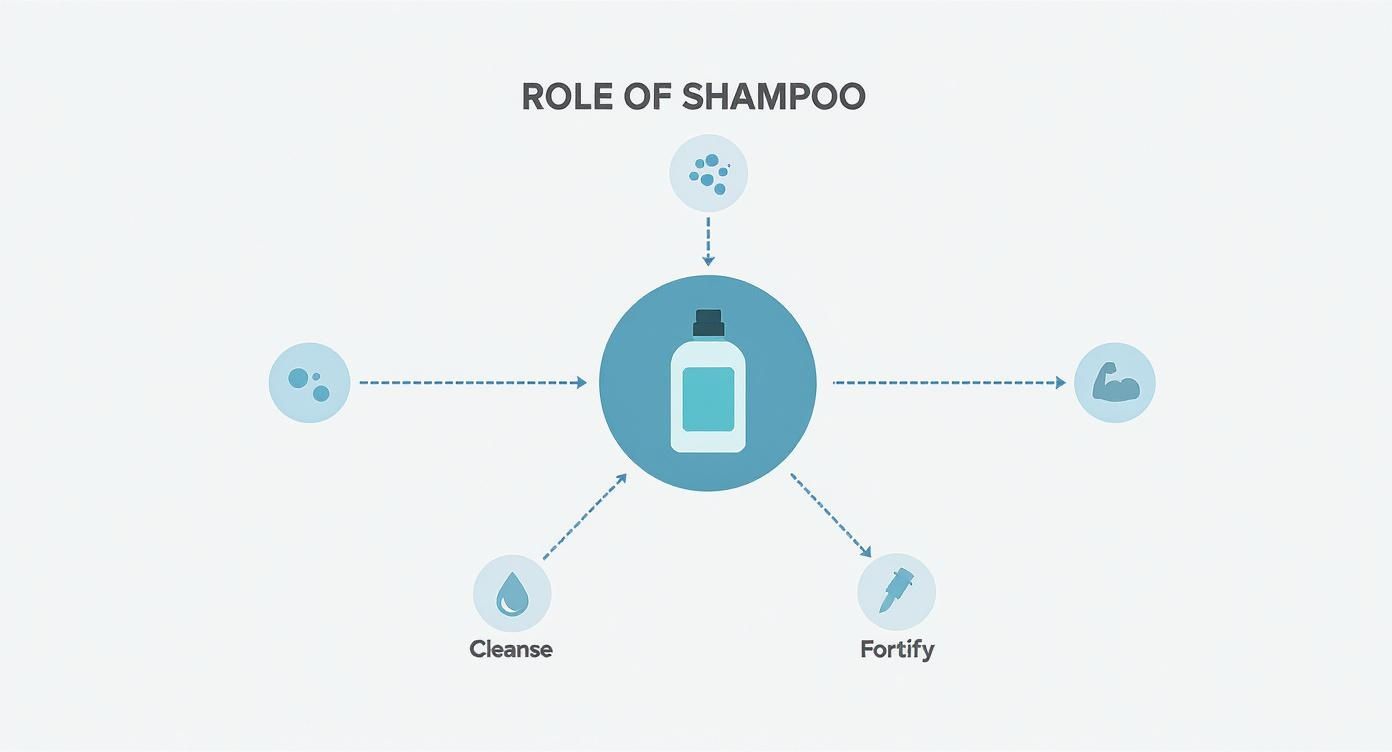
The ultimate goal is to find a blend that nourishes the scalp and fortifies your existing hair, laying the groundwork for a healthier future.
The Blockers: Defending Your Follicles
Some of the most powerful ingredients are the ones that play defense, running interference against the very factors that can accelerate hair thinning. Think of them as your scalp’s personal bodyguards.
One of the best-known ingredients in this category is Saw Palmetto. This plant-based extract is widely believed to help block DHT, a hormone that’s a major culprit in male pattern baldness. By helping to balance hormones right at the scalp level, it protects follicles from shrinking over time.
Another heavy hitter is Ketoconazole. You’ll often see it in anti-dandruff shampoos, but its benefits go beyond just flakes. It has fantastic anti-inflammatory properties and can also disrupt the DHT pathway on the scalp. Creating a calm, clean environment is non-negotiable for healthy hair growth. To learn more about how it works, our guide on Ketoconazole shampoo for hair loss dives deeper into the science.
The Stimulants: Energizing Your Scalp
Next, let's talk about the stimulants. These ingredients are like a shot of espresso for your hair follicles, waking them up and kicking them into gear.
Caffeine is a perfect example. When applied topically, it helps ramp up blood circulation to the scalp. Why does that matter? Better circulation means more oxygen and nutrients can reach the follicles, which can help keep them in their active growth phase for longer.
Niacin (Vitamin B3) works in a similar way. It’s another fantastic circulation booster and also plays a part in rebuilding keratin—the very protein that your hair is made of.
The Builders: Reinforcing Each Strand
Finally, we have the builders. These ingredients are all about making the hair you currently have stronger, thicker, and more resilient to the daily wear and tear that causes breakage.
- Biotin (Vitamin B7): Often called the "hair vitamin," and for good reason. Biotin is a crucial building block for producing keratin. When your shampoo is fortified with it, you’re helping to reinforce your hair’s natural structure from the outside in.
- Keratin: Your hair is made of about 95% keratin, so adding it directly to your hair care routine just makes sense. It acts like a spackle, filling in the weak, damaged spots along the hair shaft. This makes strands feel smoother, look fuller, and less likely to snap.
It's no surprise that consumers are demanding better formulas. The global shampoo market, valued at a staggering USD 36.27 billion in 2024, is projected to hit USD 56.59 billion by 2032. This explosive growth is fueled by people like you seeking out products packed with effective botanicals and free from harsh chemicals. Beyond what's in your shampoo bottle, internal nutrition also plays a huge role. For instance, incorporating Omega-3 fatty acids into your diet can significantly contribute to a healthier scalp and stronger hair from the inside out.
What to Avoid in Your Shampoo for Thinning Hair
https://www.youtube.com/embed/RC5UQP1AQqo
When you're trying to find the right shampoo for thinning hair, it's not just about what's in the bottle. What's been left out is equally, if not more, important.
Thinning hair is often more delicate, and your scalp can be more sensitive. That means some of the standard, heavy-duty chemicals found in everyday shampoos can actually do more harm than good, creating irritation and stress that your follicles just don't need.
Think of it like tending a garden. You wouldn't use a harsh weed killer right next to your delicate seedlings. Your scalp needs that same level of care. By learning which ingredients to avoid, you can protect your hair from unnecessary damage and create a healthier environment for growth. It empowers you to read a label and know you're making a choice that truly supports your hair.
Steer Clear of Harsh Sulfates
You know that rich, satisfying lather you get from most shampoos? That’s usually the work of sulfates. The two most common are sodium lauryl sulfate (SLES) and sodium laureth sulfate (SLES), which are incredibly effective detergents. A little too effective, in fact.
For a scalp already struggling, these powerful cleansers can be far too aggressive. They strip away the natural oils that protect your scalp and keep it balanced. This can lead to dryness, inflammation, and irritation—the very things that stand in the way of healthy hair growth. While your hair might feel squeaky clean, the price is often a compromised scalp barrier.
The Problem with Parabens and Certain Alcohols
Parabens are a type of preservative thrown into many cosmetic products to prevent bacteria and mold from growing, extending shelf life. While that sounds useful, there are growing concerns that they might interfere with hormonal balance, which is a major player in many forms of hair loss. To be safe, it's wise to stick with paraben-free formulas.
And then there's alcohol. It’s not a one-size-fits-all ingredient. Some alcohols, like cetyl and stearyl alcohol, are "fatty" alcohols that are actually great for moisturizing your hair. But others, like isopropyl alcohol or alcohol denat, are short-chain alcohols that can be incredibly drying. They zap moisture from the hair shaft, leaving it brittle and prone to snapping—a nightmare when you’re trying to preserve every single strand.
The goal is to reduce the chemical load on your scalp. Opting for formulas free from sulfates, parabens, and drying alcohols helps minimize irritation and supports your hair’s natural strength and moisture balance.
Knowing what irritates your scalp is also a key piece of the puzzle when you're looking at other topical treatments. For instance, being aware of how your skin reacts helps you make smarter choices when researching things like topical finasteride side effects or other leave-on products. A gentle shampoo is the foundation for everything else you do.
A Quick Guide to Harsh Ingredients
To make things easier when you're scanning labels, here’s a quick-reference table of common ingredients to skip and what to look for instead.
| Ingredient to Avoid | Potential Negative Effect | What to Look For Instead |
|---|---|---|
| Sulfates (SLS/SLES) | Strips natural oils, causes dryness and irritation. | Mild, coconut-based cleansers like Sodium Cocoyl Isethionate or Coco-Glucoside. |
| Parabens (e.g., Methylparaben) | Potential hormonal disruption, skin irritation. | Natural preservatives like Phenoxyethanol, Sodium Benzoate, or Potassium Sorbate. |
| Drying Alcohols (e.g., Alcohol Denat) | Dries out hair and scalp, leading to brittle strands. | Moisturizing fatty alcohols like Cetyl Alcohol, Stearyl Alcohol, or Cetearyl Alcohol. |
| Formaldehyde-Releasers | Can cause allergic reactions and scalp irritation. | Formulas explicitly labeled "formaldehyde-free." |
| Phthalates | Potential endocrine disruptors. | Look for shampoos clearly marked "phthalate-free." |
Keeping these in mind helps you cut through the marketing noise and choose a product that gently cleanses without causing extra stress to your hair and scalp.
Building a Complete Hair Wellness Routine
Finding the right shampoo for thinning hair is a fantastic first step. But think of it as laying the foundation, not building the whole house. For hair that looks and feels its best, that shampoo needs to be part of a bigger picture—a complete wellness strategy.
Your shampoo does the critical work of prepping the scalp, but everything that comes after can either boost its efforts or work against them. By creating a routine that includes the right products and healthy habits, you’re building a powerful, multi-pronged attack on hair thinning that a single bottle could never achieve on its own.
Beyond the Shampoo Bottle
So, you’ve washed your hair. What’s next? A conditioner is usually the follow-up act, but for thinning hair, you have to be selective. Go for a lightweight formula that won’t plaster your hair to your head, undoing all the volumizing work your shampoo just did. A good rule of thumb is to apply it from the middle of your hair down to the ends, steering clear of the scalp to keep those follicles clean and breathing.
Leave-in treatments and serums are where you can really up your game. While shampoos and conditioners still dominate the market—making up a massive 88.21% of hair loss treatment revenue in 2024—targeted serums are gaining serious ground. These concentrated formulas are meant to be left on the scalp, giving powerful active ingredients hours to work their magic on the hair growth cycle.
The Inside-Out Approach to Hair Health
It’s an old saying, but it’s true: you are what you eat. This is especially true for your hair. Since hair is built from protein, a diet that includes plenty of lean meats, eggs, and beans gives your body the raw materials it needs to construct strong, healthy strands.
Think of your hair follicles as tiny factories. They need a steady stream of energy and supplies to run at full capacity. A diet lacking in key nutrients is like a factory-wide power outage—production grinds to a halt.
Certain vitamins and minerals are non-negotiable for this process. Make sure your diet is rich in these hair heroes:
- Iron: This mineral helps create hemoglobin, the protein in your red blood cells that ferries oxygen everywhere—including to the cells that kickstart hair growth.
- Zinc: A zinc deficiency is a known cause of hair shedding. It’s essential for hair tissue growth and repair, keeping the "factory" in good working order.
- B-Vitamins: Biotin gets all the hype, but the whole family of B vitamins is important. They help create the red blood cells that deliver all those crucial nutrients and oxygen to your scalp.
For a closer look at the connection between diet and hair, our guide on vitamins for hair growth is a great place to start.
Gentle Handling and Environmental Factors
Finally, be kind to your hair. How you handle it every day makes a huge difference. Rough towel-drying, super-tight ponytails, and blasting it with high heat from styling tools all create physical stress and breakage. This can make thin hair look even thinner. The fix is simple: pat your hair dry gently and always use your heat tools on the lowest setting that gets the job done.
Even your water quality can play a role. It's worth exploring the benefits of shower filters for hair health to see if hard water minerals might be impacting your strands. These small, daily adjustments really do add up, helping you protect the hair you have.
Common Questions About Shampoos for Thinning Hair
When you start looking into shampoos for thinning hair, it's easy to feel a bit overwhelmed. There's a lot of noise out there, so let's cut through it. I'll walk you through some of the most frequent questions people ask, so you can feel confident you're making the right call for your hair.
How Often Should I Be Washing My Hair?
This is a big one, and the honest answer is, it all comes down to your scalp. If you've got an oily scalp, washing your hair every day with a good thinning hair shampoo is probably your best bet. This keeps your follicles from getting clogged up with sebum and product gunk that can stifle growth.
On the flip side, if your scalp is on the drier side, washing every two or three days is usually plenty. The most important thing isn't a magic number—it's consistency. For the active ingredients in your shampoo to work their magic, they need regular contact with your scalp. Find a rhythm that leaves your scalp feeling clean but not tight, and stick to it.
Will This Shampoo Make My Hair Grow Back Overnight?
It's crucial we set realistic expectations here. A great shampoo for thinning hair is all about creating the perfect environment for healthy growth. It strengthens the hair you have and helps slash the amount of breakage you see. Think of it as a key supporting player, not an instant miracle worker.
You should start to notice better volume, a healthier-feeling scalp, and less hair in your brush within a few weeks. But seeing noticeable new growth? That’s a longer game.
I always tell my clients to think of it like starting a new workout plan. You don't get a six-pack after one visit to the gym. Real change takes consistent effort over 3 to 6 months, and the same patience applies to your hair.
Can I Still Use My Regular Conditioner?
You absolutely can, but you need to be smart about which one you choose. The last thing you want is to slather on a heavy, waxy conditioner that flattens your hair and clogs up the very follicles you just worked so hard to clean.
Look for a lightweight conditioner, ideally one made for volume or fine hair. Here's the technique I swear by:
- Apply conditioner only from the mid-lengths to the ends.
- Keep it far, far away from your roots and scalp.
- Rinse it out completely, until your hair feels clean, not slick.
This trick lets you smooth and detangle your strands without sabotaging the benefits of your shampoo. Many brands that make a thinning hair shampoo also have a matching conditioner, which is usually a safe and effective pairing.
Is a More Expensive Shampoo Always Better?
Not at all. The price on the bottle is way less important than the ingredient list on the back. What really matters is the quality and concentration of active ingredients, not how much the brand spent on advertising.
Plenty of fantastic, affordable brands now use proven ingredients like caffeine, saw palmetto, and biotin. While some high-end shampoos might have unique botanical complexes or higher concentrations, you can find incredibly effective options at nearly every price point. The goal is to find a formula that works for your specific scalp and hair concerns.
At PRP For HairLoss, we believe knowledge is power. Understanding how to build a smart hair care routine—starting with the right shampoo—is the first step toward reclaiming your confidence. To learn more about male pattern baldness and the most effective treatment strategies, visit us at https://prpforhairloss.com.


Leave a Reply