Let's get right to it. You're trying to figure out the real difference between PRP and PRF for hair loss, and honestly, it can get confusing. The simplest way to think about it is that PRF is the next generation of PRP—a more advanced and completely natural version.
Imagine PRP as a quick, powerful shot of fertilizer for your hair follicles. It gives them an immediate boost. PRF, on the other hand, is more like a slow-release nutrient system. It creates a natural, biological scaffold that continuously feeds and supports your follicles over a longer period.
PRP vs PRF: The Core Differences Explained
When you start looking into hair loss treatments, you'll constantly see two terms pop up: Platelet-Rich Plasma (PRP) and Platelet-Rich Fibrin (PRF). Both treatments are based on the same brilliant idea: using the healing power packed inside your own blood to wake up dormant hair follicles. The magic, however, lies in how each one is prepared and what it delivers to your scalp.
PRP has been the go-to treatment for years, and for good reason. It’s a reliable way to get a concentrated dose of growth factors right where you need them. But PRF is the newer kid on the block, representing a significant refinement of the original technique. It's processed in a way that creates a "liquid gold" matrix holding not just more platelets, but also white blood cells and stem cells—key players in genuine tissue repair.
A Tale of Two Therapies
The main separation between PRP and PRF comes down to their final makeup and how they deliver the goods. PRP preparation involves spinning your blood at very high speeds and requires an anticoagulant to stop it from clotting in the tube. This process isolates the platelets effectively.
PRF takes a gentler approach. It's spun at a much lower speed and, critically, uses zero additives or anticoagulants. This allows a natural fibrin clot to form within the sample.
This fibrin matrix is the real game-changer. It acts like a tiny, three-dimensional sponge that traps platelets and other healing cells. Instead of releasing all its growth factors at once, it releases them slowly and steadily over 7-10 days. PRP, by comparison, delivers its payload in a quick burst, usually within the first few hours.
The infographic below does a great job of showing this fundamental difference. You can see how PRP offers that immediate jolt, while PRF provides a sustained, nourishing environment for the follicles.
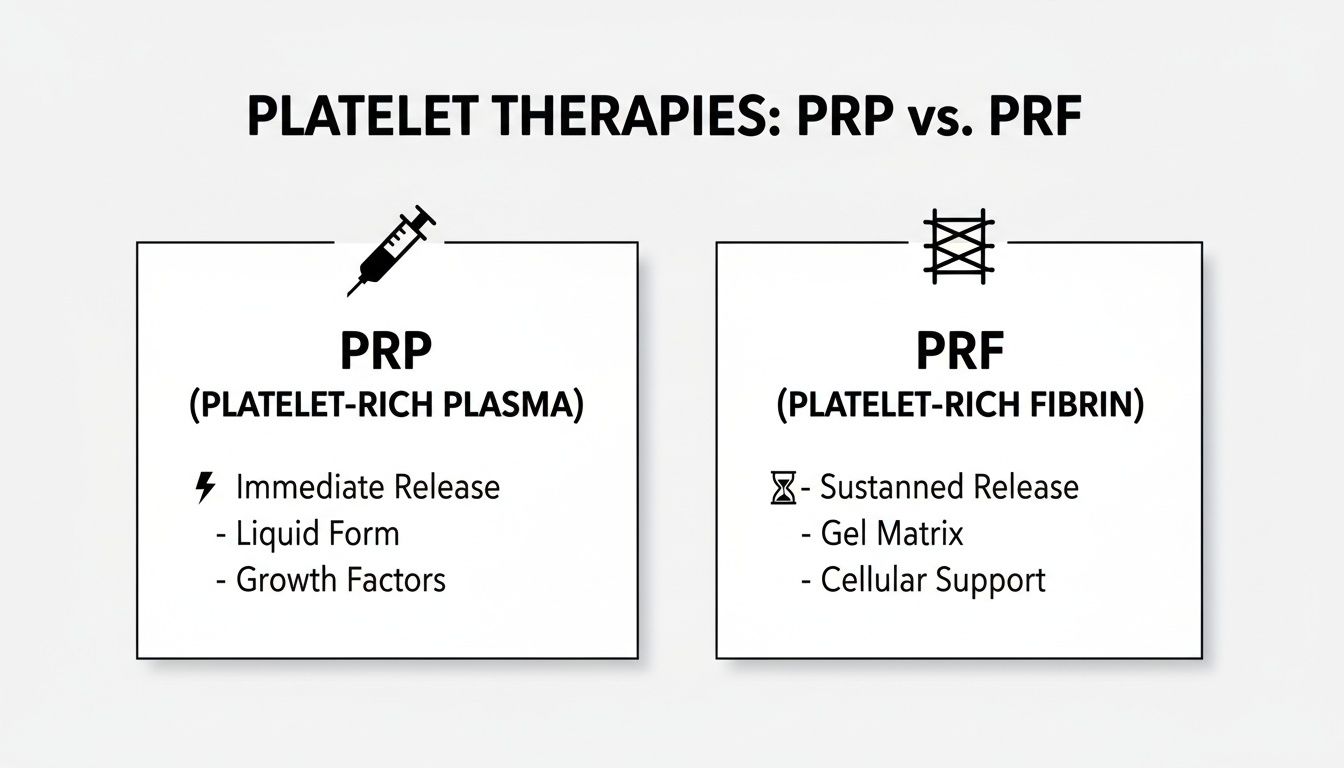
This visual really clarifies how PRF's unique structure creates a prolonged healing effect, which many experts believe is more beneficial for long-term hair restoration. For a deeper dive into the original therapy, you can learn more about how platelet-rich plasma therapy for hair works in our detailed guide.
Grasping these core differences is the first step in figuring out which treatment aligns best with your specific type of hair loss and your goals.
PRP vs PRF At a Glance: Key Differences
To make it even clearer, here's a simple breakdown of the most important distinctions between PRP and PRF. This table cuts through the noise and gives you a side-by-side view of what sets them apart.
| Feature | PRP (Platelet-Rich Plasma) | PRF (Platelet-Rich Fibrin) |
|---|---|---|
| Additives Used | Yes, contains anticoagulants to prevent clotting. | None. It is 100% natural with zero additives. |
| Growth Factor Release | Quick, immediate release within hours. | Slow, sustained release over 7-10 days. |
| Cell Composition | Primarily concentrated platelets. | Higher concentration of platelets, plus white blood cells and stem cells. |
| Structure | A simple liquid plasma. | A gel-like fibrin matrix that acts as a scaffold. |
Ultimately, while both treatments aim for the same goal—healthier, thicker hair—they take very different paths to get there. The sustained release and richer cellular mix in PRF are why many practitioners now consider it a superior option for hair restoration.
How PRP and PRF Are Prepared
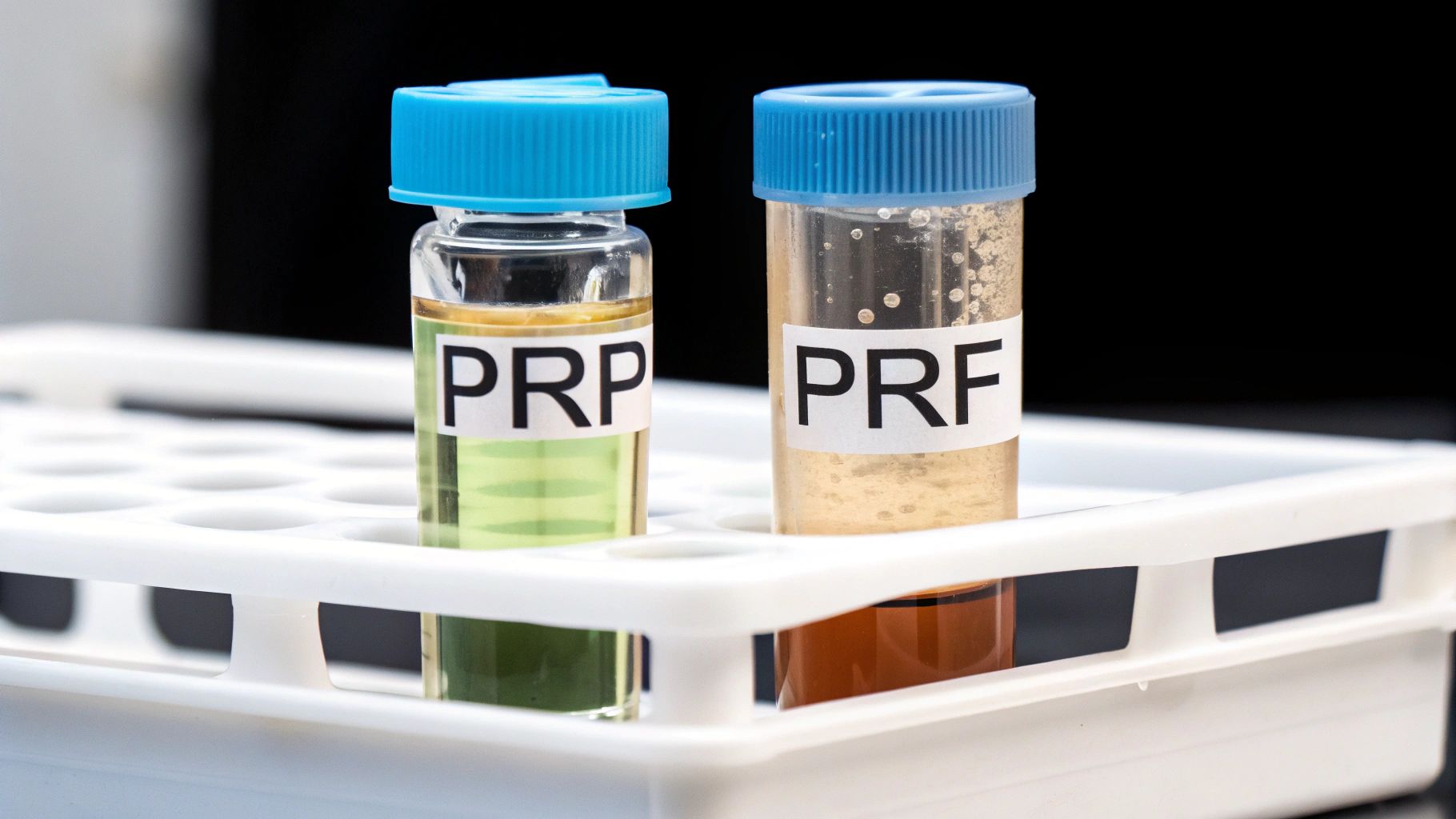
To really get the difference between PRP and PRF, you have to look at how they’re made. It might seem like a minor detail, but the preparation process is what turns your own blood into two very different treatments.
Both procedures start the same way—with a simple blood draw. But what happens next in the lab is where they diverge, and these subtle differences in protocol are what define their unique therapeutic properties.
The PRP Preparation Process: A High-Speed Spin
When a clinician prepares PRP, the main goal is to get a super-concentrated dose of platelets suspended in a small amount of plasma. This is done using a centrifuge, a machine that spins samples at incredible speeds to separate components based on their weight.
Here’s a breakdown of the typical PRP process:
- Blood Collection: A small vial of your blood is drawn, just like a routine blood test.
- Anticoagulant Added: An anticoagulant (like sodium citrate) is mixed into the blood. This is a critical step; it stops the blood from clotting so the final product remains a liquid.
- High-Speed Centrifugation: The tube of blood is spun at a very high velocity. This intense force separates the blood into three layers: heavy red blood cells sink to the bottom, platelet-poor plasma rises to the top, and a thin "buffy coat" rich in platelets gets trapped in the middle.
- Extraction: The platelet-rich layer is then carefully collected for injection.
This aggressive, high-speed spin is great for isolating a huge number of platelets. However, the use of anticoagulants and the sheer force of the spin can affect the natural state of the blood components. This is a key departure from how PRF is handled. For a deeper dive, check out our guide on platelet-rich plasma preparation.
The PRF Method: A Gentler, Slower Approach
PRF preparation is all about preserving the blood's healing components in their most natural form. The process deliberately avoids the high speeds and chemical additives that are standard in PRP protocols.
The method for creating PRF is fundamentally different:
- No Additives: First and most importantly, no anticoagulants are used. This allows the blood’s natural clotting process to kick in, which is exactly what’s needed to form the fibrin matrix.
- Lower-Speed Spin: The blood is spun in the centrifuge at a much lower speed and for less time. This gentle spin is the secret to PRF's unique structure.
Because of this slower spin, the blood doesn't separate so cleanly. Instead of forcing all the heavier cells down, it allows platelets, white blood cells, and even stem cells to get suspended within a spongy, gel-like web of fibrin that forms naturally.
This fibrin matrix is the star of the show in PRF. It acts like a biological scaffold, trapping the platelets and growth factors right where they're injected. This prevents them from dispersing too quickly and allows for a slow, steady release of healing compounds over several days.
Why the Spin Makes All the Difference
The two different prep methods result in products with major differences in their makeup and how they work in the body. PRP protocols aim to concentrate platelets to levels 2-6 times higher than your baseline, delivering a powerful but short-lived burst of growth factors. PRF, on the other hand, yields a slightly lower immediate platelet count but embeds them within that powerful fibrin scaffold.
This structural distinction is everything. It changes how growth factors are delivered to your hair follicles. Research shows that PRF releases these vital proteins slowly over several days, sometimes even weeks. In contrast, the growth factors from liquid PRP are typically released and used up within the first 24-72 hours.
Ultimately, the choice between a high-speed, concentrated liquid and a slow-spun, natural matrix comes down to the treatment strategy. One gives a quick, potent jolt to the follicles, while the other provides sustained nourishment over time.
The Biological Impact on Your Hair Follicles
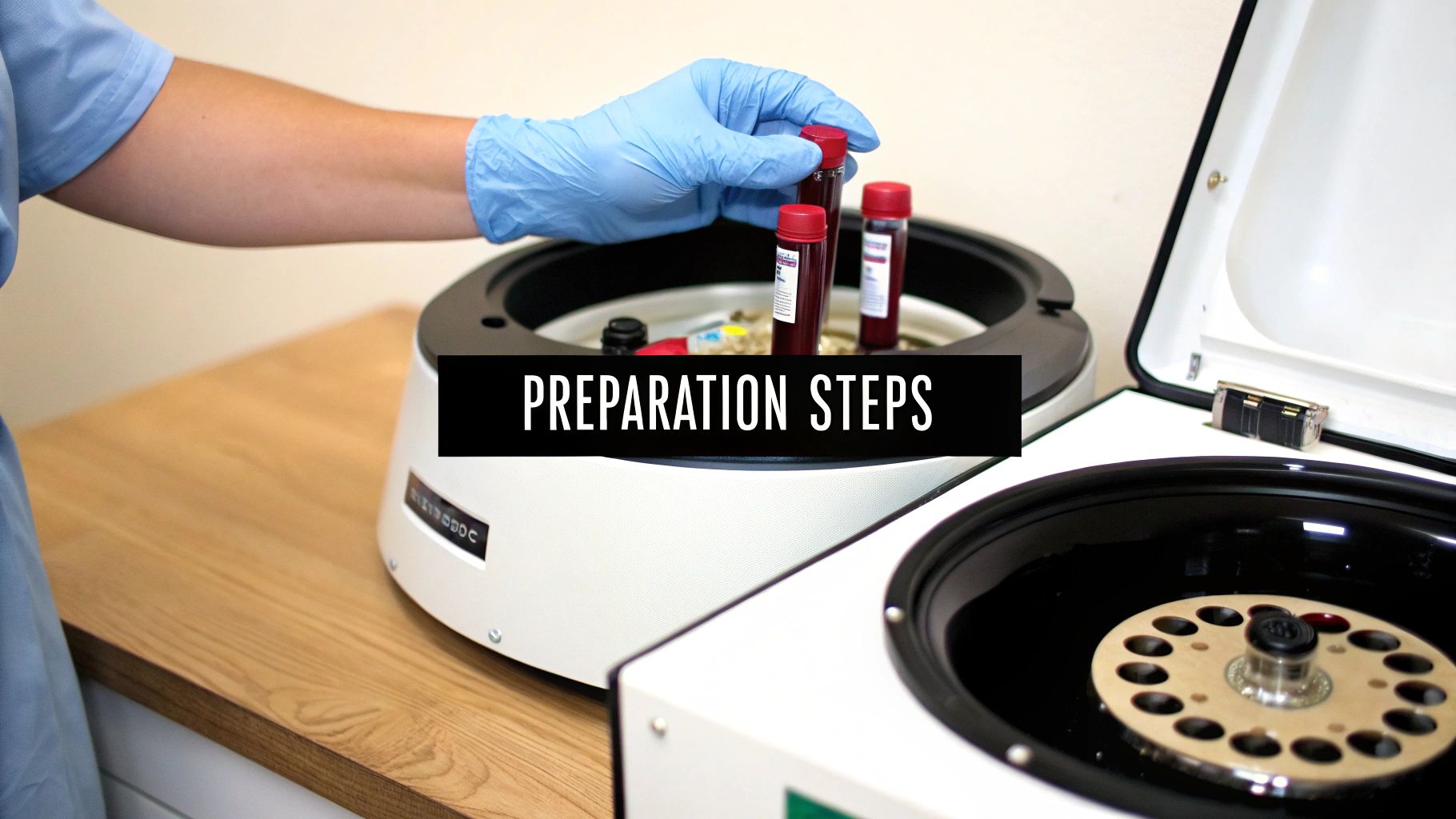
We've covered how each treatment is prepared, but what really matters is what happens when they’re injected into your scalp. The scientific differences between PRP and PRF create two very different signals for your hair follicles. It’s the difference between a loud, immediate wake-up call and a steady, nourishing conversation.
Understanding this biological action is where you see the true distinction. One gives a powerful, immediate jolt of growth factors, while the other creates a long-lasting environment for regeneration.
PRP: A Potent But Short-Lived Boost
Think of PRP as a targeted strike mission. As soon as it's injected, the concentrated platelets dump a massive payload of powerful growth factors, like Platelet-Derived Growth Factor (PDGF) and Vascular Endothelial Growth Factor (VEGF). These are the body's primary proteins for kicking off cellular repair.
This sudden flood of growth factors acts like an alarm clock for dormant or thinning hair follicles. It shocks them out of their resting state, boosts blood supply to the area, and pushes them into an active growth phase. For a deeper dive into this process, check out our guide on how PRP works for hair loss.
But here’s the catch: this stimulation is intense but brief. The vast majority of PRP's growth factors are released and used up by the body within the first 24 to 72 hours. After that initial burst, the direct stimulation dies down, which is why PRP treatments usually require more frequent sessions to keep the momentum going.
PRF: The Sustained-Release Reservoir
PRF works on an entirely different schedule. Its secret weapon is the fibrin matrix—a natural, gel-like scaffold that forms during the slower, gentler spin. This matrix is much more than just a thicker liquid; it's a biological time-release capsule.
Instead of releasing all its growth factors at once, the fibrin scaffold traps the platelets and other helpful cells. It then lets them out slowly and steadily over a period of 7 to 10 days.
This prolonged release provides a more consistent, long-term signal to your hair follicles. It’s less like a sudden shock and more like a continuous IV drip of nutrients, encouraging follicles to not just wake up, but to settle into a healthier, longer growth cycle.
This sustained delivery is a much closer match to how the body heals naturally, a process that unfolds over days, not just hours.
The Role of Extra Healing Cells in PRF
Another critical difference is what else comes along for the ride. The high-speed spin for PRP is designed to isolate platelets, but it also filters out most other cells. PRF’s gentler spin, on the other hand, preserves a much richer and more diverse team of healing agents.
Here’s what you get in PRF that you don't in standard PRP:
- Leukocytes (White Blood Cells): These are the immune system's cleanup crew. They are crucial for managing inflammation and coordinating the entire repair process, which can lead to better healing and less soreness after the procedure.
- Mesenchymal Stem Cells: While the numbers are small, these are the body's master builders. They can turn into different cell types and are essential for orchestrating complex tissue regeneration from the ground up.
This combination of platelets, growth factors, leukocytes, and stem cells all working together creates a powerful synergistic effect. The fibrin matrix acts like a "home base," keeping all these valuable cells right at the injection site where they're needed most.
This targeted, sustained, and multi-faceted approach is why many clinicians now see PRF as a significant step forward. It's not just about stimulating growth; it's about rebuilding the ideal biological environment for healthy hair to thrive.
The Evolution of Platelet Hair Therapies
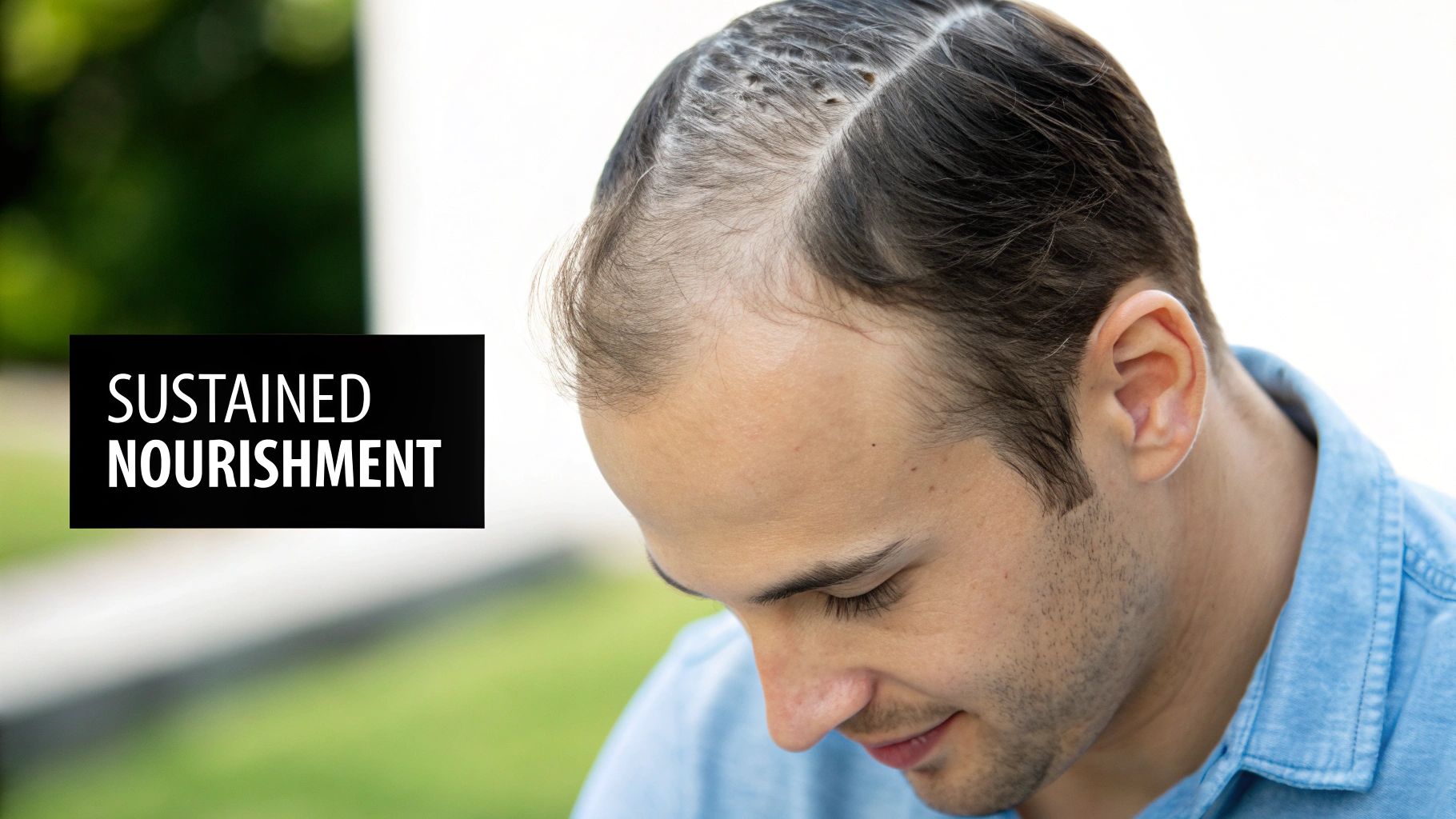
To really grasp the difference between PRP and PRF, it helps to know how they came to be. These treatments didn't just pop up overnight. They represent a clear evolution in regenerative medicine, with one being the original trailblazer and the other a direct refinement of that initial idea.
Platelet-Rich Plasma (PRP) is the old guard in hair restoration. It started gaining serious traction in the medical community back in the 1990s and became a go-to tool for its healing abilities. By the 2000s, it was a staple in orthopedics, dentistry, and dermatology.
Because it's been around for decades, PRP has a long and well-documented track record. There are years of data and established protocols for clinicians to follow, which is why it became the gold standard for using a patient's own blood to stimulate tissue repair.
A New Generation Emerges
Then along came Platelet-Rich Fibrin (PRF), introduced in 2001 as a "second-generation" concentrate. PRF wasn't meant to completely replace PRP, but to build on its success. Researchers looked at what made PRP work and asked a simple question: "How can we make this better and more natural?"
The solution was to simplify the preparation. They figured out a way to spin the blood more gently and, crucially, without any anticoagulants. This small change had a massive impact, allowing the final product to retain more healing cells and release growth factors over a longer period.
The key takeaway here is that PRF is a direct evolution of PRP. Think of it like the first iPhone versus the latest model. The original was revolutionary and still gets the job done, but the newer version has been refined for better performance and a more intuitive design.
This timeline is why you'll see both treatments offered today. Some clinics stick with PRP because of its proven history, while others have moved to PRF for what they see as a more advanced, holistic approach to regeneration.
Why This History Matters For Your Decision
Understanding this progression is important because it frames your choice. You're essentially deciding between a proven standard and a modern refinement. PRF's simpler, additive-free preparation also made it a more attractive option for aesthetic and outpatient clinics to adopt.
This backstory helps explain the difference between PRP and PRF not as "good vs. bad," but as a story of scientific progress. As we learned more about the body’s healing mechanisms, we found better ways to harness them. You can dive deeper into the historical adoption of these therapies to see just how clinical practice has evolved.
- PRP (The Pioneer): First gained popularity in the 1990s, laying the groundwork for using platelet concentrates in medicine.
- PRF (The Refinement): Introduced in the early 2000s, it was specifically designed for a more natural and sustained healing response.
Ultimately, knowing where these treatments came from gives you better context. It equips you to have a much more informed conversation with your doctor about whether an established protocol or a next-generation approach is the right call for your hair restoration goals.
How to Choose the Right Treatment for Your Hair Loss
Deciding between PRP and PRF isn’t just about picking the “best” option; it's about choosing the right tool for your specific situation. This is where we get practical and move past one-size-fits-all advice to look at real-world scenarios that will help you figure out which path makes the most sense.
Your decision really boils down to a few key factors: the stage of your hair loss, your scalp's sensitivity, and your long-term goals. Getting clear on these nuances is the first step toward having a confident, productive conversation with your doctor.
Assessing Your Stage of Hair Loss
First things first, you need to get an honest read on where your hair is right now. The best treatment often depends on whether you're trying to get ahead of early thinning or you're already fighting more noticeable hair loss.
Think of it in terms of urgency and how much of a regenerative push your follicles need.
-
For Early or Mild Thinning: If you're just starting to see a few extra hairs in the shower drain or your part seems a little wider than it used to, PRP can be a fantastic proactive step. That quick, potent burst of growth factors acts as a wake-up call for follicles that are just beginning to weaken. It’s like a preventative boost to help you hold onto your density.
-
For Moderate to Significant Thinning: Now, if you're dealing with a clearly receding hairline, thinning at the crown, or areas where your scalp is becoming more visible, PRF’s sustained regenerative power often gives it an edge. The slow, 7-10 day release of growth factors from its fibrin scaffold provides the steady nourishment needed to revive more seriously weakened follicles. This makes PRF a strong contender when you need a more intensive repair strategy.
Considering Scalp Sensitivity and Natural Preferences
Another big piece of the puzzle is how your body might react to the treatment itself. For a lot of people, a 100% natural approach isn't just a nice-to-have—it's a must.
This is where the difference between PRP and PRF becomes crystal clear. PRP needs an anticoagulant to stop the blood from clotting inside the tube before it's injected. While these additives are medical-grade and generally safe, some people with sensitive skin or who just prefer a purely natural treatment might want to steer clear.
PRF is, by its very nature, 100% autologous—meaning it contains nothing but components from your own blood. With zero additives, it can be a game-changer for anyone with a sensitive scalp or concerns about introducing foreign substances into their body. This makes PRF the go-to choice for those who want a treatment that is as close to nature as you can get.
Your Treatment Philosophy and Long-Term Goals
Finally, take a moment to think about your own approach to treatment and what you're hoping to achieve down the road. Are you looking for a tried-and-true procedure with a long history, or are you more drawn to the latest advancements?
Here’s a simple way to frame your thinking:
- PRP might be right for you if: You're in the very early stages of hair loss, looking for a more cost-effective starting point, or you feel more comfortable with a treatment that has the longest clinical track record.
- PRF could be a better fit if: You have more significant thinning, you’re committed to a 100% natural treatment with no additives, or you like the idea of a therapy that provides a sustained, long-term nourishing effect on your follicles.
It's also important to remember that these treatments don't exist in a vacuum. While PRP and PRF are great options, it’s smart to look at the bigger picture and learn about other effective hair loss solutions that experts discuss. And if your hair loss is more advanced, you’ll definitely want to understand the differences between PRP and a hair transplant, as they solve very different problems.
Ultimately, the best choice is one you make in partnership with a qualified clinician. This guide is designed to arm you with the right questions to ask, so you can walk into your consultation ready to find the perfect fit for your hair restoration goals.
Common Questions About PRP and PRF Treatments
Deciding to move forward with a hair restoration treatment is a big step. Once you get the basics of PRP versus PRF, the practical questions start bubbling up. What's the real commitment? What should I expect on treatment day?
Let's walk through some of the most common questions I hear from patients. The goal here is to give you a clear, honest picture of what the journey to healthier hair actually looks like.
How Many Sessions of PRP or PRF Will I Need?
This is usually the first thing people ask, and the honest answer is: it depends. There’s no magic number. Your treatment plan will be tailored to your specific pattern of hair loss, your goals, and which therapy you land on.
For PRP, the standard approach is to start with a "loading phase." This typically means a series of three to four treatments, spaced about four to six weeks apart, to really kickstart the follicles. After that initial push, you'll likely need maintenance sessions every six to twelve months to keep the results going strong.
PRF often follows a similar upfront schedule—usually an initial round of three treatments.
The key difference? Because PRF releases its growth factors slowly over 7-10 days, some patients find they can stretch the time between maintenance appointments. It's not uncommon for a provider to suggest follow-ups every 9-12 months, or sometimes even longer, based on how well your follicles respond.
Your clinician will map out a personalized schedule after a thorough look at your scalp.
Is There Any Downtime After PRP or PRF Injections?
Here’s some great news: both PRP and PRF are minimally invasive, meaning you can get back to your life almost immediately. Most people head right back to work or their daily routine right after an appointment.
That being said, it’s not nothing. You should expect some minor, short-lived side effects. A bit of mild swelling, some redness, and a tender scalp are all perfectly normal. Some people describe it as a "tight" feeling for the first day or so.
To help things heal perfectly, your provider will give you a few simple aftercare tips. These usually include:
- Avoiding intense workouts for about 24 hours to keep swelling down.
- Holding off on washing your hair for at least 12-24 hours.
- Steering clear of harsh chemical treatments (like hair dye or perms) for a few days before and after your session.
These minor effects almost always fade within 24 to 48 hours. Since PRF is 100% your own biological material with zero additives, some patients say they experience even less inflammation compared to PRP.
How Long Does It Take to See Results?
Patience is a virtue with regenerative treatments. You won't see a dramatic change overnight. The growth factors in both PRP and PRF are waking up dormant hair follicles, and that process takes time.
Most people start noticing the first positive signs—less shedding, maybe some thicker-feeling hair—around the three to six-month mark. This is usually after you’ve had your second or third session.
The more significant, visible improvements in density and new growth tend to show up between six and twelve months. The hair growth cycle is a slow and steady process, and these treatments are designed to support it, not override it. Taking progress photos is a great way to see the gradual changes that you might otherwise miss day-to-day. If you're curious about the science behind it all, digging into the data on whether PRP is effective for hair loss is a great next step.
Can I Combine These Treatments with Minoxidil or Finasteride?
Not only can you, but you probably should. Many of the best results come from a multi-pronged attack on hair loss. Combining PRP or PRF with proven medications like Minoxidil (Rogaine) and Finasteride (Propecia) is a very common and effective strategy.
Think of it this way: Minoxidil and Finasteride work on the foundational causes of hair loss, like hormone conversion and blood flow. They create a better, more stable environment for your hair to survive and thrive.
PRP and PRF then act as a powerful regenerative boost, directly feeding follicles with a high concentration of your body's own healing and growth signals. It's a powerful synergy—one tackles the underlying problem while the other actively stimulates new growth. Just make sure to tell your provider about everything you're using so they can build a smart, comprehensive plan.
At PRP For HairLoss, our mission is to provide clear, reliable information so you can make confident choices on your hair restoration journey.

 PRP For Hairloss
Leave a comment