Making Sense of Hair Loss Solutions
Losing your hair? PRP and hair transplants are two popular solutions, but choosing the right one can be tough. This article compares 6 key hair loss treatments, including PRP vs. hair transplant, breaking down everything from Platelet-Rich Plasma (PRP) therapy and Follicular Unit Extraction (FUE) to combination therapies and medical options like DHT blockers. By the end, you'll have the information you need to make an informed decision about your hair restoration journey in 2025.
1. Platelet-Rich Plasma (PRP) Therapy
When considering options for addressing hair loss, Platelet-Rich Plasma (PRP) therapy often emerges as a promising non-surgical alternative to hair transplantation. This innovative treatment leverages the healing power of your own blood to stimulate hair follicle activity and promote growth. It involves drawing a small sample of your blood, processing it in a centrifuge to isolate the platelet-rich plasma (PRP), and then injecting this concentrated solution directly into your scalp. The growth factors present in platelets are key players in tissue regeneration, and in this context, they work to extend the growth phase of the hair cycle, increase blood supply to the follicles, and ultimately encourage thicker, healthier hair growth.
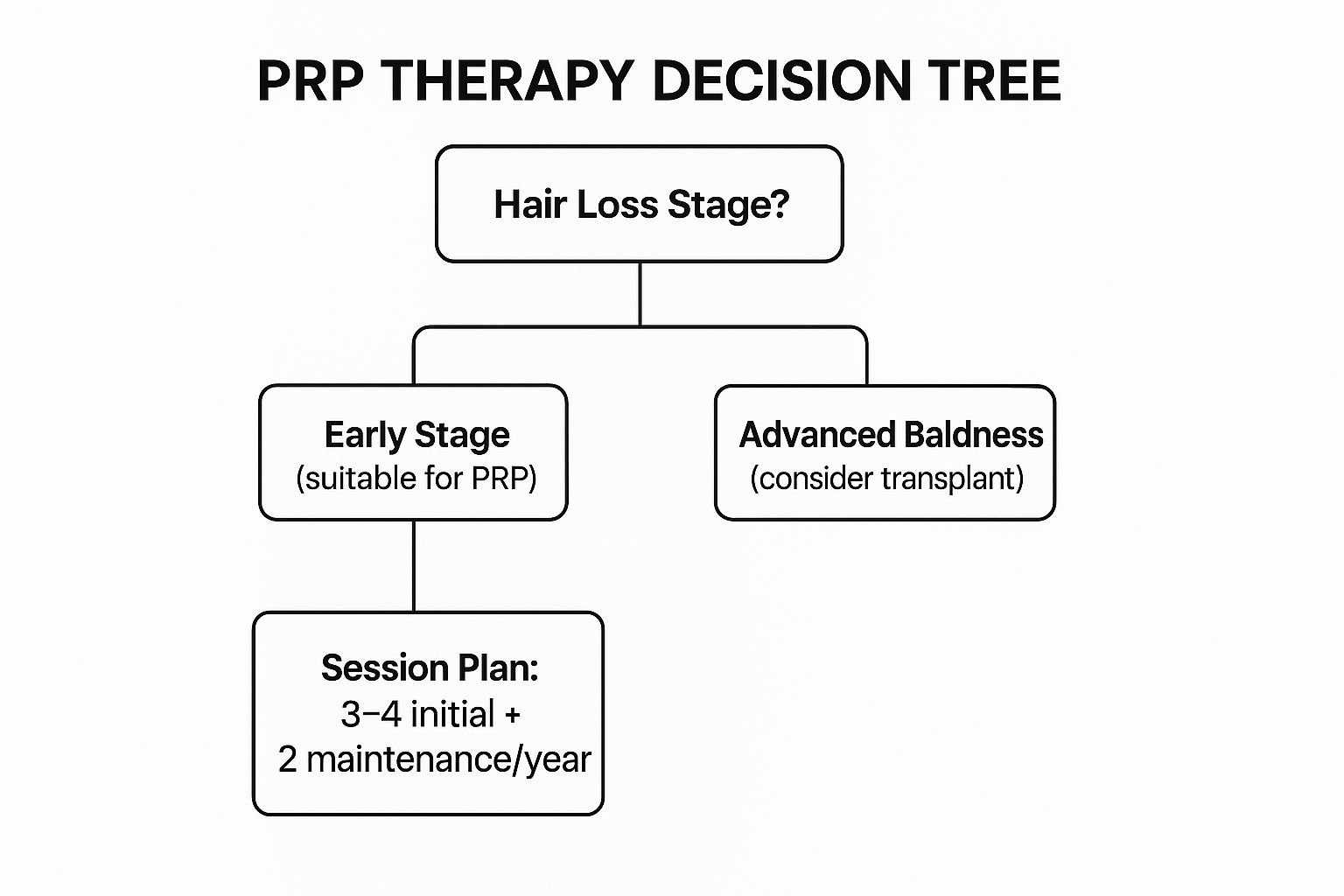
The infographic above provides a decision tree to help determine if PRP therapy is right for you. It starts by assessing the stage of hair loss and then considers factors such as budget, desired downtime, and whether you're open to combining treatments.
PRP offers several advantages, particularly for men in the early stages of androgenetic alopecia (male pattern baldness). As a minimally invasive procedure, it requires minimal downtime, allowing you to return to normal activities immediately. The cost is significantly lower than a hair transplant, typically ranging from $500-$2,000 per session. Furthermore, because PRP uses your own blood, it eliminates the risk of allergic reactions or rejection. It's also a versatile treatment that can be combined with other hair loss solutions like minoxidil or finasteride for potentially enhanced results.
However, it's crucial to understand that PRP is not a one-time fix. Multiple sessions (usually 3-4) spaced 4-6 weeks apart are needed for optimal results, followed by maintenance treatments every 6-12 months. While generally safe, the outcome can vary between individuals, and it’s not effective for areas of complete baldness. The infographic clearly highlights these decision points, guiding you through the process of determining if PRP is a suitable option based on your individual circumstances.
When and why to use PRP: PRP is best suited for men experiencing early to moderate hair thinning, particularly due to male pattern baldness. It's an excellent option if you’re looking for a non-surgical approach with minimal downtime and a lower cost compared to transplantation. The infographic visualizes this decision-making process, outlining the path towards considering PRP based on the severity of hair loss and other personal factors. For example, if you have significant hair loss, the infographic directs you towards considering a hair transplant. If you have mild to moderate hair loss and are on a budget, PRP becomes a more viable option.
Examples of successful implementation: Studies have shown a 30-40% improvement in hair count and thickness in responsive patients. PRP has been particularly effective when combined with microneedling, further stimulating the scalp and enhancing the absorption of the growth factors.
Tips for maximizing PRP results:
- Early intervention: Start PRP therapy early in the hair loss process for the best results.
- Medication management: Avoid blood thinners for 1-2 weeks before treatment.
- Combination therapy: Consider combining PRP with minoxidil or finasteride for enhanced outcomes.
- Provider selection: Choose a qualified provider who uses high-quality centrifuges for optimal platelet concentration.
- Patience is key: Results are typically visible after 3-4 months of treatment.
While PRP may not be a permanent solution for all types of hair loss, it offers a promising avenue for those seeking a non-surgical, minimally invasive way to combat thinning hair and boost their confidence. Its place in the "PRP vs hair transplant" discussion is firmly cemented as a valuable option for specific candidates, and the decision tree infographic provides a clear and concise tool for navigating this decision-making process.
2. Follicular Unit Extraction (FUE) Hair Transplant
When considering PRP vs hair transplant, Follicular Unit Extraction (FUE) stands out as a leading surgical hair restoration technique. It involves extracting individual hair follicles from a donor area, typically the back or sides of the head, and transplanting them to areas experiencing hair loss. Each follicular unit, containing 1-4 hairs, is carefully removed using a specialized micro-punch tool and then meticulously implanted into tiny incisions created in the recipient areas. This precise placement aims to mimic natural hair growth patterns, resulting in a seamless and undetectable outcome.
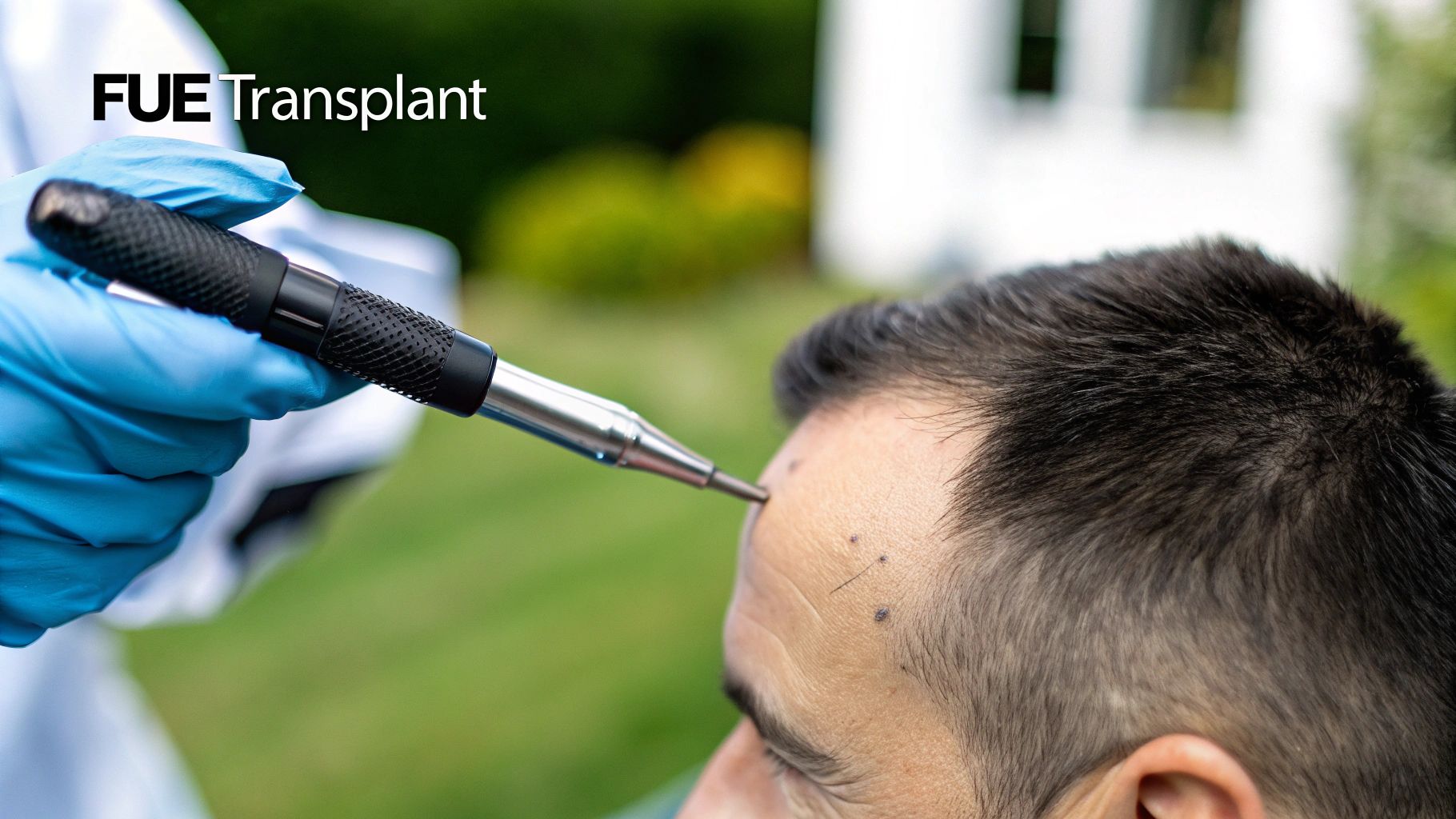
FUE offers several key features that make it an attractive option for men experiencing hair loss. It's a minimally invasive surgical procedure performed under local anesthesia, leaving only tiny dot scars instead of a linear scar. The individual follicle extraction and placement allow for customized hairline design and density. Recovery is typically quick, around 7-10 days, and the procedure is particularly well-suited for men who prefer shorter hairstyles.
Pros:
- Permanent Results: Transplanted hair grows permanently.
- Natural-Looking Hairline: Achieves natural hairline and growth patterns.
- Less Post-Operative Pain: Compared to the FUT (Follicular Unit Transplantation) or "strip" method.
- Quicker Recovery: Generally faster healing than traditional strip methods.
- Short Hairstyles: Suitable for those who prefer to keep their hair short.
Cons:
- Higher Cost: Ranging from $5,000 to $15,000 depending on the number of grafts required.
- Time-Consuming: A single session can last 6-8 hours for larger transplants.
- Multiple Sessions: May require multiple sessions for extensive baldness.
- Donor Area Shaving: Requires shaving the donor area, although some techniques minimize this.
- Limited Donor Hair: The procedure is limited by the available supply of donor hair.
Examples & Success Rates:
A single FUE session can transplant between 2,000 and 4,000 grafts. The survival rate of the transplanted follicles is typically high, between 90-95%. Full results generally become visible within 12-18 months after the procedure. The technique has been popularized by surgeons like Dr. James Harris, who pioneered refinements to the FUE technique, and advancements such as the ARTAS Robotic System, which automates the follicle extraction process. Celebrities like Wayne Rooney, Elon Musk, and Joe Biden have reportedly undergone hair transplant procedures, further raising awareness and acceptance.
Tips for Choosing FUE:
- Choose a Qualified Surgeon: Select a surgeon certified by the International Society of Hair Restoration Surgery (ISHRS).
- Review Before & After Photos: Request to see before and after photos of actual patients treated by the surgeon.
- Follow Post-Op Instructions: Meticulously follow all post-operative care instructions to ensure optimal healing and graft survival.
- Consider Medication: Discuss with your doctor the possibility of combining FUE with medication to prevent further hair loss in non-transplanted areas.
- Plan for Future Sessions: Be aware that future sessions might be needed as hair loss can progress over time.
FUE earns its place in the PRP vs hair transplant discussion because it offers a permanent solution to hair loss, providing natural-looking results. While PRP therapy can stimulate existing hair growth and thicken thinning hair, it’s not a permanent fix and may not be suitable for those with significant hair loss. FUE, on the other hand, offers a more definitive solution for restoring a fuller head of hair. The choice between the two depends on the individual's specific needs and the extent of their hair loss.
3. Follicular Unit Transplantation (FUT) Hair Transplant
When considering PRP vs hair transplant, Follicular Unit Transplantation (FUT), often referred to as the "strip method," offers a distinct approach to permanent hair restoration. This surgical procedure involves removing a strip of scalp from the donor area, typically the back of the head, where hair follicles are genetically resistant to balding. This strip is then carefully dissected under a microscope to isolate individual follicular units, which are subsequently transplanted into the recipient areas experiencing hair loss. FUT allows for the harvesting of a significant number of grafts in a single session, making it a potentially compelling choice for individuals with extensive baldness.
How it Works:
The FUT procedure begins with the administration of local anesthesia to numb the donor area. A strip of scalp, typically 10-25 cm long and 1-2 cm wide, is then excised. The incision is then closed with sutures or staples, resulting in a linear scar. Simultaneously, the surgical team meticulously dissects the harvested strip under high-powered microscopes, separating it into individual follicular units containing 1-4 hairs each. These grafts are then carefully implanted into tiny incisions created in the recipient area, following the natural pattern of hair growth.
Examples and Potential:
FUT’s ability to harvest a large number of grafts makes it a powerful tool against significant hair loss. A single session can yield 3,000-4,000 grafts, enough to cover substantial crown or frontal baldness. For example, a man experiencing advanced Norwood Class 5 or 6 baldness might find FUT a viable option for achieving significant restoration in a single procedure. Full results are typically visible within 12-18 months, as the transplanted hair follicles establish themselves and begin producing new hair growth.
Pros and Cons:
Like any surgical procedure, FUT has both advantages and disadvantages to consider when comparing it to other options like PRP therapy:
Pros:
- Permanent hair restoration solution: The transplanted hair follicles are genetically resistant to balding, offering a permanent solution to hair loss.
- More cost-effective than FUE (per graft): Although overall cost can vary, FUT generally ranges from $4,000-$10,000, often making it more budget-friendly than FUE for a comparable number of grafts.
- Higher graft survival rate (up to 95-98%): The meticulous dissection process and minimal handling of individual follicles contribute to a high graft survival rate.
- Faster extraction process than FUE: Harvesting a strip of scalp is quicker than extracting individual follicles, leading to shorter procedure times.
- Better option for extensive baldness requiring maximum grafts: FUT’s ability to harvest a large number of grafts makes it suitable for addressing significant hair loss.
Cons:
- Linear scar that limits very short hairstyles: The strip removal method leaves a linear scar at the back of the head, which may be visible with very short haircuts.
- More post-operative discomfort than FUE: Patients may experience more pain, swelling, and discomfort after FUT compared to FUE.
- Longer recovery time: Complete recovery from FUT can take 2-3 weeks.
- Higher risk of nerve damage and prolonged numbness: Although rare, there is a slightly higher risk of nerve damage and prolonged numbness in the donor area with FUT.
- Tightness in the scalp for several weeks: Patients may experience tightness and pulling sensations in the scalp for several weeks following the procedure.
Tips for a Successful FUT Procedure:
- Wear hair at least 1/2 inch long to conceal the linear scar: Longer hair can effectively camouflage the scar.
- Take prescribed antibiotics to prevent infection: Adhering to post-operative medication instructions is crucial for preventing infection.
- Sleep with head elevated for the first week: This helps minimize swelling and discomfort.
- Avoid strenuous activities for at least 2 weeks: Physical exertion can strain the incision site and impede healing.
- Consider scar revision techniques if concerned about the linear scar: Various scar revision techniques are available to minimize the appearance of the scar if desired.
Why FUT Deserves its Place in the PRP vs. Hair Transplant Discussion:
While PRP therapy can stimulate hair growth and thicken existing hair, it does not offer a permanent solution like a hair transplant. FUT provides a viable and potentially more cost-effective surgical option, especially for individuals with extensive hair loss seeking to restore significant coverage in a single session. The decision between PRP and FUT ultimately depends on the individual's specific needs, expectations, and the extent of their hair loss. Consulting with a qualified hair restoration specialist is crucial to determining the most appropriate treatment approach.
4. Combination Therapy: PRP with Hair Transplantation
When weighing PRP vs hair transplant, a compelling option emerges: combining both treatments. This approach, known as combination therapy, integrates the benefits of Platelet-Rich Plasma (PRP) therapy with surgical hair transplantation methods like Follicular Unit Extraction (FUE) or Follicular Unit Transplantation (FUT) for potentially superior results. This synergistic approach not only addresses existing baldness through transplantation but also strengthens existing and transplanted hair through PRP, making it a powerful tool in the fight against hair loss.
This method works by utilizing PRP both during and after the hair transplant procedure. PRP, rich in growth factors, is injected into the recipient area before, during, or after transplantation. The grafts themselves may also be bathed in a PRP solution before implantation. This process aims to improve graft survival, accelerate healing, and stimulate native hair growth. The combination therapy typically includes follow-up PRP sessions in the months following the transplant to further enhance results.
Features and Benefits:
- Integrates the benefits of both PRP and transplantation.
- PRP can be injected into the recipient area before, during, or after transplantation.
- Grafts may be bathed in PRP solution prior to implantation.
- Often includes follow-up PRP sessions months after the transplant.
- Comprehensive approach addressing multiple aspects of hair loss.
- Improved graft survival rate (studies report up to a 15% increase).
- Accelerated healing time after surgery.
- Enhanced thickness of both transplanted and native hair.
- Reduced post-operative shedding (shock loss).
- Better long-term results than either treatment alone.
- Studies show up to a 75% increase in graft density when combined.
- Visible results can be apparent 20-30% sooner than with transplantation alone.
- Particularly effective for patients with a limited donor hair supply.
Pros and Cons:
| Pros | Cons |
|---|---|
| Improved graft survival rate | Higher combined cost ($8,000-$20,000 total) |
| Accelerated healing time | Extended treatment timeline with follow-up PRP sessions |
| Enhanced thickness of transplanted and native hair | Still requires donor hair availability for transplantation |
| Reduced post-operative shedding | Results vary based on individual healing response |
| Better long-term results | Requires finding a surgeon experienced in both techniques |
When and Why to Use This Approach:
Combination therapy is an excellent option for individuals seeking to maximize the results of their hair restoration procedure. It is particularly beneficial for those with limited donor hair supply, as it enhances the survival and growth of each transplanted graft. If you prioritize faster healing, reduced shedding, and thicker hair growth, this comprehensive approach may be ideal for you, even with the increased cost.
Examples of Successful Implementation:
Studies have shown significant improvements in graft density (up to 75% increase) when PRP is combined with hair transplantation. Visible results are often apparent 20-30% sooner compared to transplantation alone, demonstrating the efficacy of this combined approach. Pioneering figures like Dr. Jerry Cooley and institutions like the Hair Restoration Blackrock Clinic and research by Dr. John Cole have contributed significantly to the popularization and refinement of these combined techniques.
Actionable Tips for Readers Considering Combination Therapy:
- Schedule PRP sessions at 1 month, 3 months, and 6 months post-transplant.
- Continue PRP maintenance every 6-12 months for optimal results.
- Consider combining with topical minoxidil after healing is complete.
- Choose surgeons who routinely perform combined procedures and have demonstrable experience.
- Document your progress with standardized photos at regular intervals.
This combination therapy deserves its place on this list because it offers a potent solution for men experiencing hair loss. By combining the proven benefits of both PRP and hair transplantation, this approach addresses multiple aspects of hair loss and provides a higher chance of achieving desirable, long-term results. While more expensive and time-consuming, the potential for enhanced outcomes makes combination therapy a worthwhile consideration when comparing PRP vs hair transplant.
5. DHT-Blocking Medical Therapy
When weighing the options of PRP vs hair transplant, DHT-blocking medical therapy often emerges as a valuable component of a comprehensive hair loss treatment plan. This non-surgical approach targets the root cause of androgenetic alopecia, commonly known as male pattern baldness, by inhibiting the effects of dihydrotestosterone (DHT). DHT, a hormone derived from testosterone, miniaturizes hair follicles, leading to thinning hair and eventual hair loss. DHT blockers work by hindering the 5-alpha-reductase enzyme responsible for converting testosterone to DHT.
How it Works:
Two primary medications fall under this category: finasteride (Propecia) and dutasteride. Both are available as oral medications, typically taken daily at a dosage of 1mg for finasteride and 0.5mg for dutasteride. These medications work systemically, reducing DHT levels throughout the body. Finasteride is specifically FDA-approved for male pattern baldness. While not FDA-approved for hair loss, dutasteride is sometimes prescribed off-label for this purpose. It’s important to note that results typically take 6-12 months to become noticeable with either medication.
Why It Deserves a Place in the List (PRP vs Hair Transplant):
DHT blockers offer a distinct advantage in the PRP vs hair transplant discussion by addressing the underlying hormonal cause of hair loss. While PRP stimulates growth and hair transplants relocate existing follicles, DHT blockers aim to prevent further loss of your current hair. This makes them a valuable complement to both PRP and hair transplant procedures. They can help maintain the results of a hair transplant by protecting non-transplanted hair and can boost the effectiveness of PRP by creating a more favorable environment for hair growth.
Features and Benefits:
- Oral medication: Easy to incorporate into a daily routine.
- Systemic action: Targets DHT throughout the body.
- Proven efficacy: Prevents further hair loss in 80-90% of men and promotes moderate regrowth in 30-60%.
- Relatively affordable: Costs between $50-100 per month.
Pros:
- Non-invasive
- Scientifically proven mechanism of action
- Can enhance results of other treatments like PRP and hair transplants
Cons:
- Potential sexual side effects (reduced libido, erectile dysfunction) in 2-4% of users.
- Not approved for women of childbearing age.
- Requires indefinite use to maintain results.
- Limited effectiveness for advanced baldness.
- Small risk of mood changes and depression.
Examples of Successful Implementation:
- Starting DHT blockers early in the hair loss process often yields the best results in slowing or halting progression.
- Post-hair transplant, DHT blockers are frequently prescribed to safeguard existing non-transplanted hair.
- Combining DHT blockers with PRP therapy can create a synergistic effect, maximizing hair growth potential.
Actionable Tips:
- Get a baseline hormone panel before starting treatment.
- Consider topical formulations if concerned about systemic side effects.
- Continue treatment for at least one year to fully evaluate its effectiveness.
- Some doctors recommend a modified dosage schedule (e.g., 1mg Monday/Wednesday/Friday) to potentially minimize side effects while maintaining benefits.
- Online telemedicine services offer convenient access to prescriptions and consultations.
While deciding between PRP vs hair transplant, remember that DHT-blocking medical therapy offers a powerful tool in the fight against hair loss. By addressing the hormonal component, these medications can play a crucial role in preserving and potentially restoring your hair, either on their own or in conjunction with other treatments. Consulting with a qualified medical professional is essential to determine the best course of action for your individual hair loss situation.
6. Low-Level Laser Therapy (LLLT)
When considering options like PRP vs hair transplant, Low-Level Laser Therapy (LLLT) often emerges as a compelling non-surgical alternative. LLLT utilizes red light at specific wavelengths (typically 630-670nm) to stimulate hair follicles at a cellular level. This process, known as photobiomodulation, works by delivering photons of light that are absorbed by the mitochondria within the hair follicle cells. This absorption increases ATP production, the cellular energy source, which in turn boosts cellular metabolism and enhances blood flow to the follicles. This biostimulation promotes hair growth by extending the anagen (growth) phase of the hair cycle and may even activate dormant follicles. LLLT is available as in-office treatments administered by professionals, or increasingly popular, as at-home devices such as helmets, caps, and combs.
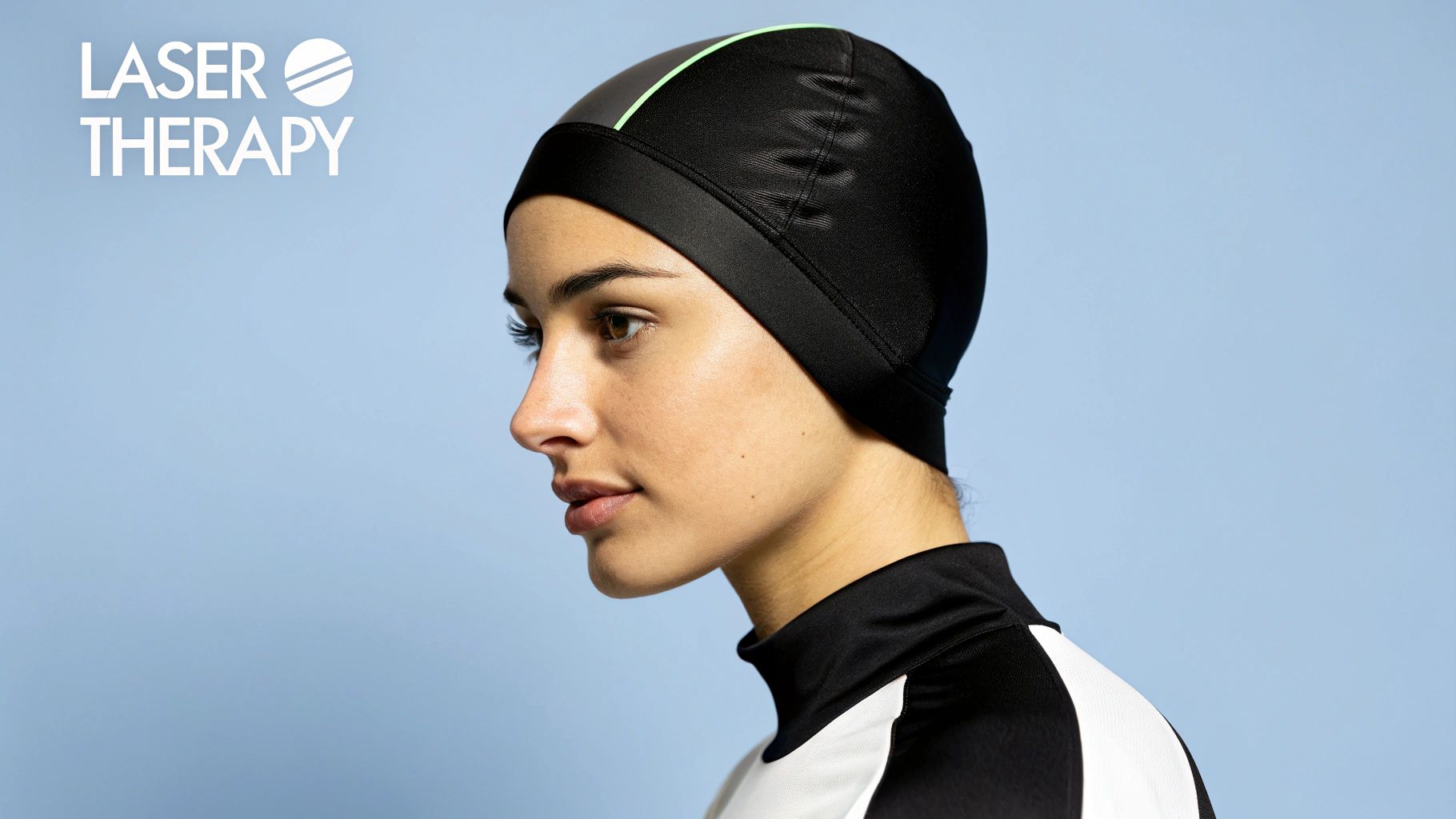
LLLT earns its place on this list due to its non-invasive nature and ease of use, making it a convenient option for men experiencing hair loss. Unlike surgery, there's no downtime or recovery period, and unlike medications, there are no known serious side effects. It’s also compatible with other hair loss treatments, meaning it can be used alongside PRP, topical solutions, or even after a hair transplant procedure to further enhance results. Clinical studies have shown an average increase of 17 new hairs per square centimeter after consistent LLLT use, showcasing its potential, especially for diffuse thinning patterns. It is often used as an adjunct therapy after transplantation or with PRP, boosting the efficacy of these procedures. For instance, after undergoing a hair transplant, LLLT can help stimulate the transplanted follicles and accelerate the healing process. Similarly, when used in conjunction with PRP, it can amplify the growth factors' effects, leading to more robust hair growth.
Pros:
- Can be self-administered at home with convenient devices.
- No downtime or recovery period, allowing you to integrate it seamlessly into your routine.
- Compatible with all other hair loss treatments, offering flexibility in your approach.
- One-time purchase for home devices (ranging from $300-$3,000), representing a potentially cost-effective long-term solution.
- Suitable for those who cannot use medications due to side effects or other contraindications.
Cons:
- Results are generally modest (10-20% increase in density) and may not be sufficient for everyone.
- Requires consistent, long-term use to see and maintain benefits.
- Not effective for completely bald areas where hair follicles are no longer viable.
- Quality, higher-powered devices, which are generally more effective, can be expensive.
- Results tend to plateau after 1-2 years of consistent use.
Tips for maximizing LLLT effectiveness:
- Clean your hair thoroughly before each treatment. Product buildup can reduce the light penetration and hinder effectiveness.
- Adhere to a consistent usage schedule, typically 20-30 minutes, 3 times weekly, as prescribed for your device. Consistency is crucial for optimal results.
- Higher-powered devices generally produce better results, so invest in a quality device if possible.
- Combine LLLT with topical treatments applied after the session to maximize benefits. The increased blood flow from LLLT can enhance the absorption of topical solutions.
- Track your progress by taking monthly scalp photos under consistent lighting. This will provide visual evidence of your progress and help you assess the effectiveness of the treatment.
LLLT offers a viable option for men seeking a non-invasive approach to combatting hair loss. While it might not be a miracle cure, its proven ability to stimulate hair growth, combined with its ease of use and compatibility with other treatments, makes it a valuable tool in the fight against hair thinning. When considering PRP vs hair transplant and other options, LLLT’s unique benefits offer another pathway towards a fuller head of hair. Devices from companies like HairMax, Capillus, and iRestore, along with research by experts like Dr. Michael Hamblin, have further popularized and legitimized this promising technology.
6-Option Hair Restoration Comparison
| Treatment Method | Implementation Complexity 🔄 | Resource Requirements ⚡ | Expected Outcomes 📊 | Ideal Use Cases 💡 | Key Advantages ⭐ |
|---|---|---|---|---|---|
| Platelet-Rich Plasma (PRP) Therapy | Minimally invasive; multiple sessions over months | Moderate; requires blood processing equipment and sessions | 30-40% improvement in hair count/thickness in responders | Early-stage androgenetic alopecia | Autologous, minimal downtime, low cost, no scarring |
| Follicular Unit Extraction (FUE) | Surgical; 6-8 hour session; precise follicle extraction | High; requires surgical team, micro-punch tools, anesthesia | Permanent, natural-looking hairline, visible after 12-18 months | Suitable for patients needing natural hairline with minimal scarring | Permanent results, less painful than FUT, no linear scar |
| Follicular Unit Transplantation (FUT) | Surgical; linear scalp strip removal; longer recovery | High; OR setup, surgical expertise, anesthesia | Permanent, high graft yield, full results in 12-18 months | Extensive baldness needing maximum grafts | Higher graft survival, cost-effective for large sessions |
| Combination Therapy: PRP + Transplant | High; surgical plus PRP sessions before/during/after transplant | Very high; combines surgical and PRP resources | Up to 75% increase in graft density; faster visible results | Patients seeking enhanced transplant survival and thicker hair | Synergistic effects, accelerated healing, better long-term results |
| DHT-Blocking Medical Therapy | Low; daily oral medication | Low; prescription medications | Prevents further loss in 80-90%, moderate regrowth in 30-60% | Early-stage hair loss, adjunct to other treatments | Non-invasive, scientifically proven, affordable |
| Low-Level Laser Therapy (LLLT) | Low; self-administered device usage 3x/week | Moderate; purchase of FDA-cleared devices | Modest density increase (~10-20%), visible after consistent use | Diffuse thinning, patients unable to use meds | Painless, no downtime, compatible with other treatments |
Choosing Your Best Path to Hair Restoration
Deciding between PRP and a hair transplant requires careful consideration of your individual hair loss situation, budget, and desired outcomes. This article has explored various options, including Platelet-Rich Plasma (PRP) therapy, Follicular Unit Extraction (FUE) and Follicular Unit Transplantation (FUT) hair transplants, combination therapy, and supplementary treatments like DHT-blocking medications and Low-Level Laser Therapy (LLLT). Each method offers unique advantages and addresses hair loss in different ways. PRP, for example, stimulates hair growth and strengthens existing follicles, while hair transplants offer a more permanent solution by relocating hair follicles to balding areas. Understanding these differences is key to making an informed decision. When exploring hair restoration options, it's also beneficial to consider various hair care treatments for hair that can complement your chosen path. These treatments can improve overall hair health and potentially enhance the results of PRP or hair transplant procedures. This information from Los Mejores Tratamientos para el Cabello en 2025 from mirik beauty provides additional insights.
Mastering these concepts empowers you to take control of your hair loss journey. By weighing the pros and cons of PRP vs hair transplant and understanding the role of supplementary treatments, you can make a proactive choice that aligns with your goals and sets you on the path to regaining a fuller, healthier head of hair and renewed confidence.
Taking that first step towards addressing your hair loss is crucial. If you're interested in learning more about the potential of PRP therapy, visit PRP For HairLoss for in-depth information and resources. This website provides valuable insights into PRP treatments and can help you determine if it's the right choice for you as part of your overall strategy, whether used alone or in conjunction with a hair transplant.


Leave a Reply