Yes, for many people struggling with hair loss, PRP is proving to be a genuinely effective solution. A growing body of research and clinical experience points to its success, especially for androgenic alopecia—the familiar condition you probably know as common pattern baldness.
The goal isn't just to halt hair loss but to actively ramp up hair density and thickness. It works by tapping into your body's own healing mechanisms to give dormant hair follicles a much-needed kickstart. While everyone's results will be a bit different, a significant number of patients see real, tangible improvements and feel much better about their hair.
How PRP Wakes Up Your Hair Follicles
Think of your hair follicles like tiny seeds that have gone dormant in the soil of your scalp. Platelet-Rich Plasma (PRP) therapy acts like a concentrated, all-natural fertilizer that gently prods them back to life.
The whole procedure is remarkably straightforward and harnesses the power already inside of you. It all starts with a simple blood draw, no different than one you'd have for a routine check-up. That blood sample is then placed in a centrifuge, a machine that spins it rapidly to separate the blood's components and isolate the good stuff: the platelets.
These platelets are your body’s first responders, absolutely packed with potent proteins known as growth factors. This concentrated, platelet-rich liquid—often called "liquid gold," and for good reason—is then carefully injected into the areas of your scalp where hair is thinning. This delivers a powerful dose of growth factors right where they're needed most, encouraging those sleeping follicles to wake up and re-enter an active growth phase.
The Science Behind the Stimulation
At its core, PRP is about restarting a natural process that has slowed down over time. Once injected, those growth factors get straight to work, sending out signals that help:
- Boost blood flow to the hair follicles, bringing in a fresh supply of oxygen and nutrients.
- Stimulate cell growth and extend the anagen, or active growth phase, of the hair cycle.
- Calm inflammation around the follicle, which is often a hidden culprit in hair loss.
This infographic does a great job of illustrating the simple three-step journey, from drawing your blood to activating the follicles.
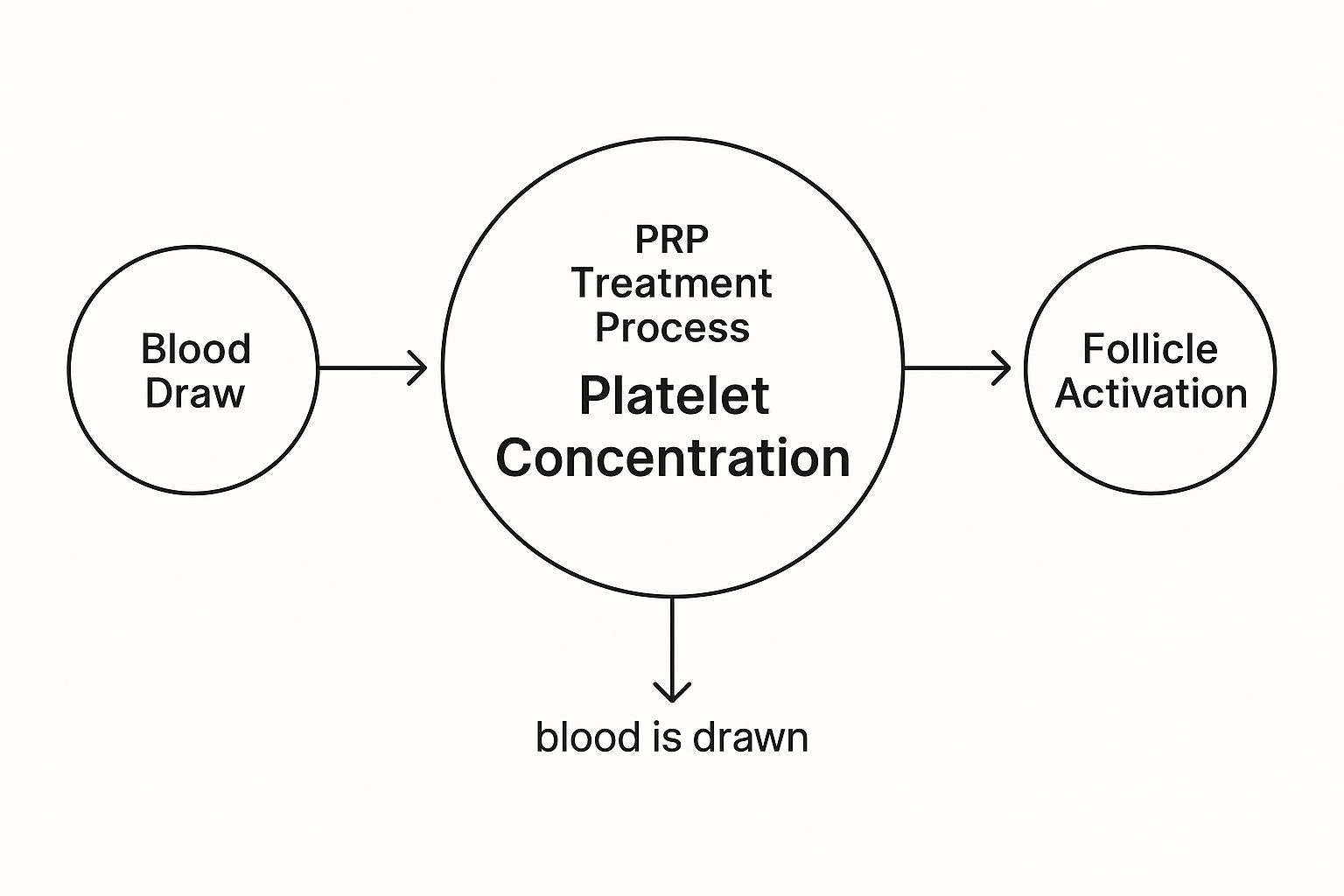
As the visual shows, a natural part of your own body is simply being refined and redeployed to help restore your hair right at the source.
From Theory to Real Results
So, does this scientific process actually make people happier with their hair? The data says yes. A study from the renowned Cleveland Clinic measured patient satisfaction before and after their PRP treatments. Before starting, the average satisfaction score was a pretty dismal 48.6 out of 100.
After just three months of PRP therapy, patients reported a major shift in how they felt. They noted better hair quality, fewer symptoms of hair loss, and—importantly—no negative side effects were reported. You can read more about the Cleveland Clinic's findings.
This really brings home the point that the benefits go beyond just hair counts; they have a real impact on a person's confidence and well-being. Once you understand the mechanics, it’s easy to see why PRP is gaining so much traction.
If you'd like to dig a bit deeper into the fundamentals, our guide on what is platelet-rich plasma is a great next step. Now, let’s look at some more of the clinical evidence that backs up these promising results.
The Clinical Proof Behind PRP's Effectiveness
Personal success stories are always encouraging, but when you're considering a medical treatment, you want to know if the science is solid. So, when we ask, "is PRP actually effective for hair loss?" what we're really looking for is hard, measurable evidence from clinical studies.
And the good news is, a growing body of research is delivering exactly that.
Scientists have moved beyond simple observation. They're now tracking concrete results like hair density (the number of hairs in a given area) and the actual thickness of the hair shaft. These aren't just subjective feelings; they're data points that prove whether a treatment is truly working.
Most of this research has zeroed in on androgenic alopecia—the technical name for male and female pattern baldness. Since it's the most common form of hair loss, understanding how PRP performs here gives us a clear picture of its potential.
Turning Clinical Trials into Real Answers
Scientific papers can be a bit dry, but their conclusions are often quite direct. Study after study is showing that when PRP is injected into the scalp, patients see a statistically significant increase in hair count compared to those who received a placebo.
And we're not talking about small, barely noticeable changes. These are measurable improvements that lead to visibly fuller hair. The real magic seems to be that the growth factors in PRP don't just nudge a few dormant follicles awake; they appear to boost the overall health and function of the entire treated area.
This process essentially coaxes follicles into a longer anagen (growth) phase. The result is thicker, stronger hair shafts that give you better scalp coverage.
Summary of Key PRP Clinical Trial Outcomes
The table below highlights some of the key findings from notable clinical studies. It’s a great way to see the measurable improvements in hair count and density that researchers have consistently observed.
| Study Finding | Patient Group | Key Improvement Metric |
|---|---|---|
| 31% Increase in Hair Count | Men with Androgenic Alopecia | Average follicular units rose from 71 to 93 per square cm after two treatments. |
| 40.6% to 54.7% of Participants | Men with Androgenic Alopecia | Percentage of patients achieving a "clinically important improvement." |
| Significant Hair Density Increase | Patients with Androgenic Alopecia | PRP group showed significantly higher hair density compared to the placebo group. |
These numbers aren't just statistics; they represent real, tangible progress for patients. The data consistently points toward PRP being a viable, effective solution for stimulating hair regrowth.
A Closer Look at the Data
Some of the most powerful evidence comes from randomized, controlled trials—the gold standard in medical research. One particular study looked specifically at men with androgenic alopecia to see if PRP could make a quantifiable difference.
The results were impressive. After just two treatments, the average hair count in the treated area increased from 71 to 93 follicular units per square centimeter. This represents a substantial rise of approximately 31% that held steady over a six-month follow-up.
This wasn't just a minor bump. Between 40.6% and 54.7% of the men in the study achieved what experts consider a "clinically important improvement." These figures confirm that PRP has a real, measurable effect on reviving hair follicles. You can dig into these specific hair follicle recovery findings on PMC yourself.
Building Confidence with Consistent Results
What really solidifies the case for PRP is seeing these kinds of findings pop up again and again across different studies. While the exact methods or patient groups might differ slightly, the overall trend points in the same direction: PRP works.
This growing collection of evidence helps us separate medical fact from marketing hype. It gives us confidence that the treatment is built on solid biological principles that produce repeatable results. For anyone thinking about investing in their hair restoration, that consistency is everything.
Understanding the numbers is a crucial part of the journey. If you're looking for a more detailed breakdown of what to expect, you can learn all about the PRP injection success rate in our dedicated guide. Knowing what the clinical data suggests helps you set realistic goals and make a truly informed decision.
PRP Results for Female Pattern Hair Loss
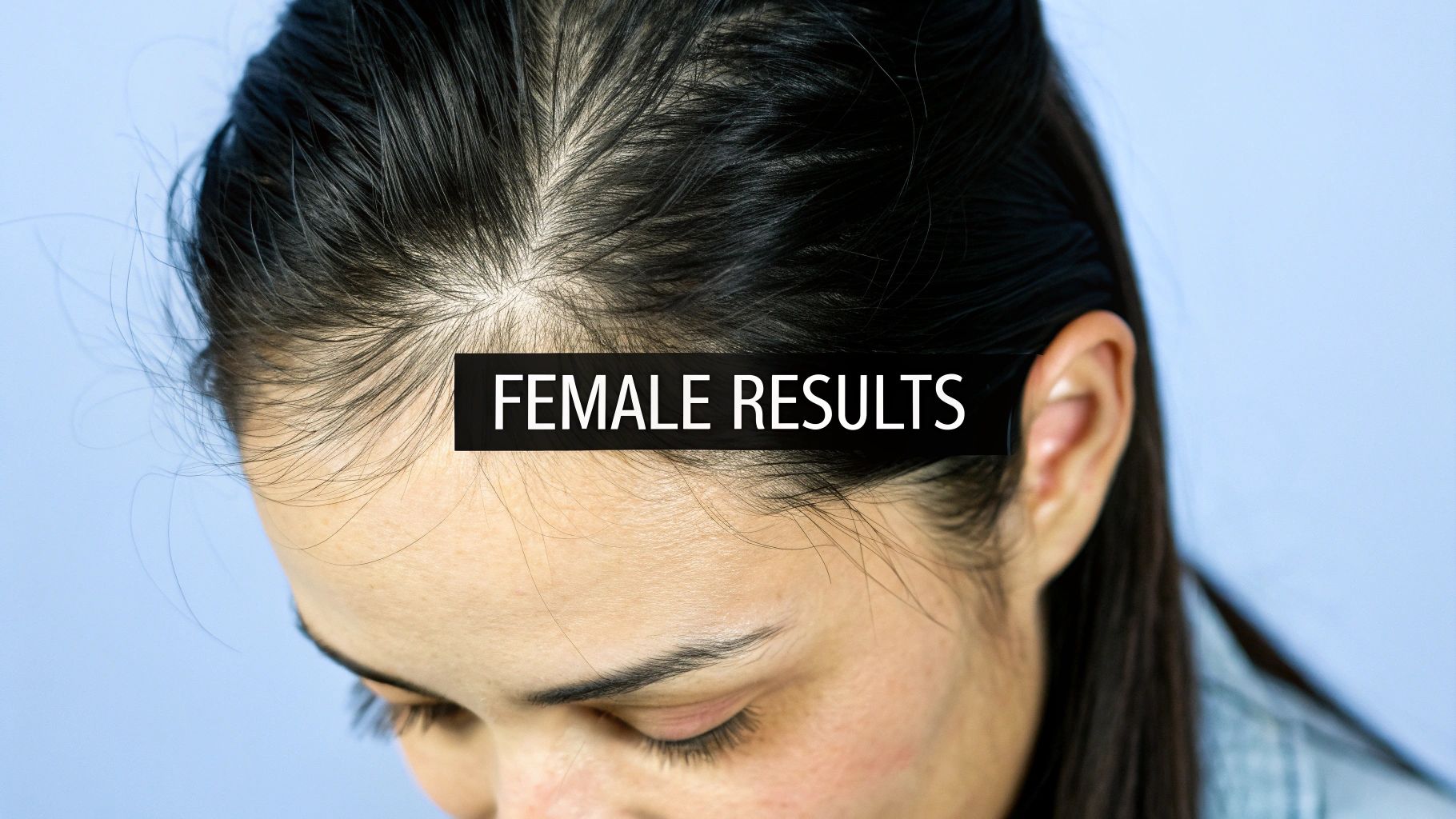
Hair loss is tough on anyone, but for women, it can be a deeply personal and frustrating experience. Unlike male pattern baldness, female hair loss often shows up as diffuse thinning right over the crown, making effective, non-surgical solutions a top priority. This is exactly where PRP has started to make a real name for itself, offering a way to target the specific nature of female hair thinning.
So, let's get right to it: does PRP actually work for women? The clinical evidence is stacking up, and it's pointing to a resounding "yes." Researchers have zeroed in on this specific group, and the results show significant gains not just in the number of hairs, but in the thickness and overall scalp coverage.
This isn't just anecdotal. It's grounded in solid, controlled science. Some of the most convincing studies use a "half-head" method, where they treat one side of a patient's scalp with PRP and the other with a placebo. This kind of direct, on-person comparison gives us some of the clearest proof of its effects.
Quantifying the Gains for Women
When you're looking into a treatment, you want to see measurable results. For women trying PRP, study after study shows a visible, quantifiable boost in hair health. We’re not talking about subtle changes you have to squint to see; we're talking about meaningful increases in hair density that make a real difference in how your hair looks and feels.
For instance, one key trial with 30 women experiencing female pattern hair loss found a significant jump in hair density after just three monthly PRP injections when measured against a placebo. Another one of those clever half-head studies showed similarly positive outcomes, confirming that the growth factors in PRP are what’s waking up those dormant hair follicles. If you want to dive into the data yourself, you can explore the research on PRP's impact on female androgenic alopecia.
These findings are so important because they scientifically back up what many women have been reporting from their own experience—that PRP can be a powerful part of their hair restoration plan.
What These Results Mean in the Real World
Clinical data is one thing, but the real-world impact is what truly counts. For women, better hair density means a lot more than just numbers on a chart.
- A Huge Confidence Boost: Fuller, healthier-looking hair can completely change how you feel, boosting self-esteem in both personal and professional life.
- Freedom to Style Your Hair Again: As hair gets thicker, styling options you might have given up on are suddenly back on the table. It brings back a welcome sense of normalcy.
- A Solid Non-Surgical Option: PRP gives a powerful alternative to women who aren't ready for, or simply aren't candidates for, surgical hair restoration.
The consistent success we're seeing in clinical trials offers a genuine message of hope. It places PRP at the forefront of non-surgical methods for women looking to take control of their hair thinning and bring back its health and vitality.
At the end of the day, the goal is to feel good about your hair again. The scientific support for PRP in treating female pattern hair loss is strong and growing, making it an excellent option for anyone seeking a natural and effective path forward.
What to Expect From Your PRP Treatment
Going into any new procedure, it really helps to know what’s coming. With PRP, the good news is that the process is quite simple, but walking through it step-by-step can ease any anxiety and help you feel prepared.
Your path to thicker hair starts with a one-on-one consultation. This is where a specialist will take a close look at your hair loss, discuss your goals, and make sure PRP is the right move for you. If you get the green light, each treatment session unfolds in three quick phases, all done in one visit.
A Look Inside a Typical PRP Session
The whole procedure is designed to be as efficient and minimally invasive as possible. Think of it as using your body’s own natural healing toolkit to kickstart hair growth—no surgery required.
Here's a breakdown of what happens on treatment day:
-
The Blood Draw: First things first, a small amount of blood is drawn from your arm. It’s no different than a standard blood test you’d get at your doctor's office.
-
The Separation Process: This is the high-tech part. Your blood is placed in a centrifuge—a machine that spins it at an incredibly high speed. This spinning action separates the blood into its different parts, allowing us to isolate and concentrate the powerful platelets into a golden, liquid form.
-
The Injections: With the platelet-rich plasma ready to go, your provider will skillfully inject it into the areas of your scalp that need it most. They use a very fine needle to make the process quick and minimize any discomfort.
Comfort, Timing, and a Dose of Patience
One of the first questions most people ask is, "Does it hurt?" You might feel a little pinch or some pressure during the injections, but it's generally very tolerable. To make sure you're comfortable, many clinics will apply a topical numbing cream or a cooling spray to your scalp beforehand. Any tenderness you feel afterward is typically mild and fades quickly.
It’s incredibly important to remember that hair growth is a marathon, not a sprint. The growth factors in the PRP need time to wake up dormant follicles and nudge them back into a new growth cycle.
This means you won’t see a change overnight. Most people begin to see the first positive signs—like less hair shedding and some fine, new hairs—after a few months. For a more detailed look at the journey, our PRP hair treatment timeline breaks it all down. The most noticeable results usually appear after you’ve completed your initial series of sessions, as it takes time for the new hair to grow in and mature.
Who Sees the Best Results with PRP Therapy

While PRP has shown remarkable promise, it’s not a one-size-fits-all solution for every type of hair loss. The therapy's success really hinges on what it has to work with. For that reason, the ideal candidate is usually someone who is just starting to notice their hair thinning or has been experiencing gradual hair loss over time.
Think of it like this: PRP is fantastic at waking up "sleepy" hair follicles, but it can’t resurrect follicles that have been dormant for years. If a patch of your scalp has been completely smooth for a long time, those follicles are likely beyond saving.
This is why people in the earlier stages of androgenic alopecia (your classic pattern baldness) are such prime candidates. Their follicles are often just miniaturized and weakened, not gone for good. A targeted boost of growth factors can be exactly what they need to kick back into a healthy growth cycle.
Key Factors for PRP Success
So, who is most likely to walk away thrilled with their results? The answer usually comes down to a few key things: the type of hair loss you have, how far it has progressed, and your overall health. When a specialist sits down with you, they're looking at the whole picture to figure out if PRP will be effective for you.
The best outcomes are almost always seen in people who:
- Are in the early stages of hair loss. The sooner you act, the better. Catching hair thinning early gives PRP the best possible chance to rejuvenate follicles before they shut down completely.
- Have areas of thinning hair, not complete baldness. Again, the treatment needs existing follicles to stimulate, even if they're small and weak.
- Are generally in good health. Because PRP relies on your own blood, your overall wellness directly impacts the quality of your platelets and your body's ability to heal and respond to the treatment.
When PRP May Not Be the Right Fit
On the flip side, it's important to be realistic—PRP is not a universal fix. Certain conditions can make the treatment less effective or even inadvisable, which is why an honest conversation with a specialist is so critical for managing expectations.
For example, individuals with specific blood-related conditions, a low platelet count, or an active infection on the scalp are typically not good candidates. The entire treatment is built on the healing power of your platelets; if their function is compromised, the results will be, too.
It's also crucial to understand that some types of hair loss, like scarring alopecia where the follicle is permanently destroyed, simply won't respond to PRP. The therapy can only revive follicles that are still capable of producing hair.
Ultimately, figuring out if you're a good candidate is the most important first step. A professional evaluation will do more than just give you a "yes" or "no"—it can help uncover the root cause of your hair loss. For those with a family history of balding, exploring your options through genetic hair loss testing can offer powerful insights and help you get ahead of the problem.
Your Top PRP for Hair Loss Questions Answered
Let's wrap things up by tackling some of the most common questions people have about PRP. Think of this as a final run-through of the essential details, helping you get a clear picture of what to expect if you decide this treatment is right for you.
How Many PRP Sessions Will I Need?
Think of the first few treatments as a "loading phase" designed to really wake up your hair follicles. Most specialists will recommend starting with a series of 3 to 4 sessions, typically spaced about 4 to 6 weeks apart. This initial consistency is crucial for building the momentum needed to kickstart new growth.
But the job isn’t quite finished after that. To protect your investment and keep your hair looking its best, you’ll need to plan for maintenance. The schedule can differ from person to person, but most find that one follow-up treatment every 6 to 12 months is perfect for sustaining the results. Your doctor will help you map out a schedule based on your unique pattern of hair loss and how your follicles respond.
Is the PRP Injection Process Painful?
This is probably one of the biggest questions on everyone's mind, and the simple answer is that it's very manageable. While you might feel some minor discomfort during the injections, your provider's top priority is making sure you're as comfortable as possible.
To make the whole process a breeze, they have a few tools at their disposal:
- Topical numbing creams are often applied to your scalp before the procedure starts.
- Local anesthetics can be used to numb the area more thoroughly.
- Cooling devices that blow cold air onto the skin can help distract the nerve endings.
Most people say the feeling is more like a temporary pressure or a quick, mild pinch. Any soreness you feel afterward is usually minimal and fades within a few hours, so you can get right back to your routine.
Can PRP Be Combined with Other Hair Loss Treatments?
Absolutely. In fact, many experts find that a multi-faceted approach often yields the best possible results. PRP works by using your body's own growth factors to stimulate follicles at a cellular level, which perfectly complements other treatments that tackle hair loss from different angles.
For example, pairing PRP with topical minoxidil (which boosts blood flow) or oral finasteride (which blocks the DHT hormone responsible for hair loss) creates a powerful, synergistic effect. It’s like fighting hair loss on multiple fronts, giving you a much more comprehensive strategy for success.
How Much Does PRP for Hair Loss Usually Cost?
PRP costs can swing quite a bit depending on a few things: where you live, the clinic you choose, and the experience level of your provider. As a general ballpark, a single session can run anywhere from $500 to over $1,500.
Keep in mind that you'll need an initial series of treatments to see real results, so the total upfront investment will likely be a few thousand dollars. It’s also important to remember that PRP is almost always considered a cosmetic procedure, meaning it's very unlikely to be covered by health insurance.
The long-term value of PRP really comes down to how long the results last. For a deeper dive into this, check out our article on how long PRP lasts for hair loss to get a better idea of what to expect from your investment over time.
At PRP For HairLoss, our mission is to give you clear, evidence-based information to empower your hair restoration journey. Explore our other resources to learn more about your options. https://prpforhairloss.com


Leave a Reply