So, let's get straight to it. Does dandruff actually cause your hair to fall out? The simple answer is no, not directly. Those little white flakes aren't grabbing onto your hair and pulling it out.
But—and this is a big but—the constant itching and inflammation that often come with a bad case of dandruff can definitely lead to hair shedding. The link is indirect, but it’s a real problem for a lot of guys. When you're constantly scratching an irritated scalp, you're physically damaging your hair follicles, and that can cause temporary hair loss.
The Real Story Behind Dandruff and Hair Loss
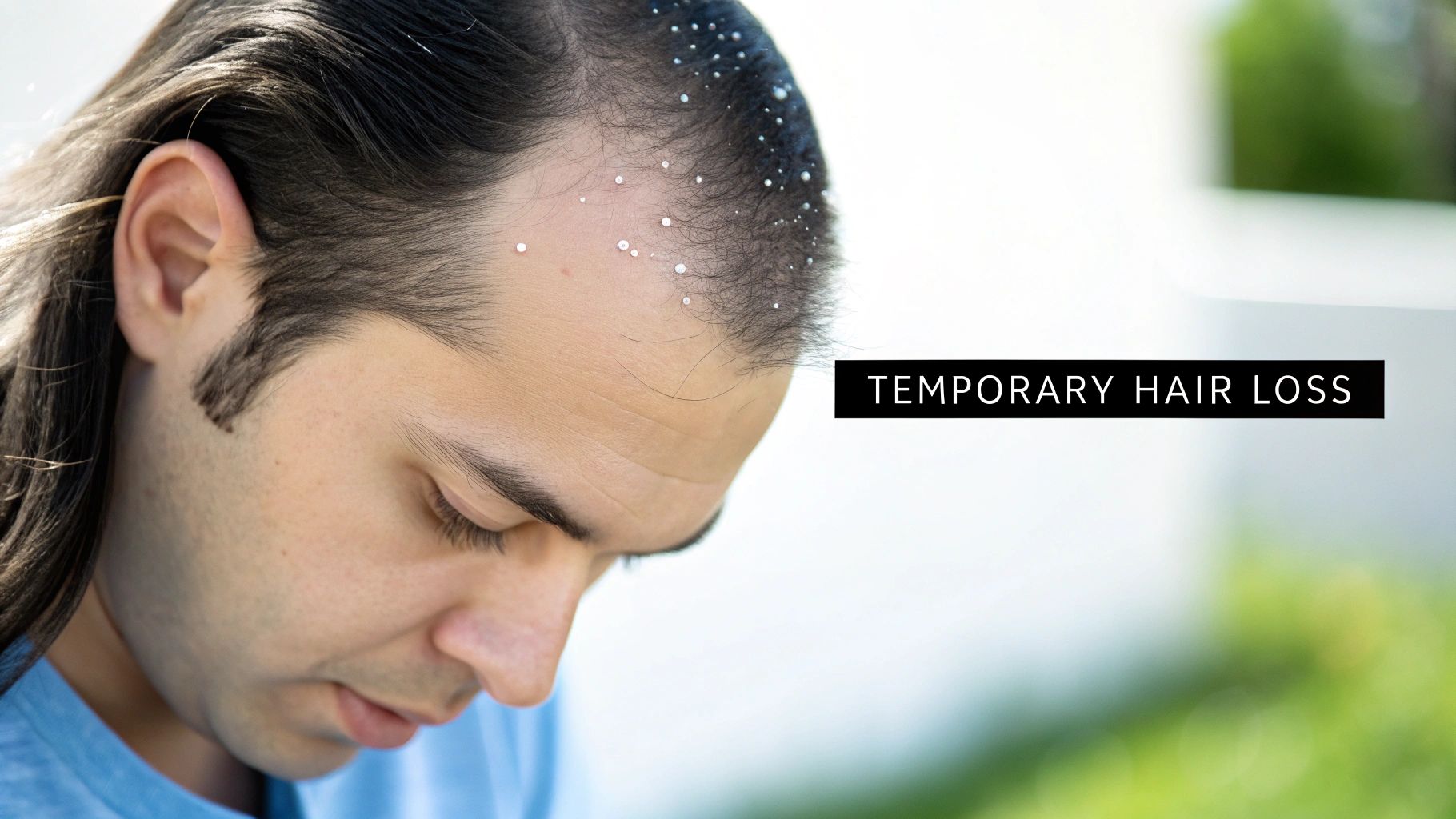
If you're noticing more hair circling the shower drain at the same time you're seeing more white flakes on your favorite dark shirt, it's easy to connect the two. But the actual villain here isn't the dandruff flake itself; it's the unhealthy scalp environment that's creating them in the first place.
Think of your scalp like soil in a garden. You can't expect healthy plants to grow in bad soil. Dandruff, and the inflammation that comes with it, essentially turns your scalp into poor-quality soil, making it tough for your hair to really thrive.
How Scratching Can Lead to Shedding
When your scalp is so itchy it feels like it's on fire, the urge to scratch can be overwhelming. But that constant, aggressive scratching does a lot of mechanical damage. You're not just getting rid of an itch; you're scraping at your scalp's surface and putting a ton of stress on your hair follicles.
This vicious cycle of inflammation and scratching weakens the hair right at the root. It messes with the normal growth process and can lead to noticeable thinning over time.
You're basically weakening the anchor that holds each strand of hair in place, and sometimes you're even pulling hairs out completely. This is the main reason so many men see a clear link between their dandruff and their thinning hair.
To get a better handle on this relationship, let's break down the key players in a table.
Dandruff vs Hair Loss The Real Connection
| Factor | Role in Dandruff | Impact on Hair Loss |
|---|---|---|
| Inflammation | A core symptom of dandruff and seborrheic dermatitis, causing redness and irritation. | Creates a hostile environment for follicles, disrupting the hair growth cycle. |
| Itching | The most common and frustrating symptom, driven by scalp inflammation. | Leads to scratching, which physically damages hair shafts and follicles, causing breakage and shedding. |
| Scratching | The physical response to itching. | Directly weakens hair roots and can pull out hairs prematurely, leading to temporary hair loss. |
| Microbial Imbalance | Overgrowth of the Malassezia fungus is a key trigger for dandruff. | This imbalance contributes to the inflammation that indirectly causes hair loss. |
As you can see, it's a chain reaction. The dandruff condition kicks off inflammation and itching, and our natural reaction—to scratch—is what ultimately damages the hair.
It's More Than Just an Itch
Concerns about scalp health are incredibly common. In fact, various scalp conditions are a major issue for a lot of people, with about 17.18% reporting them as a primary hair-related problem. That puts scalp issues nearly on par with worries about a thinning crown.
The good news? This kind of hair loss is usually temporary. Once you get the underlying inflammation and itching under control, you give your scalp a chance to heal and your hair a healthy place to grow back.
Dandruff is just one of several scalp conditions that cause hair loss. In the rest of this guide, we'll dig into why this happens and, more importantly, what you can do about it.
The Science Behind Your Itchy, Flaky Scalp
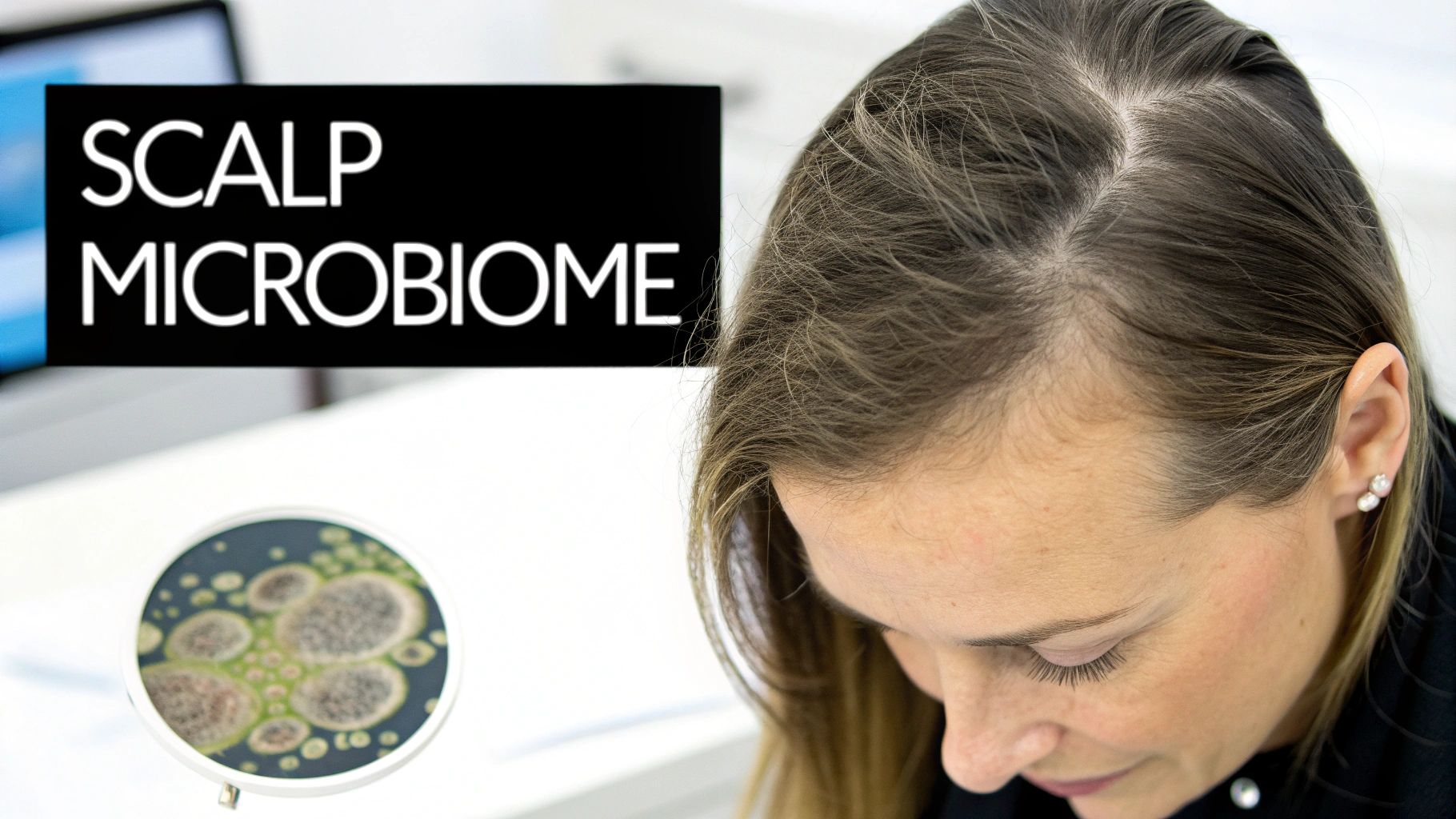
To really understand why dandruff is more than just an embarrassing problem, we need to zoom in and look at what’s happening on a microscopic level. Your scalp is a complex ecosystem, home to a whole community of bacteria and fungi that, most of the time, get along just fine.
A key player in this ecosystem is a yeast-like fungus called Malassezia globosa. For many of us, it’s a perfectly normal resident of our scalp. It just hangs out, not causing any trouble.
The problem starts when this fungus gets a little too comfortable and starts multiplying out of control. Think of a garden where one aggressive weed suddenly takes over, choking everything else out. This overgrowth is usually kicked off by an excess of scalp oil, or sebum.
The Microbiome in Overdrive
When Malassezia has too much oil to feast on, it produces a byproduct called oleic acid. For about half of the population, this acid is a major irritant, basically sounding the alarm for our scalp’s skin cells and triggering an inflammatory response.
Your body’s immune system then jumps into action to defend itself. This defensive move sends the skin cell renewal process into hyperdrive. Normally, your scalp sheds dead skin cells about once a month. With dandruff, this whole cycle can get crammed into just a few days.
This frantic pace is what creates those familiar white or yellowish flakes. It's not just dry skin; it's the visible proof of your body's over-the-top reaction to a microbial imbalance on your scalp.
Think of it like a domino effect: too much of a naturally occurring fungus leads to irritation, which sparks inflammation, which then causes a super-fast shedding of skin cells. And that relentless itch you feel? That's the inflammation talking.
When Dandruff Gets More Serious
Sometimes, this cycle can become more severe and persistent, turning into a condition known as seborrheic dermatitis. This isn't your average, everyday dandruff; it's a much more intense and chronic inflammatory skin disorder.
If you’re seeing greasy scales, noticeable redness, and stubborn patches along with the flaking, you might be dealing with something beyond standard dandruff. We cover this in more detail in our guide on what is seborrheic dermatitis.
Understanding this process is key because it shows us that the issue of dandruff causing hair loss isn't about the flakes themselves—it's about the underlying inflammation. This is a huge concern for millions, feeding a massive industry. In fact, the global hair and scalp care market hit a value of $103.15 billion in 2024, and you can bet anti-dandruff products make up a big chunk of that. It’s clear that people are desperate for solutions to keep their scalp healthy and their hair on their head.
Once you get the biological story behind your flaky, itchy scalp, you can stop just brushing away the symptoms and start targeting the real culprits: the fungal overgrowth and the inflammation. That’s the first real step toward getting your scalp back in balance and giving your hair a healthy foundation to grow from.
How Scalp Inflammation Weakens Your Hair
So, how exactly do we get from an itchy, flaky scalp to noticeably thinner hair? It’s all about the environment. Imagine the inflammation from dandruff as a constant, low-grade fire smoldering on your scalp. This chronic irritation creates a hostile environment that directly interferes with your hair's ability to grow strong and healthy.
It's just not a peaceful place for hair to thrive. Instead of focusing on growth, your scalp is busy diverting its resources to fight off what it perceives as a persistent attack. This sustained state of defense is exhausting for the tiny hair follicles trying to do their job.
Disrupting The Natural Hair Growth Cycle
Your hair grows in a predictable, three-phase cycle: growing (anagen), transitioning (catagen), and resting/shedding (telogen). On a healthy scalp, about 85-90% of your hair is in the anagen phase at any given time, actively growing for several years.
Inflammation throws a wrench into this whole system. It can prematurely kick hair follicles out of that active growing phase and push them straight into the shedding phase. This flood of hairs entering the telogen phase all at once is a direct cause of thinning you can actually see.
This is the real biological reason why the connection between dandruff causing hair loss is so strong for so many guys. It’s not just a few extra hairs in the sink; it’s a fundamental disruption of your entire growth cycle.
The itch-scratch cycle makes everything worse. Every time you give in to that itch, you're causing physical trauma to already fragile follicles. This friction can speed up hair fall and even snap the hair shaft itself, leading to breakage.
This two-pronged attack—internal inflammation from the dandruff and external physical damage from scratching—creates a perfect storm for hair thinning. The hairs that do manage to grow in this stressed-out environment are often weaker, thinner, and have a much shorter lifespan.
The Follicle Under Stress
Imagine trying to build a strong house on shaky ground during a constant storm. That's what your hair follicles are up against with chronic scalp inflammation. The biological stress can actually shrink the follicle over time, which means it starts producing thinner, finer hairs with each new growth cycle. If you want to get into the nitty-gritty on this, you can learn more about how scalp inflammation leads to hair loss and its effect on follicle health.
Here’s a breakdown of what’s happening at the cellular level:
- Oxidative Stress: Inflammation floods the area with free radicals—unstable molecules that damage the cells inside the hair follicle.
- Reduced Blood Flow: Persistent swelling can squeeze the tiny blood vessels that feed your hair roots, choking off the supply of vital nutrients and oxygen.
- Weakened Anchoring: The very structures that hold the hair shaft securely in the follicle become compromised, making it much easier for hair to be pulled out or shed.
Ultimately, once you understand that your hair loss might be a symptom of a compromised scalp, the path forward becomes much clearer. Getting your scalp health back on track isn't just about getting rid of flakes; it's about rebuilding the solid foundation your hair desperately needs to grow.
Is It Dandruff Or Something Else Entirely?
Not all flakes are the same. If you’ve been battling what you think is dandruff without much luck, you might be using the wrong tools for the job—because you could be dealing with a completely different issue. It's a common mistake for men to misdiagnose their own scalp condition, which only leads to frustration and ongoing hair thinning.
Figuring out what's really going on up there is the absolute first step toward finding some relief. Are you dealing with classic dandruff, simple dry skin, or a more stubborn condition like psoriasis? Getting this right can make all the difference.
Pinpointing The Problem On Your Scalp
Let’s get practical for a minute. The appearance of the flakes and the feel of your scalp skin are your two biggest clues.
Dandruff flakes are usually bigger, feel a bit oily, and often have a yellowish tint. This is because they're tied to an overproduction of scalp oil. On the other hand, flakes from a dry scalp are typically smaller, whiter, and more powdery—and you’ll probably notice dry skin on other parts of your body, too.
To help you get a clearer picture, this quick decision tree can guide your self-assessment.

The key takeaway here is pretty simple: oily, yellow flakes are a strong indicator of dandruff, while small, white flakes usually point to a dry scalp. Both can be itchy, but knowing this basic difference is crucial for choosing a treatment that actually works.
It’s also important to consider other possibilities. Conditions like scalp psoriasis present much more intensely, with thick, silvery scales on top of red, inflamed patches of skin. These are often chronic issues that really need a doctor’s eye to manage properly.
Identifying Your Scalp Condition: A Comparative Guide
To help you sort through the symptoms, here's a quick guide comparing the most common culprits behind an itchy, flaky scalp.
| Condition | Flake Appearance | Scalp Appearance | Common Symptoms |
|---|---|---|---|
| Dandruff | Larger, oily, yellowish-white clumps | Oily, red, and sometimes inflamed | Itching, visible flakes on hair and clothing |
| Dry Scalp | Small, fine, white, and powdery | Dry and tight, but not typically inflamed | Itching, a feeling of tightness, often worse in winter |
| Scalp Psoriasis | Thick, silvery-white scales | Well-defined, raised red patches | Intense itching, soreness, burning, potential bleeding if scratched |
| Seborrheic Dermatitis | Greasy, yellow or white scales/crusts | Red, greasy skin, inflamed | Stubborn flaking, significant itching, can affect face and chest |
Remember, this table is a guide, not a diagnosis. But it can give you a much better idea of what you might be dealing with.
It's easy to confuse these conditions because they share symptoms like itching and flaking. However, the root causes are very different, which means they respond to different treatments. Using a moisturizing shampoo for dandruff won’t fix the underlying fungal issue, and using an anti-fungal shampoo for dry scalp can make it even drier.
If your hair loss seems to have come on suddenly and is happening all over your head, it might be connected to other triggers entirely. For a deeper dive into different types of shedding, you can explore the distinctions between Telogen Effluvium vs. Male Pattern Baldness.
Knowing what you’re up against is empowering. It lets you take the right action. If your symptoms are severe, don't seem to get better with over-the-counter products, or just won't go away, your best bet is to see a dermatologist for an accurate diagnosis.
Proven Treatments to Restore Scalp Health
Okay, so we've connected the dots between a troubled scalp and thinning hair. Now, let's put together a practical plan of attack. Getting rid of dandruff isn't just about washing your hair more; it's about using the right weapons—active ingredients that target the root causes like fungal overgrowth and inflammation.
The good news? Your first line of defense is waiting for you at the local drugstore. High-quality over-the-counter (OTC) medicated shampoos are designed specifically to stop that frustrating cycle of itching and flaking, which is the key to stopping any related hair shedding.
Your First Line of Defense: OTC Shampoos
Staring at a wall of shampoos can feel overwhelming, but you only need to look for a few specific active ingredients. These are the heavy hitters that actually get the job done and restore balance to your scalp.
Think of these ingredients as different tools for the same job. One might be an antifungal powerhouse, while another is great at slowing down skin cell production. Finding the one that works for your scalp is often a matter of targeted trial and error.
Here are the most effective ingredients to look for on the label:
- Ketoconazole: This is a potent antifungal that goes directly after the Malassezia fungus. It’s incredibly effective at knocking down the fungal population, which in turn calms the inflammation and eases your symptoms. We take a deeper look into using ketoconazole shampoo for hair loss and its benefits here.
- Selenium Sulfide: This ingredient is a double threat. It slows the rapid turnover of skin cells (which causes the flakes) and has antifungal properties. It's a fantastic option for getting both flakes and irritation under control.
- Zinc Pyrithione: A true classic in the dandruff world, this ingredient has both antibacterial and antifungal properties. It helps reduce the microbes on your scalp that are fanning the flames of inflammation and flaking.
For the best results, really massage the shampoo into your scalp and let it sit for a good five minutes before rinsing. This gives those active ingredients enough time to work their magic. It's also a smart move to rotate between shampoos with different active ingredients every so often to keep the fungus from getting too used to one thing.
When to Escalate to Prescription Treatments
For a lot of guys, OTC shampoos do the trick. But they're not a magic bullet for everyone. If you’ve been using medicated shampoos consistently for a few weeks and the snowstorm on your shoulders isn't letting up, it’s time to level up your approach. Stubborn, severe dandruff, especially when it’s paired with noticeable hair thinning, often requires more firepower.
This is the point where seeing a dermatologist is a must. They can give you a definitive diagnosis—confirming it’s seborrheic dermatitis and not something else—and give you access to prescription-strength treatments.
These aren't just slightly stronger versions of what's on the shelf. We're talking about high-potency topical steroids to shut down severe inflammation fast, more powerful antifungal shampoos, or even oral medications for the most stubborn cases.
The demand for these solutions is huge and only growing. In 2025, the global dandruff treatment market is valued at around $10 billion and is expected to climb to $14 billion by 2033. This surge shows a growing understanding that a healthy scalp is the foundation of healthy hair.
If the drugstore remedies aren't cutting it, or you just have a gut feeling something more serious is going on, an online doctor prescription consultation can get you a professional diagnosis and the right prescription without the long wait. Taking that step is crucial for stopping the inflammatory cycle and giving your hair a real chance to recover.
Your Action Plan for a Healthy Scalp and Hair
Figuring out the link between dandruff and hair loss is a great first step, but that knowledge only becomes powerful when you put it into action. Lasting change comes from building a consistent routine.
Think of this as your practical checklist to start reclaiming your scalp's health today. The goal here is to create an environment where your hair can actually thrive.
It really starts with something as simple as how you wash your hair. When you're using a medicated shampoo, don't just rush through it. You need to give those active ingredients time to do their thing. Gently massage the lather deep into your scalp with your fingertips (never your nails!) and let it sit for a few minutes before you rinse it all out.
Lifestyle Tweaks For A Healthier Scalp
What you do in the shower is crucial, but your daily habits outside of it play a surprisingly big role. At the end of the day, your scalp is skin, and it’s often a mirror of your overall wellness.
Here are a few manageable adjustments that can make a real difference:
-
Get a Handle on Stress: I see it all the time—high stress levels trigger hormonal shifts that can send scalp oil production into overdrive. This extra oil is a feast for the fungus that causes dandruff.
-
Take a Look at Your Diet: While no single food is a miracle cure, a balanced diet rich in zinc, B vitamins, and healthy fats is fundamental for healthy skin everywhere, including your scalp. It helps your body regulate sebum production from the inside out.
-
Ease Up on Harsh Products: Gels, pomades, and heavy styling creams can create buildup on the scalp, trapping oil and dead skin cells. This often leads to irritation. Try to use them sparingly and make sure you're washing them out thoroughly.
It's so easy to focus only on what you put on your scalp. But what’s happening inside your body directly impacts its condition. These lifestyle changes are about supporting your medicated treatments from the inside.
Knowing When to Call a Professional
Over-the-counter options are effective, but they don't work for everyone. If you’ve been diligent with your routine for a month and see zero improvement—or worse, your symptoms are getting more intense—it’s time to stop guessing.
Persistent redness, severe itching that won't quit, or noticeable hair thinning are clear signals that you need a professional diagnosis. A dermatologist can get to the bottom of it, determine if there's an underlying condition at play, and open the door to prescription-strength treatments you just can't get on your own.
Frequently Asked Questions
Even with a solid game plan, it’s normal to still have a few questions. Let's tackle some of the most common concerns men have when they start treating their scalp.
How Long Until My Hair Grows Back After Dandruff Is Gone?
This is where patience is key. Once you get the flakes and inflammation under control, the extra shedding from your dandruff should slow down pretty quickly—usually within a few weeks.
But seeing new hair is a different story, and that’s all because of the natural hair growth cycle. You can typically expect to see the first signs of new, fine hairs sprouting within 3 to 6 months. This, of course, assumes the follicles haven't been permanently damaged from years of intense inflammation.
Do Natural Remedies Like Tea Tree Oil Actually Work?
Some natural ingredients, like tea tree oil, do have some mild antifungal properties. For a very minor case of occasional flakes, they might offer a bit of relief.
Think of them as a supportive player, not the star of the show. When you're dealing with the kind of moderate-to-severe dandruff that's actually causing hair thinning, these remedies just don't have the firepower to break that aggressive cycle of inflammation.
Sticking with proven, evidence-based medicated treatments is a much more reliable path to getting your scalp health back on track.
Will I Shed More Hair When I Start A Medicated Shampoo?
It can be unsettling, but yes, it’s surprisingly common to see a bit more shedding right when you start a new, effective scalp treatment. Try not to panic—this doesn't mean it's making things worse.
This initial shed happens because the new, healthier scalp environment and the act of washing can dislodge hairs that were already in the final "shedding" phase of their cycle. It’s a temporary clear-out that makes way for stronger, healthier growth. Think of it as your scalp hitting the reset button. For more detailed articles on health and wellness subjects, including those related to hair care, consider exploring Salthea's blog.
At PRP For HairLoss, we're dedicated to providing you with clear, evidence-based information to help you navigate your hair health journey. Learn more about your options at https://prpforhairloss.com.
 PRP For Hairloss
Leave a comment