Yes, scalp inflammation can absolutely be a direct cause of hair loss. The simplest way to think about it is to picture your scalp as the soil in a garden. If that soil is unhealthy—inflamed, irritated, or lacking nutrients—the plants (your hair) simply can't thrive. This kind of hostile environment can trigger shedding, slow down growth, and even stop new hairs from forming altogether.
The Link Between an Angry Scalp and Hair Loss
Imagine trying to grow a prize-winning rose bush in dry, cracked, and irritated soil. It just wouldn't work. The roots would struggle to take hold, they wouldn't get the nourishment they need, and the plant would eventually wither. Your scalp and hair have a very similar relationship. When we talk about scalp inflammation hair loss, we're talking about what happens when this delicate ecosystem gets thrown out of whack.
What's happening beneath the surface is that your immune system, which is usually your body's best defender, gets its signals crossed. It might overreact to things like stress, an infection, or even certain product ingredients. When it does, it floods the scalp with inflammatory cells that can mistakenly attack your hair follicles. This constant state of high alert disrupts the hair's natural growth cycle, pushing follicles prematurely out of the growing phase (anagen) and into the shedding phase (telogen).
The Warning Signs of Inflammation
The signals that this internal battle is happening are often things you can see and feel. Don't dismiss them as minor annoyances; they are your body's early warning system that your hair's foundation is compromised.
Key indicators to watch for include:
- Persistent Redness: A visible pink or reddish tint across parts of your scalp is a classic sign of increased blood flow due to the inflammatory response.
- Constant Itching or Burning: These sensations are often caused by inflammatory chemicals irritating the nerve endings in your skin.
- Tenderness or Pain: Your scalp might feel sore to the touch, much like a bruise.
- Flaking or Scaling: This occurs when inflammation speeds up the life cycle of your skin cells, causing them to build up and shed as visible flakes.
This visual guide breaks down just how common scalp inflammation is, what typically sets it off, and the first symptoms to look out for.
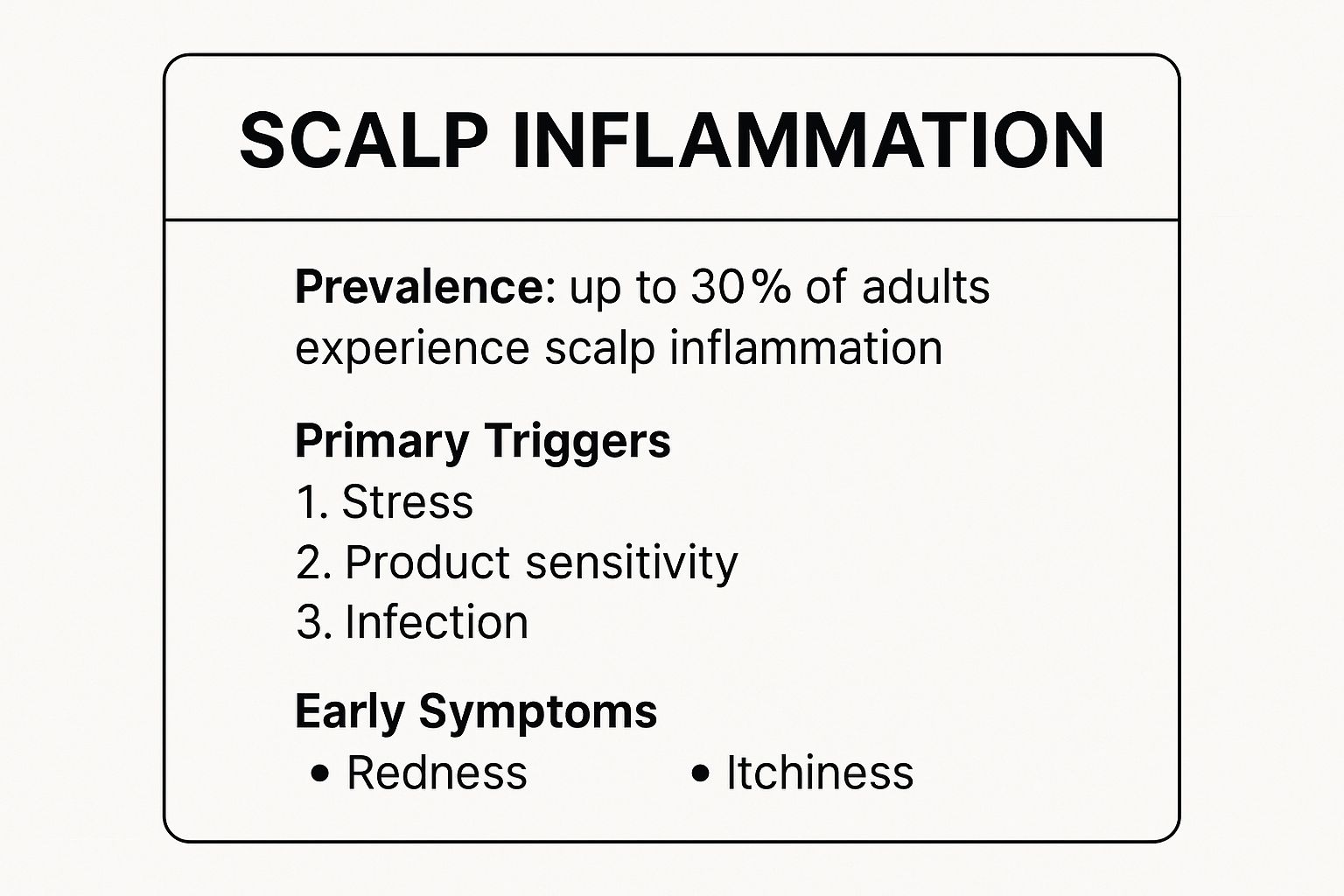
As the data shows, this is a widespread problem. It's often triggered by everyday things like stress or a reaction to a new shampoo, with redness and itching being the most common first clues.
Understanding the Conditions
Several distinct medical conditions can set off this inflammatory cascade, each affecting the hair a little differently. To help clarify, here's a quick overview of some common culprits.
Quick Guide to Scalp Inflammation Types and Their Impact
This table provides a snapshot of common inflammatory scalp conditions and the type of hair loss they typically cause.
| Inflammatory Condition | Primary Symptoms | Common Hair Loss Pattern |
|---|---|---|
| Seborrheic Dermatitis | Greasy scales, yellow or white flakes, itching, redness | Diffuse thinning across the scalp |
| Psoriasis | Thick, silvery scales on red patches, itching, burning | Patchy hair loss in affected areas |
| Alopecia Areata | Smooth, round bald patches, no scarring | Round or oval patches of complete hair loss |
| Folliculitis | Small, pimple-like bumps at the base of hair follicles | Can lead to scarring and permanent spotty loss |
| Contact Dermatitis | Itchy, red rash, sometimes with blistering | Hair loss localized to the area of contact/rash |
Understanding the specific condition is key because the treatment needs to match the cause.
One of the most powerful examples of this link is alopecia areata, an autoimmune disorder where the body's own immune cells directly attack hair follicles.
Alopecia areata (AA) is the most prevalent autoimmune disorder and the second most common cause of hair loss, affecting approximately 2% of the global population at some point in their lives. This equates to an estimated 160 million people worldwide, highlighting the massive scale of hair loss driven by inflammation. You can discover more insights about this condition from the National Center for Biotechnology Information.
By recognizing the early signs and understanding the direct connection between an irritated scalp and thinning hair, you can take action. Ignoring symptoms like persistent itching or redness allows the underlying inflammation to continue, potentially causing more significant and sometimes permanent damage to your follicles. Getting to the root cause isn't just a figure of speech—it's the critical first step toward restoring a healthy scalp and encouraging your hair to grow back.
Of course. Here is the rewritten section with a more natural, human-expert tone.
Why Your Scalp Becomes Inflamed
To get a handle on scalp inflammation hair loss, we first have to understand what’s causing all that irritation. Think of your scalp as a delicate ecosystem. When everything is in balance, your hair grows happily. But when something disrupts that balance, things can go wrong—fast.
At the heart of the issue is often your own immune system. It’s supposed to be your body's security detail, fighting off genuine threats like bacteria and viruses. Sometimes, though, it gets its wires crossed and mistakes your own hair follicles for hostile invaders.
When that friendly fire happens, the immune system floods the area with inflammatory cells. This creates a state of chronic irritation right at the hair's root. You'll feel this as itching, burning, or redness, and you might see flakes. This constant battle puts immense stress on the hair follicles, disrupting their growth cycle and leading to noticeable shedding and thinning.
When Your Body Attacks Itself
Sometimes, the most direct cause of scalp inflammation is an autoimmune response, where the body's defense system fundamentally misunderstands its own cells. The classic example in the world of hair loss is Alopecia Areata.
With this condition, the immune system launches a targeted attack specifically on hair follicles that are in their growth phase. This assault causes hair to fall out, often in those tell-tale smooth, round patches. The follicles aren't dead—they're just being suppressed by all the inflammation. The result is sudden, unpredictable hair loss that perfectly illustrates the link between a confused immune response and baldness.
Another common culprit is psoriasis, a chronic condition rooted in an overactive immune system. While we think of it as a skin issue, it frequently flares up on the scalp. Psoriasis kicks skin cell production into overdrive, causing those thick, red, scaly plaques to form.
These plaques don't just sit there; they create intense inflammation that can literally suffocate the hair follicles. The severe itching that comes with it leads to scratching, which causes even more physical damage and temporary hair loss. While the hair usually grows back once a flare-up is under control, severe and persistent inflammation can, unfortunately, cause permanent damage to the follicles.
When Infections Are the Culprit
Not all inflammation is a case of mistaken identity. Sometimes, the problem is a genuine external threat. Fungal and bacterial infections can set up shop on your scalp, triggering an immune response that, while justified, is still damaging to your hair.
A classic example is folliculitis, which is just what it sounds like: inflammation of the hair follicles. It's usually caused by bacteria (like Staphylococcus aureus) and looks like small, red or white-headed pimples at the base of your hair. If you don't treat it, a bad case can damage the follicles so severely that it leads to scarring, which means hair can't grow back in that spot.
Fungal infections, like tinea capitis (you might know it as scalp ringworm), are another major trigger. This fungus doesn't just sit on the skin; it invades the hair shaft itself. This leads to inflammation, scaling, and brittle hair that snaps off right at the scalp. The body's battle against the fungus creates an inflammatory storm that’s a major contributor to hair loss.
Let's break down these common triggers.
| Cause Category | Primary Trigger Example | How It Causes Hair Loss |
|---|---|---|
| Autoimmune | Alopecia Areata | Immune cells directly attack and suppress hair follicles. |
| Chronic Skin Condition | Scalp Psoriasis | Rapid skin cell buildup creates plaques that stress follicles. |
| Bacterial Infection | Folliculitis | Bacteria inflame follicles, potentially causing scarring. |
| Fungal Infection | Tinea Capitis | Fungus invades hair shafts, leading to breakage and inflammation. |
Allergic Reactions and Irritants
Finally, scalp inflammation isn't always tied to a disease or infection. Sometimes, the problem is a direct reaction to something you're putting on your head. This is called contact dermatitis, and it shows up in two main ways:
- Irritant Contact Dermatitis: This happens when a substance is harsh enough to directly damage the skin's protective barrier. Think of aggressive chemicals in some shampoos, styling products, or hair dyes that strip the scalp of its natural oils, leaving it red, dry, and inflamed.
- Allergic Contact Dermatitis: This is a true allergy. Your immune system overreacts to a specific ingredient that might be perfectly fine for most people. Common culprits are fragrances, preservatives, and chemicals like PPD in hair dye.
In both situations, the rash and inflammation make for a terrible hair-growing environment. The non-stop itching can also lead to scratching that physically breaks the hair, making the shedding even worse. Figuring out which product is causing the problem and cutting it out is key to calming things down and stopping the hair loss.
How Professionals Diagnose Inflammatory Hair Loss
If you're noticing the frustrating signs of scalp inflammation hair loss, the single most important step you can take is to see a professional. Trying to self-diagnose often leads to a dead end. Getting to the bottom of the problem requires a precise diagnosis, which is the cornerstone of any treatment plan that will actually work.
Your first visit will start with a conversation and a close visual look at your scalp. Your doctor needs the full picture, so they'll ask about your health history, any family history of hair loss, your diet, stress levels, and the products you're using. From there, they'll meticulously examine your scalp for tell-tale signs like redness, scaling, or particular patterns of thinning.
The Initial Consultation and Visual Exam
This first meeting is a lot more than a simple chat; it’s a critical fact-finding mission. The way your hair is thinning and the condition of your scalp skin offer major clues. For instance, the distinct, silvery scales of psoriasis look completely different from the greasy, yellowish flakes associated with seborrheic dermatitis.
Don't be surprised if your doctor performs a gentle "hair pull test." It sounds simple, but it's an effective way to gauge the severity of shedding. They'll lightly tug on a small bunch of about 50-60 hairs to see how many come loose. If more than a handful come out, it typically points to active shedding that goes beyond the normal hair growth cycle.
Key Takeaway: A detailed personal and family medical history is vital. Many inflammatory conditions are genetic or tied to other health issues, so being open with your doctor helps them connect the dots for an accurate diagnosis.
Advanced Diagnostic Tools
Sometimes, a visual check isn't quite enough to solve the puzzle. When that happens, dermatologists bring in more advanced tools to see what’s going on at a microscopic level. This helps them move past just looking at symptoms to identifying the root cause with real certainty.
One of the most powerful and common tools is trichoscopy. Think of it like an ultrasound for your hair. Using a handheld magnifying device called a dermatoscope, your doctor can get an incredibly detailed view of your hair follicles, scalp skin, and individual hair shafts.
This simple, non-invasive test can reveal specific markers for different conditions:
- "Yellow dots" can signal empty hair follicles, often a hallmark of alopecia areata.
- Pigtail hairs, which are short, regrowing hairs, also point toward alopecia areata.
- Tree-like blood vessels are a common indicator of scalp psoriasis.
For complex cases, the most definitive diagnostic method is a scalp biopsy. It sounds more intense than it is. It's actually a quick, minor procedure where the doctor numbs a small area of your scalp and removes a tiny skin sample, usually just 4 millimeters wide.
That tissue sample goes to a lab, where a pathologist examines it under a microscope. A biopsy can definitively identify the type of inflammatory cells causing the trouble, confirm or rule out scarring forms of alopecia, and provide an unambiguous picture of the hair follicles' health. It’s an unmatched level of detail that’s essential when the answer isn't obvious.
This kind of precise diagnostic work is more important than ever. The incidence of conditions like alopecia areata has been climbing, with global cases rising by an estimated 49.14% between 1990 and 2019. Research suggests this increase is particularly notable in regions dealing with issues like micronutrient deficiencies. You can learn more about these global hair loss trends from comprehensive scientific studies.
Modern Treatments for Scalp Inflammation
https://www.youtube.com/embed/Q3PZA9SzYPQ
Once your doctor has pinpointed exactly why your scalp is inflamed, you can finally start exploring real solutions for the resulting scalp inflammation hair loss. The strategy here is twofold: first, we need to calm the irritation to stop the assault on your hair follicles, and second, we have to create a healthy scalp environment where hair can actually regrow.
This isn't a one-size-fits-all problem. Finding the right treatment means taking a strategic approach that can range from simple topical creams all the way to systemic medications that work from the inside out.
Often, the first line of defense involves treatments you apply directly to your scalp. This method delivers medicine right where it's needed most, giving you targeted relief from the inflammation without affecting the rest of your body.
Topical Solutions and Medicated Shampoos
Think of topical treatments as sending firefighters straight to the source of the blaze. For conditions like psoriasis or seborrheic dermatitis, medicated shampoos, foams, solutions, and creams are usually the go-to starting point. They're easy to use at home and can be surprisingly effective for mild to moderate cases.
You'll find a few key ingredients in these products:
- Corticosteroids: These are heavy-hitting anti-inflammatory agents, like clobetasol, and are considered a gold standard in treatment. They work by dialing down the local immune response, which in turn reduces that frustrating redness, itching, and scaling.
- Coal Tar and Salicylic Acid: These are classic over-the-counter ingredients that have stood the test of time. Coal tar helps slow down the out-of-control skin cell growth you see in psoriasis, while salicylic acid works to soften and lift away thick scales, clearing the way for other medications to penetrate the skin more effectively.
- Antifungals: If the inflammation is caused by a fungal culprit (like in severe dandruff or tinea capitis), shampoos with ketoconazole or selenium sulfide are crucial for wiping out the infection at its source.
Because they target the problem area with such precision, these topical solutions are a logical first step. But for more stubborn or widespread inflammation, your doctor might need to bring in bigger guns.
Oral and Systemic Medications
When creams and shampoos just aren't cutting it, the next step involves medications that work throughout your entire body. These are typically reserved for more severe cases of scalp inflammation hair loss, especially those driven by an overactive immune system, like certain autoimmune conditions.
These oral medications are powerful tools that require a doctor's prescription and close monitoring. They generally fall into a couple of main categories.
Immunosuppressants: For tough conditions like severe alopecia areata or psoriasis, doctors may prescribe drugs like methotrexate or cyclosporine. These medications work by toning down your entire immune system to prevent it from mistakenly attacking your hair follicles.
Biologics: This is a more modern class of drugs that acts with incredible specificity. Instead of suppressing the whole immune system, biologics block the very particular inflammatory signals involved in a condition. Often given by injection, they can be a game-changer for severe, autoimmune-driven inflammation.
A dermatologist can help you find the best formula for your needs. As experts often point out, the scalp can be a tricky area to treat simply because of the hair. Options like foams, solutions, and oils can be chosen based on your hair type and what feels most comfortable, ensuring you can stick with the treatment consistently.
For people who need a truly customized solution, exploring options like personalized compounded medications can be a fantastic modern approach. This allows a pharmacist to create a special formula that combines several active ingredients at just the right strengths for your unique situation.
Light Therapy and Laser Treatments
Another highly effective tool for calming an angry scalp, especially one affected by psoriasis, is light therapy, also known as phototherapy. This treatment uses controlled, therapeutic exposure to ultraviolet (UV) light to slow down the rapid growth of skin cells and reduce inflammation.
This therapy is usually administered in a couple of ways:
- Narrow-Band UVB: This specific wavelength of UV light has proven to be incredibly effective for psoriasis. It’s delivered in a clinical setting to make sure the dose is safe and precise.
- Excimer Laser: This technology lets a dermatologist aim a high-intensity beam of UVB light directly at the inflamed patches of skin, leaving the healthy skin around them untouched. It's a fantastic option for targeting smaller, more stubborn areas of scalp inflammation.
At its core, light therapy harnesses the healing properties of light to interrupt the inflammatory cycle that leads to hair loss. It’s a powerful non-drug option that brings significant relief to many people when other methods haven't been enough. By understanding this full spectrum of treatments—from simple shampoos to advanced biologics—you and your doctor can build a plan to finally quiet your scalp and pave the way for healthy hair to return.
Understanding PRP Therapy for Hair Restoration
When we talk about advanced solutions for scalp inflammation hair loss, Platelet-Rich Plasma (PRP) therapy often comes up, and for good reason. It’s a fascinating approach that uses your body's own healing abilities to soothe inflammation and kickstart your hair follicles. For many men watching their hair thin, it's become a very compelling option.
The core idea is actually quite simple. The whole thing starts with a standard blood draw, no different than one you'd get at a routine physical. That blood is then spun in a machine called a centrifuge.
As it spins at high speed, the blood separates into layers. The magic is in one of those layers: the plasma, which is now incredibly rich in platelets. These are the same tiny cells that rush to the scene to help you heal from a cut or scrape.
The Power of Concentrated Growth Factors
So, what makes these platelets so special for your scalp? They are absolutely packed with potent proteins called growth factors. You can think of these as your body’s own elite repair crew.
When we take this concentrated "crew" and inject it back into your scalp, they get right to work. They dial down the inflammation that's been suffocating your hair follicles while simultaneously signaling dormant follicles to wake up and start growing again. This process also boosts blood flow, ensuring a fresh supply of nutrients reaches the hair roots.
In short, PRP therapy is a type of regenerative medicine. It doesn't rely on foreign substances. Instead, it creates a super-charged healing environment right where you need it, giving your hair a much better chance to thrive.
What to Expect from the PRP Process
Getting PRP therapy isn't a one-and-done deal; it's a journey. To see the best results, you'll typically go through a series of sessions spread out over time.
A typical treatment plan looks something like this:
- Initial Phase: Most people begin with a few treatments spaced about four to six weeks apart for the first three months. This helps build momentum.
- Maintenance Phase: After that initial push, your doctor will likely suggest follow-up treatments every four to six months to maintain your results and keep the follicles healthy.
The procedure itself is surprisingly fast. Once your personalized PRP serum is ready, it's meticulously injected into the areas of your scalp where you're experiencing thinning. While you might feel some minor discomfort, most people find it very manageable.
Because PRP taps into your body's natural healing systems, it's especially effective for hair loss driven by inflammatory conditions. It represents a powerful, non-surgical path for men who not only want to halt their hair loss but also encourage genuine, noticeable regrowth.
Managing Your Scalp Health at Home
While a specialist’s care is crucial for getting serious scalp inflammation hair loss under control, your daily habits are just as important. Think of your at-home routine as the foundation—it supports professional treatments, helps prevent flare-ups, and ultimately gives you more power over your scalp's health.
Building a calm, healthy environment for your scalp isn't complicated. It really comes down to being more mindful about what you’re putting on your hair and how you’re treating it. The aim is simple: cut out the irritants and stop doing things that make existing inflammation worse.
Build a Gentle Hair Care Routine
The products lining your shower shelf can either be a soothing balm or a major source of irritation. Many common hair products are loaded with harsh chemicals that strip your scalp of its natural protective oils, leaving it vulnerable and inflamed. A few smart swaps can change everything.
- Choose Sulfate-Free Shampoos: Sulfates are what make shampoos super sudsy, but they are notoriously harsh and can leave a sensitive scalp feeling dry and angry. Look for gentler, sulfate-free formulas.
- Avoid Harsh Chemicals and Fragrances: Things like hair dye, styling products with high alcohol content, and strong perfumes are common culprits for contact dermatitis. Opt for products designed for sensitive skin or labeled "hypoallergenic."
- Be Gentle: When you wash your hair, use the soft pads of your fingertips to massage shampoo into your scalp. Never use your nails! Aggressive scratching only creates more irritation and can physically damage your hair.
Key Insight: When it comes to scalp care, consistency beats intensity every time. A gentle daily routine does far more good than sporadic, harsh treatments. It’s all about creating sustainable habits that support your scalp for the long haul.
Fuel Your Body to Fight Inflammation
It’s no secret that what you eat has a direct line to your body's inflammatory levels. Adopting an anti-inflammatory diet is a powerful way to calm your entire system from the inside out, and your scalp will absolutely benefit.
This means filling your plate with whole, nutrient-rich foods. Focus on things packed with omega-3 fatty acids, like salmon, walnuts, and flaxseeds, which are famous for their inflammation-fighting power. Colorful fruits and vegetables are also key, as they're loaded with antioxidants that protect your cells from stress.
While you're zeroing in on scalp-specific care, don't forget the bigger picture. A strong immune system is your best defense against inflammatory conditions. If you're curious about how gut health connects to this, you can learn more about the role of probiotics in immunity and see how it all ties together.
Master Your Stress Levels
Stress is a well-known trigger for all sorts of inflammatory issues, and the scalp is no exception. When you're constantly stressed, your body pumps out cortisol, a hormone that can throw your immune system into high alert and make inflammation flare up.
Finding healthy ways to manage your stress isn’t just a nice-to-have for your mental state; it's non-negotiable for your scalp health.
- Practice Mindfulness or Meditation: Just 10-15 minutes a day can make a real difference in lowering cortisol and calming your nervous system.
- Get Regular Exercise: Moving your body is a fantastic stress-buster and also improves blood flow, which is great for your scalp.
- Prioritize Sleep: Skimping on sleep throws your body’s regulatory systems out of whack, including its ability to manage inflammation. Aim for a solid 7-9 hours a night.
To make things even easier, here’s a quick guide to help you get started on building a scalp-friendly lifestyle.
Anti-Inflammatory Lifestyle Quick-Start Guide
| Category | Do | Avoid |
|---|---|---|
| Diet | Eat fatty fish, leafy greens, berries, nuts, and seeds. | Limit processed foods, sugar, refined carbs, and fried foods. |
| Hair Care | Use sulfate-free shampoos and gentle, hypoallergenic products. | Use products with harsh chemicals, alcohol, and strong fragrances. |
| Stress | Practice meditation, get regular exercise, and aim for 7-9 hours of sleep. | Neglect sleep, overcommit yourself, and ignore signs of burnout. |
By weaving these simple strategies into your life, you create a supportive environment where your scalp can finally breathe and begin to heal. This proactive mindset is a game-changer, empowering you to manage your condition effectively between appointments and take back control of your hair health journey.
Common Questions About Scalp Inflammation and Hair Loss
When you're dealing with scalp inflammation and seeing more hair in the brush, you're bound to have questions. It's a confusing and often stressful experience, so getting clear answers is the first step toward feeling back in control. Let's walk through some of the most common concerns we hear from people just like you.
Is This Hair Loss Reversible?
This is usually the first and most pressing question on everyone's mind. The good news is that in many situations, the answer is a hopeful yes.
When the hair loss is a direct result of inflammation—and the hair follicle itself isn't permanently scarred or damaged—the condition is often temporary. Once you get the inflammation under control and your scalp returns to a healthy, calm state, your dormant hair follicles can get back to work and start growing hair again.
How Long Until I See Improvement?
Patience is probably the hardest part of this process. Naturally, you'll want to know how long it will take to see a change. The timeline really varies from person to person, depending on what's causing the inflammation, how severe it is, and how your body responds to treatment.
Generally, you should plan on three to six months of consistent treatment before you see a noticeable decrease in shedding or the first fuzzy signs of new growth. Remember, hair growth is a slow, multi-stage process. The first goal is to put out the fire—the inflammation—before your scalp can even begin to rebuild.
The emotional weight of this journey is real, and it’s something we can't ignore. It's easy to feel isolated, but the psychological impact of inflammatory hair loss is a well-known part of the condition.
Studies on conditions like alopecia areata reveal just how deep the impact goes. About 95% of people with the condition report feeling self-conscious about their appearance, and many will even avoid social events because of it. You can read more about the psychological burden of inflammatory hair loss to understand you are far from alone in these feelings.
Is My Hair Loss Genetic?
It's also common to wonder if you were destined for this. Does scalp inflammation run in the family? Genetics can absolutely be a factor.
Some inflammatory conditions that lead to hair loss, like alopecia areata and psoriasis, have a known genetic link. If you have a parent or sibling with one of these conditions, you might be more susceptible.
However, having the gene doesn't mean you're guaranteed to get the condition. Think of it like a light switch; the gene is there, but something from the environment—like a period of intense stress, an illness, or a reaction to a harsh chemical—often has to flip that switch on. Sharing your family's health history with your doctor can provide incredibly valuable clues for a faster, more accurate diagnosis.
At PRP For HairLoss, we know that clear, honest information is the foundation for finding the right solution. We create detailed guides on proven treatments like PRP to help men understand their options and move forward with confidence. To learn more about how PRP therapy can help and if it’s the right path for you, visit us at prpforhairloss.com.


Leave a Reply