If you're dealing with thinning hair, you understand the frustration that comes with searching for a real solution. It often feels like a slow-motion battle, with temporary fixes that never quite deliver on their promises. The good news? There are innovative options that work with your body's natural processes, not against them.
Enter the PRP procedure for hair. This isn't about introducing foreign chemicals or undergoing major surgery. Instead, this advanced, non-surgical treatment taps into the powerful healing and growth potential already packed inside your own blood. It’s a method that’s gaining so much traction because it targets the problem right at the source: the hair follicle itself.
Exploring PRP as a Solution for Hair Thinning
So, what exactly is Platelet-Rich Plasma (PRP) therapy? At its heart, it's a simple three-step process: a small amount of your blood is drawn, spun in a centrifuge to separate and concentrate the platelet-rich plasma, and then this "liquid gold" is carefully injected back into your scalp.
Think of it as a highly concentrated, all-natural fertilizer for your hair follicles. This plasma is loaded with growth factors—powerful proteins that act like a wake-up call for dormant follicles and a much-needed support system for your existing hair.
The Science Behind the Syringe
Let's get straight to what PRP is actually trying to do. The whole point is to deliver that high concentration of growth factors directly to the areas where your hair is thinning. This targeted approach is designed to:
- Stimulate new growth from follicles that have become inactive or just plain sluggish.
- Strengthen existing hair, making it appear thicker and healthier.
- Improve blood flow and overall scalp health, which creates a much better environment for hair to grow.
This focus on natural regeneration is why many people see PRP not just as a treatment, but as a way to restore the scalp's health. It’s about creating a better environment for your hair to thrive in the long run.
To give you a quick snapshot, here's what the entire process looks like from start to finish.
PRP Procedure for Hair at a Glance
| Aspect | Description |
|---|---|
| Treatment Type | Non-surgical, minimally invasive injectable treatment. |
| Procedure Time | Typically 30 to 60 minutes per session. |
| Key Ingredient | Platelet-Rich Plasma (PRP), derived from your own blood. |
| How It Works | Injects concentrated growth factors into the scalp to stimulate follicles. |
| Sessions Needed | An initial series of 3 to 4 treatments, spaced about a month apart. |
| Downtime | Minimal; most people can return to normal activities right away. |
| Maintenance | Follow-up treatments are usually recommended every 6 to 12 months. |
This table gives you a high-level view, but we'll dive deeper into each of these aspects.
Offering advanced treatments like PRP is a cornerstone for modern aesthetic practices. For those in the industry, integrating these services is a key part of a successful Medical Spa Business Plan. For clients, it means having access to more effective, science-backed solutions for their concerns.
This guide will walk you through the entire process, cutting through the complex jargon to give you a clear, honest overview of what to expect—from the science behind it to the results you can realistically hope for.
How PRP Uses Your Body's Own Healing Abilities for Hair Growth
You don't need a medical degree to understand how PRP for hair works. Just think of the platelets in your blood as your body's dedicated, on-call repair crew. Whenever you get a cut, these platelets are the first responders on the scene.
They don’t just stop the bleeding; they release powerful proteins called growth factors. These growth factors are like the foreman's instructions, signaling the body to start rebuilding tissue, creating new blood vessels, and orchestrating the entire healing process. It’s a pretty remarkable system your body already has in place.
Concentrating the "Repair Team"
The real genius of PRP therapy is that we can concentrate this natural healing power. We start with a simple blood draw, then use a centrifuge to separate and collect a massive number of these platelets—way more than what’s normally found in that same amount of blood. This powerful, golden serum is what we call Platelet-Rich Plasma.
This concentration is what makes all the difference. Instead of just having a standard repair crew show up, a PRP treatment sends an entire army of healing specialists directly to the parts of your scalp that need them most. You can dive deeper into the science in our guide on what platelet-rich plasma is.
The beauty of it is that we aren't introducing anything foreign or synthetic. The whole process is about amplifying your body's built-in ability to heal and regenerate, then directing that power exactly where we want it. By delivering this super-concentrated dose of growth factors right to the hair follicles, we aim to reboot a biological process that has slowed down over time.
In short, PRP gives your hair follicles the precise biological nudge they need to wake up and get back to growing. It’s a targeted signal telling your scalp to shift out of decline and into a phase of active regeneration.
This approach has shown real promise, especially for common types of hair loss. A recent study on androgenetic alopecia (your classic pattern baldness) found that after just three PRP sessions, participants saw a significant jump in hair density. The count went from an average of 41 hairs/cm² to 66 hairs/cm² in only twelve weeks. For those who like to see the data, you can read the full Vietnamese study on PRP efficacy for yourself.
Waking Up Dormant Follicles
So, what actually happens when this concentrated serum is injected into the scalp? The growth factors kick off a chain reaction that directly influences the hair growth cycle. It’s not just some vague "boost"—it's a specific, multi-step biological response.
Here's a breakdown of what that supercharged "repair team" gets up to:
- Activates Follicle Stem Cells: The growth factors essentially wake up the stem cells inside your hair follicles. This is critical for reviving follicles that have gone dormant or are only producing thin, wispy hairs.
- Improves Blood Supply: They encourage the formation of new, tiny blood vessels around the follicles, a process called angiogenesis. Better blood flow means more oxygen and nutrients, which is the fuel every single follicle needs to thrive.
- Extends the Growth Phase: The signals can also help follicles stay in the anagen (growth) phase of the hair cycle for a longer period. This gives each strand more time to grow thicker and stronger before it naturally sheds.
By working on all these fronts, PRP therapy helps create a healthier, more supportive environment on your scalp. It's not just about triggering a little new growth; it's about fundamentally improving the scalp's condition to support healthier hair for the long haul.
What to Expect During Your PRP Appointment
Walking into a clinic for a PRP procedure for hair can feel like a big step, but knowing what’s coming can take a lot of the mystery out of it. The whole thing is surprisingly quick and straightforward, usually wrapping up in about an hour. It really boils down to three simple stages.
Step 1: The Blood Draw
First things first, the process kicks off just like a routine blood test. A medical professional will draw a small amount of blood from your arm—nothing more than a vial or two. If you’ve ever had blood taken for a physical, you know exactly what to expect. It's quick and pretty much painless.
Step 2: Creating the "Liquid Gold"
This is where the magic really happens. Your blood sample goes into a machine called a centrifuge, which spins it at an incredibly high speed. Think of it like a high-tech salad spinner that separates your blood into distinct layers based on its density.
The rapid spinning forces the heavy red blood cells to the bottom, leaving the lighter plasma and platelets at the top. This concentrates the platelets, creating the platelet-rich plasma—that golden serum packed with your body’s own natural growth factors.
This spinning process only takes about 10 minutes. While you wait, you can just sit back and relax. Often, the practitioner will use this time to apply a topical numbing cream to your scalp to make the next step as comfortable as possible.
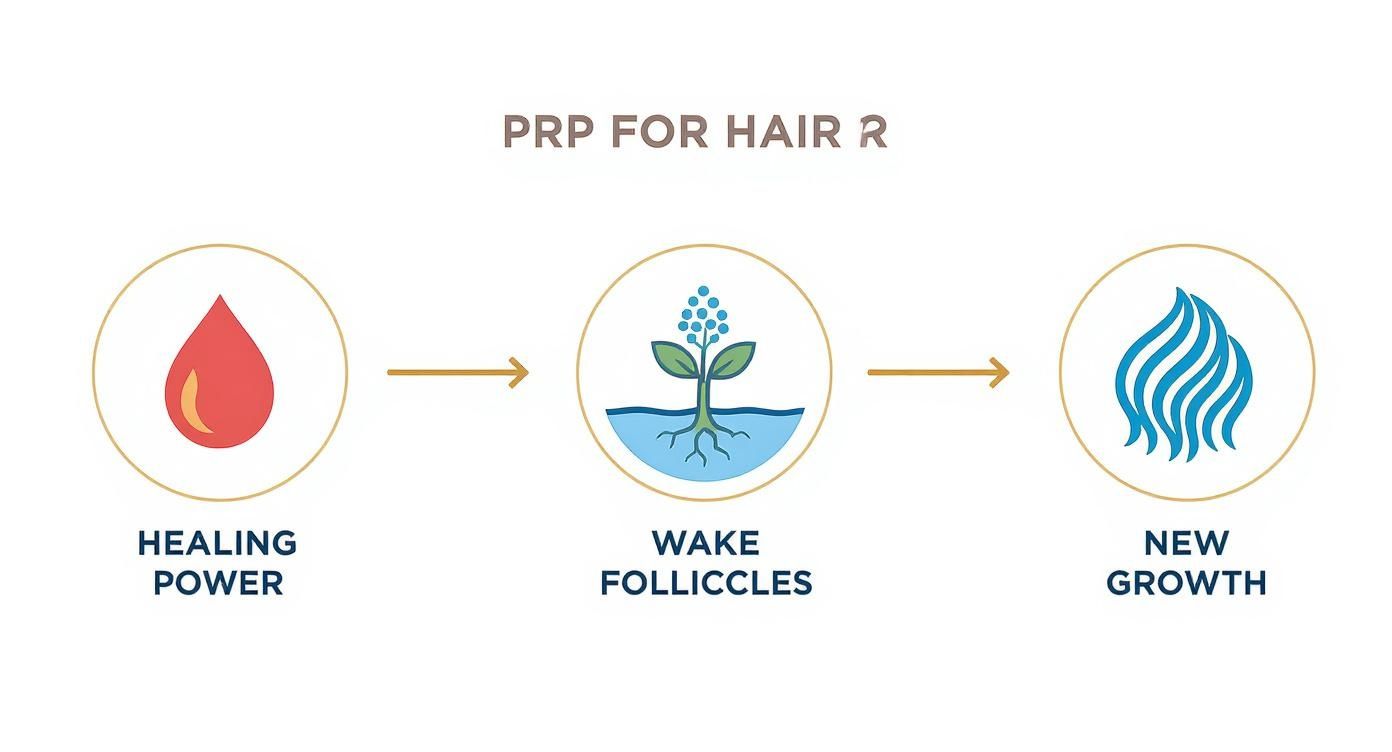
The idea is simple: we’re taking the most powerful healing components from your own blood and putting them right where you need them to stimulate those sleepy hair follicles.
Step 3: The Injection Process
Now for the main event. Once the PRP is ready and your scalp is prepped, the practitioner will start injecting the concentrated plasma. Using a very fine needle, they'll make a series of small, shallow injections in a grid pattern across the areas of your scalp where hair is thinning.
The goal is to deliver those growth factors directly to the hair follicles. The entire injection phase is faster than you might think, typically taking only 15 to 20 minutes.
Pain is a common worry, but most people say it’s very manageable. Between the numbing cream and a skilled practitioner's technique, you’ll likely just feel a slight pinch or a bit of pressure. It’s not something that’s generally described as intensely painful. If you're looking for more details on the treatment itself, our dedicated guide on PRP injections for hair loss covers it all.
The core idea is precision. Each injection delivers a concentrated dose of your body's own growth factors directly to the follicles that need the most support, stimulating them right at the source.
And that’s pretty much it. Once the last injection is done, your practitioner will clean the area and go over a few simple aftercare instructions with you. There’s virtually no downtime. Most people drive themselves home and get right back to their day, which makes it a really convenient option if you have a busy schedule.
Finding Out If PRP Is the Right Choice for You
Let's be realistic: when it comes to hair restoration, there's no such thing as a magic wand. Setting the right expectations from the start is the most important part of this journey. While PRP treatments for hair can be a game-changer for many, it’s definitely not a one-size-fits-all solution.
The first step is figuring out who really gets the best results from it.
Think of your hair follicles like tiny little plants. PRP is like a super-concentrated fertilizer that can help them grow stronger and healthier. If the plants are just starting to look a little weak or wilting, this special fertilizer can often bring them back to life.
But if the garden bed has been bare for years, you can’t expect fertilizer alone to grow a lush garden. That’s why timing is everything with PRP.
The Ideal Candidate for PRP
The sweet spot for PRP is almost always with people who are just starting to notice their hair thinning. Tackling the problem early gives the growth factors in your plasma the best possible chance to kick those follicles back into gear before they give up for good.
So, who does this typically look like?
- Men with Androgenetic Alopecia: This is your classic male pattern baldness. PRP has shown real promise in slowing this process down and boosting hair density, especially if treatment starts before significant bald patches show up.
- Those with Thinning, Not Total Baldness: The best candidates still have a good number of active hair follicles, even if they're getting weaker. PRP is brilliant at beefing up these existing hairs and waking up the ones that have only recently gone dormant.
- Individuals in Good Overall Health: Your body's own healing power is what makes PRP work. If you're generally healthy—without issues like blood disorders or autoimmune diseases that interfere with healing—your platelets will be primed and ready to do their job effectively.
Your initial consultation with a specialist is a huge part of this. They need a full picture of your health history to see if you're a good fit. This is where things like efficient medical intake forms come in handy, helping the clinic quickly and thoroughly assess all the important factors.
Comparing PRP Suitability Across Different Hair Loss Stages
To give you a clearer idea, it helps to see how PRP's potential effectiveness lines up with different stages of hair loss. The stage you're at plays a massive role in the kind of results you can realistically expect.
| Hair Loss Stage/Type | General PRP Suitability | Key Considerations |
|---|---|---|
| Early Thinning | Excellent | This is the perfect time. Follicles are still active and highly responsive to stimulation. |
| Moderate Hair Loss | Good to Very Good | Results are often very positive, focusing on slowing loss and increasing density in thinning areas. |
| Advanced/Extensive Baldness | Low to Poor | Follicles may be completely dormant or scarred over. PRP is unlikely to regrow hair in these areas. |
| Alopecia Areata (Patchy) | Variable | Can be effective for some, but it depends on the autoimmune activity. This requires careful evaluation. |
Ultimately, this table is just a guide. A professional evaluation is the only way to know for sure where you stand and what results you can hope for.
When PRP Might Not Be the Best Option
It’s just as important to know when PRP might not work as it is to know when it will. Being upfront about this saves a lot of time, money, and disappointment.
The goal is to invest in a procedure that aligns with your specific hair loss situation and health profile. Being honest about your starting point is key to a successful outcome.
For instance, if you have large areas of your scalp that have been completely bald for many years, you're probably not a great candidate. In these cases, the hair follicles have often scarred over or are simply no longer viable. They just won't respond to the growth factor stimulation, no matter how concentrated it is.
Certain health conditions can also get in the way.
- Low Platelet Count: The whole treatment is based on having a high concentration of platelets. If you have a condition like thrombocytopenia, the "P" in your PRP just won't be potent enough to make a difference.
- Active Infections or Skin Diseases: You can't perform the treatment on an inflamed or infected scalp. Any existing skin conditions need to be cleared up first.
- Certain Medical Conditions: People with chronic liver disease, metabolic disorders, or those taking blood-thinning medications might not be cleared for the procedure.
Trying to figure all this out on your own can feel overwhelming. To get a better sense of whether it makes financial and practical sense for your situation, check out our guide that helps answer the big question: is PRP for hair loss worth it for you? A good, honest conversation with a qualified professional is the final piece of the puzzle.
Understanding Timelines and Realistic Results
One of the first questions people have when they commit to a PRP procedure for hair is a simple one: "When will I actually see a difference?" It's a perfectly logical question, but the answer requires a bit of patience. PRP isn't a quick fix; it works in sync with your body's natural hair growth cycle, which is a slow and steady process.
Think of it like tending a garden. You prepare the soil, plant the seeds, and water them, but you don’t see a full-grown plant the next day. The growth factors in PRP need time to wake up dormant hair follicles and improve the scalp's health before new, stronger hair can even begin its journey.
This all happens gradually over several months. You won't wake up one morning with a totally different head of hair, but you will start to notice encouraging, subtle changes along the way if you're paying attention.
The Typical Treatment Schedule and Growth Phases
The standard approach for PRP therapy is to start with an initial series of treatments to build momentum. This first phase is absolutely crucial for kickstarting the regenerative process and giving your follicles the consistent stimulation they need to get going.
A common protocol looks something like this:
- Initial Phase: Most people begin with three to four treatment sessions, spaced about four to six weeks apart.
- Evaluation: After that initial round, usually around the 3-6 month mark, your provider will sit down with you to assess the progress.
- Maintenance Phase: To keep the results going strong, you'll likely need follow-up treatments every six to twelve months.
This schedule is designed to keep the growth factor stimulation high. Each session builds on the progress of the last one, helping to keep the scalp in an active state of regeneration and support the newly activated follicles as they get to work producing healthier, thicker hair.
When Do Results Become Noticeable?
So, what can you realistically expect to see, and when? While everyone's journey is a little different, here’s a general timeline of what the first year often looks like.
- Months 1-3: Don't expect to see much new hair sprouting just yet. The main thing happening here is a reduction in hair shedding as the follicles get healthier and prepare for new growth. Some people say their existing hair starts to feel a bit stronger during this time.
- Months 3-6: This is when the first real signs of life often show up. You might start noticing fine, new "baby hairs" emerging. You may also see an increase in overall thickness as your existing hairs become healthier and more robust.
- Months 6-12: By this point, the results should be much more obvious. Hair density continues to improve, and those new hairs have had time to grow longer, contributing to a fuller, healthier appearance.
It’s so important to manage your expectations and remember that your results are unique to you. For a deeper dive, check out our complete guide to the PRP hair treatment timeline, which offers more insight into what to expect month by month.
Remember, the goal of PRP is not just to sprout new hairs but to improve the overall health and quality of all the hair in the treated area. This includes thickening existing strands and creating a healthier scalp environment for the long term.
Interestingly, how you feel about your results often lines up with the hard data. A study from NYU Langone Health found a strong link between patients' own perceptions and objective measurements of hair density. Patients who felt their hair had "improved" showed a significant density increase of +18.9 hairs/cm². This confirms that when you feel like things are getting better, the science usually backs you up. You can read the full findings on patient-reported outcomes if you want to dig into the details.
At the end of the day, PRP is a journey of gradual improvement. By understanding the timeline and staying committed to the full treatment and maintenance plan, you give yourself the best possible shot at achieving meaningful, lasting results.
Aftercare and Recovery: What to Do Post-Treatment
The work isn't over once you leave the clinic. In fact, your role in the success of the PRP procedure for hair is just getting started. Proper aftercare is absolutely critical for a smooth recovery and for giving your hair follicles the ideal environment to begin regenerating.
Right after the treatment, it's completely normal to feel some mild tenderness, a bit of swelling, or a "tight" sensation on your scalp. You can actually think of this as a good sign—it means your body is responding and those powerful growth factors are getting to work. These feelings are usually minor and tend to disappear within a day or two.
The First 48 Hours: Your Immediate Action Plan
The first couple of days are the most important for a comfortable recovery. Your main goal here is simple: be gentle with your scalp. You want to avoid anything that could cause irritation or get in the way of the initial healing process. The good news is, the rules are straightforward and easy to follow.
To help things along, focus on these key actions:
- Avoid Harsh Chemicals: Don't wash your hair for at least 24 hours. When you do, stick to a gentle, pH-balanced shampoo. Steer clear of harsh products like hair dyes, gels, or heavy sprays for a few days.
- Stay Out of the Sun: Direct sunlight can really irritate the treated areas. If you have to be outside, wear a loose-fitting hat to keep your scalp protected.
- Postpone Strenuous Activity: Skip the gym, saunas, and steam rooms for at least two days. Anything that significantly raises your blood pressure or makes you sweat a lot can increase swelling and discomfort.
The guiding principle of PRP aftercare is simply to treat your scalp with care. By creating a calm, clean, and protected environment, you give the growth factors their best chance to work their magic without any interference.
Long-Term Care and Maximizing Your Results
Beyond the first few days, a few simple habits can really support the long-term success of your treatment. Your scalp is now primed for growth, so what you do in the following weeks and months can make a real difference in your final results.
Think about making these practices part of your routine:
- Gentle Hair Care: Continue to avoid harsh chemical treatments and excessive heat styling. Treat your hair and scalp gently.
- Hydration and Nutrition: It sounds basic, but a healthy diet and staying well-hydrated support your body's overall health, and that includes your hair follicles.
- Follow Your Provider’s Advice: Your clinician will give you specific instructions designed just for you. Following their guidance is the single best way to ensure a great outcome.
By taking these simple steps, you're doing more than just recovering from a procedure—you're being an active participant in your own hair restoration journey. For a more detailed guide, you can find extra information on the specifics of post-PRP hair treatment care to make sure you're on the right track.
Answering Your Top Questions About PRP Hair Procedures
It's completely normal to have more questions, even after you understand the basics of the procedure. When you're thinking about PRP for hair loss, the practical details—like cost, comfort, and how long it all lasts—are usually what come up next. Let's dig into some of the most common questions I hear from patients.
Does the PRP Procedure Hurt?
Most people are pleasantly surprised by how tolerable the procedure is. Before we even start with the injections, a topical anesthetic is applied to your scalp to make sure the area is good and numb.
You might feel a little bit of a pinch or some pressure when the injections happen, but "painful" isn't the word most people use. Any slight soreness you might feel at the injection sites usually disappears within a day or so.
What’s the Typical Cost of PRP Hair Treatments?
The price tag for PRP can really vary. It depends a lot on where you live, the experience of the clinic you choose, and how many sessions you’ll need to get the results you're looking for. A single session usually lands somewhere in the $500 to $1,500 range.
Since most people start with a series of three or four treatments, you can expect the initial investment to be between $1,500 and $4,500. It's crucial to remember that this is considered a cosmetic treatment, so insurance won't cover it. The demand for these kinds of treatments is booming; in the U.S. alone, the market for PRP and stem cell alopecia therapies was valued at around USD 255.20 million in 2024 and is set to grow. If you're curious, you can read more about the growth of regenerative hair therapies and see where the industry is headed.
How Long Will My PRP Results Last?
PRP results are impressive and long-lasting, but they aren't a one-and-done fix. The treatment works in sync with your natural hair growth cycles, so it requires a little upkeep. After the first round of treatments, most people enjoy their results for a solid one to two years.
Think of it like a tune-up for your hair follicles. To keep that new hair density and thickness going strong, your provider will recommend maintenance sessions.
These follow-up appointments are usually scheduled every six to twelve months. Your personal schedule will depend on your specific hair loss situation, your age, and how well your body responds to the therapy.
Are There Any Serious Risks or Side Effects?
One of the best things about PRP is how safe it is. Because the procedure uses your own blood, the chance of having an allergic reaction or catching a transmissible disease is virtually zero.
The side effects people do experience are almost always minor and clear up quickly. These include:
- Mild soreness or tenderness where the injections were made
- A bit of redness or swelling on the scalp
- Pinpoint bleeding or some light bruising
The risk of anything more serious, like an infection or nerve injury, is extremely low. That risk is minimized even further when you ensure your procedure is done by a skilled, qualified professional in a proper sterile environment.
At PRP For HairLoss, we're committed to providing clear, honest information to guide you on your hair restoration path. We offer detailed resources on everything from the science behind PRP to setting realistic expectations for your treatment. To learn more, feel free to explore our articles at https://prpforhairloss.com.


Leave a Reply