Trying to sort through all the hair loss treatments out there can feel like a full-time job. It’s easy to get lost in a sea of confusing options. I'm here to cut through the noise and talk about one of the more exciting choices: Platelet-Rich Plasma (PRP) injections. This is a non-surgical approach that cleverly uses your body's own healing powers to take on hair loss.
We're going to ditch the dense medical jargon and get right down to what you actually need to know about PRP injections for hair loss. My goal is to give you a genuine, practical understanding of how it all works so you can figure out if it's the right move for you.
Your Guide to PRP Hair Treatment
Let's treat this as a simple conversation about your options. We’ll explore the science behind PRP, walk through what the procedure is really like, and talk honestly about the kind of results you can expect.
To kick things off, here’s a quick summary table. It lays out the essentials so you can get a solid handle on the basics from the get-go.
PRP Hair Treatment At a Glance
| Aspect | Description |
|---|---|
| Treatment Type | A non-surgical, injectable procedure using a concentration of your own blood platelets. |
| Main Goal | To stimulate dormant or struggling hair follicles, encouraging new growth and boosting hair thickness. |
| Key Ingredient | Platelet-Rich Plasma (PRP), which is loaded with natural growth factors essential for tissue repair and regeneration. |
| Typical Candidates | People dealing with early to moderate hair thinning, especially from androgenetic alopecia (pattern baldness). |
| Session Duration | A typical appointment takes about 60 to 90 minutes from start to finish. |
| Required Sessions | Usually starts with a series of 3-4 treatments, one month apart, followed by maintenance sessions. |
| Downtime | Minimal to none. Most people get right back to their normal activities immediately after the procedure. |
Now that you have the bird's-eye view, let's dig a bit deeper into what makes PRP such a compelling choice for so many people.
Understanding the Potential
Platelet-rich plasma has really made a name for itself as a serious player in the fight against hair loss. It’s particularly well-known for treating androgenetic alopecia (AGA), which is just the clinical term for the common pattern hair loss that affects millions of men and women.
The results are often quite promising. Clinical studies and real-world experiences show that PRP therapy can be highly effective, with some reports showing a success rate of around 70–80% for individuals in the earlier stages of hair thinning. If you want to look at the numbers, you can find out more about the success rates of PRP treatment on texasdls.com.
At its heart, PRP therapy is about tapping into your body’s natural ability to heal. By concentrating the most powerful healing elements of your blood and delivering them directly where they're needed, you're giving your hair follicles a potent shot of regenerative support.
What's really appealing about this approach is that we're not introducing any foreign chemicals or drugs. We're just taking your body's own healing resources and putting them to work. The whole point is to wake up those sleeping hair follicles and strengthen the hairs you still have, which ultimately leads to a fuller, thicker head of hair over time.
How PRP Awakens Your Hair Follicles
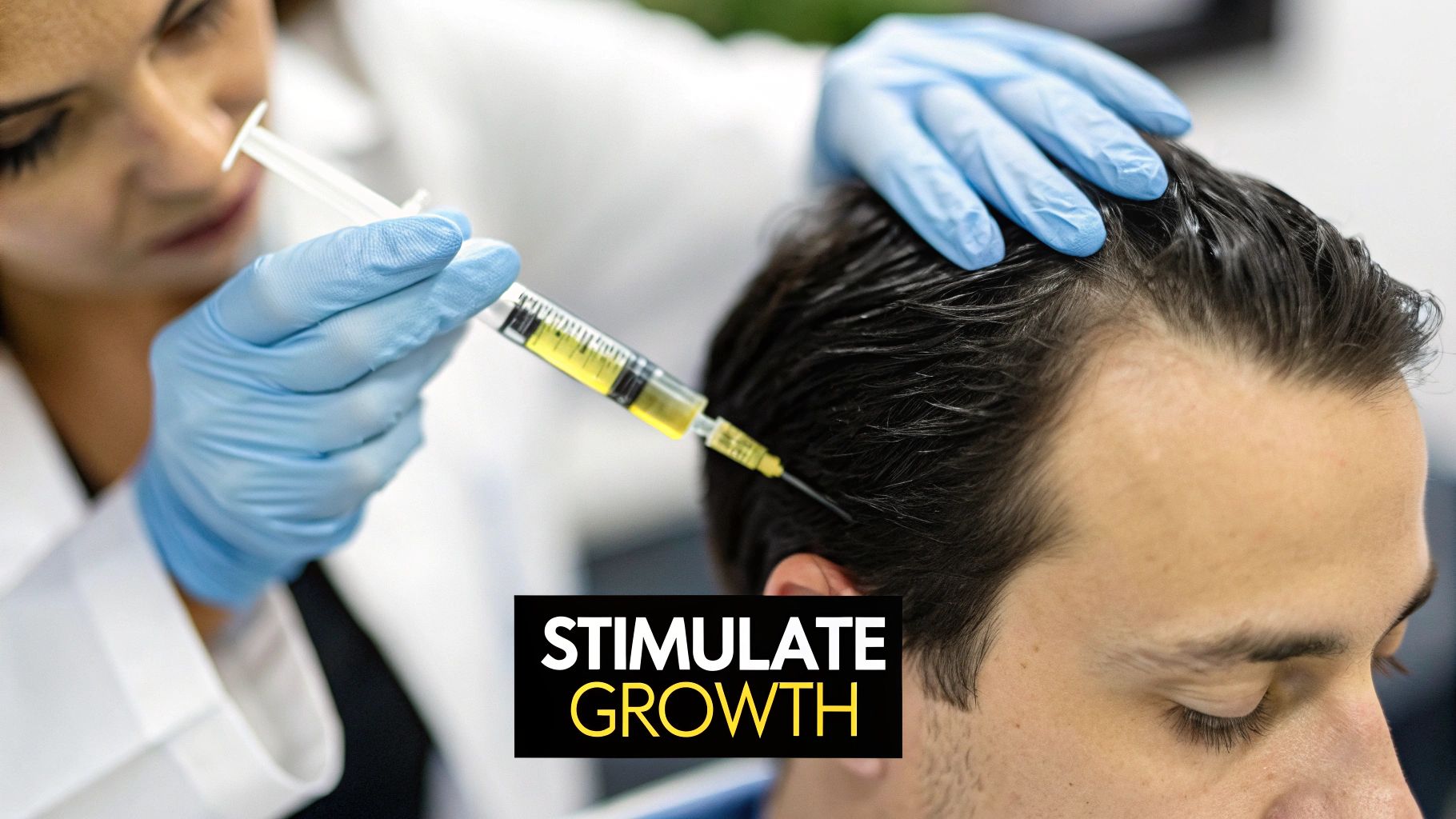
To really grasp why PRP injections for hair loss can be so effective, we need to look at the science—but I'll spare you the dense textbook lecture. The easiest way to think about it is that your blood has its own natural, built-in repair team. This team is made up of tiny cell fragments called platelets, and they are absolutely packed with powerful proteins known as growth factors.
Under normal circumstances, these growth factors are your body's first responders. When you get a cut, they rush to the scene to manage repairs, kickstart healing, and tell other cells to start rebuilding tissue. Think of them as the project managers of your body's internal construction crew.
During a PRP treatment, we tap into this natural healing talent. A small amount of your blood is drawn and spun in a centrifuge. This device spins the blood at very high speeds, separating it into different layers. This lets us isolate the platelets and concentrate them into a golden liquid. This final product, the platelet-rich plasma, is basically a supercharged dose of your body's own regenerative power.
Delivering the 'Wake-Up Call'
Once this powerful serum is ready, it's carefully injected into the parts of your scalp where hair is thinning. This is where the magic really happens. Introducing this high concentration of growth factors directly to the scalp sends a strong signal straight to the base of your hair follicles.
Imagine your dormant hair follicles are asleep on the job. The sudden flood of growth factors acts like a loud but friendly alarm clock, nudging them out of their resting (telogen) phase and pushing them back into the active growing (anagen) phase.
Essentially, the treatment creates an incredibly fertile environment for hair growth. It's not just about waking up the follicles; it's about giving them all the resources they need to thrive once they're active again.
This "wake-up call" isn't a one-time thing but a complex process. The growth factors get to work on a cellular level, kickstarting regeneration and providing ongoing support for healthy hair.
The Key Players in Hair Regeneration
The power of PRP comes from the teamwork of its growth factors. While there are many, a few are particularly important for reviving hair follicles.
- Platelet-Derived Growth Factor (PDGF): This one is like the foreman, overseeing the building of new blood vessels around the follicle. This process, known as angiogenesis, is crucial for improving the flow of oxygen and nutrients.
- Vascular Endothelial Growth Factor (VEGF): Working closely with PDGF, VEGF is another key player in creating a strong blood supply, making sure the follicle has the lifeline it needs to sustain growth.
- Epidermal Growth Factor (EGF): This factor encourages cells to multiply and specialize, which helps build a stronger hair shaft and anchor it more firmly in the scalp.
- Fibroblast Growth Factor (FGF): FGF stimulates the production of specialized cells that rebuild and regenerate the actual structure of the hair follicle itself.
This multi-pronged approach doesn't just restart the growth cycle; it helps extend the active growing phase. A longer anagen phase gives your hair more time to grow, leading to strands that are often thicker, stronger, and healthier. Over a series of treatments, this can lead to a visible improvement in hair density and overall scalp coverage.
Ultimately, PRP therapy is a smart way of gathering your body's own powerful healing systems and directing them exactly where they can do the most good. By creating this nutrient-rich, stimulating environment, PRP injections for hair loss give your follicles the best possible chance to return to a healthy, productive growth cycle.
A Step-By-Step Walkthrough of Your PRP Session
It's totally normal to feel a bit nervous before any new medical procedure. Knowing what's coming can make a huge difference, and that's especially true for PRP injections for hair loss. While it might sound technical, the actual appointment is a remarkably simple and well-practiced process.
Let's break down exactly what happens during a typical session, from the moment you walk in to when you leave. The whole thing usually wraps up in about 60 to 90 minutes. Showing up well-prepared can also help ensure your treatment is as effective as possible; this general guide on how to prepare for a session offers some great universal tips.
Step 1: The Initial Blood Draw
First things first. Your PRP session begins with a simple blood draw, just like one you'd have at a regular doctor's appointment. A small vial of blood is drawn, usually from your arm. It’s quick and routine, and it provides the key ingredient for the entire treatment: your own blood.
This step is the foundation for everything else. The quality and freshness of this sample are crucial for creating a potent, effective PRP concentrate.
Step 2: Isolating the Liquid Gold
With the blood sample collected, it’s taken to a special machine called a centrifuge. Think of it as a high-tech spinner. The centrifuge spins the vial at an incredibly high speed, which separates your blood into three distinct layers based on their density: red blood cells, platelet-poor plasma, and the one we're after—platelet-rich plasma.
This concentrated layer of platelets is what we want. It has a distinct golden hue, which has earned it the nickname "liquid gold." This is the serum, packed with the powerful growth factors that will be used to wake up your dormant hair follicles.
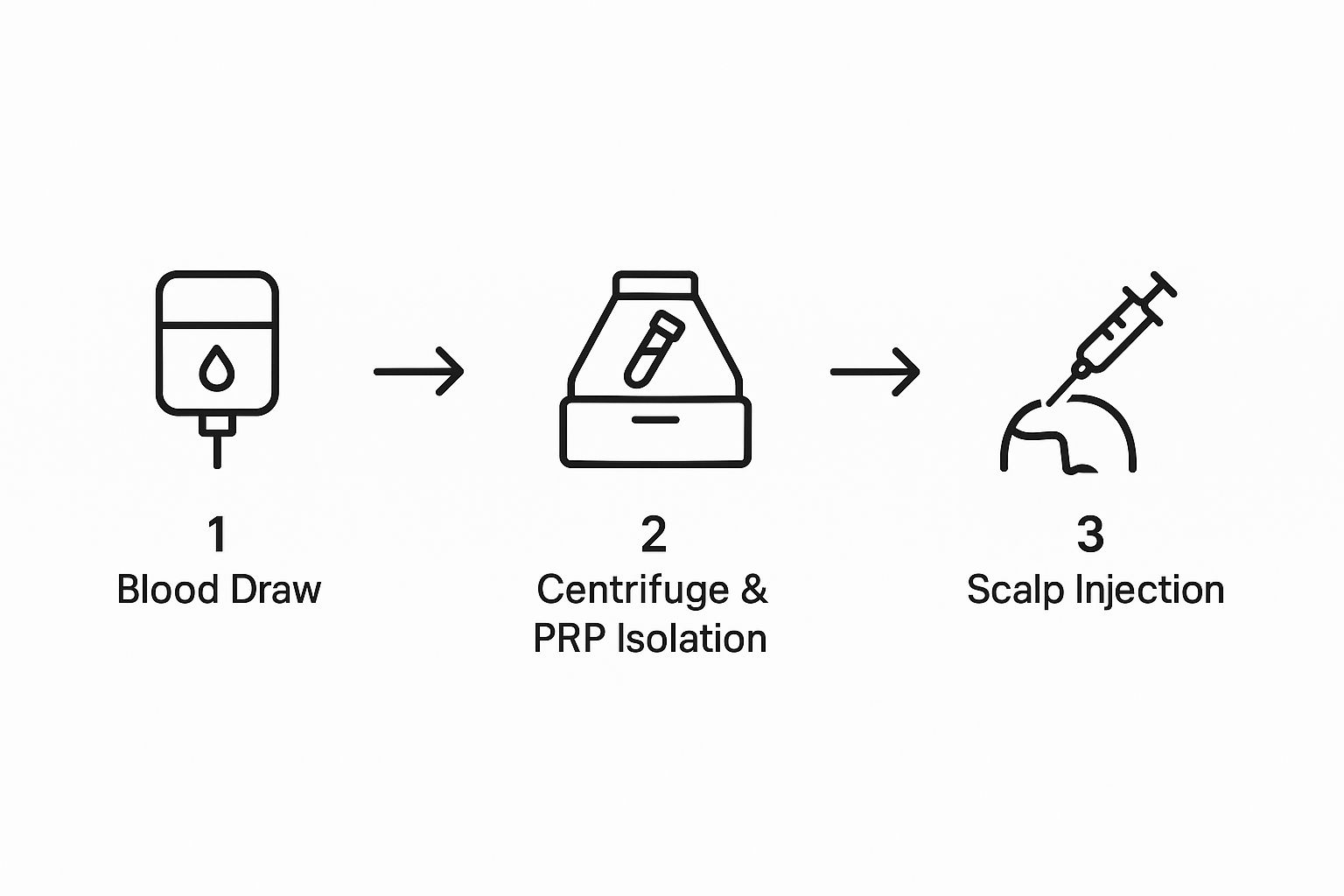
As you can see, the process is elegantly simple: draw, spin, and inject. Your body’s own healing potential is harnessed and delivered right where it's needed most.
Step 3: Scalp Preparation and Injections
Now that the PRP is ready, it's time to prepare your scalp. Your comfort is the top priority, so the clinician will apply a local anesthetic or a powerful numbing cream to the treatment area. This makes a huge difference in making sure the process is as comfortable as possible.
Once your scalp is numb, the clinician uses a very fine needle to strategically inject small amounts of the PRP directly into the areas of your scalp that are thinning. These injections are meticulously placed across the target zones, ensuring every drop of that liquid gold is delivered precisely to the hair follicles.
While nobody exactly loves the idea of needles, most people describe the sensation as little more than a mild pressure or a slight pinch. The numbing agent does its job well, making the whole thing very manageable.
What to Expect After Your Session
One of the greatest benefits of PRP injections for hair loss is the minimal downtime. You can pretty much get back to your day as soon as the session is over. Your provider will give you a few simple aftercare instructions to help you get the best possible results.
You’ll typically be advised to:
- Avoid strenuous activity: Take the rest of the day off from the gym or any heavy lifting to help minimize any potential swelling.
- Hold off on hair products: Skip any harsh chemicals, dyes, or heavy styling products for a day or two to avoid irritating the injection sites.
- Wash your hair gently: It's usually fine to wash your hair the next day, just be gentle with your scalp.
Following these simple tips lets the PRP work its magic without any interference. It’s normal to have some minor soreness, redness, or a little swelling, but this usually disappears within 24 to 48 hours. By the next day, most people feel completely back to normal, letting their body's natural healing process take over.
Are You a Good Candidate for PRP Hair Treatment?
While the idea of using your body's own healing power to fight hair loss is fantastic, PRP injections for hair loss aren't a universal solution. It can be a real game-changer for some, but it might not be the right choice for others. The first and most important step is figuring out if you're a good fit.
The success of PRP hinges on the current state of your hair follicles. The treatment is designed to wake up dormant or "sleeping" follicles, not to create brand new ones. That distinction is everything when it comes to setting realistic expectations and knowing who will get the most from the procedure.
The Ideal PRP Candidate Profile
Generally, the people who see the best results from PRP therapy have a few things in common. If you read through this list and find yourself nodding along, you could be a prime candidate.
The sweet spot for PRP is for those in the early to moderate stages of hair loss. This is that frustrating time when you first notice your hair thinning, your hairline starting to retreat, or a bald spot appearing on your crown. At this stage, many of your hair follicles are likely just inactive or shrinking—they haven't disappeared for good.
Think of it this way: PRP is more like waking up tired workers than hiring a whole new crew. If the follicle is still there, even if it's underperforming, the growth factors in PRP have something to work with.
This is exactly why androgenetic alopecia, classic male and female pattern baldness, often responds so well to PRP. The slow, gradual shrinking of follicles that defines this condition creates the perfect window for PRP to step in, delivering the nourishment they need to reverse the process and start growing thicker, healthier hair again.
Factors That Influence Your Candidacy
Beyond the stage of your hair loss, a few other factors are really important in determining if PRP is the right path. A detailed consultation with a specialist is an absolute must, but you can get a head start by considering these points.
Your Overall Health
Since this treatment uses your own blood, your general health is a big deal. Being in good health usually means your blood is rich with high-quality platelets and growth factors—the "liquid gold" that makes PRP effective. Certain underlying health conditions can reduce the treatment's effectiveness or even make it a bad idea.
Age and Treatment Response
Your age can also play a role in how well you respond to PRP injections for hair loss. While people of all ages can get good results, some studies suggest that younger individuals might see more dramatic improvements in hair density. For example, one study found that patients between 35 and 49 tended to see the biggest gains. Older individuals can still benefit, but they might need more frequent sessions or to combine PRP with other therapies to get similar results. You can find more detail on this in a 2025 retrospective study.
Who Might Not Be a Good Fit for PRP
Just as it’s important to know who benefits, it's crucial to understand who should be cautious or look at other options. PRP isn't recommended for everyone, and being realistic is key to avoiding disappointment.
You may not be an ideal candidate if you fall into one of these categories:
- Extensive Hair Loss: If your hair loss is very advanced and you have large areas of smooth, slick scalp, it usually means the follicles there have died off. PRP can't bring dead follicles back to life.
- Active Scalp Conditions: Issues like scalp infections, psoriasis on the scalp, or chronic skin diseases like lupus need to be treated and fully resolved before you can even consider PRP.
- Certain Medical Conditions: People with blood-clotting disorders, platelet abnormalities, chronic liver disease, or some types of cancer are generally not advised to undergo PRP therapy.
In the end, the only way to know for sure is to have an honest conversation with a qualified professional. They can take a close look at your hair loss, review your medical history, and help you decide if PRP injections for hair loss are your best shot at reclaiming a fuller head of hair.
Setting Realistic Expectations for Your Results
Alright, let's talk frankly about what PRP injections for hair loss can and cannot do. When you're investing your time, money, and hope into a treatment like this, you deserve a clear and realistic picture of the journey ahead. The path to hair regrowth is a marathon, not a sprint, and patience is your most important ally.
One of the biggest misunderstandings I see is the hope for an overnight transformation. Hair growth is a slow, biological process, and PRP works by giving that process a helpful nudge. It takes time for the growth factors to awaken dormant follicles, push them into an active growth phase, and for new, stronger hairs to finally make an appearance.
The most crucial thing to remember is that results are cumulative and progressive. Each session builds on the last, gradually creating a healthier environment for your hair to thrive.
Often, the very first sign that the treatment is working isn't something you'll see, but something you'll feel—or rather, not see. Many patients report a noticeable decrease in hair shedding within the first couple of months. This is a fantastic early signal that your follicles are stabilizing and responding to the therapy.
The Typical Results Timeline
Visible improvements in hair thickness and density generally start to appear after about three to six months. This is when you might look in the mirror and notice your part line looks a little tighter or that the thinning spot on your crown seems less obvious. These changes typically emerge after you've completed an initial series of treatments, which is usually three or four sessions spaced about a month apart.
Here’s a general timeline of what you can expect:
- Months 1-2: The main change you'll likely notice is less hair falling out—fewer hairs in the shower drain or on your brush.
- Months 3-6: This is when visible results often kick in. You might start seeing new, fine "baby hairs" popping up and an overall increase in hair thickness.
- Months 6-12: The results continue to build. Your hair should feel fuller and look denser as those new hairs mature and thicken.
The Science Behind the Results
The effectiveness of PRP can vary quite a bit, and a lot of that boils down to the quality of the plasma itself. The concentration of platelets in the final serum is a huge factor. Some of the best research points to a direct link between higher platelet counts and better outcomes.
For example, one notable randomized, double-blind trial discovered that participants who received PRP with a very high platelet concentration saw up to a 42% increase in hair density over six months. This study really underscored that more concentrated PRP often leads to more impressive regrowth. It's also important to note, however, that other studies have found less significant differences between PRP and placebo injections, which just highlights that results are never guaranteed for everyone. You can read more about the comprehensive evaluation of PRP effectiveness on cureus.com if you want to dive into the data.
Maintaining Your New Growth
Finally, and this is critical, you have to understand that PRP is not a one-and-done cure for hair loss. It’s a management strategy. The underlying causes of your hair loss, like genetics or hormones, don't just go away. To keep your results, you'll almost certainly need ongoing maintenance sessions.
Most practitioners recommend a follow-up treatment every 6 to 12 months after your initial round. Think of these sessions as a tune-up for your scalp—they keep the stimulating effects going, ensuring your hair follicles stay active and healthy for the long haul. By setting these realistic expectations from the start, you can approach your PRP journey with confidence and a clear head.
Common Questions About PRP Injections
Even after you get the science, it's the practical, everyday questions that tend to stick around. When you're thinking about a treatment like PRP injections for hair loss, the little details really matter. You want to know what it feels like, what it’s going to cost, and what to expect when you walk out of the clinic.
This is where we get into those final, crucial questions. I’ve put together the most common things people ask before they decide if PRP is for them. My goal is to give you clear, honest answers so you can feel completely confident about whatever you decide to do next.
Is the PRP Injection Process Painful?
This is usually the first question on everyone's mind, and for good reason. Let’s be direct: the vast majority of people find the procedure to be a minor inconvenience, not a painful ordeal. Clinicians go to great lengths to make sure you're comfortable.
Before anything starts, a strong topical numbing cream or a local anesthetic is applied all over the treatment area on your scalp. This is a standard part of the process, and it works very well. You'll have plenty of time for it to take full effect before any injections begin.
Most patients describe the sensation as a bit of pressure, a quick pinch, or just a dull feeling. The needles used are incredibly fine, so the physical sensation is minimal. Honestly, it's a very tolerable experience, and any discomfort is over quickly. The blood draw from your arm feels exactly the same as getting a routine blood test at your doctor's office.
How Much Do PRP Injections for Hair Loss Cost?
Money is always a big part of the equation, and you deserve a clear picture of what you’re getting into. The price of PRP injections for hair loss can vary quite a bit, so there’s no single price tag. But we can definitely talk about the typical range and what drives the cost.
Here in the United States, a single PRP session for hair restoration usually lands somewhere between $500 and $2,500. That’s a pretty wide gap, and several key factors are behind it.
It's crucial to understand that PRP is almost never a one-off treatment. Most reputable clinics will start you with a series of three or four sessions, usually scheduled about a month apart. This means your initial total investment could be anywhere from $1,500 to $10,000 or more.
After that initial round, you’ll need maintenance treatments to keep your results, usually once or twice a year. Factoring these long-term costs in from the start is key to smart budgeting.
Key Factors That Influence the Cost
So, what causes that big price difference? It really boils down to a few core things.
- Geographic Location: This is a big one. The cost of living where the clinic is located plays a huge role. You can expect to pay more at a clinic in a major city like New York or Los Angeles compared to one in a smaller town.
- Clinic Reputation and Expertise: A board-certified dermatologist or a seasoned plastic surgeon specializing in hair restoration will naturally charge more. You're paying for their experience, skill, and the quality of their results.
- Technology Used: Not all equipment is the same. The quality of the centrifuge—the machine that spins your blood—can affect the cost. High-end systems that yield a purer, more concentrated PRP often come with a higher treatment price.
- Treatment Protocol: Some clinics bundle PRP with other therapies, like microneedling or Low-Level Laser Therapy (LLLT). These add-ons can increase the price per session but might also boost your results.
When you're looking at costs, try to see it as an investment in a specialized medical procedure. Be very wary of clinics advertising rock-bottom prices. It can be a red flag for subpar equipment, inexperienced staff, or a diluted PRP product.
Are There Any Side Effects with PRP Hair Treatment?
One of the greatest things about PRP is how safe it is. Because the treatment uses your own blood, the risk of an allergic reaction or your body rejecting it is practically zero. That's a huge plus compared to therapies that use synthetic chemicals.
That said, any procedure involving a needle has the potential for some minor side effects. The good news is they are almost always mild, temporary, and clear up on their own pretty quickly.
The most common side effects are all right on your scalp and might include:
- Mild Soreness or Tenderness: Your scalp might feel a little tender for a day or two.
- Minimal Swelling: It's normal to have some minor puffiness around the injection sites, which usually goes down within 24 to 48 hours.
- Redness or Bruising: You might see some slight redness or tiny bruises where the needle went in. This also fades fast.
- Temporary Headache: A few people report a mild headache after a session, which is easily managed with standard over-the-counter pain relievers.
These are just signs that your body is responding to the treatment. Serious complications are incredibly rare, especially when you go to a qualified professional who works in a sterile environment. Choosing a reputable clinic is your best defense against infection or other issues. Your provider will also give you aftercare instructions—like taking it easy on exercise for a day—to help everything heal smoothly.
How Many PRP Sessions Will I Need?
Knowing the timeline is essential for setting the right expectations. PRP injections for hair loss are not a quick fix. To get real, lasting results, you need to commit to a structured treatment plan.
The standard approach starts with what’s often called a "loading phase." This almost always means an initial series of 3 to 4 treatment sessions, with each one scheduled about one month apart. The purpose of this initial burst is to saturate the scalp with growth factors, waking up as many dormant hair follicles as possible.
Once you’ve finished that first round, the work isn't quite done. Since hair loss is an ongoing condition for most people, maintenance is the key to protecting your investment.
Most specialists will recommend a maintenance session every 6 to 12 months. Think of these as a "booster shot" for your hair, keeping the follicles active and preventing your hair from thinning out again.
The exact number of sessions you'll need will ultimately depend on how you respond, the extent of your hair loss, and your age. A good provider will create a personalized plan with you and adjust it based on the progress you're making.
If you're dealing with pattern baldness or thinning hair, understanding your options is the first step. The information on the PRP For HairLoss blog is here to guide you through treatments like Platelet-Rich Plasma, giving you the clear, honest facts you need. Explore more about your hair restoration options today.


Leave a Reply