At its heart, platelet-rich plasma (PRP) is a concentrated healing serum created from your own blood. You can think of it as taking the natural repair crews your body already has—your platelets—and giving them a supercharged boost to help regenerate tissue.
Tapping Into Your Body's Own Repair Kit
The concept is actually pretty straightforward. Imagine you get a paper cut. What happens? Your body immediately dispatches tiny cellular first responders, called platelets, to the scene. These little powerhouses are packed with growth factors—the essential proteins that orchestrate the entire healing process, from stopping the bleeding to rebuilding the damaged tissue.
PRP therapy simply takes this natural process and refines it. We draw a small amount of your blood, just like you would for a standard lab test, and place it into a machine called a centrifuge. This device spins the blood at an incredibly high speed, which separates its components by their density.
The end result is a solution with a concentration of platelets that is 3 to 5 times greater than what’s normally circulating in your bloodstream.
To really get what we're isolating, let's break down the key players in your blood.
Understanding Your Blood's Components
| Blood Component | Primary Function | Role in PRP Preparation |
|---|---|---|
| Red Blood Cells | Carry oxygen throughout the body. | Separated and removed, as they aren't needed for this kind of regeneration. |
| White Blood Cells | Fight infection as part of the immune system. | Mostly removed to minimize potential inflammation at the injection site. |
| Platelets | Clot blood and release growth factors to heal injuries. | The star of the show. These are carefully isolated and concentrated. |
| Plasma | The liquid base that carries all the blood cells. | Becomes the rich, golden liquid carrier for our concentrated platelets. |
By separating out the red and most of the white blood cells, we're left with a potent, platelet-dense plasma—the "liquid gold" used in the treatment.
A Healing Serum, Custom-Made for You
This platelet-rich plasma is often called "liquid gold," partly for its color but mostly for its powerful regenerative abilities. Because it’s made from your own blood, the treatment is completely biocompatible and natural. Your body recognizes it as its own, which virtually eliminates the risk of allergic reactions or the kinds of side effects you might worry about with synthetic substances.
When injected into the scalp, this serum gets right to work. It delivers a high-powered dose of growth factors directly to your hair follicles, basically signaling them to wake up, get stronger, and start functioning more like they used to.
This isn't just about masking hair loss; it's about kickstarting a genuine biological response. The goal is to prompt your body's own systems to repair and rejuvenate the hair follicles from the inside out. For men dealing with thinning hair, this means PRP can help revive dormant follicles, leading to thicker, healthier hair. We aren't adding anything foreign—we’re just giving your body more of its own healing tools, right where you need them the most.
The Evolution of PRP in Modern Medicine

While platelet-rich plasma therapy might feel like a recent innovation, its roots go deep into medical history. This isn't some fleeting trend; PRP is the result of decades of research, refinement, and real-world application, long before it became famous for hair restoration and skin care.
The fundamental idea of concentrating platelets from blood has been around for over 70 years. Believe it or not, the term "platelet-rich plasma" was first coined way back in 1954 to describe platelet concentrates for transfusions. By the 1970s, thanks to innovations like flexible plastic blood bags, preparing these concentrates became a routine job for blood banks. This early work laid the foundation for everything that came next.
From Surgery to Regeneration
The first big leap from blood banking to active healing happened in operating rooms. Oral and maxillofacial surgeons were some of the first to apply PRP, discovering it could help manage bleeding and seemed to speed up healing after intense procedures. This was a game-changer.
Suddenly, platelets were no longer just seen as tiny plugs for stopping bleeds. They were recognized as powerful biological tools, packed with growth factors that could actively manage and direct how tissue repaired itself.
This breakthrough sparked curiosity across the medical world. Orthopedic surgeons began experimenting with PRP for notoriously slow-healing tendon and ligament injuries. Dermatologists saw its potential for rejuvenating skin. This gradual, specialty-by-specialty adoption built a mountain of clinical evidence.
This history is crucial for understanding its reliability. PRP didn't just appear out of thin air; it was carefully studied and applied in demanding medical settings for years, proving its value one application at a time.
This rich background is exactly why PRP is now a trusted option for everything from sports injuries to aesthetic treatments. Its journey from a simple blood bank product to a sophisticated regenerative therapy cements its place in modern medicine. You can learn more about how this history influences the current PRP hair treatment cost and its overall value.
The 3 Simple Steps of Preparing PRP
One of the great things about PRP is how straightforward the preparation is. This isn't some complicated lab experiment; it’s a streamlined, three-step method that takes your own blood and transforms it into a powerful, personalized treatment for your hair.
Step 1: The Blood Draw
It all begins with a simple blood draw. If you've ever had blood taken for a routine check-up, you know exactly what to expect. A small amount of blood is drawn from your arm, and that’s it. This quick first step ensures the resulting PRP is 100% autologous—which is a fancy way of saying it comes entirely from your own body.
Step 2: Separation and Concentration
This is where the magic really happens. Your blood sample is placed into a machine called a centrifuge. Think of it as a high-speed spinner that separates your blood into its different parts based on weight. The heavier red blood cells sink to the bottom, while the lighter plasma and platelets rise to the top.
This spinning action is the key to creating PRP. It isolates and concentrates the platelets, creating that golden-colored plasma packed with powerful growth factors. These are the very proteins your body uses to heal and regenerate tissue, and now they're concentrated into a potent serum ready for use.
The whole point is to get a platelet concentration that is several times higher than what's found in normal blood. This is what gives the treatment its power.
This graphic gives you a great visual overview of the entire process, from start to finish.
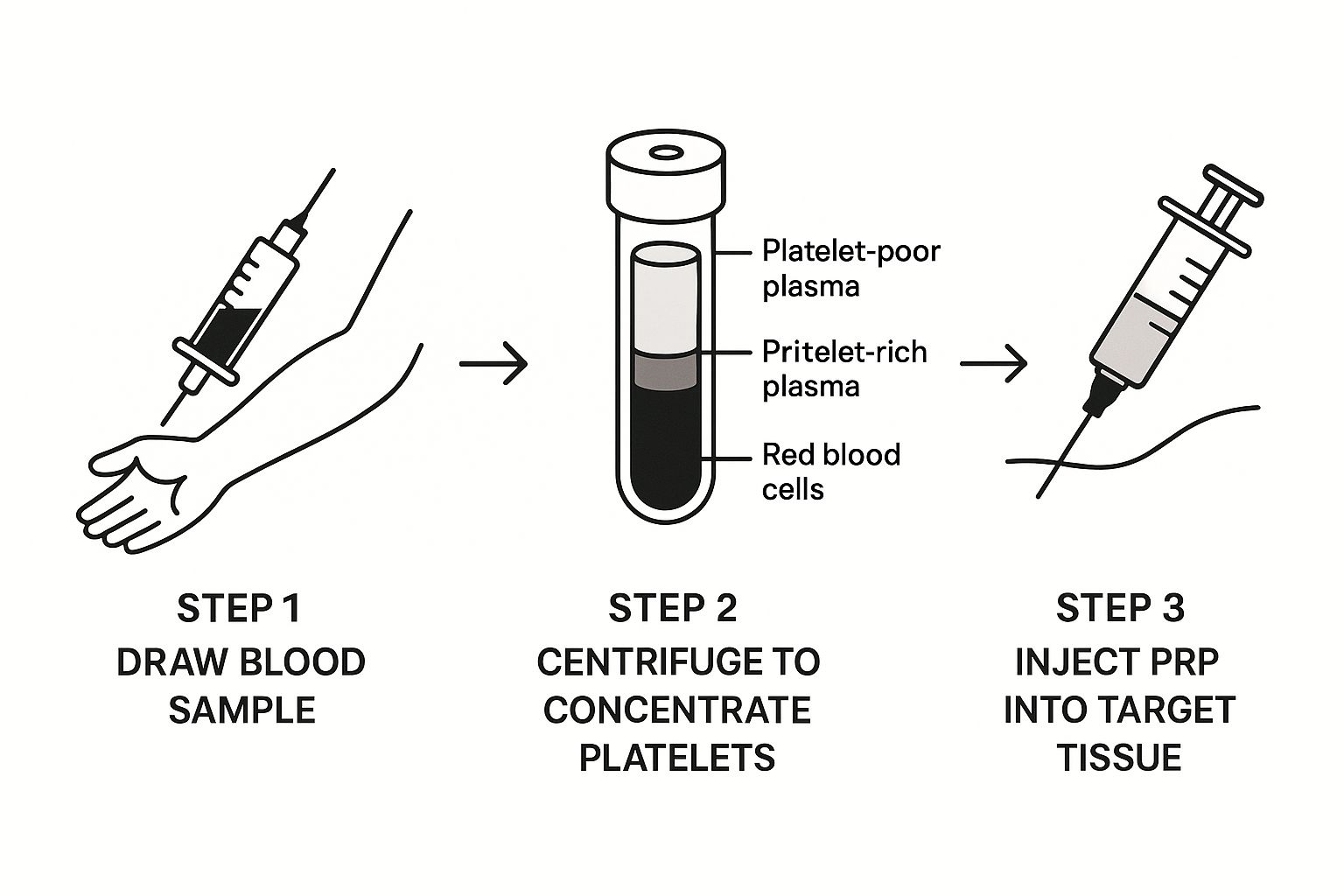
As you can see, it's a logical flow: draw the blood, refine it to get the good stuff, and then get it ready for treatment.
Step 3: Collection and Preparation
In the final step, we carefully collect this concentrated, platelet-rich "liquid gold" and draw it into a syringe. The entire process is sterile and self-contained, so there's no risk of contamination. What you end up with is a customized dose of your body's own healing power, ready to be precisely injected into the areas of your scalp that need it most.
To see how this applies specifically to hair loss, you can read our detailed guide on PRP for male pattern baldness.
How PRP Triggers Your Body's Natural Repair Response
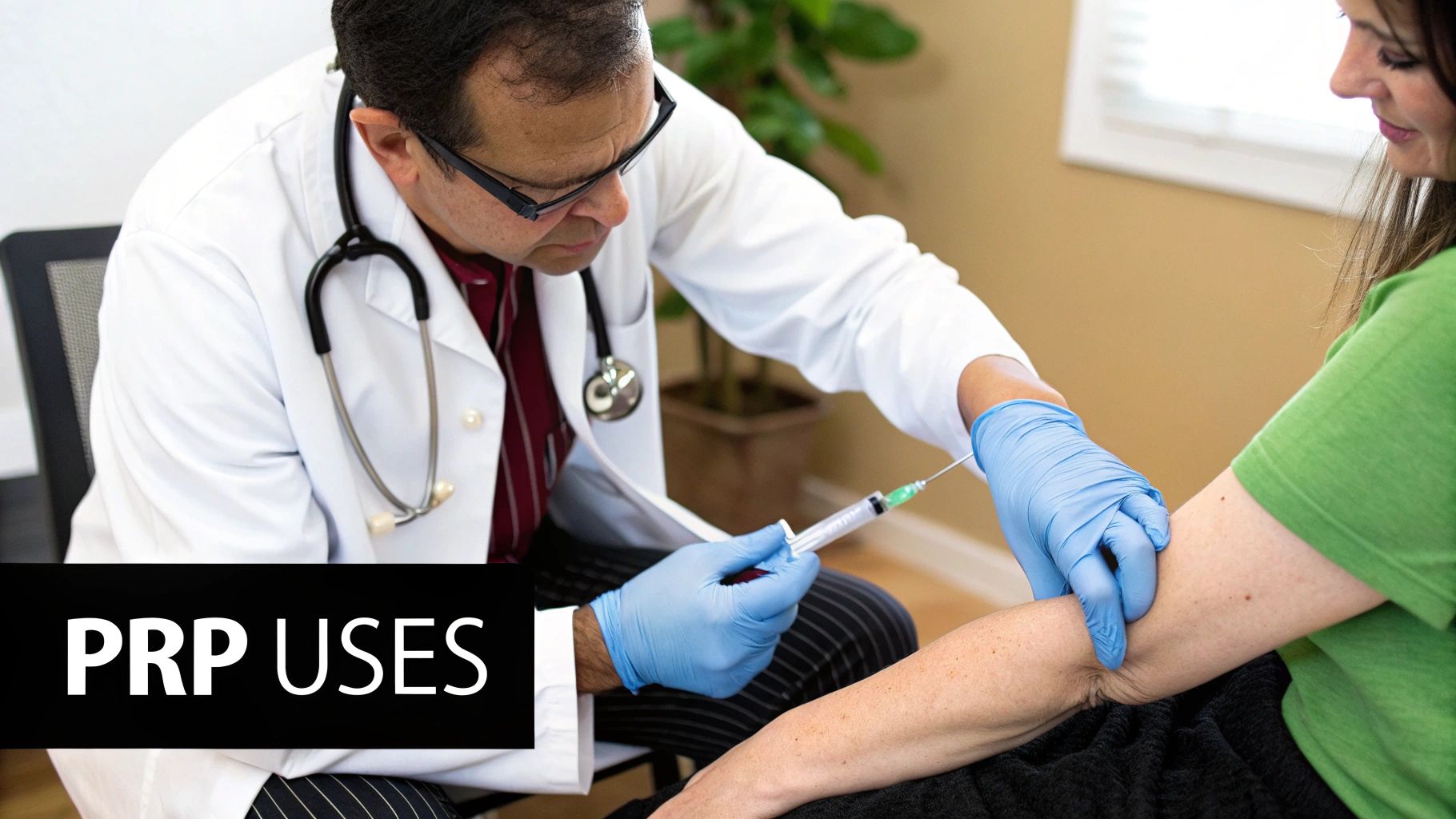
Once the prepared platelet-rich plasma is injected into your scalp, its job is really just beginning. Think of the concentrated platelets as a highly specialized repair crew arriving at a site that needs serious attention.
Immediately after injection, these platelets release a flood of powerful growth factors. These are basically signaling proteins that act like little project managers, telling your body's cells exactly what to do. They send out a call to action, recruiting other repair cells to the area and kickstarting a powerful regenerative process right at the hair follicle.
Igniting the Healing Cascade
This isn't just a quick fix. The growth factors released by PRP take on several crucial roles to overhaul the scalp environment and give your hair follicles the support they desperately need.
- Boosting Cell Growth: They encourage the cells responsible for hair follicle health to multiply, which strengthens the follicle from within.
- Creating New Blood Vessels: This process, known as angiogenesis, improves circulation to the scalp. Better blood flow means more oxygen and nutrients can get directly to the hair roots.
- Building Healthy Tissue: The growth factors also help construct a fresh, robust tissue matrix around the follicles, giving them a much healthier foundation to grow from.
The basic idea here—using a controlled injury to spark a healing response—is surprisingly old. We’re talking about medical principles that go back more than 2,000 years. PRP is just a modern, sophisticated take on this concept. It doesn’t just send the signal for repair; it delivers the biological tools needed to get the job done right.
By creating this revitalized environment, PRP can help wake up dormant follicles and push active ones to stay in their growth phase longer. It’s a smart, strategic approach that works with your body’s own systems. This biological nudge is what ultimately leads to the positive platelet-rich plasma results people see in their fight against thinning hair.
Using PRP to Address Hair Thinning
https://www.youtube.com/embed/zwdrirF2Yqg
While PRP has proven useful all over the medical field, one of its most popular uses today is helping men who are struggling with thinning hair. The logic is beautifully simple: take the body's own powerful repair serum and inject it directly into the scalp right where the hair loss is happening.
When PRP is introduced to the scalp, its concentrated growth factors get to work on the hair follicles. Think of it as a targeted wake-up call for follicles that have become sluggish or even dormant. The goal is to stimulate them, improve their overall health, and encourage them to once again produce thicker, more robust hair strands.
How PRP Influences the Hair Growth Cycle
This treatment works on a few different levels, all aimed at creating a healthier environment for your hair to thrive in.
- Improved Blood Flow: The growth factors help create new, tiny blood vessels, a process called angiogenesis. This new network delivers more oxygen and essential nutrients directly to the hair roots, feeding them what they need to grow.
- Thicker Hair Strands: PRP can actually increase the diameter of existing hairs. That might not sound like a huge deal, but when you have thousands of hairs getting thicker, it adds up to a fuller, denser overall appearance.
- Extended Growth Phase: It encourages hair follicles to stay in the anagen (growth) phase longer. This means your hair grows for a longer period before it naturally sheds, leading to longer, healthier hair over time.
This whole approach is built on decades of understanding how our own platelets contribute to healing. The idea of using platelets for regeneration started gaining traction way back in the 1970s. By the early 2000s, studies were confirming its remarkable ability to repair tissues. A landmark 2006 trial, for example, showed a stunning 93% reduction in pain for patients with chronic elbow injuries two years after treatment. These early wins in orthopedics paved the way for doctors to explore its use in other areas, including hair restoration.
Setting Realistic Expectations
It's crucial to have a clear understanding of what PRP can and can't do. This isn't a miracle cure that will regrow a full head of hair on a completely bald scalp. Instead, you should think of it as a powerful therapy for slowing down the progression of hair loss and significantly improving hair density in men who are experiencing thinning.
The people who typically see the best results are those in the earlier stages of hair loss, where the follicles are still there—they've just become weak or dormant.
A typical treatment plan usually begins with a series of sessions, often spaced about a month apart. After that, you'll likely need maintenance treatments every six to twelve months to keep the results going strong. Our guide digs deeper into how effective is PRP for hair loss and what you can expect based on your unique situation.
Common Questions About PRP Therapy
It's completely natural to have questions when you're exploring a new treatment like PRP. In fact, it's smart to get a clear picture before you decide to move forward. Let's walk through some of the most common questions I hear from people who are just starting to learn about platelet-rich plasma.
Does PRP Therapy Hurt?
This is probably the number one question on everyone's mind. The thought of injections into the scalp can sound a little intimidating, but the reality is usually much less scary than people imagine. Your practitioner will typically apply a local anesthetic to numb your scalp before the injections even begin, which makes the whole process much more comfortable.
Most people report feeling a bit of pressure or a mild, brief pricking sensation, but not outright pain. Afterward, you might notice some temporary soreness or minor swelling where the injections were done. This is totally normal and usually fades within a day or two.
How Many PRP Sessions Will I Need?
Think of PRP as a long-term strategy, not a one-and-done fix. Seeing real, lasting results takes a bit of commitment. While your specific plan will be tailored to you, most people follow a fairly standard protocol to get started.
A typical plan looks something like this:
- Initial Phase: You'll likely start with 3-4 sessions, spaced about one month apart. This initial burst helps to really kickstart the rejuvenation process in your hair follicles.
- Maintenance Phase: After the initial round, you'll move to maintenance treatments every 6-12 months. These follow-up sessions are crucial for sustaining your results and keeping your hair healthy and strong.
Are There Any Side Effects with PRP?
One of the biggest advantages of PRP is its remarkable safety profile. Because the treatment uses a powerful concentrate made from your own blood, the risk of an allergic reaction or your body rejecting it is practically zero. It's your own biological material, just in a more potent form.
The most common side effects are minor, temporary, and directly related to the injections themselves. Think of things like mild scalp soreness, a little bit of swelling, or some light bruising. For a deeper dive, you can read our detailed guide on potential PRP hair treatment side effects.
It's also worth noting that the principles behind PRP are used in other cosmetic procedures, like the increasingly popular under eye PRP treatments that help rejuvenate tired-looking skin.
Ready to take the next step in addressing your hair loss? Explore the resources at PRP For HairLoss to get all the information you need. Visit us at https://prpforhairloss.com.


Leave a comment