Walk into any pharmacy or browse online, and you'll see biotin supplements with dosages all over the map, from 2,500 to 5,000 micrograms (mcg). That’s a massive jump from the basic dietary need of around 30 mcg, but there's a good reason for it. These higher amounts are specifically formulated to support keratin production—the very protein that builds your hair from the ground up.
Finding the Right Biotin Dosage for Your Hair
It’s easy to feel a bit lost in the numbers when you're looking at biotin bottles. You'll find everything from modest daily amounts to what some might call "mega-doses." But here’s the thing: there isn’t one magic number that works for everyone. The best biotin dosage for you really hinges on your personal needs, what your diet looks like, and what you’re trying to achieve.
The rise of these supplements has been nothing short of explosive. Over the past couple of decades, the market for vitamins aimed at hair and nail health has ballooned, with many products packing in doses over 160 times the recommended daily intake. This isn't just a marketing trend; it's backed by real numbers. Research into biotin supplement trends shows a dramatic spike in the use of high-dose biotin among US adults, climbing from just 0.1% in 1999 to 2.8% by 2016.
Understanding Different Dosage Levels
To cut through the confusion, it helps to think of the different dosages as tools for different jobs. A small amount is for general maintenance, keeping your body's systems running smoothly. A larger, more targeted dose, however, is meant for specific goals, like giving your hair a structural boost. It's all about matching the dose to the purpose.
The key is to start with a realistic expectation. For most people without a deficiency, biotin is a supportive nutrient, not a miracle cure. It works best as part of a broader approach to hair wellness.
This graphic gives a great visual breakdown of the common dosage levels you'll come across.
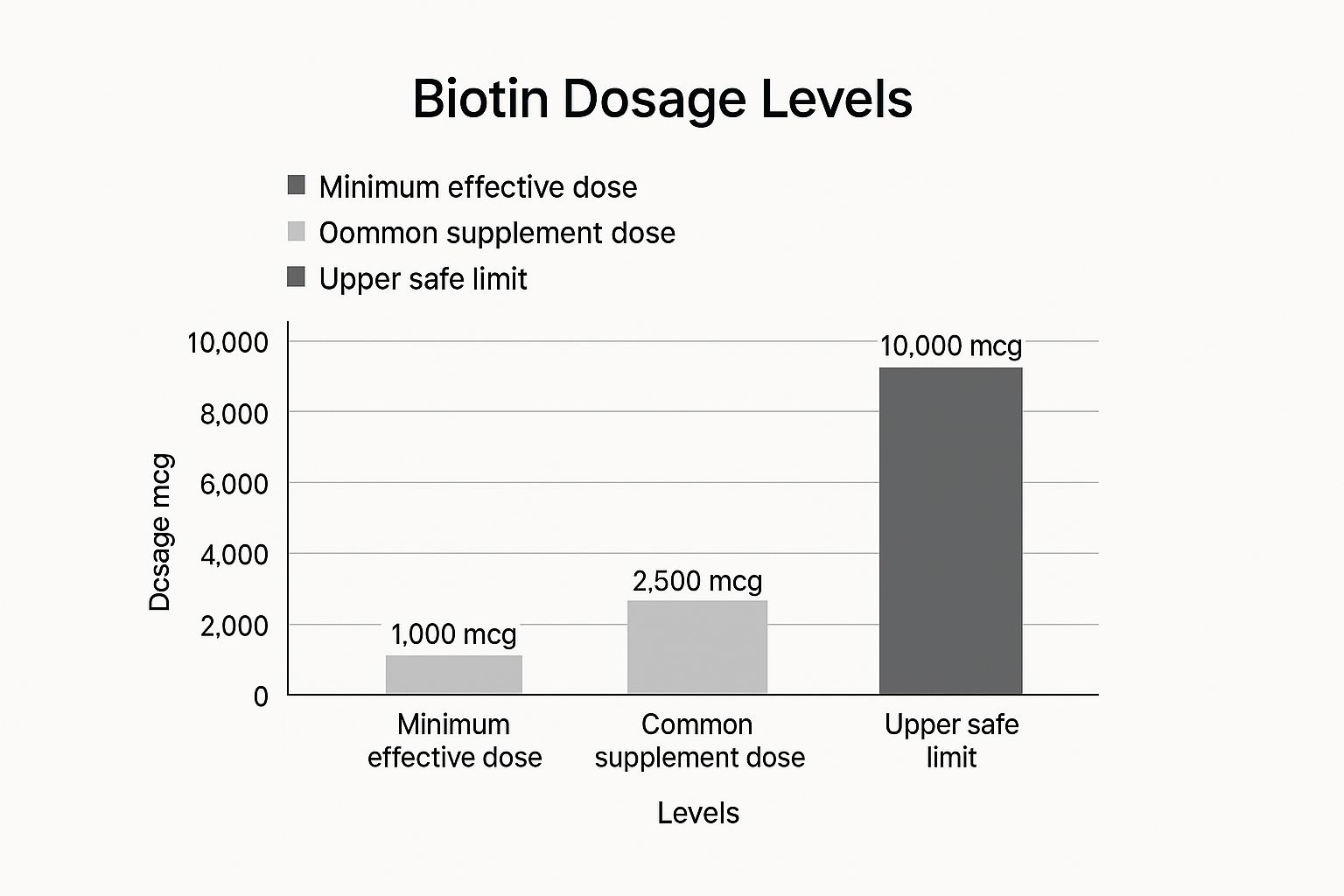
As you can see, that common 2,500 mcg dose you see on shelves is a popular starting point—it's well above the basic minimum but still sits comfortably within the safe upper limits.
To put these numbers into a clearer context, here’s a quick breakdown of what different dosage levels are typically for.
Biotin Dosage Levels at a Glance
| Dosage Level (mcg) | Who It's For | Primary Purpose |
|---|---|---|
| 30-100 mcg | Most healthy adults | Meeting daily dietary requirements for metabolic function. |
| 1,000-2,500 mcg | Individuals seeking hair and nail support | Supporting keratin infrastructure and overall hair health. |
| 5,000-10,000 mcg | Those with specific deficiencies or under medical guidance | Addressing a diagnosed biotin shortfall to restore hair vitality. |
This table shows how the purpose of taking biotin shifts dramatically with the dosage, from basic nutrition to a targeted therapeutic approach for those who need it most.
How Biotin Actually Helps Build Stronger Hair
Before we get into the nitty-gritty of the right biotin dosage for hair loss, it’s worth taking a moment to understand what this B-vitamin actually does inside your body. It’s not a magic bullet, but it plays a crucial role. Think of biotin as a key foreman on your body’s internal construction site, specifically in charge of building the very structure of your hair.
Its main job is to help metabolize the fats, carbs, and proteins from your diet, turning them into energy your cells can actually use. But for our purposes, biotin’s most important function is supporting the synthesis of keratin.
Keratin is that tough, fibrous protein that serves as the primary building block for your hair, skin, and nails. When your biotin levels are where they should be, you’re basically ensuring your body's "keratin factory" is fully staffed and running smoothly. The result? Hair strands that are built to be strong and resilient from the inside out.
The Keratin Connection
Here's a simple analogy: imagine trying to build a brick wall without enough mortar. You could stack the bricks, sure, but the wall would be weak, unstable, and likely to crumble at the slightest pressure. In this scenario, biotin is the essential mortar holding your hair's structure together.
If you're running low on this vitamin, it can throw a wrench in keratin production. This often leads to hair that’s more brittle, weaker, and prone to breaking. It's this fundamental connection that places biotin at the center of so many conversations about hair health.
Biotin’s main contribution is reinforcing your hair's infrastructure. It ensures the building blocks are properly formed, leading to stronger, more resilient strands right from the root.
To be clear, biotin doesn't just sprout new hair on its own, particularly if you're already healthy and not deficient. Its role is supportive. It works to improve the quality of the hair you currently have while ensuring any new growth is as robust as possible. While biotin works from within, many guys also look into treatments that tackle hair health from the outside. For those curious about regenerative options, understanding how platelet-rich plasma therapy works can provide a fuller picture of modern hair restoration strategies.
From Nutrient to Hair Strand
The journey from a biotin capsule to a visibly stronger strand of hair is a biological process, and it definitely doesn't happen overnight. Here's a quick rundown of how it works:
- Ingestion and Absorption: First, you take in biotin from food or a supplement. It’s then absorbed into your system through your small intestine.
- Metabolic Support: Once absorbed, it gets to work as a coenzyme, helping to break down nutrients and fuel crucial cellular processes throughout your body.
- Keratin Synthesis: This is where the magic happens for your hair. Biotin plays its part in producing the keratin protein that will form the basis of new hair strands.
- Hair Growth Cycle: Finally, this newly created, fortified keratin is integrated into the hair follicle during the anagen, or growth, phase of the hair cycle.
Since hair only grows about half an inch per month on average, this whole process requires patience. It’s why you won’t see a dramatic change in a week and why sticking with a supplement routine is the only way to see real, noticeable improvements over time.
What Clinical Research Actually Says About Biotin Dosage
Let's cut through the marketing noise and look at what the science tells us. When we move from theory to real-world results, clinical studies give a much clearer picture of who really benefits from taking extra biotin. It’s not a cure-all for every guy with thinning hair, but for the right person, it can be a critical piece of the puzzle.
The most compelling evidence for biotin supplementation is for people who have a diagnosed biotin deficiency. While this is pretty rare in healthy guys eating a balanced diet, when it does happen, the effect on hair can be dramatic. In these specific cases, biotin isn't just a helpful supplement—it's an essential treatment to reverse hair thinning.
The Role of Deficiency in Biotin's Effectiveness
Here’s a simple way to think about it: if your car is low on oil, adding more will make it run a whole lot better. But if the tank is already full, pouring in extra oil won't make the car go any faster. Biotin works the same way. For those who are genuinely running low, supplementing directly tackles the root cause of their hair problems.
For these individuals, studies show that supplementation can bring about real, noticeable improvements. It's also worth remembering that biotin is just one player on a much larger team. Other advanced treatments often deliver more direct results. For instance, understanding how effective PRP is for hair loss shows how different therapies work to directly stimulate the follicles themselves.
Clinical studies consistently show that biotin's most significant impact on hair growth occurs in people with an underlying deficiency. For those with adequate levels, the benefits are far less clear.
This is the key distinction that separates the medical facts from the marketing hype. Those incredible "before and after" pictures you see online? They almost always feature someone who was deficient to begin with.
Dosage in Clinical Settings
So, what doses do researchers actually use? It varies quite a bit depending on the situation. While most of us only need about 30 micrograms (mcg) a day from our food, clinical treatments use significantly higher amounts.
For conditions like brittle nails or certain hair shaft disorders, studies have effectively used dosages ranging from 300 mcg to 3,000 mcg. In rare cases of genetic enzyme deficiencies that prevent the body from using biotin properly, patients might need massive daily doses of 10,000 to 30,000 mcg just to manage their condition.
Is Taking More Biotin a Shortcut to Better Hair?
When it comes to supplements, we often get caught up in the "more is better" trap. If a normal dose of biotin is good for hair, then a massive one must be a surefire way to get a thicker mane, right? It's a tempting thought, but the science just doesn't back it up.

The reason is pretty straightforward: biotin is a water-soluble vitamin. Unlike fat-soluble vitamins that get stored in your tissues, your body is really smart about managing water-soluble ones. It takes what it needs for things like keratin production and simply gets rid of the rest.
Think of it like watering a plant. The soil absorbs the water it can hold, and anything extra just drains out the bottom. Pouring more water on a saturated plant won't make it grow any faster; it's just wasted. Your body treats excess biotin the exact same way—it gets flushed out.
The Myth of Mega-Doses
If your biotin levels are already sufficient, taking a huge dose won't suddenly kick hair growth into overdrive. Once your body has enough to do its job, your kidneys filter out the surplus, and it leaves your system. For most guys, the point of diminishing returns is hit long before reaching the mega-doses you see in some popular supplements.
This is why a smart, consistent dosage is a much better strategy than just chasing the highest number on the bottle. Going overboard doesn't offer extra benefits, and it can actually create a serious, unexpected problem.
While generally safe, taking excessive biotin provides no added hair benefits and carries a significant risk: it can interfere with critical medical tests.
A Critical Safety Warning
Beyond just being wasteful, there’s a crucial safety reason to steer clear of sky-high biotin doses. The U.S. Food and Drug Administration (FDA) has issued a specific warning about this very issue. High concentrations of biotin in your bloodstream can seriously mess with certain lab tests, leading to dangerously incorrect results.
This isn't just a small hiccup. It can throw off the results for troponin tests, which are essential for diagnosing heart attacks. An inaccurate reading in that scenario could lead to a misdiagnosis in a life-or-death situation. It can also interfere with hormone tests, including those for thyroid health.
Because of this very real risk, it's absolutely vital to tell your doctor about all supplements you're taking, especially high-dose biotin. Making an informed choice means putting your overall health first, not chasing a shortcut to better hair that doesn't really exist.
How to Choose a Quality Biotin Supplement
Walking into the supplement aisle can feel overwhelming. You’re faced with a wall of bottles, all promising the same thing: better hair. So, how do you cut through the noise and find one that’s actually worth your money? It all comes down to knowing what to look for on the label, not just the flashy promises on the front.
First thing’s first: check the biotin dosage for hair. Flip the bottle over to the "Supplement Facts" panel and you'll see the dose listed in micrograms (mcg) or milligrams (mg). Just remember that 1,000 mcg is the same as 1 mg, so a 5,000 mcg supplement is identical to a 5 mg one. If you're new to this, starting with a dose around 2,500 mcg is a great way to ease in and see how your body responds.
More Than Just Biotin
You’ll quickly notice that many of the best hair supplements aren't just biotin. They’re often complex formulas that pack in other ingredients designed to support hair health from different angles.
Here are a few common players you might see:
- Collagen: This is a protein that supplies the amino acids needed to build keratin, which is basically what your hair is made of. More building blocks can mean stronger hair.
- Saw Palmetto: You'll see this one a lot in men's formulas. It’s a plant-based ingredient thought to help inhibit DHT, the hormone that’s a major culprit in male pattern baldness.
- Other Vitamins & Minerals: Nutrients like zinc are crucial for hair tissue repair, while low iron levels can directly lead to shedding. Having them in the mix provides more comprehensive support.
These multi-ingredient blends can offer a much more holistic approach. Of course, supplements are only one piece of the puzzle. It’s smart to be aware of all the tools available, which is why many guys also look into the costs associated with PRP hair treatments to understand the full spectrum of options.
Quick tip: Look for a seal from a third-party certifier like USP or NSF on the bottle. This is your proof that an independent lab has verified the ingredients and dosage, so you can trust you're getting what you paid for.
Pills, Gummies, or Liquid?
The final decision comes down to how you prefer to take your supplements. Biotin comes in a few different forms, and there’s no single "best" one—it's all about what works for you.
Pills or Capsules: This is the old standby for a reason. They’re usually the cheapest option, straightforward to take, and don't contain any added sugars.
Gummies: If you hate swallowing pills, gummies are a popular alternative. The trade-off? You have to watch out for added sugars and artificial flavors that are often thrown in to make them taste good.
Liquid Drops: For a fast-absorbing option, liquid drops are a great choice. You can easily adjust your dose, but be prepared for a potentially strong taste.
By checking the dose, understanding the supporting ingredients, and picking a form you’ll actually stick with, you can confidently walk out with a biotin supplement that truly fits your goals.
Beyond the Bottle: Nourishing Hair from Within
Taking the right biotin dosage is a great step, but it’s only one piece of a much larger puzzle. To truly see a difference, you need a complete strategy, not just a single pill.
Think of it like building a house. You can't construct a sturdy home with just one material. You need a solid foundation, a strong frame, and quality finishing touches. The same principle applies to building healthy hair.
Your first and most important line of defense is always what's on your plate. A diet that's naturally rich in biotin provides a constant, reliable supply of this crucial nutrient, supporting your hair from the inside out.
Building a Hair-Healthy Diet
Getting more biotin from your food is probably easier than you think. Many common, everyday foods are packed with it.
- Eggs: The yolk, in particular, is a biotin powerhouse.
- Nuts and Seeds: Almonds, walnuts, and sunflower seeds make for a perfect, hair-healthy snack.
- Salmon: This fatty fish pulls double duty, offering both biotin and omega-3 fatty acids.
- Avocados: A fantastic and versatile fruit that’s just as good for your hair as it is on toast.
Making these foods a regular part of your meals ensures your body has the raw materials it needs to thrive. This "food-first" mindset perfectly complements any supplement routine you might be on. For those looking into more direct methods of nutrient delivery, options like IV hydration and multi vitamins therapy can provide a wider view of what's possible for overall wellness.
The Supporting Cast of Nutrients
While biotin often steals the spotlight, it definitely doesn't work in isolation. A whole team of other vitamins and minerals is just as critical for maintaining strong, healthy hair. If you're deficient in any of them, you might still see thinning or shedding, no matter how much biotin you take. You can dive deeper into the essential vitamins for hair growth in our detailed guide.
A holistic approach is always more effective. Biotin is a key player, but it performs best when supported by a full team of nutrients and healthy habits.
Don't forget about these other hair heroes:
- Iron: Absolutely essential for producing hemoglobin. Hemoglobin carries oxygen to all your cells—including the ones responsible for stimulating hair growth.
- Zinc: This mineral plays a vital role in hair tissue growth and repair. It also helps keep the oil glands around your hair follicles working properly.
- Protein: Your hair is made almost entirely of a protein called keratin. It stands to reason that not getting enough protein in your diet can lead to weak, brittle strands.
Finally, never underestimate the power of good hair care habits. Gentle cleansing that doesn't strip away natural oils and regular scalp massages to boost circulation can create the perfect environment for growth. This complete approach—combining smart supplementation, a nutrient-packed diet, and mindful hair care—is the most reliable path to achieving the healthy hair you're after.
Common Questions About Biotin for Hair
As we wrap things up, let's go over a few of the most frequent questions men have about using biotin. This should clear up any lingering doubts and help you feel confident about adding it to your routine.
How Long Until I See Results from Taking Biotin?
When it comes to hair, patience is a virtue. Hair grows slowly—most people only get about half an inch per month—so you won't see dramatic changes overnight. Realistically, you’ll need to take biotin consistently for at least three to six months before you can expect to see any noticeable new growth.
This timeline gives your body enough time to absorb the biotin and put it to work within the natural hair growth cycle. Any improvements start at the scalp, so it takes a while for that new, healthier hair to grow long enough to be visible.
The single most important factor is consistency. Sticking with your daily supplement gives your body the steady supply of building blocks it needs to produce stronger hair over the long haul.
Is Taking Too Much Biotin Dangerous?
For the most part, no. Biotin is a water-soluble vitamin, which means your body simply gets rid of any excess it doesn't need through urination. So, while taking massive doses is a waste of money, it's not considered toxic.
The biggest risk, as we mentioned earlier, is that very high doses can seriously mess with important lab tests. This includes critical tests for thyroid hormones and troponin, a marker used to detect heart attacks.
Should I Talk to a Doctor Before Taking Biotin?
Yes, absolutely. It's always a smart move to chat with your doctor before starting any new supplement, and biotin is no exception.
A doctor can help figure out if a deficiency is actually your problem or if there's another reason for your hair issues. If you're wondering why your hair might have stopped growing, getting a professional opinion is the best first step you can take. This ensures you're on the right track from the start, prioritizing both your safety and your hair's health.
At PRP For HairLoss, our goal is to give you clear, science-backed information to help you on your hair restoration journey. Feel free to explore our site to learn more about effective solutions for male pattern baldness. Learn more at https://prpforhairloss.com.


Leave a Reply