If you're diving into ways to deal with hair loss, you've almost certainly bumped into the name finasteride. When you start thinking about topical finasteride side effects, the first thing to get your head around is how this stuff actually works. The whole idea is to go after hair loss right at the source, but without the full-body exposure that comes with swallowing a pill. This very targeted strategy is at the heart of both its effectiveness and its safety profile.
How Topical Finasteride Actually Works
To really get how topical finasteride does its job, you have to know the main villain in the male pattern baldness story: a hormone called dihydrotestosterone (DHT). Think of DHT as a persistent bully that picks on your hair follicles, gradually shrinking them over time until they just give up on growing healthy hair.
Finasteride is designed to be the bodyguard for your follicles. It’s part of a drug class known as 5-alpha reductase inhibitors. In simple terms, it blocks the enzyme (that’s the 5-alpha reductase) that's responsible for turning testosterone into the follicle-wrecking DHT.
A Targeted Approach to Hair Loss
What makes topical finasteride different is all about how you use it. Instead of taking a pill that sends the drug on a tour through your entire system, you apply it as a liquid or gel directly onto your scalp. This lets it act like a highly localized bouncer, concentrating its DHT-blocking muscle exactly where the hair loss is happening. The idea is to dramatically lower DHT levels in the scalp tissue while keeping the amount that slips into your bloodstream to a minimum.
This focused treatment is all about protecting your hair follicles directly. That's precisely why it's become such a compelling alternative to the oral pill—by keeping the drug's action contained to the scalp, the goal is to sidestep the risk of body-wide side effects.
This "scalp-first" method brings a few key advantages to the table:
- Direct Action: The active ingredient gets delivered right where you need it most—your hair follicles.
- Reduced Systemic Exposure: Far less of the drug makes it into your bloodstream compared to an oral tablet, which is believed to lower the odds of certain side effects.
- Proven Mechanism: It relies on the same scientifically validated, DHT-blocking principle that has made finasteride a go-to treatment for hair loss for years.
Getting a grip on this mechanism is crucial. It gives you the foundation you need for a clear-eyed look at the potential topical finasteride side effects, both on the skin and, in rarer cases, elsewhere.
Dealing With Common, Mild Side Effects
The big selling point of topical finasteride is its "stay-local" approach. The goal is to concentrate the medicine right on the scalp, minimizing its travel throughout the rest of your body. But what happens when your skin is the one that complains?
Knowing what to expect with common, mild side effects can make the difference between feeling confident and feeling alarmed.
Most reactions are just what you'd guess from a scalp treatment: local and pretty mild. These aren't deep, body-wide issues. Instead, think of it as your skin’s first impression of a new product. Just like trying a new face cream, your skin might need a little time to get used to it, or it might just not like one of the ingredients.
Common Skin Reactions at the Application Site
The side effects people report most often happen right where the solution is applied. You might notice things like:
- Mild Itching or Pruritus: This can feel like anything from a faint tickle to a more noticeable, persistent itch on your scalp.
- Redness and Irritation: The skin in the treatment area might get a little red or feel tender, almost like a very light sunburn.
- Scalp Dryness or Flaking: Some people find their scalp gets drier than normal, which can lead to some minor dandruff-like flaking.
More often than not, these issues aren't from the finasteride itself. The real culprits are usually the other ingredients in the mix, like alcohol or propylene glycol, which are known to be drying or irritating for sensitive skin. It's also helpful to have a broader perspective on why you're losing hair in the first place; understanding different hair loss causes can put your entire treatment plan into context.
Mild Effects Beyond the Scalp
While topical finasteride is designed to stay on your head, it's not a completely closed system. A tiny amount of the drug can still get absorbed into your bloodstream. This means some mild, non-local side effects are possible, though they're much less common than simple skin irritation.
Headaches, for example, are sometimes reported. It’s a good reminder that even a targeted treatment isn't totally isolated from the rest of your body. One study looking at a combination topical finasteride and minoxidil spray found that 11.8% of users experienced some kind of adverse effect within the first six weeks, and headaches were the most common one. While the overall safety is still quite good, this shows why it’s smart to pay attention to both local skin reactions and any new systemic feelings.
The bottom line is that mild side effects are usually temporary and can often be managed. But if any symptom—on your scalp or elsewhere—sticks around or really bothers you, it's always worth a conversation with your doctor. They can help figure out if it's a simple irritation or if your treatment needs a tweak.
The Truth About Systemic and Sexual Side Effects
Let's get right to it. This is the conversation that causes the most anxiety for anyone considering finasteride, and for good reason. Even though topical finasteride is designed to work locally on your scalp, your body isn't a perfectly sealed container. A tiny amount of the medication can still make its way into your bloodstream.
This is called systemic absorption, and it’s the reason for the big question: can the topical version cause the same sexual side effects linked to the oral pill? The risk is definitely much, much lower with the topical form, but it’s not zero. We need to look at the actual evidence to see the full picture.
How Systemic Absorption Works
Think of your skin like a high-tech filter, not a brick wall. When you apply topical finasteride, the vast majority of it stays right where you want it—in the scalp, blocking the DHT that attacks hair follicles. But a very small fraction can get through that filter and into your general circulation.
Because of this, it's helpful to glance at the data for oral finasteride. It gives us a blueprint for the types of side effects that are theoretically possible, even if the odds are significantly lower with a topical. Sexual side effects are the most talked-about issue with the pill. To get some perspective, you can compare this with the potential issues of other treatments, like those discussed regarding PRP hair treatment side effects.
This image breaks down some of the most common user concerns, starting with the local stuff.
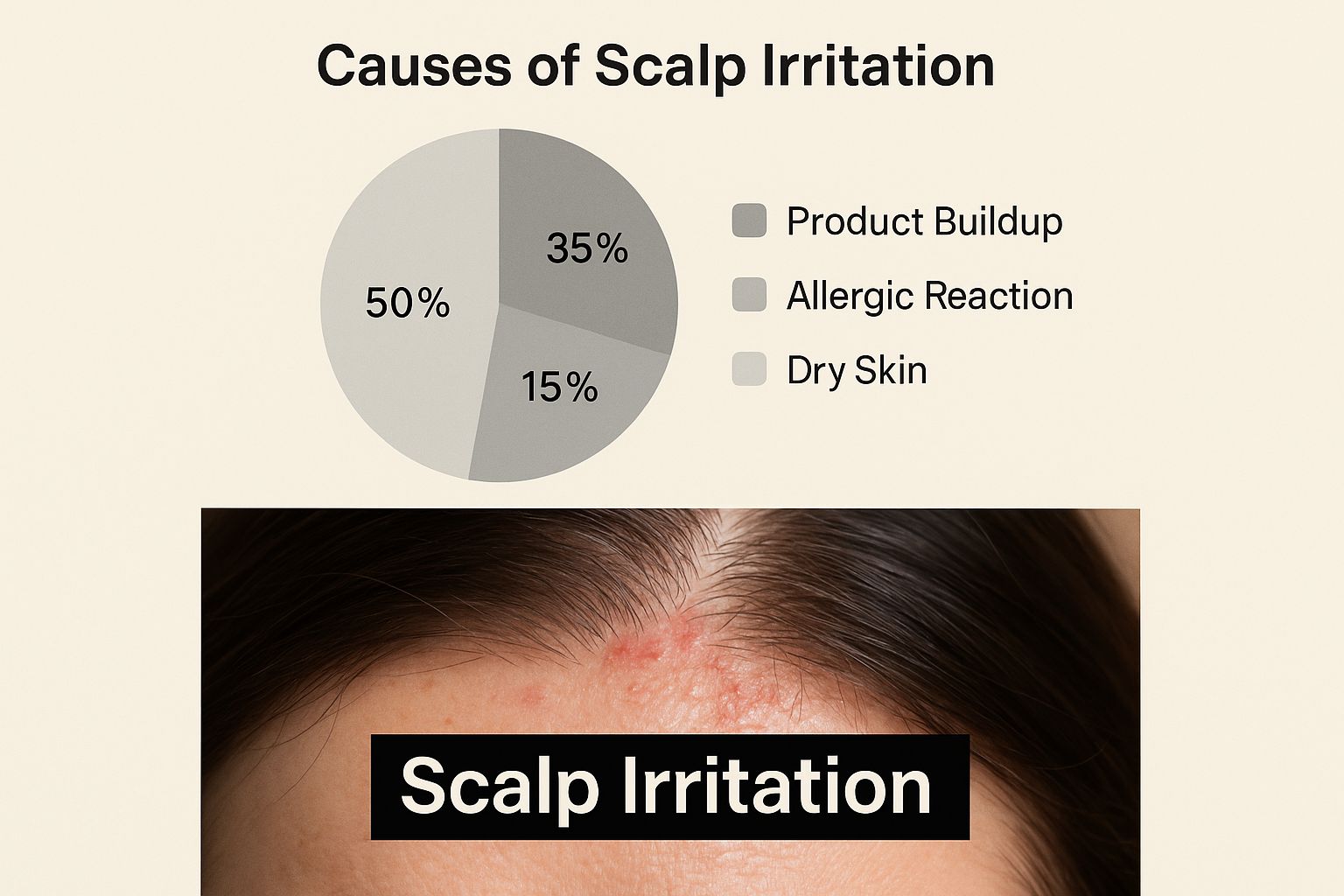
While scalp irritation is a more direct, local reaction, it’s that small chance of systemic absorption that opens the door to questions about broader side effects.
A Look at the Numbers
To understand the real-world risk, let's look at the data from oral finasteride studies. It's important to remember these studies often use a higher 5mg dose for prostate issues, not the 1mg dose typically used for hair loss. Still, it provides a valuable benchmark.
The table below shows the reported incidence of sexual side effects in men taking oral finasteride compared to those taking a placebo.
Sexual Side Effects Incidence Oral Finasteride vs Placebo
| Side Effect | Finasteride Incidence Rate | Placebo Incidence Rate |
|---|---|---|
| Erectile Dysfunction | 3.4% to 15.8% | 1.7% to 6.3% |
| Decreased Libido | 2.36% to 10% | 1.2% to 6.3% |
| Ejaculatory Issues | 0.8% to 7.7% | 0.1% to 1.2% |
Even with the pill, the incidence rates are relatively low, but they are consistently higher than the placebo group. This is the key reason why the topical formulation was developed.
The whole point of topical finasteride is to dramatically slash the amount of medication that goes systemic. Studies confirm that topical versions lower DHT levels in the bloodstream far less than the oral pill does, which is strong evidence for a lower risk of these side effects.
The possibility, however small, still exists. The goal here isn’t to scare you, but to give you a clear-eyed view of the complete risk profile. This way, you can have a truly informed discussion with your doctor, weighing the proven hair-saving benefits against the reduced—but not eliminated—risks.
Understanding Rare Neuropsychiatric Risks
Beyond a bit of scalp irritation or the more talked-about sexual side effects, the conversation around finasteride has to include some rare but serious neuropsychiatric risks. We're talking about potential changes to mood and mental clarity that a small number of users have reported. It's a complex and sensitive area, but it's vital for a complete picture of the medication.

Here's the key thing to grasp: because some topical finasteride gets absorbed into your bloodstream, it can cause the same range of side effects as the oral pill. The chances are lower, sure, but the potential is still there. This includes effects on your mental and emotional state.
This isn't meant to frighten anyone away. It’s about arming you with the full safety profile so you can have a truly informed discussion with your doctor.
The Connection Between Finasteride and Mood
Scientists are still working out the exact link between finasteride and mood, but the leading theory involves something called neurosteroids. Think of these as hormones that help regulate brain function, mood, and how you handle stress. By blocking the 5-alpha reductase enzyme, finasteride can throw off the balance of these neurosteroids. For a very small subset of people, this can unfortunately lead to changes in their mental well-being.
Some of the reported neuropsychiatric side effects include:
- Depression or a persistent low mood
- Anxiety
- Difficulty concentrating or a feeling of "brain fog"
Again, these symptoms are considered rare, but they're serious enough that you need to be aware of them. It's also helpful to know that other hair loss treatments come with different considerations. For example, you can compare these risks to the side effects of PRP for hair to get a broader perspective.
FDA Communications and Persistent Risks
Health authorities have taken notice. In a major Safety Alert, the U.S. FDA highlighted 32 cases of adverse events tied to compounded topical finasteride products between 2019 and 2024. The reports documented neuropsychiatric effects like depression, anxiety, brain fog, and even suicidal ideation. This was official confirmation that systemic absorption can, in fact, lead to the same risks as the oral drug.
One of the most critical points from these reports is that symptoms can sometimes stick around even after someone stops using the medication. This really drives home how important it is to tell your doctor immediately if you notice any new or worsening mood-related symptoms.
The overwhelming majority of people using topical finasteride will never encounter these problems. But knowing they're a possibility is empowering. Your mental health is every bit as important as your physical health, and any treatment decision should reflect that. This knowledge lets you monitor yourself properly and talk to your doctor clearly about any changes, making sure your journey to fuller hair is a safe one.
How to Minimize Risks and Use Treatment Safely
Knowing about potential side effects is one thing, but actively managing your treatment is what really counts. With a few smart, practical steps, you can significantly lower the risks and make your experience with topical finasteride as safe as possible. It's all about being proactive.
This process kicks off with a chat with your doctor. Their goal will be to find the lowest effective dose for you. Think of it as dipping your toe in the water first—there's no reason to dive in headfirst when a lower concentration could give you the results you're after with a much smaller risk of side effects.
Starting low and slow gives your body time to acclimate and lets you keep a close eye on how you're feeling right from the beginning.

Mastering Proper Application
How you put the solution on your scalp is just as critical as the dose itself. Using more than you're supposed to won't make your hair grow back any faster, but it can definitely increase how much finasteride gets absorbed into your system—which is precisely what you're trying to limit.
Here are a few simple rules to live by:
- Follow Directions Exactly: Only use the amount your doctor prescribed, which is usually measured out with a dropper. More is not better here.
- Apply to a Dry Scalp: A wet scalp can actually increase absorption. Always wait until your scalp and hair are completely dry before applying.
- Wash Your Hands Thoroughly: As soon as you're done, wash your hands well with soap and water. This prevents you from accidentally spreading it to other parts of your body or to other people.
Getting your treatment from a reputable pharmacy is absolutely non-negotiable. The quality of compounded medications can be all over the map, so you need to be sure you're getting a product that's been formulated with precision by a source you trust. It's also helpful to understand the bigger picture of hair loss treatment; our guide on how to stop hair loss offers some great additional strategies.
Knowing When to Stop and Get Help
Your best line of defense is simply paying attention to your body. Most side effects, if they occur, are mild and resolve on their own, but it's crucial to know which red flags mean you need to stop and call your doctor.
Your health always comes first. Don't ever hesitate to reach out to your physician if you notice any concerning symptoms, even if they seem minor. Trust your gut.
You should stop the treatment and get in touch with your doctor right away if you experience any of these issues:
- Persistent or Severe Scalp Irritation: Redness, itching, or a burning sensation that just won't quit or seems to be getting worse.
- Any Sexual Side Effects: This means anything from a lower sex drive to erectile dysfunction or changes in ejaculation.
- Noticeable Mood Changes: If you start feeling down, anxious, or experience a "brain fog" that wasn't there before, it's time to report it.
By following these guidelines—starting with a low dose, applying it correctly, using a trusted source, and listening to your body—you put yourself in the driver's seat. You can chase the hair-boosting benefits of topical finasteride while actively keeping potential risks in check.
Making an Informed Decision with Your Doctor
So, where does that leave us? Deciding on topical finasteride is ultimately a personal cost-benefit analysis. You're weighing a proven hair loss treatment against a list of potential side effects.
On one side of the scale, you have a medication that gets right to the hormonal root of the problem. Its safety profile is, by and large, considered an improvement over the oral pill, offering a solid option for many people who see great results without any trouble.
But on the other side, you can't ignore the risks. While the odds are lower than with the pill, side effects are a real possibility, ranging from simple scalp irritation to, in rare cases, more serious systemic issues. It's a risk that, while small, is not zero.
Partnering with Your Healthcare Provider
This is not a decision to make on your own after a few hours of internet research. The most critical step you can take is to have a frank, detailed conversation with a dermatologist or a doctor who truly understands hair loss.
A medical expert can provide a level of personalized guidance that no article ever could. They will:
- Evaluate Your Personal Health: Your doctor will dive into your full medical history, looking for anything—from pre-existing conditions to current medications—that might change your risk profile.
- Discuss Your Risk Tolerance: They can help you put the potential pros and cons into perspective, framing them in a way that aligns with your own comfort level and health goals.
- Create a Monitoring Plan: If you move forward, your doctor will set up a clear plan to track your progress and keep a close eye out for any unwanted reactions.
The goal here is for you to be an informed patient, an active partner in your own healthcare. Your doctor brings the medical expertise, but you bring the essential feedback on how you're actually feeling and what you're willing to accept.
This conversation is also the perfect time to explore all your options. As you're weighing the details, understanding how finasteride vs dutasteride for hair loss compare can add valuable context. By laying all the cards on the table, you and your doctor can chart the best and safest course forward for you.
Your Questions, Answered
It's completely normal to have questions when you're considering a new treatment. Let's tackle some of the most common ones that come up regarding topical finasteride.
Are Topical Finasteride Side Effects Permanent?
For almost everyone, the answer is no. If you experience side effects, they typically go away after you stop using the treatment.
However, it's important to be aware of a rare condition known as Post-Finasteride Syndrome (PFS), where some individuals have reported symptoms that continue even after they've discontinued the drug. While the risk of this is considered very low, it's a key reason why keeping an open dialogue with your doctor throughout your treatment is so crucial.
Can I Use Topical Finasteride with Minoxidil?
Absolutely. In fact, this is one of the most popular and effective combination strategies for tackling hair loss. The two compounds work on different pathways. Finasteride plays defense by blocking DHT, while minoxidil goes on offense, stimulating the follicles to promote growth.
Think of it as a one-two punch for your hair. You're simultaneously protecting what you have and encouraging new growth, which often leads to better results than using just one or the other.
Many over-the-counter and prescription formulas actually come pre-mixed for this very reason. As always, just be sure to follow your doctor's recommendation when using them together.
How Long Until Side Effects Appear or Disappear?
There’s no set schedule, as everyone's body reacts differently.
Local side effects, like a bit of scalp redness or itching, can pop up within the first few days of use. Systemic side effects, if they happen at all, tend to develop more slowly and might not be noticeable for several weeks or even a couple of months.
If you decide to stop treatment, most side effects usually start to fade within a few weeks. But again, this timeline can vary quite a bit from person to person.


Leave a comment