When you're on the hunt for the best hair growth serum for men, the sheer number of options can be dizzying. The real secret? Look past the flashy marketing and find a formula packed with proven ingredients, like Minoxidil or natural DHT blockers. These are the workhorses that get to the root of the problem—literally. The best serums are all about nourishing the scalp and waking up dormant follicles, not just slapping a temporary coating on the hair you have left.
Your Guide to Reclaiming Thicker, Fuller Hair
It can be a tough moment, catching a glimpse in the mirror and seeing more scalp than you're used to. Millions of men go through it, but that doesn’t make it feel any less personal. The good news? You’re not powerless here. Science-backed solutions are out there, and you have more control over this situation than you probably think.
Think of this guide as your no-nonsense roadmap to the world of men's hair growth serums. We’re here to cut through the hype and focus on what actually works. We'll break down the science behind these products in a way that’s easy to understand.
Understanding True Hair Restoration
First things first, let's draw a line in the sand between a quick cosmetic fix and a genuine hair restoration treatment. A lot of styling products can create the illusion of thickness by plumping up existing hair strands, but they don't do a thing for the underlying issue. A real hair growth serum plays a completely different ballgame.
Its main job is to sink into the scalp and feed active ingredients directly to the hair follicle. The follicle is the powerhouse where hair growth starts and ends, so targeting it is the only way to make a real, lasting difference.
Our mission here isn't to just hand you a "best of" list and call it a day. We want to arm you with the knowledge to pick the right serum for you. That means getting a handle on a few key things:
- Pinpointing your hair loss type: Is it classic male pattern baldness, a reaction to stress, or something else entirely?
- Decoding ingredient labels: We’ll teach you how to spot the heavy hitters that actually get results.
- Setting realistic expectations: Patience is a virtue, my friend. Understanding the timeline for new growth is crucial for sticking with it.
While our focus is squarely on hair, taking a holistic view of your health is always a smart move. For those interested in the bigger picture, understanding male health beyond hair offers some great insights.
Alright, let's get started on the path to a fuller head of hair.
How Hair Growth Serums Actually Work
So, what’s actually happening inside that little bottle you’re putting on your scalp? Let's break down how a hair growth serum really gets the job done. This isn't your everyday shampoo that just cleans your hair or a conditioner that simply coats the strands you already have. A serum is on a much more important mission.
A good serum is a highly concentrated yet lightweight formula designed for one thing: deep absorption into the scalp. Its whole purpose is to get past the hair itself and deliver a potent cocktail of active ingredients directly to the hair follicles. Think of the follicle as the hidden command center for each hair, living just beneath the skin's surface.
The easiest way to think about it is to picture your scalp as a garden. If a plant were struggling, you wouldn't just spritz water on its leaves, would you? Of course not. You’d feed the soil to nourish the roots. A quality serum does the exact same thing for your hair, delivering a targeted shot of nutrients right where the magic happens.
The Science Of The Hair Growth Cycle
To really get why serums can be so effective, you have to understand your hair's natural lifecycle. Every single strand on your head goes through a three-phase cycle. When you start noticing thinning or hair loss, it's usually because this cycle has been thrown off balance.
- The Anagen (Growth) Phase: This is the main event—the active growth period where follicles are busy building new hair. This phase can last anywhere from 2 to 7 years and determines how long your hair can ultimately get.
- The Catagen (Transition) Phase: This is a brief pit stop, lasting about two weeks. The hair follicle shrinks, detaches from the blood supply, and stops growing.
- The Telogen (Resting) Phase: For about three months, the follicle just chills out and lies dormant. At the end of this phase, the old hair is shed to make way for a new one, and the whole cycle kicks off again.
For men, pattern baldness usually kicks in when a hormone called dihydrotestosterone (DHT) starts to shrink the follicles. This dramatically shortens the anagen (growth) phase while making the telogen (resting) phase longer. The result? Hairs grow back finer and shorter, until eventually, they stop growing altogether.
How Serums Step In To Help
This is where a well-designed serum comes into play. It’s formulated to intervene in that cycle and correct the imbalances. Its main goals are to keep your hair in the anagen phase for longer and cut the telogen phase short. In plain English, it keeps more hairs growing on your head for a longer period of time.
It pulls this off in a few key ways:
- Boosting Scalp Circulation: Many serums include ingredients that get the blood flowing better in the scalp. More blood flow means more oxygen and nutrients can reach the hair follicles, giving them the fuel they need to thrive.
- Blocking DHT: The heavy-hitter serums for men often contain ingredients that inhibit DHT right at the follicle. By shielding the follicle from this hormone, they help prevent it from shrinking and keep the growth cycle running smoothly.
- Waking Up Dormant Follicles: A powerful mix of nutrients and stimulants can jolt sleeping follicles out of that extended resting phase and push them back into the active, growing anagen phase.
The real goal of the best hair growth serum for men isn't just about forcing new hair to grow. It's about creating a healthier scalp environment where the entire growth cycle can function as it should, leading to hair that's stronger, thicker, and more resilient over time.
This targeted, scientific approach is what sets a good serum apart from other hair products. For men who want to dig deeper into what really gets results, it's worth comparing the different types of treatments out there. You can explore more about hair growth products that actually work to get a clearer picture. The key is to find a formula that targets the specific reason behind your hair loss.
Key Ingredients That Power Effective Hair Growth Serums
The real power of a hair growth serum isn't in the brand name or the fancy bottle—it's locked inside the ingredient list. Honestly, understanding what these key components do is the single most important step in finding the best hair growth serum for men. Some ingredients get the blood flowing, others fight back against hair-loss hormones, and a few provide the raw materials for stronger hair.
Let's break down the powerhouse actives you should be looking for.
The Clinical Gold Standard: Minoxidil
First on the list is Minoxidil, and for good reason. It’s the only topical ingredient approved by the FDA for over-the-counter use to treat hair loss. It was originally a blood pressure medication, but doctors quickly noticed a very interesting side effect: patients were growing more hair.
Minoxidil is a vasodilator, which is a fancy way of saying it widens the blood vessels in your scalp. Think of it like upgrading the plumbing to your hair follicles. This improved circulation delivers a rush of oxygen, blood, and nutrients, helping to wake up shrunken follicles and nudge them back into their active growth phase. It’s particularly effective for guys dealing with hereditary hair loss at the crown of their head.
This chart gives you a quick visual breakdown of the different tiers of hair growth serums, so you can see where clinically-proven ingredients fit into the bigger picture.
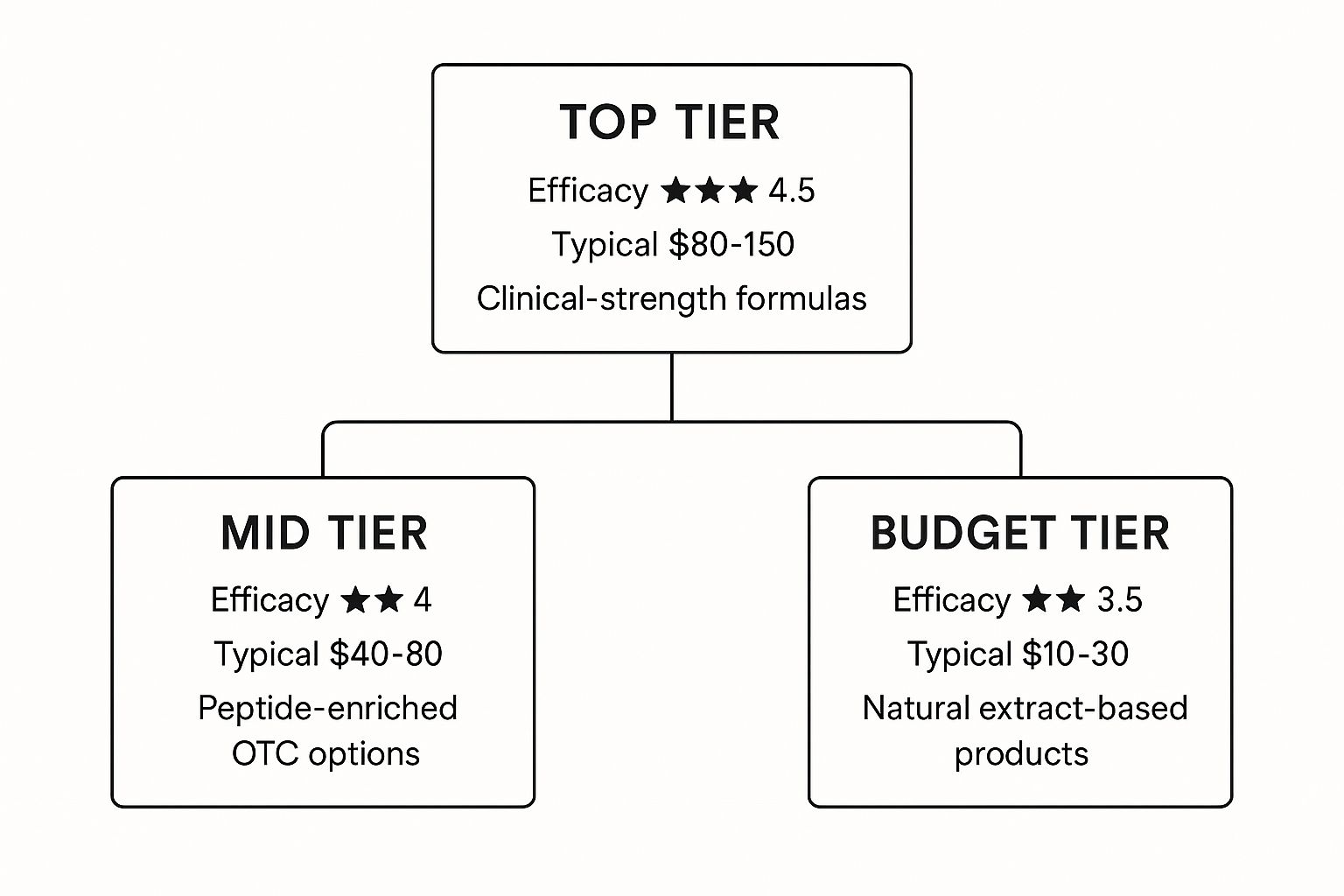
As you can see, formulas with heavy hitters like Minoxidil tend to deliver the most reliable results, but they also often come with a higher price tag.
Natural DHT Blockers and Peptides
While Minoxidil is a proven workhorse, a lot of men prefer to explore natural alternatives or ingredients that can work alongside it. This is where DHT blockers come into play. Dihydrotestosterone (DHT) is the main hormone behind male pattern baldness, so blocking it is a cornerstone strategy.
- Saw Palmetto: This herbal extract is probably the most well-known natural DHT inhibitor. It gets in the way of the enzyme that converts testosterone into DHT, helping to shield follicles from shrinking.
- Caffeine: When applied right on the scalp, caffeine can stimulate follicles and has been shown to counteract some of DHT's negative effects. It gives your scalp a jolt of energy, much like your morning coffee gives you one.
Another crucial category to know about is peptides. These are just short chains of amino acids, which are the fundamental building blocks of proteins like keratin—the very stuff your hair is made of. Peptides in a serum can signal your follicles to produce more collagen and fortify the hair shaft itself, leading to thicker, more resilient strands.
The demand for these targeted treatments is a huge driver of market growth. The global market for hair loss treatment products, including these potent serums, was valued at USD 2.93 billion in 2025 and is projected to hit USD 4.26 billion by 2030. This growth is all about new innovations in serum tech and men becoming more aware of what actually works.
For anyone looking to specifically tackle hormonal hair loss, understanding how these ingredients work is a game-changer. Our detailed guide on DHT blockers for hair loss takes a much deeper dive into this critical piece of the hair restoration puzzle.
Essential Nutrients and Scalp Supporters
At the end of the day, a healthy scalp is the foundation for healthy hair. Even the most powerful active ingredients won't stand a chance if your scalp is inflamed, dry, or clogged up. That’s why the best hair growth serum for men will also include ingredients that create the perfect environment for growth.
Keep an eye out for these key supporters:
- Biotin (Vitamin B7): Absolutely essential for keratin production, Biotin helps strengthen the hair you already have and supports the growth of new strands.
- Antioxidants (like Vitamin E): These protect your scalp from oxidative stress caused by everyday things like pollution and UV rays, which can damage follicles over time.
- Niacinamide (Vitamin B3): This ingredient helps improve scalp circulation and calms down inflammation, creating a nourished and happy base for your follicles to thrive in.
The table below gives you a quick-glance comparison of these essential ingredients. It's a simple way to help you match your specific hair concerns with the right active components.
Key Hair Growth Serum Ingredients and Their Functions
| Ingredient | How It Works | Best For |
|---|---|---|
| Minoxidil | Widens blood vessels to increase nutrient flow to follicles. | Genetic hair loss, thinning at the crown. |
| Saw Palmetto | A natural extract that helps block the formation of DHT. | Male pattern baldness, receding hairlines. |
| Peptides | Amino acid chains that act as building blocks for hair protein (keratin). | Weak, brittle hair and overall thinning. |
| Biotin | A B-vitamin that is essential for producing keratin. | Slow-growing or weak hair due to nutritional gaps. |
| Antioxidants | Protects the scalp from environmental damage and reduces inflammation. | All hair loss types, especially for those with scalp irritation. |
By getting familiar with these ingredients, you're no longer just a hopeful consumer—you're an informed buyer. Now you can read a product label and understand why it works, giving you the confidence to choose a serum that actually addresses the root cause of your hair loss.
Picking the Right Hair Growth Serum for You
Alright, you now understand what makes a good hair growth serum tick. The real challenge is taking that knowledge and applying it to your unique situation. Choosing the best hair growth serum for men isn't about chasing a miracle in a bottle; it's about matching the right tool to your specific needs.
To do that, you need to get real about your hair, your scalp, and your daily habits. Think of yourself as a detective investigating your own hair loss. The more clues you uncover, the better your odds of finding a solution that actually works. Let’s run through the exact checklist you need.
What’s Causing Your Hair Loss?
First things first, you have to ask the most important question: Why am I losing hair? Different ingredients target different problems, so getting the diagnosis right from the start is absolutely crucial. For most men, the answer usually falls into one of these common buckets.
- Male Pattern Baldness (Androgenetic Alopecia): This is the big one. If you've got the classic receding hairline or a thinning spot on your crown, and baldness runs in your family, you're likely dealing with a genetic sensitivity to the hormone DHT.
- Stress-Related Shedding (Telogen Effluvium): Been through a major life event recently? A stressful job, an illness, or a significant personal challenge can shock a large number of your hair follicles into the shedding phase all at once, causing sudden, diffuse thinning all over your head.
- Nutritional Gaps: Your hair follicles are like tiny factories that need a constant supply of raw materials. If your diet is lacking in key nutrients like iron, zinc, or biotin, those assembly lines slow down, resulting in weaker and thinner hair.
If you’re pretty sure it's genetic, your best bet is a serum with DHT-blocking ingredients like Saw Palmetto or a clinically proven active like Minoxidil. On the other hand, if stress or diet is the likely culprit, you’ll want a serum loaded with vitamins, peptides, and ingredients that boost scalp circulation. Understanding the full picture is key, and you can explore a complete hair loss treatment for men to see how these different strategies can work together.
What’s Your Scalp and Hair Type?
Your scalp is the garden where your hair grows. A product that’s perfect for an oily scalp could be a total nightmare for someone with dry, sensitive skin. If you ignore this, you risk causing irritation, which will only make your hair loss worse.
Take a quick assessment. Is your scalp greasy by the end of the day, or does it feel tight and flaky?
- For Oily Scalps: You need something light. Look for water-based serums that soak in quickly without clogging your pores. Ingredients like salicylic acid can also be a big help in keeping that extra oil under control.
- For Dry or Sensitive Scalps: Alcohol-free formulas are non-negotiable, as alcohol will only dry your skin out more. Instead, look for serums with soothing, hydrating ingredients like aloe vera or hyaluronic acid to calm things down.
Your hair’s texture plays a role, too. If you have fine hair, a heavy, oily serum is just going to weigh it down and make it look even thinner. A lightweight, non-greasy formula is almost always the smarter move to keep some volume while the active ingredients get to work.
The Make-or-Break Factor: Consistency and Patience
This is where so many guys go wrong. You could have the most scientifically advanced hair growth serum in the world, but if you don't use it consistently, it will fail. Period. Hair growth is a marathon, not a sprint; you're working with your body's natural (and very slow) biological clock.
You have to apply the serum every single day, exactly as instructed. Skipping days or only using it when you happen to remember is the fastest way to waste your money and see zero results. Those active ingredients need to be constantly present to do their job.
The easiest way to stick with it is to piggyback it onto a habit you already have. Put it on every morning after you brush your teeth or every night right before bed. Once it becomes an automatic part of your routine, you've cracked the code.
And remember, you won't see results tomorrow. It takes a solid three to six months of daily use before you can even begin to look for the first signs of progress—which often appear as less shedding or some new, fine "baby hairs." Be patient. Stick with the plan and give the serum a real chance to work its magic.
Common Mistakes to Avoid When Using Hair Serums
Even the best hair growth serum for men can fall flat if you're not using it correctly. You can spend good money on a top-shelf product, but a few common missteps will sabotage your results, leaving you frustrated and back at square one. Learning what not to do is just as critical as knowing which ingredients to look for.
The biggest mistake, by a long shot, is impatience. Hair growth operates on a biological timeline, not a hopeful one. We're talking about a slow, steady process that requires commitment long before you'll see a dramatic change in the mirror.
Quitting after just a month or two is like walking out of a movie before the final act—you miss the whole point. You have to give those active ingredients enough time to wake up dormant follicles and get the growth cycle humming again.
The Sin of Inconsistency
Right behind giving up too soon is spotty application. Using your serum "most days" or "whenever you remember" just won't cut it. The ingredients need to maintain a consistent presence on your scalp to have any meaningful, sustained effect on your hair follicles.
Think of it like watering a plant. An occasional splash of water isn't going to save it from wilting. It needs a regular, dependable supply to thrive, and your scalp is no different. The easiest way to stick with it is to anchor the habit to something you already do every day, like applying it right after you brush your teeth.
And more men are building these kinds of routines. The global hair serum market was valued at around USD 1.57 billion in 2024 and is projected to hit USD 2.63 billion by 2030. A huge driver of this is the men's segment, which is growing at 9.21% annually as more guys make dedicated hair care a non-negotiable part of their grooming. You can learn more about the evolving men's hair care market trends.
More Is Not Better
Another classic pitfall is over-application. It’s tempting to think that drenching your scalp in serum will speed things up, but it doesn't work that way. Your scalp can only absorb so much product at once.
Using more than the recommended dose accomplishes two things, and neither is good:
- It wastes your expensive product, meaning you'll have to buy it more often.
- It can lead to greasy buildup, which can clog pores and even cause irritation.
Just stick to the instructions on the bottle. A few drops or a single pump is almost always enough to cover the areas that need it.
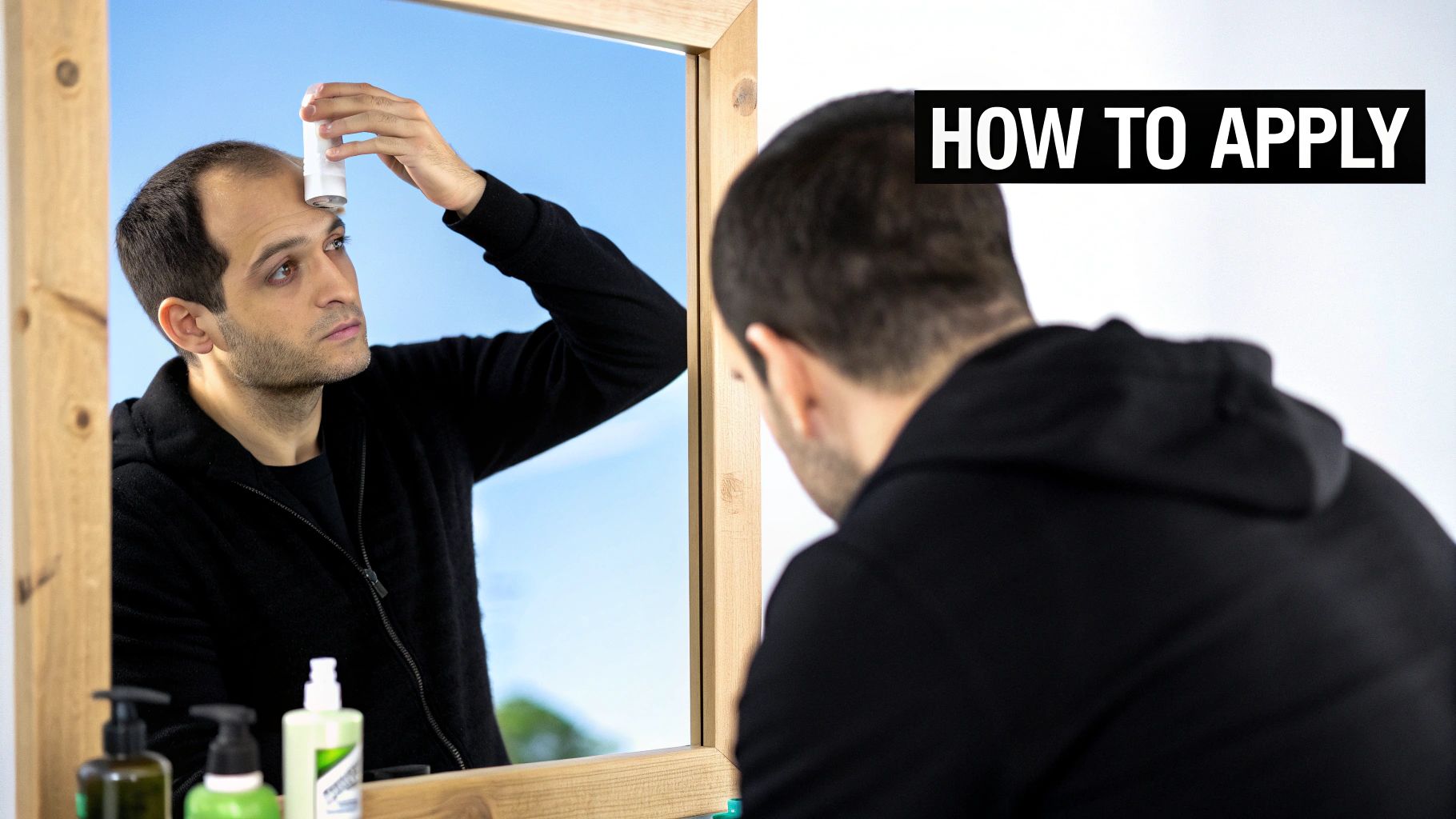
The goal is to apply a thin, even layer directly to the skin of your scalp, not to coat your hair. The active ingredients need to reach the follicle, and applying the serum to your hair strands is a complete waste.
Forgetting the Foundation: Scalp Health
Finally, a lot of guys completely overlook the underlying health of their scalp. You can’t build a sturdy house on a shaky foundation. If your scalp is dealing with issues like severe dandruff, inflammation, or excessive oil, the serum's ingredients are going to have a tough time penetrating and doing their job.
Before you start any new treatment, get your scalp in good shape. That might mean using a medicated shampoo to handle flakes or just making sure you're washing your hair regularly to remove buildup. A clean, balanced scalp is the perfect canvas for a hair growth serum to work its magic.
Avoiding these common blunders will give you the best possible shot at seeing the fuller, healthier hair you’re after.
Beyond Serums: A Look at Advanced Hair Restoration
A top-notch hair growth serum is a fantastic starting point for tackling hair loss, and for many guys, it's all they'll ever need. Think of it as your daily front-line defense. But if you're dealing with more significant thinning, it’s smart to know what other tools are in the toolkit.
Sometimes, you need to bring in the heavy hitters. This is where clinical treatments, like Platelet-Rich Plasma (PRP) therapy, enter the conversation. The goal here isn’t to sell you on a procedure, but to give you a complete picture so you can have an informed chat with a dermatologist if serums aren't quite cutting it.
So, What Exactly Is PRP Therapy?
PRP therapy might sound like something out of a sci-fi movie, but it's grounded in your body's own natural healing abilities. It’s all about concentrating and redirecting the powerful growth factors that are already circulating in your bloodstream.
The process kicks off with a simple blood draw, no different than what you’d get at a routine check-up. That blood is then spun in a centrifuge, a machine that separates it into different layers. The prize is the platelet-rich plasma—a golden liquid packed with the proteins your body uses to repair tissue and kickstart growth.
How Does PRP Work on Hair Loss?
Once the PRP is isolated, a doctor injects this concentrated liquid directly into the parts of your scalp where hair is thinning. This puts those powerful growth factors right where they're needed most: at the base of your hair follicles.
You can think of it as a high-potency fertilizer being delivered straight to the roots of struggling plants. These growth factors send a powerful wake-up call to dormant or shrinking follicles, signaling them to get back into the anagen (growth) phase.
This stimulation can help thicken existing strands, encourage new growth, and ultimately increase the hair count in the treated areas. While a serum works on the surface, PRP gets to work from the inside out, using your body's own biology to do the heavy lifting.
Of course, a clinical treatment is a different ballgame than a topical serum.
- How it Works: Serums are a daily, external application of ingredients. PRP is a periodic, internal boost using your own concentrated growth factors.
- The Cost: As a medical procedure, PRP is a much bigger financial commitment than a bottle of serum.
- The Process: Serums are totally non-invasive. PRP is considered a minimally invasive treatment because it involves injections.
Understanding options like PRP gives you a clearer view of what's possible. If you’re curious to dive deeper into these kinds of treatments, exploring the world of non-surgical hair restoration is a great next step to see what lies beyond the bottle.
Frequently Asked Questions About Hair Growth Serums
Even after you've done your research, starting a new hair care routine can feel like a leap of faith. It's natural to have a few lingering questions. Getting those answered is the key to feeling confident enough to stick with it and see the results you're after. Let's tackle the most common questions guys ask before diving into hair growth serums.
How Long Does It Really Take to See Results?
This is the big one, and the honest answer is: be patient. Your hair grows in cycles, and it's a slow-and-steady marathon, not a sprint. You'll generally need to use a serum consistently, every single day, for at least three to six months before you can expect to notice a real difference.
The first clues are usually subtle. You might see less hair on your pillow in the morning or fewer strands circling the shower drain. A bit later, you may spot some new, fine "peach fuzz" (technically called vellus hairs) sprouting in thinning spots. Keep at it, and those can eventually mature into thicker, more pigmented hair.
Can I Use a Hair Growth Serum With Other Styling Products?
Absolutely, but the order of operations is crucial. The serum always, always goes first. Think of it as priming the canvas—it needs to make direct contact with your scalp to have any effect.
Apply the serum to a clean, dry scalp and take a minute to massage it in gently. Let it fully absorb and dry completely. Once it is, you're clear to use your go-to gel, pomade, or whatever else you use to style your hair. This simple step ensures the active ingredients get down to the follicles instead of being blocked by a layer of product.
The golden rule is scalp first, hair second. Putting serum on top of styling products just wastes your time and money, as it creates a barrier that stops the ingredients from getting where they need to go.
Will My Hair Fall Out If I Stop Using the Serum?
This really depends on why you're losing hair in the first place. If you're dealing with genetic male pattern baldness, then yes, you'll likely lose the hair you gained. Ingredients like Minoxidil essentially hold your follicles in an active growth phase. When you stop the treatment, those follicles eventually revert to their previous state, and the new hair will likely shed over the next few months. Knowing the early symptoms of male pattern baldness can help you figure out if this is your situation.
On the other hand, if your thinning was caused by something temporary—like a period of intense stress or a nutritional gap—you might be able to stop using the serum once you've addressed the root cause and keep your hair.
Are There Any Side Effects I Should Know About?
Most well-formulated serums are designed to be gentle, but side effects are still a possibility. The most common ones are usually minor and limited to the scalp, including:
- Irritation or redness
- Dryness or some flaking
- A mild itching sensation
These tend to show up more often in formulas containing alcohol or other powerful ingredients. To play it safe, always do a patch test. Just apply a small amount to a hidden area of skin (like behind your ear) and wait 24 hours before going all-in on your scalp. If you experience any persistent irritation, it's best to stop using the product and maybe check in with a dermatologist.
At PRP For HairLoss, we're committed to helping you understand every option on the table. From the science behind serums to more advanced clinical treatments, we're here to give you the clear, straightforward information you need to take back control of your hair. https://prpforhairloss.com

 PRP For Hairloss
Leave a comment