Understanding DHT: Why Your Hair Follicles Are Under Attack
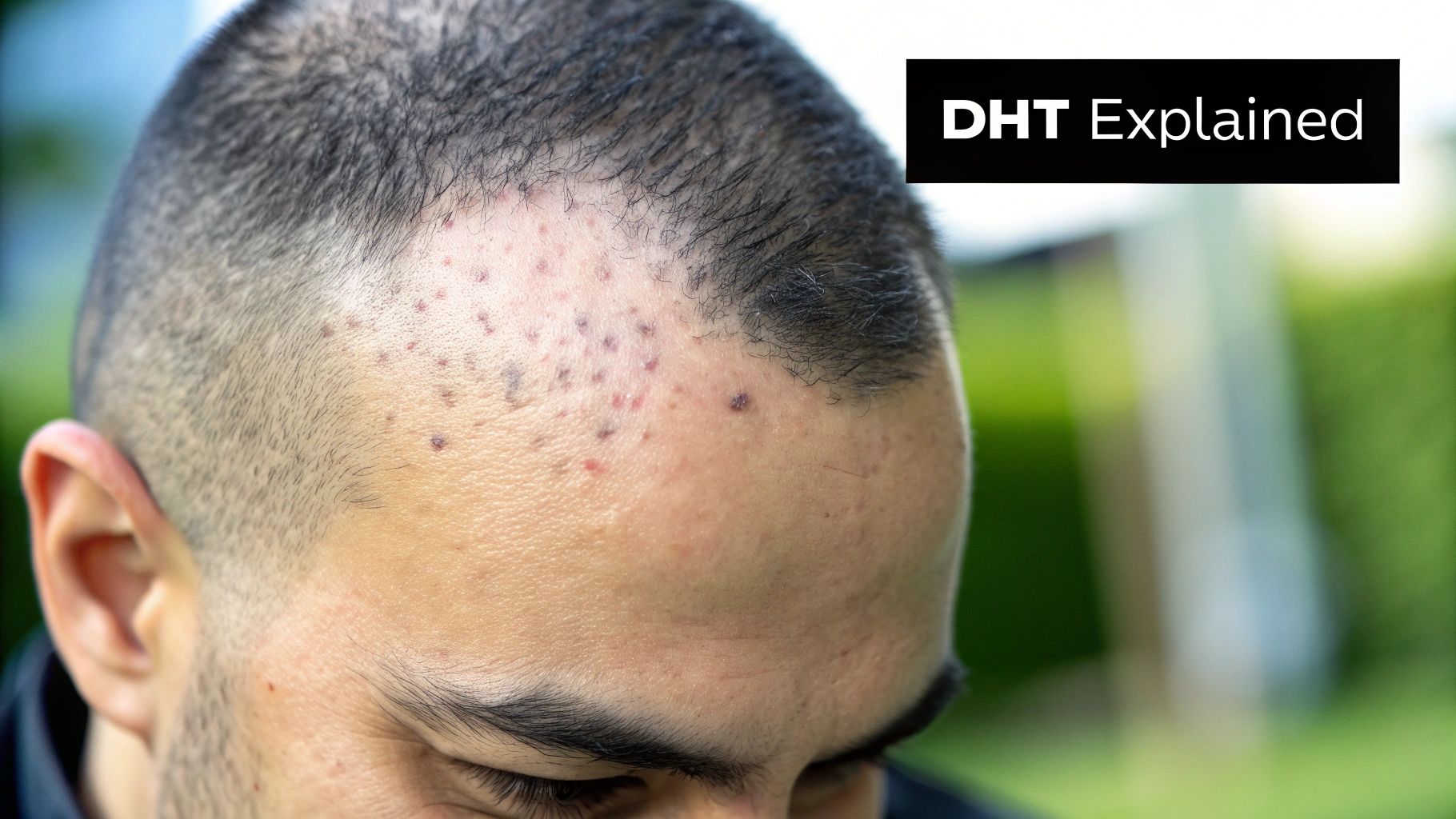
To successfully fight hair loss, you first need to identify the culprit. In the case of male pattern baldness, the main adversary is a hormone called dihydrotestosterone (DHT). The name might sound complicated, but its function is surprisingly direct. Imagine DHT as an overzealous security guard who, over time, starts seeing your hair follicles as a threat and begins to slowly shut them down.
DHT itself isn't a villain; it’s a natural and powerful hormone created from testosterone. An enzyme known as 5-alpha reductase (5-AR) converts a small portion of your testosterone into this more potent form. During puberty, DHT is essential for developing male characteristics. The problem arises later in life for those with a genetic tendency for hair loss. This is why some men can have high testosterone and a full head of hair, while others start thinning in their twenties. It’s not about the total amount of DHT, but rather how sensitive your hair follicles are to its effects.
The Genetic Lottery of Hair Loss
Your sensitivity to DHT is a trait handed down through your family. If male pattern baldness runs in your family, you've likely inherited hair follicles with a large number of DHT receptors. Think of each follicle on your scalp as having a tiny docking station. When DHT molecules travel through your bloodstream, they latch onto these stations. For genetically susceptible people, this connection sets off a damaging chain reaction.
This genetic "switch" is the fundamental difference between someone who experiences significant hair loss and someone who doesn't. The process isn’t a sudden attack but a slow, methodical siege. This is why understanding this mechanism is so important for choosing the right dht blockers for hair loss, as these treatments are specifically designed to interrupt this process.
Follicle Miniaturization: The Slow Shutdown
When DHT consistently attaches to a sensitive hair follicle, it signals the follicle to shrink. This process is called miniaturization. With each new hair growth cycle, the active growing phase gets shorter, and the hair that is produced becomes thinner, weaker, and lighter in color.
- Anagen (Growth) Phase Shortens: The active growth stage, which normally lasts for years, is drastically reduced.
- Telogen (Resting) Phase Lengthens: The follicle spends more time dormant instead of producing new hair.
- Hair Shaft Thins: The new hairs that do grow are finer and less noticeable, often referred to as "vellus" hairs.
Eventually, the follicle shrinks so much that it can no longer produce a visible hair, resulting in baldness. This slow decline highlights the importance of acting early. The market for treating this condition, known as androgenetic alopecia, has grown substantially due to effective treatments. Valued at USD 1,805.5 million in 2024, it's expected to reach USD 2,823.2 million by 2035, reflecting the increasing demand for reliable solutions. You can learn more about the market projections for androgenetic alopecia treatments. Recognizing this science helps you understand why timing and the correct strategy are crucial for your hair recovery.
How DHT Blockers Turn the Tide on Hair Loss
Think of your scalp as a garden. For hair to grow, follicles need the right signals and nutrients. However, in people with genetic hair loss, a hormone called DHT acts like a weed, sending signals that tell hair follicles to shrink and stop producing healthy hair. In this scenario, DHT blockers for hair loss are like targeted weed control. They don't remove the "good" parts of the garden but instead interfere with the "weeds," stopping them from choking out your hair follicles.
This approach is what makes DHT blockers a cornerstone of hair loss treatment. They don't all work identically; instead, they use different strategies to protect your hair. Understanding how they work is the first step in choosing a path that fits your needs. The two main strategies are either lowering the amount of DHT in your system or physically stopping it from attaching to your hair follicles.
The Two Core Mechanisms of Action
The most common method involves inhibiting an enzyme called 5-alpha reductase (5-AR). You can picture the 5-AR enzyme as a factory that converts testosterone into the much more potent DHT. By slowing down this factory's production line, DHT blockers dramatically lower the amount of DHT circulating in your scalp. With less DHT, fewer damaging signals can reach your follicles. This is the primary way that leading prescription medications work.
The second strategy is to block the androgen receptors on the hair follicles themselves. This is like putting a cover over a lock so the wrong key (DHT) can't get in. Even with DHT present in the scalp, it’s unable to latch on and begin the shrinking process known as miniaturization. Many natural ingredients are thought to work this way, providing an alternative method of defense. The image below shows a few popular natural ingredients.
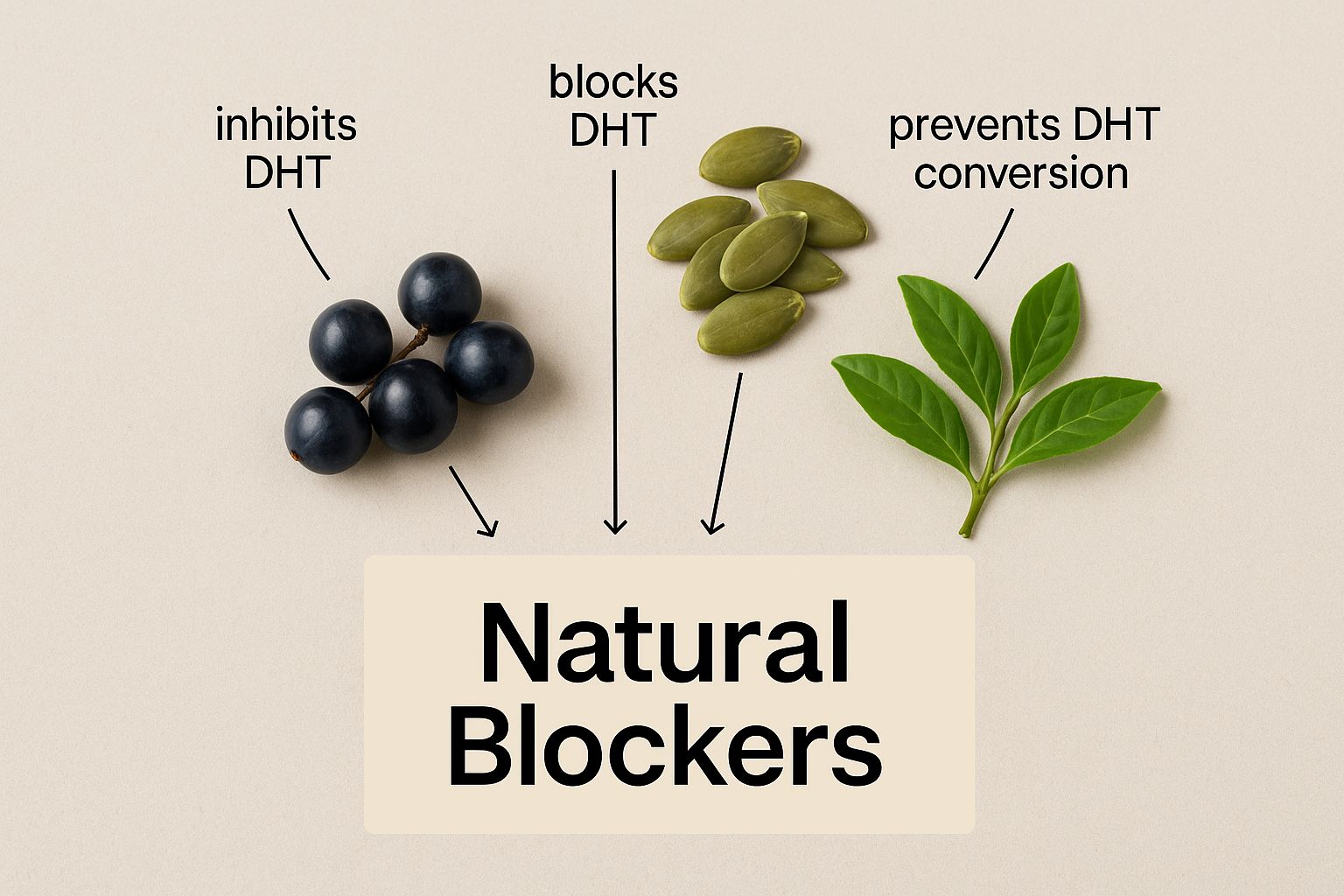
This visual highlights some plant-based ingredients often found in supplements studied for their potential to disrupt DHT's effect on hair follicles.
To help clarify these different approaches, the table below breaks down how each type of blocker works, along with typical success rates and what to expect timeline-wise.
| Blocker Type | How It Works | Success Rate | Results Timeline |
|---|---|---|---|
| Prescription (e.g., Finasteride) | Inhibits the 5-alpha reductase enzyme, reducing systemic DHT levels. | Can stop hair loss in up to 90% of men. | 3-6 months to see reduced shedding and initial thickening. 12+ months for more noticeable regrowth. |
| Topical (e.g., Finasteride, Dutasteride) | Applied directly to the scalp to inhibit the 5-alpha reductase enzyme locally, with less systemic absorption. | Varies by formulation; aims for similar local effect as oral versions with fewer side effects. | 4-6 months for stabilization. 12-24 months for visible density improvements. |
| Natural Supplements (e.g., Saw Palmetto) | Believed to work by inhibiting the 5-AR enzyme and/or blocking androgen receptors on follicles. | Less potent than prescriptions; evidence is promising but varies. Best for mild hair loss or prevention. | 6-12 months to notice reduced shedding. Effects are generally more subtle. |
| Shampoos (e.g., Ketoconazole) | Contains active ingredients that may have mild anti-androgenic effects on the scalp when used regularly. | Primarily a supportive role; not a standalone solution for significant hair loss. | 3-6 months as part of a broader routine to notice improved scalp health and potentially less shedding. |
This table shows the clear differences in potency and expected outcomes between prescription medications and natural or topical options, helping you understand the commitment required for each.
Reversing Miniaturization: From Surviving to Thriving
The true goal of using a DHT blocker is not just to stop hair loss but to potentially reverse follicle miniaturization. When the constant pressure from DHT is removed, shrunken follicles get a chance to recover. In the first few months of treatment, you likely won't see a full head of new hair. The first, and most important, goal is stopping further hair loss.
This stabilization is a crucial milestone. First, the treatment must interrupt the cycle of damage. Once the follicles are no longer under attack, they can slowly begin to re-enter a healthier growth phase. The recovery process typically unfolds like this:
- Months 1-3: The main benefit is a noticeable reduction in hair shedding. The cycle of hair loss starts to slow as DHT's influence decreases.
- Months 3-6: You may notice that existing hairs feel thicker and healthier as stabilized follicles begin to produce better-quality strands. Your scalp might look a little less visible.
- Months 6-12+: More significant improvements can become apparent. Some follicles that were producing thin, weak "vellus" hairs may start generating stronger, pigmented "terminal" hairs again. Studies show treatments like finasteride can halt hair loss progression in nearly 90% of men.
Patience is a must. The hair growth cycle is a slow, methodical process, and undoing years of damage takes time. The objective is to shift follicles from a state of decline to one of stability, and ultimately, regrowth. This gradual but steady improvement is how DHT blockers can make a real difference in the fight against hair loss.
Prescription Powerhouses: The Science Behind Medical DHT Blockers
When you're looking for clinically proven DHT blockers for hair loss, prescription medications are the heavy hitters. Treatments like finasteride and dutasteride aren't just speculative remedies; they are precision tools designed to disrupt the hormonal process of hair loss right at the source. Supported by decades of research and trusted by millions, dermatologists and hair restoration specialists often recommend them as a first-line defense against androgenetic alopecia.
These medications work by directly targeting the 5-alpha reductase enzyme, which is responsible for converting testosterone into DHT. Think of it as shutting down the factory that produces the very hormone causing your hair follicles to shrink. By drastically lowering DHT levels in your scalp and blood, these drugs give your follicles a fighting chance to recover and get back to a normal growth cycle. The success of this method is well-documented, making it a reliable approach for many men.
Finasteride and Dutasteride: The Gold Standard
The two most common prescription DHT blockers are finasteride and dutasteride. While they work toward the same goal, they have important differences in how they function and how potent they are.
- Finasteride (Propecia®): This is the most recognized oral medication for male pattern baldness. It specifically inhibits the Type II 5-alpha reductase enzyme, the type primarily found in hair follicles. Clinical studies show that a daily 1mg dose can reduce DHT levels in the blood by about 70%. This reduction is often enough to stop hair loss from getting worse in up to 90% of men and can even lead to regrowth for many users over time.
- Dutasteride (Avodart®): Often seen as a more powerful alternative, dutasteride blocks both Type I and Type II 5-alpha reductase enzymes. This dual-action method leads to a more significant drop in DHT—over 90%. Although it's technically prescribed off-label for hair loss in many countries, research indicates it might be more effective than finasteride for some, especially those with more aggressive hair loss.
As understanding of these treatments grows, so does the market. It's predicted that the global hair loss treatment market will expand from an estimated USD 4.78 billion in 2025 to USD 7.28 billion by 2032, fueled by greater awareness and effective solutions like these. You can read more about the growing hair loss treatment market and its driving factors.
Setting Realistic Expectations and Navigating Side Effects
While prescription DHT blockers are highly effective, they aren't a one-size-fits-all cure. It's vital to start treatment with realistic expectations. Results appear gradually and depend on consistent use. Most people will need to wait at least three to six months to see less shedding and a year or more for noticeable regrowth.
It's also crucial to discuss potential side effects with your doctor. A small number of men might experience issues like a decreased sex drive or erectile dysfunction. For most, these are not a concern, and if they do happen, they are often temporary and go away after stopping the medication. A consultation with a doctor is the best way to see if you're a good candidate, talk about different dosing strategies (including topical versions that may reduce systemic side effects), and develop a plan that fits your health and hair goals.
Natural DHT Blockers: Separating Science from Marketing Hype

While prescription medications offer a potent solution, many people are first drawn to natural ways to address hair loss. It's a booming market, with a clear preference for plant-based supplements. In fact, the global hair growth supplements market was valued at $940.1 million in 2025 and is projected to reach $2,581.1 million by 2032. This growth is a testament to the trend, and you can explore the hair growth supplements market analysis to see the numbers for yourself.
However, it's a space where marketing claims can often get ahead of the science. The attraction to natural DHT blockers for hair loss is easy to understand—they typically have fewer potential side effects and are available without a doctor's visit. The challenge is to find products backed by credible research, not just anecdotal success stories.
Examining the Evidence: Key Natural Ingredients
Not all supplements are built the same. Some have been studied for their potential to influence the DHT pathway, usually more gently than their pharmaceutical counterparts. Let's look at a few of the most promising ingredients:
- Saw Palmetto: Perhaps the most studied natural DHT blocker, saw palmetto is derived from the berries of a small palm tree. It's believed to work much like finasteride by inhibiting the 5-alpha reductase enzyme. Multiple studies suggest it can improve hair count and quality, although its effects are generally considered milder than prescription drugs.
- Pumpkin Seed Oil: This oil is quickly gaining a reputation as a powerful natural option. One notable study showed that men who took 400mg of pumpkin seed oil daily for 24 weeks experienced an average hair count increase of 40%. Researchers suspect it also works by blocking the 5-AR enzyme.
- Green Tea (EGCG): The main active compound in green tea, epigallocatechin gallate (EGCG), is a strong antioxidant with potential anti-androgenic effects. Laboratory studies indicate EGCG might help shield hair follicles from DHT's impact, but more human trials are needed to confirm how well it works for hair growth.
These ingredients offer a more evidence-based path for those seeking a natural approach to managing hair loss.
Natural vs Prescription: Making the Right Choice
When exploring natural solutions, it's important to have realistic expectations. They are often best for people experiencing mild to moderate hair loss or as a supportive element in a larger treatment plan. To help you understand the trade-offs, here is an honest comparison of natural supplements and prescription medications.
| Treatment Option | Effectiveness | Side Effects | Monthly Cost | Availability |
|---|---|---|---|---|
| Natural Supplements | Mild to moderate; varies by ingredient and quality. Best for slowing loss. | Low risk; typically well-tolerated. Potential for minor digestive upset. | $20 – $60 | Over-the-counter |
| Prescription Medications | High; clinically proven to stop loss and promote regrowth in a majority of users. | Low but higher risk than supplements; includes potential sexual side effects. | $25 – $75 (generic) | Prescription only |
In the end, deciding on a natural DHT blocker means weighing the potential upside against the scientific evidence. While they provide a less aggressive option, success depends on patience and choosing high-quality, well-researched products to make a real difference in your hair recovery journey.
Building Your Hair Recovery System: DHT Blockers Plus Advanced Treatments
Using DHT blockers for hair loss is a crucial first step, much like laying the foundation for a new house. But to build a strong, lasting structure, you need more than just a solid base. The most effective hair recovery plans often combine DHT blockers with other advanced treatments, creating a powerful team that works together for better results. This combined approach can deliver outcomes that far exceed what any single treatment could do alone.
Think of it as a coordinated strategy for your hair. While DHT blockers work from the inside to shield your follicles from hormonal damage, treatments like Platelet-Rich Plasma (PRP) therapy and microneedling work from the outside to energize and rejuvenate them. It’s a classic two-part game plan: the DHT blocker plays defense for your follicles, while other treatments go on offense to encourage new, healthy growth.
Creating Synergy: How Combination Therapies Work
The secret to a successful, multi-faceted attack on hair loss is knowing how different treatments support one another. By tackling the problem from several angles, you cover all your bases and boost your chances of seeing significant improvement.
- DHT Blockers + PRP Therapy: This is a very common and effective pairing. While your DHT blocker (like finasteride) reduces the hormonal threat, PRP therapy uses growth factors from your own blood to directly awaken dormant or weakening hair follicles. This duo ensures follicles are both protected and stimulated. To explore a full range of options beyond just blockers, consider looking into professional hair rejuvenation services that can complement your at-home regimen.
- DHT Blockers + Microneedling: Microneedling creates tiny, controlled micro-injuries on the scalp. This process triggers the body's natural healing response, which boosts blood flow and releases growth factors. When you add a DHT blocker to the mix, you’re not just protecting the follicle but also creating the perfect environment for it to grow. Some research even indicates that microneedling can improve how well topical treatments are absorbed.
- DHT Blockers + Low-Level Laser Therapy (LLLT): LLLT devices use specific light wavelengths to boost cellular activity in the follicles. This can help extend the growth phase of the hair cycle. Using it alongside a DHT blocker gives you the combined benefits of hormonal defense and cellular energy support.
The Power of Platelet-Rich Plasma (PRP)
PRP therapy has quickly become a key player in combination treatments because of its natural, targeted method. The procedure starts with drawing a small sample of your blood, which is then spun in a centrifuge to separate the platelets into a concentrated plasma. This "liquid gold" is then carefully injected into the areas of your scalp where hair is thinning.
The distinct layers you see in the vials show the separation process clearly. The golden-yellow platelet-rich plasma, isolated at the top, is ready for use. This high concentration of growth factors is what makes PRP such a potent tool for promoting follicular regeneration.
The timing of these treatments is also important. Most professionals suggest being on a DHT blocker for at least 3-6 months to stabilize hair loss before beginning a series of PRP or microneedling sessions. This strategy ensures your follicles are in a protected and receptive state, allowing the stimulative treatments to have the greatest possible effect and lead to a more complete and satisfying recovery.
Your DHT Blocker Journey: What Really Happens Month by Month
Starting treatment with DHT blockers for hair loss is a commitment, and knowing what to expect can make all the difference. Think of it as a marathon, not a sprint. While everyone’s experience is slightly different, understanding a typical timeline helps set realistic expectations and keeps you motivated through the slow but steady process of hair recovery. Your results will depend on factors like your genetics, how advanced your hair loss is, and your consistency with the treatment.
Let's walk through what you can realistically anticipate as you move forward, month by month.
The First Three Months: Patience and Stabilization
This initial phase is often the most trying because visible changes are minimal. The main goal here isn't regrowth—it's to stop hair loss in its tracks.
- Months 1-2: Don't be surprised if you don't see any positive changes yet. In fact, some people experience a temporary increase in shedding, sometimes called the "dread shed." While this can be alarming, it's often a good sign. The DHT blocker is pushing out weak, miniaturized hairs to clear the way for new, healthier strands to grow. This shedding indicates that the treatment is beginning to reset your hair cycles.
- Month 3: By the end of the third month, the initial shedding should slow down or stop. For many, this is the point where hair loss stabilizes. You might not see new growth, but the amount of hair you find in the shower drain or on your pillow should be noticeably less. This stabilization is your first major victory.
Months Four to Twelve: The Growth Phase
After the initial stabilization period, the more encouraging part of the journey begins. This is when you can start to see tangible improvements in your hair's thickness and density.
- Months 4-6: You may begin to notice subtle but welcome changes. Existing hairs might feel a bit thicker and stronger. Look closely, and you might see new, fine, almost peach-fuzz-like hairs called "vellus" hairs sprouting along your hairline or in thinning areas. These are the precursors to stronger, more mature hairs. Taking monthly progress photos is a great way to spot these small but meaningful developments.
- Months 6-9: This is often when the results become more obvious to you and others. Those fine vellus hairs can start to mature into thicker, pigmented terminal hairs, which improves overall scalp coverage. Your part line might look tighter, and thinning spots may appear less prominent.
- Month 12: By the one-year mark, you should have a clear idea of how well the treatment is working for you. Many clinical studies on medications like finasteride use the 12-month point to measure peak results. At this stage, improvements in hair count and density are typically at their most significant.
Long-Term Success: Maintenance and Beyond
After the first year, your focus will shift from regrowth to maintenance. It's essential to continue your DHT blocker treatment to hold onto your results. If you stop, the hair miniaturization process will likely resume. Think of it as providing ongoing protection for your hair follicles. Consistent, long-term use is the key to preserving the hair you’ve worked so hard to regain.
Your Next Steps: Creating a Personalized DHT Blocker Strategy
Now that you have a solid grasp of how DHT blockers for hair loss operate, it's time to shift from learning to doing. Your experience with hair loss is as individual as your fingerprint, meaning your treatment plan needs to be built just for you. Creating a personal strategy involves more than picking one product; it's about developing a consistent approach that fits your specific situation, lifestyle, and budget.
Think of it like starting a new fitness program. You wouldn’t just follow a stranger's workout plan. You'd evaluate your current health, define your goals, and figure out how much time you can realistically dedicate. The same principle applies here. Begin with an honest assessment. Is your hair thinning new and mild, or has it been progressing for years? Is there a history of baldness in your family? The answers will guide you toward whether a gentle, natural option could be enough or if you need the established power of prescription medication.
Preparing for a Professional Consultation
For most people, the surest way forward is to see a dermatologist or a hair loss specialist. This visit is about more than just getting a prescription; it's your opportunity to get a correct diagnosis and expert direction. To get the most value from your appointment, arrive prepared.
Before you go, make a list of questions that will give you the clarity needed to move forward with confidence. Here are a few ideas to start with:
- Given my hair loss pattern, which type of DHT blocker for hair loss would you recommend?
- What are the realistic outcomes I can expect at the 6-month and 12-month marks?
- Would combination treatments, like PRP or microneedling, be a good fit for me?
- What are the potential side effects of the proposed treatment, and how frequently do they occur?
- How will we monitor progress, and at what point should we reassess the plan?
Your doctor's responses should be clear, supported by data, and specific to you. Be wary of any professional who guarantees results or brushes off your questions about side effects. A strong patient-doctor relationship is founded on open communication and setting realistic goals.
Budgeting and Long-Term Commitment
Finally, it's important to think about the financial and practical sides of a long-term treatment. Hair loss solutions aren’t a one-and-done fix; they demand consistent application to preserve any gains. Work out the monthly expense of your chosen approach, whether it's a prescription drug, a quality supplement, or a mix of therapies.
Your plan should feel manageable, not like a source of stress. The most effective strategy is always the one you can stick with over the long haul. By carefully considering the facts, getting professional advice, and setting up a sensible plan, you give yourself the best shot at managing your hair loss effectively and moving toward recovery.
Trying to figure out hair loss treatments can feel like a lot to handle, but you aren't on your own. For more detailed information on advanced options like Platelet-Rich Plasma and how they can boost your results, check out the expert guides at PRP For HairLoss.


Leave a Reply