You’re probably here because you’ve done the same thing most men do when hair loss starts getting harder to ignore.
You search late at night. You compare photos. You zoom in on hairlines. You tell yourself you’re “just looking,” then suddenly you’ve got ten tabs open on hair transplants, minoxidil, PRP, and something called a tattoo for hair loss that seems to turn a bald scalp into a sharp buzz cut overnight.
That last one gets attention for a reason. The before-and-after photos are dramatic. A man goes from visibly thinning or fully bald to looking groomed, tighter, younger, and more in control in what looks like a single weekend.
But the internet is full of half-truths on this topic.
Scalp micropigmentation can be a very smart move. It can also be a bad decision if you choose it for the wrong reason, choose the wrong provider, or expect it to do something it cannot do. If you’re still weighing your options, it helps to look at broader hair transplant alternatives before locking yourself into one path.
This is the straight answer. SMP works. It works fast. It can look excellent. But it is camouflage, not regrowth. If you understand that from the start, you’re already ahead of most buyers.
The Search for a Hair Loss Solution
A lot of men don’t panic when the first signs show up. They adjust the haircut. Change the angle in photos. Use a little more product. Then one day the bathroom light gets honest, or a friend tags you in a picture, and you realize your hairline is not “basically the same.”
That’s usually when the search starts.
You see pills, foams, lasers, serums, clinics, influencers, and miracle transformations. Then SMP shows up in your feed. The appeal is obvious. No waiting around for weak follicles to wake up. No pretending a powder or thickening spray is a strategy. A tattoo for hair loss looks immediate, crisp, and simple.
That speed is exactly why men get pulled in.
Why men get tempted by SMP so quickly
The typical pattern looks like this:
- You want control back: Hair loss feels like something happening to you. SMP looks like a decision you can make quickly.
- You’re tired of uncertainty: Biological treatments can help, but they take time and they depend on living follicles.
- You care more about appearance than theory: Most men do not care whether a result is “biological” if the mirror looks better.
That mindset is understandable. It’s also where clinics can oversell.
If a provider talks about SMP like it “restores hair,” walk away. It restores the look of hair, not the hair itself.
The smart way to think about scalp micropigmentation is simple. It is a cosmetic solution with real value. It is not a cure. Once you accept that, your decision-making gets much easier.
What Exactly Is a Tattoo for Hair Loss
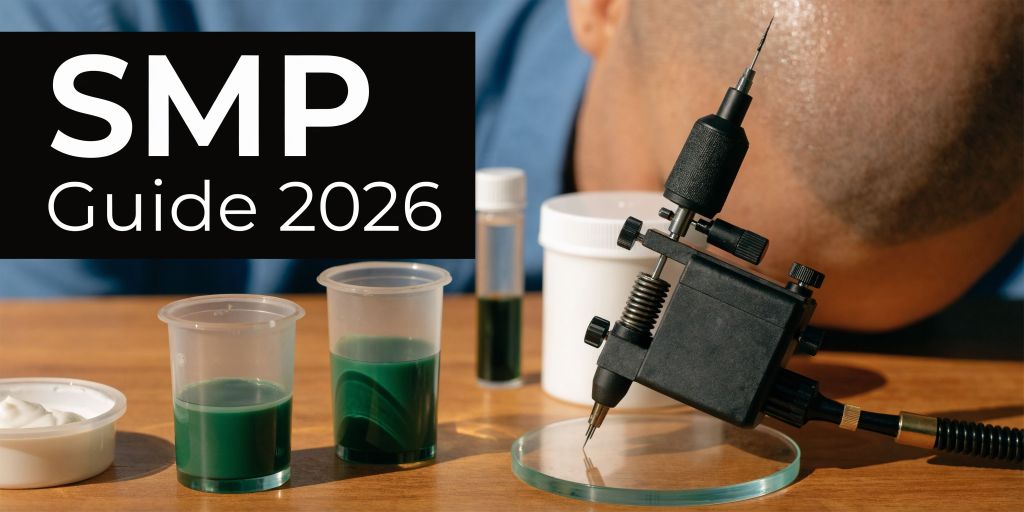
Scalp micropigmentation, usually shortened to SMP, is a specialized cosmetic procedure that places tiny pigment impressions into the scalp so it looks like natural hair follicles are present.

Calling it a “hair tattoo” is fine for casual conversation, but it leaves out the important part. Good SMP is not traditional tattooing on your scalp. It is controlled cosmetic pointillism. Thousands of tiny impressions are placed in patterns that mimic shaved follicles and create the illusion of density.
Done well, it can make a bald scalp look like a deliberate buzz cut. It can also make thinning areas look fuller by reducing the contrast between hair and scalp.
Why SMP is not the same as a normal tattoo
The technical difference matters. According to Skalptec, scalp micropigmentation deposits pigments into the scalp’s epidermal layer at a precise depth of 0.5 mm to mimic hair follicles, and that shallow depth helps prevent the blurring seen in traditional tattoos. The same source notes that results usually take 3-5 sessions and typically last 3-5 years (Skalptec).
That shallow placement is one reason high-quality SMP can look sharp instead of muddy.
A normal tattoo artist is trying to create durable body art. An SMP practitioner is trying to create believable follicle impressions under unforgiving lighting, on a curved surface, from different viewing distances, and often on a scalp that still has some real hair. Those are not the same skill sets.
If you want a plain-language overview of what scalp micropigmentation entails, that guide is a useful companion read because it helps separate the cosmetic craft from the marketing language.
What SMP is trying to achieve
There are usually two use cases.
| Use case | What the practitioner is trying to create |
|---|---|
| Shaved-head look | A uniform buzz-cut illusion across a mostly bald scalp |
| Density treatment | Less visible scalp in thinning areas when some hair still remains |
The first is usually the cleanest visual result. The second can work well, but it demands better judgment from the artist because matching dot size, density, and color to existing hair is harder than most men realize.
A good provider also designs a hairline that fits your age and face. That part is huge. The problem with bad SMP is rarely “people can tell it’s SMP” from ten feet away. The problem is usually that the hairline looks too sharp, too low, too dark, or too artificial for the man wearing it.
Here’s a quick visual explainer of the process and look professionals aim for:
The blunt truth
A tattoo for hair loss is best understood as optical engineering for the scalp.
It does not thicken strands.
It does not stop male pattern baldness.
It does not revive dead follicles.
What it does is reduce the visual penalty of hair loss. For many men, that is enough. In some cases, it is more than enough. But you need to buy it for what it is, not for what advertising suggests it might be.
The SMP Procedure From Start to Finish
Most men imagine SMP as one appointment, a few hours in a chair, then a new look. That is not how the best work gets done.
A strong result usually comes from restraint. The practitioner builds the look over multiple sessions so the density settles naturally instead of landing too dark and too obvious on day one. If you want to understand the treatment mindset behind biological options too, this overview of the PRP procedure for hair helps frame how different these paths really are.
The consultation matters more than men think
The first meeting is not paperwork. It is where the outcome is decided.
A good practitioner studies your scalp, your skin tone, the extent of your loss, the hair you still have, and how you wear it. Then comes the hairline discussion. Bad vanity can ruin a result at this stage. A hairline that looked great at twenty may look fake on a man in his late thirties or forties.
You want honesty here, not hype.
A reliable practitioner will usually push for a softer, age-appropriate front line instead of the kind of aggressive edge that looks dramatic on social media and strange in daylight.
The best SMP hairline is usually the one you barely notice. You just register that the man looks sharper.
What the sessions usually feel like
The treatment itself is repetitive, controlled, and detail-heavy. The practitioner applies tiny impressions in patterns and layers instead of “filling in” the scalp like a regular tattoo.
Most men describe the discomfort as manageable. It is not surgery. It is also not nothing. The scalp is sensitive, and some areas are more noticeable than others. You should expect irritation, some redness, and a freshly treated look right after each appointment.
The visual change starts early, but the final look usually comes from layering. One pass establishes the base. Later sessions adjust density, refine the blend, and make the overall pattern feel believable.
A realistic treatment journey
A typical client experience looks something like this:
Consultation and design
You agree on hairline shape, density goals, and whether you’re going for a shaved-head illusion or added density around existing hair.First session
The scalp gets the foundation. It often looks lighter and less dramatic than men expect, which is usually a good sign.Healing period
The initial darkness softens. You start seeing how the pigment settles in real life.Second and later sessions
The artist adds depth, tightens the blend, and corrects anything that needs refinement.
This slower build is one reason you should be suspicious of anyone promising a perfect one-session fix.
What you need to be ready for afterward
The practical side is simple but important:
- You may need to keep your hair very short: Especially if the treatment is designed to mimic a shaved scalp.
- You have to follow aftercare carefully: Sweat, sun, and irritation are not your friends right after treatment.
- You need patience: Fresh SMP is not healed SMP.
Men who do best with this process tend to treat it like a craft procedure, not a commodity purchase. They show up with realistic expectations, they listen, and they care more about the final healed result than the first-day reveal.
Benefits and Long-Term Realities of SMP
The appeal of SMP is easy to understand because the upside is immediate.
You don’t need to wait around hoping weak follicles respond. You don’t need surgery. You don’t need donor hair. If your hair loss is advanced, a tattoo for hair loss can create a clean, deliberate look when other non-surgical options cannot.
That is the good news. Now for the part many clinics soften or skip.
Where SMP is strong
SMP is at its best when the goal is visual improvement, fast.
It can work especially well for men with advanced male pattern baldness, men who already keep their hair clipped down, and men who want to hide transplant scars or uneven density. Some providers also use it to restore the appearance of a receded hairline in a way that looks tighter and more defined.

There is also a simple advantage men appreciate. SMP gives a guaranteed cosmetic shift. It does not depend on whether a follicle decides to respond. If the work is good, the look changes right away.
The long-term reality most men are not told clearly enough
The phrase “low maintenance” gets abused in this space.
SMP is lower maintenance than daily topical treatments. It is not maintenance-free. Fading happens. Your real hair loss can continue. Those two facts together are where a lot of disappointment starts.
A source focused on long-term maintenance notes that scalp pigments can fade 30-50% faster than body tattoos, and 68% of men reported dissatisfaction after 3 years without touch-ups (YouTube reference). That tracks with what many men eventually discover on their own. The issue is not usually that SMP “fails” overnight. The issue is that a once-even cosmetic effect can start looking off if the pigment softens while your natural hair pattern keeps changing.
The hidden trade-off is lifestyle
The shaved look is not optional for many SMP clients. It is part of the illusion.
If the surrounding hair grows out but the pigment pattern stays fixed, the mismatch becomes easier to spot. Some men are fine with that because they already prefer a clipped style. Others realize too late that they do not want to commit to that look long term.
Here’s the practical checklist before you book:
- Accept the haircut reality: If your SMP is meant to mimic follicles, you may need to keep your hair very short.
- Expect touch-ups: A tattoo for hair loss ages. Sun, skin oil, and time all matter.
- Think about future balding: If your native hair keeps thinning around treated areas, the original design may need revision.
- Be honest about your goal: If what you really want is hair growth, SMP will not satisfy you on its own.
SMP works best for men who want a cosmetic answer and are comfortable maintaining the look. It works worst for men secretly hoping it will feel like getting their old hair back.
My direct take
SMP is worth serious consideration if your priority is appearance, speed, and control.
It is a weaker choice if you still have salvageable hair and have not explored ways to preserve or thicken it first. It can also be a poor fit if you are sentimental about hairstyle flexibility. Before making any permanent-looking cosmetic decision, many men benefit from understanding how broader outcomes compare, including the truth about hair transplant success rate.
SMP vs PRP vs Hair Transplants A Head to Head Comparison
You notice more scalp every month. One clinic pushes PRP. Another pushes a transplant. A third says a hair tattoo will solve the whole problem. That is where men get steered wrong.
These options are not competing versions of the same treatment. They solve different problems, and you should judge them by the job you need done.
SMP changes how your scalp looks.
PRP tries to improve weakened follicles.
Hair transplants move living follicles into new areas.

The quick comparison
| Option | Core function | Best fit | Main limitation |
|---|---|---|---|
| SMP | Cosmetic camouflage | Advanced baldness, scar concealment, men who suit a shaved look | No real regrowth |
| PRP | Biological support for existing follicles | Early to moderate thinning with active follicles still present | Weak choice for slick bald areas |
| Hair transplant | Surgical relocation of hair | Men with adequate donor supply who want growing hair in new areas | Surgery, healing, and donor limits |
SMP if your main goal is a fast visual fix
SMP gives the fastest visible result.
That matters if you are already clearly bald and want control now, not months from now. It can sharpen the look of a bare scalp, reduce the contrast between hair and skin, and help disguise transplant scars or patchy density.
Be honest about what you are buying. SMP is camouflage. Good camouflage, often. But still camouflage.
From a hair restoration perspective, SMP fits best after you decide that regrowth is not realistic enough, not important enough, or not worth the wait. It can also work alongside restoration treatments, but it should not be sold as a substitute for actual follicle-based improvement.
PRP if you still have hair worth protecting
PRP belongs earlier in the hair loss timeline.
Its whole value depends on follicles still being present and capable of responding. If you have diffuse thinning, reduced caliber, or early recession with miniaturized hairs still there, PRP may help support what remains. If the area is smooth and long gone, PRP is the wrong tool.
A practical overview of PRP treatment for hair loss is useful here because it explains the basic point many men miss. PRP is about preservation and thickening potential. It is not a cosmetic cover-up, and it is not a way to repopulate a dead zone.
This is why I do not like the lazy question, “SMP or PRP?” If you still have salvageable hair, PRP often deserves attention first. Then you decide whether the cosmetic gap that remains is worth covering with SMP.
Hair transplants if you want actual growing hair in a bald area
A transplant does something the other two cannot do. It places growing hair into areas that no longer have enough viable follicles.
That upside comes with real constraints. You need donor hair. You need a surgeon with judgment. You need patience while grafts heal and grow. You also need realistic density expectations, because a transplant redistributes finite supply. It does not create new hair.
For the right candidate, a transplant is the strongest route to real coverage. For the wrong candidate, it becomes an expensive exercise in chasing density you may never fully reach.
The smart comparison is timing, not hype
Here is the clean way to sort this out.
If your priority is appearance this year, SMP is the fastest answer. If your priority is preserving hair that is actively thinning, PRP makes more sense. If your priority is growing hair in a bald zone and you accept surgery, book a transplant consultation.
A lot of men need more than one category of help. Biology and cosmetics are not enemies. They address different parts of the problem. PRP may help you hold onto thinning hair. SMP may make that same scalp look better almost immediately. A transplant may rebuild selected areas later if donor supply and goals line up.
My recommendation by scenario
Use this framework:
- Choose SMP first if you are already substantially bald, prefer a closely shaved style, and want immediate cosmetic improvement.
- Choose PRP first if you still have noticeable thinning hair and your bigger goal is retention or thickening.
- Choose a transplant consultation if you want real hair growth in bald areas and accept surgery, healing, and donor limitations.
- Choose a combined plan if you want to preserve living hair while also improving the look of your scalp sooner.
The biggest mistake is treating these as interchangeable. They are not. SMP helps you look better fast. PRP tries to support hair that is still alive. Transplants physically move follicles. If you are weighing the biology-first route against surgery more directly, this comparison of PRP vs hair transplant is worth reading before you commit.
How to Choose a Reputable SMP Provider
With SMP, the provider is not a detail. The provider is the outcome.
A mediocre PRP session may disappoint. Bad SMP can sit on your scalp every day in full view. That is why I care less about a clinic’s branding and more about whether the practitioner can show healed, believable work under normal lighting.
What to check before you book
Do not rely on polished social posts alone. Anyone can post fresh treatment photos taken from the right angle.
Use this checklist instead:
- Ask for healed results: Fresh SMP looks sharper and darker than healed SMP. You want to see work after it has settled.
- Look for close-ups and full-head shots: A hairline can look good in a cropped photo and awful in context.
- Check different skin tones and stages of hair loss: A provider who only shows one type of client may not have broad skill.
- Ask what pigment and equipment they use: If they get vague, that is not reassuring.
- Ask how they design hairlines: You want age-appropriate judgment, not a template.
Red flags that should stop you cold
Some warning signs are obvious. Some are not.
Watch for these:
- One-session promises: Good work is usually layered.
- Aggressive low hairlines: This is often insecurity sold back to the client as confidence.
- Body tattoo background with no SMP specialization: Not automatically disqualifying, but not enough on its own.
- Suspiciously cheap pricing: Cutting corners on scalp cosmetics is a bad gamble.
- No medical hygiene discussion: If they do not talk clearly about sanitation, leave.
A great SMP artist thinks like both a technician and a realist. He should care about how your scalp will look in two years, not just in the checkout photo.
Ask the uncomfortable questions
You are allowed to be direct. You should be direct.
Ask what happens if your hair loss progresses. Ask how often clients return for maintenance. Ask whether they would recommend PRP or another treatment first if you still have meaningful thinning. If a clinic cannot handle those questions, it does not deserve your money.
And if you need a starting point for broader provider research, this directory-style resource on hair restoration clinics near me can help you build a shortlist before you narrow down to SMP specialists.
Common Questions About Getting a Hair Tattoo
You look in the mirror, see a sharp SMP result online, and start thinking you found the answer. Then the better questions show up. Will it hurt. Will it look fake. What happens if your real hair keeps disappearing.
Those questions matter more than the before-and-after photos.

Does SMP hurt
Less than surgery. More than a casual clinic ad suggests.
Most men handle it well, but your scalp is still being needled. Some areas feel mild. Others sting. Expect manageable discomfort, not agony. If a provider says it is completely painless, treat that as marketing.
Will it look fake up close
It can, if the work is bad.
The usual problems are obvious once you know what to look for. Hairlines that sit too low. Pigment that is too dark. Dot patterns that look flat and stamped on. Density packed in with no softness or variation. Good SMP disappears into the overall look. Bad SMP announces itself.
What if my remaining hair turns gray
Ask about this before your first session, not after.
Gray hair changes the contrast between your native hair and the pigment. That matters most if you are getting density SMP over thinning hair instead of a full shaved look. A provider with judgment will plan for aging, future color change, and the fact that your scalp will not look the same at 45 as it did at 30.
Can SMP be removed if I hate it
Yes, but removal is a repair job, not a smart plan.
Laser removal and correction work take time, money, and patience. Start conservative. A slightly softer result is easier to build on than an aggressive result that needs to be undone.
What if my hair loss keeps getting worse after SMP
This is the question men skip when they are desperate.
If your thinning is still active, the pattern can keep changing after the pigment is in place. Then the camouflage stops matching the biology. That is the core limitation of SMP. It gives instant visual improvement, but it does not slow male pattern baldness, revive weak follicles, or protect the hair you still have.
If you still have meaningful miniaturizing hair, handle that part seriously. As noted earlier, biological treatment can make sense before SMP or alongside it. SMP covers loss. It does not treat it.
Should I do PRP before SMP
If you still have hair worth saving, yes, that deserves real consideration.
PRP and SMP do different jobs. PRP aims to support living follicles. SMP creates the appearance of more hair. Men with early or moderate thinning often make a better decision when they try to preserve and thicken native hair first, then use SMP only for the cosmetic gap that remains. That is the hair restoration mindset. Do not tattoo over a problem you have not properly assessed.
Is SMP a good choice for advanced baldness
Often, yes.
This is usually where SMP makes the most sense. If you are significantly bald, comfortable keeping your hair shaved or clipped short, and want a cleaner hairline frame without surgery, SMP can work very well. It does not depend on donor supply. It does not ask dead follicles to come back. It gives fast cosmetic change, which is its real strength.
What is the biggest mistake men make with a tattoo for hair loss
They buy the look without thinking through the plan.
SMP is strongest when your goal is visual definition and lower daily stress about your appearance. It is weaker when your real goal is regrowth, density from actual hair, or freedom to wear longer styles. If you want camouflage, SMP may fit. If you want treatment, start with treatment.
If you want straight, useful guidance on PRP, male pattern baldness, and how to think through your options without clinic fluff, PRP For HairLoss is a solid place to keep researching before you commit to anything permanent-looking.
 PRP For Hairloss
Leave a comment