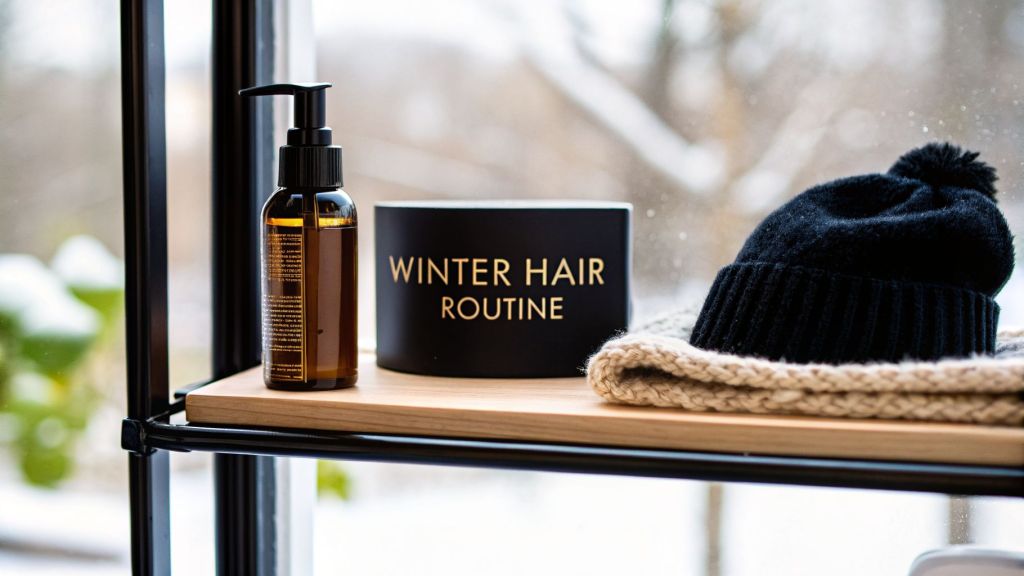
A solid winter hair care routine really boils down to two simple goals: adding moisture back into your hair and scalp, and then doing everything you can to keep it there. It's a strategy of deep hydration and proactive protection to keep your hair from becoming brittle and your scalp from getting irritated by the dry, harsh air.
Why Winter Is Tough on Men's Hair
Let's be honest. The moment the temperature plummets and the central heating kicks on, your hair and scalp are the first to suffer. For any guy dealing with thinning hair, winter isn't just an inconvenience—it's a direct threat to the hair you're working hard to keep.
The core of the problem is the air itself. Cold, crisp winter air physically holds far less humidity than warm, summer air. This creates a dry atmosphere that literally saps moisture from everything it comes in contact with, including your hair strands and, crucially, your scalp.
The Indoor Environment Problem
Then you step inside, thinking you’ve escaped the cold. While it’s a relief, that central heating is creating an intensely dry indoor climate. That constant blast of warm, dry air is just as damaging as the cold outside, maybe even more so. Your hair is caught in a relentless cycle, never getting a break from moisture-stripping conditions.
This leads directly to a few familiar problems:
- Increased Brittleness: Simply put, dry hair is weak hair. The strands lose their elasticity and become much more prone to snapping and breaking.
- Scalp Irritation: A dehydrated scalp feels tight, gets itchy, and starts to flake—symptoms often mistaken for run-of-the-mill dandruff. If your scalp is unhealthy, your follicles can't function properly.
- Static and Frizz: That lack of moisture is exactly why you get those annoying flyaways and that static cling every time you pull off a winter hat.
A study in the Journal of Cosmetic Dermatology confirmed what many of us feel, finding that men in northern climates saw a 25% increase in scalp dryness during winter. This was tied directly to lower sebum (your scalp's natural oil) production in the cold.
The Impact on Hair Thinning
If you're already focused on hair loss, this is where you need to pay close attention. An irritated, dry, and inflamed scalp is not the healthy foundation your hair follicles need to thrive. This constant state of stress can disrupt the natural hair growth cycle and can even push more follicles into the shedding phase.
For a deeper dive, check out our guide on whether or not a dry scalp can cause hair loss.
Research has actually shown that hair shedding can jump by as much as 30% during the colder months. This is often because indoor heating systems cause humidity to plummet, sometimes below 20%, creating an exceptionally hostile environment for your hair. To get ahead of this, exploring seasonal hair care recommendations can give you a solid game plan.
To make it even clearer, here’s a quick summary of the main challenges winter throws at you and the simple, immediate actions you can take to fight back.
Winter Hair Challenges vs Your First Line of Defense
| Winter Problem | Immediate Solution |
|---|---|
| Dry, Brittle Hair Strands | Introduce hydrating shampoos and leave-in conditioners. |
| Itchy, Flaky Scalp | Reduce shampoo frequency to preserve natural oils. |
| Friction & Breakage from Hats | Choose hats with a soft lining, like silk or satin. |
| Increased Shedding | Boost scalp circulation with gentle daily massages. |
This table makes it clear why having a dedicated winter hair care routine is so important. This isn't just about looking good; it’s a non-negotiable part of protecting the hair you have and creating the right environment for healthy growth.
Building Your Daily and Weekly Hair Care Plan
A great winter hair care routine isn’t about adding a dozen new steps you’ll forget by the second week of December. It's about creating simple, consistent habits that actually work. The goal here is a practical plan that defends against the cold without taking over your life.
Consistency really is your most powerful tool. The best approach involves two parts: small, daily actions to protect and hydrate, and a more intensive weekly “reset” to restore moisture and clear the path for healthy growth. This combination ensures your hair and scalp get the support they need to stand up to the harsh winter elements.
It’s a surprisingly simple chain reaction that leads to winter hair damage. The cold, dry air zaps moisture from your scalp, which in turn makes your hair brittle and prone to breakage.

Interrupting this cycle is what a good routine is all about.
Your Daily Defense Strategy
Your day-to-day plan should focus on gentle care and locking in moisture. I see a lot of guys make the mistake of over-washing their hair in the winter, which strips the scalp of the natural oils it desperately needs for protection.
- Rethink Your Shampoo Schedule: Unless your hair gets incredibly oily, you probably don't need to shampoo every day. For most men, washing just two or three times a week is plenty to keep your hair and scalp clean without causing that stripped, dry feeling. On the off-days, a simple rinse with cool or lukewarm water is all you need.
- Apply a Hydrating Product: Right after you shower, while your hair is still damp, is the perfect time to apply a lightweight leave-in conditioner or a non-greasy scalp serum. This creates a barrier that helps seal in moisture. Look for products with ingredients like hyaluronic acid (which draws moisture from the air) or glycerin.
- Be Gentle with Your Towel: Vigorously rubbing your hair with a rough towel is one of the fastest ways to cause breakage, especially when your hair is already fragile from the cold. Instead, gently pat your hair dry or squeeze the excess water out. It's a small change that makes a big impact.
If you’re struggling to figure out the right wash frequency, we have more specific advice on how often to wash thinning hair that will help you find that sweet spot.
The Weekly Reset for Deep Hydration
Once a week, it’s time to go a little deeper to replenish everything the cold air has stolen. Think of this as your main refueling session that sets your hair up for the week ahead.
Your weekly treatment is the cornerstone of a successful winter routine. It's your opportunity to reverse the week's damage and fortify your hair and scalp against the next cold snap.
This weekly reset is all about deep conditioning and gentle exfoliation.
First, you'll want to use a deep-conditioning treatment. Swap your everyday conditioner for a richer hair mask or deep conditioner. Apply it generously from the mid-lengths to the ends and let it work its magic for at least 10-15 minutes before rinsing. This gives restorative ingredients like argan oil or shea butter enough time to really penetrate the hair shaft and bring back moisture and elasticity.
Next, focus on a gentle scalp exfoliation. A dry, flaky scalp is a common winter problem that can clog follicles. Before you shampoo, use a gentle scalp scrub or a chemical exfoliant containing salicylic acid. Massage it in with your fingertips—never your nails!—to lift away dead skin cells without causing irritation.
How to Protect Your Scalp from Winter Damage

It’s no secret that healthy hair grows from a healthy scalp, but winter can be relentless on the skin on your head. That mix of biting wind outside and dry, blasting heat inside is a recipe for irritation, flakiness, and inflammation—all things you want to avoid when you're already focused on hair retention.
A major offender is something most of us don't even think about: friction. Your go-to wool beanie feels warm, but those rough fibers are constantly rubbing against your hair follicles and strands. This can physically damage the hair, especially the finer hairs around your hairline, leading to breakage and frustrating static.
Choose Your Winter Gear Wisely
The good news is that the solution is simple. When you’re picking out a winter hat, go for one with a soft lining. A layer of silk or satin between the outer knit and your head creates a smooth, protective barrier. It drastically cuts down on friction and stops the wool from wicking away precious moisture.
If you’re attached to your current hat collection, don’t worry. You can find inexpensive satin liners online that you can easily tack or sew inside your favorite beanies. It’s a small tweak that makes a world of difference for your hair’s daily battle against breakage.
Boost Scalp Circulation
Cold weather also has a sneaky way of slowing things down. The chill can constrict the tiny blood vessels in your scalp, which reduces the flow of nutrients and oxygen to your hair follicles. For anyone trying to maintain their hair, that’s the last thing you want.
This is where a daily scalp massage becomes your best friend. Just spend a couple of minutes—two to three is plenty—gently working your fingertips in firm, circular motions across your entire scalp. I find it’s easiest to make this a habit in the shower while shampooing or right before turning in for the night. It’s not about pressure; it’s about stimulation. This simple act gets the blood moving and creates a much healthier environment for hair to thrive. We cover more ways to do this in our guide to scalp care for men.
Seal and Soothe Your Scalp
After cleansing and massaging, a few final touches can really lock in the benefits. A lightweight, non-medicated scalp serum can be a game-changer for delivering hydration right to the source without clogging your follicles. I recommend looking for water-based formulas that contain soothing ingredients like aloe or glycerin.
Here’s a pro tip I share with all my clients: End your shower with a quick, cool water rinse. Just 15-20 seconds is enough. The cool water helps close your hair's cuticles and soothes the scalp, which reduces redness and locks in the moisture from your conditioner.
Remember, the effects of winter go beyond temporary dryness. For the over 50 million American men dealing with androgenetic alopecia, seasonal shifts can have a real impact. Factors like reduced sun exposure and lower vitamin D levels can shorten the hair's growth phase by as much as 15-20% during the darker months. This makes a protective routine not just helpful, but essential. You can explore global hair care trends on Statista.com to get a broader perspective on the market.
Getting the Most from Your PRP Treatment This Winter
If you're undergoing Platelet-Rich Plasma (PRP) therapy to fight hair loss, the winter months require a bit of extra diligence to protect your investment. Think of it like this: your PRP treatment plants the seeds for new hair growth, and a solid winter care routine ensures the soil is perfectly primed and protected from the elements.
You can't afford to let the harsh, dry winter air work against the incredible regenerative power of PRP. The goal is simple: support the growth factors introduced during your treatment by maintaining a stable, hydrated, and calm scalp. A dry, flaky, or inflamed scalp is the enemy of the progress you're trying to make.
Post-PRP Care in Cold Weather
The first few days after a PRP session are the most sensitive. Your scalp is in a healing phase, and you need to be gentle to avoid disrupting the powerful growth stimulation process that's just getting started.
Ditch the Harsh Chemicals: For at least a few days post-treatment, steer clear of any shampoos containing harsh sulfates, parabens, or aggressive fragrances. These ingredients can easily irritate a freshly treated scalp, causing inflammation that you absolutely want to avoid.
Gentle Cleansing Only: When you wash your hair, stick to lukewarm water and a mild, pH-balanced shampoo. There's no need to scrub aggressively; a light lather and the flow of the water are more than enough. You can find more great tips on the best after PRP hair treatment care to make sure you're doing everything right.
Keep Your Scalp Hydrated: A hydrated scalp is a healthy one. Applying a lightweight, non-comedogenic scalp serum or oil can work wonders for maintaining moisture. This creates the perfect environment for those PRP growth factors to do their job effectively.
A question I get all the time is, "Can I wear a beanie after my PRP treatment?" Yes, you can, but with one important rule: wait at least 24-48 hours. When you do, make sure the hat is clean and, ideally, lined with a soft material like silk or satin to prevent rubbing and friction on the sensitive treatment area.
Making Your Winter Routine Work with PRP
Your day-to-day winter hair care should complement your treatment plan, not fight against it. For anyone undergoing or just researching these therapies, understanding the core principles of a successful PRP Treatment for Hair Loss is key to getting the results you want.
It really comes down to a partnership. The PRP stimulates the follicles from within, and your daily routine maintains the ideal external environment for that stimulation to lead to real, visible growth. By protecting your scalp from extreme cold and dryness, you're directly supporting the long-term effectiveness of your treatment and ensuring you get the absolute most out of every single session.
Lifestyle and Diet Hacks to Fortify Your Hair

While the right products are a huge part of the equation, a solid winter hair care plan isn't complete without considering what’s happening inside your body. The most effective way to protect your hair is to fight a war on two fronts: externally with great products and internally with the right nutrients.
Think of it this way: if a factory isn't getting high-quality raw materials, the final product is going to be subpar. Your body is that factory, and your hair is the product. This becomes even more critical during the colder, darker months when our diets and habits tend to shift.
Fueling Your Follicles from Within
Your hair follicles might be tiny, but they have massive nutritional demands. For hair strength, zinc and iron are absolutely non-negotiable. Zinc is a workhorse for hair tissue growth and repair. Meanwhile, iron is essential for helping red blood cells deliver oxygen to your follicles—a process vital for growth.
It’s easy to slip into eating carb-heavy comfort foods in the winter, which often lack these key minerals. I’ve learned to be strategic with my grocery list to make sure I’m getting what I need.
- For Zinc: A handful of pumpkin seeds or cashews makes for an easy and effective afternoon snack.
- For Iron: I'll often throw a good amount of spinach into a morning omelet or make sure I’m having lean red meat for dinner a couple of times a week.
Vitamin D is another major player. With less sun exposure in winter, our levels can dip, and that can throw a wrench into the hair growth cycle. Adding fatty fish like salmon to your weekly meal plan is a fantastic way to give yourself a boost. If you want a deeper dive, we have a complete guide on the best foods for hair growth.
Adjusting Your Environment and Habits
Your daily habits can either supercharge your hair care routine or completely sabotage it. One of the biggest culprits of winter hair damage isn't the outdoor cold, but the bone-dry indoor air cranked out by central heating.
Indoor heating can be absolutely brutal on hair. It often slashes humidity levels down to a desert-like 10-15%. In fact, a 2018 study found this extreme dryness can increase hair breakage by a staggering 40% in men over 30, making a humidifier an essential tool in your winter arsenal.
Running a small humidifier in your bedroom overnight is one of the easiest, most passive things you can do. It puts moisture back into your immediate environment, which helps not just your hair and scalp but your skin and sinuses, too.
Finally, don’t underestimate what stress, especially around the holidays, does to your hair. High cortisol levels can prematurely push more of your hair into the shedding phase. Finding a way to manage that—whether it's hitting the gym, meditating, or just carving out some quiet time for yourself—is a crucial part of any real hair care strategy. Combine that with staying hydrated by aiming for at least eight glasses of water a day, and you've built a powerful internal support system for healthier hair. You can discover more insights on the hair care market at GrandViewResearch.com.
Your Winter Hair Care Questions Answered
Even with the best game plan, winter always throws a few curveballs. I've been helping men navigate hair loss for years, and I've heard just about every question when the temperature drops. Here are my answers to the ones that come up most often.
How Often Should I Wash My Hair in Winter?
This is the big one, and my answer is almost always: less than you are now. Over-washing is the fastest way to strip your scalp of the natural oils it needs to stay protected, leaving your hair and scalp dry and vulnerable.
For most guys, especially if your hair is thinning, washing just two to three times a week is the perfect balance. It’s enough to clear out sweat and product buildup without causing that dreaded winter dehydration. On the days you don't wash, a simple rinse with lukewarm water is all you need to feel refreshed.
Of course, if you've had a really intense workout or your hair feels particularly oily, go ahead and wash it. But try to make that the exception, not the rule. Your scalp is working hard to produce those protective oils—let them do their job.
Are Hot Showers Really That Bad for My Hair?
I know, I know. A long, steaming hot shower feels incredible on a freezing morning. But honestly, it’s one of the worst things for your hair and scalp, especially if you're already concerned about thinning.
Think of scalding water as a powerful solvent. It dissolves your scalp's natural sebum (its protective oil layer) way too efficiently. This can send your scalp into panic mode, causing it to overproduce oil to compensate, and you end up with a scalp that’s somehow both greasy and flaky. It’s a vicious cycle.
It’s like trying to wash a buttery dish. You use hot water to cut right through the grease. That’s great for dishes, but your scalp’s oils are there for a reason—to protect. Stripping them away leaves your hair brittle and your scalp exposed.
The fix is simple: just dial the temperature down to lukewarm. It’s still comfortable but infinitely gentler. And like we talked about earlier, finishing with a quick shot of cool water is a great pro move to help seal the hair cuticle.
How Do I Stop Static from My Winter Hat?
Ah, hat static. You take off your beanie and suddenly you have a halo of flyaways. That static is a direct result of dehydration and friction. Your dry hair rubs against the fabric of your hat (usually wool or acrylics), building up an electrical charge.
It’s annoying, but you can definitely fight it without turning your hair into a greasy mess.
Here are a few tricks that actually work:
- Bring in a leave-in conditioner. A very light, water-based leave-in spray is your best friend here. A quick, light mist before you put your hat on adds just enough moisture to prevent static from taking hold.
- Try the dryer sheet trick. It sounds weird, but it works in a pinch. Just take a new, unscented dryer sheet and gently wipe it over your hair. It instantly neutralizes the charge without leaving any gunk behind.
- Think about your hat's lining. As we covered before, friction is the real enemy. If you can find a hat lined with silk or satin, you'll notice a massive difference. The smooth material creates far less friction than rough wool.
By tackling these common winter headaches, you can fine-tune your winter hair care routine and get through the season with healthier, more resilient hair.
At PRP For HairLoss, our goal is to give you practical, no-nonsense information to help you manage hair loss effectively. Take a look at our other resources to build a complete care plan that truly works for you. Learn more about our approach to hair restoration.
 PRP For Hairloss
Leave a comment