Let's cut right to the chase. Does sweating more make your hair grow faster? It’s a question that pops up a lot, especially after a great workout. But the short, simple answer is no.
Sweat itself doesn't have any magical properties that stimulate hair follicles. The real magic is in the exercise that causes the sweat, but the sweat is just a side effect.
The Honest Answer About Sweat and Hair Growth
When you're drenched after a run or a heavy lifting session, it’s easy to think all that activity on your scalp must be doing something for your hair. And you're half right—exercise is fantastic for your body, and by extension, your hair. But sweat's only job is to cool you down. It’s almost entirely water and salt.
For the many men worried about thinning hair, pinning your hopes on sweat is a dead end. The real driver behind male pattern baldness is a mix of genetics and the hormone dihydrotestosterone (DHT), which gradually shrinks hair follicles. This genetic reality affects roughly 50 million men in the United States by the time they hit 50. How much they sweat just doesn't factor in.
To clear up any lingering confusion, it helps to see the common myths laid out right next to the scientific facts.
Sweat and Hair Growth Myth vs Reality
This table breaks down what you might have heard versus what science actually tells us.
| Common Myth | Scientific Reality |
|---|---|
| Sweat contains nutrients that "feed" hair follicles. | Sweat is 99% water and salt, with no growth-promoting properties. |
| The more you sweat, the faster your hair will grow. | There's no scientific evidence connecting the volume of sweat to the rate of hair growth. |
| Sweating cleans out hair follicles to spur growth. | While it can flush pores, leaving sweat on your scalp can cause buildup and irritation. |
So, while sweat doesn't feed your follicles, the belief isn't totally out of left field. It’s just a case of mistaken identity.
Here's an interesting bit of trivia from the research world: bald scalps actually sweat two to three times more than scalps with a full head of hair. Why? Because hair acts as an insulator, trapping moisture and slowing evaporation. A study published by the National Library of Medicine also confirms that scalp sweat has a negligible impact on hair health, further putting this myth to rest.
People often get the cause and effect of exercise all tangled up. The exercise is the hero here, not the sweat. If you want to dig deeper, you can explore the real relationship between how exercise and hair loss are connected. At the end of the day, a healthy scalp is your goal, and sweat is just a guest that shouldn't overstay its welcome.
Understanding Your Scalp: A Closer Look at Glands, Follicles, and Sebum
To really get to the bottom of this whole sweat and hair growth myth, we first need to understand what’s happening on your scalp. Think of it as a busy little ecosystem. Just like a garden, it has several moving parts that need to work in harmony for anything to grow well.
When we talk about this ecosystem, three components are the real stars of the show: your hair follicles, sweat glands, and sebaceous glands. Each one has a completely different job.
The Key Players on Your Scalp
First up are the hair follicles. These are the tiny, deep pockets in your skin where each strand of hair is born. In our garden analogy, the follicles are the seeds. For these "seeds" to sprout strong, healthy hair, they need a well-maintained environment.
Then you have your sweat glands. Their job is simple: produce sweat to cool you down when your body temperature rises. They're like the sprinkler system, but their main purpose is temperature control, not fertilizing the garden.
Finally, we have the sebaceous glands. These glands produce a natural oil called sebum, which is your scalp’s built-in moisturizer. Sebum coats your scalp and hair, keeping everything from getting dry and brittle and creating a protective, waterproof barrier on the skin.
As you can probably guess, sweat and hair follicles are neighbors, but they aren't directly connected in a way that helps hair grow.

When the Scalp's Balance Is Disrupted
In a perfect world, these three elements coexist peacefully. But when that delicate balance gets thrown off, problems start to creep in. It’s like overwatering your garden and dumping on too much oily fertilizer—you end up with a swampy mess that chokes the plants.
The same thing can happen on your scalp when sweat and sebum mix together too much. Here’s what can go wrong:
- Clogged Follicles: When oil, sweat, and dead skin cells all mix, they can form a stubborn plug that blocks the hair follicle. This makes it tough for new, healthy hair to push through.
- Irritation and Buildup: The salt and lactic acid in sweat can be pretty irritating if you leave it on your scalp for too long. This creates an itchy, uncomfortable film that nobody wants.
- An Unhealthy Environment: A scalp that’s always damp and oily can quickly become a breeding ground for fungus and bacteria. This can lead to minor infections that weaken the hair at its root.
Sometimes, a persistently oily, flaky, and itchy scalp is more than just temporary buildup. It might be a sign of an underlying condition. You can learn more about what causes seborrheic dermatitis and how to manage it in our detailed guide.
So, while sweat and sebum are totally natural, letting them sit and build up is where the trouble begins. A clean, balanced scalp is what really paves the way for healthy hair.
The Real Benefits of Working Up a Sweat

While sweat itself isn't a magical hair growth elixir, the activities that cause you to sweat are a different story. The real hero here isn't the sweat; it's the exercise that produces it. Instead of focusing on perspiration, think about your workout as a way to create an incredibly healthy environment where your hair can flourish.
Getting your heart pumping is fantastic for your circulation. This surge in blood flow acts like an express delivery service for your entire body, and your scalp is a prime destination.
Think of it this way: when you exercise, you're essentially widening all the tiny delivery routes—your blood vessels—that lead to your scalp. This allows more "trucks" loaded with oxygen and essential nutrients to reach your hair follicles, keeping them well-fed and strong.
A Workout for Your Follicles
This supercharged circulation gives your follicles everything they need to perform at their peak. You're not just working out your body; you're giving your hair a workout from the inside out. While exercise won't reverse something like male pattern baldness on its own, the improved blood flow is a major plus. Poor circulation is often tied to weaker hair, so anything that gets the blood moving is a win.
This is especially important when you consider that 85% of men deal with some hair thinning by age 50. Keeping follicles healthy through good circulation is one of the smartest things you can do. As some experts point out, sweat plays an indirect role in scalp health from Theradome.com, mainly because of the exercise that causes it.
Of course, that’s not the only way exercise helps. It’s also one of the best stress-busters around.
Regular physical activity helps your body manage cortisol, the main stress hormone. Since ongoing stress is a known cause of hair shedding (a condition called telogen effluvium), keeping cortisol under control is a massive victory for your hair.
The Bigger Picture for Hair Health
When you look at it this way, exercise becomes a whole new game. It’s not about how much you sweat, but about what your body gains from the physical activity. A consistent fitness routine builds a stronger, more resilient system from head to toe.
Consider all the indirect ways exercise supports healthy hair:
- Better Nutrient Delivery: Increased blood flow ensures your follicles get a steady supply of the building blocks they need for growth.
- Serious Stress Reduction: Lowering cortisol helps stop stress-related shedding in its tracks, which means more hair stays where it belongs.
- Hormonal Balance: Consistent exercise helps regulate various hormones, which fosters a more stable internal environment for hair growth.
This holistic view is far more effective than just hoping sweat will do the trick. Simple habits that also boost circulation, like a daily scalp massage for hair growth, can complement the benefits you get from the gym. At the end of the day, a healthy lifestyle is the true foundation for a healthy scalp, and exercise is a cornerstone of that foundation.
When Sweat Turns Against Your Scalp
That fantastic feeling after a tough workout comes with a trade-off, and it’s happening right on top of your head. While the exercise itself is fantastic for circulation, letting sweat linger on your scalp creates an environment that can actively undermine healthy hair.
Let's go back to our garden analogy for a second. What would happen if you let salty, grimy water pool around the roots of your plants day after day? It wouldn't be long before the soil became hostile and the plant began to suffer. Your scalp is no different.
When sweat mixes with your skin’s natural oils (sebum) and old skin cells, it creates a problematic film. If you don't stay on top of your hygiene, this buildup can be surprisingly destructive.
How Buildup Causes Damage
This sticky residue does more than just make your hair feel greasy and your scalp start to itch. It can cause very specific problems that get in the way of your hair's natural growth cycle. The main issue here is clogged hair follicles.
Think of it as putting a cap over a tiny sprout trying to push through the soil. When the opening of the follicle gets blocked, the new hair struggles to emerge, and the follicle itself can get inflamed and seriously irritated.
This leads to a few common, unwelcome results:
- Irritation and Itching: The salt and lactic acid in your sweat are natural irritants. When left on the skin, they cause that nagging itch and redness, which makes you want to scratch—potentially damaging the follicles in the process.
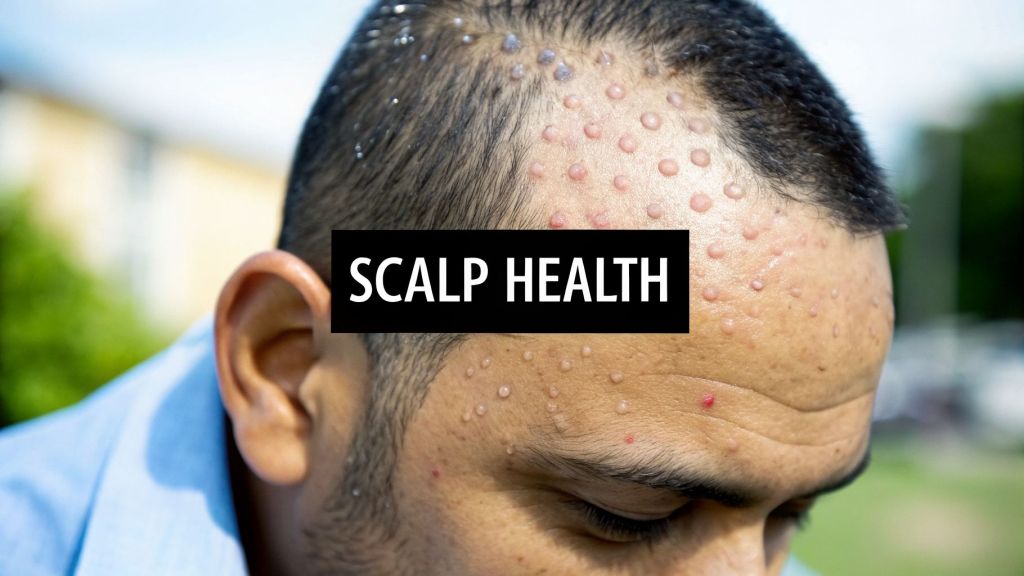
- Folliculitis: A warm, damp, and dirty scalp is the perfect breeding ground for bacteria and yeast. This can trigger folliculitis, which is essentially a low-grade infection of the hair follicles that shows up as small, pimple-like red bumps and can weaken the hair right at the root.
- Weaker Hair Strands: Research has found that the lactic acid in sweat can actually degrade the keratin protein your hair is made of. Over time, this chemical damage can lead to weaker strands that are much more prone to breakage.
The real enemy here isn't the act of sweating—it's what happens when you don't clean up afterward. A clean scalp is simply non-negotiable for maintaining a healthy foundation for hair growth.
The Simple Fix: Post-Workout Hygiene
The good news? Preventing all these problems is incredibly simple. It really just comes down to washing your scalp after a good sweat session. You don't need to panic and rush to the shower the second you finish your last rep, but you do need to be consistent.
Rinsing away the sweat, salt, and grime keeps your follicles clear and that delicate scalp ecosystem in balance.
This is especially critical if you’re already dealing with thinning hair. The last thing you want is to create extra obstacles for the hair you have. If you’re not sure about the right washing frequency for your hair type, figuring out how often to wash thinning hair is a game-changer.
Ultimately, the question of whether sweat helps hair grow is far less important than how you manage it. Taking a proactive approach to your scalp hygiene is one of the easiest and most powerful things you can do to support your hair's health.
Proven Treatments That Actually Support Hair Growth

So we've established that sweat doesn't directly trigger hair growth and can even cause problems if left to linger. So, where do you turn for real results? If you're dealing with genetic hair thinning, hoping a good workout will turn things around is, unfortunately, a dead end.
Real progress comes from science-backed solutions that tackle the biological roots of hair loss. While exercise is fantastic for your health, it simply can't resurrect dormant hair follicles or block the follicle-shrinking hormone DHT. For that, you need to bring in the heavy hitters.
The Power of Platelet-Rich Plasma (PRP)
One of the most exciting and effective treatments available today is Platelet-Rich Plasma (PRP) therapy. The best way to think about it is using your body's own high-tech repair crew to restart the hair growth engine.
The process itself is surprisingly straightforward. A small amount of your blood is drawn—just like a standard blood test—and placed in a centrifuge, which spins it at high speed to isolate the platelets. What you're left with is a golden, concentrated serum packed with powerful growth factors.
These growth factors are the natural signals your body uses to heal and generate new tissue. When this potent plasma is carefully injected into thinning areas of your scalp, it delivers a direct message to sleeping hair follicles: it’s time to wake up and get back to work.
PRP therapy isn't some far-off theory; it’s a practical way to harness your body's innate healing abilities. It gets to the heart of the problem by delivering a super-dose of regenerative signals right where they're needed most.
For men with androgenetic alopecia (male pattern baldness), this approach has shown remarkable success. Clinical trials have found that PRP can boost hair thickness by 25-35% in 70% of patients after only four sessions. Other studies have documented hair density increases of 30-40% over three to six sessions—results that far exceed anything you could hope for from just sweating more. If you're looking for a deeper dive into the procedure, this guide to PRP treatment for hair is an excellent resource.
Other Science-Backed Options
While PRP is a fantastic, modern approach, it’s not the only tool in the hair restoration toolbox. A few other FDA-approved treatments have stood the test of time and delivered consistent results for millions.
- Minoxidil (Rogaine): This is a topical foam or liquid you apply directly to your scalp. It's a vasodilator, which means it helps widen the blood vessels. Think of it as manually boosting that blood flow to the follicles we talked about earlier, giving them the extra oxygen and nutrients they crave.
- Finasteride (Propecia): As an oral pill, Finasteride works from the inside out. It directly addresses the genetic cause of male pattern baldness by lowering the body's levels of DHT—the hormone responsible for shrinking hair follicles over time.
- Ketoconazole Shampoos: Don't underestimate the power of a good medicated shampoo. Certain formulations can help reduce scalp inflammation and create a healthier environment for hair growth. You can learn more about how they work in our detailed guide on ketoconazole shampoo for hair loss.
At the end of the day, a good sweat is a great sign of a healthy body, but it's a myth that it'll bring your hair back. For a direct and effective path to restoring your hair, your best bet is to turn to proven medical treatments like PRP, Minoxidil, and Finasteride.
Your Action Plan for a Healthier Scalp
So, what does all of this mean for you and your hair? Let's cut through the noise about sweat and hair growth and focus on a straightforward plan that actually works. We can break it down into three simple, effective strategies to give you back control over your scalp health.
Keep Moving, but for the Right Reasons
First things first: keep exercising. But don't get hung up on the idea that the sweat itself is the magic ingredient. The real benefits come from what's happening inside your body when you get your heart rate up.
Think of it as upgrading your body's internal delivery service. Regular physical activity boosts blood circulation, which means a richer supply of oxygen and nutrients gets rushed directly to your hair follicles. It’s also one of the best ways to manage stress, which helps keep cortisol—a hormone notorious for triggering hair shedding—at bay. This is about creating a healthy foundation from the inside out, where your hair is a natural beneficiary.
Nail Your Post-Workout Scalp Care
This next part is absolutely crucial. While exercise is fantastic, the sweat it creates can turn into a problem if you just let it sit. A consistent post-workout routine is non-negotiable for preventing a scalp-clogging buildup of salt, bacteria, and oil.
Here’s a simple routine to make second nature:
- Rinse Promptly: At the very least, rinse your hair and scalp with plain water right after a tough workout. This immediately gets rid of the worst of the salty residue.
- Wash Consistently: Use a high-quality shampoo to give your scalp a proper cleanse, which is key to preventing clogged follicles and irritation.
- Be Gentle: You don't need to scrub aggressively. A firm but gentle massage with your fingertips is all it takes to get the job done without damaging your follicles.
Getting ahead of the problem this way ensures sweat doesn't have a chance to create a hostile environment for your hair.
While sweat itself doesn't directly stimulate growth, fostering a healthy scalp environment is paramount. For genuine ways to foster a thriving environment for your hair, you can explore more about proven tips for strong, healthy hair.
Look into Science-Backed Solutions
Finally, if what you're seeing is genuine hair thinning, especially the kind that runs in your family, it's time to look beyond lifestyle tweaks. When genetics are at play, your best bet is to be proactive with solutions grounded in science.
Don't wait until the problem gets worse. It’s worth talking to a dermatologist or hair loss specialist about proven treatments. Options like Platelet-Rich Plasma (PRP) therapy, for instance, use your own body’s concentrated growth factors to awaken and re-energize dormant hair follicles. This is where you move from general wellness to targeted, effective treatment.
Your Top Questions About Sweat and Hair Answered
We’ve dug deep into the science, but you probably still have a few specific questions bouncing around your head. Let’s clear those up so you know exactly how to handle sweat and keep your scalp healthy.
Can the Salt in Sweat Actually Damage My Hair?
Absolutely. While sweat is 99% water, it's the remaining salts and acids that cause trouble. As sweat evaporates from your hair, it leaves behind a salty, gritty residue. This film acts like a sponge, pulling essential moisture right out of the hair shaft.
The result? Hair that feels dry, looks dull, and becomes incredibly brittle. This is a fast track to frustrating breakage and split ends.
How Often Should I Wash My Hair if I Work Out Every Day?
This is a balancing act. If you're sweating heavily every day, you need to get that sweat off your scalp. A daily rinse with plain water can work wonders, washing away the irritating salt before it has a chance to cause problems.
You don’t necessarily need a full-on shampoo every time, which can strip natural oils. Instead, pay attention to your scalp.
The real expert is your own scalp. If it feels oily, starts to itch, or you can see flaky buildup, it’s time for a proper wash with a gentle shampoo. The goal is always a clean, clear scalp.
Does Wearing a Hat While Sweating Make Hair Loss Worse?
A hat itself doesn't cause male or female pattern baldness—that's a genetic issue. However, it can definitely create an environment that accelerates shedding.
Think of it as creating a mini-greenhouse on your head. The hat traps heat and sweat, creating a warm, damp climate that bacteria and yeast just love. This can easily trigger scalp inflammation or folliculitis, which in turn can lead to increased hair fall. On top of that, a consistently tight hat can cause physical stress on the follicles, a type of breakage known as traction alopecia.
Is Sauna Sweat Different from Exercise Sweat?
From your scalp’s point of view, sweat is sweat. Whether you’re getting it from an intense workout or a relaxing sauna session, the basic composition is the same: mostly water, with some salt and minerals mixed in.
The big difference is what comes with the sweat. Exercise gives you that incredible circulatory boost, pumping oxygen-rich blood to your follicles and helping to balance hormones. A sauna is just passive sweating, so you miss out on those powerful, hair-healthy benefits.
Ready to move past myths and explore a solution that genuinely supports hair restoration? At PRP For HairLoss, we focus on science-backed treatments like PRP therapy that use your body's own power to rejuvenate follicles. Learn how you can take proactive steps toward reclaiming your hair by visiting https://prpforhairloss.com.
 PRP For Hairloss
Leave a comment