If you've noticed your hair is starting to thin out at the crown, you're in good company. This specific spot, along with the temples, is ground zero for hair loss in most men. It might feel like it's happening out of the blue, but the reason is anything but random—it's a story written in your DNA and driven by hormones.
Why Hair Loss Often Starts at the Crown
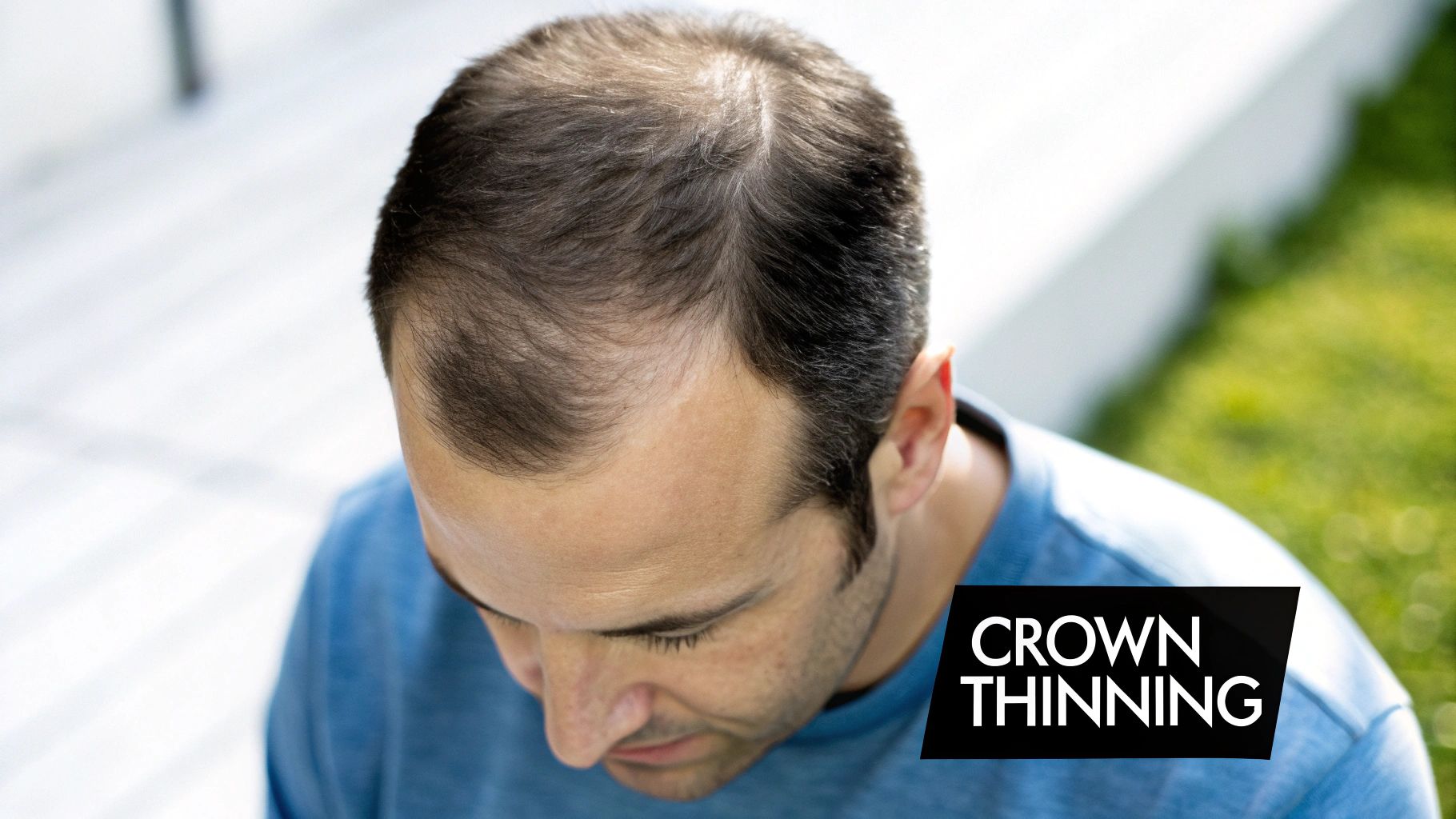
The main reason for this predictable pattern is a condition called androgenetic alopecia, which you probably know as male pattern baldness. It's a hereditary trait, so if your father or grandfather had a thinning crown, the odds are higher that you will too.
This genetic programming makes the hair follicles on the top of your head extra sensitive to a hormone called dihydrotestosterone, or DHT.
The Role of DHT in Crown Thinning
Think of your hair follicles as tiny, hair-producing factories. For men who are genetically prone to hair loss, DHT is like a saboteur that slowly shuts down production. It latches onto receptors in the follicles at the crown and hairline, causing them to shrink over time. This process is called miniaturization.
As follicles miniaturize, a few things happen:
- Thinner Strands: Each new hair that grows from the affected follicle is finer and weaker than the one before it.
- Shorter Growth Cycles: The hair's growth phase gets shorter, meaning it doesn't have time to grow as long before it sheds.
- Less Pigment: The shrinking hairs often lose their color, becoming lighter and almost translucent, which makes the thinning even more noticeable.
Eventually, the follicle shrinks so much that it stops producing any visible hair at all. This gradual, targeted shutdown is why hair thinning at the crown is such a classic sign of male pattern baldness. You can get a deeper look into the science of this process in our guide on what causes androgenetic alopecia.
Understanding the Norwood Scale
To get a handle on where you are in the hair loss journey, doctors and specialists use a visual guide called the Norwood Scale. It breaks down the typical progression of male pattern baldness into seven distinct stages, from a bit of recession at the temples to significant loss across the crown and hairline.
The Norwood Scale is essentially a roadmap for male hair loss. Figuring out your stage, which often starts with that first bit of thinning on the vertex (crown), is the first real step in understanding what’s happening and finding the right way to manage it.
And remember, this is an incredibly common experience. Male pattern baldness affects a staggering number of men. Medical research shows that 30-50% of men will have some degree of it by age 50. For some, it starts much earlier—about one in four men see the first signs by age 25.
Confirming Crown Thinning: From First Signs to a Professional Diagnosis
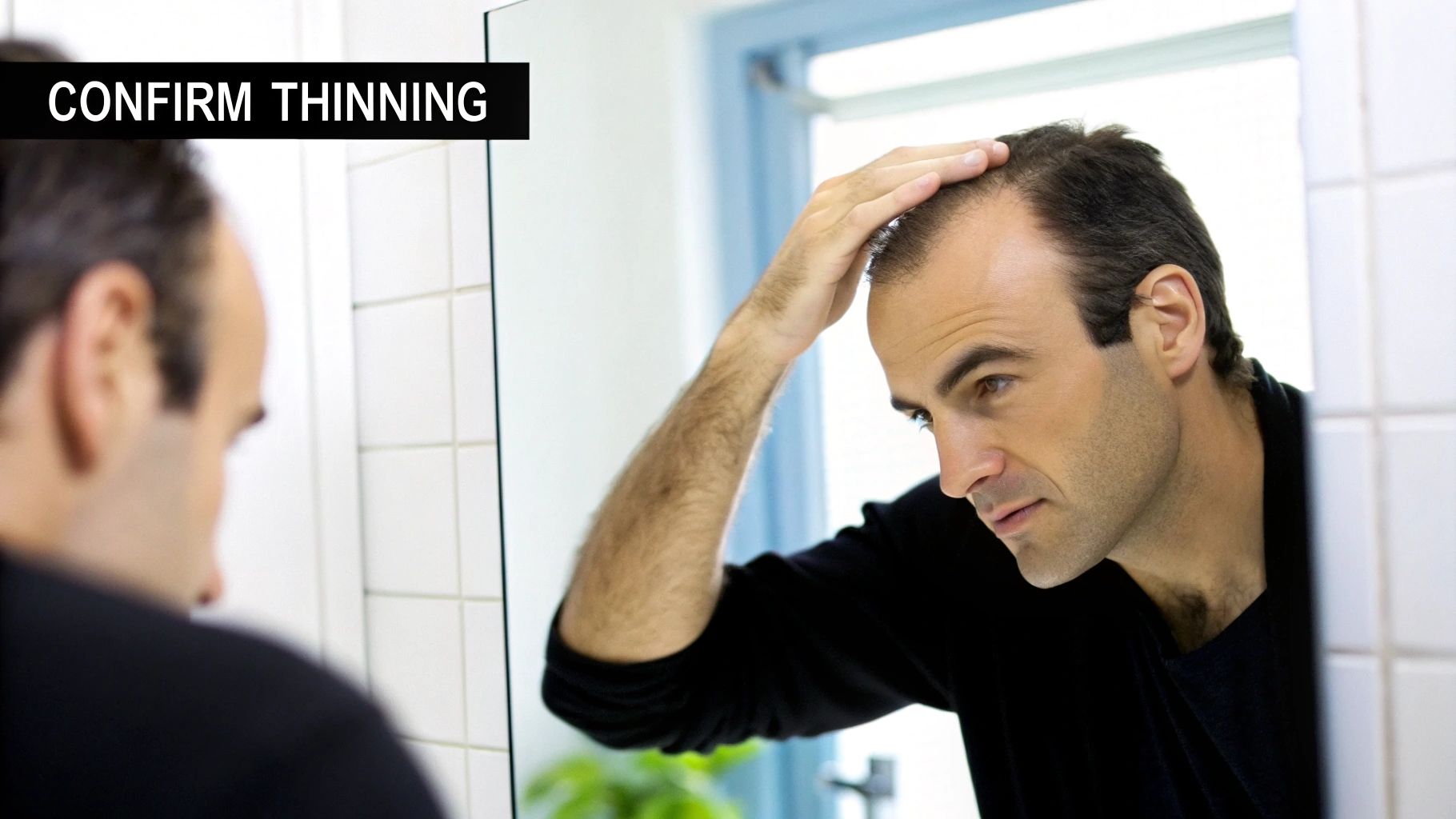
Is it actually thinning, or is that just the harsh bathroom light playing tricks on you? We've all been there. That flicker of uncertainty is the first step, and getting a clear answer is the key to taking control. It all starts at home, with you noticing the small things that no one else would.
Maybe you find yourself using more product than you used to just to get the hair on your crown to look right. Or you catch a reflection in a shop window and see a little more scalp than you remember. These are the subtle clues, the first real signs that your hair density is changing.
Spotting the Early Warning Signs Yourself
Before you rush to book an appointment, there are a few things you can keep an eye on. These signs creep up slowly, so paying attention over a few weeks will give you a much better sense of what's really going on. This isn't about being paranoid; it's about being proactive.
Here are a few key things to watch for:
- The Light Test: Stand directly under a bright light. Does your scalp at the crown seem more visible than it used to? This is how most guys first spot hair thinning at the crown.
- The Post-Shower Check: When your hair is wet after a shower, it clumps together, making any thinning much easier to see. A quick glance in the mirror can reveal a lot about the density back there.
- Photo Evidence: Go back through recent photos, especially any taken from above or behind. A camera can capture a pattern of thinning you might miss when looking straight into the mirror.
These simple checks give you a baseline. If you want to get a bit more systematic, you can learn more about how to do a hair density test at home to track these changes.
The Importance of a Professional Diagnosis
Doing your own homework is a great start, but nothing beats a professional diagnosis. Seeing a dermatologist or a hair loss specialist is what turns vague worry into a concrete plan. They have the expertise to not only confirm that your hair is thinning but, more importantly, to figure out why.
Getting an expert opinion is non-negotiable. While male pattern baldness is the usual suspect, a professional will rule out other causes like stress, nutritional gaps, or even underlying health issues that can trigger hair loss.
During a consultation, the specialist will perform a detailed scalp examination. It’s not an invasive or complex process. They'll likely use a simple handheld device called a trichoscope—basically a high-powered, polarized light camera that gives them a close-up view of your scalp.
Think of it as a magnifying glass for your hair. This lets the doctor inspect your hair follicles, check their health and density, and look for miniaturization, which is the classic calling card of male pattern baldness. With that professional confirmation, you can stop guessing and start moving forward with a treatment plan that's actually right for you.
Building Your Treatment Plan with Proven Medications
Once you've gotten a proper diagnosis from a professional, you can stop worrying and start doing something about it. The best place to begin is with treatments that have a long track record of scientific backing and real-world results. These medications are the bedrock of any solid plan for fighting a thinning crown.
Think of them as your first line of defense. They’re the most common, most studied options out there, giving you a reliable way to slow down the shedding and, for many guys, even regrow some of the hair you thought was gone for good.
Comparing Medical Treatments for Crown Thinning
The two heavy hitters in the world of hair loss medication are Minoxidil and Finasteride. They work in completely different ways but are often used together for a powerful one-two punch against male pattern baldness. Here's a quick look at how they stack up.
| Feature | Minoxidil (Rogaine) | Finasteride (Propecia) |
|---|---|---|
| How It Works | A vasodilator that widens blood vessels, boosting nutrient and oxygen flow to hair follicles. | A DHT blocker that stops the conversion of testosterone into the hair-damaging hormone DHT. |
| Application | Topical liquid or foam applied directly to the scalp twice daily. | Oral pill taken once daily. |
| Availability | Available over-the-counter without a prescription. | Requires a prescription from a doctor. |
| Primary Goal | Revitalizes weakened follicles and promotes regrowth. | Halts the progression of hair loss at its hormonal source. |
While both are effective, they target the problem from different angles. Minoxidil is like giving fertilizer to a struggling plant, while Finasteride removes the poison that was harming it in the first place.
Minoxidil: The Follicle Revitalizer
You've almost certainly heard of Minoxidil, probably under its brand name, Rogaine. It’s a topical treatment you apply right to your scalp. Its main job is to act as a vasodilator, which is just a technical term for something that widens blood vessels.
By opening up those tiny blood vessels, it allows more oxygen, blood, and nutrients to reach your hair follicles. For follicles that have been miniaturized and choked out by DHT, this is a lifesaver. It essentially wakes them up, pushing them from a resting phase back into an active growth phase, which leads to thicker, healthier hair over time.
It’s important to know that Minoxidil doesn't actually stop the hormonal cause of baldness. But its ability to kickstart dormant follicles makes it a crucial tool for anyone noticing their crown starting to thin.
Consistency is everything with Minoxidil. It's a daily commitment, not a one-and-done fix. If you start skipping applications, you're just pausing your progress, so you have to make it a non-negotiable part of your daily routine.
Finasteride: The DHT Blocker
While Minoxidil is busy feeding the follicles, Finasteride gets to the root cause of the problem. It’s a prescription pill (brand name Propecia) that works on a hormonal level. Finasteride is a powerful DHT blocker.
It works by shutting down an enzyme called 5-alpha reductase. This enzyme is the culprit responsible for turning testosterone into dihydrotestosterone (DHT), the hormone that attacks and shrinks your hair follicles. By drastically cutting down the DHT levels in your scalp, Finasteride removes the primary trigger for male pattern baldness.
This direct attack on the cause makes it incredibly effective at stopping hair loss in its tracks. A huge number of men see their thinning come to a complete halt, and many experience impressive regrowth, especially on the crown.
Setting Realistic Expectations
It’s so important to go into this with the right mindset. These medications are a marathon, not a sprint, and they demand patience.
- The Initial Shed: Don't panic if you notice more shedding when you first start. This is usually a good sign! It means the treatments are pushing out the old, weak hairs to make room for new, healthy ones to grow in.
- The Timeline: You won't see changes overnight. You’ll need to stick with either treatment for at least 3 to 6 months before you can expect to see noticeable improvements. The best results often show up after a full year of consistent use.
- A Long-Term Game: These medications only work as long as you take them. If you stop, the hair loss process will pick up right where it left off, and any ground you've gained will likely be lost within months.
If you're digging deeper into your options, you might want to understand the difference between DHT blockers. For a closer look, check out our guide on Finasteride versus Dutasteride for hair loss to learn about another potent alternative. Starting your plan with these proven medications is the most proactive and effective step you can take.
How Platelet-Rich Plasma (PRP) Therapy Rejuvenates Hair
Beyond daily pills and topical treatments, there’s an approach that taps into your body’s own incredible healing capacity to fight hair thinning at the crown. It’s called Platelet-Rich Plasma (PRP) therapy, and for many men, it’s a game-changer in hair restoration. Instead of introducing foreign substances, this method works with your body.
Think of it this way: if your scalp is a garden where the soil has become tired and depleted, PRP acts like a powerful, organic fertilizer. It doesn't add anything artificial. It just supercharges the existing environment to give your hair follicles a fighting chance to thrive again.
The Science Behind Your Body's Healing Power
At its heart, PRP therapy is surprisingly simple. It takes the healing components already present in your bloodstream and puts them exactly where they’re needed most. Your blood contains red cells, white cells, plasma, and, most importantly for us, platelets. These platelets are the real heroes of the story.
Platelets are your body’s emergency response team. When you get a cut, they’re the first on the scene, stopping the bleed and kicking off the repair process. They do this by releasing powerful proteins called growth factors, which act like little messengers, telling your body's cells to heal and build new tissue. PRP therapy isolates these powerful platelets and puts them to work directly on your scalp.
This entire approach falls under the growing field of regenerative medicine, which is all about harnessing the body’s innate ability to heal and restore itself.
The Simple Three-Step PRP Process
The whole procedure is refreshingly straightforward and usually takes about an hour from start to finish. It’s a clean, three-stage process that goes from a simple blood draw to targeted scalp treatment, all in a single visit.
- The Blood Draw: It begins just like any routine blood test, with a small sample of blood drawn from your arm.
- The Centrifuge: That blood is then placed into a special machine called a centrifuge. This device spins the vial at high speed, neatly separating the blood into its different components. The spinning isolates the platelets, creating a highly concentrated, platelet-rich plasma—what many of us in the field call "liquid gold."
- The Application: Finally, this potent PRP is carefully injected into the areas of your scalp where the thinning is most noticeable, like the crown.
By delivering this concentrated dose of growth factors right to the doorstep of your struggling hair follicles, we can awaken dormant ones and give them the nourishment they need to grow healthier, thicker hair. You can find a deeper dive into the mechanics in our guide on platelet-rich plasma therapy for hair.
How PRP Specifically Helps a Thinning Crown
Once that "liquid gold" is injected, the growth factors get right to work, setting off a chain reaction of positive effects that are perfect for tackling hair thinning at crown male. They essentially send a wake-up call to the underperforming follicles.
Here’s a breakdown of what the PRP does:
- Stimulates Follicle Activity: The growth factors signal dormant or shrinking hair follicles to shift back into their active growth phase.
- Boosts Blood Flow: PRP helps improve circulation in the scalp, making sure follicles get a steady supply of the oxygen and nutrients needed to build strong hair.
- Thickens Hair Shafts: Over several months, this renewed activity can actually increase the thickness of individual hair strands, which creates a much fuller, denser appearance.
The real beauty of PRP is that it's your body healing itself. There are no synthetic chemicals or foreign substances, which dramatically reduces the risk of side effects. It’s a natural, biological boost for your hair.
Is PRP the Right Choice for You?
While PRP therapy is a fantastic option for many men, it’s not a magic bullet for everyone. Its success really depends on the current state of your hair loss.
This treatment tends to work wonders for men who are in the earlier stages of thinning. If you still have a decent number of active (even if they’re weakened) hair follicles, PRP can give them the jolt they need to recover. It’s ideal for the guy who has noticed his crown is looking pretty thin but isn't completely bald yet.
On the other hand, if an area of your scalp has been completely smooth for several years, those follicles have likely shut down for good. In those cases, PRP is less likely to be effective because there are no viable follicles left to save. The best way forward is always a one-on-one consultation with a specialist who can assess your scalp and tell you if you’re a great candidate.
Your PRP Journey: What to Expect from Start to Finish
So, you're considering Platelet-Rich Plasma therapy. That's a big step. Knowing what the whole process looks like, from the first appointment to the final result, can help turn any apprehension you might have into confidence. Let's walk through the entire journey so you know exactly what's coming.
The good news is that the procedure itself is pretty straightforward and isn't a major intrusion on your life. We'll cover everything from how to get ready for your first session to the simple aftercare steps, making the whole experience feel smooth and, hopefully, very rewarding. It all begins with a little prep work to give your body the best shot at success.
Preparing for Your First Session
Before you come in, your specialist will give you a handful of simple guidelines. Think of it like preparing good soil before you plant seeds—you want to create the ideal conditions for growth. The aim here is to make sure the growth factors in your blood are as potent as possible and your scalp is ready to go.
Here’s what you’ll likely be asked to do:
- Hydrate, Hydrate, Hydrate: Drinking plenty of water for a few days before your appointment is a must. Being well-hydrated makes for a much easier and better-quality blood draw.
- Pause Certain Meds: You'll probably need to stop taking anti-inflammatory medications like ibuprofen or aspirin for about a week beforehand. The same goes for certain supplements, like fish oil, as they can interfere with how your platelets work.
- A Squeaky-Clean Scalp: Show up with clean hair, free of any styling products. This is a simple but important step to keep the treatment area sterile.
Following these instructions is a small effort that really sets the stage for a successful treatment.
The infographic below breaks down the core steps you'll go through during each session. It's a simple, elegant process that puts your body's own healing power to work.
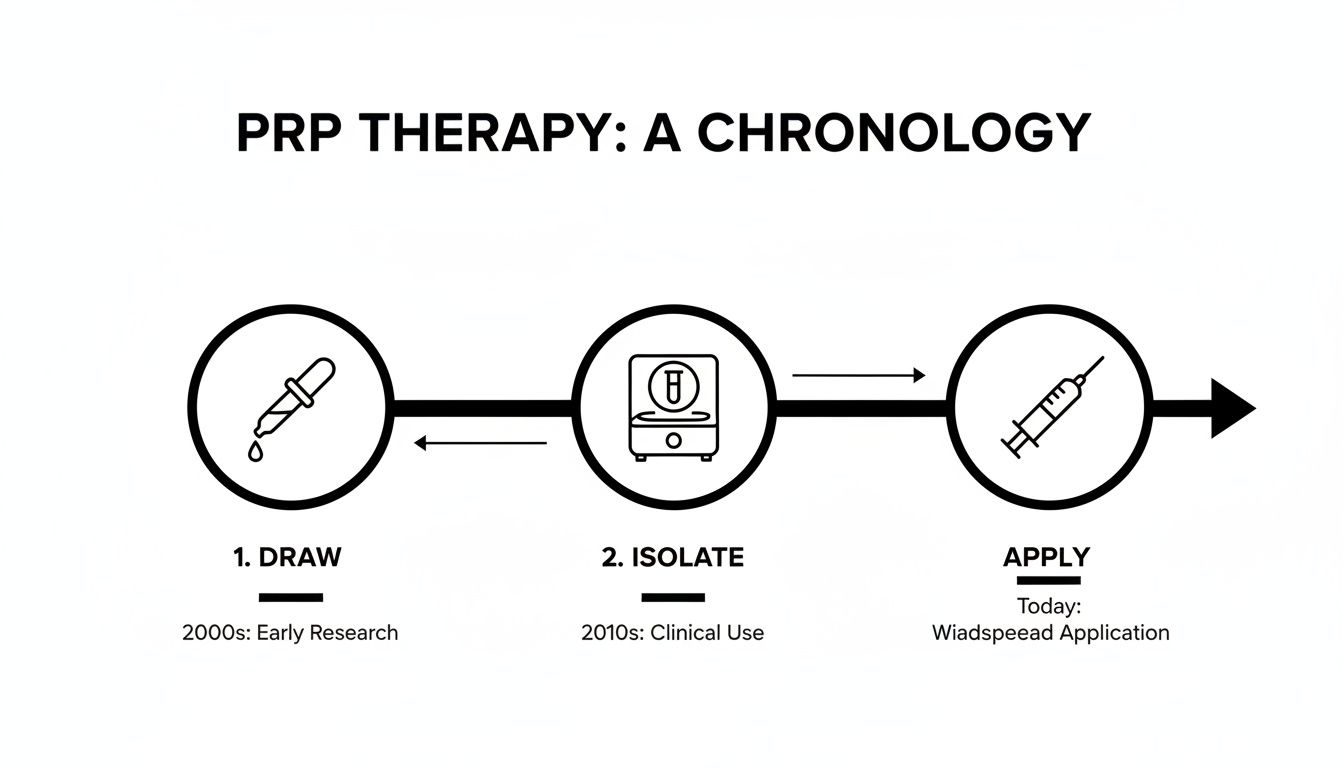
Essentially, we’re concentrating the most powerful parts of your blood and delivering them right where they’re needed most—the hair follicles.
The Treatment Schedule and Timeline for Results
One of the first questions guys ask is, "How many treatments will I need?" It's a great question. PRP isn't a one-and-done deal; it's a program that builds on itself over time. The initial protocol is all about kickstarting that regenerative process.
Most clinics recommend starting with a series of three to four sessions, spaced about four to six weeks apart. This consistent stimulation is what really wakes up those sleepy follicles and gets the ball rolling.
After that initial push, it's all about maintenance.
Think of the first few sessions as building a strong foundation for new hair. The follow-up treatments, usually every six to twelve months, are like routine maintenance to protect your investment and keep your hair growing strong.
You'll need to be patient, as the results don't pop up overnight. They appear gradually. For a deeper dive into the month-by-month journey, you can check out this complete PRP hair treatment timeline to see what to expect.
From Healing to Visible Growth: What to Look For
Right after your session, it's totally normal for your scalp to feel a little tender or look a bit pink for a day or so. That’s a good sign—it means the healing response has been activated. The real magic, though, is happening below the surface as those growth factors start signaling your follicles to get back to work.
Here’s a rough idea of what you can expect to see and when:
- First Few Months (1-3): The very first thing you’ll probably notice isn't new hair, but less hair falling out. A reduction in shedding is an excellent early indicator that the treatment is stabilizing the follicles.
- The Middle Ground (3-6 Months): This is typically when you'll start to spot the first signs of new, fine hairs sprouting in the crown. It might not look like a full head of hair just yet, but it’s the beginning of renewed density.
- The Payoff (6-12 Months): By this stage, you should see a tangible improvement in the thickness and coverage on your crown. Those new hairs have had time to mature, growing in thicker and stronger, creating a much fuller appearance.
Supporting Your Hair Health with Daily Habits

While medical treatments like PRP and Finasteride are the heavy hitters when it comes to hair thinning at the crown, you can't overlook the power of your daily routine. Think of your habits as the foundation that makes those treatments even more effective.
By making a few smart adjustments, you create the best possible environment for hair to grow and thrive. These small, consistent steps work hand-in-hand with your medical plan, ensuring you’re tackling hair loss from every angle. From what's on your plate to how you unwind, you have more influence than you might realize.
Fueling Your Follicles from the Inside Out
At its core, your hair is made of protein. If your diet is skimping on this essential building block, it's going to show in the strength and growth of your hair. It's not just about protein, though; several other key nutrients are non-negotiable for a healthy scalp.
To give your follicles the fuel they need, make sure your diet is rich in these power players:
- Protein: The absolute foundation of hair. Get plenty from lean meats, eggs, fish, and beans.
- Iron: This mineral is crucial for carrying oxygen to your cells, including the ones responsible for hair growth. Low iron is a well-known cause of hair shedding.
- Biotin: A B-vitamin that helps your body produce keratin, the very protein that makes up your hair strands.
- Zinc: Plays a huge part in hair tissue growth and repair, and it helps keep the oil glands around the follicles working as they should.
Think of a balanced diet as providing the raw materials your body needs to maximize the results you're aiming for with your treatments.
Managing Stress to Protect Your Hair
Never underestimate the physical toll of chronic stress. Your hair is often one of the first things to feel the impact. High levels of cortisol, the stress hormone, can throw your hair's natural growth cycle out of whack, forcing more follicles into the shedding phase. This condition, called telogen effluvium, can make a thinning crown look noticeably worse.
Finding an effective way to manage stress isn't just good for your mental health; it's a practical strategy in your hair restoration plan. It helps create a stable hormonal environment where your follicles can do their job without interference.
You don't need a massive overhaul. Simple, daily practices can make a world of difference. Try setting aside just 15-20 minutes a day for a brisk walk, meditation, or just listening to music. These small breaks can help lower cortisol levels and shield your hair from the fallout of stress.
Smart Hair Care and Styling Habits
How you treat your hair on the outside is just as important as what you put in your body. Harsh products and aggressive styling can cause breakage and damage, making thinning areas look more pronounced.
It pays to be aware of common mistakes. You can learn about some of the biggest culprits in this guide to 3 Hair Styling Mistakes Men Make That Causes Hair Loss. Simple swaps, like using a gentle, sulfate-free shampoo and dialing back the heat on styling tools, can go a long way in preserving the hair you have.
Even with the best habits, it's impossible to ignore the role of genetics. Your heritage is the biggest predictor of crown thinning. There are striking differences across the globe, with Caucasian men in Europe and North America showing much higher rates of baldness. In fact, Spain leads the world with 44.5% of men experiencing male pattern baldness, a powerful reminder of how much genes are in the driver's seat.
Got Questions? We've Got Answers: Common Questions About PRP for Crown Thinning
It's completely normal to have a lot of questions when you're considering a treatment for crown thinning. Let's walk through some of the most common things men ask about PRP, so you can get a clearer picture of what to expect.
Does PRP Therapy Hurt? What About Side Effects?
Most guys I talk to say it's more of a minor discomfort than actual pain. Before the procedure even starts, your doctor will apply a local anesthetic to numb your scalp, which really takes the edge off the injections.
Since PRP is made from your own blood, the chance of an allergic reaction is practically zero. The side effects are usually very mild and don't stick around for long. You might see a bit of redness, feel some tenderness, or notice minor swelling where the injections were done, but that typically clears up within 24 to 48 hours.
How Long Do the Results of PRP Actually Last?
PRP isn't a one-and-done permanent fix for male pattern baldness, but the results can be impressively long-lasting. After you finish your initial set of treatments, most men see the benefits of thicker hair stick around for 12 to 18 months.
To keep that great result going, your specialist will probably suggest a maintenance session once or twice a year.
Think of these follow-up sessions like a tune-up for your hair. They keep the growth signals firing and protect the investment you've made in getting your crown back.
Of course, how long your personal results last can hinge on things like your age, the specifics of your hair loss, and your genetics.
Can I Combine PRP with Minoxidil or Finasteride?
Absolutely. In fact, combining treatments is often the smartest way to tackle hair loss. Using PRP in tandem with daily medications like Minoxidil or Finasteride gives you a powerful, two-pronged attack.
Here's how to think about it: Minoxidil and Finasteride are your daily ground troops, working around the clock to defend your existing hair and slow down thinning. PRP comes in as periodic air support—a powerful boost that awakens dormant follicles and supercharges your scalp's health. This combined strategy often yields the most dramatic and lasting results. Just be sure to map out a plan with your doctor to make sure it's the right fit for you.
At PRP For HairLoss, our goal is to give you the most reliable, up-to-date information for dealing with hair loss. Take a look through our resources to see how PRP can help you get your confidence back. Find out more at https://prpforhairloss.com.
 PRP For Hairloss
Leave a comment