The first step in any effective hair loss plan is to really understand what you're up against. For the vast majority of us, this means getting to grips with the interplay between our genetics and hormones. Once you know the 'why,' you can move on to the 'how' with proven, consistent solutions.
Getting to the Root of Your Thinning Hair
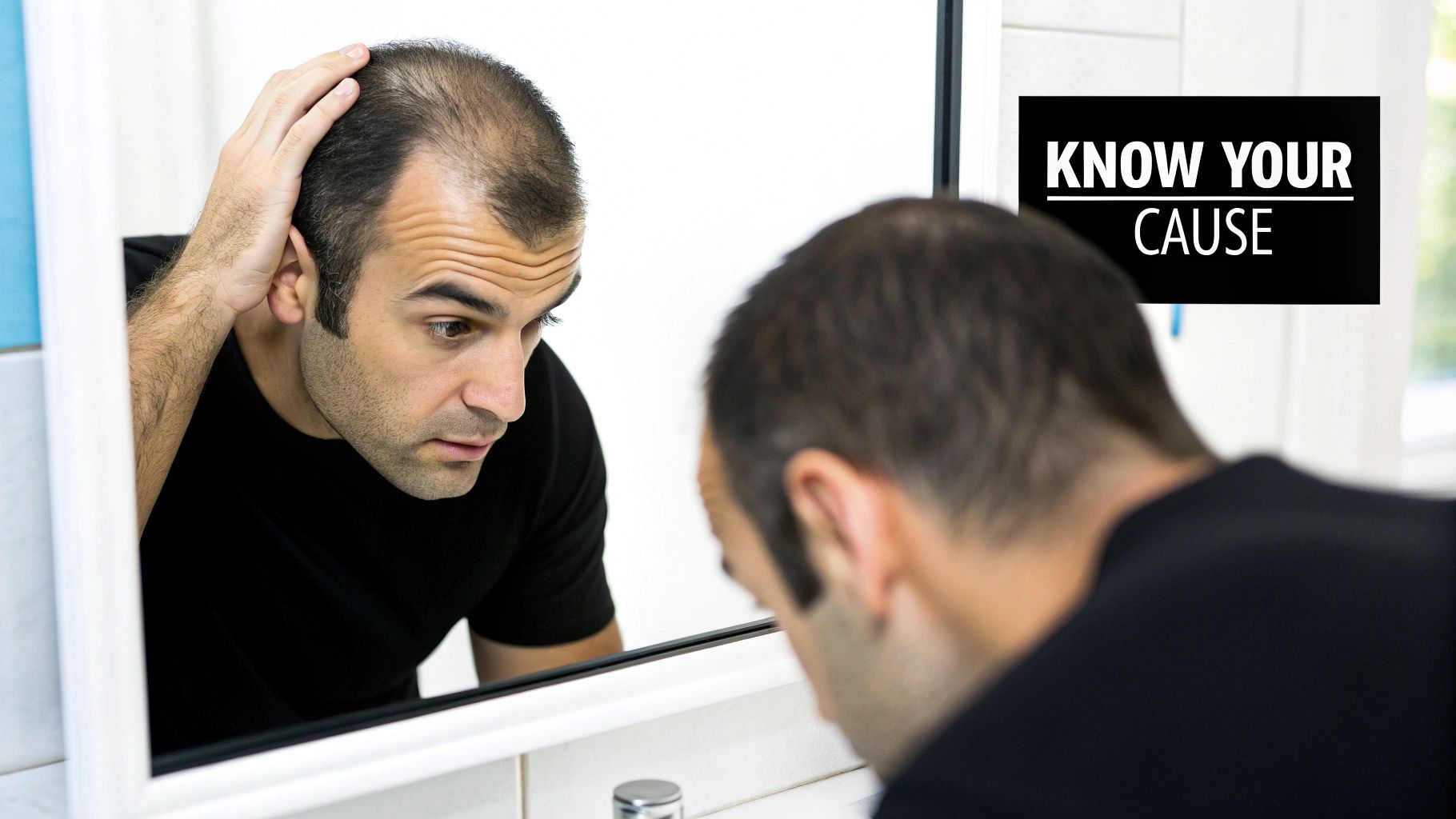
Seeing more hair on your pillow or noticing your part widening can be unsettling, but it’s an incredibly common experience. For about 95% of men dealing with thinning hair, the diagnosis is the same: androgenetic alopecia, better known as male pattern baldness.
It's so important to understand this isn't a disease or a sign that you're unhealthy. It’s simply a predictable process driven by your genetic makeup and a specific hormone.
At the heart of it all is a hormone called dihydrotestosterone, or DHT. Your genes determine how sensitive your hair follicles are to it. If you've inherited this sensitivity, DHT will gradually latch onto your follicles, causing them to shrink over time. This process is called miniaturization, and it’s the real culprit behind thinning.
With each growth cycle, the hair that emerges is a little finer, a bit shorter, and weaker than the last. Eventually, the follicle just gives up and stops producing hair altogether. This often starts much earlier than people realize—around 25% of men with male pattern baldness see the first signs before they even hit 21. By age 35, that number jumps to over 65%.
It’s All in the Genes (and Hormones)
Think of your DNA as the instruction manual for your hair. If your dad, grandfathers, or even uncles on your mother's side lost their hair, chances are you've inherited that same genetic roadmap.
Key Takeaway: You can't change your genes, but knowing they're the primary driver is actually good news. It means your hair loss isn't some random mystery—it's a predictable process you can actively manage with the right strategy.
This genetic and hormonal tag team is what creates the classic M-shaped receding hairline or the thinning patch on the crown. Before jumping into treatments, grasping these foundational concepts is key. For more detail, this article explores the question, Why Is My Hair Falling Out?
Where Do You Stand? A Look at the Norwood Scale
To get a clearer picture of where you are on your hair loss journey, experts often turn to the Norwood Scale. This is basically a standardized visual guide that breaks down the common stages of male pattern baldness.
It’s not a diagnostic tool for you to use at home, but it provides a fantastic frame of reference. Knowing your approximate stage helps you track changes over time and have a much more specific conversation with a doctor about what treatments might work best.
Hair loss experts use the Norwood Scale to classify the extent of male pattern baldness. Here's a quick look at the early stages to help you get your bearings:
| Norwood Stage | What It Looks Like | Common Age of Onset |
|---|---|---|
| Stage 1 | No significant hair loss or hairline recession. | Adolescence / Early 20s |
| Stage 2 | Minor recession, typically around the temples. Often called a "mature" hairline. | Late teens to mid-20s |
| Stage 3 | The first stage where hair loss is considered clinically significant. | 20s to early 30s |
| Stage 3 Vertex | Same temple recession as Stage 3, but with noticeable thinning at the crown. | 20s to early 30s |
Being able to pinpoint your stage is the first real, practical step toward building a plan that makes sense for you. For a deeper look at the mechanisms behind this, check out our guide on what causes hair loss: https://prpforhairloss.com/what-causes-hair-loss. This clarity is your foundation for taking control.
At-Home Strategies to Start Today
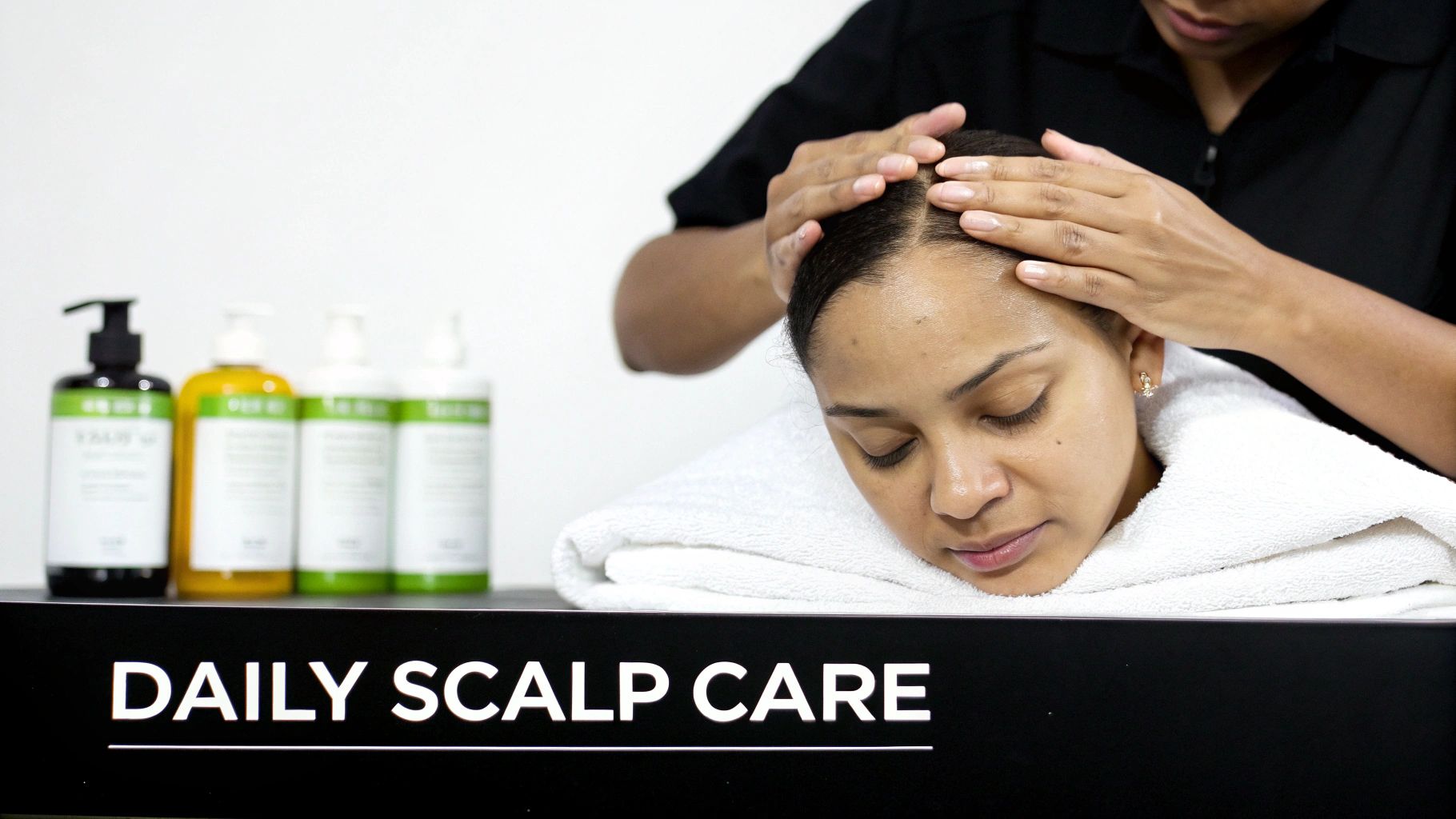
Before you even book a consultation, there are powerful steps you can take right now to support your hair's health. The idea with at-home care is to create the best possible environment for your follicles to do their job. Think of it as preparing the soil before you plant the seeds.
This isn’t about chasing some miracle cure you saw online. It's about making smart, consistent choices that give your hair its best chance to stick around.
Start with a Healthier Scalp
Your scalp is the foundation for every single hair on your head. If it’s oily, flaky, inflamed, or clogged with product buildup, it's actively working against you by suffocating the follicles. That's why the right shampoo can be a surprisingly effective first line of defense.
Look for a shampoo that contains ketoconazole, an active ingredient you often see in anti-dandruff products. Some studies suggest it has a mild anti-androgen effect right on the scalp, which is a nice bonus when you're fighting the effects of DHT.
Another simple but effective habit is a daily scalp massage. Just spending a few minutes gently working your fingertips over your scalp can significantly boost blood flow. This improved circulation brings more oxygen and vital nutrients straight to the follicles, which is exactly what they need for a healthy growth cycle.
Pro Tip: The easiest way to make this a habit is to do it in the shower while you’re shampooing. You're already there, so just spend an extra minute or two massaging the lather in. No extra time needed.
Fuel Your Follicles from the Inside Out
Your hair follicles are tiny biological factories, and like any factory, they need the right raw materials to function. While a perfect diet won't magically reverse genetic hair loss, major nutritional gaps can absolutely accelerate it. A balanced, nutrient-dense diet is a non-negotiable part of any serious plan for thinning hair.
Focus on getting enough of these key nutrients:
- Biotin: This B-vitamin is essential for producing keratin, the protein that hair is literally made of. Eggs, nuts, and whole grains are great sources.
- Iron: Low iron is a well-documented cause of excessive shedding. Make sure you're getting enough from lean red meat, spinach, or lentils.
- Zinc: This mineral is critical for hair tissue growth and repair. Oysters are packed with it, but beef and pumpkin seeds are excellent sources, too.
- Vitamin D: Some research has drawn a line between low Vitamin D levels and alopecia. A little sun exposure or eating fatty fish like salmon can help.
Making sure your diet is solid gives your body the fundamental building blocks it needs for hair production. You can dive deeper into other approaches by exploring these ways to stimulate hair growth.
Master the Art of Styling for Volume
While you're working on the long-term biological fixes, how you style your hair can make a huge difference in your confidence today. The right techniques can create the illusion of more fullness and density without causing more damage.
First, be gentle. Thinning hair is more fragile. Ditch tight hairstyles like man buns or tight braids that constantly pull on the roots—this can cause a type of hair loss called traction alopecia. And when your hair is wet and at its most vulnerable, use a wide-tooth comb, not a brush.
Next, rethink your products. Heavy gels, waxes, and pomades can clump hair together and weigh it down, making it look flat and exposing more scalp. Switch to lighter products like a volumizing mousse, a texturizing sea salt spray, or even just a bit of dry shampoo at the roots to add lift and absorb oil.
Finally, a smart haircut can do half the work for you. Shorter, textured styles almost always make thinning hair appear thicker. Talk to your barber about a cut that works with your hair's new reality, like a textured crop or a classic crew cut, to make the absolute most of what you have.
Your First Line of Medical Defense

When shampoos and lifestyle tweaks just aren't cutting it, it's time to bring in the heavy hitters. For men looking to seriously combat thinning hair, two treatments have consistently proven their worth, backed by decades of research and FDA approval.
These are the go-to, non-surgical options that form the foundation of most effective hair restoration plans. Getting a handle on how they work, what to expect, and which one (or both) might be right for you is the next crucial step. While this isn't medical advice, it will give you the knowledge you need for a productive conversation with a professional. Before you commit to a plan, it's always smart to figure out what doctor you should see for hair loss.
Minoxidil: The Topical Growth Stimulant
You probably know this one by its most famous brand name, Rogaine. Minoxidil is a topical treatment, meaning you apply it directly to your scalp, usually as a foam or liquid. We don't know the exact mechanism, but the leading theory is that it works by widening blood vessels and opening up potassium channels. This process lets more oxygen, blood, and vital nutrients flood your follicles.
Think of Minoxidil as a personal trainer for your dormant hair follicles. It essentially wakes them up, pushing them from their resting (telogen) phase back into their active growth (anagen) phase, and helps keep them there longer. Over time, the result is often noticeably thicker and longer hair strands.
Finasteride: The Oral DHT Blocker
While Minoxidil works on the surface of your scalp, Finasteride (originally sold as Propecia) tackles the problem from the inside out. It’s an oral medication, usually just one pill a day, that directly targets the hormonal root cause of male pattern baldness.
Finasteride works by blocking an enzyme called 5-alpha-reductase. This enzyme is the culprit that converts testosterone into dihydrotestosterone (DHT)—the hormone that shrinks and ultimately kills hair follicles. By drastically lowering DHT levels throughout your body, Finasteride puts the brakes on that destructive process. It can stop follicles from shrinking further and, in many cases, even allows them to recover and start producing healthy hair again.
The Key Difference: Minoxidil is a growth stimulant that helps revitalize existing follicles. Finasteride is a protective agent that stops the hormonal assault on them. This is exactly why they are so often used together for a powerful one-two punch against hair loss.
Setting Realistic Expectations for Results
Patience isn't just a virtue here; it's an absolute necessity. Neither of these treatments is a miracle cure that works overnight. With consistent, daily use, here's a general timeline of what you can expect:
- Months 1-3: Don't be alarmed if you notice an initial shedding phase, sometimes called the "dread shed." This is actually a good sign. It means the treatment is working, pushing out old, weak hairs to make room for new, stronger ones to grow in.
- Months 3-6: This is typically when you'll start to see the first real signs of progress. The initial shedding should slow down, and you might spot fine, new hairs (called vellus hairs) beginning to appear.
- Months 6-12: Visible thickening and improved density become much more apparent. This is often the point where you, and others, will notice a clear difference in your hair.
- After 1 Year: By the one-year mark, you should have a solid idea of your peak results. From this point forward, the name of the game is maintenance—continuing the treatment is essential to keep the hair you've worked so hard to regain.
The progression of hair loss is often tracked using the Norwood Scale, which classifies the stages from minor recession to more advanced baldness. The statistics are telling: about 25% of men start to see male pattern baldness by age 21, and that number climbs to 85% showing significant thinning by age 50. Medical treatments like these deliver the best results when they're started in the earlier phases of this progression.
Using Your Body's Own Healing Power with PRP Therapy
When you start looking past the usual medications for thinning hair, you’ll inevitably run into Platelet-Rich Plasma (PRP) therapy. It's a fascinating approach that uses your body's natural healing mechanisms to wake up tired hair follicles. This isn't about a new chemical or a daily pill; it’s about taking the growth factors already circulating in your bloodstream, concentrating them, and putting them to work right where you need them most.
The idea is actually pretty simple. Your blood contains platelets, which are little first responders packed with healing proteins. When you get a cut, they rush in to stop the bleeding and start the repair process. PRP therapy isolates these powerful components and redirects them to your scalp to help rejuvenate your hair.
What Actually Happens During a PRP Session?
The whole thing is done in a doctor’s office and is a lot less complicated than it might sound. While there are a few steps, the process is efficient and doesn't involve any real downtime.
It all begins with a standard blood draw, no different than what you’d get at a routine check-up. That blood sample is then spun in a machine called a centrifuge, which separates it into three distinct layers based on density.
- Red Blood Cells: The heaviest component, which settles at the bottom.
- Platelet-Poor Plasma: The lighter, yellowish liquid that rises to the top.
- Platelet-Rich Plasma (PRP): The magic stuff. This is a highly concentrated layer of platelets and growth factors suspended in plasma, found right in the middle.
Once this "liquid gold" is isolated, your doctor carefully draws it into a syringe. The final step is a series of small, shallow injections across the areas of your scalp where you're experiencing thinning. The goal is to deliver those growth factors directly to the base of the hair follicles.
The Big Idea: Think of PRP as a targeted biological boost. By introducing a super-concentrated dose of your body's own healing agents to the scalp, you can help nudge dormant follicles back into a growth phase, improve circulation, and encourage thicker, stronger hair to grow.
Who Is a Good Candidate for PRP?
PRP isn't a silver bullet for everyone, and I’ve found it works best for guys in the earlier stages of hair loss. The ideal person is someone who sees noticeable thinning but still has plenty of active (even if miniaturized) hair follicles for the PRP to work on.
It’s most effective for men who fall somewhere between a Norwood Stage 2 and 5. If an area is completely shiny and bald, it usually means the follicles have died off, and PRP won't be able to bring them back. The aim here is to strengthen and thicken the hair you still have, not to regrow hair from scratch. To see exactly how it's done, you can check out this detailed guide to the PRP procedure for hair.
Comparing Hair Loss Treatments At a Glance
With a few great options on the table, it helps to see them side-by-side. This table breaks down the top three medical treatments so you can quickly understand how they differ in their approach, application, and who they're best suited for.
| Treatment | How It Works | Best For | Application |
|---|---|---|---|
| Topical Minoxidil | A vasodilator that increases blood flow to follicles and is thought to prolong the anagen (growth) phase. | General thinning, especially at the crown. Great for early stages. | A liquid or foam applied directly to the scalp twice daily. |
| Oral Finasteride | A DHT-blocker. It inhibits the enzyme that converts testosterone to DHT, the hormone that shrinks follicles. | Slowing hair loss all over the scalp and maintaining existing hair. | A once-daily prescription pill. |
| PRP Therapy | Uses concentrated growth factors from your own blood to stimulate and rejuvenate weakened hair follicles. | Men with diffuse thinning who want a non-daily, natural treatment to boost hair density and thickness. | A series of in-office injections, followed by maintenance sessions. |
Each of these treatments tackles hair loss from a different angle. While Minoxidil and Finasteride are about daily maintenance and hormonal control, PRP is a periodic, concentrated treatment to directly stimulate follicles. Many guys actually end up using them in combination for the best results.
What to Expect: The Timeline and Treatment Schedule
It’s critical to go into PRP with realistic expectations. This is a process that builds over time, not an overnight miracle.
A standard starting protocol usually involves a "loading phase" to kickstart the process. Most specialists will recommend an initial series of three to four sessions, scheduled about four to six weeks apart. This front-loading helps build up a critical mass of growth factors in the scalp.
After that, it's all about maintenance. To keep your results going, you'll likely need a follow-up treatment every six to twelve months. Without these tune-ups, the natural progression of male pattern baldness will eventually take over again, and the benefits will slowly fade.
Male pattern baldness is a massive global issue, with some studies showing Spain leading the way with 44.5% of men affected, and the US not far behind at 42.68%. The culprit is almost always DHT's attack on hair follicles. That's where PRP steps in, using your blood’s plasma—which contains over 20 unique growth factors—and injecting it right where the damage is happening. The results are solid, with 70-80% of men reporting good outcomes and seeing an average hair count increase of around 30% after four monthly sessions.
For those looking for comprehensive care, it's worth exploring specialized clinics offering PRP mesotherapy and hair transplantation. One of the biggest advantages of PRP is its safety profile. Because it uses your own biological material, the risk of an allergic reaction or other side effects is almost zero, making it one of the safest hair loss treatments you can get.
Building Your Long-Term Hair Health Game Plan
Let’s be real: tackling thinning hair isn't about finding a single magic bullet. It's about building a smart, consistent, long-term strategy. Think of it more like starting a new fitness routine than taking a pill for a headache. The goal here is to create a sustainable plan that actually fits your life, combining different angles of attack for a much more powerful result.
This is where we pull everything together. It’s not just about what treatments you pick, but how you weave them into your daily life for the long haul.
Creating a Powerful Synergy
From my experience, the most effective approach is to combine treatments that work in completely different ways. This multi-pronged attack can deliver results that blow any single treatment out of the water. You're basically playing both offense and defense at the same time.
For instance, a classic and highly effective combination I often recommend looks something like this:
- Finasteride: This is your defensive line, working systemically to lower DHT levels and shield your follicles from the hormonal assault that causes thinning in the first place.
- Minoxidil: This is your offense. You apply it topically to stimulate blood flow and kick dormant follicles back into their growth phase, actively encouraging new hair to sprout.
- PRP Therapy: Think of this as a specialized booster shot. It periodically floods your scalp with a concentration of your own growth factors, directly nourishing the follicles to help thicken and strengthen the hair you already have.
This kind of combination covers all your bases. You're blocking the root hormonal cause, stimulating growth at the scalp level, and using your body's own biology to supercharge the whole process.
Lifestyle: The Unsung Hero of Hair Health
Here's a hard truth: no medical treatment works in a vacuum. Your daily habits are the foundation that your treatment plan is built on. Ignoring them is like trying to build a house on a shaky foundation—it’s just not going to hold up.
Chronic stress, for example, can flood your system with cortisol, a hormone that can seriously disrupt the hair growth cycle and push more follicles into the shedding phase. Similarly, skimping on sleep robs your body of its critical time for cellular repair, and that absolutely includes your hair follicles.
A nutrient-poor diet is another major roadblock. If you're not giving your body the essential building blocks like iron, zinc, and biotin, you simply can't expect it to produce strong, healthy hair.
Integrating healthy habits isn't just a friendly suggestion; it's a non-negotiable part of any plan that's going to work. For a deeper dive into the right fuel, check out this guide on the ideal hair loss diet.
Tracking Progress and Staying Patient
Progress with hair loss treatments is almost always a slow burn. It’s not linear, and if you stare at your head in the mirror every day, you will drive yourself crazy. You need a better, more objective way to track your journey.
Here's what I tell my patients to do:
- Find a spot in your house with consistent lighting. Bathroom lighting is usually great for this.
- Take photos from the same angles every single time—front, top-down, and the crown.
- Do this once a month. No more.
This simple routine gives you an objective record of your progress. It helps you see the subtle but meaningful changes over 3, 6, and 12 months that you would absolutely miss otherwise. Patience is your greatest ally here; real results take time to show up.
This flowchart maps out a simple starting point for figuring out if a treatment like PRP is a logical next step for you.
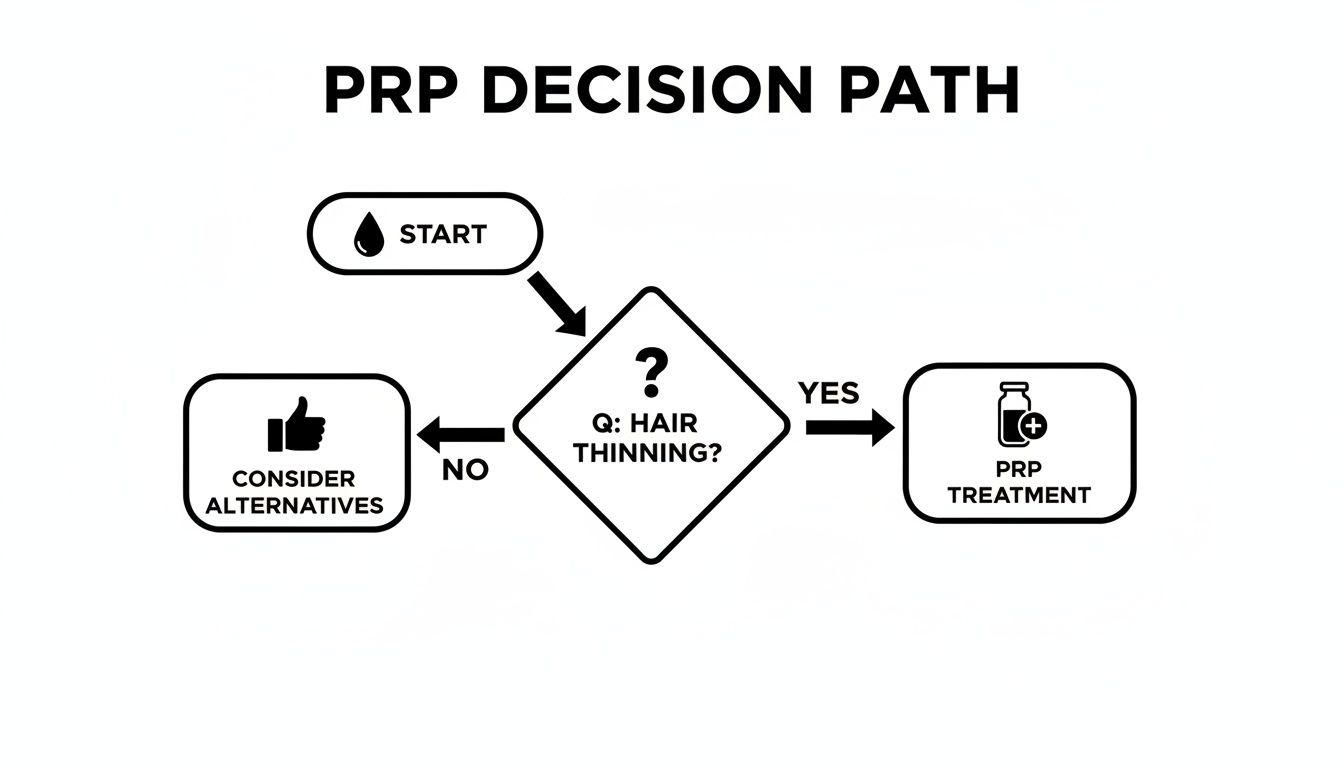
As you can see, the main qualification is simply having thinning hair, which is why it's a relevant option for so many guys, even early on.
Knowing When to Call in a Specialist
While this guide gives you a solid framework, it doesn't replace personalized medical advice from an expert. It’s definitely time to book an appointment with a dermatologist or a hair loss specialist if:
- You’re still not sure what’s causing your hair loss.
- You’ve been using over-the-counter treatments for six months or more with little to no improvement.
- You’re ready to explore prescription options like Finasteride or advanced therapies like PRP.
A specialist can give you a concrete diagnosis, rule out any underlying health issues, and help you build a plan that’s truly tailored to your specific stage of hair loss and your goals. Think of them as your partner in this journey, helping you navigate the options and fine-tune your approach for the best possible outcome.
Common Questions About Treating Thinning Hair
When you first start digging into how to treat thinning hair, it's easy to get overwhelmed. You're hit with a whirlwind of different treatments, timelines, and technical terms. Let's cut through the noise. Here are the real answers to the questions most guys have when they're in your shoes.
How Long Does It Take to See Results?
This is the big one, right? The honest answer is that you have to be patient. There's no overnight fix, and the single most important thing you can do is stay consistent with your routine.
With something like topical Minoxidil, you’re looking at four to six months before you see the first real signs of life. The best results usually show up around the one-year mark. For an oral medication like Finasteride, you might notice progress a bit faster, often within three to four months.
PRP therapy is a different animal. The first thing most guys notice is that they’re shedding a lot less hair. Then, after your first round of sessions, you can expect to see early regrowth and a bit more thickness around the three-month mark. The more noticeable, substantial improvements tend to kick in after six months.
Can I Combine Different Hair Loss Treatments?
Not only can you, but you probably should. In my experience, the most successful strategies tackle hair loss from multiple angles at once. It's about building a comprehensive defense.
A classic, powerhouse combo is using Finasteride to block DHT internally while applying Minoxidil to stimulate the follicles externally. Throwing PRP therapy into that mix is like adding a supercharger—it boosts follicle health and can really push for greater density and thickness.
That said, don't play doctor. You absolutely must talk to a qualified hair loss specialist before you start combining treatments. They'll help you build a plan that's not only effective but, more importantly, safe for you.
Will My Hair Fall Out Again If I Stop?
Unfortunately, the answer is yes. For treatments targeting male pattern baldness, you have to be in it for the long haul. The genetic and hormonal factors causing the hair loss are always there in the background, so stopping treatment means you'll eventually lose any ground you've gained.
If you quit Minoxidil or Finasteride, any hair you’ve regrown will likely start to disappear within a few months. It's the same story with PRP; it requires ongoing maintenance sessions—usually once or twice a year—to keep your results looking good after the initial series of treatments. The best way to think about it is as an ongoing management plan, not a one-and-done cure.
Are There Any Side Effects with PRP for Hair Loss?
One of the biggest advantages of PRP is that it's incredibly safe. Since the treatment uses a concentrate made from your own blood, the risk of an allergic reaction or major complication is virtually zero.
The side effects you might run into are almost always minor, temporary, and directly related to the injections. It's pretty common to experience:
- Mild soreness or tenderness where the injections were done
- A little pinpoint bleeding or some slight bruising
- A bit of scalp swelling
- A temporary headache right after the procedure
This stuff is completely normal and usually clears up within a day or two. When you go to an experienced, qualified professional, serious complications are exceptionally rare.
At PRP For HairLoss, our mission is to give you the clear, straightforward information you need to take control of your hair's future. Dig into our resources to learn more about all your options.
 PRP For Hairloss
Leave a comment