Losing your hair can feel like you're running out of options, but a surgical transplant is definitely not the only game in town. There's a whole world of effective hair transplant alternatives out there, from FDA-approved medical treatments like finasteride and minoxidil to newer therapies like Platelet-Rich Plasma (PRP) and clever cosmetic fixes like scalp micropigmentation.
These approaches are designed to slow down hair loss, kickstart new growth, or just make your existing hair look a lot fuller—all without going under the knife.
Your Guide to Non-Surgical Hair Restoration
When people think "hair restoration," their minds often jump straight to surgery. But that's just a small part of the story these days. The field of non-surgical treatments has exploded, giving men at all stages of hair loss some seriously powerful tools to work with.
These methods tackle the problem from all sorts of angles. Some work by blocking the hormones that cause baldness, others stimulate the follicles directly, and a few create a remarkably convincing illusion of density.
Finding the right fit really comes down to a few key things:
- Your Stage of Hair Loss: What works for early thinning might not be the best bet for more advanced hair loss.
- Your Lifestyle and Budget: Some treatments are a daily pill or foam, while others mean a few visits to a clinic each year.
- Your Ultimate Goal: Is the plan to regrow what's been lost, hold the line against further thinning, or just achieve a fuller look right now?
Comparing Top Hair Transplant Alternatives at a Glance
To cut through the noise, it helps to see how the main players compare side-by-side. Each one works differently, is meant for a specific kind of guy, and delivers results on its own timeline. For a deeper dive, you can explore more about non-surgical hair restoration in our detailed guide.
Here's a quick look at how these popular options stack up.
| Alternative | How It Works | Best Suited For | Results Timeline |
|---|---|---|---|
| Medical Treatments | Blocks DHT or directly stimulates follicles | Men with early to moderate pattern baldness | 3-6 months |
| PRP Therapy | Uses growth factors from your own blood | Individuals who want a natural, regenerative boost | 3-6 months |
| LLLT | Red light therapy energizes hair follicle cells | Those looking for a non-invasive, at-home option | 4-6 months |
| SMP & Cosmetics | Creates the illusion of hair density or stubble | Anyone who wants an immediate visual improvement | Instant |
As science evolves, more topical solutions are also hitting the market. For instance, some guys are getting good results from products like a peptide hair growth serum, which represents another promising path in this expanding field.
Let's walk through these choices so you can find a strategy that helps you build back not just your hair, but your confidence, too.
The Proven Medical Path with Finasteride and Minoxidil
When you're looking for a scientifically-backed way to tackle hair loss, the conversation almost inevitably lands on two heavy hitters: Finasteride and Minoxidil. These aren't just passing trends; they are the cornerstone of medical hair loss treatment, both FDA-approved for their ability to fight male pattern baldness. Consider them the foundation of any serious non-surgical approach.

They work in completely different ways, which is exactly why they’re often used as a one-two punch for a more comprehensive effect. One handles the problem from the inside out, while the other gets to work directly on your scalp.
Tackling the Root Cause with Finasteride
Finasteride, which you might know by its brand name Propecia, is a daily pill that gets right to the source of male pattern baldness. Its job is to block an enzyme called 5-alpha reductase. This enzyme is the culprit that converts testosterone into dihydrotestosterone (DHT).
DHT is the hormone that ruthlessly shrinks hair follicles on your scalp, causing them to thin out and eventually stop growing hair altogether. By dramatically reducing DHT levels, Finasteride essentially slams the brakes on that entire process.
For most guys, this translates to two major benefits:
- A significant slowdown, or even a complete stop, to further hair loss.
- The potential for some regrowth where follicles have thinned but haven't died off.
Don't expect overnight results, though. You’ll need to take it consistently for at least 3-6 months to start seeing a difference. The real payoff is in the long game—preserving the hair you have. You can learn more about how it works and whether it will stop your hair loss in our detailed article.
Finasteride is often considered the first line of defense against progressive hair loss because it directly addresses the underlying hormonal trigger. It’s less about regrowing a full head of hair and more about protecting what you still have.
It's crucial to remember that Finasteride requires a prescription. A frank conversation with your doctor about the potential side effects is a must. While they're not common, they are a key consideration in deciding if this is the right move for you.
Stimulating Growth Topically with Minoxidil
While Finasteride is working systemically, Minoxidil (widely known as Rogaine) is a foam or liquid you apply directly to your scalp. We don't know its exact mechanism down to the last detail, but we know it acts as a vasodilator, meaning it helps widen blood vessels.
This widening effect boosts blood flow, bringing a fresh supply of oxygen and nutrients to your hair follicles. It also seems to prolong the anagen (growth) phase of the hair cycle, waking up dormant follicles and coaxing them back into production.
Here’s what you can realistically expect when starting Minoxidil:
- Initial Shedding: Don't panic if you see more hair falling out in the first few weeks. This is actually a good sign. It means the treatment is pushing out old, weak hairs to make room for new, healthier ones to grow in.
- Consistency is Key: This is non-negotiable. You have to apply it twice a day, every single day. Skipping applications will seriously undermine its effectiveness.
- Visible Results: Just like Finasteride, this is a long-haul treatment. Most people start noticing better density and coverage after 4-6 months of dedicated, continuous use.
Minoxidil is available over-the-counter and tends to work best for men in the earlier stages of thinning, especially around the crown. It’s a great tool for thickening up existing hair and can even spark some modest regrowth, making it a perfect partner to Finasteride.
Understanding Regenerative Treatments Like PRP Therapy
Beyond the daily routine of pills and foams, there’s a more hands-on approach gaining serious ground in hair restoration: regenerative medicine. The star player here is Platelet-Rich Plasma (PRP) therapy, which uses your body's own healing mechanisms to fight back against hair loss.
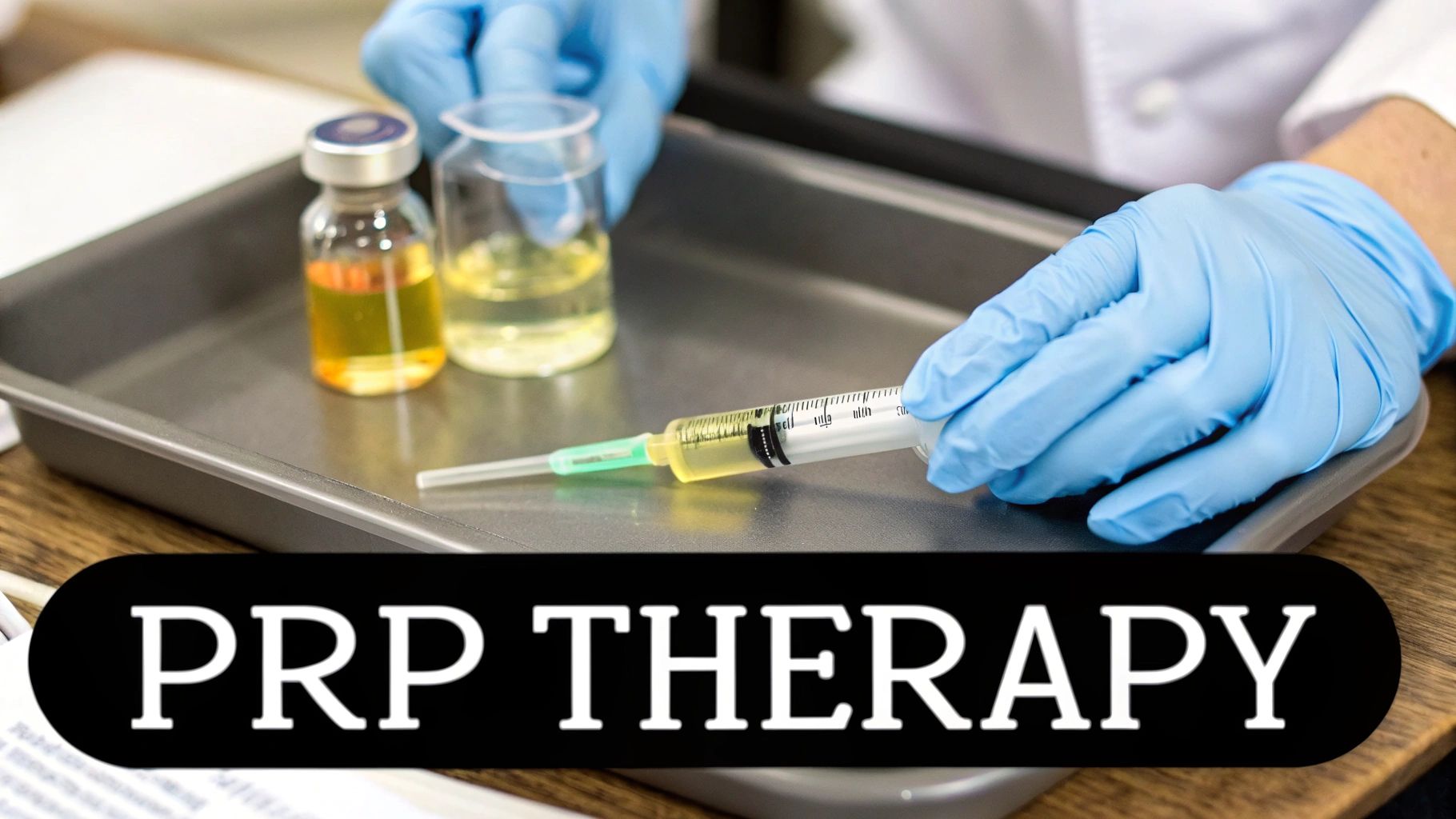
Think of it as tapping into a resource you already have circulating in your bloodstream. It's a solid option if you're not keen on long-term medication or simply want to give your follicles a powerful, natural jumpstart.
How PRP Wakes Up Your Hair Follicles
The idea behind PRP is actually pretty simple. We isolate the platelets in your blood—the very same cells that rush to heal a cut—and concentrate them into a potent serum for your scalp.
The whole process is quite straightforward and happens in three main steps:
- A Quick Blood Draw: We take a small amount of your blood, no different from a routine lab test.
- Concentrating the Platelets: That blood sample goes into a centrifuge, which spins it at high speed to separate the components. This process isolates the valuable, golden-colored platelet-rich plasma.
- Strategic Injections: We then inject this concentrated PRP, now packed with powerful growth factors, directly into the areas of your scalp where hair is thinning.
Those growth factors are the magic here. They essentially act as a wake-up call for dormant or struggling hair follicles, nudging them back into the active growth phase. Over time, this can lead to noticeably thicker, denser hair and a healthier scalp environment.
PRP is a major player for guys dealing with male pattern baldness, so much so that many surgeons now pair it with transplants to boost graft survival. The concentration of platelets can be 4-5 times higher than normal, and growth factors like PDGF and VEGF are what really get things going. For men using PRP as a standalone treatment, it's not uncommon to see a 25-30% increase in hair thickness after a few sessions.
What to Expect from Your PRP Journey
It's crucial to have realistic expectations. PRP isn't a one-shot fix; it’s a process that requires some commitment to see through.
PRP is in a league of its own because it doesn't introduce any foreign drugs or chemicals. It simply concentrates and redirects your body's natural healing abilities right where you need them most—your hair follicles.
A typical plan kicks off with 3-4 initial treatments, each spaced about a month apart. This initial blitz is designed to saturate the scalp with growth factors and really get the follicles responding. After that, we shift to maintenance, with follow-up sessions usually recommended every 6-12 months to keep the progress going.
The appointment itself is quick, usually under an hour, and you can get right back to your day. While the injections can cause some minor discomfort, we typically apply a topical numbing cream to make it a very manageable experience.
Who Is the Ideal Candidate for PRP
I've found that PRP works best for people in the earlier stages of hair loss. If you’re seeing thinning but still have a good number of active follicles, you're likely a great candidate. The treatment revitalizes existing follicles; it doesn't grow new ones from a completely bald scalp.
It’s an especially good fit for:
- Men in their 20s and 30s who are just starting to notice a thinning crown or a receding hairline.
- Anyone looking for a non-pharmaceutical approach to hair restoration.
- Those who want to amplify the results of other treatments, like minoxidil or finasteride.
Because we're using your own biological material, the risk of an allergic reaction or side effects is practically zero. If you want to dig deeper into the science, check out our comprehensive overview of platelet-rich plasma therapy for hair. It's a natural and powerful tool to have in our arsenal against hair loss.
Tapping into the Power of Light: Low-Level Laser Therapy
Let's shift gears from treatments you take or apply to one that works with pure light energy. Low-Level Laser Therapy (LLLT) is a non-invasive, pain-free approach that's really gaining ground as a hair transplant alternative. It’s especially popular for anyone looking for a solid at-home solution.

The method is simple in concept: devices emitting specific wavelengths of red light penetrate the scalp and wake up the cells inside your hair follicles. You can almost think of it as photosynthesis for your scalp—the light gives sluggish follicles the energy they need to get back to work, extending their growth phase and improving their overall health.
How Does Light Actually Grow Hair?
At its core, LLLT works by boosting circulation and energizing the very cells responsible for making hair. The red light is absorbed by mitochondria, which are the tiny powerhouses in your cells, and this prompts them to produce more energy.
This surge in cellular energy brings a few key benefits to your hair follicles:
- It improves blood flow, which means more oxygen and vital nutrients get delivered right where they're needed.
- It helps extend the anagen (growth) phase of the hair cycle.
- It can calm inflammation on the scalp, creating a better environment for hair to thrive.
The result is a gradual revitalization. You’ll notice that weak, thinning hairs start to look and feel stronger and thicker, and some dormant follicles might even be coaxed back into production. It’s a gentle but consistent way to give your hair the biological support it needs.
The market for these devices has exploded, and it’s a big part of why the medical hair replacement industry is projected to hit $3.5 billion in 2024 and grow at a 7.8% CAGR through 2033. This growth is really driven by user-friendly tech, like FDA-cleared caps and combs that deliver precise 650-670nm wavelengths. Studies have shown that consistent use can lead to 35-40% gains in hair density in just 16-26 weeks, making it a seriously compelling option.
The Trade-Off: Convenience vs. Commitment
One of the biggest selling points for LLLT is just how easy it is to use. There are no prescriptions to fill or clinics to visit. You just perform the treatments yourself in your own home while catching up on a show or reading a book.
These devices come in a few different forms, so you can pick what works for you:
- Laser Caps and Helmets: These give you maximum scalp coverage and are totally hands-free. Just put it on and let it do its thing.
- Laser Bands: These are designed to treat the scalp in sections, so you’ll need to move the band every few minutes.
- Laser Combs: Just like they sound, these require you to actively comb the device through your hair for the entire treatment session.
LLLT stands out because it requires no pills, creams, or needles. For those seeking a treatment with virtually no side effects, it's one of the cleanest and safest hair transplant alternatives available.
But here’s the trade-off for all that convenience: you have to be consistent. A typical routine involves using the device for about 20-30 minutes, several times a week—usually every other day. This isn't something you can do every now and then and expect to see a difference.
And like any hair loss solution that actually works, patience is key. You'll likely need to stick with it for at least four to six months before you start seeing any real, noticeable improvements in hair thickness or a slowdown in shedding.
Stronger Together: Combining LLLT with Other Treatments
While LLLT is perfectly capable of working on its own, many people find it’s even more effective as part of a multi-pronged attack. It tackles hair loss from a completely different angle than medications, which makes it a fantastic teammate.
For instance, you can combine LLLT with:
- Minoxidil: LLLT can improve blood flow, which may in turn help your scalp absorb topical Minoxidil more effectively.
- Finasteride: While Finasteride is working internally to block DHT, LLLT provides external stimulation to energize the follicles.
This kind of synergistic approach can often produce better, faster results than relying on just one method. If this sounds like a path you want to explore, it's worth checking out the best Low-Level Laser Therapy devices to find one that fits your lifestyle and budget.
Cosmetic and Lifestyle Solutions for Fuller-Looking Hair
While medical treatments get to work on a biological level, there's a whole other category of options that give you an immediate visual boost and build a strong foundation for hair health. These cosmetic and lifestyle approaches can be incredibly effective on their own or used to enhance the results of other therapies.
Think of it as a two-pronged attack: creating a healthier environment for long-term growth while using clever solutions to make your hair look its best right now. It's about combining long-term health with instant gratification.
The Art of Illusion with Scalp Micropigmentation
One of the most impressive cosmetic solutions out there is Scalp Micropigmentation (SMP). This isn't just a tattoo; it's a highly specialized technique where a skilled technician uses micro-needles to place tiny dots of pigment on the scalp. These dots are carefully layered to mimic the look of individual hair follicles.
The effect is a stunningly realistic illusion of density. For men who rock a shaved head, SMP creates that clean, sharp look of a full buzz cut. For guys with thinning hair, it works by minimizing the color contrast between your scalp and hair, which instantly makes what you have look much thicker.
SMP is unique because it offers an immediate and permanent solution to the appearance of hair loss. It doesn’t regrow hair, but it expertly camouflages thinning areas, providing a confidence boost that doesn't depend on months of waiting for biological changes.
This procedure is a fantastic fit for:
- Men with advanced hair loss who might not be great candidates for other treatments.
- Anyone looking to hide scars from old surgeries or injuries.
- Those who want a low-maintenance, permanent fix for the look of thinning.
The whole process usually takes 2-3 sessions to get the density just right, and the results can last for years before you might need a touch-up.
Building Healthier Hair from Within
Beyond the cosmetic fixes, what you do every day really matters. A solid strategy that includes smart nutrition, stress management, and good scalp care lays the groundwork for any other treatment to truly shine. Your hair follicles are living parts of your body, and they need the right fuel to do their job.
A balanced diet is absolutely essential for healthy hair. Specific vitamins and minerals are critical players in the hair growth cycle. To give your hair the best shot, you can learn more about the best foods for hair growth in our guide.
A few key nutrients to keep in mind are:
- Iron: Crucial for producing hemoglobin, which delivers oxygen to your cells—including the ones that power hair growth.
- Zinc: A powerhouse for hair tissue growth and repair. It also helps the oil glands around the follicles function correctly.
- Biotin: A well-known B-vitamin that’s a building block for keratin, the main protein your hair is made of.
On top of that, you have to get a handle on stress. High levels of cortisol (the stress hormone) can throw your hair growth cycle out of whack and trigger more shedding. Simple things like regular exercise, meditation, or just making time for hobbies you enjoy can make a real difference.
Finally, cosmetic systems offer a temporary but effective way to manage your appearance. For those considering wigs as an option, knowing how to care for human hair wigs is key to making them last and look natural. By weaving these supportive habits into your routine alongside targeted treatments, you create the best possible conditions for keeping and improving your hair.
How to Choose the Right Path for Your Hair Loss
Navigating all the non-surgical hair loss options can feel overwhelming. The key isn't finding the single "best" treatment, but the one that's the best fit for you. Your specific situation—everything from your hair loss pattern to your daily routine and budget—is what will ultimately point you to the most effective strategy.
Think of it as a quick self-assessment. By being honest about a few key factors, you can quickly narrow the field from a long list of possibilities to a handful of options that actually make sense for your life.
Pinpointing Your Position
First things first: get real about where you stand in your hair loss journey. A tool like the Norwood scale is incredibly useful for classifying male pattern baldness, and figuring out your stage can instantly filter your options.
Are you in the early stages, maybe a Norwood 2 or 3? If you're just starting to see some thinning at the temples or crown, you're in a prime position. Medical treatments like finasteride and minoxidil, or even regenerative therapies like PRP, can work wonders to help you hold onto what you have and maybe even thicken it up.
On the other hand, if your hair loss is more advanced (think Norwood 5 or higher), your goals might need to shift. At this stage, treatments focused on regrowth will likely have a much lower impact. This is where a cosmetic solution like Scalp Micropigmentation (SMP) can be a game-changer, offering a powerful and satisfying visual result.
This decision tree helps illustrate how your primary goal—whether it's improving hair health or just creating the look of more density—steers you toward different treatments.
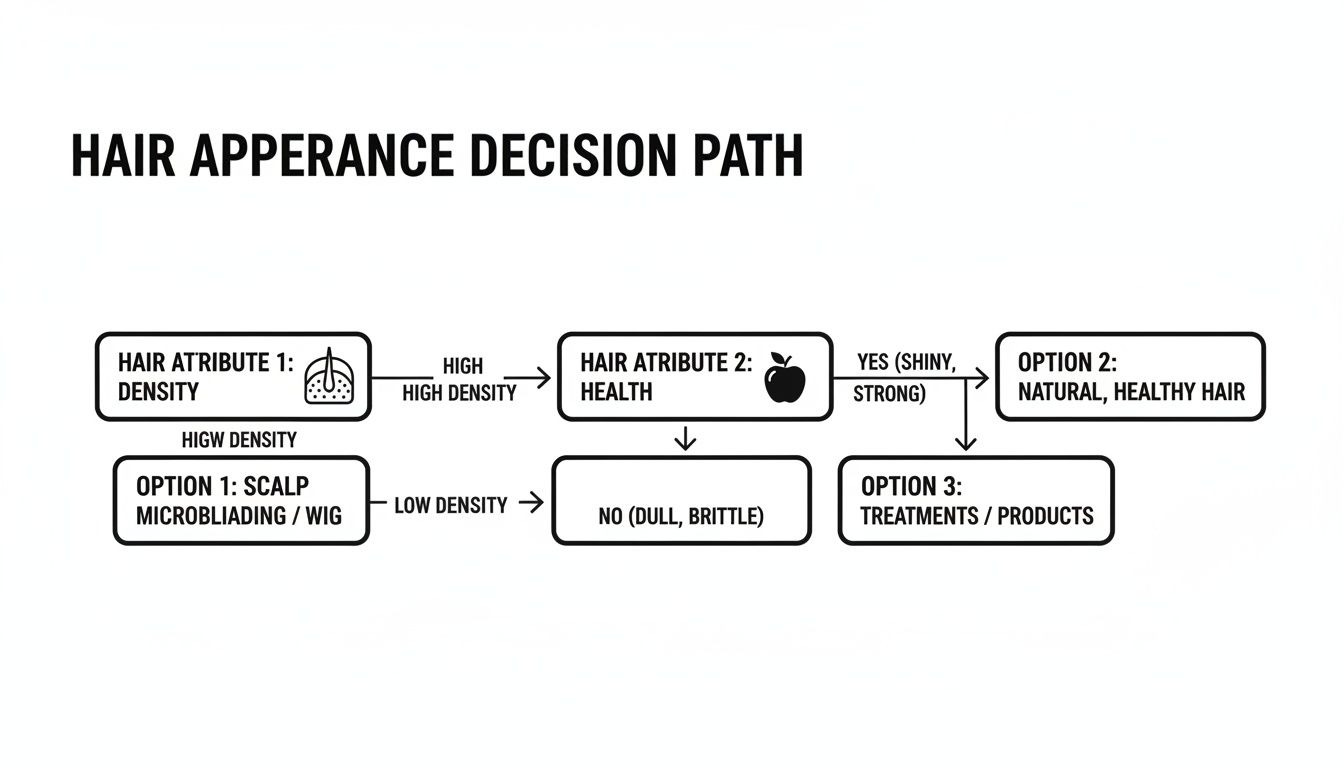
As you can see, the path forward often depends on whether you're trying to fix the biological health of your follicles or simply enhance the immediate appearance of your hair.
Matching a Solution to Your Lifestyle
Next up is the practical side of things. How much commitment are you willing to make, both in terms of time and money? This is where the rubber meets the road.
- For the Routine-Oriented: If you’re good with daily habits, applying minoxidil foam or taking a finasteride pill can easily become part of your morning ritual, just like brushing your teeth.
- For the Hands-Off Approach: Prefer a "set it and forget it" option? PRP therapy could be your answer. It only requires a few clinic visits a year for maintenance, taking the daily task off your plate.
- For the Homebody: Low-Level Laser Therapy (LLLT) is perfect if you want a convenient, at-home treatment. You can literally do it while kicking back and watching TV a few times a week.
Your willingness to stick with a regimen is just as important as the treatment itself. An amazing solution that you don't use consistently is no solution at all.
Finally, while this guide gives you the information to make a smart choice, it's no substitute for professional medical advice. The most important next step you can take is scheduling a consultation with a dermatologist or a hair restoration specialist.
They can give you an accurate diagnosis, make sure there aren't any underlying medical issues causing your hair loss, and help map out a personalized treatment plan. Taking that step ensures you’re moving forward on a path backed by expert guidance, giving you real confidence in your decision.
Your Questions About Hair Transplant Alternatives, Answered
It's completely normal to still have questions, even after digging into all the options. Deciding how to tackle hair loss is a major step, and you deserve clear, honest answers before you commit. Let's clear up some of the most common questions that come up about hair transplant alternatives.
Think of this as the final check-in, a way to nail down the practical side of these treatments so you can move forward with confidence.
Can These Alternatives Actually Regrow Hair on a Bald Head?
To be blunt, no. Treatments like PRP, minoxidil, and LLLT are designed to play defense and strengthen what you already have. They excel at slowing down hair loss, waking up follicles that are dormant (but not dead), and making existing hair thicker and healthier. They're most effective for guys who are noticing thinning or are in the earlier stages of male pattern baldness.
Once a hair follicle is gone for good, these treatments can't bring it back. For areas that are completely smooth and have been for years, a hair transplant is really the only proven way to get coverage back.
How Long Am I Stuck Using These Treatments?
For medical treatments like finasteride and minoxidil, you’re in it for the long haul. You have to use them consistently to keep your results. If you stop, you can expect any hair you've gained or preserved to fall out within a few months. The same goes for LLLT—it requires regular, ongoing sessions to maintain the benefits.
The bottom line for most non-surgical treatments is that consistency is everything. Your results are directly tied to your commitment, making this a long-term management strategy, not a quick fix.
PRP therapy is a bit different. You'll start with a series of sessions, but then you'll switch to a maintenance schedule, usually coming in every 6-12 months. It's less of a daily chore but still requires a long-term plan to keep your hair healthy.
Can I Mix and Match Different Alternatives for Better Results?
Yes, and you absolutely should consider it. In fact, most experts will tell you that a multi-pronged attack is the smartest way to go. Combining treatments that fight hair loss from different angles often delivers a much bigger punch than relying on just one.
A classic and very effective stack looks like this:
- Finasteride: Gets to the root of the problem by blocking the DHT hormone internally.
- Minoxidil: Works on the surface, directly stimulating your follicles to grow.
- PRP or LLLT: Adds a regenerative boost, improving the overall health and energy of your hair follicles.
Before you start mixing anything, talk to a doctor. A professional can help you put together a regimen that’s safe, effective, and actually designed for your specific type of hair loss.
At PRP For HairLoss, our mission is to give you the full picture on all your options for fighting male pattern baldness. To learn more about PRP and other proven hair restoration treatments, head over to our website at https://prpforhairloss.com.

 PRP For Hairloss
Leave a comment