So, you're looking in the mirror or at your hairbrush and asking yourself, "Why is my hair falling out?" It’s a jarring experience, to say the least. But for most guys, the answer is surprisingly straightforward: male pattern baldness. This isn't some disease or a sign you've done something wrong; it's a completely normal process, pretty much hardwired into you by your genetics and hormones.
Answering Your First Question: Why Hair Loss Happens
Finding a little more hair in the shower drain than you're used to can send anyone into a spin. It’s completely natural to feel concerned. But before you jump to the worst conclusion, it's good to remember that shedding some hair every day is part of a healthy hair cycle. Everyone loses hair.
To get your bearings, it helps to know what’s considered a normal amount of daily shedding. You can learn more about what to expect here: https://prpforhairloss.com/how-much-daily-hair-loss-is-normal
The real turning point isn't just the shedding itself, but when the hair that grows back comes in thinner, weaker, and finer than before. That’s the core issue for most men.
The Main Culprit: Genetics and Hormones
For over 95% of men dealing with hair loss, the cause is a condition called Androgenetic Alopecia—what we all know and love as male pattern baldness. It’s better to think of it as an inherited trait, like your eye color, not an illness.
Here’s a simple way to picture it: imagine your hair follicles are tiny factories. Your DNA provides the blueprint for how these factories operate. If you have the genetic predisposition for baldness, your personal blueprint instructs those follicles to become extra sensitive to a hormone called Dihydrotestosterone (DHT).
DHT is a natural byproduct of testosterone. The problem isn't having "too much" testosterone; it's all about how sensitive your follicles are to DHT. This sensitivity is what triggers the follicles to shrink over time—a process called 'miniaturization.' As they shrink, they produce thinner, shorter hairs until, eventually, they just shut down production completely.
This doesn't happen overnight, of course. It's a gradual process, and understanding how it works is the first real step toward managing it. For more general health and wellness information that can sometimes intersect with hair health, many people find helpful articles and discussions. Resources like the Insights from xlr8well's Blog often cover topics that contribute to overall well-being.
Beyond the Usual Suspects
While genetics is almost always the star of the show, it's not the only actor on stage. Other factors can cause or contribute to hair loss, so it's good to be aware of them. Here is a quick summary of the most common triggers.
A Quick Look at Common Hair Loss Triggers
This table breaks down the most frequent reasons for hair loss in men at a glance.
| Cause | What It Means for You | Primary Driver |
|---|---|---|
| Androgenetic Alopecia | This is the classic "male pattern baldness," responsible for the vast majority of cases. | A genetic sensitivity to the hormone DHT. |
| Telogen Effluvium | You might notice sudden, widespread shedding a few months after a major stressful event. | A shock to the system (illness, surgery, major stress). |
| Alopecia Areata | Patchy, often circular, areas of total hair loss that can appear suddenly. | An autoimmune response where the body attacks its own hair follicles. |
| Nutritional Deficiencies | Overall thinning or increased shedding can sometimes be linked to what you're eating. | Lacking key nutrients like iron, zinc, or certain vitamins. |
| Medical Conditions | Hair loss can be a symptom of an underlying health issue. | Thyroid problems are a common example, but others exist. |
While it's good to know about these other possibilities, the reality is that for most guys, the journey starts and ends with understanding the predictable, manageable path of male pattern baldness.
Understanding Male Pattern Baldness
If you find yourself asking, "Why is my hair falling out?" you're definitely not alone. For over 95% of men, the answer is a condition called Androgenetic Alopecia. That’s just the clinical term for what we all know as male pattern baldness. It’s not a disease or a sign that something is wrong with your health; it's a completely natural process hardwired by your genetics.
Think of it like a script written in your DNA. This script dictates exactly how the hair follicles on your scalp will respond to certain hormones as you get older. For millions of men, that script involves a gradual, predictable pattern of thinning.
The Real Story Behind DHT and Hair Loss
The main culprit in this story is a hormone called Dihydrotestosterone (DHT). It’s a powerful offshoot of testosterone, created when an enzyme known as 5-alpha reductase gets involved.
Here's where a common misconception trips people up: male pattern baldness isn't caused by having too much testosterone or DHT. The real issue is follicle sensitivity. Your genes determine how sensitive your hair follicles are to DHT’s effects. If you've inherited a high sensitivity, even normal levels of DHT can start to wreak havoc on your hair.
DHT attaches to receptors in your hair follicles. If those follicles are genetically programmed to be sensitive, this connection triggers a process of gradual shrinking, or what we call 'miniaturization.'
This miniaturization is the root cause of thinning hair. With each growth cycle, the affected follicle produces a hair that's shorter, finer, and weaker than the one before. Eventually, after many cycles, the follicle shrinks so much that it can no longer produce a visible hair, and it goes dormant.
This entire journey is what we see as the progression of male pattern baldness.
The interplay between your genetics, hormones, and age is what really drives this process, as you can see below.
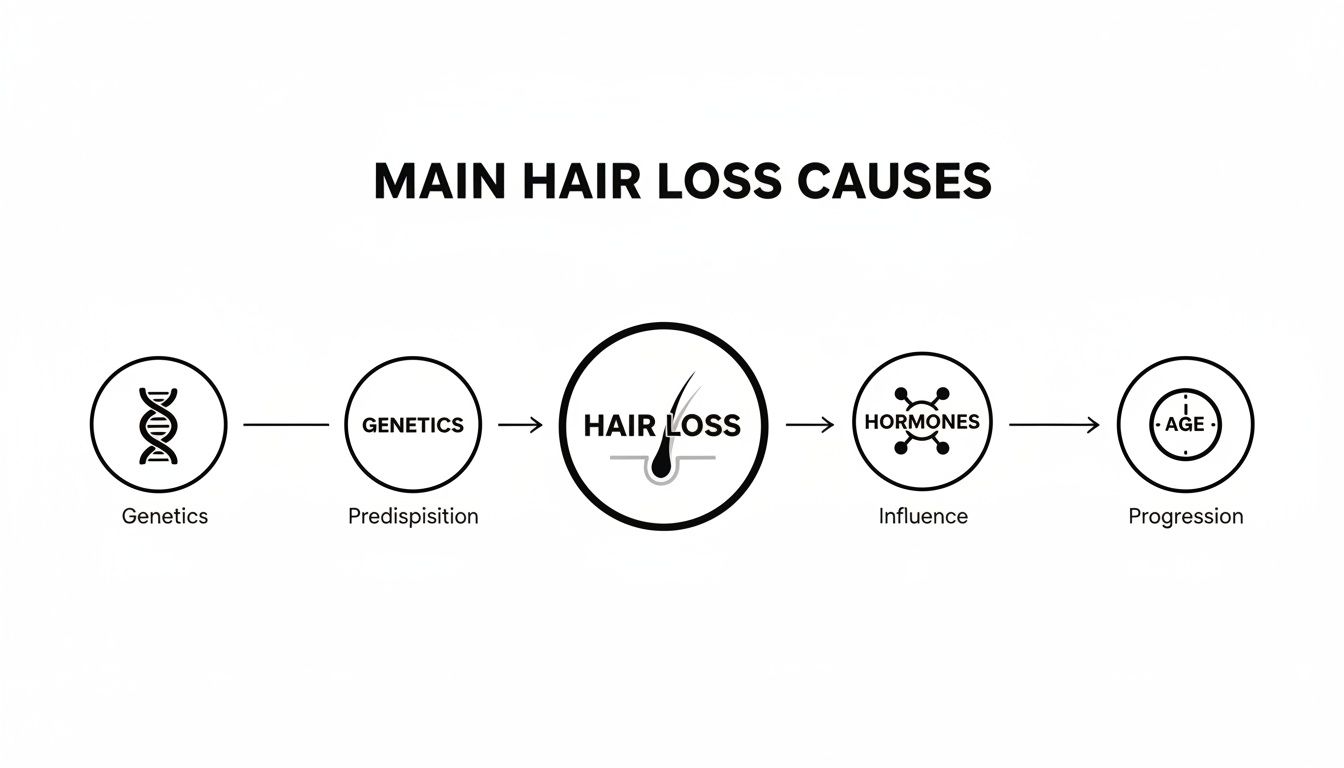
As the chart shows, it all starts with your genetic blueprint, which sets the stage for how your body handles hormones over time.
How Common Is Male Pattern Baldness?
Seeing those first signs of thinning can feel isolating, but the truth is, you're in very good company. Male pattern baldness is incredibly common and follows a surprisingly predictable timeline for most men.
Let's look at the statistics. They paint a clear picture of how this condition is tied directly to age, proving it's a shared experience for millions. The odds of noticing some hair loss go up with every decade of life.
Here's a quick breakdown of how common it is:
- In your 20s: Roughly 20% of men start to see some noticeable thinning.
- In your 30s: The number jumps to about 30%.
- In your 40s: This increases to 40%.
- By age 50: Around half of all men (50%) will be dealing with significant hair loss.
These numbers highlight just how normal this is. In the U.S. alone, an estimated 35 million men are affected by Androgenetic Alopecia. Diving deeper, about two-thirds of American men will have some degree of hair loss by the time they hit 35. For a quarter of guys, the process starts even before they turn 21.
This is a journey many men take, and understanding the "why" behind it is the crucial first step toward finding a solution that works for you.
Does Your Background Increase Your Hair Loss Risk
When you find yourself asking, “Why is my hair falling out?” the answer often hides in your family history. Your genetic makeup acts like a roadmap, hinting at your personal chance of male pattern baldness. It’s not just about copying Dad’s hairline—your genetic lottery is far more intricate.
You get DNA from both your mother’s and father’s sides, and either branch of the family tree can carry hair-loss traits. If thinning or baldness is common among your relatives, your odds definitely climb. This isn’t a sentence of doom—it’s just a prompt to understand the hand you’ve been dealt.
The Genetic Blueprint For Baldness
Think of your DNA as the body’s instruction guide. In some men, that guide includes a special note making scalp follicles extra sensitive to DHT. That heightened sensitivity is what flips the switch on male pattern baldness.
This explains why two men with similar testosterone levels can have wildly different hairlines. It’s not the hormone itself but how the follicle is wired to respond. Recognizing baldness as a programmed reaction helps take the randomness out of the equation.
Family patterns offer the clearest roadmap to your own hair future. A lineage of thinning hair—mothers, fathers, uncles, grandparents—raises the odds that you share this trait.
Knowing your genetic triggers doesn’t lock you into an inevitable outcome. It gives you the power to take action.
A Global Look At Hair Loss And Ethnicity
Ethnicity intertwines with genetics to shape who loses hair and who keeps it. Worldwide data paints a vivid picture of how DNA and DHT interact after puberty.
Caucasian men, especially those of European descent, tend to top the charts:
- 44.5% of men in Spain are bald or balding
- 44.37% in Italy
- 42.68% in the United States
By contrast, men of East Asian and African descent generally experience lower rates of hair loss, thanks to certain protective genetic variations.
Turning Knowledge Into Action
- Early Awareness: Spot signs like a receding hairline or a thinning crown before they become really obvious.
- Proactive Steps: Support your follicles with a balanced diet, gentle scalp care, and trying to manage stress.
- Informed Decisions: When you know what’s driving your hair loss, you can choose treatments that are backed by solid research.
Your genes set the opening act, but you get to direct the finale. Armed with this understanding, you can start to shape the story of your hair.
Exploring Other Triggers for Hair Thinning

While genetics and DHT are the usual suspects in male hair loss, they don't tell the whole story. Sometimes, other factors jump into the mix. If your hair loss doesn't fit the classic receding hairline or thinning crown pattern, it’s time to play detective.
Think of your hair's growth cycle as a meticulously planned operation. Male pattern baldness is like a slow, predictable system decline. The triggers we're about to cover are more like sudden shocks that can throw the entire operation into chaos, leading to noticeable and often rapid shedding.
The Impact of Intense Stress
Have you ever gone through a really tough time—a major surgery, a serious illness, or a period of extreme emotional stress—only to find your hair shedding by the handful a few months later? That's not your imagination. It's a very real condition known as Telogen Effluvium.
This is your body’s emergency response system kicking in. When faced with a significant shock, your body redirects energy away from non-essential tasks like growing hair. It shoves a large number of hair follicles, sometimes up to 30-50%, straight into the "resting" (telogen) phase all at once. Two to three months later, that "rest" ends, and a wave of shedding begins.
The good news? Telogen Effluvium is almost always temporary. Once the stressor is gone and your body recalibrates, the follicles wake back up, and your hair density usually recovers over the next several months.
If you're dealing with rapid, widespread thinning, it's worth understanding the causes of sudden hair loss to see if this might be what's happening.
When Nutrition Is the Missing Piece
Your hair follicles are tiny, high-energy factories that demand a constant supply of nutrients to build strong hair. If your diet is falling short, these factories slow down production, resulting in weaker strands and more shedding.
A few key nutrient deficiencies are notorious for causing hair issues:
- Iron: Low iron is a huge one. It's essential for producing the hemoglobin that carries oxygen to your cells, including the ones that power your hair follicles. Without enough, growth grinds to a halt.
- Vitamin D: This vitamin helps create brand-new follicles, the tiny pores where new hair grows. When you're running low, it can put a damper on hair regeneration.
- Zinc: Zinc is a crucial player in hair tissue growth and repair. It also helps keep the oil glands around the follicles functioning properly, which is vital for a healthy scalp.
Typically, these deficiencies cause diffuse thinning all over your head, not a specific pattern. The fix, guided by a doctor, often involves adjusting your diet or adding supplements, which can reverse the hair loss.
Underlying Medical Conditions
Finally, your hair can act as a barometer for your overall health. Certain medical conditions can disrupt the hair growth cycle directly, making hair loss one of the first visible symptoms. A classic example is a thyroid imbalance.
The thyroid gland is your body's master regulator of metabolism. If it's overactive (hyperthyroidism) or underactive (hypothyroidism), it can throw your entire system out of sync—hair follicles included. This hormonal chaos can easily lead to widespread thinning.
This table can help you quickly see how these causes differ from the more common male pattern baldness.
Comparing Different Types of Hair Loss
| Symptom | Male Pattern Baldness | Stress-Induced Shedding | Nutritional Deficiency |
|---|---|---|---|
| Pattern | Receding hairline, thinning crown | Diffuse thinning all over the scalp | Diffuse thinning all over the scalp |
| Onset | Gradual, over many years | Sudden, appears 2-3 months after a trigger | Gradual, but often faster than MPB |
| Associated Signs | Hair becomes finer and shorter | Widespread shedding, often in clumps | May have fatigue, brittle nails, etc. |
| Reversibility | Progressive, but can be managed | Usually fully reversible once trigger is gone | Reversible with corrected diet/supplements |
Spotting these differences is key, as the approach to treatment for these secondary causes is completely different from managing genetic hair loss.
How PRP Therapy Can Revitalize Your Hair

Once you have a handle on why your hair might be thinning, the next logical step is to explore what you can do about it. One of the most promising and natural-sounding treatments out there is Platelet-Rich Plasma (PRP) therapy. It’s a non-surgical approach that taps into your body’s own healing mechanisms to kickstart hair growth.
The core idea is pretty clever. Your blood is full of platelets, which are basically your body's first responders for any injury. These tiny cells are loaded with hundreds of powerful proteins called growth factors that are critical for tissue repair and regeneration.
PRP therapy essentially isolates these high-powered platelets, concentrates them, and puts them to work right where you need them. Think of your scalp as a garden with tired, undernourished soil. PRP acts like a super-concentrated, organic fertilizer made from the best stuff your own body can produce, giving your hair follicles a direct boost of what they need to thrive again.
The Patient Experience From Start To Finish
Hearing the term "medical procedure" can be a bit daunting, but the PRP process is surprisingly simple and performed in a clinical setting. The specialized environments where these therapies happen play a big role in patient care. For a closer look at what goes into equipping modern healthcare facilities, you can get some fascinating insights into creating these optimal spaces.
The entire appointment typically breaks down into three straightforward steps:
- The Blood Draw: It all starts with a simple blood draw from your arm, much like you’d have during a routine physical. They only need a small sample.
- The Centrifuge Process: This is the really interesting part. The blood is placed into a machine called a centrifuge, which spins it at an incredibly high speed. This process separates your blood into its core components, allowing the golden-hued, platelet-rich plasma to be isolated.
- The Scalp Injections: Finally, this "liquid gold" is carefully injected into the areas of your scalp where hair is thinning. Most practitioners use a topical anesthetic to make sure you’re comfortable throughout this part.
The whole thing usually wraps up in under an hour. Best of all, there’s minimal downtime, so you can pretty much get back to your day right after leaving the clinic.
Who Is The Ideal Candidate For PRP?
While PRP is an impressive tool, it's not a silver bullet for every type of hair loss. It’s most effective when used to wake up hair follicles that have become sluggish or miniaturized, not to revive completely bald spots where follicles have long since disappeared.
You're likely a great candidate for PRP if:
- Your hair loss is in the early stages. The sooner you start, the more follicles are still viable and ready to be stimulated.
- You're experiencing thinning, but the follicles are still there. PRP is fantastic for thickening existing hair and pushing weakened follicles to produce stronger, healthier strands.
- You prefer a non-surgical option. If you’re hesitant about medications or more invasive procedures, PRP is a compelling, natural alternative.
The key takeaway is this: PRP revitalizes follicles that are struggling, but it can't create new ones from scratch. Its success really depends on having a population of dormant, but still viable, follicles to work with.
If you’re curious about the science behind it, you can take a deeper dive into how PRP works to stimulate hair growth to understand what’s happening on a cellular level.
Realistic Expectations: Treatment And Cost
Going into any hair restoration treatment with realistic expectations is absolutely critical. PRP results don't happen overnight. The growth factors need time to work their magic on repairing and stimulating your follicles, so the progress is gradual.
A typical treatment schedule usually looks something like this:
- An initial phase of three to four treatments, scheduled about a month apart.
- A maintenance phase that involves follow-up treatments every four to six months to keep the results going.
Most people start noticing a real difference in hair texture, thickness, and less shedding after just a few months. The most dramatic results are usually visible around the six-month mark.
The cost of PRP therapy can vary based on your location and the clinic, but it’s helpful to see it as a long-term investment in your hair’s health. By harnessing your body’s own regenerative capabilities, PRP offers a smart, modern way to tackle hair loss head-on.
Creating Your Plan to Combat Hair Loss
Now that you have a good handle on why your hair might be thinning, it’s time to shift from learning to doing. Understanding the "why" is half the battle, but a concrete plan is what truly makes a difference. This is where you take back control.
The first and most important move? Get a professional diagnosis. While this guide gives you a solid foundation, nothing beats the expertise of a dermatologist or a dedicated hair loss specialist. They can pinpoint the exact cause of your shedding and rule out any other health issues, giving you the clarity you need to build an effective strategy.
Building Your Action Plan
Once you know what you’re up against, you can start exploring the treatments that will work best for you. The great news is there are proven, effective options out there. Your personal plan will likely be a combination of approaches, customized to your specific type of hair loss, budget, and goals.
Commonly, a solid plan includes one or more of the following:
- FDA-Approved Medications: Think of Finasteride and Minoxidil as the foundational pillars of medical treatment. They work in different ways—one helps block the DHT hormone that attacks follicles, while the other works to stimulate growth directly at the scalp.
- Advanced Procedures: If you're looking for something more hands-on, treatments like PRP therapy can be a game-changer. This procedure uses the powerful growth factors found in your own blood to wake up dormant follicles and boost hair density.
- Supportive Lifestyle Choices: Don't underestimate the small things. Simple, consistent changes to your routine can have a big impact. For a deeper dive, check out our guide on how to prevent hair loss.
The Power of Early Intervention
If there's one universal truth in managing hair loss, it's this: timing is everything. The sooner you start, the better your results will be. It's far easier to protect the hair you still have than it is to try and bring it back later.
Acting early means you have more active follicles to work with. Treatment is about revitalizing weakened follicles, not resurrecting dead ones. The sooner you intervene, the more hair you can save.
This isn't about finding a magic bullet to turn back the clock. It's about intelligently managing a progressive condition. By taking decisive action now, you give yourself the best possible shot at maintaining your hair for the long haul. You have the knowledge. The next step is up to you.
A Few Common Hair Loss Questions Answered
Even with a solid grasp of the science, some questions always seem to pop up. There's a ton of information out there—a lot of it conflicting—and it's easy to get lost in the myths. Let's tackle some of the most frequent questions men have when they first start noticing thinning hair.
My goal here is to give you straight, no-nonsense answers so you can move forward with confidence.
Does Wearing a Hat Cause Baldness?
This is probably one of the most enduring myths about hair loss, but the short answer is no. Your hair follicles get all the oxygen they need from your bloodstream, not from the air around them. A hat isn't going to suffocate them.
That said, there's a tiny sliver of truth to the concern. If you're wearing a hat so tight it's leaving marks, it could potentially cause some breakage over time. More realistically, a dirty hat traps sweat and oil, which isn't great for your scalp's health. So, just make sure your hats are clean and fit comfortably.
Is All Hair Loss Permanent?
Thankfully, this is a big no. While genetic male pattern baldness is a progressive condition that needs a long-term strategy, many other causes of hair loss are completely temporary.
Shedding from intense stress (Telogen Effluvium), a bad diet, or a recent illness is almost always reversible. Once you fix the root cause, the follicles usually wake back up and get back to growing. Getting the diagnosis right is everything.
This distinction is critical. It's the difference between needing ongoing management and simply supporting your body as it recovers.
Does Washing Your Hair Too Often Make It Fall Out?
It's an easy assumption to make when you see hair in the shower drain, but this one is another myth. The hairs you find after a shampoo were already detached and ready to fall out as part of their natural cycle. All the water did was help them along.
In reality, keeping your scalp clean is vital for healthy hair growth. Letting oil, dead skin, and styling products build up can clog follicles and get in the way of new hairs trying to emerge. So please, wash your hair regularly with a good-quality, gentle shampoo.
Can Stress Really Make My Hair Fall Out?
Yes, this is absolutely true. A major physical or emotional shock—think surgery, a major life event, or intense prolonged stress—can trigger a condition called Telogen Effluvium. It's a fascinating and frustrating response where your body abruptly shoves a large percentage of hair follicles into the resting (telogen) phase.
Then, a few months later, all those hairs shed at once, leading to a sudden, noticeable thinning. It’s a delayed reaction. The good news? It’s almost always temporary. Once the stress is gone and your body finds its balance again, the hair grows back.
At PRP For HairLoss, we believe that clear, accurate information is the first step toward taking control of your hair's future. We hope this guide has answered your questions and empowered you to find the right path forward. For more insights and guidance on treatments like PRP, explore our resources at https://prpforhairloss.com.
 PRP For Hairloss
Leave a comment