When you hear "melatonin," your mind probably jumps straight to sleep, and for good reason. But what if this superstar sleep hormone could pull double duty for your hair? As it turns out, using topical melatonin for hair loss might be a surprisingly effective strategy in the fight against thinning, and the science points to some fascinating benefits happening right at the scalp level.
The Unlikely Link Between Sleep Hormones and Hair Health
Think of each hair follicle as a tiny, highly specialized factory. These factories run on a tight 24/7 schedule, churning out the hair you see on your head. Now, imagine if the same hormone that tells your brain it's time to wind down could also act as a security guard for these microscopic factories.
That’s pretty much the idea behind using topical melatonin. The goal isn't to make your scalp drowsy. It’s about tapping into one of melatonin's lesser-known, yet incredibly powerful, roles: a biological protector for your hair.
More Than Just a Sleep Signal
Beyond managing our sleep-wake cycles, melatonin is a heavyweight antioxidant. An easy way to think of an antioxidant is as a bodyguard for your cells. Every single day, our bodies are bombarded by "free radicals"—nasty, unstable molecules that cause cellular damage in a process called oxidative stress.
Oxidative stress is a key villain in the aging story, and your hair follicles are prime targets. It's like leaving a bike out in the rain; over time, rust forms and weakens the metal. Oxidative stress has a similar "rusting" effect on the delicate cells of your hair follicles, which can throw hair growth off track and speed up thinning.
Applying melatonin directly to the scalp is thought to deliver these protective antioxidant effects right where they're needed most, helping to shield follicles from the daily grind of cellular damage.
This direct, localized approach is what makes it so interesting. It lets the melatonin get to work on specific receptors located in the hair follicles themselves, bypassing the need to circulate through your entire system.
The Role of Stress and Sleep
We all know that high stress and sleepless nights can do a number on our health, and our hair is often one of the first places to show it. This connection isn't just an old wives' tale; it's grounded in our biology. While this article is zeroed in on topical use, the bigger picture is important. You can learn more about how a lack of sleep contributes to hair loss in our dedicated guide.
Getting a handle on why hair thins is the first step for anyone dealing with it. For a wider view, you can explore the various causes and solutions for female hair loss, as many of the biological pathways overlap.
So, let's circle back to the main question: can putting a sleep hormone on your head actually help your hair? The early science is surprisingly compelling. It suggests that melatonin's protective abilities could open up a whole new front in supporting hair health. This isn't just a random shot in the dark; it's a strategy built on melatonin's proven role as a guardian of our cells.
Before we dive into the clinical studies, here's a quick cheat sheet on what you need to know about topical melatonin for hair loss.
Topical Melatonin for Hair Loss Quick Facts
| Key Aspect | Summary for Men with Hair Loss |
|---|---|
| Primary Mechanism | Acts as a powerful antioxidant on the scalp, protecting hair follicles from oxidative stress, which can accelerate male pattern baldness. |
| How It's Used | Applied directly to the scalp as a liquid solution, serum, or foam, typically once a day before bed. |
| Is It a DHT Blocker? | No. Unlike finasteride, its main benefit isn't blocking DHT. It works through a different pathway by promoting a healthier follicular environment. |
| Main Benefit | Aims to prolong the anagen (growth) phase of the hair cycle and potentially increase hair density by protecting follicles from damage. |
| Systemic Side Effects | Very low risk. Topical application leads to minimal absorption into the bloodstream, so it doesn't typically cause drowsiness or other side effects associated with oral melatonin. |
| Best For | Men in the early to moderate stages of androgenetic alopecia who are looking for a non-hormonal, protective treatment to add to their regimen. |
This table gives you the high-level view. Now, let’s dig into what the actual scientific research has to say about its effectiveness.
How Melatonin Fights Hair Loss at the Follicle Level

To really wrap your head around how topical melatonin might help with hair loss, we need to get up close and personal with the hair follicle itself. Think of your follicles as being under a constant, low-level attack from everyday stress, both internal and environmental. In this battle, melatonin acts like a highly specialized defense force.
The science points to two main strategies it uses to protect your hair: shielding it from damage as a potent antioxidant and encouraging it to stay in its growth phase longer. It’s a one-two punch of protection and promotion.
Neutralizing "Cellular Rust" with Antioxidant Power
Imagine a prized car left out in the rain year after year. Eventually, rust starts to form, weakening the metal. A similar process, called oxidative stress, happens to the cells in our bodies, including those in our hair follicles.
This "cellular rust" is caused by unstable molecules called free radicals. They bounce around, damaging healthy cells and disrupting their ability to function. Over time, this constant assault can wear down your follicles, causing them to produce thinner, weaker hair until they eventually give up.
This is where melatonin steps in as a powerful antioxidant. When you apply it directly to your scalp, it goes to work neutralizing these damaging free radicals right where the action is. It essentially provides a protective coating for the follicle, creating a much healthier environment for hair to grow.
By shielding the follicle from this oxidative damage, topical melatonin helps keep your hair's "production factory" running smoothly and efficiently for as long as possible.
But melatonin isn't just about playing defense. It also seems to take a more active role in managing the hair growth cycle itself.
Extending the Anagen (Growth) Phase
Hair doesn't just grow and grow forever. It goes through a cycle, and the most important part of that cycle for a thick head of hair is the anagen phase—the active growing period. In men with male pattern baldness, this growth phase gets progressively shorter.
This is melatonin's second trick. Early research suggests it can help extend this critical anagen phase. By keeping more of your follicles actively growing hair for longer, you naturally hang onto more of your hair. You can learn more about this crucial stage in our guide on the anagen phase of hair growth.
Simply put, it encourages follicles to stay in "grow mode" instead of switching prematurely to the resting and shedding phases. This direct influence on the growth cycle is a big reason why it's being seriously looked at as a hair loss treatment.
How Does it Work? Direct Action on Follicle Receptors
So, how does the scalp even know the melatonin is there? It turns out our hair follicles are actually equipped with specific receptors for melatonin. This is a game-changing detail because it means a topical solution can have a direct, localized impact.
Applying melatonin to the scalp is like delivering a nutrient-rich fertilizer directly to a plant's roots. The ingredient goes exactly where it’s needed, binds to these receptors, and sends a signal to the follicle: "Ramp up your defenses and keep growing."
This isn't just theory. A key study on women with hair loss found a 0.1% melatonin solution significantly boosted the number of hairs in the anagen phase. The effect was even more pronounced in those with androgenetic alopecia, suggesting melatonin is actively nudging follicles into a more productive state. You can read the full research about these findings to see the data for yourself.
What the Science Actually Says About Melatonin for Hair
The theory behind topical melatonin—that it can shield your hair follicles from damage and keep them in their growth phase longer—sounds pretty good on paper. But theories don't regrow hair. Results do. So, let's move past the "how it might work" and get into the nitty-gritty of what clinical studies have actually found.
Instead of just dumping a list of academic papers on you, we'll walk through the story the research tells. We'll focus on what these findings mean for guys with male pattern baldness (androgenetic alopecia) and what kind of results you might realistically see.
How Researchers Measure Real Results
When scientists test a hair loss treatment, they don't just ask people if their hair "looks better." They rely on hard data and specific metrics to track progress. Knowing what they're looking for helps you understand what "improvement" really means.
- Hair Density: This one is simple: how many individual hairs are there in a square centimeter of your scalp? More hairs per square centimeter means a denser head of hair.
- Hair Shaft Thickness: Sometimes the problem isn't just a lack of hair, but that the hairs themselves are getting thinner and weaker. Thicker, healthier hair shafts are a key sign of a follicle that's getting back on track.
- Anagen-to-Telogen Ratio: This is the big one. It's the ratio of hairs actively growing (anagen phase) to those that are resting or shedding (telogen phase). A higher ratio is exactly what you want—it means more of your follicles are working and fewer are taking a break.
With these objective measures, we can get a clear picture of what's happening on the scalp. So, how does topical melatonin stack up?
The Evidence from Human Studies
The research on topical melatonin has been quietly building over the years, and the results have been consistently positive, especially for men battling pattern hair loss.
The most significant piece of evidence came from a major systematic review in 2023. Think of a review like the ultimate summary—it gathers all the existing human trial data and analyzes it together to see the big picture. This one looked at 11 human studies with over 2,200 participants, more than half of whom were men.
The findings were pretty compelling.
The review concluded that eight of the eleven studies showed positive results specifically for people with androgenetic alopecia. Researchers saw improvements across the board: eight studies reported better overall scalp hair growth, four saw an increase in hair density, and two measured a boost in hair shaft thickness.
This wasn't just a one-off result; the data points in the same direction. The review also helped us pinpoint what actually works. The effective dosage in the successful studies was either a 0.0033% or 0.1% melatonin solution, applied once a day for about 90 to 180 days. If you want to dive into the data yourself, you can read the full research about these melatonin findings and see the consolidated evidence.
What This All Means for You
Okay, let's translate this from "science-speak" into practical advice. The bottom line is that using topical melatonin isn't just some fringe idea. It's an approach backed by a solid and growing body of evidence.
Here are the key takeaways from the data:
- It's a Marathon, Not a Sprint: Be patient. The studies that saw real results involved daily use for at least three to six months. You have to give your hair follicles time to respond.
- It Fights on Multiple Fronts: Melatonin seems to tackle thinning from different angles—not just helping to slow the shedding, but also potentially improving the density and even the thickness of the hair you have.
- The Dose Makes a Difference: Those concentrations from the successful trials (0.0033% and 0.1%) are your guide. They provide a solid benchmark for what to look for when you're choosing a product.
While the evidence is encouraging, it's important to keep expectations in check. Melatonin isn't a miracle cure that will magically restore a hairline you lost a decade ago. But the science strongly suggests it can be a very useful tool, particularly for guys in the earlier stages of hair loss who want to protect their hair and foster a healthier environment for growth.
Comparing Melatonin With Minoxidil And Finasteride
If you've dipped your toes into the world of hair loss treatments, you've definitely run into the two heavyweights: Minoxidil (the active ingredient in Rogaine) and Finasteride (Propecia). They're the FDA-approved titans of the industry, the gold standard for decades. So, where does a relative newcomer like topical melatonin for hair loss actually fit in?
It’s easy to think of them as direct competitors, but that's not quite the right way to look at it. A better analogy is a toolkit. You wouldn't use a hammer for a screw, right? Finasteride, Minoxidil, and melatonin all tackle hair loss from completely different angles, and understanding that is the key.
Different Mechanisms For A Common Goal
Knowing how each treatment works reveals its unique value. They don't just magically "grow hair"; they intervene in the complex process of hair loss through distinct biological pathways.
-
Finasteride: This is your DHT blocker. Taken as a daily pill, it works systemically to lower the body's levels of dihydrotestosterone (DHT). DHT is the main culprit behind male pattern baldness, shrinking follicles until they stop producing hair. Think of Finasteride as cutting off the fuel supply to the fire that's causing the damage.
-
Minoxidil: This is a vasodilator, a blood flow booster. When you apply it to your scalp, it helps widen the blood vessels, theoretically improving the flow of blood, oxygen, and nutrients to your starving hair follicles. It’s like upgrading the plumbing to ensure your follicles are well-fed and encouraged to stay in their growth phase longer.
-
Melatonin: This acts primarily as a topical antioxidant and growth cycle promoter. It works right on the scalp's surface to shield follicles from oxidative stress—that "cellular rust" we talked about earlier. It’s all about playing defense, protecting the follicle's immediate environment and nudging it to stay in the anagen (growth) phase.
As you can see, these aren't just three flavors of the same thing. One blocks a hormone internally, one improves circulation externally, and one provides localized protection.
Hair Loss Treatment Comparison: Melatonin vs. Standard Therapies
Choosing the right approach often boils down to balancing effectiveness, potential side effects, and your personal comfort level. To make an informed choice, it's helpful to see how these options stack up side-by-side. For a broader look at the landscape, you can explore this overview of various hair loss solutions.
Here’s a quick-glance table to help you compare the main players.
| Treatment | Primary Mechanism | Application | Common Side Effects | Best For |
|---|---|---|---|---|
| Topical Melatonin | Antioxidant; extends anagen phase | Topical liquid/serum, once daily (usually at night) | Very rare; mild scalp irritation or itching | Men looking for a protective, non-hormonal option with an excellent safety profile. |
| Topical Minoxidil | Vasodilator; improves blood flow | Topical foam/liquid, twice daily | Scalp irritation, unwanted facial hair growth, initial shedding | Men wanting a widely available, FDA-approved topical growth stimulant. |
| Oral Finasteride | DHT blocker | Oral pill, once daily | Potential sexual side effects (low libido, ED), mood changes | Men with confirmed DHT-driven hair loss who are comfortable with a systemic medication. |
Each path has its own set of pros and cons, making the "best" choice a very individual one. For a deeper dive into what you can expect from the most popular topical treatment, check out our guide on Minoxidil before and after results.
Can Melatonin Be A Standalone Or Add-On Treatment?
This is the big question on most guys' minds. Can topical melatonin hold its own, or is it strictly a supporting player?
The answer really depends on where you are in your hair loss journey. For a guy just noticing the first signs of thinning, melatonin's protective qualities might be a fantastic and sufficient first line of defense. Its stellar safety profile makes it a very appealing starting point.
For men with more advanced hair loss, however, melatonin really shines as part of a team. Because its mechanism is so different from Minoxidil and Finasteride, you can stack them to create a powerful, multi-pronged attack on hair loss.
You could use Finasteride to crush DHT, Minoxidil to boost circulation, and melatonin to guard the follicles from daily environmental stress. It's a comprehensive strategy.
The chart below gives a snapshot of the improvements documented in clinical studies on topical melatonin, hitting on several key metrics for healthy hair.
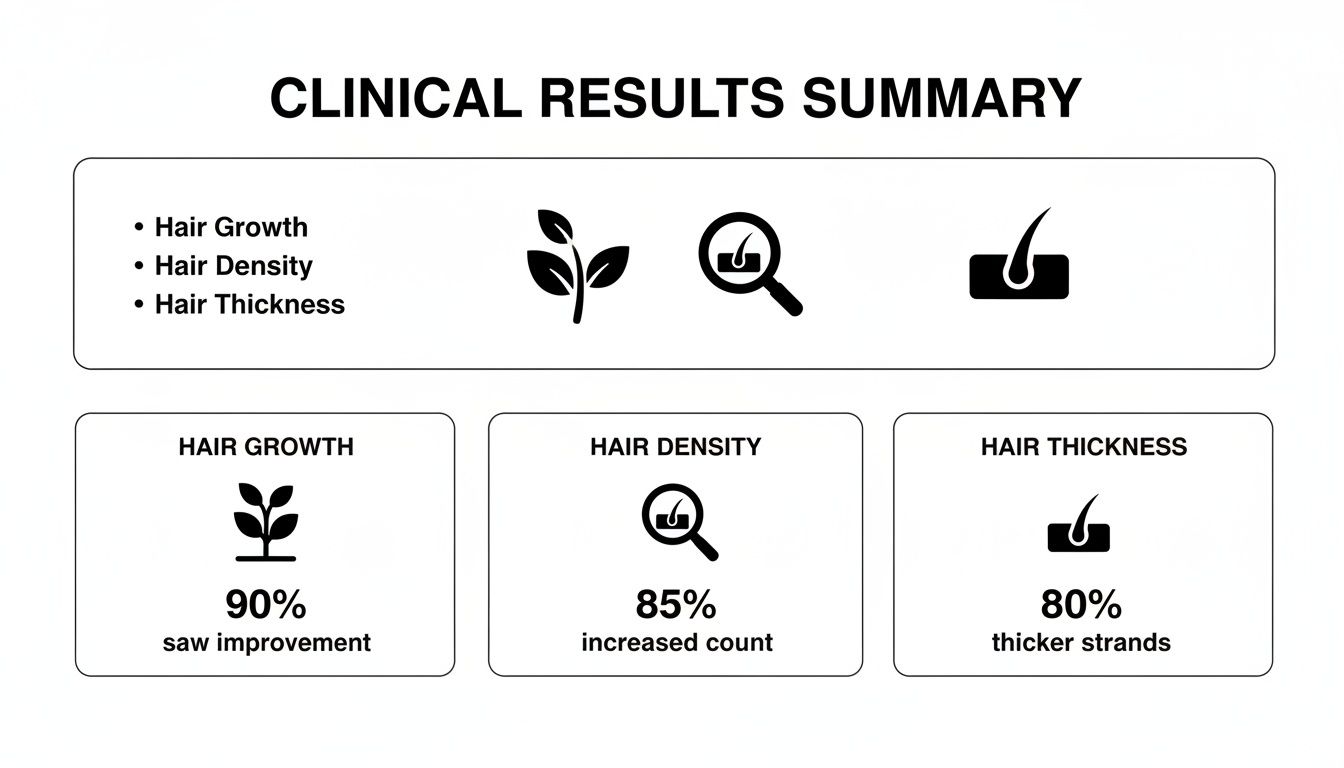
This shows that the benefits aren't just about a single outcome. The research points to positive effects on overall hair growth, the density of hair on the scalp, and even the thickness of individual strands, confirming it can have a multi-faceted impact.
A Practical Guide to Using Topical Melatonin
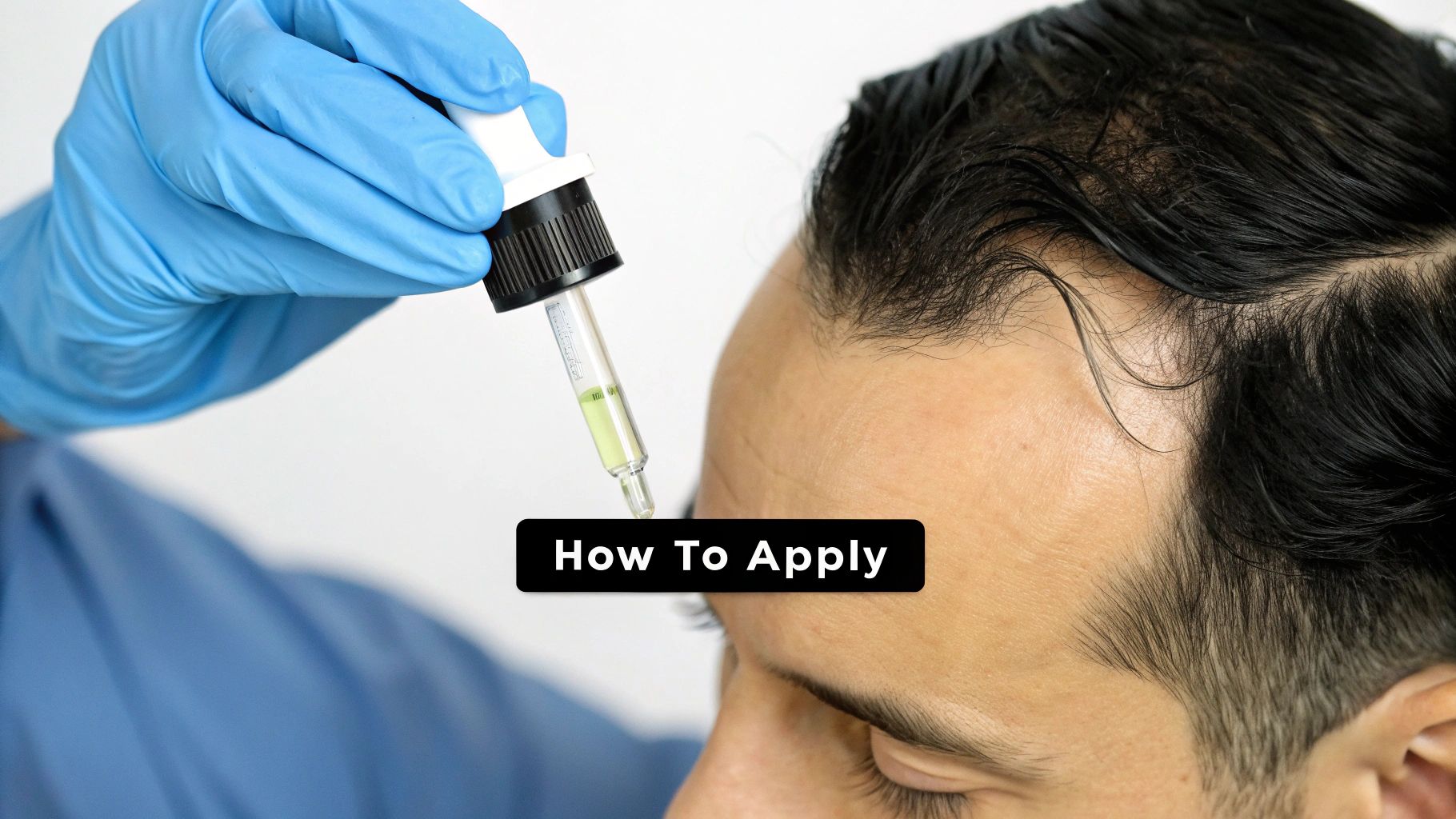
Alright, so you're considering adding topical melatonin to your hair loss toolkit. Let's move from the science to the practical side of things—how to actually use it, what to expect, and how it fits into your daily routine.
Choosing and Applying Your Product
First off, what should you even look for? The clinical studies that got people talking used concentrations of either 0.0033% or 0.1% melatonin. When you’re shopping around, sticking to a product in this range is your best bet for mirroring the results seen in the research.
Applying it is pretty simple, which is key. The most effective treatments are the ones you can stick with, so making it a no-fuss daily habit is crucial.
Here's a simple, effective routine to get you started:
- Start with a Dry Scalp: Always apply the solution to a clean, dry scalp for the best absorption. If your scalp is wet or even just damp, you risk diluting the product and weakening its impact.
- Use the Right Amount: The standard dose in most of the studies was 1 milliliter (ml) of solution per day. Thankfully, most products come with a marked dropper, so measuring this out is easy.
- Apply at the Right Time: Aim to apply it at night, maybe 30-60 minutes before bed. This syncs up with your body’s own natural surge in melatonin levels, which can only help things along.
- Massage It In Gently: Once you've applied the drops to your problem areas—like the crown or your hairline—use your fingertips to gently massage it into the scalp for a minute or so. This just helps ensure it's spread evenly and absorbed properly.
Setting Realistic Expectations for Results
Let’s be real: no hair loss treatment works overnight. Just like you can't build muscle after one trip to the gym, your hair isn't going to transform in a week. The hair growth cycle is a slow, methodical process.
Based on the clinical data we have, you need to commit to at least three to six months of consistent, daily use before you can really judge your results. Patience and persistence are everything here.
And there's solid evidence to back that timeline up. One large-scale study with over 1,800 people found some pretty remarkable changes after just 90 days of using a 0.0033% melatonin solution. The percentage of participants with active hair shedding plummeted from 61.6% down to just 7.8%, and 22.5% saw measurable new hair growth. You can read the full research on these melatonin findings if you want to dig into the details.
Is This a Lifelong Commitment?
This brings us to the big question: what happens if you stop? Well, like pretty much every other effective hair loss treatment out there—Minoxidil and Finasteride included—topical melatonin is a maintenance therapy. It's not a one-and-done cure.
The benefits you get, like the antioxidant protection and the extended growth phase for your hair, all depend on you continuing to use it. If you stop, your hair follicles will likely revert to their old ways over a few months, and any ground you gained will gradually disappear. The best way to think about it is as a long-term part of your hair care routine.
If you're exploring other topical options that work differently, you might also want to check out our guide on topical dutasteride for hair loss to get the full picture of what's available.
Common Questions About Topical Melatonin
Jumping into a new hair loss treatment always brings up a few questions. And when that treatment involves a hormone most of us link to sleep, the questions get even more specific. Let's clear the air and tackle the most common things men ask about using topical melatonin for hair loss.
Will Rubbing Melatonin on My Head Make Me Tired?
This is, hands down, the number one concern—and it makes perfect sense. Melatonin is the body's sleep hormone, after all. The good news? The risk is incredibly low.
When you apply a melatonin solution to your scalp, it’s meant to work locally. Studies that have actually measured this found that the amount absorbed into your bloodstream is minimal, not nearly enough to cause a significant spike that would make you drowsy.
Think of it like using a medicated cream on a sore muscle; you're targeting that one spot, not your whole system. Topical melatonin is designed to act directly on the hair follicles, making it highly unlikely to mess with your energy levels or sleep cycle.
What Are the Side Effects?
Safety is a big deal, especially for something you might use long-term. Luckily, the safety profile for topical melatonin is one of its biggest strengths.
Across a number of clinical studies, it has proven to be exceptionally well-tolerated. It's a world away from the potential systemic side effects you hear about with drugs like Finasteride.
The side effects that have been reported are both rare and mild, usually just:
- Slight scalp irritation
- Minor itching right where you applied it
These are the kind of reactions you could get from any new shampoo or scalp product and typically go away on their own. For most guys, it's a very safe and gentle option.
Can I Use It with My Minoxidil or Finasteride?
This is a key question for anyone already fighting hair loss on another front. The short answer is yes, and this is where melatonin’s unique approach really shines.
As we've covered, melatonin plays a completely different game than the big-name treatments.
- Finasteride works by blocking the hormone DHT.
- Minoxidil is a vasodilator, meaning it boosts blood flow to the follicles.
- Melatonin acts as a powerful local antioxidant and helps push follicles into the growth phase.
Because they don't step on each other's toes, there's real potential for a synergistic effect. It’s like building a specialized team—each member attacks the problem from a different angle. Combining them could give you a much more robust defense against hair loss. That said, it's always smart to talk with a dermatologist to put together a combo plan that's right for you.
How Is This Different Than Just Taking Melatonin Pills?
It’s easy to think that if a little on the scalp is good, swallowing a pill must be even better. But the two delivery methods are designed for completely different jobs.
Taking an oral melatonin supplement is for a systemic effect—it raises the hormone level throughout your bloodstream to help regulate sleep. While that’s great for your overall health, it only delivers a tiny, diluted dose to your scalp.
A topical solution is all about targeted delivery. It puts a much higher, concentrated dose directly onto the hair follicles where you need it most. This localized punch maximizes the impact on your hair while keeping absorption into the rest of your body to a minimum.
For hair loss, you want the active ingredient working on the follicles, not taking a tour through your entire system. It's about precision.
Will It Mess with My Testosterone or DHT Levels?
Nope. Topical melatonin does not work by changing your hormone levels. This is a crucial distinction from treatments like Finasteride, which directly targets and lowers DHT. Since DHT is the main culprit behind male pattern baldness, it's vital to know how different treatments work. You can get the full picture by reading up on what DHT is and how it causes hair loss.
Melatonin operates on a completely separate biological pathway, focused on shielding follicles from oxidative stress. This makes it a great option for men who are worried about the potential hormonal side effects that can come with other medications.
At PRP For HairLoss, our mission is to give you clear, evidence-based information so you can confidently navigate your hair restoration journey. We want to empower you with solid knowledge on all the options out there, from the tried-and-true treatments to promising new approaches like topical melatonin. Explore our resources to learn more about the science of hair loss and the solutions that can truly make a difference.
Find out more at https://prpforhairloss.com.
 PRP For Hairloss
Leave a comment