Let's get straight to it: PRP therapy for hair loss takes a concentrated sample of your own blood to give your hair follicles a much-needed kickstart. It’s like using a natural, super-charged fertilizer on your scalp, tapping into your body's own healing powers to encourage new growth and add some real thickness. This is a non-surgical approach that’s all about putting your own biology to work for you.
What Is PRP Therapy for Hair Loss
If you’re looking into ways to fight hair thinning, you've probably stumbled across the term PRP, which stands for Platelet-Rich Plasma. At its core, this is a surprisingly simple three-step medical treatment. First, a small bit of your blood is drawn. Then, it's processed in a special machine to separate and concentrate the platelets. Finally, this potent plasma is injected right back into the parts of your scalp that need a boost.
The real magic isn't in the procedure itself, but in what those platelets are carrying. Think of platelets as your body's own little emergency response team. Whenever you get a cut, they're the first ones on the scene, stopping the bleeding and kicking off the healing process by releasing powerful proteins known as growth factors.
These growth factors are basically biological messengers, sending out signals that tell your cells to get busy repairing and regenerating. When a high concentration of them is injected directly into the scalp, the idea is to:
- Wake up dormant hair follicles, coaxing them out of their resting phase and back into an active growth cycle.
- Improve blood flow to the follicles, making sure they get a steady supply of oxygen and essential nutrients.
- Thicken the actual hair shaft, which leads to a fuller, denser look over time.
The Science Behind the Treatment
The whole concept is to concentrate these natural healing compounds where they can do the most good. After your blood is drawn, the sample is popped into a centrifuge—a machine that spins it at an incredibly high speed to separate it into layers. The golden, platelet-rich liquid is what we're after. This is carefully gathered and prepared for the injections.
While it might sound new for hair loss, this technique has actually been a go-to in sports medicine for decades, helping pro athletes bounce back from injuries way faster. Its use in aesthetics and hair restoration is a more recent development, but one that's become increasingly popular. For a deeper dive, you can explore what platelet-rich plasma is and its various components.
Platelet-rich plasma (PRP) therapy for hair loss has come a long way in a short time. In the early 2000s, it was mostly experimental. By the mid‑2020s, it became a mainstream option you'd hear about in dermatology clinics all over the world.
This rapid adoption shows how PRP went from a fringe idea to a recognized therapy in a surprisingly short period. It’s a testament to the ongoing search for effective, less invasive solutions for hair loss.
For a quick, easy-to-digest overview, I've put together a table that summarizes the key points of PRP therapy for men.
PRP Therapy Overview for Men
This table gives you the full picture of the treatment at a single glance, helping you know what to expect.
| Key Aspect | What You Need to Know |
|---|---|
| Source Material | Your own blood (autologous), which means there's pretty much zero risk of allergic reactions. |
| Primary Goal | To stimulate dormant hair follicles and improve the density and thickness of your existing hair. |
| Mechanism | Concentrated growth factors released by the platelets signal your follicles to get back to the job of growing. |
| Procedure | A simple three-step process: a blood draw, spinning it in a centrifuge, and a series of targeted scalp injections. |
| Treatment Plan | Most guys start with a series of 3-4 sessions spaced a month apart, followed by occasional maintenance treatments. |
This summary should give you a solid foundation for understanding what PRP is all about and whether it might be the right move for you.
How PRP Helps Revitalize Hair Follicles
So, how does a bit of your own blood actually get your hair to grow back? It's not magic, but it is some pretty amazing biology.
Imagine the platelets in your blood as a team of elite medics, and the growth factors they carry are their specialized tools. Each one has a very specific job in the process of healing and rebuilding.
When we inject this super-concentrated plasma into your scalp, we're basically dropping that medical team directly into the zones where your hair is thinning. The platelets get to work immediately, releasing a powerful cocktail of proteins that signal the surrounding tissue to kickstart the repair cycle.
The Role of Growth Factors
These growth factors are the real heroes here. They're signaling proteins that communicate directly with your cells—including the ones that make up your hair follicles. It's like a coach giving a fiery pep talk to a tired team, jolting them back into action.
The result is a multi-pronged attack on hair thinning:
- Better Blood Supply: One of the key signals tells your body to form tiny new blood vessels, a process called angiogenesis. More blood flow means more oxygen and nutrients can get to your follicles, which is the fuel they need to produce healthy hair.
- Stronger Follicles: Other growth factors tell the cells at the base of your hair to start dividing and multiplying. This beefs up the follicle itself, leading to a thicker, more solid hair shaft.
- Longer Growth Cycles: They also help push the hair into its anagen phase—the active growing stage—and keep it there for longer. This means your hair can grow longer and fuller before it naturally sheds.
The whole point of injecting PRP into the scalp is to stimulate follicles that have gotten lazy or weak. By hitting them with a high dose of growth factors, we're trying to shift them from a dormant, resting state back into an active, hair-producing one.
This targeted boost is what leads to thicker hair and better scalp coverage over time. We're just amplifying your body's own natural healing system and aiming it exactly where it needs to go.
Waking Up Dormant Follicles
One of the biggest frustrations with male pattern baldness is that the hair follicles don't just disappear. They shrink, go dormant, and eventually stop producing visible hair. PRP therapy is designed to step in and interrupt that very process.
Introducing this concentrated blend of growth factors can act like a wake-up call for these sleeping follicles. This is precisely why PRP often works best for guys in the earlier stages of hair loss—most of their follicles are still there, just not pulling their weight.
PRP leverages your body's innate ability to heal itself. For a closer look at the science behind this, you might find this resource on understanding cellular regeneration helpful.
The way these growth factors interact with your cells is pretty incredible. They dock onto special receptors on the follicle cells, which sets off a chain reaction that wakes them up and gets them working again. Our detailed guide explains more about how PRP works on a cellular level to get hair growing.
Ultimately, this treatment is all about improving the health of the follicles you still have, not creating brand new ones. By strengthening your existing hair and creating a healthier environment on your scalp, PRP gives you the best possible chance at fighting back against progressive thinning.
What to Expect: A Step-by-Step Guide to Your PRP Treatment
Knowing what’s coming can make the whole PRP process feel a lot less intimidating. It’s a pretty straightforward procedure, but understanding each step helps you walk in feeling confident and prepared. From the first chat to the treatment itself and the aftercare, let's break it down into three simple stages.
This visual gives you a great snapshot of how your own blood is used to kickstart hair growth right at the follicle.
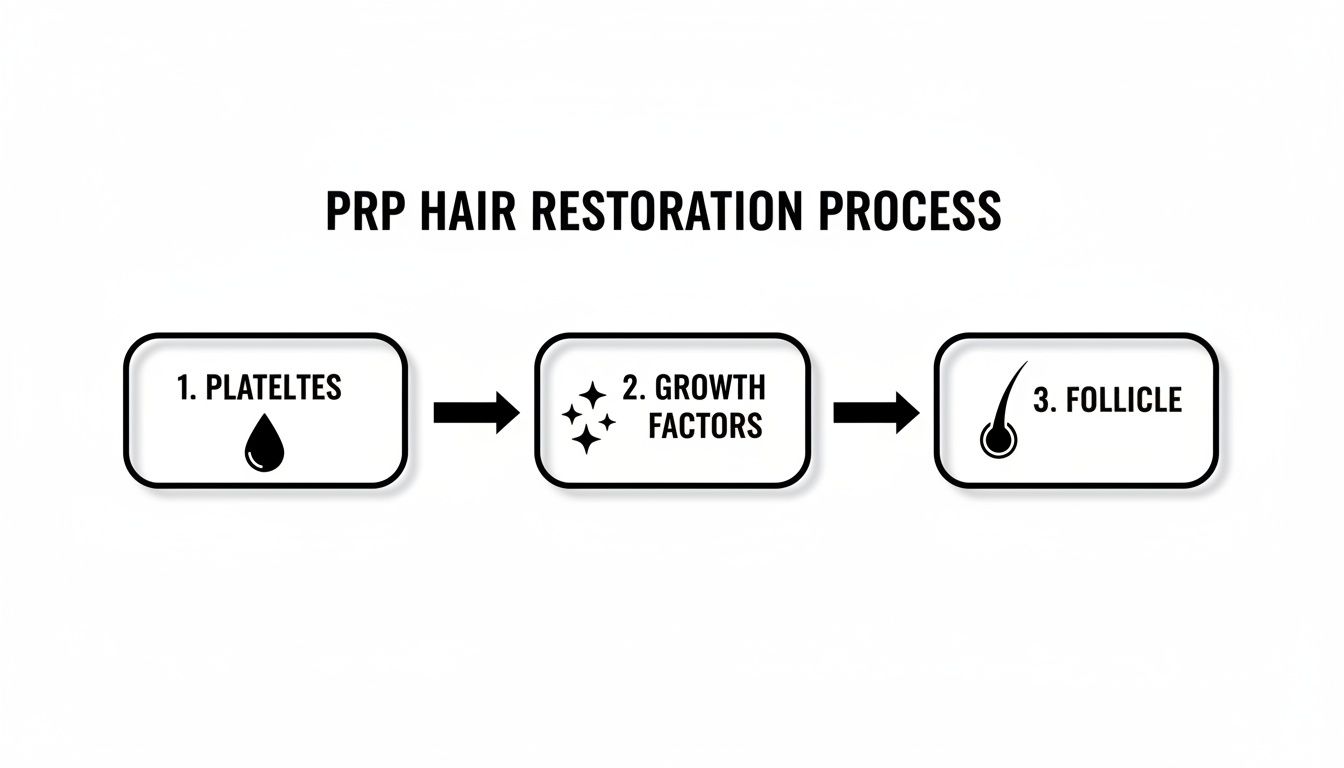
It really drives home the core idea behind PRP therapy: using your body’s own healing power to revitalize dormant hair follicles.
Step 1: The Initial Consultation
Everything kicks off with a detailed consultation. This is your chance to get all your questions answered and for a specialist to figure out if PRP is the right move for you. A good provider will take the time to examine your scalp, discuss your hair loss history, and ask about your general health.
Think of this less as a sales pitch and more as a proper medical assessment. It's a two-way street where you can talk openly about your goals and what you hope to achieve. This initial meeting is what sets the stage for your personalized treatment plan, including how many sessions you'll likely need.
Here are a few questions you should absolutely ask:
- What kind of results can I realistically expect with my type of hair loss?
- How many sessions do you recommend to start, and what does the long-term maintenance look like?
- Can I see some before-and-after photos of your actual patients?
- What's the total cost for the recommended treatment plan?
Step 2: The Treatment Day Experience
When you come in for your appointment, the process is pretty quick, usually taking about an hour from start to finish. First, a small amount of blood is drawn from your arm, just like a routine blood test. It's a familiar and very quick part of the process.
Next, that blood sample goes into the centrifuge. This machine spins the vial at high speed, using centrifugal force to separate your blood into different layers. After about 10-15 minutes, the golden, platelet-rich plasma is isolated and ready for the next step.
The final part is the injection. The practitioner uses a very fine needle to strategically inject the concentrated PRP into the areas of your scalp where you’re seeing thinning.
A lot of guys worry about the pain, but clinics almost always apply a numbing cream or a local anesthetic to make sure you're comfortable. Most men describe the sensation as a series of quick, tiny pinches—very manageable.
Step 3: After Your Session
Post-treatment care is simple but super important for getting the best results. You’ll want to be gentle with your scalp for the first 24 to 48 hours. Your provider will give you a specific list of instructions, but they generally boil down to a few key points.
A quick look at what to do and what to avoid:
- Take it Easy: Skip the gym or any strenuous activity for a day. This helps avoid excess sweating and keeps blood flow to the scalp normal.
- Avoid Harsh Products: Hold off on things like Minoxidil, hair dyes, or strong styling products for at least 24 hours.
- Stay Out of the Heat: It's best to avoid saunas, steam rooms, and extra-hot showers, as they can increase swelling or irritation.
Your scalp might feel a little tender or look slightly pink, much like a mild sunburn, but this usually fades within a few hours. There's practically no real downtime, so you can head right back to your normal routine. Of course, the safety of any injectable treatment depends on the clinic's standards; a commitment to sterile preparation for injectable therapies is a non-negotiable sign of a high-quality medical practice.
Following these simple guidelines helps ensure those powerful growth factors can get to work undisturbed. To get a better sense of how each session builds on the last, check out this overview of the complete PRP hair treatment timeline and see what to expect over the coming months.
Real Results and Realistic Expectations

This is the question that matters most: does PRP actually work for hair loss? The short answer is yes, for many men, it absolutely can. But it's vital to go into the process with your eyes open and your expectations grounded in reality.
PRP isn't an overnight fix. It’s a biological process that unfolds over several months, gradually waking up dormant follicles and improving the overall health of your scalp. Think of it like trying to revive a struggling lawn. You don’t just toss down some seed and expect a lush green carpet the next day. First, you have to strengthen the existing grass, and then you’ll start to see the patchy areas slowly fill in. PRP works the same way.
My goal here is to give you a clear, honest picture of the journey. While PRP won't bring back a full head of hair on a completely bald scalp, it offers a real chance at significant improvement for the right person.
The Typical Timeline for Results
Patience is key with PRP. The growth factors in your plasma need time to do their job, and the results appear in stages. It's a slow burn, not a wildfire.
Here's a breakdown of what you can generally expect as you move through your treatment plan.
The very first sign that things are moving in the right direction is often a change in hair shedding. Many guys notice they’re losing less hair in the shower drain or on their pillow. This welcome change can often be seen within the first 2 to 3 months after starting.
Next, you'll likely feel an improvement in the quality of your existing hair. The individual strands start to feel thicker and more substantial. This is a clear sign the growth factors are nourishing your follicles and building healthier, more robust hair. This thickening phase typically becomes noticeable around the 3 to 6-month mark.
The big one—new growth—is usually the last to show up. Visible new hairs often start to emerge between 6 and 12 months as those sleeping follicles are finally coaxed back into their active growth phase.
What the Data Says About Effectiveness
It's one thing to hear success stories, but it’s another to see the hard data. When you dig into the clinical studies, PRP therapy consistently shows meaningful improvements in hair density and thickness for a majority of patients.
So, what do the numbers say?
- Summaries of clinical trials often report that PRP can increase hair density by 30–40%.
- A solid 70–80% of patients report feeling satisfied with their improvement after their initial round of sessions.
For more on the science, this scientific review of PRP for hair loss offers a deep dive.
To make this even clearer, I've put together a table that lays out what you can expect and when.
PRP Results Timeline: What to Expect and When
| Timeframe | Typical Observable Results |
|---|---|
| 1–3 Months | A noticeable drop in daily hair shedding. This is often the first positive sign that the treatment is taking hold. |
| 3–6 Months | Existing hair begins to feel thicker and stronger. You'll notice an overall improvement in hair quality and texture. |
| 6–12 Months | Visible new hair growth appears in treated areas, leading to increased overall density and scalp coverage. |
This timeline helps set a realistic pace. Remember, everyone's body responds differently, but this is a solid guide for the average patient experience.
Visualizing the Potential Outcome
Numbers and timelines are helpful, but seeing is believing. Before-and-after photos provide a powerful visual for what's actually possible with PRP. They show real-world examples of how this treatment can improve hair density and scalp coverage over several months.
Of course, individual results will always vary based on your age, genetics, and how far your hair loss has progressed. But looking at photos can help you set a realistic goal for your own journey.
You can check out our gallery of PRP hair loss before and after photos to get a much better sense of what other men have been able to achieve. It’s the best way to ground your expectations in what is genuinely achievable.
Is PRP the Right Choice for You?
PRP is a powerful, science-backed tool in the fight against hair loss, but it's not a magic bullet for every guy out there. The key is figuring out if your specific situation is a good match for what this therapy does best. It’s all about matching the right treatment to the right person.
So, how do you know if you're a good candidate? It really comes down to timing. PRP works by waking up and strengthening hair follicles that are still there, just weakened or dormant. This means it's most effective for men in the earlier stages of male pattern baldness.
If you've noticed your hair thinning but still have decent coverage across your scalp, you're likely in the sweet spot. PRP is all about boosting the hair you have and coaxing lazy follicles back to life—it's not designed to grow new hair on a completely smooth scalp where the follicles have been gone for years.
Who Benefits Most from PRP
The guys who get the best results from PRP therapy usually fit a pretty clear profile. Seeing where you fit in can help you decide if it's a logical next step.
You're probably a strong candidate if this sounds like you:
- Early to Moderate Hair Loss: You’re seeing thinning at the crown or your hairline is starting to move back, but you aren't completely bald in those spots. The sooner you act, the more follicles there are to save.
- Good Overall Health: Since PRP uses your body’s own healing power, being in good general health is a huge plus. Any conditions that impact your blood platelets or immune system could make the treatment less effective.
- Realistic Expectations: You get that PRP is about making things better, not perfect. You’re looking for thicker-looking hair, less shedding, and better scalp coverage—not the hairline you had at 18.
When PRP Might Not Be the Best Option
It’s just as important to know who PRP is not for. The treatment has its limits, and it's better to be honest about them from the start.
For example, PRP generally isn't recommended for men with certain chronic health issues like liver disease, active skin diseases, or blood disorders. And if you have advanced, long-standing baldness where the follicles have completely shut down, PRP is unlikely to give you the results you're hoping for. In those cases, other routes might make more sense. You can check out our guide comparing PRP vs. a hair transplant to explore different options for more advanced hair loss.
PRP as a Standalone or Combination Therapy
One of the best things about PRP is how versatile it is. It works great as a standalone treatment for men who want a natural approach and don't want to deal with daily medications. Because it’s made from your own blood, it’s an incredibly safe option with a very low risk of side effects.
On the other hand, many men use PRP as part of a bigger hair restoration strategy. It pairs really well with proven treatments like Minoxidil and Finasteride. Using them together can create a powerful one-two punch: PRP strengthens follicles from the inside, while the medications work to block the hormonal triggers of hair loss.
When deciding if PRP is worth it, real-world satisfaction data provides a useful perspective. Observational reports from clinics often suggest that more than 80% of patients see positive results like less shedding or thicker hair after a full series of treatments.
For patients with early-stage hair loss whose follicles are still primed for a comeback, success rates can climb into the 80–90% range. This high level of satisfaction really drives home how crucial it is to pick the right candidates from the start.
Common Questions About PRP Therapy
Even after getting the full rundown on PRP, it's natural to have some practical questions still floating around. It’s a big decision, and you’re probably weighing the cost, the comfort factor, and what the long-term commitment really looks like. Let's tackle those final, crucial questions head-on.
I've pulled together the most common things men ask right before they decide to move forward. Think of this as your final checklist—just clear, direct answers to help you feel completely confident about your next steps.
Does PRP Therapy Hurt and What Is the Downtime?
This is usually the first thing people want to know, and the answer is reassuring. Yes, you're getting a series of injections into your scalp, but the discomfort is surprisingly mild and over with quickly. Any reputable clinic will make your comfort a top priority.
To keep things as painless as possible, a strong numbing cream or a local anesthetic is applied to your scalp first. Most guys I talk to describe the sensation as a few quick pinches or a bit of pressure—definitely not sharp, intense pain.
After the session, your scalp might feel a little tender or look slightly pink for a few hours, but that's about it. The best part? There’s virtually no real downtime. You can head right back to your day, though it's a good idea to skip a hardcore workout or harsh hair products for a day or two.
How Much Does PRP for Hair Loss Typically Cost?
Alright, let's talk about the investment. The cost of PRP therapy can swing quite a bit based on your city and the clinic's reputation. Since it's considered a cosmetic procedure, it's almost never covered by insurance, so this will be an out-of-pocket expense.
On average, a single PRP session will set you back anywhere from $500 to $1,500. But here's the key: one session won't cut it. A standard starting protocol involves an initial round of three to four sessions, usually scheduled about a month apart.
So, your initial investment is likely to land somewhere between $1,500 and $4,500. It's vital to get a crystal-clear cost breakdown during your consultation so you know exactly what you’re signing up for financially.
Remember to ask about the cost of long-term maintenance as well. Understanding the full financial commitment, including the follow-up sessions needed to sustain your results, is key to making an informed decision without any surprises down the road.
After that first series of treatments, you'll need a plan for upkeep to protect your investment.
How Long Do the Results of PRP Last?
It's really important to think of PRP as a management strategy, not a one-and-done cure for male pattern baldness. The underlying genetic and hormonal triggers for hair loss are still there, so consistent care is part of the deal.
The great results from your initial treatments—the reduced shedding, the new growth, the added thickness—typically last for about one to two years. To hold onto that progress and prevent backsliding, maintenance is non-negotiable.
Here’s what that looks like in practice:
- Initial Phase: A series of 3-4 treatments spaced 4-6 weeks apart.
- Maintenance Phase: A single "tune-up" session is usually recommended every 6 to 12 months.
If you skip these maintenance treatments, the gains you've made will slowly fade, and your hair will likely drift back toward its pre-treatment state. I often tell my patients to think of it like maintaining a car; you can't skip the oil changes and expect it to keep running smoothly.
Are There Any Serious Side Effects or Risks?
One of the biggest selling points of PRP is its incredible safety profile. Because the entire treatment is derived from your own blood, the chance of an allergic reaction or your body rejecting it is virtually zero. It doesn't get much more natural than that.
The side effects you might experience are all minor, temporary, and directly related to the injections. These can include:
- Mild soreness or tenderness where the injections were done
- A little bit of swelling or redness on the scalp
- A temporary, mild headache
The risk of infection is extremely low, as long as the procedure is done in a sterile, clinical setting by a qualified medical professional. When you compare it to the potential systemic side effects of some daily hair loss pills, PRP stands out as a very low-risk and safe option for fighting hair thinning.
At PRP For HairLoss, our goal is to provide you with clear, honest, and comprehensive information to help you navigate your hair restoration journey. We believe that an informed decision is the best decision. To learn more and explore all our resources, visit our website. https://prpforhairloss.com
 PRP For Hairloss
Leave a comment