Getting a handle on lowering DHT isn’t a one-shot deal. It’s really a combination of smart medical choices, lifestyle adjustments, and the right supplements. The most direct route involves prescription medications like Finasteride or Dutasteride, which go straight to the source by blocking the enzyme that turns testosterone into DHT in the first place.
Understanding the Real Cause of Hair Loss

If you're noticing more scalp in the mirror—whether it's a thinning crown or a hairline that’s beating a hasty retreat—the hormone Dihydrotestosterone (DHT) is almost always the villain behind the scenes. To actually win this fight, you need to know exactly what you're up against.
DHT is a potent androgen, a male sex hormone that your body naturally makes from testosterone. This conversion happens thanks to an enzyme called 5-alpha-reductase. While DHT plays a key role in developing male characteristics during puberty, it can turn on your hair follicles later in life.
And that’s where the trouble really begins. For guys who are genetically wired for male pattern baldness, their hair follicles are extremely sensitive to DHT. When DHT latches onto the receptors in those follicles, it kicks off a destructive process known as miniaturization.
The Process of Miniaturization
You can think of miniaturization as a slow-motion strangulation of your hair follicles. It doesn't happen overnight. It’s a gradual weakening that can take years to become obvious.
Here's what’s really going on under the surface:
- Shrinking Follicles: DHT signals your scalp's hair follicles to shrink, making them unable to support a healthy, thick strand of hair.
- Shorter Growth Cycles: The anagen (growth) phase of your hair cycle gets cut shorter and shorter. Hairs fall out more quickly and are replaced by new ones that are noticeably thinner and weaker.
- Eventual Dormancy: After enough time, the follicle becomes so tiny that it just gives up and stops producing visible hair altogether. That's when true baldness sets in.
This explains why you don't just wake up one morning completely bald. It's a slow fade, where you first notice your hair feels finer and less dense long before any bald spots actually show up.
Key takeaway: Male pattern baldness isn't really about losing hair. It's about your existing, healthy hairs being replaced by progressively smaller, finer, and less visible ones until they effectively vanish.
To give you a quick overview, here are some of the most effective strategies we'll be diving into.
Quick Guide to Lowering DHT
This table sums up the heavy hitters for reducing DHT, from proven medical treatments to supportive lifestyle changes.
| Method | Mechanism | Effectiveness |
|---|---|---|
| Finasteride/Dutasteride | Inhibits the 5-alpha-reductase enzyme, blocking DHT production. | Very High |
| Topical DHT Blockers | Applied directly to the scalp to reduce local DHT activity. | Moderate |
| Dietary Changes | Consuming foods rich in lycopene, zinc, and other nutrients. | Low to Moderate |
| Key Supplements | Saw palmetto, pumpkin seed oil, and green tea may help. | Low to Moderate |
| Lifestyle Adjustments | Regular exercise and stress management to balance hormones. | Supportive |
Each of these methods has a role to play, but their impact can vary a lot from person to person.
Why Genetics Matter
So, if every guy produces DHT, why don't all of us go bald? The answer is written in your DNA. Your genes determine just how sensitive your hair follicles are to DHT's damaging effects. Some men inherit follicles that are naturally resistant, letting them keep a full head of hair well into their old age.
The rest of us aren't so lucky. Men with androgenetic alopecia (the clinical name for male pattern baldness) often have a higher concentration of 5-alpha-reductase and more androgen receptors in their scalp. This creates the perfect storm for hair loss.
Since DHT comes from testosterone, a smart starting point for understanding your personal risk is looking into male testosterone tests. Getting a read on your baseline hormone levels gives you a much clearer picture of what you're up against, helping you make smarter decisions about how to fight back. When you understand the link between your testosterone, DHT, and genetics, you’ll see exactly why the strategies we’re about to cover are so effective.
Finasteride: The Gold Standard DHT Blocker
When you start digging into medically-proven ways to stop hair loss, one name comes up again and again: Finasteride. It’s the most well-known and prescribed oral medication for male pattern baldness, and for good reason—it goes straight to the source of the problem.
Finasteride’s job is to block an enzyme called type II 5-alpha reductase. Think of this enzyme as the main culprit in your scalp that turns testosterone into DHT, the hormone that shrinks hair follicles. By shutting down that conversion process, Finasteride drastically lowers DHT levels where it matters most, giving your hair a real chance to recover.
How It Actually Works
The standard game plan for fighting hair loss with this medication is a 1mg pill taken once a day. This dose has been studied to death and is proven to be the sweet spot for crushing DHT levels in the scalp without going overboard. It's a targeted strike.
The mechanism is pretty straightforward. Imagine the 5-alpha reductase enzyme is a factory assembly line. Testosterone goes in one end, and follicle-killing DHT comes out the other. Finasteride basically throws a wrench in the machinery, stopping that production line cold.
Male pattern baldness affects over 50 million men in the US alone, and Finasteride is one of the most powerful tools we have to fight it. This FDA-approved pill slashes scalp DHT by about 70%. The clinical data is even more impressive—a landmark study found it stopped hair loss from getting worse for 83% of men. Many guys even see thicker, healthier hair within the first 3-6 months.
If you catch thinning early, starting Finasteride can potentially save up to 90% of your hair from DHT’s miniaturizing attack.
What to Expect: The Results Timeline
Let’s be clear: this isn't an overnight fix. Hair grows slowly, so patience is absolutely part of the deal. The results build over time, and sticking with it is the only way to see the full benefit.
Here’s a realistic timeline of what most guys experience:
- Months 3-6: The first sign it's working is usually less shedding. You'll notice fewer hairs in the shower drain or on your pillow. Don't freak out if you see a bit more shedding at first; that’s often just weak hairs making way for stronger ones.
- Months 6-12: This is when you start seeing real, visible changes. Thinning spots might begin to look fuller, and some guys notice regrowth, especially in the crown area. Your hair should feel stronger and healthier.
- Months 12-24: By the one-to-two-year mark, you’re seeing the peak results. For most men, hair loss has completely stabilized, and any regrowth is now well-established.
Keep in mind, everyone’s journey is a bit different. For a more detailed look at what to expect, check out our guide on the Finasteride results timeline.
An Honest Look at Potential Side Effects
We can't talk about Finasteride without covering the side effects. While it's safe for the vast majority of men, a small percentage can experience them, and they are typically sexual in nature.
The most commonly reported issues are:
- Lowered sex drive (libido)
- Erectile dysfunction (ED)
- Reduced semen volume
It's critical to put these numbers in perspective. In clinical trials, these side effects only affected a tiny fraction of users, usually somewhere between 1-2%. For many of the men who do run into these issues, they often go away on their own as their body adjusts, or they disappear completely if they stop taking the drug.
One thing you absolutely must understand: Finasteride only works for as long as you take it. If you stop, your DHT levels will climb back up, and your hair loss will pick up right where it left off. This is a long-term commitment.
Before you even think about starting, have a frank conversation with your doctor. This is non-negotiable. They can help you weigh the proven benefits against the potential risks for you personally, monitor your progress, and make sure it’s the right call. It’s all about making an informed decision so you can take control of your hair loss with confidence.
Dutasteride: A More Powerful Option
While Finasteride is the go-to for many men, sometimes it’s just not enough to stop aggressive hair loss. If you’ve tried it without much luck or you're looking for a stronger line of defense from the get-go, it's time to talk about Dutasteride.
Though it's primarily FDA-approved for treating an enlarged prostate, Dutasteride is widely used off-label as a potent weapon against hair loss. Its power comes from how thoroughly it blocks the enzyme that creates DHT.
The Dual-Enzyme Advantage
The real difference between Finasteride and Dutasteride comes down to how they work. Finasteride mainly blocks the type II 5-alpha reductase enzyme, which is the key player in your hair follicles.
Dutasteride, on the other hand, is a dual inhibitor—it blocks both type I and type II 5-alpha reductase.
Think of it like having a security system that guards both the front and back doors instead of just the front. This dual-action approach gives it a much stronger punch, allowing Dutasteride to slash overall serum DHT levels far more dramatically than Finasteride can.
We're talking about a serious step up. Dutasteride can reduce serum DHT by up to 90%, a massive leap from Finasteride's roughly 70% reduction. This makes it a formidable option for men with stubborn or rapidly progressing male pattern baldness.
In fact, a phase II study that put them head-to-head found that daily doses of Dutasteride outperformed 5mg of Finasteride in boosting hair counts at both 12 and 24 weeks. You can dig into the full clinical research on Dutasteride's efficacy to see the data for yourself.
Dosing and Half-Life Considerations
Because it's so much more potent, the dosing for Dutasteride is often different. The standard dose for hair loss is typically 0.5mg per day.
But here's where it gets interesting: Dutasteride has an incredibly long half-life, which is the time it takes for half the drug to leave your body.
Dutasteride’s half-life is about five weeks, a stark contrast to Finasteride’s six to eight hours. This unique feature has led some doctors to prescribe less frequent dosing schedules, like a few times a week. This strategy can sometimes help manage side effects while still keeping DHT suppressed. Our guide on dutasteride hair loss dosage explores this in more detail.
The following chart shows the kind of impact these DHT-blocking medications can have on hair loss.
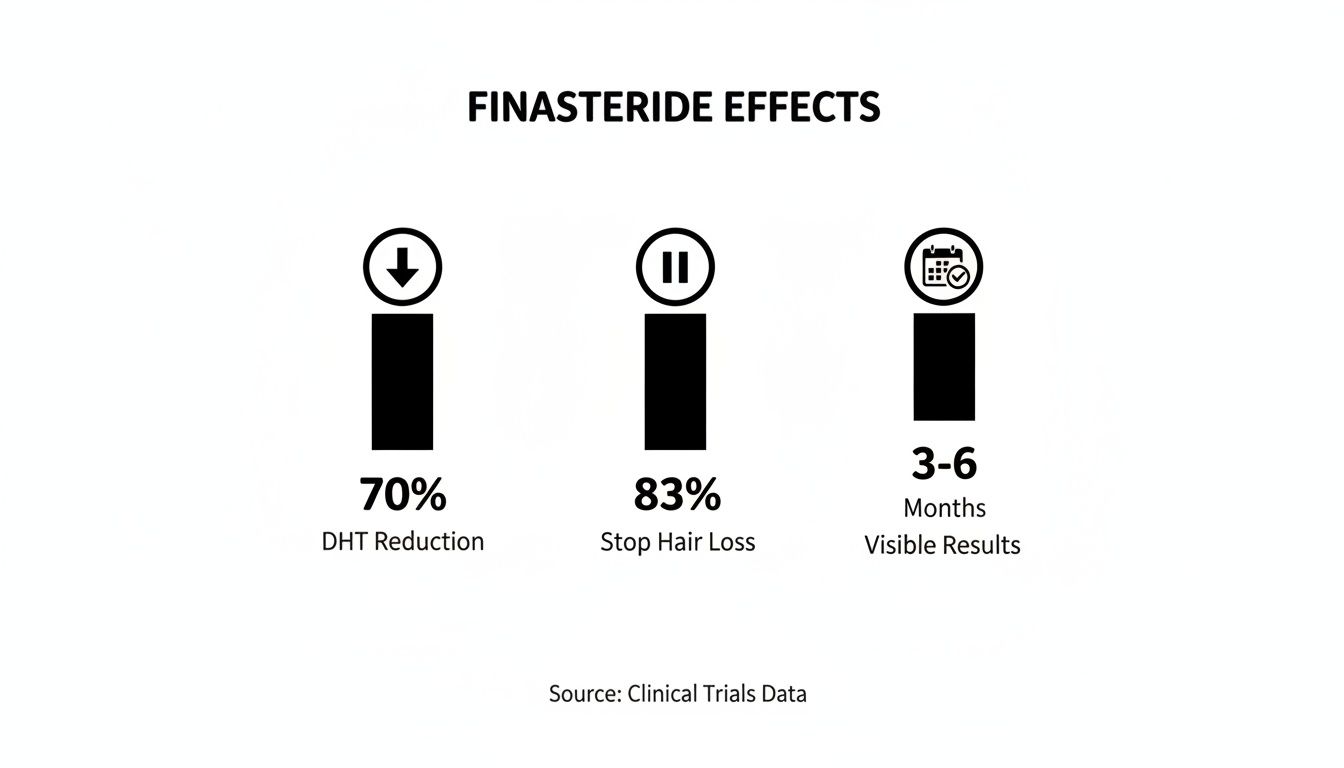
This visual breaks down the key goals of treatment: significant DHT reduction, a high success rate in stopping hair loss, and a realistic timeline for seeing results.
Balancing Power with Potential Side Effects
With greater power comes a need for greater caution. Because Dutasteride lowers systemic DHT so dramatically, the risk of side effects can be slightly higher than with Finasteride. The potential side effects are the same—decreased libido, erectile dysfunction, and changes in semen volume—but they may occur in a slightly larger percentage of users.
It's crucial to remember that "slightly higher" doesn't mean "guaranteed." The vast majority of men who take Dutasteride do so without experiencing any significant issues.
The longer half-life also means that if you do experience side effects, they can take much longer to resolve after you stop the medication. This is a critical point to discuss with your doctor. They can help you weigh whether the increased potency of Dutasteride is the right trade-off for your specific situation.
Here's a direct comparison of the two leading medical DHT blockers to help you understand their key differences.
Finasteride vs Dutasteride Head-to-Head
| Feature | Finasteride | Dutasteride |
|---|---|---|
| Enzyme Blocked | Type II 5-alpha reductase | Type I and Type II 5-alpha reductase |
| DHT Reduction | ~70% | Up to 90% |
| FDA Approval | Approved for Male Pattern Baldness | Off-label use for hair loss |
| Half-Life | ~6-8 hours | ~5 weeks |
Ultimately, choosing Dutasteride is a decision for those who feel they need a more aggressive approach to lowering their DHT levels. Its ability to block both enzyme types makes it an incredibly effective, albeit more intense, option in the fight against hair loss.
Natural DHT Blockers and Supportive Nutrients
While medications like finasteride are the heavy hitters, the fight against DHT doesn't have to stop at the pharmacy counter. What you eat and the supplements you take can build a powerful, supportive strategy from the inside out.
This isn't about finding one "magic bullet" food. Instead, it’s about creating a holistic plan that complements your medical treatments, giving your hair the best possible environment to thrive.
If finasteride or dutasteride is your main line of defense, then your diet and specific nutrients are the support crew. You're stacking the odds in your favor from every angle possible.
Powering Your Diet Against DHT
Certain foods contain compounds that are known to inhibit the 5-alpha-reductase enzyme or provide the raw materials for strong hair. The best part is that weaving these into your meals is an easy, actionable step you can take today. No drastic overhaul needed—just smarter, more strategic choices.
Here are a few nutritional powerhouses to focus on:
-
Pumpkin Seeds for Zinc: Zinc is a key mineral that helps inhibit the 5-alpha-reductase enzyme. Pumpkin seeds are loaded with it, making them an excellent snack. A handful a day can make a real contribution to your hair health regimen.
-
Tomatoes for Lycopene: That bright red color in tomatoes comes from lycopene, a powerful antioxidant. Some research suggests lycopene can help inhibit DHT. Quick tip: cooked tomatoes, like in a sauce or paste, make the lycopene easier for your body to absorb.
-
Green Tea for EGCG: The benefits of green tea are well-known, but for hair, its most valuable compound is epigallocatechin gallate (EGCG). This antioxidant has been studied for its potential to shield hair follicles from DHT's damaging effects. Swapping your afternoon coffee for green tea is a simple, effective switch.
-
Nuts and Avocados: Healthy fats and nutrients like biotin and L-lysine are non-negotiable for healthy hair growth. Almonds, walnuts, and avocados are packed with these supportive compounds, giving your body what it needs to build strong hair from the ground up.
Making these small, consistent adjustments creates a solid foundation that supports everything else you're doing.
Navigating the World of Supplements
Walking down the supplement aisle can feel like stepping into the Wild West. Countless bottles make bold promises, so it's crucial to cut through the marketing noise and focus on ingredients with actual scientific backing.
Remember, supplements are meant to supplement your efforts, not replace proven medical treatments. Think of them as reinforcements that add an extra layer of defense against hair loss.
Let's break down a few of the most popular options and see what the evidence actually says.
Saw Palmetto: The Natural Blocker
Saw palmetto is easily the most well-known natural supplement for hair loss. It's an extract from the berries of the Serenoa repens palm tree and has a long history of use for prostate health—an issue that, like hair loss, is also closely linked to DHT.
Its mechanism is believed to be similar to finasteride, though much milder: it appears to inhibit the 5-alpha-reductase enzyme. While the evidence isn't nearly as strong as it is for prescription drugs, some studies have shown encouraging results. One study, for instance, found that men taking saw palmetto experienced an increase in hair count. For many, it's a good starting point if they're hesitant about medical therapy or want to add it to an already comprehensive routine.
Other Key Supportive Nutrients
Beyond specific "blockers," some vitamins and minerals are absolutely essential for healthy hair. Being deficient in any of these can undermine even the most aggressive DHT-lowering treatments.
-
Biotin (Vitamin B7): Often called the "hair vitamin," biotin is critical for producing keratin, the protein that hair is made of. It won't stop DHT by itself, but being low on biotin is like asking a construction crew to build a house without enough bricks.
-
Iron: Iron deficiency is a well-known cause of hair shedding (telogen effluvium), especially in women, but it absolutely affects men, too. Low iron can complicate your battle against androgenetic alopecia, so getting your levels checked is a smart move.
-
Vitamin D: The "sunshine vitamin" plays a role in creating new hair follicles. Since so many people are deficient without even knowing it, ensuring your levels are optimal is another important piece of the hair health puzzle.
Before you start buying bottles of pills, it’s always best to get a simple blood test to check for deficiencies. This allows you to supplement intelligently instead of just guessing what you need.
To help you choose the right options, we've put together a detailed resource on the science behind the most popular products. You can explore our complete guide to the best DHT blocking supplements to make a more informed decision. By combining a strategic diet with well-researched supplements, you create a powerful, natural foundation that supports every other action you take to lower DHT and protect your hair for the long run.
How PRP Therapy Supports Your DHT Strategy
So far, we've been laser-focused on one thing: blocking DHT, the hormone that slowly strangles your hair follicles. But what about the follicles that are already weakened and struggling? Lowering DHT is a fantastic defensive move to stop future damage, but you also need an offensive plan to revive the hair you've already started to lose.
This is where Platelet-Rich Plasma (PRP) therapy comes in. It’s crucial to understand that PRP is not a DHT blocker. It works through a totally different—and complementary—mechanism, which is what makes it such a powerful ally in a full-scale hair restoration plan.
PRP doesn't touch your hormones; it's all about healing and regrowth.
Awakening Dormant Follicles with Growth Factors
The magic of PRP is already flowing through your veins. The whole process starts by drawing a small amount of your own blood, spinning it in a centrifuge to separate and concentrate the platelets, and then injecting this golden serum right back into your scalp where it's needed most.
This "platelet-rich plasma" is a natural cocktail of potent growth factors—proteins that act as signals for your body to repair and regenerate tissue. When this is introduced to your scalp, it’s like a wake-up call for tired, miniaturized follicles.
These growth factors get to work in a few key ways:
- Boosting Blood Flow: They encourage the formation of new blood vessels around the hair follicles, which ramps up the delivery of oxygen and critical nutrients.
- Extending the Growth Phase: They help push follicles into the anagen (growth) phase of the hair cycle and, just as importantly, keep them there longer.
- Thickening Hair Shafts: The renewed cellular activity gives weakened follicles the fuel they need to start producing thicker, healthier, and stronger strands of hair.
I like to use a simple analogy: think of it like tending a garden. DHT blockers are the fence that keeps the deer out. PRP is the high-quality fertilizer and water that nourishes the soil so your existing plants can thrive again.
The Power of a Two-Pronged Attack
When you combine a DHT blocker with PRP therapy, you create a powerful synergistic effect. You're hitting the problem from two completely different angles, and the results are often far better than what either treatment could ever achieve on its own.
Here’s a look at how they work in tandem:
- Stop the Assault: A DHT blocker like Finasteride or Dutasteride dramatically lowers the amount of follicle-shrinking DHT in your system. This essentially calls a ceasefire, halting the progression of hair loss and creating a safe environment for recovery.
- Repair and Regrow: With the primary threat neutralized, PRP therapy can step in to repair the existing damage. It floods the weakened follicles with everything they need to recover and get back to the business of producing healthy hair.
This combination gives you the ability to not only hold on to the hair you have but to actually regain some of the density you thought was gone for good.
By tackling both the root cause (DHT) and the direct effect (follicle damage), you create the most robust strategy possible for reclaiming your hair. This comprehensive approach gives you the absolute best chance for visible, lasting improvement.
You can dive deeper into the science and see a clearer picture of how PRP works for hair restoration in our detailed guide.
Complementing Your Hair Restoration Efforts
This dual-therapy approach is incredibly effective, but it doesn't mean you should ignore other avenues that support hair growth. In fact, layering in other advanced treatments, such as certain peptides, can offer even more support. These therapies, much like PRP, are designed to create an optimal growth environment for your hair follicles.
If that piques your interest, this guide on Peptides for Hair Growth is a great resource for learning about this emerging field. By stacking multiple growth-focused therapies on top of your DHT-blocking foundation, you build a truly multi-faceted regimen—and that’s often the key to getting the best possible outcome.
Common Questions About Lowering DHT
When you first start looking into lowering your DHT, a ton of questions pop up. It makes sense—you're dealing with everything from medical treatments to diet changes, and it's easy to feel like you're drinking from a firehose.
We've heard just about every question in the book from men starting this journey. Getting straight answers is the first step to setting realistic expectations and finding a game plan that works for you.
How Long Until I Actually See Results?
This is the big one, and the honest answer is you have to be patient. With medical treatments like finasteride or dutasteride, you’re playing the long game.
- First Signs (3-6 Months): The first good sign you'll likely notice is less shedding. Seeing fewer hairs in the shower drain is a huge win—it means the medication is starting to do its job.
- Visible Progress (6-12 Months): This is the window where you might start seeing real, visible changes. Hair can begin to look thicker, and thinning spots, especially at the crown, may start filling in.
- Peak Results (12-24 Months): The full impact usually materializes after a year or two of consistent use.
Keep in mind that natural methods will almost always take longer, and the results are often more subtle. No matter which route you take, consistency is everything.
Are the Effects of DHT Blockers Permanent?
Nope. And this is a really important piece of information to have from the get-go. The results you get from DHT blockers are entirely dependent on you continuing the treatment.
These drugs work by actively blocking the 5-alpha-reductase enzyme. The moment you stop, your DHT production goes right back to its baseline, and the hair loss process will likely pick up again within a few months.
Think of DHT blockers as a management strategy for a chronic condition, not a one-and-done cure. If you want to keep the hair you have and regrow, you have to commit to it for the long haul.
Can I Combine Different DHT-Lowering Methods?
Absolutely. In fact, a lot of guys find that a multi-pronged strategy gives them the best results. It's like fighting the battle on multiple fronts.
For instance, a really solid stack might look something like this:
- Medical Foundation: Using finasteride or dutasteride to hit DHT systemically.
- Dietary Support: Eating more foods known to have DHT-inhibiting properties, like those with plenty of zinc and lycopene.
- Growth Stimulation: Adding a treatment like PRP to help kickstart dormant follicles and heal the scalp environment.
Just make sure you run any combined approach by your doctor first. They can help you build a safe and effective plan that’s right for your specific situation, ensuring all the pieces are working together. For a deeper look into the effectiveness of these treatments, our guide explains in more detail if DHT blockers work.
Will Lowering DHT Mess with My Muscle Growth or Masculinity?
This is a valid concern we hear all the time. Fortunately, for the vast majority of men, the answer is no. The hormone that drives muscle mass, sex drive, and other male characteristics is testosterone, not DHT.
Hair loss medications are designed to selectively target the conversion of testosterone to DHT, primarily within the scalp and prostate. Most men find it has no impact on their gym performance, physique, or overall sense of well-being. That said, you should always discuss any concerns about hormones with your doctor.
At PRP For HairLoss, we believe that understanding all your options is the first step toward reclaiming your confidence. A well-informed strategy, combining medical insights with supportive therapies, can make all the difference in your hair restoration journey. Find out more at https://prpforhairloss.com.
 PRP For Hairloss
Leave a comment