Let's cut to the chase: Platelet-Rich Plasma (PRP) therapy is a medical treatment that essentially puts your body's own healing squad to work against hair loss. It’s a pretty clever process that takes the super-powered platelets from your blood, concentrates them, and injects them right back into your scalp to give worn-out hair follicles a much-needed kickstart.
Unlocking Your Body's Healing Power
Forget the confusing medical jargon for a moment. What is PRP therapy, really? Imagine you have a highly specialized repair crew already on your payroll. When you get a cut, tiny cells in your blood called platelets are the first responders on the scene. They’re packed with powerful proteins called growth factors, which act like a foreman on a construction site, telling your body to start rebuilding and patching things up.
PRP therapy simply harnesses that natural, biological power and aims it directly at your scalp.
How the Process Works
The procedure itself is surprisingly straightforward. It kicks off with a simple blood draw, no different from a routine test you'd get at your doctor's office. That blood is then spun in a special machine called a centrifuge.
A centrifuge is a device that spins vials of blood at incredibly high speeds. This action separates the blood into its different layers, letting us isolate a concentrated, golden-colored liquid loaded with platelets—the "PRP" that is the star of the show.
This isn't just your run-of-the-mill plasma. This super-concentrated serum contains 3 to 5 times the number of growth factors found in your everyday, circulating blood.
When this potent liquid is injected into the areas of your scalp where hair is thinning, it’s like a wake-up call for your follicles. The growth factors get to work, stimulating sluggish or dormant follicles and improving blood flow, which delivers the vital nutrients they need to start growing hair again. To get a closer look at the science, feel free to explore our detailed guide on what is platelet-rich plasma and its components.
To give you a quick snapshot, here's a simple breakdown of what's involved.
PRP Therapy at a Glance
| Key Aspect | Simple Explanation |
|---|---|
| The "Medicine" | Your own blood, specifically the platelet-rich plasma. No foreign chemicals. |
| The Goal | To reawaken and nourish dormant or weakened hair follicles. |
| The "Active Ingredient" | Growth factors naturally present in your platelets. |
| The Method | A small blood draw, separation via centrifuge, and scalp injections. |
Getting this core concept is key. PRP isn't a synthetic drug or some foreign substance; it’s a concentrated dose of your body's own regenerative power, aimed precisely where you need it most.
How PRP Fights Male Pattern Baldness
To really appreciate what PRP therapy does for hair loss, you first have to understand the enemy: male pattern baldness. The scientific name is androgenetic alopecia, and it's not just about hair falling out. The real issue is that your hair follicles are slowly shrinking and, well, giving up.
This happens because the follicles become hyper-sensitive to a hormone called Dihydrotestosterone, or DHT. DHT basically bullies these follicles, causing them to shrink over time in a process called miniaturization. As they get smaller, the hairs they produce become finer, shorter, and weaker, until eventually, they stop producing hair at all. This is exactly where PRP steps in.
Waking Up Sleeping Follicles
Think of the platelets in your blood as your body's own first-response team, packed with everything needed for healing and repair. When we concentrate them into plasma and inject that solution into your scalp, they release a potent cocktail of proteins known as growth factors.
These growth factors are like biological messengers that send a wake-up call to the damaged cells. They're telling the shrunken, struggling hair follicles to get back to work.
This isn't just a band-aid solution. The growth factors in PRP literally kickstart dormant follicles, pushing them out of their resting (telogen) phase and back into the active growth (anagen) phase. It's a direct nudge to reboot the natural hair growth cycle.
This biological boost helps counteract the suffocating effect of DHT, giving your follicles the support they need to start producing thicker, healthier hair again.
This simple diagram breaks down the journey from your own blood to revitalized hair follicles.
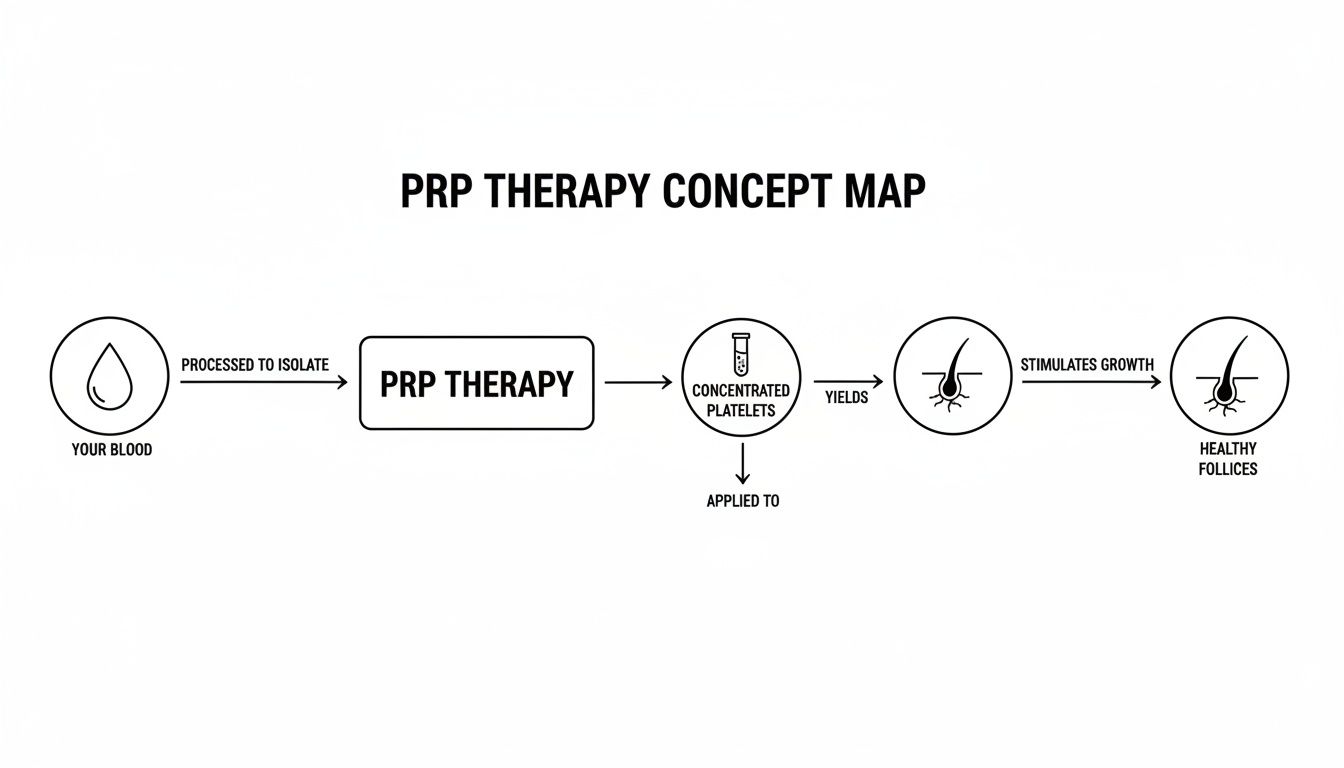
As the visual shows, PRP simply harnesses your body's own powerful resources to get the scalp's growth engine running again.
The Science Behind the Boost
So what are these growth factors actually doing down at the cellular level? They have several key jobs that directly fight back against the progression of male pattern baldness.
Here’s a quick rundown of what’s happening in your scalp:
- Boosting Blood Flow: The growth factors encourage the formation of new blood vessels around the hair follicles. This process, called angiogenesis, means more oxygen and nutrients can reach the follicles, which is critical for healthy hair growth.
- Extending the Growth Phase: They help prolong the anagen (growth) phase of the hair cycle. This gives each hair more time to grow longer and stronger before it sheds, leading to a noticeable improvement in hair density over time.
- Calming Inflammation: Low-grade, chronic inflammation can suffocate hair follicles. PRP has anti-inflammatory properties that help create a healthier, more hospitable environment for your hair to thrive.
This multi-faceted approach is why PRP is becoming such a go-to for guys looking for a non-surgical solution. In fact, its adoption is soaring. Data from the International Society of Hair Restoration Surgery reveals a 25% year-over-year increase in PRP therapy procedures in the U.S. This isn't just hype; it reflects a growing confidence in its ability to reboot follicles and improve the overall health of the scalp.
At its core, the treatment creates the best possible environment for your existing hair to survive and regenerate. To dig deeper into the specific biological processes, you can learn more about how does PRP work at the cellular level in our detailed guide. It’s not magic—it's just smart science, using your body's own toolkit to fight back against hair loss.
What to Expect During a PRP Treatment: A Step-by-Step Walkthrough
It’s one thing to understand the science behind PRP, but it's another to picture what actually happens in the clinic. The good news is the whole process is surprisingly straightforward and efficient. Let’s walk through exactly what you can expect during a typical session.
From start to finish, the entire appointment is usually wrapped up in less than an hour. It’s a clean, three-step process that uses the healing power already inside you to get to work on your hair follicles.
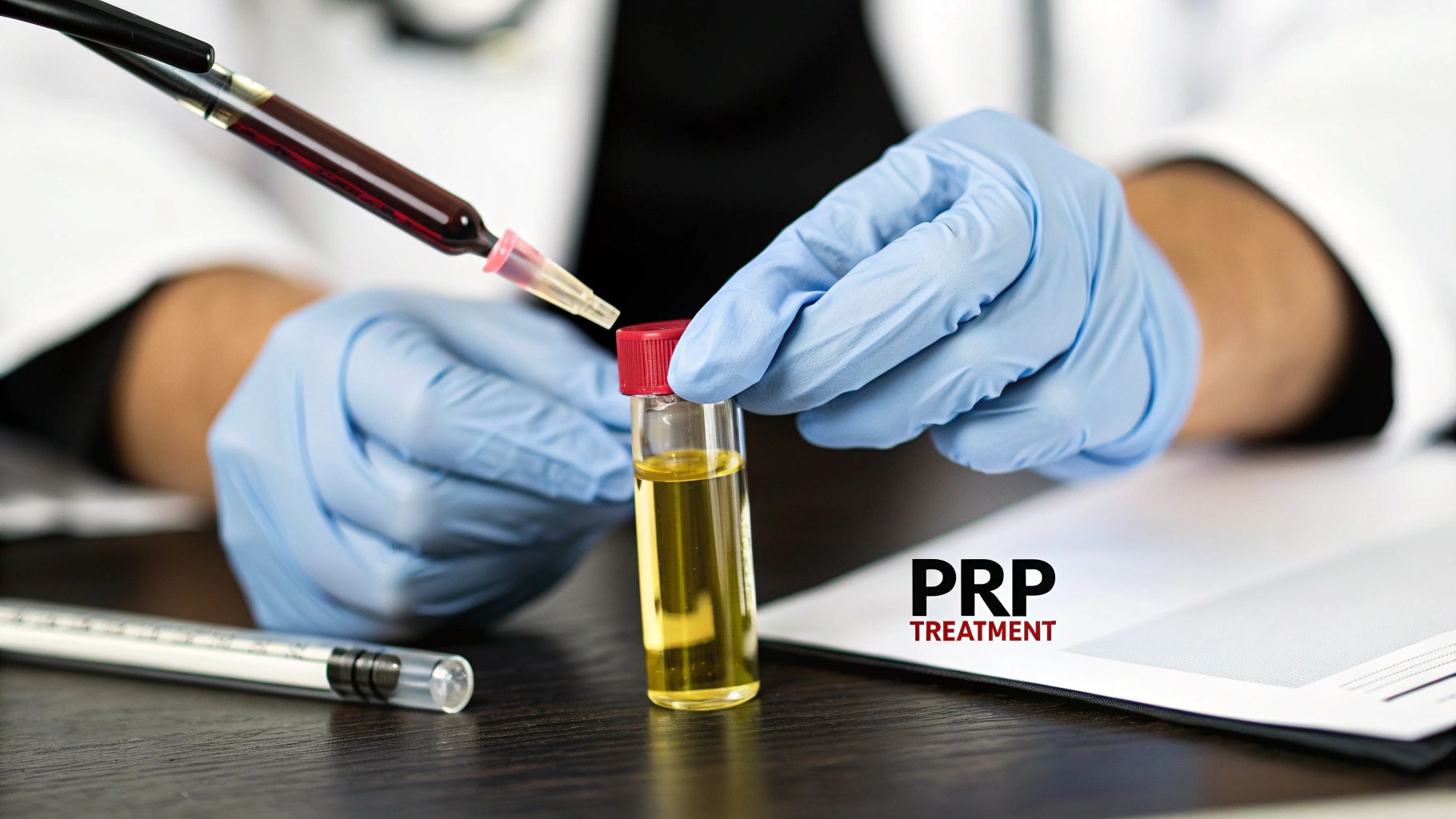
Stage 1: The Blood Draw
Your PRP treatment starts with a simple blood draw, just like you’d have for any routine lab work. A small vial of blood is taken from your arm—that’s it. This part is quick, familiar, and over in a couple of minutes.
Stage 2: Creating the “Liquid Gold”
This is where the real magic happens. Your blood sample is placed into a centrifuge, a machine that spins it at high speeds. This rapid spinning separates your blood into its different components based on their weight.
After about 10 to 15 minutes in the centrifuge, the blood will have settled into three distinct layers:
- Red Blood Cells at the bottom.
- Platelet-Poor Plasma (PPP) at the top.
- Platelet-Rich Plasma (PRP) in the middle.
This middle layer is the "liquid gold" we're after. It's a highly concentrated serum of your own platelets and the powerful growth factors they contain. Because it's made from your own blood, the risk of an allergic reaction or other adverse side effects is extremely low.
By isolating and concentrating the platelets, a standard vial of blood is transformed into a powerful regenerative solution. This resulting PRP contains 3 to 5 times the concentration of growth factors found in normal blood, creating a targeted biological boost for your scalp.
Stage 3: The Injections
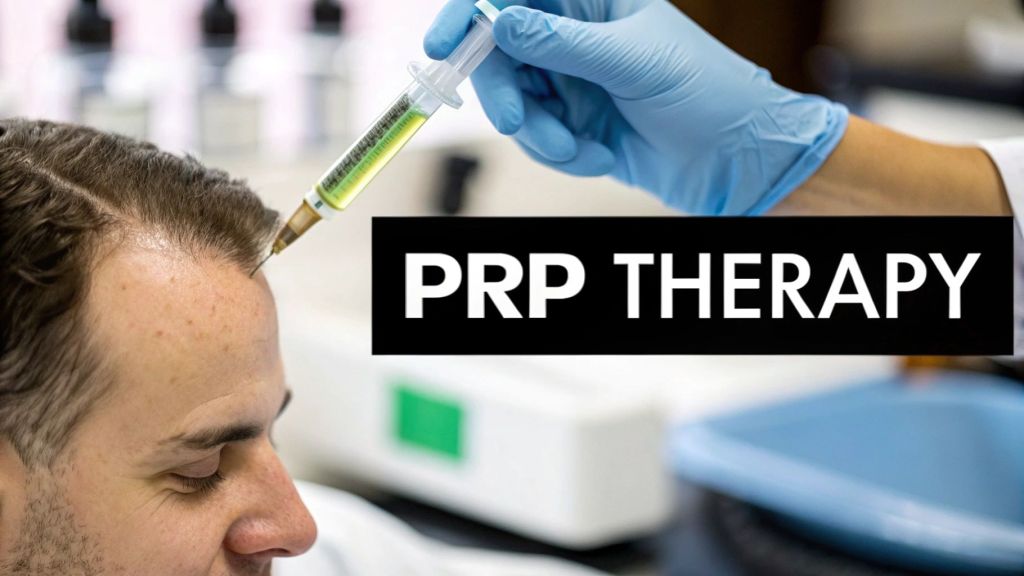
With the PRP prepared, your clinician will begin the final step. Using a very fine, thin needle, they will carefully inject small amounts of the PRP directly into your scalp in the areas where your hair is thinning.
The injections are shallow and quick. Most guys say it feels like a series of minor pinpricks, not outright pain. To make it as comfortable as possible, your provider will likely apply a topical numbing cream to your scalp beforehand. The injection process itself usually takes just 15 to 20 minutes.
If you want a deeper dive into the specifics of this stage, check out our full guide on the PRP procedure for hair.
After Your PRP Session
One of the best parts about PRP is that there's virtually no downtime. You can head right back to your day as soon as you leave the clinic. Your provider will give you a few simple instructions to follow for the best results.
Typically, you'll be advised to:
- Avoid heavy workouts for the rest of the day.
- Wait at least 24 hours before washing your hair.
- Steer clear of harsh hair products or chemical treatments for a few days.
It’s completely normal to have some mild redness, tenderness, or slight swelling on your scalp, but this almost always fades within a day or two. This simple journey is what makes PRP a go-to option for men who want an effective hair loss treatment without the hassle.
Does PRP Actually Work for Hair Loss?
This is the million-dollar question, isn't it? Once you understand the "how," you need to know if it actually delivers real, measurable results. Let's move past the hype and look at the hard evidence.
The short answer is yes—for many men, PRP therapy is a legitimate, science-backed weapon in the fight against male pattern baldness. We're talking about tangible outcomes, the kind you can see in the mirror and feel with your hands.
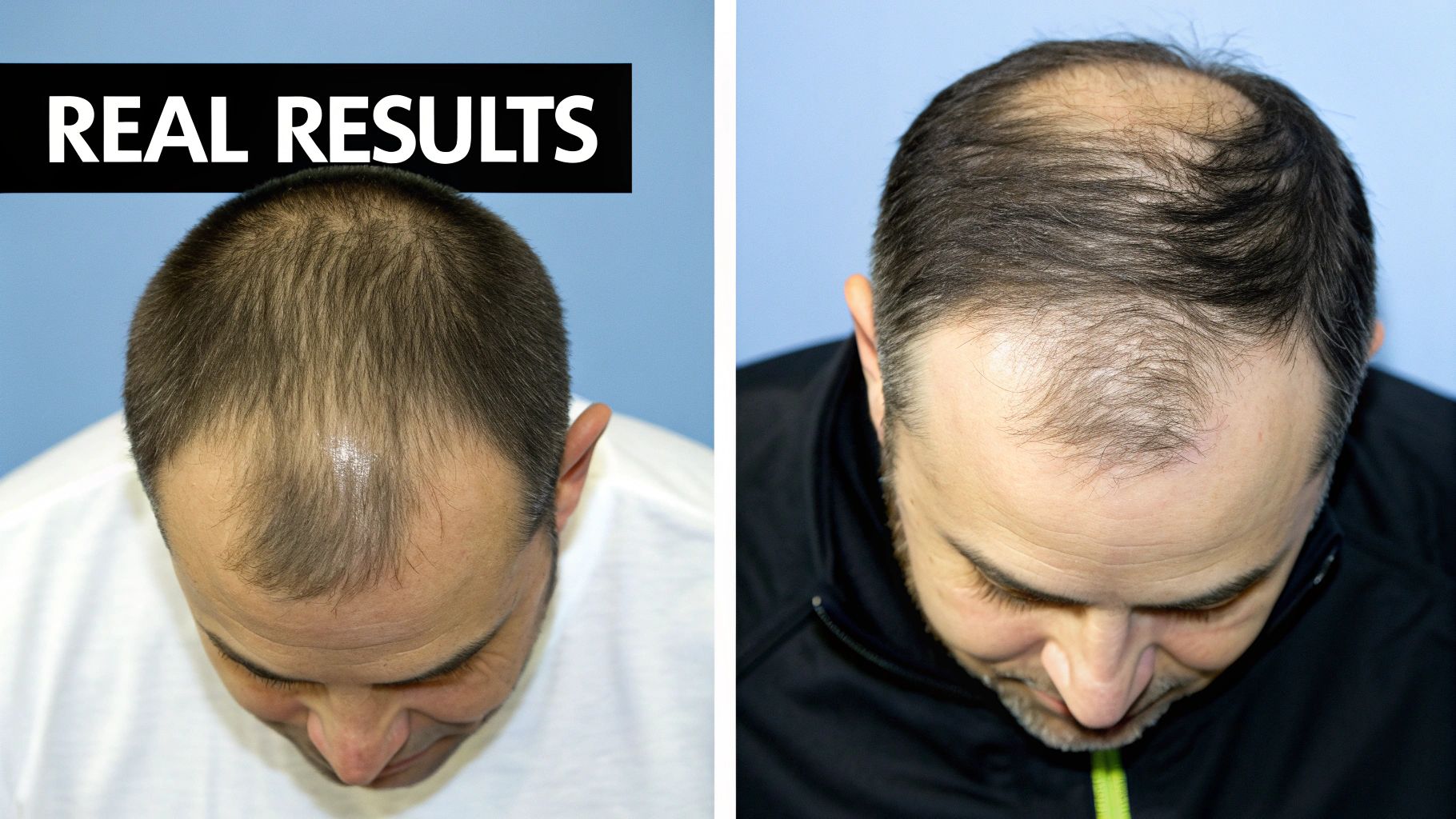
What the Clinical Data Shows
When we dig into the research, a very clear picture begins to emerge. A landmark review in the British Journal of Dermatology, which pooled data from 1,826 patients, reported some seriously compelling outcomes.
Here’s what they found on average:
- A 31% increase in hair density.
- A 67% reduction in hair shedding.
- An 84% improvement in hair thickness.
Perhaps the most telling statistic? A whopping 73% of patients reported high satisfaction with their results a full year after treatment. These aren't minor tweaks; they're significant improvements that genuinely impact a person's appearance and confidence.
The track record for PRP therapy is well-established, with top-tier medical journals recognizing it as a standout non-surgical option. It has consistently shown it can improve hair density, boost thickness, and achieve high satisfaction rates among men worldwide.
How PRP Measures Up
It's not just one study, either. Further research consistently shows PRP outperforming placebo treatments and holding its own against other established options like minoxidil. Scientists have even looked at the genetic level, finding that PRP injections actually ramp up the genes responsible for hair growth, the formation of new blood vessels, and the prevention of follicle cell death. This gives us a clear biological reason why it works so well.
The clinical results are just as impressive. It's common for patients to see a 30-40% increase in hair density after three to six months, with a success rate seen in 70-80% of men with androgenetic alopecia. One key study even highlighted an incredible 84% reduction in hair shedding within the first month alone, followed by a 40% increase in hair count by the six-month mark. You can explore the up-to-date research on PRP for hair loss to see just how effective it can be.
Setting Realistic Expectations
It's crucial to ground these exciting numbers in reality. Hair growth is a slow, biological process, and results are not universal. How well it works for you can depend on the stage of your hair loss, your genetics, and your overall health.
Think of it this way: PRP is most effective for men who still have active, albeit weakened, hair follicles. It's designed to revive and strengthen what you have, not to regrow a full head of hair on a completely bald scalp.
For those who are good candidates, PRP is a powerful tool. The data overwhelmingly shows that it can thicken existing hair, kickstart new growth, and significantly slow down the progression of male pattern baldness. It has rightfully earned its place as a cornerstone treatment.
Setting a Realistic Timeline for PRP Results
When it comes to PRP therapy, one of the first things I tell my patients is that we're working with the body's natural hair growth cycle. This isn't an overnight fix. It’s a marathon, not a sprint, and understanding the journey ahead is crucial for staying motivated and recognizing the progress you’re making.
The path to thicker, fuller hair happens in stages. Think of it like planting a garden—you have to prepare the soil before you can expect to see sprouts, and then those sprouts need time to grow strong.
Months 1 to 3: The Foundation Phase
For the first one to three months, the main goal is simple: stop the bleeding, so to speak. The focus is on stabilization. During this time, the growth factors from your PRP injections are getting to work, calming down inflammation around the follicles and giving them a much-needed boost.
The very first sign that the treatment is taking hold is usually a noticeable drop in hair shedding. You’ll start to see less hair in the shower drain, on your pillow, or in your comb. This is a huge win. It tells us that your follicles are getting stronger and are holding on to hair for longer.
Months 3 to 6: Seeing the First Sprouts
This is where things really start to get exciting. Sometime between the third and sixth months, most people begin to see the first visible signs of new growth. It often starts as very fine, soft "peach fuzz" in the areas we've treated.
Don't worry if these new hairs look thin or wispy at first—that's completely normal. These are new vellus hairs, and over the coming months, they will mature. As they tap into the improved blood flow and nutrient supply in your scalp, they’ll gradually become thicker, darker, and stronger. To get a better sense of what to expect, you can explore a detailed PRP hair treatment timeline that breaks down the process month by month.
The initial treatment protocol is all about building momentum. It usually involves a series of 3 to 4 sessions, spaced about 4 to 6 weeks apart. This consistent stimulation is what wakes up dormant follicles and gets them back into a healthy growth rhythm.
Months 6 to 12: The Peak Growth Phase
The most significant improvements in hair density and overall coverage really start to show from the six-month mark onward. By this point, all those new hairs have had time to grow out and mature, adding to a visibly thicker head of hair.
This is the phase where you see the full payoff. The results can be quite impressive; for instance, some studies have shown it's possible to cut down hair shedding by 67% in just three months. Another clinical trial noted that 84% of patients saw less shedding within the first month alone, leading to a 40% increase in hair count by the six-month mark.
After completing your initial series of treatments, the plan shifts to maintenance. To keep your results going strong and protect your investment, most experts recommend a follow-up "booster" treatment every 6 to 12 months. This ensures your follicles stay active, healthy, and productive for the long haul.
Are You a Good Candidate for PRP?
While PRP therapy is a game-changer for many dealing with hair loss, it isn't a silver bullet for everyone. The key to getting great results is making sure you're the right fit for the treatment in the first place.
So, who gets the most out of PRP? Generally, it’s someone in the earlier stages of hair loss.
Think of it this way: it’s much easier to bring a wilting plant back to life than it is to grow a new one from dead soil. PRP therapy works on a similar principle. It's designed to wake up and strengthen existing hair follicles that have become weak or miniaturized, not to resurrect follicles that are long gone.

Who Typically Sees the Best Results?
In my experience, the people who walk away happiest with their PRP results usually have a few things in common. They're typically in good health and are looking for a non-surgical way to boost hair density and slow down thinning.
You might be an ideal candidate if:
- Your hair loss started recently: You've noticed thinning over the last few years, not the last few decades.
- You still have fine, "peach fuzz" hair: The presence of these miniaturized hairs in thinning areas is a great sign that follicles are still alive and ready to be stimulated.
- You're in good overall health: Your body's ability to heal and regenerate is a huge part of what makes PRP work, so general wellness matters.
The treatment is particularly effective for androgenetic alopecia, which is the clinical term for male pattern baldness. To dive deeper into how it works for this specific condition, check out our guide on PRP for androgenetic alopecia.
When PRP Might Not Be the Right Fit
It’s just as important to understand when PRP isn't the best option. An honest practitioner will tell you upfront if your expectations don't match what the therapy can realistically deliver.
A good consultation isn’t a sales pitch. It’s a collaborative effort to see if your specific hair loss situation aligns with what PRP is designed to accomplish, ensuring you choose the most effective path forward.
PRP is generally not recommended in these situations:
- Complete Baldness: If an area of your scalp has been completely smooth for many years, the follicles there are likely dormant beyond revival.
- Certain Medical Conditions: People with active scalp infections, skin diseases, or specific blood disorders may not be suitable.
- Blood-Thinning Medications: If you're on medications that affect how your platelets work, it can undermine the effectiveness of the treatment.
The only way to know for sure is to sit down with a specialist. A one-on-one consultation allows for a proper evaluation of your hair loss pattern and medical history, leading to a clear, personalized recommendation you can trust.
Your Top Questions About PRP Hair Treatment, Answered
Alright, so we've covered the science and the step-by-step process. But it's totally normal to still have some practical questions buzzing around your head. Making a decision like this is a big deal, and you should feel 100% clear on what to expect.
Let's dive into the most common questions guys ask when they're seriously considering PRP.
Does PRP Therapy Hurt?
This is usually the first thing people want to know, and the answer is reassuring. Most men find the injections to be a minor, quick discomfort rather than real pain. The needles are very fine, and the injections are shallow, so it feels more like a series of brief pinpricks.
To make sure you're comfortable, your provider will almost always apply a topical numbing cream to your scalp beforehand. You might have some mild tenderness or a bit of soreness afterward, but that almost always disappears within a day.
What’s the Real Cost of PRP for Hair Loss?
Talking about the investment is key. The price tag for PRP can swing quite a bit based on where you live, the clinic's reputation, and the specific equipment they're using.
As a ballpark figure, a single PRP session typically runs between $500 and $1,500. Most clinics recommend starting with a series of 3-4 sessions spaced a month apart to get the best initial results.
So, you're likely looking at an initial investment somewhere in the $1,500 to $4,500 range. Don't forget to factor in the follow-up treatments, which are crucial for maintaining your hair. Most guys need a maintenance session every 6-12 months.
Are There Any Serious Side Effects or Risks?
This is one of the biggest draws of PRP—it’s incredibly safe. Since the treatment uses a concentrate made from your own blood, the risk of an allergic reaction or infection is extremely low. You're not introducing any foreign substances into your body.
The side effects that do pop up are almost always minor and temporary. You might experience:
- A little bit of swelling or redness where the injections were made.
- Some mild tenderness on the scalp.
- Tiny pinpoint bleeding right after the session.
These things typically clear up on their own within 24 to 48 hours, making PRP one of the safest options out there for tackling hair loss.
Is PRP a Permanent Cure for Hair Loss?
It's really important to set the right expectations here. PRP is not a one-and-done permanent cure for male pattern baldness. Think of it less as a cure and more as a powerful long-term management tool.
Male pattern baldness is a progressive genetic condition, and PRP works by actively fighting back against it—stimulating follicles that are being told to shut down. To keep those follicles awake and productive, you’ll need to stick with periodic maintenance treatments. It’s like a workout plan for your scalp; consistency is what keeps the results going strong for the long haul.
Ready to take control of your hair loss journey? The team at PRP For HairLoss provides the in-depth information you need to make an empowered decision. Explore our resources and learn more about how PRP can help you at https://prpforhairloss.com.
 PRP For Hairloss
Leave a comment