Catching a glimpse of thinning hair in the mirror can be a real knock to your confidence, but the good news is that finding a solution is simpler than you might think. The best hair thickening products for men cover a lot of ground, from quick cosmetic fixes like fibers and sprays to long-term treatments that actually support healthier growth right from the scalp.
Think of this guide as your no-nonsense roadmap to figuring out which options will give you the thicker, fuller hair you're after.
Your Guide to Thicker and Fuller Hair
If you've started to notice your hair isn't as full as it used to be, you're in good company. It’s a reality for countless men, often chalked up to genetics, stress, or just getting older. Thankfully, the men's hair care market has caught up, and it's now packed with products designed to tackle this head-on.
This isn't some tiny corner of the grooming world, either. The global market for men's hair care and styling products hit around USD 34.68 billion in 2024 and is expected to climb to USD 56.72 billion by 2032. That massive growth means better research, more advanced ingredients, and genuinely effective solutions that simply weren't around a decade ago.
To give you a bird's-eye view, here's a quick breakdown of the product types we'll be covering.
Quick Guide to Hair Thickening Product Types
| Product Type | How It Works | Best For |
|---|---|---|
| Hair Fibers | Tiny, statically-charged particles that cling to existing hair, instantly making it look denser. | Instantly concealing thin spots and receding hairlines. |
| Thickening Sprays | Coats each hair strand with polymers to temporarily increase its diameter. | Adding all-over volume and texture, especially to fine hair. |
| Thickening Shampoos | Uses ingredients to plump hair strands and remove scalp buildup that can hinder growth. | A daily-use foundation for building volume and a healthy scalp. |
| Topical Treatments | Serums or foams with active ingredients that stimulate follicles and promote growth over time. | Men committed to a long-term approach for addressing hair loss. |
| Scalp Concealers | A cream or powder applied directly to the scalp to reduce the contrast between skin and hair. | Masking wider parts or areas with significant thinning. |
| Hair Supplements | Oral vitamins and minerals that provide the building blocks for healthy hair growth from within. | Supporting overall hair health, especially if you have nutritional gaps. |
This table should help you quickly see where each product fits, but now let's dig into the details to find what's right for you.
Finding Your Path to Fuller Hair
Walking down the hair care aisle can feel like a pop quiz you didn't study for. Brands are shouting bold claims from every bottle, and it's easy to get lost in the sea of options. To cut through the confusion, it helps to group these products into two main camps.
- Cosmetic Thickeners: These are your instant gratification tools. They work on the surface to immediately make your existing hair look and feel thicker.
- Therapeutic Treatments: These play the long game. They focus on the scalp and follicle, working to create a better environment for your hair to grow stronger and healthier over weeks and months.
The real secret isn't just picking a product—it's understanding how it works and if that lines up with what you want to achieve. Are you just looking for a quick boost before a big meeting, or are you ready to invest in the long-term health of your hair?
This guide is here to filter out the marketing hype. We’ll break down each product type, from everyday shampoos to powerful serums, so you know exactly what you’re buying. We’ll get into the specific ingredients that matter, how to use them correctly, and what kind of results you can realistically expect. For those who want to get serious about it, you can learn more about foundational strategies in our guide on how to increase hair density.
By the time you're done reading, you'll have the confidence to build a routine that truly works for you. Achieving thicker-looking hair is well within reach.
Instant Fixes vs. Long-Term Hair Health
When you start digging into the world of hair thickening products, you’ll quickly notice they fall into two main camps. It’s a lot like getting in shape: you can throw on a sharp, tailored jacket for an instantly broader look, or you can commit to the gym to build real muscle over time. Both work, but they serve completely different purposes.
One approach is all about instant gratification—the cosmetic quick fixes. These are your hair fibers, volumizing sprays, and styling concealers that give you a visible boost right away. They work by clinging to your existing hair, plumping up each strand to create the illusion of more density. The effect is impressive, but it washes right out with your next shampoo.
The other path is the long game. This strategy is about improving the actual health of your hair and scalp from the inside out. We're talking about specialized shampoos, conditioners, and powerful topical treatments. These products are formulated to nourish the follicle, cut down on breakage, and create the ideal environment for healthier, more resilient hair to grow.
The Quick Boost Approach
Cosmetic thickeners are your best friend when you need a confidence boost now. Got a big meeting, a first date, or a wedding this weekend? These products will give you the look you want in minutes. They’re brilliant for camouflaging thinner patches and making fine hair look much fuller and more substantial.
The huge upside is the speed. There’s no waiting around. You apply it, style it, and you’re good to go. The trade-off, of course, is that the results are temporary and purely cosmetic. They don't actually change the underlying biology of your hair.
The Foundational Health Strategy
On the other hand, long-term treatments are an investment in your hair's future. You won't see a dramatic difference overnight. Instead, they work slowly and steadily to improve your hair's quality right from the root. Think of it like gardening: you have to nurture the soil before you can expect healthier, stronger plants to grow.
This approach demands two things: patience and consistency. You'll typically start to see real, noticeable results after three to six months as your hair moves through its natural growth cycles. The payoff is hair that isn't just appearing thicker—it actually is healthier and stronger. It's no surprise that this approach is catching on. The global market for hair thickener serums was valued at around USD 1,412.7 million in 2025 and is expected to more than double by 2035, which shows a real shift in focus toward long-term hair health.
This little decision tree can help you figure out which path makes the most sense for you right now.
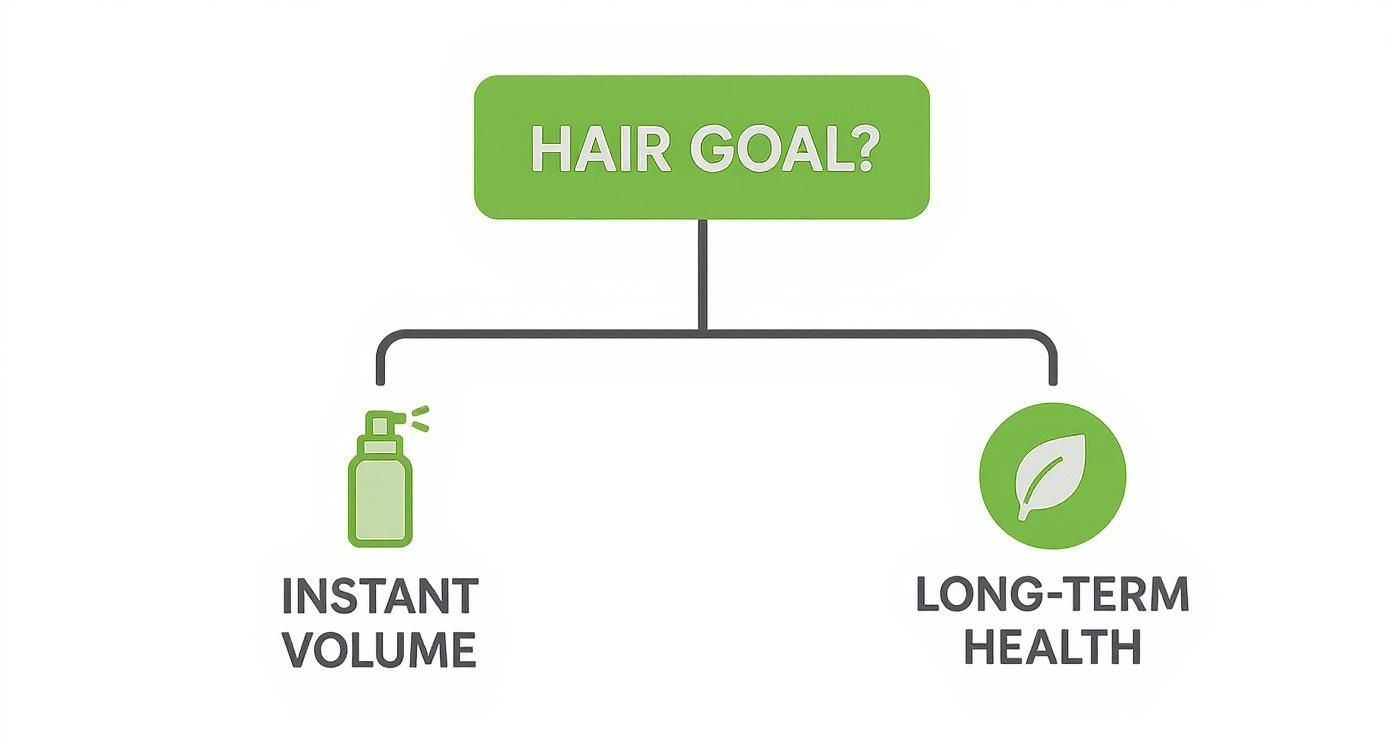
As the chart shows, it really boils down to whether you need a cosmetic tool for today or a biological solution for tomorrow.
Combining Both for the Best Results
Here’s the thing: you don't actually have to pick a side. In fact, the smartest and most effective strategy often involves using both types of products together. This hybrid approach gives you the immediate confidence from cosmetic thickeners while the long-term treatments are quietly doing their work behind the scenes.
Pro Tip: Build your daily routine around a growth-supporting shampoo and serum. Then, for days you need some extra oomph or want to hide thinning spots, reach for the hair fibers or a thickening spray as a finishing touch.
This way, you get the best of both worlds—an instant visual upgrade and a genuine investment in the future of your hair. Many of these foundational products are considered non-surgical options that work to support the hair you already have. To get a better feel for the landscape, you might want to read our overview of the various non-surgical hair loss treatments that can complement this kind of routine.
Ultimately, knowing the difference between a quick fix and a long-term solution is what empowers you to build a grooming routine that delivers the results you want, both today and down the road.
Understanding What Is Inside the Bottle
Walking down the hair care aisle can feel like preparing for a chemistry exam you never signed up for. The labels are a mess of complex names, and it's tough to tell what actually works and what's just marketing fluff. Let's break it down and decode what's inside the bottle so you can choose the right products with confidence.
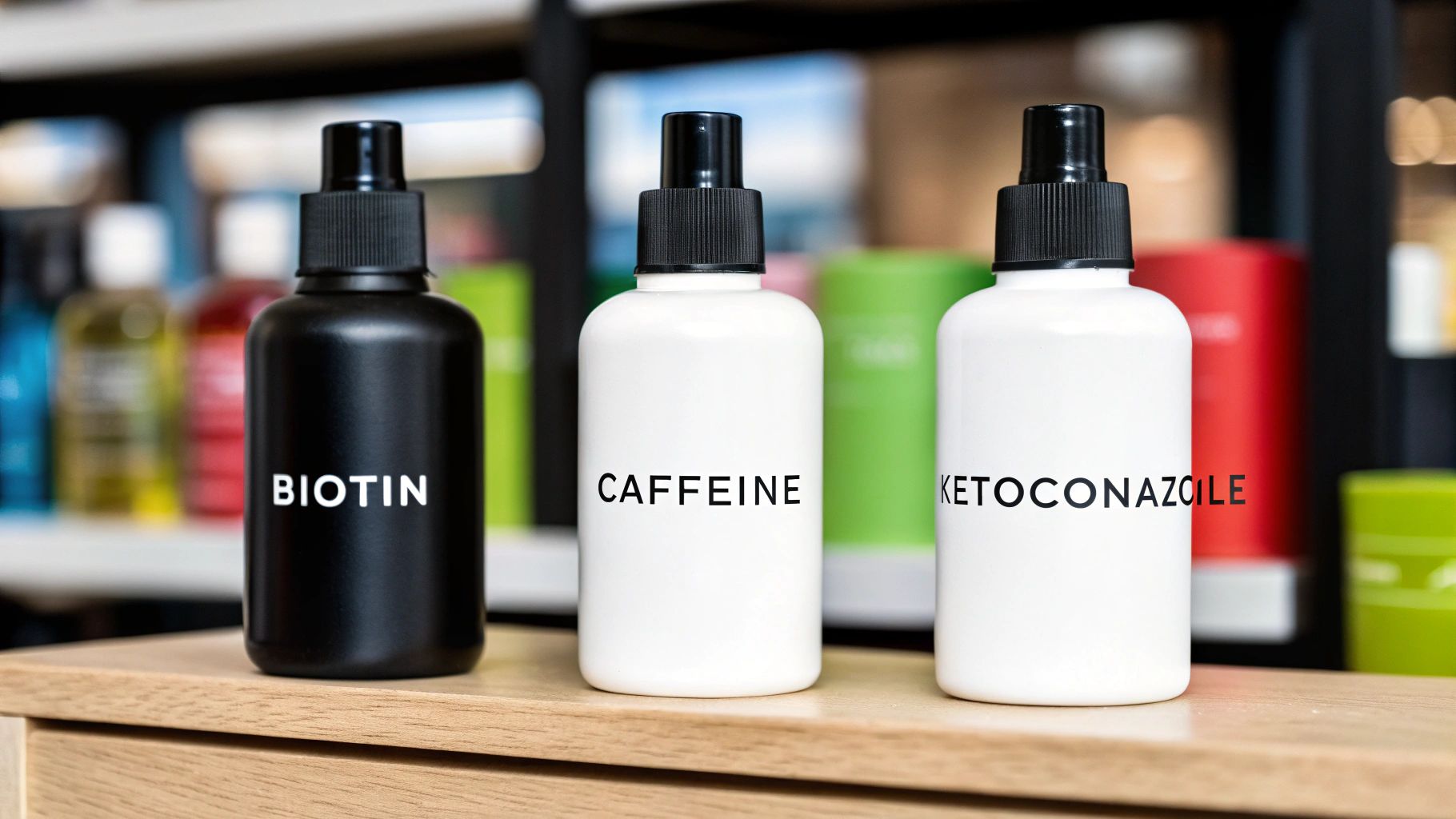
Think of your scalp like soil in a garden. To get healthy, strong plants, you need nutrient-rich soil free from anything that could stunt growth. The same idea applies to your hair. The right ingredients create a healthy scalp environment, while the wrong ones can just make things worse.
The Powerhouse Ingredients to Look For
When you're scanning a product label, a few names should jump out at you. These are the ingredients with a proven track record of supporting healthier, fuller-looking hair. They all work a bit differently, from stimulating the scalp to reinforcing the hair you already have.
Here are a few of the heavy hitters to keep an eye out for:
- Ketoconazole: You might know this as an anti-dandruff ingredient, but it has a great side effect for thinning hair. It calms scalp inflammation, a common culprit that can accelerate hair loss, creating a better environment for growth.
- Saw Palmetto: This natural plant extract is widely believed to help block DHT, the hormone that’s the primary driver of male pattern baldness. By interfering with DHT’s attack on your hair follicles, it can help you hold on to your hair longer.
- Caffeine: That jolt from your morning coffee can do something similar for your scalp. Topically applied caffeine helps stimulate blood flow to the follicles, delivering a fresh supply of oxygen and nutrients right where they're needed most.
- Biotin: Also known as Vitamin B7, biotin is a fundamental building block for healthy hair. While taking it as a supplement works from the inside out, applying it topically helps fortify the hair shaft itself, making individual strands more resilient against breakage.
These ingredients are the stars of long-term treatments like shampoos and serums. If you're looking for an instant fix, you'll see other players. Keratin fibers, for instance, are made from the same protein as your hair and use static electricity to cling to your existing strands, making your hair look significantly denser in seconds.
Red Flags: Ingredients to Avoid
Knowing what not to put on your scalp is just as crucial as knowing what to look for. Some common ingredients lurking in mass-market shampoos and styling products can cause more harm than good, especially for hair that's already thinning. They can strip away your scalp's natural oils, cause irritation, and make your hair brittle.
A good rule of thumb is to treat your scalp with the same care you'd give the skin on your face. If an ingredient sounds harsh or drying, it probably is. Avoiding these culprits is a simple way to protect your hair's health.
Keep your distance from these common offenders:
- Sulfates (SLS & SLES): Sodium Lauryl Sulfate and Sodium Laureth Sulfate are harsh detergents responsible for that rich, foamy lather. The problem? They're often too effective, stripping away the natural oils that protect your scalp and hair. This can lead to a dry, irritated scalp and weaker hair over time.
- Certain Alcohols: Not all alcohols are bad news, but short-chain alcohols like isopropyl alcohol or alcohol denat are incredibly drying. When you see them high up on an ingredient list, it’s a red flag that the product could be dehydrating your hair, leaving it brittle and prone to snapping.
- Parabens: These are simply preservatives used to give products a longer shelf life. While a direct link to hair loss is still debated, they are known to cause skin irritation and allergic reactions in some guys, which is the last thing you want when trying to create a healthy scalp.
To make this even easier, here’s a quick cheat sheet to help you remember the good, the bad, and the ugly when you're checking labels.
Key Ingredients Cheat Sheet
| Ingredient | What It Does (The Good) | What to Watch Out For (The Bad) |
|---|---|---|
| Ketoconazole | Reduces scalp inflammation and fights fungus, creating a healthy environment for hair follicles. | Can be slightly drying for some; start with use every few days. |
| Saw Palmetto | A natural plant extract that may help block the hormone DHT, a key cause of male pattern baldness. | Efficacy can vary from person to person; consistency is key. |
| Caffeine | Stimulates blood flow to the scalp, delivering more nutrients and oxygen to hair roots. | It's a topical stimulant, not a "cure." Works best as part of a routine. |
| Biotin (Topical) | Strengthens the hair shaft, making individual strands more resistant to breakage and damage. | Less effective for new growth than when taken as an oral supplement. |
| Sulfates (SLS/SLES) | Creates a rich lather that deeply cleans. | Strips natural oils, leading to a dry, irritated scalp and brittle hair. |
| Drying Alcohols | Can help ingredients penetrate the skin. | Sucks moisture from hair strands, causing them to become weak and snap easily. |
| Parabens | Act as preservatives to prevent bacteria and mold growth in the product. | Can cause scalp irritation and allergic reactions in sensitive individuals. |
By learning to spot these key ingredients, you put yourself in the driver's seat. You’ll no longer be swayed by flashy packaging or empty promises. Instead, you can flip over any bottle and know whether the formula inside is designed to help or hinder your goal of thicker, fuller hair. This knowledge is especially useful when selecting a foundational product; you can learn more about what goes into the best hair growth serum for men in our detailed guide.
How to Apply Products for a Natural Look
Having the right hair thickening products is one thing, but knowing how to use them is what really makes the difference. It's the secret to a natural, confident look versus an obvious cover-up. The goal here is to enhance what you have, not just hide what you don't. With a bit of practice, these products become an invisible tool in your arsenal, creating fuller, denser-looking hair that nobody will second-guess.
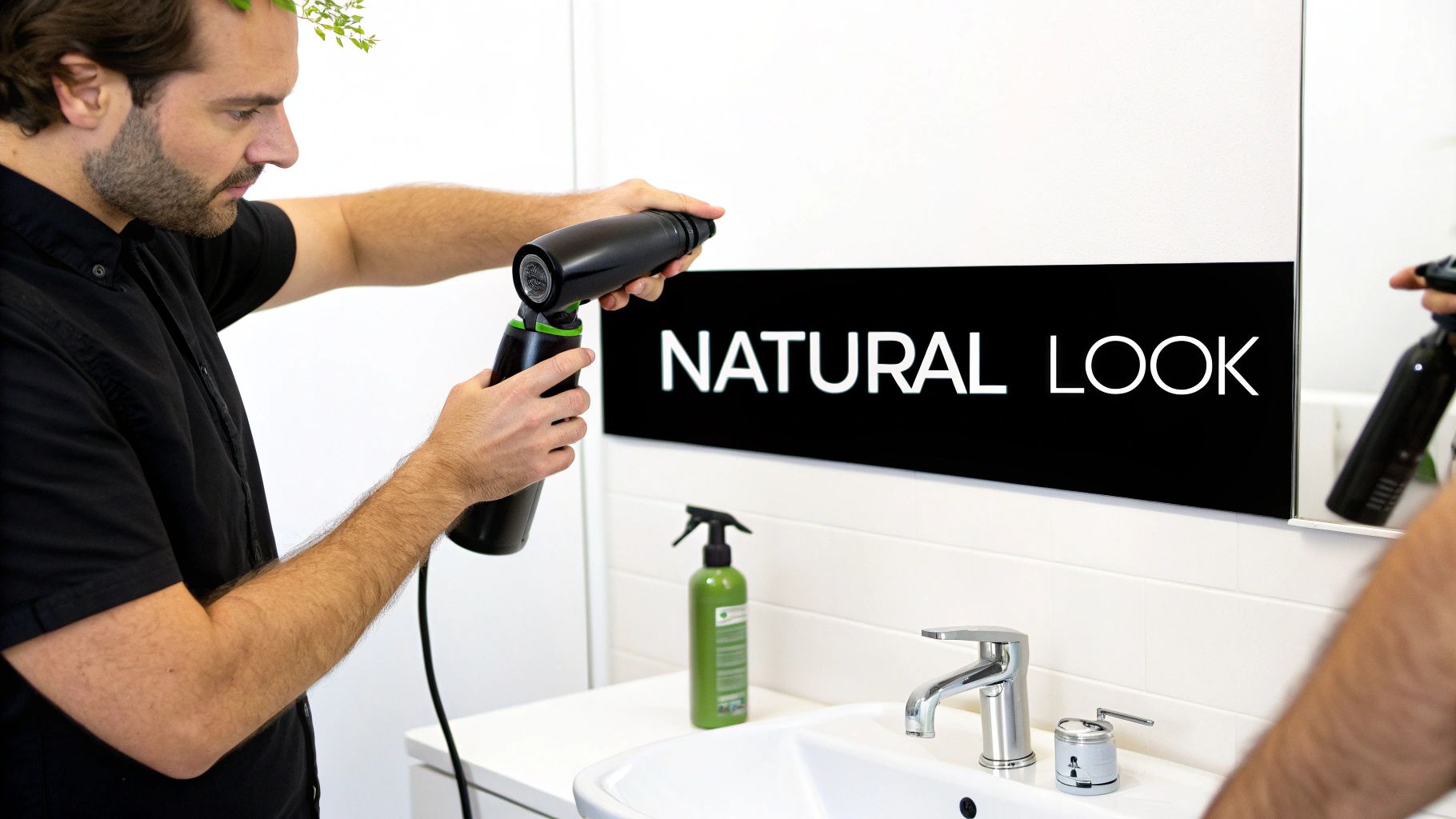
Think of it like painting a wall. If you just slap on one thick, heavy coat, it looks messy and uneven. But if you apply several thin, even layers, you build up to a flawless finish. The exact same idea applies to your hair: less is almost always more. Building up slowly is the key.
Mastering Your Application Technique
Every product works a little differently, so your technique has to adapt. Going too heavy on hair fibers can leave a dusty-looking residue, while overdoing it with spray can make your hair stiff and crunchy. Let's walk through the right way to apply each type so you can nail it every single time.
For Hair Fibers and Scalp Concealers:
- Start With Dry Hair: This is non-negotiable. Fibers and powders need dry hair to grab onto. If your hair is even slightly damp, you’ll just get clumping.
- Apply Sparingly: Hold the shaker a few inches above the thinning spots and gently tap or shake the fibers out. Aim for the hair strands themselves, not just your scalp.
- Pat, Don't Rub: Once the fibers are on, gently pat your hair with your fingertips. This simple action helps them settle and disperse naturally among your existing hair for a seamless blend.
- Lock It In: A light mist of a dedicated fiber-hold spray or even a flexible-hold hairspray will seal the deal, making the fibers resistant to wind, sweat, and light rain.
Getting this technique right is especially important for tricky spots like the crown or a receding hairline. For more advanced tips, our guide on how to hide bald spots has some great strategies that pair perfectly with these products.
Activating Volume with Sprays and Serums
When you're using thickening sprays and scalp serums, the game changes. It's less about precise placement and more about creating lift and a healthy scalp environment. This is where your blow dryer becomes more than just a tool for drying your hair—it's what activates the product and shapes your style.
The heat from a blow dryer is what makes the magic happen with thickening sprays. It activates the polymers in the formula, causing them to expand around each hair shaft. This one step can easily double the volumizing effect.
For Thickening Sprays and Styling Foams:
- Apply the product to damp, towel-dried hair. Really focus on the roots, since that's where you want the most lift.
- Grab your blow dryer and put it on a medium heat setting. As you dry, use your fingers or a wide-tooth comb to lift your hair up and away from the scalp.
- Point the airflow from the roots toward the ends. This builds volume without creating a frizzy mess.
For Scalp Serums and Topical Treatments:
- Apply the serum directly to your scalp, not your hair. Use the dropper to part your hair and place it right where it’s needed most.
- Gently massage it in with your fingertips for at least 30-60 seconds. Don't just rub it around—the massage itself is crucial for stimulating blood flow to the follicles, which helps the product absorb and work better.
- Give the serum a few minutes to fully absorb before you put anything else on top. You don't want to dilute it with other styling products.
At the end of the day, it's the small details in your routine that make all the difference. Taking that extra minute to apply products correctly will elevate your results from just "good" to "great" and give you that natural, fuller look you're after.
Looking Beyond Products for Hair Health
While the right thickening spray or shampoo can give you an instant visual boost, real, lasting hair health is built from the ground up. It’s not just about what you put on your hair—it’s about what you put in your body. A solid nutritional base, and sometimes advanced clinical treatments, are what make all those products work ten times better.
Think of it this way: you can spend all day waxing a car, but if the engine is running on bad fuel, it’s never going to perform. Your hair follicles are that engine. They need the right fuel—a steady stream of specific nutrients—to construct strong, healthy hair.
Fueling Your Follicles From the Inside
What you eat shows up in your hair. When your body runs low on essential vitamins and minerals, it has to prioritize, sending those nutrients to vital organs first. Your hair is often last in line, which can lead to weaker, brittle strands that are much more prone to thinning.
A great starting point is looking at your diet, especially the importance of sufficient protein intake. After all, hair is made almost entirely of a protein called keratin. Getting enough is non-negotiable.
Beyond protein, a few key micronutrients are all-stars for maintaining hair density:
- Biotin (Vitamin B7): You’ve probably heard of this one. Biotin is a powerhouse because it’s directly involved in producing keratin, the very building block of your hair.
- Iron: An iron deficiency can hit the brakes on the hair growth cycle and lead to shedding. Your body needs iron to make hemoglobin, which carries oxygen to the cells that kickstart hair growth.
- Zinc: This mineral is crucial for hair tissue growth and repair. It also helps the oil glands around your follicles do their job right. Low zinc levels are often linked directly to hair loss.
Hair growth supplements are designed to fill in any nutritional holes in your diet, giving your topical products a helping hand. This is a booming market for a reason; valued at around USD 810.14 million in 2024, it’s expected to climb to a staggering USD 2,876.85 million by 2033. For a deeper dive, check out our complete guide to the best hair growth supplements for men.
Exploring Advanced Clinical Options
For guys ready to get more aggressive in the fight against thinning, clinical treatments can offer a powerful advantage. These procedures work on a deeper level than over-the-counter products by directly stimulating the hair follicles to wake up and get back to work.
One of the most promising options out there is Platelet-Rich Plasma (PRP) therapy. This isn't a cream or a pill; it's a medical procedure that harnesses your body's own natural healing powers to rejuvenate your scalp.
PRP therapy is a straightforward three-step process:
- First, a small sample of your blood is drawn, just like a routine blood test.
- Next, that blood is spun in a centrifuge to separate the platelets and create a super-concentrated plasma packed with growth factors.
- Finally, this "liquid gold" is injected into the areas of your scalp where you're experiencing thinning.
Those growth factors are like a wake-up call for tired or dormant hair follicles, encouraging thicker, healthier hair to grow over the following months. It’s a way of using your own biology to turn the tide on hair thinning.
Common Questions About Hair Thickening Products
Even after wading through all the options, you've probably still got a few questions. That's completely normal. Finding the right hair thickening product isn't a one-size-fits-all deal, and a little extra clarity goes a long way.
Let’s clear up some of the most common things guys wonder about before diving into a new routine.
How Long Does It Take to See Results?
This is the big one, right? The honest answer is: it really depends on what you're using.
Cosmetic thickeners like hair fibers or volumizing sprays give you that instant "wow" factor. You shake them on or spray them in, and boom—your hair looks fuller right away. They're designed for a quick, temporary fix.
On the other hand, long-term solutions like growth shampoos or scalp treatments require a different mindset. These products work with your body's natural hair growth cycle, so you have to be patient. You're looking at a minimum of 3 to 6 months of consistent, daily use before you'll see a noticeable difference. I can't stress this enough: consistency is everything.
Can These Products Stop Male Pattern Baldness?
It's crucial to have the right expectations here. Most hair thickening products are about improving the look of the hair you have and creating a healthy environment for it to grow. While some ingredients can help slow down thinning, they are not a cure for male pattern baldness. That’s a complex genetic and hormonal condition.
Think of it like this: cosmetic products are fantastic for camouflage, hiding thin spots and creating an illusion of density. Therapeutic products are more like a personal trainer for your follicles, working to get your existing hair as strong and healthy as it can be.
If you're looking for medically proven treatments that can actually stop or reverse hair loss, your best move is to talk to a dermatologist or a hair loss specialist.
Are Hair Thickening Products Safe for Daily Use?
For the most part, yes. The majority of quality thickening shampoos, conditioners, and serums are formulated to be gentle enough for you to use every single day. The trick is to scan the ingredient list for harsh chemicals like sulfates, which can strip your scalp of its natural oils and cause irritation over time.
With concealers like hair fibers or powders, it's a good habit to wash them out before you go to bed. This gives your scalp a chance to breathe overnight, which is key for keeping things healthy up there. And a golden rule for anything new you try: always do a quick patch test on a small, hidden patch of skin first to make sure you don't have a bad reaction.
Will People Know I'm Using a Product?
When you get the hang of it, the best products are completely invisible. Seriously. The secret sauce is a combination of two things: picking the perfect color match for your hair and mastering the application.
The universal rule is to start with less and build up slowly. A light hand is your best friend. When you learn to blend the product seamlessly into your existing hair, all anyone will see is natural-looking fullness—your secret will be safe.
At PRP For HairLoss, we believe that knowing all your options is the first step toward feeling confident again. While the right products are a fantastic tool, exploring advanced treatments can offer more significant and lasting results. Learn more about how PRP therapy can be a powerful part of your hair health journey by visiting us at https://prpforhairloss.com.

 PRP For Hairloss
Leave a comment