Noticing a bit more scalp showing through than you’d like? You're definitely not alone. The good news is, you have more control over the situation than you might think. Getting back to thicker, fuller-looking hair doesn't have to start with pricey, complicated treatments. The journey really begins in your own shower, with a few simple but powerful tweaks to your daily routine.
Think of it like tending a garden. For anything to grow well, you first have to get the soil right. That's precisely what we're doing here—creating the perfect environment for your hair follicles to get back to doing their best work.
Building Your Foundation for Thicker Hair
Let's get straight to it. These are the practical, immediate changes that lay the groundwork for everything else.
Start with Smarter Shower Habits
That steaming hot shower might feel amazing, but it’s doing your hair zero favors. Scalding water strips your scalp of its natural protective oils, leaving it dry, irritated, and inflamed—a terrible environment for hair growth.
The fix is ridiculously easy: turn the temperature down. Lukewarm water is all you need to get clean without stressing out your scalp and hair. It’s a tiny change that makes a huge difference over time.
Gentle Handling Is Non-Negotiable
Thinning hair is fragile hair. When you jump out of the shower and scrub your head with a towel like you're trying to start a fire, you're literally snapping off weakened strands. Same goes for yanking a comb through wet hair, which is when it's at its most vulnerable.
So, ditch the rough towel-drying. Instead, gently pat your hair dry or use a soft microfiber towel to blot away the moisture. When you need to detangle, reach for a wide-tooth comb and carefully work from the ends up to the roots. This simple shift prevents a ton of unnecessary pulling and breakage.
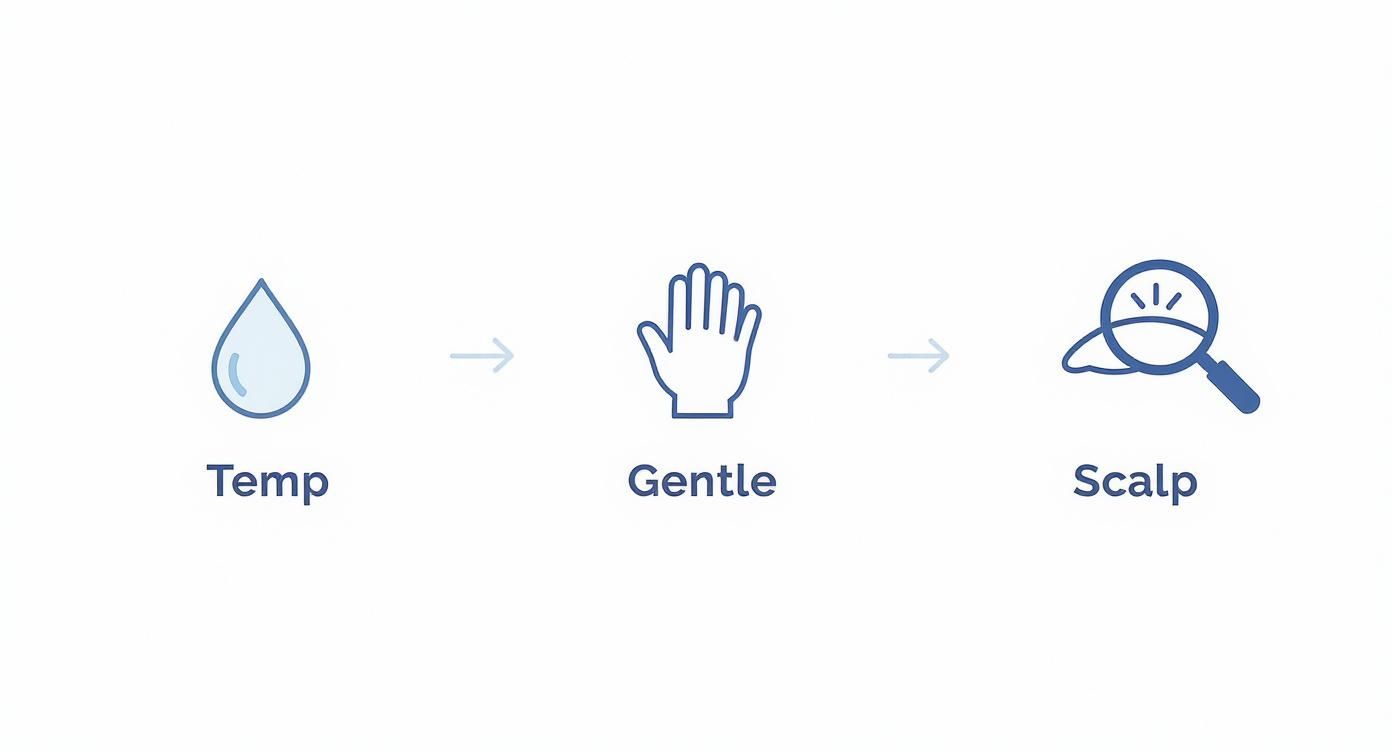
Mastering these basics—cooler water, gentle handling, and scalp focus—sets the stage for healthier, stronger hair growth.
Your Scalp Is the Main Event
It’s easy to focus on the hair itself, but the real action happens at the root. Your scalp is skin, and it needs to be treated that way. A scalp clogged with product buildup, dead skin cells, and oil is like trying to grow a plant in compacted, unhealthy soil. It just won't work well.
Your hair will only be as healthy as the scalp it grows from. Prioritizing scalp care isn't an optional step; it's the most critical part of any effective hair thickening strategy.
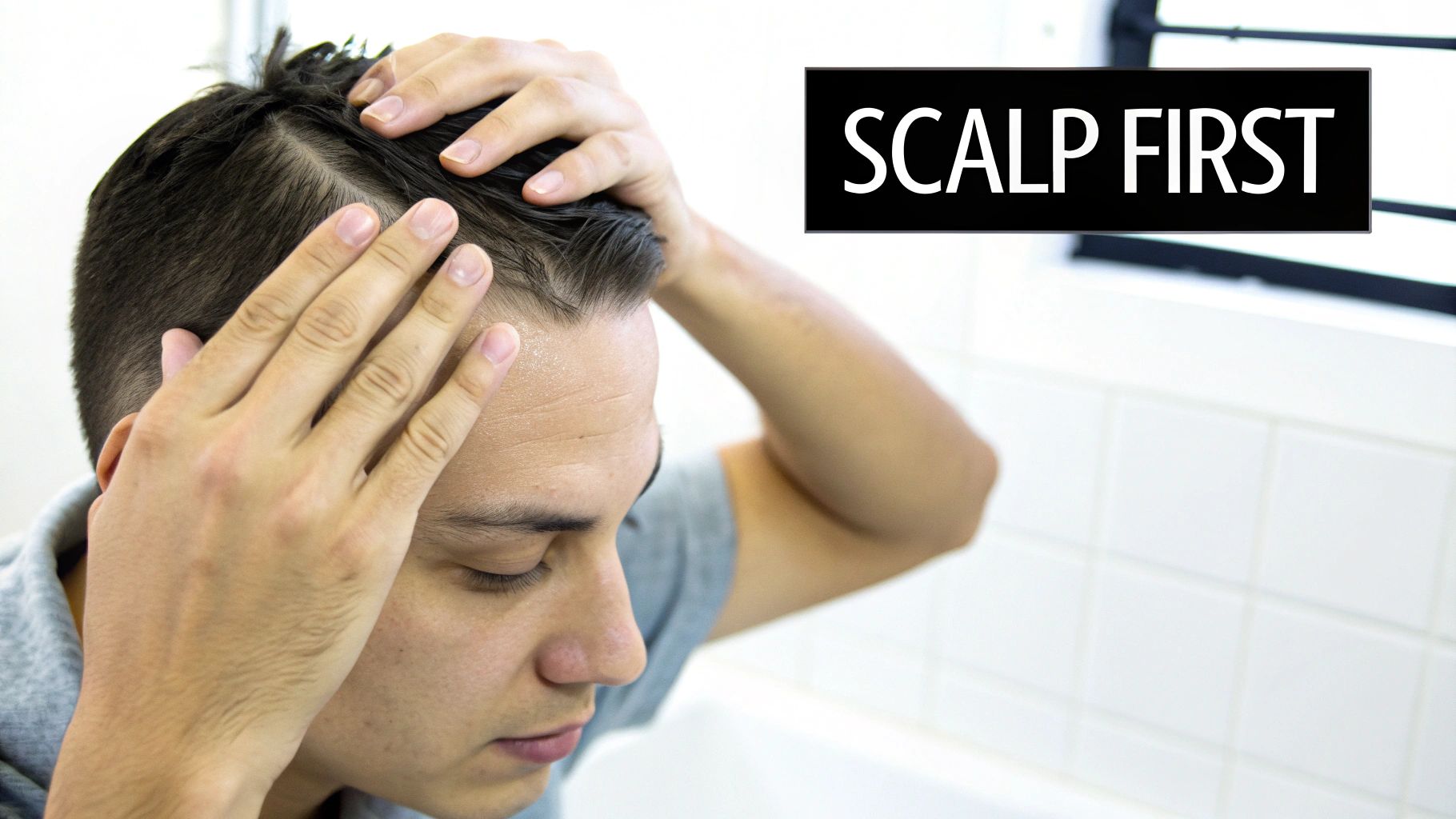
Turn your daily shampoo into a treatment. As you lather up, use your fingertips (not your nails!) to gently massage your scalp for a minute or two. This simple act boosts blood flow, which helps deliver vital oxygen and nutrients directly to your hair follicles. For more on this, check out this guide on how to increase hair thickness.
If you're feeling discouraged, remember that you're in the majority. Studies show that by age 35, roughly 66% of men deal with noticeable thinning. By the time they're older, about 85% of men will have experienced some degree of hair loss. These foundational habits are your first and best line of defense.
Here’s a quick-start guide to put these foundational habits into action right away.
Immediate Actions for Thicker-Looking Hair
| Action | Why It Helps | Quick Tip |
|---|---|---|
| Use Lukewarm Water | Prevents stripping the scalp's natural protective oils, reducing dryness and irritation. | Test the water on your wrist; it should feel comfortable, not hot. |
| Gentle Towel Drying | Reduces physical stress and breakage on fragile, thinning hair strands. | Pat or squeeze hair with a soft towel instead of rubbing vigorously. |
| Scalp Massage | Stimulates blood circulation to the hair follicles, delivering more nutrients for growth. | Use the pads of your fingers in a circular motion for 1-2 minutes while shampooing. |
| Use a Wide-Tooth Comb | Minimizes pulling and snapping of hair, especially when it's wet and at its weakest. | Always start combing from the ends and work your way up to the roots. |
Putting these simple practices into place costs nothing but can have a significant impact on the health and appearance of your hair as you begin your journey to reclaim thickness.
Fueling Hair Growth From the Inside Out
Getting your scalp in top shape is a fantastic start, but building genuinely thick, resilient hair really happens from the inside. Think of it this way: your hair follicles are like tiny factories. What you eat and how you live provide the raw materials and operating conditions for those factories.
This isn't about some miserable, restrictive diet. It's about being strategic. You're simply making smart additions to your plate that give your follicles the exact building blocks they need to thrive. Let's dig into the key players that can help you win this fight.
The Building Blocks Your Hair Craves
At its core, your hair is made of a protein called keratin. If you're not getting enough protein in your diet, your body simply can't produce strong hair. It’s like trying to build a brick house with no bricks—the whole operation grinds to a halt.
This is where you can make some really simple but powerful changes. Just aim to get a quality protein source in with every meal.
- Breakfast: Swap that plain bagel for a couple of scrambled eggs or a bowl of Greek yogurt.
- Lunch: Toss some grilled chicken, chickpeas, or lentils into your salad.
- Dinner: Build your meal around lean meats, fish like salmon (a double win with its omega-3s), or tofu.
Beyond protein, certain micronutrients are just as critical. Take iron, for example. It's responsible for carrying oxygen through your bloodstream. When you're low on iron, your hair follicles are one of the first non-essential systems your body rations oxygen from.
Key Nutrients for Thicker Hair
Here are a few more nutritional powerhouses to get on your radar:
- Biotin (Vitamin B7): This is the famous "hair vitamin" for a reason—it’s crucial for producing keratin. You’ll find it in eggs, almonds, and sweet potatoes.
- Zinc: This mineral is a workhorse for hair tissue growth and repair. It's no surprise that a zinc deficiency is often linked to hair loss. Oysters, beef, and pumpkin seeds are loaded with it.
- Vitamin C: This antioxidant does two things well: it helps your body produce collagen (which strengthens hair strands) and improves iron absorption. So, load up on citrus fruits, bell peppers, and strawberries.
If you want a deeper look at the science behind what feeds your follicles, this guide on vitamins for hair growth is a fantastic resource.
Just remember, this is a long game. It can easily take three to six months for the benefits of a better diet to show up in your hair. Consistency is everything.
Optimizing your diet is a huge step, and if you want to take it even further, understanding the best supplements for cellular health and longevity can provide a real edge. After all, healthy cells are the foundation for everything, including robust hair follicle activity.
The Silent Hair Killers: Stress and Sleep
You can have the perfect diet, but if you're chronically stressed out and not sleeping, you're fighting an uphill battle. High levels of cortisol—the stress hormone—can actually shove your hair follicles out of their growth phase and into a resting/shedding phase.
This condition, called telogen effluvium, leads to that sudden, diffuse thinning all over your head. It’s a very real physical response to intense stress.
Getting a handle on stress is non-negotiable. This doesn't mean you need to start meditating for an hour every day. Simple things work wonders:
- Take a 15-minute walk at lunch.
- Put your phone away and read a book for 20 minutes before bed.
- Get back into a hobby you enjoy a few times a week.
In the same vein, poor sleep sabotages your body's ability to repair and regenerate—a process your hair follicles absolutely depend on. Aiming for 7-9 hours of quality sleep a night gives your body the time it needs to produce the hormones that drive healthy cell turnover and growth. It's the internal support system your hair needs to thrive.
Smart Styling for Maximum Fullness
While you're playing the long game with treatments and lifestyle changes, how you style your hair each day can make an immediate, massive difference. This isn't about some elaborate cover-up; it's about using smart techniques to create the illusion of more volume and density. Think of it as your daily playbook for looking and feeling your best.
The secret is to work with your hair, not against it. The right cut, a few key products, and even the way you aim your blow dryer can completely change the perception of thickness. It's about working smarter, not harder, to get the look you want right now.

The Right Haircut Is Half the Battle
A common mistake men make with thinning hair is growing it out. The logic seems sound—more hair to cover things up—but in reality, long, thin hair gets weighed down easily. This can make it look stringy and actually highlight sparse areas, particularly on the crown.
A shorter, more textured style is almost always the better move. When you talk to your barber or stylist, here are a few winning ideas:
- The Textured Crop: This is a fantastic option. It keeps the sides tidy while leaving things a little longer and messier on top. That choppiness creates dimension and makes your hair look way fuller than it is.
- Strategic Layering: A few light layers on top can work wonders. They prevent the hair from lying flat against your scalp, creating natural movement and the appearance of more body.
- The Buzz Cut: If your thinning is more advanced, don't fight it—embrace it. A classic buzz cut is a powerful, confident look that dramatically reduces the contrast between your hair and scalp.
A great rule of thumb is to always keep the sides tighter than the top. This trick of the eye automatically draws attention upward, faking height and fullness right where you want it. For more inspiration, you can find a ton of practical ideas on how to style thinning hair and make it your own.
Choosing Your Product Arsenal Wisely
Navigating the product aisle is tough, but here’s a simple rule for thinning hair: go for lightweight lift, not heavy hold. Steer clear of those thick, gunky gels, heavy waxes, and greasy pomades. They’ll just clump your hair together, exposing more scalp and weighing everything down in the process.
Instead, your new best friends are products that feel almost weightless. Look for things like volumizing mousses, root-lifting sprays, or thickening tonics. These are designed to subtly coat each hair shaft, making it feel and look thicker without that heavy, greasy feeling.
Don't confuse stiffness for volume. The best styling products for thinning hair create a touchable, natural fullness that moves, rather than a stiff, helmet-like shell.
Dry shampoo can also be a secret weapon. Even on clean hair, a quick spray at the roots adds instant grit and texture, absorbing any scalp oil that might be flattening your style.
The Blow-Drying Technique That Changes Everything
If you’re still letting your hair air-dry flat against your head, you're missing out on a huge opportunity for free volume. A blow dryer is more than just a tool for getting dry; it's your number-one tool for creating lift from the root.
This game-changing technique takes less than two minutes:
- First, gently towel-dry your hair until it's just damp. Apply a small amount of your go-to volumizing product, focusing on the roots.
- Next, use your fingers to lift sections of your hair up and away from your scalp. Aim the blow dryer's nozzle right at the base, drying the roots in the opposite direction they naturally grow. This forces them to stand up.
- Finally, once your hair is mostly dry, hit it with a blast of cool air from the dryer. This "cool shot" is crucial—it sets the style in place and locks in all that volume you just created.
It's a simple process, but it makes a world of difference. By creating space between the hair strands and lifting them off the scalp, your hair will instantly look thicker and fuller every single morning.
Exploring Over-The-Counter Hair Treatments
When you've dialed in your diet and upgraded your hair care routine but still aren't seeing the thickness you want, it's time to look at the next line of defense. The pharmacy aisle isn't just for cough drops and allergy meds anymore; it's become a key battleground in the fight for fuller hair. This is where science-backed topical treatments step in, giving you a way to target thinning right at the source.
Let's be honest, the number of products promising a miracle cure can be overwhelming. The goal is to cut through that noise and focus on what actually has a fighting chance of working, based on real evidence.

Minoxidil: The Gold Standard
If you're going to start anywhere with an OTC treatment, Minoxidil (you probably know it as Rogaine) is the place. It's one of the most rigorously studied topical solutions out there and is FDA-approved to treat male pattern baldness.
So, what does it actually do? Think of it as a wake-up call for your hair follicles. Minoxidil is a vasodilator, meaning it helps widen the blood vessels in your scalp. This boosts blood flow, delivering more oxygen and vital nutrients to the follicles, which can kick them out of their dormant resting phase and back into an active growth cycle.
It's important to understand that Minoxidil doesn't magically create new follicles. Instead, it works to revive the ones you already have that have become sluggish or started to shrink. That’s why starting early is so crucial for getting the best results.
How to Use It and What to Realistically Expect
Using Minoxidil is straightforward, but consistency is non-negotiable. It usually comes as a 5% foam or liquid solution that you apply directly to a dry scalp once or twice daily. The trick is to get it on the skin, not just your hair. Massage it in gently and let it dry.
Now for the tough part: you have to be patient. You won't see a change in a week, or even a month. In fact, it's common to experience a temporary shedding phase during the first few weeks. Don't panic. This is often a good sign that the treatment is pushing out old, weaker hairs to make room for new, healthier ones to grow.
You need to commit to at least four to six months of consistent, daily use before you can accurately judge your results. Stopping the treatment will, unfortunately, reverse any gains you’ve made within a few months.
For a more detailed timeline, our guide on how soon Rogaine works breaks down what you can expect month by month. Just remember, this is a long-term commitment, not a quick fix.
Comparing Popular Over-The-Counter Hair Treatments
With so many products on the shelf, choosing the right one can feel like a shot in the dark. This table breaks down the most common OTC options to help you figure out which approach best fits your situation.
| Treatment | How It Works | Best For | Potential Side Effects |
|---|---|---|---|
| Minoxidil (5%) | Widens blood vessels to improve nutrient flow to follicles, reactivating the growth cycle. | Men with genetic hair loss (male pattern baldness), especially at the crown. | Scalp irritation, itching, unwanted facial hair growth, initial shedding phase. |
| Ketoconazole Shampoo | An anti-fungal that reduces scalp inflammation and dandruff. May have mild DHT-blocking effects. | Men with scalp issues like dandruff or dermatitis contributing to hair thinning. | Dryness, itching, change in hair texture. Generally well-tolerated. |
| Saw Palmetto Serums | A plant-based extract thought to inhibit the enzyme that converts testosterone to DHT. | Men in the very early stages of thinning looking for a natural, milder approach. | Minimal side effects when used topically, though less potent than other options. |
Ultimately, the best choice depends on the cause and severity of your hair thinning. For many guys, a combination approach—like using a ketoconazole shampoo alongside Minoxidil—can create a healthier scalp environment and yield better results.
Other Players in the OTC Game
While Minoxidil is the main event, a few other ingredients can play a strong supporting role in your routine.
- Ketoconazole: This anti-fungal, famously found in Nizoral shampoo, is a powerhouse for creating a healthy scalp. By fighting inflammation and dandruff, it helps establish a better foundation for hair to grow. Some studies even suggest it has mild anti-androgenic effects, helping to counter the impact of DHT right at the scalp.
- Saw Palmetto: Often found in serums and shampoos, this plant extract is believed to act as a natural DHT blocker. The evidence isn't as strong as it is for prescription drugs, but some men with mild to moderate thinning have seen positive results.
The demand for solutions has turned this into a huge market. The global hair thinning treatment sector was recently valued at USD 1.51 billion, and it's only getting bigger. Making a smart choice here is the key to not wasting your time and money.
Exploring Professional and Medical Options
When you've tried everything at home—the right shampoos, the lifestyle tweaks, the over-the-counter foams—and you're still not seeing the results you want, it might be time to bring in the heavy hitters. For a lot of guys dealing with noticeable thinning, the most effective solutions are waiting in a dermatologist's or hair restoration specialist's office.
This is where we move beyond general upkeep and into targeted, medical-grade treatments designed to make a real, lasting impact.
Think of it as calling in the specialists. These options work on a biological level, getting to the root causes of hair loss in ways that topical products simply can’t.
Prescription Power: Finasteride Explained
If you're dealing with classic male pattern baldness, you've probably heard of Finasteride, which is most commonly known by its brand name, Propecia. This isn't a cream you rub on your scalp; it's a daily pill that fights hair loss from the inside out.
So how does it work? Finasteride's main job is to block an enzyme called 5-alpha reductase. This enzyme is the culprit that converts your normal testosterone into a much more potent hormone called dihydrotestosterone (DHT). For guys genetically wired for hair loss, DHT is public enemy number one. It latches onto your hair follicles, causing them to shrink, weaken, and eventually give up on producing hair altogether.
By drastically reducing the amount of DHT in your system, Finasteride acts like a bodyguard for your hair follicles, protecting them from this shrinking process. This can stop hair loss in its tracks and, for many men, even lead to noticeable regrowth as those miniaturized follicles get a chance to recover. Because it’s a prescription, this journey starts with a conversation with your doctor.
Advanced In-Office Therapies
Beyond a daily pill, clinics now offer procedures that can directly stimulate the scalp and essentially wake up dormant follicles. Two of the most common and effective non-surgical options are Platelet-Rich Plasma (PRP) therapy and Low-Level Laser Therapy (LLLT).
These treatments take a more direct route. They aren’t focused on blocking hormones but on delivering a concentrated blast of growth factors and energy right where your hair needs it most.
Professional treatments aren't just a last resort. Starting them earlier can be a powerful preventative move, helping you keep the hair you have while working to regain what you've lost.
Looking into these options with a professional will give you a much clearer idea of what's achievable for your specific situation. If you want to get a head start, digging into the details of non-surgical hair restoration can arm you with great information before you even book an appointment.
A Closer Look at PRP and LLLT
Okay, so what are these treatments actually like? What happens in the clinic?
-
Platelet-Rich Plasma (PRP) Therapy: This is pretty cool because it uses your body's own natural healing abilities. A small sample of your blood is taken (just like a normal blood test) and spun in a centrifuge. This machine separates out the platelets to create a "platelet-rich plasma" that's packed with powerful growth factors. This liquid gold is then meticulously injected into the areas of your scalp where the thinning is happening. The goal is to give the stem cells in your follicles a potent wake-up call, nudging them back into an active growth phase.
-
Low-Level Laser Therapy (LLLT): This is a completely painless and non-invasive option. LLLT devices usually come in the form of a cap, helmet, or comb that uses medical-grade lasers to shine a low-level light energy directly onto your scalp. The cells within your follicles absorb this light, which is believed to boost blood flow and fire up their metabolism. It’s like a workout for your follicles, giving them the energy they need to work better and stay in their growth phase longer.
Both PRP and LLLT typically require a series of sessions to achieve the best results. They’re also frequently used as part of a combined strategy, working alongside treatments like minoxidil or finasteride to attack hair loss from every possible angle. The key is talking to a specialist who can diagnose your type of hair loss and build a safe and effective plan that’s right for you.
Answering Your Hair Thickening Questions
It's completely normal to have questions when you're starting down this path. The world of hair loss is full of myths and "quick fixes," so let's cut through the noise and get you some straight answers to the most common concerns.
How Long Does It Really Take to See Thicker Hair?
Patience is probably the toughest part of this whole process. Whether you're using a topical like Minoxidil or taking a prescription medication, you need to be prepared for the long haul. You're looking at a minimum of three to six months of consistent, daily use before you'll see any meaningful changes.
You might even notice some extra shedding in the first few weeks. Don't panic. This is usually a good sign—it means the treatment is pushing out old, dormant hairs to make room for new, healthier ones to grow in. Think of it as a necessary clearing of the way for better things to come.
Is It Okay to Combine Different Treatments?
Not only is it okay, it's often the best way to get results. A lot of guys find the most success by attacking hair loss from multiple angles. For example, a doctor might suggest using topical Minoxidil to kickstart follicle activity on the scalp while also prescribing oral Finasteride to tackle the internal, hormonal triggers of hair loss.
You can then back up these medical approaches with a solid diet, smarter styling habits, and a scalp-care routine that creates the best possible environment for growth. The only rule here is to always run your plan by a doctor before mixing any medical or prescription treatments to make sure they're safe for you.
The most powerful hair restoration plans are almost always layered. When you combine a proven medical treatment with supportive lifestyle changes, you give yourself the best possible shot at getting the results you're after.
Do Those "Thickening" Shampoos Actually Work?
They can help, but you have to manage your expectations. A shampoo alone isn't going to regrow your hair, but it can be a fantastic supporting player in your overall strategy.
For one, many of these shampoos have ingredients that coat each hair strand, temporarily swelling the shaft to make your hair look and feel thicker right after washing. Secondly, some contain ingredients like ketoconazole, which is great for taming scalp inflammation—a known enemy of healthy hair growth. View them as a cosmetic boost and a way to improve scalp health, not as a primary treatment.
Will Wearing a Hat Make Me Go Bald Faster?
This is one of the oldest myths in the book, and it's time to put it to bed. Wearing a regular, clean hat does not cause hair loss. Your hair follicles get everything they need—oxygen, nutrients—from your bloodstream, not from the air.
The only exception is a rare condition called traction alopecia, which is caused by hairstyles or headwear that are so tight they constantly pull on the hair roots for long stretches. But for the average guy wearing a baseball cap? You're completely fine. Just make sure it fits well and you keep it clean.
At PRP For HairLoss, we know that the best decisions are informed ones. Understanding all your options, from daily habits to advanced medical therapies, is the key to building a strategy that truly works for you. Take a look through our resources to get a handle on the science and find your best path forward.
Learn more at https://prpforhairloss.com

 PRP For Hairloss
Leave a comment