If you've ever felt like your ponytail isn't as thick as it used to be or you're seeing a bit more scalp than you'd like, you're in the right place. It’s a common worry for many of us, but the great news is that you can absolutely take control and make a real difference.
Getting thicker hair isn't about chasing some mythical quick fix. It’s about building a solid foundation through a consistent, well-rounded strategy. I like to think of it as a three-pronged attack: nourishing your hair from the inside out, overhauling your daily hair care habits, and making a few smart lifestyle tweaks. This combination is everything—a single product just can't make up for a poor diet or damaging routines.
Your Journey to Thicker Hair Starts Now
We're going to cut through the noise and focus on what actually works. This guide is your roadmap to real, lasting results, built on a few core principles:
- Fueling from Within: Your hair follicles are tiny factories that need the right raw materials—proteins, vitamins, and minerals—to build strong, thick strands. We'll show you what to eat.
- Creating a Healthy Scalp Environment: A healthy scalp is the bedrock of healthy hair. We'll cover how to keep it clean, stimulated, and free of the gunk and inflammation that can suffocate follicles.
- Making Smart Lifestyle Choices: Stress, poor sleep, and certain daily habits can wreak havoc on your hair's growth cycle. Recognizing and managing these factors is a game-changer.
This infographic lays out the foundational pillars for improving hair thickness, showing how what you eat, how you live, and how you care for your scalp all fit together.
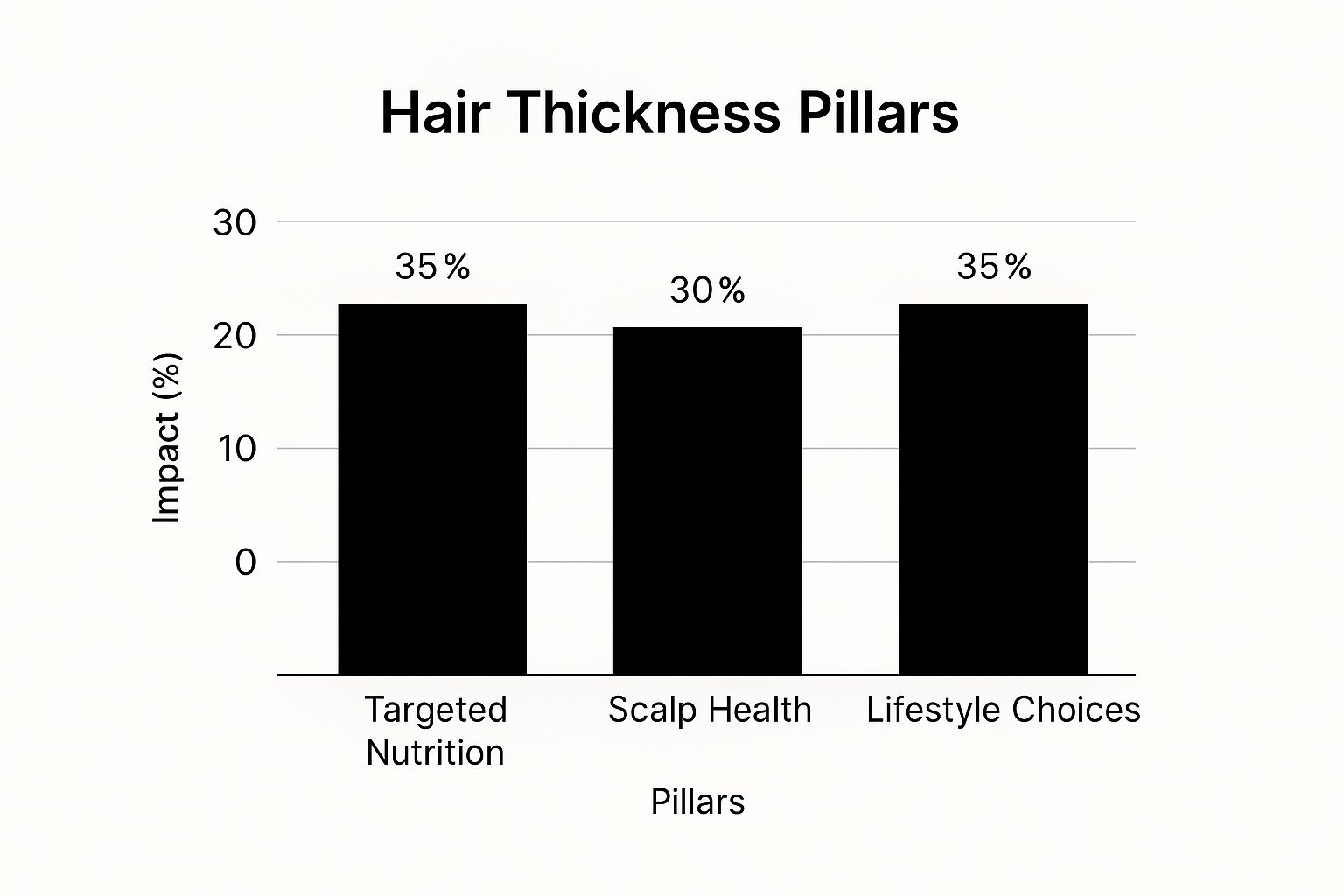
As you can see, what you do every day—your lifestyle and nutrition—carries just as much weight as any specific hair care product.
A Holistic Approach Delivers the Best Results
I like to think of hair like a garden. You can't just toss some seeds on the ground and hope for the best. For plants to thrive, they need good soil (your scalp), the right nutrients (your diet), and a healthy environment (your lifestyle).
If you neglect one area, it will always undermine your efforts in another. For example, you could buy the most expensive thickening serum on the market, but it won't do much if your diet is short on protein or if chronic stress is forcing your hair into a premature shedding phase.
The only truly effective path to thicker hair is a synergistic one. When you make positive changes to your diet, routine, and daily habits, they all work together to unlock your hair's full growth potential.
For a quick overview, this table breaks down the core strategies we'll be diving into.
Key Strategies for Increasing Hair Thickness at a Glance
| Pillar | Primary Focus | Key Action |
|---|---|---|
| Nutrition | Internal Fuel & Building Blocks | Prioritize protein, iron, zinc, and biotin-rich foods. |
| Scalp Care | Growth Environment | Use gentle, targeted products and incorporate regular scalp massage. |
| Lifestyle | Hormonal & Systemic Balance | Manage stress, prioritize 7-9 hours of sleep, and stay hydrated. |
This table serves as a handy cheat sheet, but now it's time to get into the details. Throughout the rest of this guide, we'll explore each of these pillars with actionable steps and practical advice you can start using today. Let's get started on building that fuller, healthier head of hair.
Fuel Your Follicles from the Inside Out

If you're serious about getting thicker hair, the first place to look isn't your bathroom cabinet—it's your kitchen. I’ve seen it time and again: you can’t build a strong house with shoddy materials, and you can’t expect your body to produce thick, healthy hair without the right nutrients.
Your hair follicles are like tiny factories that need a constant supply of specific raw materials to build strong, robust strands. When those supplies run low, production slows down, and the hair that does grow is often weaker and thinner. Turning every meal into a chance to nourish your follicles is genuinely one of the most powerful steps you can take.
The Building Blocks of Thicker Hair
At its core, hair is made of a tough protein called keratin. When your diet is low in protein, your body has to ration it, prioritizing essential functions over things like hair growth. This is a common culprit behind increased shedding and strands that feel noticeably thinner and more brittle.
To counter this, you need to make sure you're getting enough high-quality protein every day. Don't worry, this doesn't mean you have to live on steak and chicken. To give your hair the protein it craves, you could explore some high-protein meal plans to get started.
Here are some of my go-to protein sources to add to your grocery list:
- Lean Meats: Chicken, turkey, and lean cuts of beef are packed with the amino acids needed for keratin production.
- Fish: I especially recommend fatty fish like salmon and mackerel. They provide protein plus anti-inflammatory omega-3 fatty acids, which are fantastic for scalp health.
- Eggs: Often called nature's multivitamin for a reason. Eggs are a brilliant source of both protein and biotin.
- Legumes: Lentils, chickpeas, and beans are excellent and affordable plant-based options.
- Greek Yogurt: This provides a serious protein punch and is great for breakfast or a snack.
A common mistake I see is people focusing only on protein while forgetting the key vitamins and minerals that help the body actually use that protein effectively. These micronutrients are the essential support crew for your hair-building factories.
For a deeper dive into the specific roles these nutrients play, you might be interested in our detailed guide on essential vitamins for hair growth.
Are You Missing Key Nutrients?
Sometimes, thinning hair is one of the first warning signs that your body is low on a key nutrient. For instance, iron deficiency (anemia) is a major—and often overlooked—cause of hair loss, particularly in men. Iron helps red blood cells carry oxygen, and without enough of it, your follicles are literally starved of the oxygen they need to thrive.
Similarly, low levels of zinc can throw the hair growth cycle out of whack and lead to increased shedding. Zinc is critical for hair tissue growth and repair, and it helps keep the oil glands around the follicles working properly.
Keep an eye out for these tell-tale signs:
- You're seeing more hair in the shower drain or on your brush.
- Your hair just feels weaker or breaks more easily than it used to.
- The thinning seems to be happening all over, not just in one spot.
If you suspect a deficiency, your best bet is to see a doctor. They can run simple blood tests to give you a clear answer. Please don't start popping iron pills on your own—self-supplementing can be risky if you don't actually need it.
Getting an Extra Boost with Supplements
While a food-first approach is always best, let's be realistic: it can be tough to get optimal levels of every single nutrient from your diet alone. This is where a good, targeted supplement can play a valuable supportive role.
The market for these products is absolutely booming, which tells us that more and more people understand the diet-hair connection. Hair growth supplements are a fast-growing part of the hair care industry. Valued at USD 810.14 million in 2024, this market is expected to skyrocket to USD 2.88 billion by 2033. People are moving toward natural and safe options containing vitamins, minerals, and omega-3s to boost their hair health from within.
If you decide to go this route, look for a formula that contains a smart blend of the most critical hair nutrients, not just a mega-dose of one or two.
Your Hair-Healthy Plate
Putting this all together doesn't have to be complicated. The goal is to consistently include hair-friendly foods in your daily routine. To make it easier, here’s a quick-glance table to help you build your shopping list and plan your meals.
Essential Nutrients for Hair Thickness
This table breaks down the most critical vitamins and minerals for hair health, explaining why they matter and where you can find them.
| Nutrient | Why It Matters for Hair Thickness | Found In |
|---|---|---|
| Protein (Amino Acids) | Provides the literal building blocks for creating strong keratin strands. | Lean meats, fish, eggs, Greek yogurt, lentils |
| Iron | Carries oxygen to hair follicles, which is essential for cell growth and function. | Red meat, spinach, lentils, fortified cereals |
| Zinc | Crucial for hair tissue growth, repair, and proper oil gland function around follicles. | Oysters, beef, pumpkin seeds, lentils |
| Biotin (Vitamin B7) | Plays a key role in keratin infrastructure, helping to improve hair's strength. | Eggs, nuts, seeds, sweet potatoes |
| Vitamin C | An antioxidant that helps produce collagen and improves iron absorption from plant sources. | Oranges, bell peppers, strawberries, broccoli |
By focusing on a diet rich in these key players, you're not just eating for your overall health—you're giving your body the exact tools it needs to build the thickest, strongest hair it possibly can.
Master Your Daily Hair Care Routine
Once you’ve got your nutrition dialed in, the next place to look for thicker hair is right in your own bathroom. A lot of us are unintentionally working against our hair goals with habits that seem harmless but actually lead to breakage and scalp issues. The key is to shift your daily routine from a simple chore to a proactive strategy for building hair density.
Think of your scalp as the soil in a garden. If that soil is clogged and unhealthy, you can't expect to grow strong, vibrant plants. It's the same with your hair—when product buildup, oil, and dead skin cells block your follicles, it chokes out new growth and weakens the hair you already have. A clean, stimulated scalp is absolutely non-negotiable.
Rethink Your Washing Strategy
One of the most common mistakes I see is an all-or-nothing approach to shampooing. Guys either wash way too often with harsh soaps or scrub their scalp like they're trying to sand a floor. Both of these strip away your scalp's natural oils (sebum), which can cause it to either dry out completely or go into oil-production overdrive.
The trick is to cleanse your scalp, not just your hair. For most guys, shampooing every 2-3 days is plenty. When you do wash, use the pads of your fingertips—never your nails—to gently massage a sulfate-free shampoo right onto your scalp. The lather will clean the rest of your hair as you rinse it out.
Choose Your Cleanser Wisely
The shampoo you use makes a huge difference. A lot of the stuff you find at the drugstore is loaded with harsh detergents like sodium lauryl sulfate (SLS). They create a big, foamy lather, but they can also be incredibly stripping over time, leaving you with an irritated scalp and brittle hair.
Instead, start reading labels and look for shampoos with:
- Gentle, sulfate-free cleansers that get the job done without disrupting your scalp's natural balance.
- Targeted ingredients known to help, like ketoconazole for dandruff and inflammation, or caffeine to help give follicles a boost.
- Nourishing components like biotin, saw palmetto, or pumpkin seed oil that contribute to a healthier scalp environment.
The Power of Scalp Stimulation
Beyond just keeping it clean, the simple act of massaging your scalp can be a total game-changer for hair thickness. A daily scalp massage is probably the easiest and one of the most effective ways to increase blood flow to your hair follicles. Better circulation means more oxygen and nutrients are delivered directly to the hair's root, setting the stage for stronger growth.
You don't need any fancy gadgets. Just spend a few minutes each day using your fingertips to apply firm, circular pressure across your entire scalp. It's a small habit that can yield big results over time. If you want to dive deeper, you can learn more about the best techniques for a scalp massage for hair growth.
Scalp massage is like a targeted workout for your hair follicles. By improving circulation, you're ensuring they get the top-tier fuel delivery needed to build stronger, thicker hair strands from the root up. It’s a simple habit with a powerful impact.
Gentle Styling Is Essential
How you treat your hair after the shower is just as critical as how you wash it. Hair is at its most fragile when it's wet. That vigorous, back-and-forth towel rub most of us do creates a ton of friction, roughing up the hair's outer layer and leading directly to breakage. Over time, that adds up to thinner-looking hair.
Ditch the rubdown. Instead, gently pat and squeeze the water out with a soft towel. Better yet, use an old cotton t-shirt, which is even gentler. When you need to comb it, always use a wide-tooth comb and start from the ends, carefully working your way up to the roots to avoid pulling and snapping strands.
Heat Styling The Right Way
Heat is one of the biggest enemies of thick, healthy hair. High temperatures from blow dryers can literally cook the protein that your hair is made of, leaving it weak and prone to breaking. Air-drying is always your best bet, but that’s not always practical.
If you have to use a blow dryer, live by these rules:
- Always use a heat protectant spray first. It creates a buffer that seriously reduces damage.
- Use the lowest heat setting you can get away with. You’re drying your hair, not roasting it. Use the cool shot button at the end to lock your style in place.
- Keep the dryer moving constantly. Don't blast one spot for too long.
By making these simple but crucial tweaks to your daily routine, you stop fighting your hair and start supporting it. This creates the perfect external environment to complement the internal work you’re doing with your diet, putting you on a clear path to visibly thicker, stronger hair.
Navigating Professional Hair Thinning Treatments
So you've fine-tuned your diet and perfected a gentle hair care routine, but you're still not seeing the thickness you're after. At this point, it might be time to explore professional treatments.
Stepping into the world of clinical options can feel a little intimidating, but understanding the science behind them makes it much easier to decide if one is right for you. Think of these not as quick fixes, but as targeted interventions designed to stimulate your follicles and genuinely improve your hair's overall health.
If you're dealing with thinning hair, you're in good company. It's an incredibly common issue, affecting an estimated 85% of men and 33% of women at some point. The emotional toll is real, which is why the demand for effective solutions has skyrocketed—a fact reflected in the overwhelmingly positive outcomes many patients report. You can find more insights into global hair loss statistics on medihair.com.
Before you commit to anything, the single most important step is to consult a dermatologist or a trichologist. A trained professional can get to the bottom of what’s causing your hair thinning—whether it's genetics, hormones, or something else entirely—and map out a plan that’s built specifically for you.
Platelet-Rich Plasma (PRP) Therapy
One of the most talked-about treatments for boosting hair thickness right now is Platelet-Rich Plasma (PRP) therapy. At its heart, PRP is a regenerative treatment that uses your body's own healing power to awaken dormant hair follicles and supercharge the growth of your existing hair.
The process itself is surprisingly straightforward. A small amount of your blood is drawn, just like a routine test. That sample is then spun in a centrifuge, which separates the platelets from everything else. These concentrated platelets—packed with powerful growth factors—are then carefully injected into the areas of your scalp where you need them most.
These growth factors essentially act as a wake-up call for underperforming follicles.
The best candidates for PRP are usually people in the earlier stages of hair thinning who still have active follicles, even if they've become miniaturized. It’s all about strengthening and thickening the hair you have, not trying to grow new hair where a follicle has completely died off. A typical treatment plan involves a few sessions, usually spaced about a month apart.
PRP therapy isn't about creating new follicles; it's about optimizing the ones you have. By delivering a concentrated dose of growth factors directly to the scalp, you're giving existing follicles the high-quality resources they need to produce thicker, stronger hair strands.
Topical and Light-Based Solutions
Beyond injectables like PRP, there are other proven, clinical-grade options you can discuss with your doctor. These often work well as part of a combined approach or as effective standalone treatments, depending on your situation.
-
Minoxidil (Rogaine): You've probably seen this on pharmacy shelves, but a prescription-strength version can be a game-changer. Minoxidil is a vasodilator, which means it widens blood vessels. When applied to the scalp, it boosts blood flow to the follicles, delivering a rush of oxygen and nutrients that helps them thrive and stay in their growth phase longer.
-
Low-Level Laser Therapy (LLLT): This is a non-invasive option that uses red light therapy, typically delivered through a cap, helmet, or comb. The light energy penetrates the scalp to stimulate cellular activity within the follicles, improving their function and encouraging the production of denser, healthier hair.
It's interesting to see how the principles behind stimulating scalp follicles apply elsewhere. In fact, if you look into eyebrow growth treatment options, you'll find similar concepts at play, like using growth serums or even PRP to rejuvenate follicles in that area.
Ultimately, navigating these options is best done with a professional guide. To get a full picture of what’s out there, take a look at our detailed breakdown of the best hair thickening treatments. With the right information and expert advice, you can confidently choose a path that aligns with your goals for achieving thicker, healthier hair.
The Hidden Lifestyle Factors Affecting Your Hair
We've covered what you eat and how you treat your hair, but let's talk about the less obvious culprits: what's going on in your head and how well you're sleeping. It's easy to forget, but your hair is often a direct reflection of your overall well-being. Making a few small, consistent changes to your lifestyle can create a powerful ripple effect, helping you build more resilient, thicker hair.
The mind-hair connection is no joke. When you're constantly under the gun, your body flips into survival mode and starts pumping out the stress hormone cortisol. A little bit is fine, but when cortisol levels are chronically high, it can seriously disrupt the delicate hair growth cycle. This can actually push more of your hair follicles into the shedding phase way too early.
I've seen it time and time again in my practice—a period of intense stress is often followed by noticeable hair thinning a few months down the line. It’s a delayed reaction that catches a lot of people completely off guard.
Taming Stress for Thicker Hair
Getting a handle on your stress isn't just a "nice-to-have" for your mental health; it's a critical part of any serious plan to get thicker hair. The goal isn't to live a stress-free life, because that's impossible. It's about building a toolkit of techniques to keep it from spiraling.
What works for one person might not do a thing for another, so you have to find what clicks for you. Here are a few practical strategies that I’ve found genuinely help my clients:
- Mindfulness and Deep Breathing: Seriously, even just five minutes of focused breathing can lower your cortisol. Try a simple box breathing exercise: inhale for four seconds, hold for four, exhale for four, and hold again. It’s surprisingly effective at hitting the reset button on your nervous system.
- Regular Physical Activity: You don't need to sign up for a marathon. A brisk 30-minute walk, a bike ride, or hitting the weights a few times a week is fantastic. Exercise is one of nature’s best stress-reducers and it also boosts circulation, which means more nutrients are getting delivered right to your scalp.
- Setting Boundaries: Honestly, sometimes the best stress management technique is learning to say "no." Overcommitting yourself at work or in your personal life is a one-way ticket to burnout, and your hair will often pay the price. Guard your time and energy.
Think of your hair follicles as being incredibly sensitive to your body's internal alarm system. When stress keeps that alarm ringing 24/7, non-essential systems like hair growth get put on the back burner. Calming that alarm gives your follicles the all-clear to get back to work.
The Critical Role of Quality Sleep
Sleep is prime time for your body's repair crew to get to work, and that absolutely includes your hair follicles. During those deep sleep stages, your body releases growth hormones and gets busy with cellular repair. If you consistently skimp on sleep, you're robbing your hair of this crucial nightly maintenance.
Making it a priority to get 7 to 9 hours of quality sleep is one of the best things you can do for your hair. If you struggle to fall or stay asleep, creating a solid wind-down routine can be a game-changer. Try shutting down all screens an hour before bed, reading a book, or taking a warm bath to signal to your body that it's time to power down.
Avoiding Hair-Hostile Habits
Finally, a few common habits can directly sabotage all your hard work. Making a conscious choice to cut back or quit can protect your hair from a lot of unnecessary damage. One of the biggest offenders here is smoking.
Smoking constricts your blood vessels, which chokes off blood flow all over your body—including to the tiny capillaries that feed your hair follicles. Less blood flow means less oxygen and fewer nutrients making their way to the scalp, which can lead to weaker, thinner hair over time. If you need another reason to quit, our guide explaining the link between smoking and hair loss breaks down exactly how this habit impacts your hair's health.
By actively managing your stress, prioritizing restorative sleep, and ditching habits that work against you, you’re creating an internal environment that doesn't just support, but actively encourages, healthy and thick hair growth.
Choosing Products That Actually Thicken Hair

Walking down the hair care aisle can feel like a maze. Every bottle seems to promise thicker, fuller hair, but how do you know what actually works? From my experience, the secret isn't in the marketing claims on the front—it's in the ingredient list on the back.
Many "volumizing" or "thickening" products just coat the hair shaft with polymers. This gives you a temporary sense of fullness, but it does absolutely nothing to address the root cause of thinning hair. For genuine, lasting results, you need to look for active ingredients that nourish the scalp and support healthy follicle function.
What to Look For
Let's cut through the noise and talk about what's backed by science. When you're scanning labels, keep an eye out for a few key players:
- Ketoconazole: You'll often see this in anti-dandruff shampoos, but it's great for more than just flakes. It helps calm scalp inflammation and has been shown to combat DHT, a hormone that's a major culprit in hair thinning.
- Caffeine: A jolt of caffeine isn't just for your morning coffee. When applied topically, it can help stimulate circulation in the scalp, delivering more nutrients and oxygen to your hair follicles.
- Saw Palmetto: This natural botanical extract is another DHT blocker that’s become a popular ingredient in formulas designed for hair thinning.
While you're looking for the good stuff, be sure to watch out for harsh detergents like sodium lauryl sulfate (SLS). It can strip your scalp of its natural oils, leading to irritation and dryness that definitely won't help your cause.
Think of your product choices as an investment in your scalp's health. The goal is to find formulas that nourish the follicles, not just ones that mask the problem with cosmetic fillers.
It's a booming market, with the global hair thinning industry valued at USD 1.51 billion in 2024 and projected to hit USD 2.75 billion by 2030. With so many options, being an informed consumer is your best bet. To help you sort through it all, we've put together a guide on hair growth products that actually work.
Your Hair Thickening Questions, Answered
As you start down the path of getting thicker hair, it's completely normal for questions to pop up. It’s a journey, after all. Let's clear up some of the most common things people ask so you know exactly what to expect.
How Long Until I Actually See Thicker Hair?
This is the big one, isn't it? Everyone wants to know when they'll see a difference. While there's no magic number, most people start noticing subtle improvements—maybe a little more body or less shedding—within 3 to 6 months of being really consistent with their routine.
But you have to play the long game. Hair growth happens in cycles, and it's a slow, steady process. For those truly noticeable, "wow, my hair looks so much fuller" results, you're realistically looking at closer to a year. Patience is a non-negotiable part of the process.
Is It Possible to Grow More Hair Follicles?
Here's a crucial piece of the puzzle: we're all born with a set number of hair follicles, and that number is determined by our genetics. You can't naturally create new ones.
The real strategy for thicker hair isn't about increasing your follicle count. It’s about two things: fattening up the diameter of each individual hair strand and waking up any follicles that have gone dormant, coaxing them back into their growth phase. That one-two punch is what creates the appearance of a much fuller, denser head of hair.
Do Thickening Shampoos Really Work?
The honest answer? It depends entirely on what’s in the bottle. A lot of so-called "thickening" shampoos just coat your hair strands with polymers to create a temporary illusion of fullness. It feels thicker for a day, but it washes right out without any lasting benefit.
If you want a shampoo that actually contributes to your goals, you need to become an ingredient detective. Look for products that contain active ingredients known to support a healthy scalp and hair growth, such as:
- Ketoconazole
- Caffeine
- Saw Palmetto
Think of these shampoos as a helpful supporting player in your overall routine, not the star of the show. They can help create the right environment for growth, but they work best when you’re also focusing on nutrition and the other strategies we've covered.


Leave a comment