Let's be real: seeing more of your scalp than you'd like can be a serious knock to your confidence. It's a journey a lot of us are on, but the conversation usually stops at treatments and supposed miracle cures. But what if the most immediate, powerful change you could make was sitting right there in the stylist's chair? The right haircut doesn't just 'hide' thinning; it works with your hair's new reality to create something genuinely stylish. It’s all about strategic layering, clever texturizing, and shapes that build volume exactly where you need it most.
We're moving past the outdated idea of a combover and into an era of smart, sharp styles that make the most of what you've got. This isn't about covering up; it’s about leveling up. We've put together a definitive guide to the best haircuts for thinning hair to help you reclaim your style. In this list, we'll break down specific cuts that create the illusion of thickness and density, from textured crops to strategic fades. We’ll get into why each style works, who it's best for, and exactly how to ask your barber or stylist for it. Let's dive into the cuts that can redefine your look—and more importantly, how you feel about your hair.
1. Textured Crop or Pixie Crop
The Textured Crop, often called a Pixie Crop, is a masterclass in using technique to create the illusion of density. This style keeps the hair short, usually around 1-2 inches on top, with strategically cut choppy layers that add volume, movement, and a deliberate, modern texture. It's one of the best haircuts for thinning hair because it tackles the problem head-on by removing the weight that can make longer, thinning hair look flat and sparse.
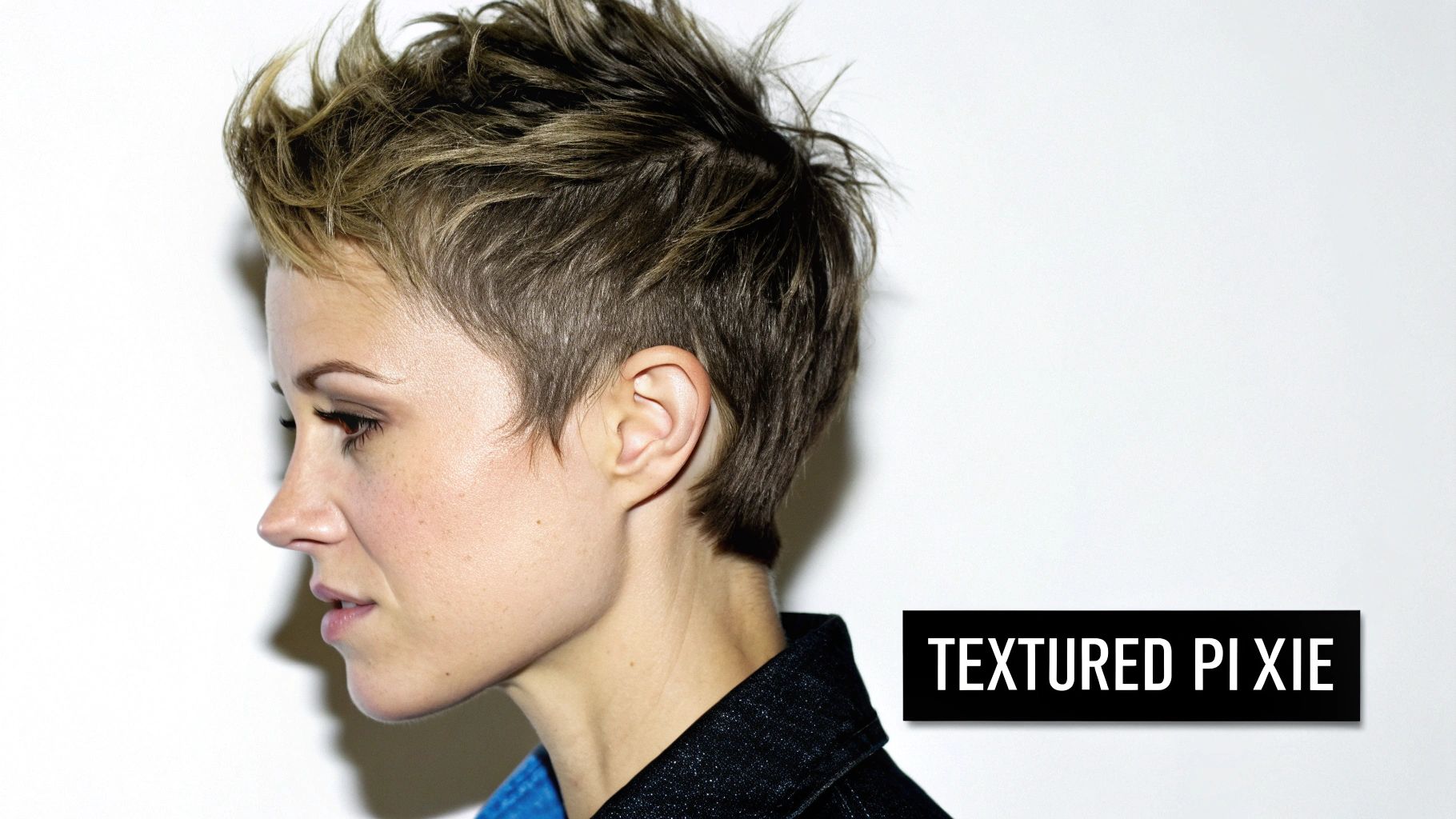
This cut works with your hair's natural growth patterns and texture, making it a low-maintenance yet incredibly effective option. By keeping the length short and adding layers, the focus shifts from any lack of hair to the style and shape of the cut itself. This clever redirection draws the eye to the dynamic texture rather than any thin spots, especially around the crown or hairline. Iconic styles like Mia Farrow's classic pixie or more modern, textured versions seen on celebrities prove just how timeless and effective this look can be.
Why It Works for Thinning Hair
The genius of the Textured Crop is in its construction. Shorter hair is lighter and stands up more easily from the scalp, which instantly creates a look of more body. The layering breaks up solid lines, preventing the hair from appearing see-through and adding a multi-dimensional quality.
Key Insight: This style doesn't try to hide thinning hair; it incorporates it into a deliberate, textured look. The choppiness creates shadows and highlights that mimic the appearance of thicker, denser hair.
How to Get and Style This Cut
Talking clearly with your barber or stylist is crucial for getting the perfect Textured Crop.
- Be Specific: Ask for a short crop with plenty of choppy texture on top. Mention that your goal is to add volume and camouflage thinning areas.
- Embrace Your Texture: This cut is designed to work with your natural waves or straightness, not against it.
- Styling Products: Use a lightweight, matte-finish product like a clay or texturizing spray. Work a tiny amount through dry hair with your fingertips to lift the roots and define the layers. Stay away from heavy gels or wet-look pomades, which can clump hair together and expose the scalp.
- Maintenance: To keep the shape sharp and the texture prominent, plan on a trim every 4-6 weeks.
2. Blunt Bob with Layers
The Blunt Bob with Layers offers a sophisticated and powerful way to create the illusion of fullness. This style usually sits at chin-length or a bit shorter, using a strong, blunt baseline to create a solid shape. The magic, however, is in the strategic, subtle layers throughout the interior of the cut. They remove just enough weight to encourage movement and volume, preventing the hair from lying flat. It's one of the best haircuts for thinning hair because it marries the density-creating effect of a blunt line with the lift and texture of layers.
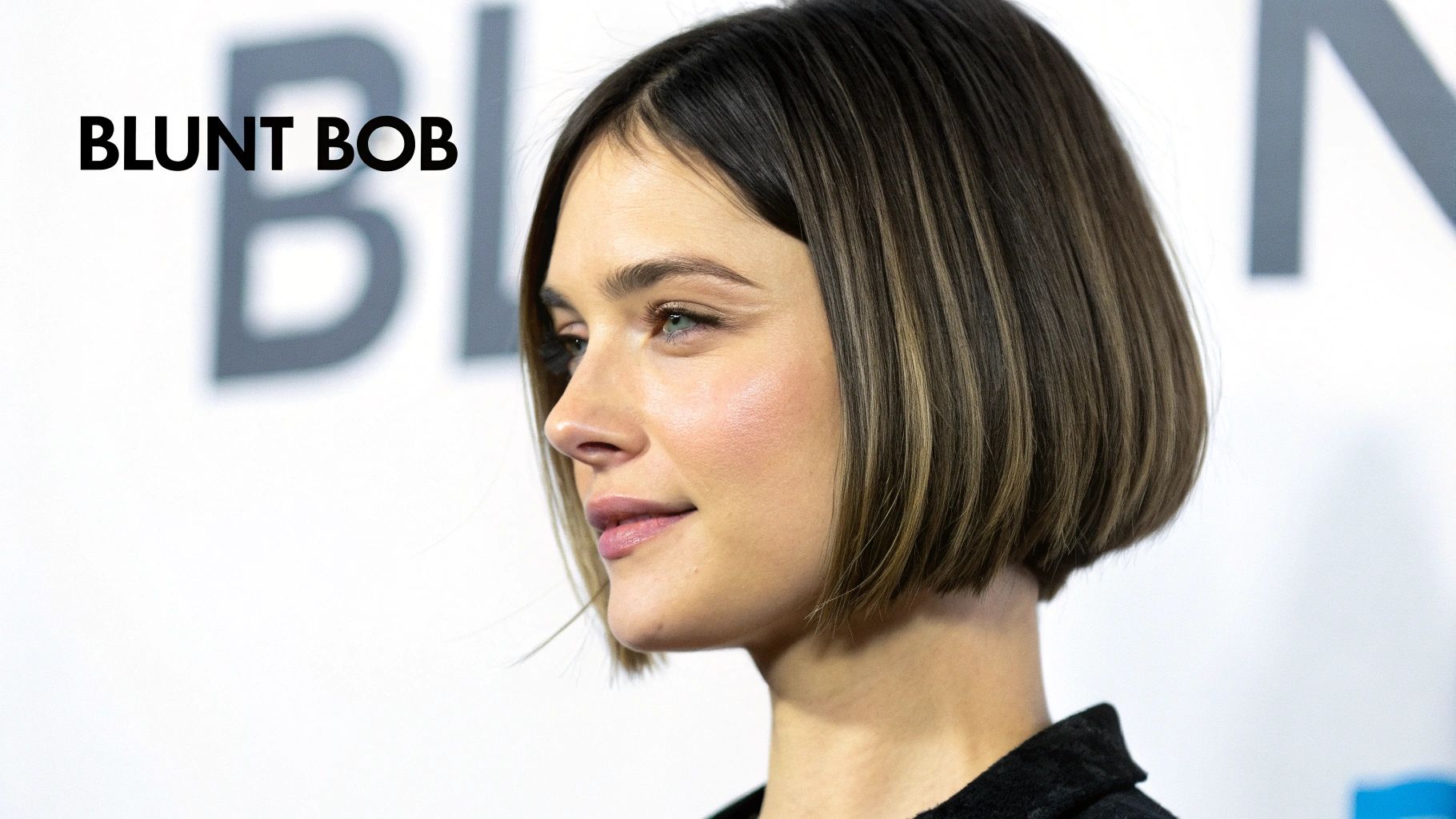
This cut masterfully balances structure and softness. The blunt perimeter makes the ends of the hair look thick and healthy, while the internal layers give the style life and stop it from looking heavy or triangular. This modern take on a classic bob, seen on style icons like Bella Hadid and Margot Robbie, proves you don't have to sacrifice style for function. It’s an intentional, chic look that works by drawing attention to the clean lines and shape instead of the density of the hair itself.
Why It Works for Thinning Hair
The effectiveness of this cut comes from its dual-action approach. The solid, blunt edge creates a visual trick, making the overall volume of hair seem more substantial than it really is. Meanwhile, the light internal layers allow the hair to lift at the roots and move freely, generating natural body and dimension that effectively camouflages less dense areas.
Key Insight: This style builds a strong foundation with its blunt perimeter, making the hair look fuller at the ends, while hidden layers on top create lift and movement right where it's needed most.
How to Get and Style This Cut
Clear communication with your stylist is essential to nail this look without it appearing too bulky or too thin. For those interested in complementing this style with treatments, you can find more information about how to increase hair thickness.
- Be Specific: Ask for a blunt, chin-length bob but specify that you want soft, long internal layers to add volume and movement. Stress that the goal is to remove weight, not length.
- Styling Products: A volumizing mousse or root-lifting spray applied to damp hair is your best friend. These products provide hold and lift without weighing the hair down.
- Blow-Drying Technique: Use a round brush while blow-drying, focusing on lifting the hair at the roots and curling the ends under slightly to enhance the blunt shape. For extra texture, finish with a light-hold texturizing spray.
- Maintenance: A trim every 6-8 weeks is a must to maintain the sharp, blunt line, which is the secret to this style’s effectiveness.
3. Taper Fade or Undercut
The Taper Fade or Undercut is a massively popular and modern haircut that offers a brilliant solution for thinning hair. This style creates a strong, defined contrast by keeping the hair on top longer (usually 2-4 inches) while the sides and back are gradually tapered down to a much shorter length. This contrast is the whole point—it draws the eye upward and makes the hair on top look significantly thicker and more voluminous.
This cut is one of the best haircuts for thinning hair because it strategically removes bulk from the sides where hair loss is often less of a concern, concentrating all the visual density on top. It creates a clean, sharp silhouette that is both stylish and incredibly practical. Variations of this cut have been spotted on celebrities like Timothée Chalamet and Harry Styles, proving its versatility and fashionable appeal, even for those with fuller hair.
Why It Works for Thinning Hair
The power of the Taper Fade is in its ability to create a visual illusion. By fading the sides down to the skin or very short stubble, you establish a baseline that makes any amount of hair on top seem more substantial in comparison. This technique effectively frames the fuller part of your hair, giving it structure and making it the focal point.
Key Insight: This style manipulates contrast to build the perception of density. The clean, faded sides provide a sharp outline that makes the top section look intentionally styled and fuller than it actually is.
How to Get and Style This Cut
Getting this look right and making it work for your hair type means clear communication with your barber.
- Be Specific: Ask for a gradual taper fade on the sides and back, and specify the length you want to keep on top. Emphasize that your goal is to make the top look as voluminous as possible.
- Styling Products: A matte-finish pomade, clay, or styling powder is what you need here. These products add texture and hold without that heavy, wet look that can cause hair to separate and reveal the scalp. Learn more about techniques to hide thinning spots on prpforhairloss.com.
- Application is Key: Apply a small amount of product to dry or slightly damp hair. Use your fingers to lift the roots and comb the hair back or slightly to the side to create a fuller, more structured shape.
- Maintenance: A fade needs regular upkeep to look its best. Plan to visit your barber every 3-4 weeks to keep the sides clean and the contrast sharp.
4. Shag Haircut
The modern Shag Haircut is a highly strategic style that uses layers and texture to create an abundance of movement and volume. This cut features a cascade of layers—typically longer on top and getting shorter towards the ends—finished with choppy, feathered edges. It's a fantastic choice among haircuts for thinning hair because it builds a natural-looking fullness and diverts attention away from sparse areas through its deliberately undone, piece-y look.
Unlike its heavier 1970s ancestor, the contemporary shag is softer, more versatile, and incredibly effective at creating a thicker appearance. By focusing on varied lengths and a tousled finish, the style creates an illusion of density. This cut is particularly well-suited for people experiencing overall thinning, also known as diffuse thinning, as the layers work together to provide coverage and volume across the entire head. The messy-on-purpose vibe makes any signs of hair loss just seem like part of the intentional, rock-and-roll style.
Why It Works for Thinning Hair
The shag's power is in its structured chaos. The multiple, disconnected layers stop the hair from lying flat, lifting it away from the scalp to produce body. The choppy ends break up the silhouette, which means the eye doesn't settle on any single area, making it much harder to spot thinning patches. This is a perfect example of a cut that enhances what you have, rather than trying to cover something up.
Key Insight: The Shag Haircut masterfully uses layering to build volume from the inside out. Its inherent messiness makes the hair appear fuller and turns thinning into an integral part of a cool, textured look.
How to Get and Style This Cut
To get a shag that works for you, a clear chat with your stylist is a must.
- Be Specific: Ask for a modern shag with lots of choppy, disconnected layers to build volume. Explain that you want a textured, lived-in style that will help make your hair look fuller.
- Embrace the Undone Look: This style is meant to look effortless, not perfectly coiffed. The goal is controlled messiness.
- Styling Products: A sea salt spray or a light texturizing mist is your go-to. Spritz it into damp hair and use your fingers to scrunch and shape it as it air-dries or while using a diffuser. This enhances natural waves and creates that signature shag texture.
- Maintenance: Visit your stylist every 6-8 weeks to keep the layers sharp and prevent the style from looking overgrown or losing its shape.
5. Disconnected Fringe/Bangs with Longer Back
The Disconnected Fringe is a bold, fashion-forward style that masterfully redirects attention. This cut features distinctly shorter, often choppy bangs or a fringe at the front, which is "disconnected" from the longer hair kept in the back and on the sides. The deliberate contrast creates a strong focal point right around the face and hairline, making it one of the most strategic haircuts for thinning hair, especially for anyone dealing with a receding hairline or thinning at the temples.
This hairstyle leverages a high-contrast silhouette to its advantage. By bringing a heavily textured, shorter section forward, it builds density exactly where it's needed most: framing the face. The longer length in the back provides a modern, almost rebellious balance, seen on celebrities like Finn Wolfhard and in various editorial looks. It's a style that doesn't just compensate for hair loss; it turns it into a deliberate and contemporary fashion statement.
Why It Works for Thinning Hair
The power of this cut is its ability to control the narrative. The shorter, textured fringe naturally falls forward, giving you excellent coverage for a receding hairline. Because the fringe is the most prominent feature of the haircut, it draws all the attention, effectively distracting the eye from thinner areas on the crown or parting. The separation between the front and back creates visual intrigue and volume.
Key Insight: This cut creates an illusion of two different hairstyles in one. The dense, textured front provides coverage and style, while the longer back adds character, distracting entirely from concerns about hair density.
How to Get and Style This Cut
Getting this look right requires a clear vision and the right styling techniques to maintain its intentional separation and volume.
- Be Specific: Ask your stylist for a disconnected cut with a heavy, textured fringe. Explain that you want a noticeable difference in length between the front and the back to help cover a receding hairline.
- Embrace Texture: A choppy, piecey fringe is essential. Avoid a blunt, straight-across cut, which can look severe and less voluminous.
- Styling Products: Apply a volumizing mousse or root-lifting spray to damp hair, focusing on the fringe area. When styling, push the fringe forward and use your fingers to create a tousled, messy look that maximizes its texturized appearance.
- Maintenance: The fringe is the star of this style, so it needs to stay sharp. Plan for fringe trims every 3-5 weeks to keep it from getting overgrown and losing its shape.
6. Messy Lob (Long Bob) with Lots of Layers
For those who prefer a bit more length, the Messy Lob is a total game-changer. This shoulder-length cut uses extensive, choppy layers to create movement, texture, and a powerful illusion of fullness. It’s a strategic move away from a one-length cut, which can hang heavily and actually accentuate thinness. The "messy" part is intentional, as it shows off the layers and stops hair from looking flat or see-through.

This style masterfully balances length with volume, making it one of the best haircuts for thinning hair if you're not quite ready for a super-short style. The layers work together to build body and dimension, effectively making the hair appear substantially thicker than it really is. It's a modern, versatile look, famously worn by celebrities like Taylor Swift and Blake Lively, who have shown its ability to look both effortlessly casual and sophisticated.
Why It Works for Thinning Hair
The magic of the Messy Lob is in its dynamic structure. The varied lengths of the layers prevent the hair from clumping together, which can expose the scalp. Instead, the layers fall over one another, creating a stacked effect that boosts volume from the roots to the ends. This movement and texture draw attention to the style itself, not the density of the hair.
Key Insight: This cut creates artificial density through layering. The choppy, uneven ends break up the silhouette, making it impossible for the eye to perceive where thinning might be occurring.
How to Get and Style This Cut
Achieving the perfect Messy Lob requires a clear talk with your stylist and the right at-home techniques.
- Be Specific: Ask your stylist for a shoulder-length lob with lots of choppy, disconnected layers throughout. Stress that your goal is to maximize volume and create a textured, messy finish.
- Embrace Imperfection: The point of this cut is to look a bit undone. Don't aim for perfectly straight or sleek hair; let the layers do their job.
- Styling Products: A sea salt spray or texturizing spray is your best friend. Mist it onto damp or dry hair to enhance the layers and add grit. A light dry shampoo can also be used on the roots for an instant lift, even on clean hair.
- Maintenance: Plan for a trim every 6-8 weeks to keep the layers sharp and prevent the ends from looking weighed down. For more ideas on managing your hair, discover additional tips on how to style thinning hair.
7. Textured Crew Cut or Modern Crew
The Textured Crew Cut, or Modern Crew, is a contemporary spin on a timeless military classic, specifically adapted to be one of the best haircuts for thinning hair. This style keeps the hair short and manageable but introduces choppy, multi-length layers on top, usually around 1-2 inches. Unlike its traditional counterpart, the sides are often a bit longer, creating a softer, less severe transition and a more balanced silhouette.
This cut is an evolution, moving away from a uniform, flat-top look to one that embraces imperfection to build fullness. The intentional messiness and varied lengths on top are what make it so effective. It creates a fuller profile by breaking up the scalp line, making any thinning, particularly at the crown or hairline, far less obvious. It’s a popular choice for athletes and professionals who need a sharp, low-maintenance style that performs well.
Why It Works for Thinning Hair
The power of the Textured Crew Cut is in its ability to build volume from very little. The short, choppy layers on top are light enough to stand up from the scalp, instantly creating the look of more hair. This texturizing technique effectively distracts the eye, drawing attention to the style and shape rather than the hair's density.
Key Insight: This cut manufactures volume and density through texture. The uneven lengths prevent the hair from lying flat and clumping together, which is what often exposes a thinning scalp.
How to Get and Style This Cut
Achieving the perfect modern crew cut requires a clear chat with your barber and the right styling approach at home.
- Be Specific: Ask for a crew cut but emphasize that you want choppy, point-cut texture on top, not a smooth or buzzed finish. Specify that the goal is to add volume.
- Styling Products: A lightweight styling cream or a matte pomade is perfect here. Warm a small, pea-sized amount between your palms and work it through dry hair, lifting the roots upward and forward.
- Technique is Key: Avoid combing the hair flat. Instead, use your fingers to create a slightly disheveled look that enhances the texture. For more information on boosting your hair's body, explore these tips on how to increase hair volume.
- Maintenance: A trip to the barber every 4-6 weeks is essential to maintain the shape and keep the textured layers from growing out and falling flat.
8. Curly/Wavy Perm with Layering (for Straighter Hair)
For those with naturally straight or fine hair, adding texture can feel like an uphill battle. A modern body wave or perm, combined with strategic layering, is an innovative solution that chemically alters the hair's structure to create lasting volume and the illusion of density. This isn't the tight, poodle-like perm of the 80s; modern techniques create soft, natural-looking waves that make the hair physically take up more space, instantly appearing fuller.
This approach is one of the best haircuts for thinning hair because it fundamentally changes the hair's texture from flat to multi-dimensional. The new wave pattern disrupts straight lines, making it much harder to see through to the scalp. Paired with layers, the style gains movement and body that straight, thinning hair just can't achieve on its own. Popular modern styles, like the subtle waves seen in Korean beauty trends, show just how effective a gentle perm can be for adding a soft, full appearance.
Why It Works for Thinning Hair
The power of a perm is its ability to create texture where there was none. Each hair shaft is reshaped into a wave, which forces it to lift away from the scalp and intertwine with its neighbors. This manufactured chaos builds a scaffold of volume, making the entire head of hair look significantly thicker and more robust.
Key Insight: This method doesn't just style the hair to look fuller; it physically changes its structure to create lasting volume. The added waves break up the hair's silhouette, effectively camouflaging sparse areas.
How to Get and Style This Cut
Getting a natural-looking perm requires a skilled professional who understands modern techniques.
- Find an Expert: Look for a stylist with a portfolio of modern men's perms or body waves. This is not a service to leave to just anyone.
- Discuss Wave Intensity: Be very clear about what you want. Ask for a "body wave" or "texture perm" for a loose, natural look, not tight ringlets.
- Aftercare is Key: To maintain the perm's integrity, wait at least 48-72 hours before washing your hair. Use sulfate-free shampoos and conditioners designed for chemically treated hair to prevent stripping the waves.
- Styling: Let hair air-dry or use a diffuser on low heat to enhance the wave pattern. A light sea salt spray or curl cream can add definition without weighing hair down.
- Maintenance: Plan for a touch-up every 3-4 months as new, straight hair grows in.
Comparison of Top 8 Haircuts for Thinning Hair
| Style | Implementation Complexity 🔄 | Resource Requirements ⚡ | Expected Outcomes ⭐ 📊 | Ideal Use Cases 💡 |
|---|---|---|---|---|
| Textured Crop / Pixie Crop | Moderate 🔄 — expert layering for texture | Low ⚡ — light products, trims every 4–6 weeks | High ⭐ — strong illusion of thickness and density | Best for fine/thinning hair; want very short, low-maintenance look |
| Blunt Bob with Layers | Medium–High 🔄 — precise blunt line + internal layers | Moderate ⚡ — heat styling, volumizers, trims every 6–8 weeks | High ⭐ — structured fullness with versatile styling | Fine–medium hair; want a polished, versatile cut |
| Taper Fade / Undercut | Medium 🔄 — skilled fading and length contrast | Low–Moderate ⚡ — frequent barber visits (3–4 weeks), styling product | High ⭐ — concentrates volume on top; visually thicker crown | Receding hairlines or thinning crowns; modern/edgy preference |
| Shag Haircut | Medium 🔄 — multiple choppy layers and texturizing | Moderate ⚡ — texturizing products; forgiving between cuts | High ⭐ — creates movement and conceals thin areas | Natural waves/curls or those wanting a trendy, tousled look |
| Disconnected Fringe / Bangs + Longer Back | High 🔄 — precise disconnect and shaping | Moderate–High ⚡ — frequent fringe trims (4–6 weeks), styling | High ⭐ — draws attention to face/crown; masks thinning | Fashion-forward users who want face-framing and volume at crown |
| Messy Lob with Lots of Layers | Medium 🔄 — extensive layering for movement | Moderate ⚡ — styling effort, trims every 8–10 weeks | High ⭐ — preserves length while increasing perceived fullness | Fine–medium hair that wants length plus added volume |
| Textured Crew Cut / Modern Crew | Low–Medium 🔄 — simple cut but needs choppiness | Low ⚡ — minimal styling, trims every 4–6 weeks | Moderate–High ⭐ — neat, fuller appearance with quick styling | Professional/active lifestyles; men seeking low-maintenance density |
| Curly/Wavy Perm with Layering | High 🔄 — chemical service requiring expertise | High ⚡ — higher initial cost, maintenance, products | High ⭐ — significant, lasting fullness for months | Straight/thinning hair wanting long-lasting texture and volume |
Your Next Step: Beyond the Cut
Navigating hair loss can feel overwhelming, but as we've explored, you have a powerful toolkit at your disposal. Choosing one of the best haircuts for thinning hair—whether it’s a sharp Textured Crop or a classic Taper Fade—is a brilliant and immediate way to regain control and boost your confidence. These styles are more than just cuts; they are strategic designs meant to create illusions of density, draw attention to your best features, and work with your hair's natural texture, not against it.
The core principle that ties all these successful haircuts together is the strategic use of volume, texture, and proportion. A short, textured style like a Modern Crew Cut prevents hair from lying flat and exposing the scalp, while longer options like a Shag or Messy Lob use clever layering to build movement and fullness. The main takeaway is that you don't need to hide your hair; you just need to style it smarter.
From Salon Chair to Daily Routine
Think of your new haircut as the architectural blueprint. The real structure is built every day through your styling habits. Mastering this daily routine is what turns a good haircut into a great one.
- Product is Paramount: The right products are non-negotiable. Ditch the heavy, greasy pomades for lightweight matte clays, texturizing powders, or volumizing mousses. These products add grip and lift at the root without weighing your hair down, which is the number one enemy of fine or thinning hair.
- Master the Blow-Dryer: Don't let your hair air-dry flat. Using a blow-dryer is one of the most effective ways to create instant, lasting volume. Direct the heat at the roots while lifting the hair with your fingers or a brush. A blast of cool air at the end will help set the style in place.
- Wash Wisely: Over-washing can strip natural oils, while under-washing can lead to buildup that flattens hair. Find a balance with a sulfate-free, thickening shampoo and use conditioner sparingly, focusing only on the mid-lengths and ends.
A Proactive Approach to Hair Health
While a great haircut provides a cosmetic solution, pairing it with a proactive hair care strategy yields the most comprehensive results. Taking care of the health of your scalp and follicles is the ultimate long-term investment. This holistic approach supports the hair you have and encourages a healthier growth environment for the future.
For those looking to enhance their hair's vitality and thickness, explore options such as natural hair health solutions like essential oil blends, which can nourish the scalp. For those dealing with progressive thinning, it's also worth investigating clinical treatments that target the root cause of hair loss.
By combining one of the best haircuts for thinning hair with an intelligent styling routine and a focus on long-term hair health, you create a powerful, multi-faceted strategy. This isn't just about managing hair loss; it's about mastering your look and stepping out each day with unshakable confidence.
Ready to take a clinical step towards reclaiming thicker hair? At PRP For HairLoss, we offer advanced Platelet-Rich Plasma treatments that use your body's own growth factors to stimulate dormant follicles and promote natural regrowth. Learn how our scientifically-backed approach can complement your new style by visiting PRP For HairLoss today.

 PRP For Hairloss
Leave a comment