It’s a tough moment—seeing more hair than usual in the shower drain or catching a glimpse of a thinning spot in the mirror. While it's easy to blame genetics, the truth is that hair loss isn't just about what you inherit. It’s also about what you eat. Getting the right mix of hair loss vitamins for men can be a game-changer, but first, let's get to the root of why it happens.
Understanding Why Hair Loss Happens to Men
It can feel like you're fighting a losing battle against your own biology, but understanding the "why" is your best defense. Hair loss in men is a complex puzzle with several interlocking pieces. Once you see how they fit together, it becomes clear why nutrition is so critical.
Think of your scalp like a garden. To grow a healthy lawn, you need good soil, plenty of water, and the right fertilizer. Your hair follicles are exactly the same. They need a healthy scalp and a constant supply of specific vitamins and minerals to do their job. If any of those key elements go missing, the garden starts to look a little patchy.
The Main Triggers of Male Hair Loss
For most guys, hair loss boils down to a few key culprits. Each one can throw your natural hair growth cycle out of whack, leading to thinning, shedding, and a hairline that’s weaker than it used to be.
- Genetics (Androgenetic Alopecia): This is the big one—classic male pattern baldness passed down through your family. It all comes down to a genetic sensitivity to a hormone called Dihydrotestosterone (DHT).
- Hormonal Changes: DHT is the main villain in this story. It actually shrinks your hair follicles, making it harder and harder for them to produce thick, healthy hair. The process is slow and steady, but it's relentless if you don't intervene.
- Lifestyle and Stress: Chronic stress can literally push your hair follicles into a "resting" phase, causing a type of shedding called telogen effluvium. It's often temporary, but it can definitely speed up any underlying genetic hair loss you already have.
- Nutritional Deficiencies: This is where hair loss vitamins for men step into the spotlight. Lacking key nutrients essentially starves your hair follicles of the fuel they need. Without those building blocks, hair becomes brittle, weak, and much more likely to fall out.
The link is undeniable: a body low on nutrients simply can't support strong, healthy hair growth. A car won't run without gas, and your hair follicles can't function without the right vitamins and minerals.
Aside from your genes and hormones, it's wise to recognize the common signs of vitamin deficiency, because these shortages can be a major player in thinning hair. The connection is so direct, in fact, that you can learn more about whether a vitamin deficiency can cause hair loss and see just how deep it goes.
Ultimately, tackling hair loss isn't about a single magic bullet; it's about a smart, multi-pronged strategy. You can't change your genes, but you absolutely can control your diet, manage stress, and give your body the nutritional tools it needs to succeed. This guide will walk you through the essential vitamins and minerals that fuel your follicles and set the stage for healthier, stronger hair.
The Core Nutrients That Fuel Healthy Hair Growth
To really get a handle on hair loss, it helps to think like a mechanic. Your hair follicles are tiny, powerful engines that are constantly working to produce hair. Just like any high-performance machine, they need the right kind of fuel to run properly. If that fuel supply—the vitamins and minerals you get from your diet—is low or inconsistent, those engines start to sputter and slow down.
This is where understanding hair loss vitamins for men becomes a game-changer. Each nutrient has a very specific and critical job in the complex assembly line of hair growth. A shortfall in just one of these key players can throw the entire system out of whack, leading to weaker strands, more shedding, and much slower regrowth.
The good news? You have a lot of control over this process. By making sure your body has a steady supply of these crucial nutrients, you’re giving your hair the exact building blocks it needs to thrive. Let's break down the A-list players and what they do.
Biotin: The Master Builder
Often called the king of hair vitamins, Biotin (or Vitamin B7) is essentially the lead construction worker for your hair. Its main job is to help produce keratin, the tough protein that makes up over 90% of every single hair strand.
Think of keratin as the bricks needed to build a solid wall. Without enough bricks, the wall is going to be weak and unstable. It's the same with your hair. Without enough Biotin to ramp up keratin production, your hair becomes brittle, weak, and far more likely to snap.
While a full-blown Biotin deficiency is rare, just making sure your levels are optimal is a cornerstone of any smart nutritional plan for healthier hair. It supports the very structure of your hair from the inside out.
Vitamin D: The Follicle Activator
If Biotin builds the hair, Vitamin D is the one that flips the switch on the factories that make it. This vital vitamin is a key player in creating new hair follicles—the tiny pores where new hair actually grows. It essentially sends a "wake-up call" to dormant follicles, telling them it's time to get back into the growth phase.
Research has even shown a link between low Vitamin D levels and more severe cases of male pattern baldness. When you're deficient, your follicles can stay inactive for longer stretches, which leads to visible thinning over time.
A good supply of Vitamin D helps ensure that as old hairs shed, new ones are ready and waiting to take their place. This is what maintains the density and fullness of your hair.
This is exactly why getting enough sunlight or supplementing with Vitamin D is so important, especially for guys worried about thinning. It keeps the hair growth cycle running on schedule. Our guide on the best overall vitamins for hair growth explores this connection in more detail.
Zinc: The Repair Crew
Every engine needs a maintenance team, and for your hair follicles, that team is Zinc. This essential mineral is a true powerhouse for tissue growth and repair, playing a crucial role in keeping both your follicles and your scalp in peak condition.
Zinc helps keep the oil glands around the follicles in check, ensuring your scalp environment is healthy and balanced. More importantly, it helps with the cellular processes required for hair production. A Zinc deficiency has been directly tied to a type of hair shedding called telogen effluvium.
Just think of Zinc as the on-site repair crew that fixes damage and keeps the production line moving without a hitch. When your levels are low, follicle function starts to break down, and hair growth suffers.
Iron: The Oxygen Delivery Service
Finally, none of this can happen without energy, and that energy is delivered by oxygen. Iron is the mineral responsible for producing hemoglobin in your red blood cells. Hemoglobin is the delivery truck, hauling oxygen to every cell in your body—including your hair follicles.
Without enough iron, your follicles are literally starved of the oxygen they need to function. This can force them into a resting phase, causing hair to shed way too early. It's one of the most common nutritional deficiencies linked to hair loss. Making sure your iron levels are where they need to be is like making sure the fuel delivery trucks can always reach the factory.
This growing understanding has fueled a huge market. Globally, the hair loss supplements market was valued at about $1.63 billion in 2024 and is projected to hit over $3.8 billion by 2032, all driven by a greater focus on preventative health. You can explore more about the hair loss supplement market trends to see how demand is shaping the industry. Each of these core nutrients works in harmony, creating a powerful foundation for healthy, resilient hair.
A Deep Dive Into Key Vitamins for Men's Hair
Alright, let's get into the specifics. Knowing you need certain vitamins is one thing, but understanding exactly how they work inside your body is what separates guesswork from a real strategy. It's not enough to just grab a bottle of hair loss vitamins for men; you need to know what each nutrient does, how much you actually need, and the best places to find it.
Think of it like building a house. Each nutrient is a different material, and you need to know its specific purpose to build a strong, lasting structure. This knowledge connects what you eat and supplement with to the health of your hair, empowering you to make choices that will pay off for years to come.
Vitamin E: The Scalp Protector
Picture Vitamin E as the ultimate bodyguard for your scalp. Its main mission is to act as a powerful antioxidant, shielding your scalp's cells from something called oxidative stress. This is just a scientific term for cellular wear-and-tear caused by unstable molecules known as free radicals. You encounter them everywhere—from air pollution and UV rays to your body’s own natural processes.
Just as rust corrodes metal, oxidative stress can damage and weaken your hair follicles, leading to inflammation and cutting the hair growth phase short. In fact, a 2010 study showed that men with hair loss who took Vitamin E supplements saw a significant jump in their hair count compared to those who didn't.
By fighting off these free radicals, Vitamin E helps create a healthy, protected environment where your hair follicles can do their job without interference.
Key Takeaway: Vitamin E is your scalp's first line of defense, protecting the delicate hair follicle cells from the daily environmental and internal stressors that can speed up hair thinning.
- Recommended Daily Intake for Men: 15 mg (or 22.4 IU)
- Top Food Sources: Sunflower seeds, almonds, spinach, avocados, and peanuts are all fantastic sources to add to your daily routine.
- Signs of Deficiency: A true deficiency is rare, but it can show up as muscle weakness or poor coordination. Its effect on your hair is often more subtle and happens over time.
Vitamin A: The Natural Conditioner
Every healthy scalp produces its own natural moisturizer, and Vitamin A is the nutrient that makes it happen. It’s absolutely essential for your skin glands to produce sebum, the oily substance that acts as your body's own leave-in conditioner.
Sebum coats the hair shaft, preventing it from becoming dry and brittle while giving it a healthy shine. A well-moisturized scalp is a happy scalp, and that’s the perfect foundation for strong hair.
But here’s a word of caution: with Vitamin A, more is not better. While not getting enough can lead to dry hair, taking too much can actually trigger hair loss. It’s a classic case of "just right," which is why sticking to the recommended daily amount is so important.
Biotin Revisited: Getting the Dose Right
We’ve already called Biotin the master builder of hair, but its real-world impact often comes down to the dosage. While a serious deficiency is uncommon, many guys look to supplementation to make sure they have an optimal supply for hair strength. The standard adequate intake for adult men is 30 micrograms (µg) per day.
Most of us hit this target easily through foods like eggs, salmon, and sweet potatoes. For those looking to specifically combat thinning hair, it's crucial to understand the right Biotin dosage for hair to find a safe, effective amount that delivers real results.
This infographic does a great job of showing how the recommended daily amounts for key hair nutrients compare.
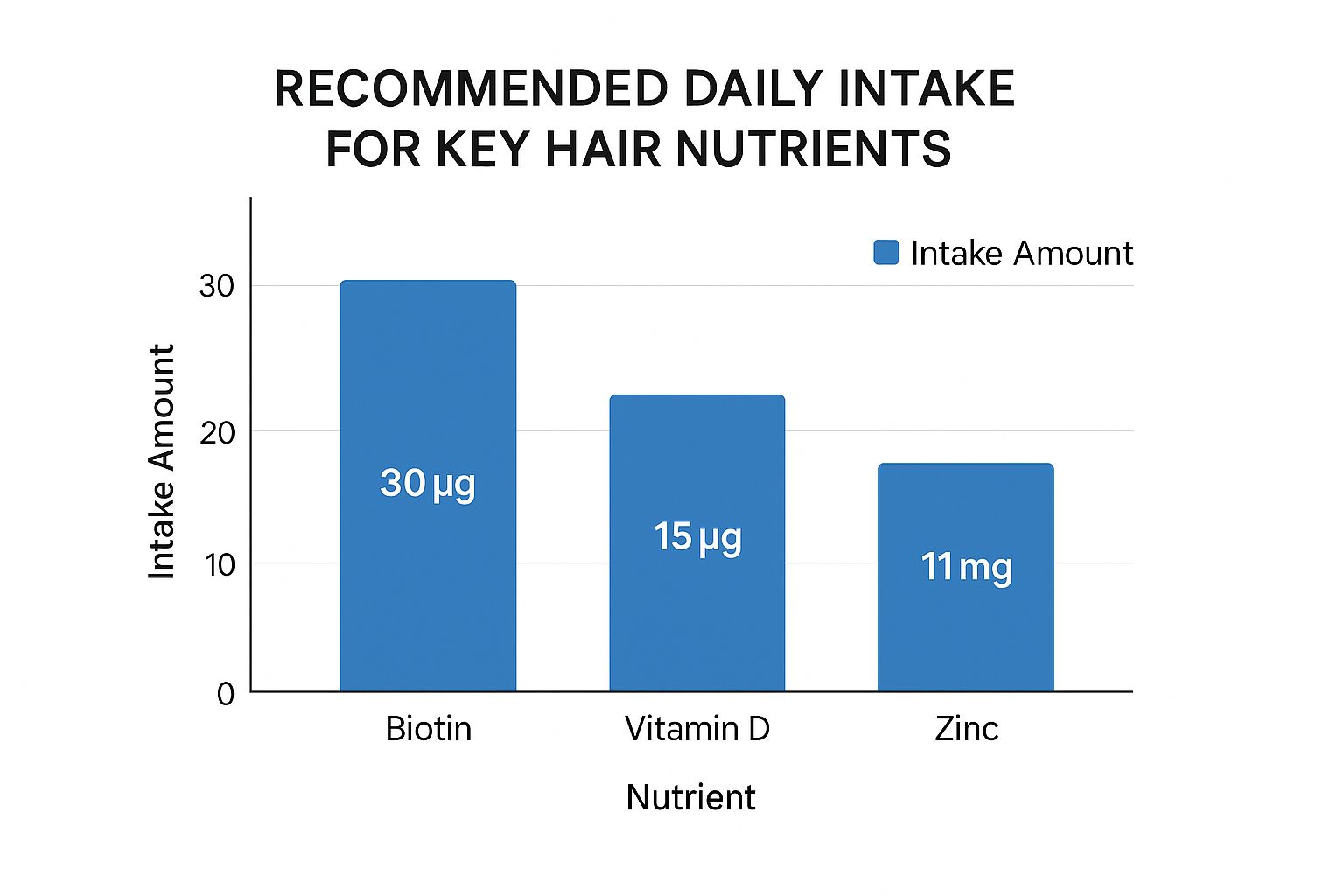
As you can see, there's a big difference in the scale. The body needs a lot more Zinc (measured in milligrams) than it does Biotin or Vitamin D (measured in much smaller micrograms).
Your Quick Reference Nutrient Guide
To pull all this information together into a practical tool, here's a simple cheat sheet. Use this table as your go-to reference for identifying which foods pack the biggest punch for the vitamins your hair craves.
Essential Hair Health Nutrients and Their Food Sources
| Nutrient | Primary Role in Hair Health | Excellent Food Sources |
|---|---|---|
| Vitamin A | Promotes sebum production to moisturize the scalp. | Sweet potatoes, carrots, spinach, kale, and eggs. |
| Biotin (B7) | Essential for producing keratin, the protein that forms hair. | Eggs, almonds, salmon, pork, and avocado. |
| Vitamin D | Helps create new follicles and awaken dormant ones. | Fatty fish (salmon, mackerel), fortified milk, and sunlight. |
| Vitamin E | A potent antioxidant that protects scalp cells from damage. | Sunflower seeds, almonds, spinach, and avocados. |
| Zinc | Crucial for hair tissue growth, repair, and follicle health. | Oysters, beef, pumpkin seeds, and lentils. |
| Iron | Carries oxygen to hair follicles for energy and growth. | Red meat, spinach, lentils, and fortified cereals. |
By prioritizing a diet filled with these foods, you're giving your body a constant supply of the specific hair loss vitamins for men needed to fuel a healthy growth cycle from the inside out.
Beyond the Basics: Powerful Supporting Nutrients
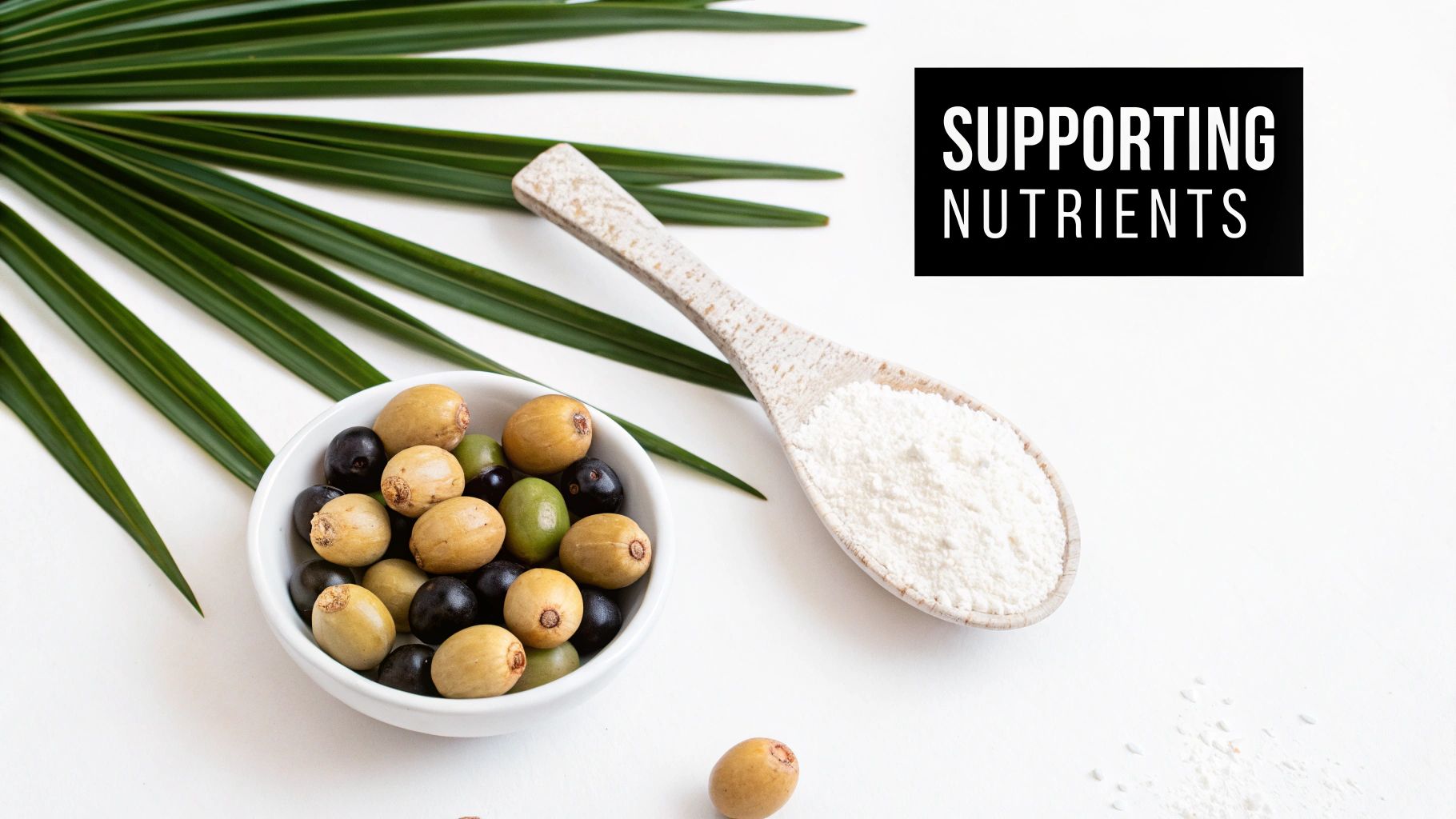
While the big-name vitamins and minerals are the foundation of any solid hair health plan, stopping there is like building a house without reinforcing the walls or protecting the roof. To build a truly resilient defense against thinning, we need to look at the bigger picture.
Think of it like this: if vitamins are the fuel for your hair follicles, these supporting nutrients are the high-performance additives that protect the engine from wear and tear. By adding compounds like amino acids, targeted botanicals, and structural proteins, you create a far more complete system of support.
This is the kind of next-level knowledge that lets you see beyond a generic multivitamin and find formulas that offer a genuinely potent and well-rounded strategy against hair loss.
Amino Acids: The Raw Materials for Hair
Your hair is, at its most basic level, protein. And the building blocks of every protein are amino acids. For hair, two stand out: L-lysine and L-cysteine.
- L-Cysteine: This is a core component of keratin, the tough, fibrous protein that gives your hair its structure and strength. Think of L-cysteine as the specialized rivet that holds each strand together, making it tough and resilient.
- L-Lysine: While not a direct part of the keratin protein itself, L-lysine is an essential facilitator. It helps your body absorb iron and zinc—two absolutely critical minerals for healthy follicles. It also plays a key role in producing collagen, strengthening the very foundation your hair grows from.
Without enough of these amino acids, your body simply can’t construct strong, healthy hair, no matter how many other vitamins you’re taking. A lack of zinc, for example, can have a devastating impact, which you can learn more about in our guide to zinc deficiency and hair loss.
Saw Palmetto: A Natural Ally Against DHT
For any man dealing with male pattern baldness (androgenetic alopecia), the hormone DHT is public enemy number one. This is where a botanical extract like Saw Palmetto really shines.
Sourced from the berries of a small palm tree, Saw Palmetto is widely believed to work by inhibiting an enzyme called 5-alpha-reductase. This is the specific enzyme that converts your testosterone into DHT—the hormone that shrinks hair follicles.
By potentially slowing down this conversion, Saw Palmetto helps shield your follicles from the miniaturizing effect that leads to thinning and, eventually, hair loss. It’s a targeted approach that works beautifully alongside the nutritional support you get from vitamins.
Collagen: The Scaffolding for Your Scalp
If keratin is the brick and mortar of your hair, then collagen is the foundational scaffolding that supports the entire structure. This crucial protein gives your skin its strength and elasticity—and that includes the dermal layer of your scalp where every hair follicle is anchored.
A healthy scalp rich in collagen provides a more secure and robust environment for your follicles to thrive. It helps ensure they are held firmly in place and have the structural integrity to sustain strong, continuous growth cycles.
As we age, natural collagen production slows down, which can weaken the scalp and contribute to hair looking thinner. Supplementing with collagen can help reinforce this critical foundation from the inside out. It's no surprise that the demand for these solutions is booming. While the global hair thinning market was valued at $1.51 billion in 2024, supplements made up nearly 65% of that. And while women have traditionally been the larger market, the male segment is catching up fast as more guys get in on the action. You can read the full research on hair thinning market trends to see the numbers for yourself.
How to Choose the Right Hair Loss Supplement
https://www.youtube.com/embed/_FO-tBEQxrY
Walking down the supplement aisle can be a dizzying experience. Bottle after bottle of hair loss vitamins for men makes the same promise of a fuller, thicker head of hair. So, how do you cut through the marketing noise and find something that actually works? The trick is to stop looking for a magic pill and start reading the label like a pro.
Choosing the right supplement isn't about luck; it’s about making a smart decision based on quality, transparency, and bioavailability. A top-tier formula doesn’t just toss in the right ingredients—it uses the right forms of those ingredients, the ones your body can absorb and put to work immediately.
Decoding the Supplement Label
Think of a supplement label as the product's entire resume. It gives you the full story on its qualifications, and you need to be a discerning hiring manager. When you scan that ingredient list, don't just skim for familiar names; dig deeper for indicators of quality.
For instance, seeing "Vitamin B12" on the label is one thing, but finding methylcobalamin is a whole lot better. Why? Methylcobalamin is the active form of B12 that your body can use right away, unlike the cheaper, more common cyanocobalamin that requires extra work to convert. This principle holds true for many other key nutrients.
Be skeptical of anything that hides behind a "proprietary blend." It sounds fancy, but it's often just a way for companies to conceal the exact amount of each ingredient. This makes it impossible for you to know if you're getting a powerful, effective dose or just a sprinkle of something to make the label look good.
A high-quality supplement is proud of its formula and transparent about dosages. If a brand isn't telling you exactly what's inside, it's often because there isn't much to brag about.
Look for a clean label that isn’t cluttered with fillers, binders, and artificial colors. Those extras do absolutely nothing for your hair and can sometimes just lead to an upset stomach. Your goal is to feed your follicles, not a bunch of synthetic junk. As you weigh your options, it's also worth exploring if liquid vitamins are better than pills for your body's absorption rate.
Look for Third-Party Verification
So, how do you trust that what's printed on the label is actually inside the bottle? The supplement industry lacks the strict oversight of pharmaceuticals, which is precisely why third-party testing is a non-negotiable seal of approval.
Keep an eye out for certifications from independent organizations like these:
- USP (United States Pharmacopeia): This seal verifies that the supplement contains what the label says it does, in the exact strength and amount declared.
- NSF International: This certifies that the product was made in a facility that has been audited for both quality and safety standards.
These seals are a simple, powerful sign that a company has invested in proving its product's integrity. It's a quick way to filter out the questionable brands and give yourself some much-needed confidence in your purchase.
Managing Expectations and Staying Consistent
It's crucial to set a realistic timeline from the start. Vitamins aren't an overnight fix for hair loss. Think of them as a long-term investment in your health, correcting nutritional gaps and creating the ideal internal environment for hair to thrive.
Consistency is everything. Popping a pill here and there won't move the needle. You have to commit to taking it daily for at least three to six months. This gives your hair growth cycle enough time to actually respond to the new nutrients.
Finally, always have a chat with your doctor before starting any new supplement regimen. This is especially true if you have any pre-existing health conditions or are taking other medications. A simple blood test can pinpoint any deficiencies, helping you choose the most effective hair growth supplements for men to address your body’s unique needs. That personalized approach ensures you're putting your money toward a solution that's truly right for you.
Your Questions About Hair Loss Vitamins, Answered
Alright, even with all this information, you probably have a few practical questions bouncing around in your head. That's a good thing. It means you're taking this seriously and want to get it right.
Let's walk through some of the most common questions guys ask before they commit to a hair supplement routine. Think of this as clearing up the final details so you can move forward with confidence.
How Long Until I Actually See a Difference?
Let's set the right expectation from the start: this is a long game. Hair growth is a slow, cyclical process, and you won’t wake up with a full mane next week. It's a marathon, not a sprint.
For most guys, it takes a solid 3 to 6 months of consistent, daily use to notice a real change. This timeframe allows your body to correct any underlying nutrient shortfalls and gives new, healthier hairs the time they need to actually grow in and become visible. The first positive signs are usually subtle—less hair in the shower drain or some fine, new "baby hairs" sprouting along your hairline.
Can't I Just Use My Daily Multivitamin?
A standard multivitamin is a great safety net for your general health, but it's not designed to be a heavy hitter for hair loss. Think of it like using a family sedan for a Formula 1 race—it’s just not built for that specific, high-performance job.
Supplements formulated for hair loss contain much higher, targeted doses of the key players like biotin, zinc, and saw palmetto. They’re specifically engineered to support the follicle, whereas a general multi just covers the basic nutritional bases.
A standard multivitamin might help if you have a slight deficiency, but for tackling male pattern hair loss head-on, a dedicated formula is almost always the more effective route.
Are There Any Side Effects I Should Worry About?
For the vast majority of men, these supplements are perfectly safe as long as you stick to the recommended dose on the bottle. Problems typically only arise when people start "megadosing," thinking more is better. It isn't.
Taking way too much can lead to a few issues:
- Stomach Upset: Popping too much zinc or iron, especially without food, can sometimes lead to nausea.
- Skin Issues: In rare cases, extremely high doses of biotin have been linked to acne breakouts in sensitive individuals.
- Nutrient Competition: Overloading on one vitamin can sometimes block your body's ability to absorb another. It’s a delicate balance.
The golden rule here is simple: never exceed the recommended dose. Read the label, and even better, have a quick chat with your doctor before starting any new supplement. This is the best way to ensure it’s right for you and won't interact with any medications or health conditions you might have.
Will These Supplements Make My Beard Thicker, Too?
There's a good chance they will, yes. The same nutritional fuel that your scalp follicles need is also craved by the hair follicles on your face.
Key nutrients like biotin and zinc are just as critical for a healthy, robust beard as they are for the hair on your head. So, if nutritional gaps are the reason your beard is looking a bit thin or patchy, a quality hair supplement can absolutely help improve its density and health.
Just remember that genetics and hormones are still the primary architects of your beard. Vitamins are the high-quality building materials, but your DNA is the blueprint. They’ll help you reach your full beard potential, but they can’t create follicles where genetics didn't put them.
At PRP For HairLoss, we believe that giving your body the right tools is the first step toward reclaiming your confidence. A solid nutritional foundation can make all the difference in your journey to healthier, stronger hair. Explore our resources to learn more about advanced hair loss solutions.

 PRP For Hairloss
Leave a comment