Look, fixing damaged hair follicles isn’t about stumbling upon some miracle cure. It's about figuring out what's causing the problem in the first place—whether it's hormonal, physical, or even environmental—and then building a solid routine to help them recover. By mixing gentle scalp care, the right nutrition, and ditching bad habits, you can create the perfect environment for your follicles to heal and, hopefully, get back to growing healthy hair.
What Really Damages Your Hair Follicles
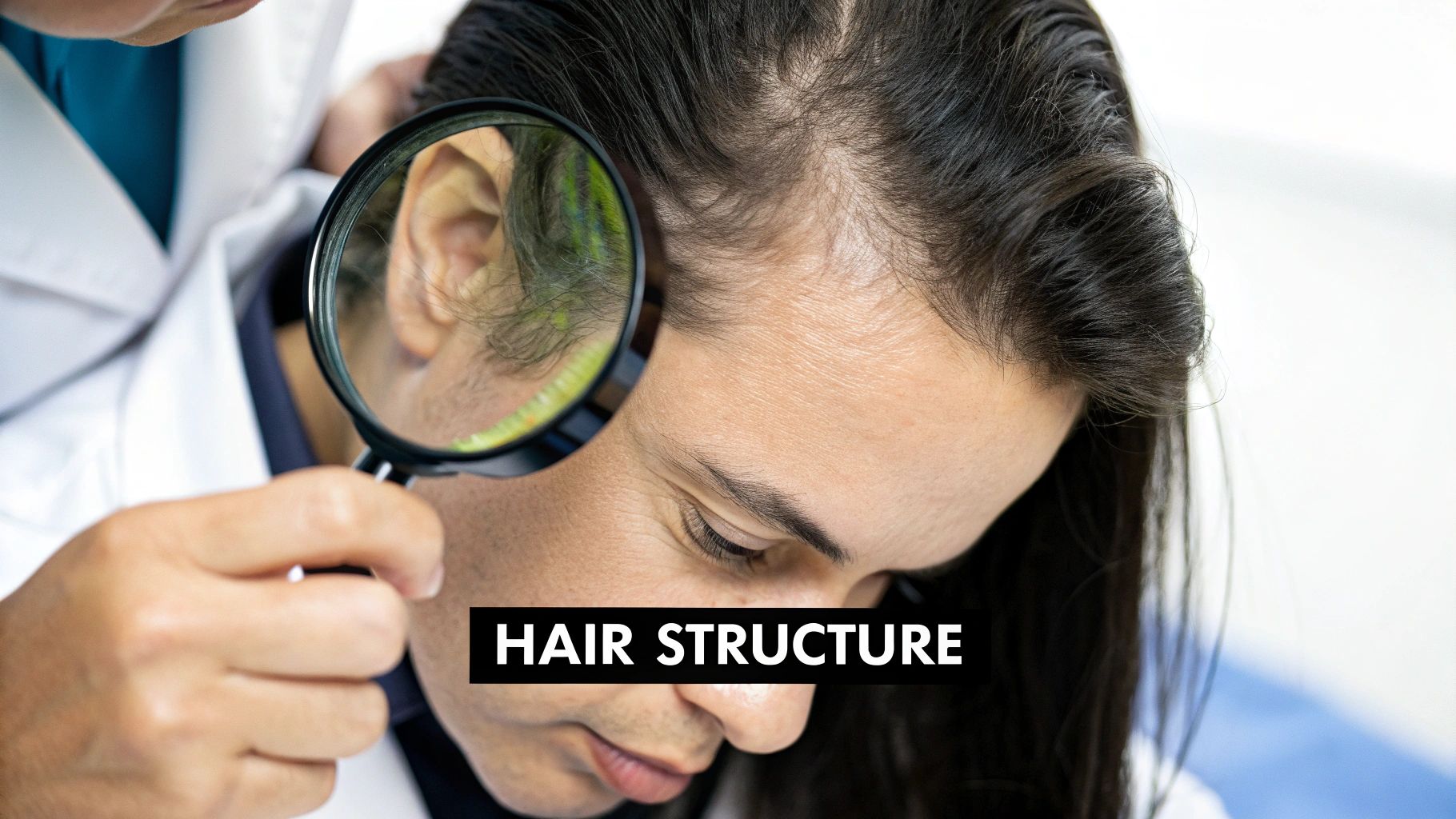
Before you can even think about repair, you’ve got to know what you're up against. The issue often goes way deeper than just using the wrong shampoo; we're talking about specific triggers that attack your hair right at the source. Pinpointing the "why" behind your hair concerns is absolutely the most critical step you can take.
A lot of guys don't realize that their everyday routines or underlying health issues are the real culprits. It helps to think of your hair follicles as tiny, sensitive engines. To run smoothly, they need the right fuel and proper maintenance. And honestly, they're surprisingly easy to throw off balance with both internal and external stressors.
The Role of Hormones and Genetics
For a huge number of men, the number one cause of follicle damage is androgenetic alopecia—what we all know as male pattern baldness. This isn't a simple case of hair just falling out. It's a slow, methodical process driven by a one-two punch of your genes and your hormones.
The main player here is a hormone called dihydrotestosterone (DHT), which is a byproduct of testosterone. If you have a genetic predisposition, DHT can latch onto receptors in your hair follicles, causing them to shrink over time. This process is known as follicle miniaturization.
As the follicle gets smaller, the hair it produces becomes finer, shorter, and weaker. Eventually, it just gives up and stops producing hair altogether. This is exactly why you see thinning long before you see actual bald spots. Getting a handle on the basics of hair follicle miniaturization is essential to understanding why so many treatments focus on blocking DHT.
Follicle damage isn't usually a sudden event. For most guys, it’s a slow, progressive weakening at the root. That's why jumping on it early is so much more effective than trying to reverse years of damage.
Physical Stress and Environmental Factors
Your follicles can also take a beating from direct physical harm. One of the most common, yet overlooked, causes is just chronic tension on the scalp.
- Traction Alopecia: This is hair loss caused by a constant pulling force on your hair. Think tight man buns, cornrows, or even wearing a snug helmet day in and day out. This steady tension can inflame and permanently damage the follicles. It might start with a few broken hairs around the hairline, but if you don't relieve the tension, it can lead to irreversible hair loss.
- Harsh Treatments: Overdoing it with chemical treatments, blasting your hair with high heat, and even aggressive brushing can weaken the hair shaft and irritate the scalp. This creates an inflammatory environment that is hostile to healthy follicle function.
These outside factors essentially create a state of chronic inflammation around the follicle. This inflammation messes with the hair growth cycle and, in worst-case scenarios, can lead to scarring that seals the follicle shut for good.
Nutritional and Lifestyle Triggers
It’s no surprise that what you put into your body directly impacts your hair. Your follicles are high-energy factories that need a constant supply of nutrients to do their job. If you’re suddenly or chronically deficient in key vitamins and minerals, you’re basically starving them of fuel.
For example, low levels of iron, zinc, biotin, and protein can all throw a wrench in the hair growth cycle. It's like trying to grow a plant in bad soil; without the essential building blocks, you'll only get stunted, weak growth.
Likewise, chronic stress is a massive factor. High stress levels can prematurely push a huge number of hair follicles into their resting (telogen) phase. The result is a sudden, alarming amount of shedding known as telogen effluvium. While this is often temporary, long-term stress can absolutely compromise the health of your follicles. Identifying these triggers is the first real step in building a plan to repair damaged hair follicles and get your hair's vitality back.
Your At-Home Follicle Support System

While professional treatments are game-changers, the real groundwork for repairing damaged hair follicles is laid right at home. Your daily routine is the support system that creates a healthy, stable environment for healing.
This isn't about finding one magic bullet. It’s about building a solid foundation, day in and day out, that gives your follicles the best possible chance to recover. A strong home-care regimen can dramatically improve scalp health, nourish follicles from the inside, and get your scalp ready for any advanced treatments you might be considering.
Adopt a Scalp-First Cleansing Approach
For years, the focus has been on the hair strands, but the real secret to follicle health is at the root. You have to start thinking "scalp-first," treating the skin on your head with the same care you give your face. That means clearing away anything that could be clogging or irritating your follicles.
One of the biggest culprits is buildup from sebum (your scalp's natural oil), dead skin cells, and styling products. When all that gunk accumulates, it can literally suffocate follicles and create an inflammatory environment that stops growth in its tracks.
This is where a good clarifying shampoo with an ingredient like salicylic acid can make a massive difference. Using it just once or twice a week is enough. Salicylic acid gently exfoliates the scalp, breaking down oils and dissolving the dead skin that blocks follicle openings. It helps maintain a clean, balanced environment where your follicles can finally breathe.
The Real Power of Scalp Massage
I know, scalp massage sounds more like a spa day treat than a serious hair repair strategy. But trust me, when done correctly and consistently, it’s a genuinely effective way to boost follicle health. The main benefit? Blood flow.
Your follicles depend on a steady stream of oxygen and nutrients delivered by your bloodstream. If circulation is poor, they're essentially starving. A daily scalp massage physically stimulates the tiny capillaries in your scalp, getting that blood moving again.
It's more than just a feel-good ritual. One study found that men who performed a standardized scalp massage for just four minutes a day saw increased hair thickness after 24 weeks. Consistency is everything.
Here’s a simple technique that works:
- Use Your Fingertips: Never, ever use your nails—that just causes irritation. Stick to the pads of your fingers and apply gentle but firm pressure.
- Move in Small Circles: Start at your hairline and work your way back to the crown, using small, circular motions.
- Cover the Entire Scalp: Don't forget the sides and the back of your head. Aim for at least five minutes every day.
You can do this on a dry scalp anytime or work it into your shampoo routine to help the product penetrate better. It’s a small time commitment for a very real payoff.
Build Your Follicle-Friendly Diet
You simply can't fix your follicles with topical treatments alone. Healthy hair is built from the inside out. Your diet provides the essential building blocks your follicles need to construct strong, healthy hair, and a deficiency in key nutrients can bring hair production to a screeching halt.
Creating a "follicle-friendly" diet isn't about restriction; it's about being intentional. You want to include specific foods rich in the vitamins and minerals that are critical for the hair growth cycle. Think of it as fueling the factory.
A balanced diet ensures your follicles get everything they need. For a deeper dive, check out our guide on the best foods for hair growth for more ideas to add to your grocery list.
Good nutrition is non-negotiable for follicle repair. The table below breaks down the most important nutrients, what they do, and where you can find them.
Key Nutrients for Hair Follicle Health
| Nutrient | Role in Follicle Health | Food Sources |
|---|---|---|
| Iron | Carries oxygen to your hair roots, which is essential for growth and repair. A deficiency is a major cause of hair shedding. | Spinach, lentils, red meat, chickpeas, and pumpkin seeds. |
| Zinc | Plays a vital role in hair tissue growth and repair. It also helps keep the oil glands around the follicles working correctly. | Oysters, beef, pumpkin seeds, lentils, and spinach. |
| Biotin (B7) | Essential for producing keratin, the protein that makes up your hair. A deficiency can lead to thinning hair. | Eggs, almonds, sweet potatoes, salmon, and avocados. |
| Protein | Hair is made almost entirely of protein. Without enough of it, your body can't build strong, resilient hair strands. | Lean meats, fish, eggs, beans, tofu, and Greek yogurt. |
Making these small, consistent changes at home—from how you wash your hair to what you eat—is what creates the optimal environment for your damaged hair follicles to begin the long journey toward repair.
Clinical Treatments That Can Revive Follicles
When your at-home efforts seem to hit a wall, it doesn't mean the journey is over. Sometimes, the best way forward is to call in the professionals. Clinical treatments offer a powerful, science-backed approach that can provide the significant boost your scalp needs to wake up dormant follicles and kickstart new growth.
These options go far beyond what you can achieve in your bathroom, targeting the biological mechanisms of hair growth directly at the source. Let's pull back the curtain on two of the most effective choices—Platelet-Rich Plasma (PRP) and Low-Level Laser Therapy (LLLT)—so you can have a more informed conversation with your doctor.
A Deeper Dive Into Platelet-Rich Plasma (PRP)
You’ve probably heard the term PRP thrown around, as it’s become a major player in regenerative medicine. At its core, PRP therapy uses the incredible healing power of your own body to rejuvenate your scalp. The process is surprisingly straightforward but can be incredibly effective.
It all begins with a simple blood draw, no different than a routine check-up. That blood is then spun in a centrifuge, a machine that separates the blood into its different components. This step isolates the platelets and plasma, creating a concentrated, golden serum packed with powerful growth factors. Think of these growth factors as little messengers that, when injected back into your scalp, essentially tell your dormant or struggling hair follicles to get back to work.
For advanced clinical interventions, Platelet-Rich Plasma (PRP) treatments are a go-to for stimulating dormant hair follicles and promoting regrowth.
The real beauty of PRP is that it’s autologous—meaning it comes directly from you. This dramatically cuts down the risk of allergic reactions because your body is simply using its own biological material to heal itself.
A typical session is quicker than most people think. Once the PRP is prepared, a specialist uses a very fine needle to make a series of small injections across the areas of your scalp where thinning is most prominent. While "injections" might sound intimidating, the discomfort is usually minimal. Most guys I've talked to report feeling slight pressure more than actual pain, and the whole injection process is often over in about 15 minutes.
If you want a play-by-play of the procedure, our in-depth guide to platelet-rich plasma therapy for hair offers more detail on what to expect during a session.
The Rise of Non-Surgical Solutions
It's clear that the demand for effective, non-surgical methods to repair hair follicles is skyrocketing. The global hair restoration market, which covers everything from transplants to therapies, was valued at roughly USD 6.46 billion in 2023.
Within that massive market, Platelet-Rich Plasma (PRP) therapy alone brought in revenues over USD 2.4 billion in 2023. That figure shows just how much men are turning toward these less invasive options.
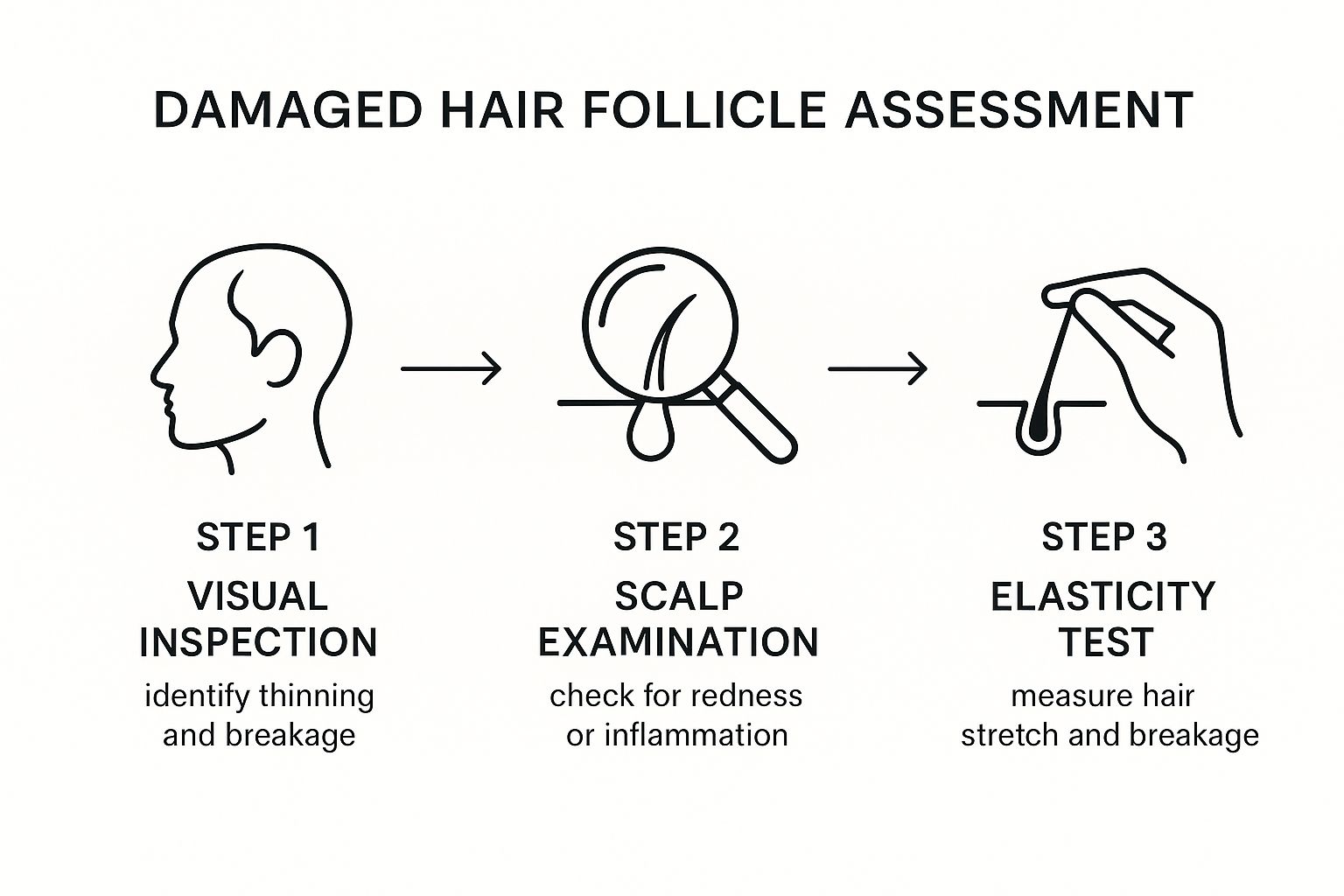
This simple three-step process is a great starting point for assessing the state of your hair follicles at home. As you can see, a proper assessment involves more than just looking for thinning hair; it requires a hands-on check of your scalp's health and the integrity of your hair strands.
Energizing Your Follicles With Low-Level Laser Therapy
If needles just aren't your thing, Low-Level Laser Therapy (LLLT) is an excellent non-invasive alternative worth looking into. This technology uses specific wavelengths of red light to stimulate cellular activity right inside the hair follicle.
Essentially, you can think of it as giving your follicle cells a shot of espresso.
The process works through a mechanism called photobiomodulation. The red light is absorbed by the mitochondria—the "powerhouses" of your cells—which ramps up their energy production. This surge of cellular energy helps in a few key ways:
- Improved Blood Flow: The light therapy enhances circulation to the scalp, making sure a richer supply of oxygen and nutrients actually reaches your follicles.
- Reduced Inflammation: LLLT has known anti-inflammatory properties, which helps create a healthier, more stable environment for hair to grow.
- Extended Growth Phase: It can help prolong the anagen (growth) phase of the hair cycle, leading to thicker and longer hair strands over time.
LLLT is typically administered through devices like caps, helmets, or combs that you can use right at home. The key here is consistency, with most protocols requiring sessions of about 20-25 minutes every other day. While results aren't immediate, many people report seeing less shedding and the first signs of new growth within three to six months. It’s a commitment, but one that offers a painless and convenient way to support follicle repair.
The Future of Hair Repair: Stem Cells
While clinical treatments like PRP do a fantastic job of kicking your body's existing healing mechanisms into high gear, the world of regenerative medicine is always looking for the next big thing. We're now exploring how to rebuild and reactivate follicles at the most fundamental level. This is where the exciting science of stem cells comes in, offering a real glimpse into what might be possible for reversing even severe follicle damage.
For anyone wondering how to repair damaged hair follicles in a way that goes beyond just stimulation, stem cell therapy represents a potential leap forward. Instead of just coaxing existing structures back to life, the goal here is to use your body's own "master cells" to generate entirely new, healthy ones.
Understanding Stem Cells and Hair Growth
Every single hair follicle you have contains a small reservoir of follicular stem cells. Think of them as the ultimate on-site repair crew, holding the complete blueprint to create every single part of a new, functioning hair follicle. When everything is working correctly, these cells are active and do their job flawlessly.
But life happens. Factors like DHT, chronic inflammation, or physical trauma can cause these stem cells to go dormant. They're still there, but they’ve essentially been put to sleep and aren't getting the right signals to wake up and start building hair. This is precisely where regenerative treatments aim to step in.
The core idea behind stem cell therapy isn't about introducing foreign cells. It's about reawakening the powerful regenerative potential that already exists within your own scalp. It’s about flipping the switch for dormant follicles back to the "on" position.
This approach is fundamentally different from a treatment like PRP. While PRP uses a concentration of growth factors to signal and encourage existing follicles, stem cell therapy aims to regenerate the follicle structure itself, potentially creating healthier and more robust hair-producing units from the ground up.
How Does Stem Cell Therapy Work?
The concept is both elegant in its simplicity and incredibly complex in its execution. Stem cell therapies work by targeting these dormant or damaged hair follicles to directly activate the follicular stem cells. This jolt encourages them to regenerate the follicle and, ultimately, promote entirely new hair growth.
While the science is still evolving, early clinical trials and market analyses are incredibly encouraging. In fact, global market forecasts predict that these regenerative treatments will be a major driver of future expansion in the hair restoration industry. You can dig into some of that data on the hair restoration market on Maximizemarketresearch.com.
A couple of primary methods are currently being explored:
- Adipose-Derived Stem Cells: This is a popular approach. It involves taking a small sample of your fat tissue (usually from the abdomen), isolating the powerful stem cells from it, and then carefully injecting them into the thinning areas of the scalp. These cells then release a potent cocktail of growth factors that signal the dormant follicular stem cells to wake up.
- Follicular Unit Extraction (FUE) Method: With this technique, a small number of healthy hair follicles are extracted from a robust donor area. The stem cells within these follicles are then isolated, multiplied in a lab setting, and injected back into the scalp where they're needed most.
Both methods are designed to replenish the scalp's supply of active stem cells and create an environment rich in the biochemical signals needed for true regeneration. If you want to dive deeper, our guide to stem cell hair therapy breaks down these procedures and what they involve in much more detail.
Where the Technology Stands Today
It's really important to have realistic expectations here. While the science is incredibly promising, stem cell therapy for hair loss is still very much an emerging field. Many of the most powerful treatments are still in the clinical trial phase, so it's not yet a mainstream, widely available solution like PRP or LLLT.
That said, the progress is undeniable. Early studies have shown exciting results in terms of increased hair density and thickness. As the research continues and the techniques become more refined and accessible, we're likely to see these therapies become a standard and powerful tool in the fight against hair loss, offering a genuine solution for even significant follicle damage.
When a Hair Transplant Is the Right Call

There comes a point where even the most dedicated at-home care and clinical treatments can't turn the tide. If your hair follicles have scarred over or have been dormant for years from advanced pattern baldness, they simply can't be revived. In those situations, a hair transplant isn't a last resort—it's the most practical and effective way forward.
A hair transplant works by moving healthy, DHT-resistant hair follicles from a donor area (usually the back and sides of your head) to the areas where you're thinning or bald. We're not bringing dead follicles back to life; we're strategically relocating healthy ones that are genetically programmed to keep growing. It's a powerful solution, but it's important to know when it’s the right move for you.
This isn't a new or experimental approach. The International Society of Hair Restoration Surgery reported over a million transplant procedures worldwide back in 2014, with 89% of them being for the scalp. And with men making up around 87.3% of those patients, it's clear this is a go-to solution for male pattern baldness.
Are You an Ideal Candidate for Surgery?
A successful hair transplant isn't just about the surgeon's skill; it's also about having the right canvas to work with. Not everyone is a perfect candidate, and a reputable clinic will be honest with you about your prospects.
Here are the key factors they'll look at:
- A Strong Donor Area: This is non-negotiable. You need a good supply of healthy, dense hair on the back and sides of your head to serve as the donor follicles. Without it, there's nothing to transplant.
- Stable Hair Loss: It's best if your hair loss has slowed down or stabilized. If your hair is still thinning aggressively, you might find yourself needing another procedure later to fill in new gaps.
- Realistic Expectations: Surgery can deliver incredible, life-changing results. But it won't give you the exact same head of hair you had at 18. Understanding the goals and limitations is crucial for being happy with your outcome.
If you're seriously considering this route, it's worth reading through some detailed patient information on hair transplants to get a feel for the process before your first consultation.
Comparing FUT and FUE Transplants
Today’s hair transplants primarily use one of two methods: FUT or FUE. They both get you to the same destination, but they take very different routes.
The choice between FUT and FUE often comes down to your specific hair loss pattern, your lifestyle, and your surgeon’s recommendation. Neither one is universally "better"—it's about which one is better for you.
Follicular Unit Transplantation (FUT)
Often called the "strip" method, FUT involves removing a thin strip of scalp from the donor area. Technicians then carefully dissect individual hair follicles from that strip under a microscope before they are implanted. The upside is that you can often transplant a large number of grafts in a single session. The downside is a fine linear scar, though it's easily hidden under the surrounding hair.
Follicular Unit Extraction (FUE)
With FUE, the surgeon extracts follicular units one by one directly from the scalp using a tiny punch-like tool. This technique is more meticulous and less invasive. It leaves no linear scar—just tiny, dot-like marks that are practically invisible once healed—and recovery is typically faster. However, FUE can be more time-consuming and, in some cases, more expensive per graft.
What to Expect During Recovery
Patience is the name of the game after a hair transplant. You'll have some redness, swelling, and scabbing on your scalp for the first week or two. This is totally normal and part of the healing process.
Here's something that catches many people by surprise: the newly transplanted hairs will fall out after a few weeks. Don't panic! This is called "shock loss," and it's a completely expected phase. The important thing is that the follicles are safe and sound beneath the skin. They'll start growing new, permanent hair in about 3-4 months.
After that initial shed, you'll see slow but steady improvement. The most dramatic results usually become visible between 9-12 months after the procedure, so it really is a marathon, not a sprint.
Common Questions About Hair Follicle Repair
Starting a journey to fix damaged hair follicles naturally brings up a lot of questions. Let's walk through some of the most common ones I hear from clients to give you some straight, practical answers and help set the right expectations from the get-go.
Can a Dead Hair Follicle Really Be Revived?
This is the big one, isn't it? The short answer requires making a critical distinction between a dormant follicle and a truly dead one. Think of a dormant follicle like a plant in winter—it's not producing, but it's still alive under the surface. This is what treatments like PRP and LLLT are designed to do: wake those sleeping follicles back up.
But once a follicle is completely dead and the tissue has scarred over, it's not coming back. At that stage, it's physically incapable of producing a hair strand. This is precisely why jumping on hair loss early makes all the difference. If you're curious to learn more about the science behind this, we break it all down in our guide on whether dead follicles can be revived.
How Long Does It Actually Take to See Results?
When it comes to regrowing hair, patience isn't just a virtue; it's a necessity. Hair grows in slow cycles, so don't expect a new head of hair overnight. The timeline really hinges on the specific treatment and how your own body decides to respond.
Here's a realistic breakdown based on what I typically see:
- At-Home Care: If you're consistent with diet improvements, scalp massage, and better hair care habits, you could see less shedding and a healthier scalp within 2-4 months.
- PRP Therapy: Most guys begin to notice the first hints of new growth or better thickness after their second or third treatment. That usually puts you at the 3-6 month mark.
- LLLT: This is a long game. You’ll need to commit to using your device consistently for at least 4-6 months before you can expect to see a real change in hair density.
The single most important factor is consistency. Sticking with your plan, whether it's a daily scalp routine or a series of clinical treatments, is what ultimately drives results. A scattered approach just won't get you there.
Are the Results from These Treatments Permanent?
This is another great question, and the answer isn't a simple yes or no. The results can be incredibly long-lasting, but they are rarely a "one-and-done" solution, especially if you're dealing with a progressive condition like male pattern baldness.
For something like PRP, the injected growth factors give your follicles a powerful boost, but they can't change your genetics or stop the hormonal processes that caused the hair loss. That's why most specialists will recommend coming in for maintenance sessions once or twice a year to keep your results strong.
Even with a hair transplant, where DHT-resistant follicles are moved to a new spot, the native hair around the transplanted grafts can keep thinning. This is why top surgeons often advise combining a transplant with ongoing medical therapies. The goal is to protect the surrounding hair and maintain a natural, full look for the long haul.
At PRP For HairLoss, we know that good information is the first step toward getting your confidence back. We're here to help men make sense of their options for fighting hair loss. Explore our resources to find out which treatments might be right for you. https://prpforhairloss.com

 PRP For Hairloss
Leave a comment