Finding a few stray hairs in your brush or circling the shower drain can feel a little jarring, but it’s almost always nothing to worry about. The reality is, losing between 50 and 100 hairs every day is perfectly normal. It's not a sign that something is wrong; it's just a healthy part of your hair's natural renewal process.
The Baseline for Normal Daily Hair Loss
Think of your scalp like a garden. For new shoots to grow, older ones have to be cleared away. This constant cycle is a good thing—it means your hair follicles are active and working as they should. That familiar 50 to 100 hair range is really just an average reflecting the different stages of this cycle.
At any moment, a small portion of your hair is in what's called the telogen phase. This is basically a resting period where the hair has stopped growing and is getting ready to shed. Making way for a new strand is a necessary step, which is why you notice hair coming out when you brush, wash, or style it. For more context, you can explore some of the UK's hair loss facts and statistics.
To make it even clearer, here's a quick side-by-side look at what’s considered typical versus what might be a bit more than usual.
Daily Hair Loss At a Glance
| Shedding Level | Hair Count Per Day | Common Cause |
|---|---|---|
| Normal | 50-100 Strands | The natural hair growth cycle |
| Potentially Excessive | 150+ Strands | Could be related to stress, diet, or health changes |
Knowing this baseline is the first crucial step. It helps you understand whether what you're seeing is genuine hair loss or just your body's regular, healthy maintenance schedule. This little bit of knowledge can provide a lot of peace of mind.
Understanding Your Hair's Natural Growth Cycle
To really get what's normal when it comes to daily hair shedding, we need to look at what’s happening on your scalp. It's not a free-for-all up there; every single hair on your head is on its own schedule, moving through a predictable cycle of growth, rest, and renewal.
Think of it like a garden. You don't see every flower bloom and wilt at the exact same time. Instead, it’s a constant, staggered process. This is precisely how your hair works, ensuring you have a full head of hair while a small percentage is always making way for new growth.
This infographic gives a great visual breakdown of the hair growth cycle and what percentage of your hair is in each phase at any given moment.
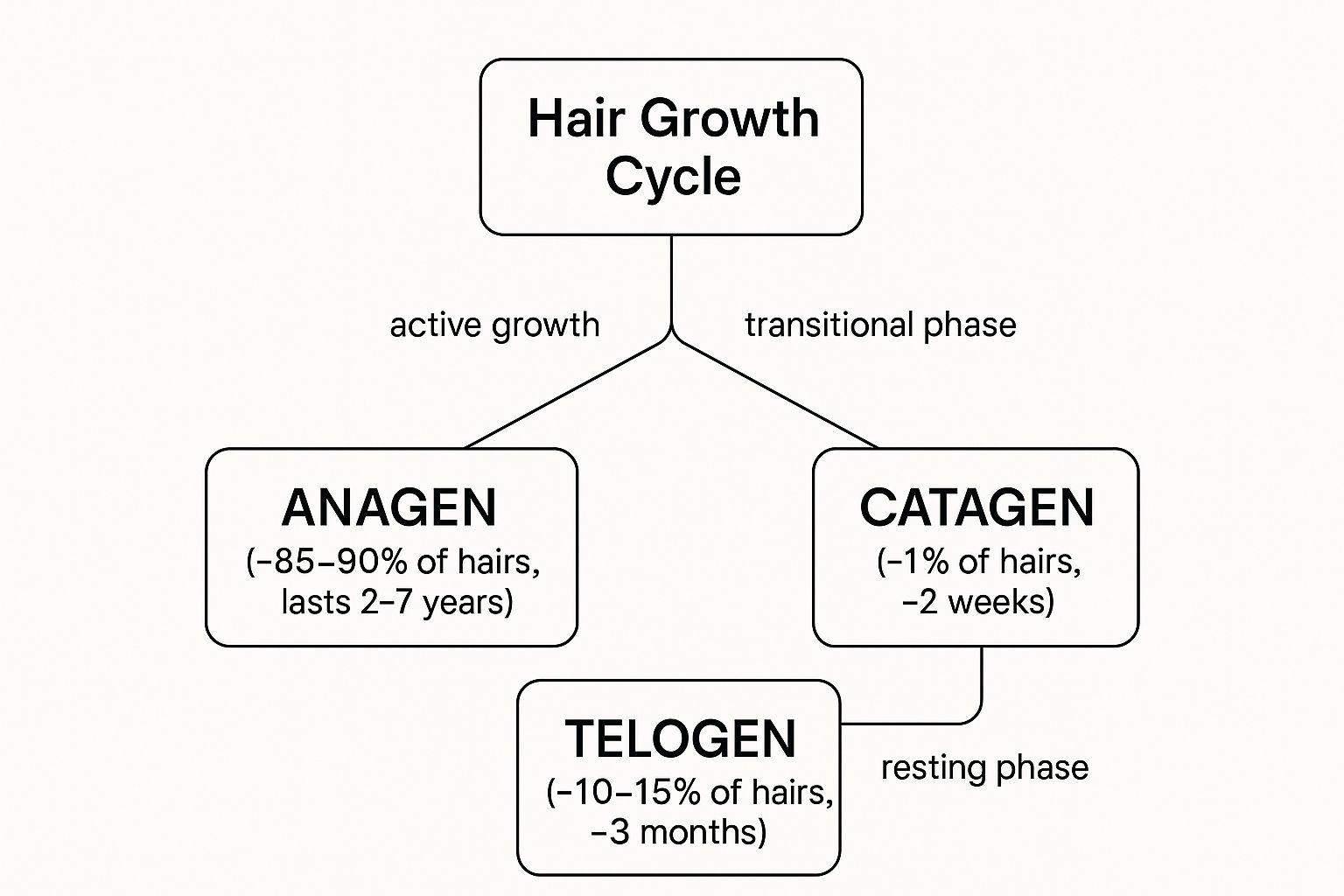
As you can see, the vast majority of your hair is actively growing, while only a small fraction is getting ready to shed. Let’s take a closer look at each stage.
The Three Phases of Hair Growth
This whole process is a beautifully orchestrated biological rhythm. Each phase has a distinct purpose and timeline, all working together to maintain the health and fullness of your hair.
-
Anagen (The Growth Phase): This is the main event—the long, active growing period for each hair. This phase can last anywhere from 2 to 7 years, which is why our hair can grow so long! On a healthy scalp, about 85% to 90% of your hair is in the anagen phase at any given time.
-
Catagen (The Transitional Phase): After years of growing, the hair gets a signal to wind down. This short transitional stage, called catagen, lasts only about two weeks. The hair follicle shrinks, cutting itself off from the blood supply in preparation for the final phase. A tiny 1% of your hair is typically in this stage.
-
Telogen (The Resting & Shedding Phase): Finally, the hair enters a resting period. For about three months, the hair just sits in the follicle, dormant, while a new hair begins to form beneath it. Roughly 10% to 15% of your hair is in the telogen phase. Once this stage is over, the old hair is pushed out—it sheds!—and the new hair begins its own anagen journey.
This constant, overlapping cycle is exactly why losing 50-100 hairs a day is perfectly normal. It's just old hairs making a graceful exit to let new ones take their place.
Grasping this cycle is the first step in knowing whether your shedding is just part of the routine or something more. To dive even deeper, you can explore the complete hair growth cycle and all its fascinating details.
Factors That Influence How Much Hair You Lose Daily
That 50-100 hairs-per-day range is a great rule of thumb, but it’s far from a hard and fast rule. The truth is, your personal "normal" can fluctuate quite a bit based on a whole host of things happening both inside and outside your body.
Getting a feel for these influences is key to understanding what you see in your hairbrush or the shower drain.
After all, just as no two people are the same, neither are their heads of hair. Your genetic blueprint is a massive driver of everything from your hair's density and the length of its growth cycle to whether you're predisposed to thinning later in life. It really sets the stage for what’s normal for you.
Your Body and Your Hair
What's going on inside your body has a direct line to your hair follicles. Hormonal shifts, in particular, are some of the biggest players in the hair shedding game.
- Age: As we get older, it's natural for the anagen (growth) phase of the hair cycle to get a bit shorter. This means hair moves into the shedding phase more frequently and may grow back finer, leading to a gradual uptick in daily hair fall over the years.
- Hormonal Shifts: Big life events like pregnancy or menopause trigger major hormonal swings that can prematurely push a larger number of hairs into the telogen (shedding) phase. This usually causes a temporary, but definitely noticeable, increase in shedding.
Genetics and hormones are incredibly powerful forces when it comes to hair health. For example, androgenic alopecia—the most common cause of hair loss—is directly linked to your genetic makeup and the activity of certain hormones.
Ethnicity can also be a factor. In Mexico, studies show that 5 out of 10 men between 20 and 30 experience this type of hair loss. That number jumps to 8 out of 10 as they get older.
External and Lifestyle Influences
Beyond your biology, your daily routines and environment absolutely affect how much hair you shed. The good news is that these factors are often the ones you have some control over.
Seasonal changes are a real thing; many people notice they shed more hair in the fall. This is thought to be a natural, almost evolutionary response, potentially triggered by stressors like summer sun exposure.
Your styling habits also make a big difference. Constant use of high-heat tools or tight hairstyles like ponytails and braids puts physical stress on the hair follicles. This can lead to breakage that looks like shedding and can even trigger genuine hair fall, a condition known as traction alopecia.
Getting to know the different hair loss causes can help you connect the dots and figure out what might be influencing your own shedding patterns.
When Normal Shedding Crosses into Hair Loss
So, how can you tell if the hair you're seeing in the shower drain is just part of a natural cycle or the start of a bigger problem? It’s less about counting every single strand and more about noticing real, tangible changes over time.
Instead of getting fixated on daily numbers, take a step back and look at the bigger picture. Is your hair's overall volume feeling different? Does it look thinner than it used to? These are the clues that really matter.
Key Signs to Watch For
It's easy to get lost in the day-to-day fluctuations of shedding. True hair loss, however, tends to show up with more consistent and visible signs. Keep an eye out for these subtle but important shifts:
- A Wider Part Line: If you notice the part in your hair is slowly getting wider over several months, this is a classic sign of thinning.
- A Thinner Ponytail: For those with longer hair, a ponytail that feels noticeably smaller or less dense than it used to is a very common red flag.
- More Scalp Visibility: When you're styling your hair, are you starting to see more of your scalp, especially under bright lights? This points directly to a drop in density.
- Excessive Hair on Your Pillow: A few hairs on the pillow is perfectly normal. But finding a clump of them every single morning could signal that your shedding rate has increased.
It’s stressful to worry about hair loss, but it's also incredibly common. Statistically, about 56 million people worldwide show symptoms of alopecia or hair loss. This includes an estimated 21 million women and 35 million men in the United States alone. To get a better sense of this widespread issue, check out these shocking stats about hair loss.
It often helps to put a name to what might be happening on your scalp. Two of the most common culprits are Telogen Effluvium—a temporary spike in shedding often triggered by stress, illness, or major life changes—and Androgenetic Alopecia, the genetic condition better known as male or female pattern baldness.
Telling these two apart is a critical first step, as their causes and treatments are completely different. You can dive deeper into the differences between Telogen Effluvium vs. male pattern baldness in our detailed guide. Spotting these signs early is how you move from just worrying to finding a real solution.
Practical Steps for Maintaining Healthy Hair
While you can't change your genetics, your daily habits have a massive impact on the health and strength of your hair. It really comes down to the small, consistent things you do every day to create a better environment for your hair to grow and to cut down on unnecessary breakage. The key is to focus on what you can control.
Your first line of defense is a solid, balanced diet. Foods packed with iron, biotin, and protein are literally the building blocks for strong hair. We’re talking about things like leafy greens, eggs, and lean meats. When you nourish your body from the inside out, you're directly supporting the follicles doing all the hard work.
Gentle Care for Stronger Strands
How you handle your hair is just as important as what you eat. It's easy to mistake breakage from rough handling for actual hair loss, so a gentle approach is non-negotiable.
- Ease Up on Heat: Blasting your hair with high heat from blow dryers and flat irons will absolutely weaken the hair shaft over time. If you must use them, think of a heat protectant as essential armor for your strands.
- Avoid Tight Hairstyles: That super-tight ponytail or bun might look sharp, but it can cause a type of hair loss called traction alopecia. This is literally hair loss from physical stress. Try to give your scalp a break with looser styles.
- Rethink Your Bedding: Tossing and turning at night can cause a surprising amount of friction and breakage. This is where simple changes, like understanding the best way of caring for your silk pillowcases, can make a real difference.
Your hair care routine should be proactive, not reactive. Gentle handling, a nutrient-rich diet, and smart stress management are the three pillars of a great foundation.
Finally, don't underestimate the power of stress management. High stress can literally shock your system and push more hair into the shedding phase than normal. Finding a healthy way to unwind—whether it's hitting the gym or meditating—is good for your whole body, and your hair will thank you for it. For more in-depth strategies, our guide on how to prevent hair loss is a great next step.
Frequently Asked Questions About Daily Hair Loss
Even when you know the basics of the hair growth cycle, it's natural to have more specific questions. Seeing hair in your brush or in the shower drain can be worrying, so let's clear up a few common concerns.
Here are some straightforward answers to the questions we hear all the time.
Does Washing My Hair Every Day Cause More Hair Loss?
Nope, washing your hair daily doesn't actually make you lose more hair. It simply dislodges the hairs that were already in the shedding phase and were going to fall out anyway.
Think of it this way: you’re just collecting a day's worth of shedding all at once. A clean, healthy scalp is actually a great foundation for hair growth, so don't be afraid to wash it.
Can Stress Really Make My Hair Fall Out?
It absolutely can. A major physical or emotional event can shock your system and trigger a condition called telogen effluvium. This essentially pushes a large number of your hair follicles into the shedding phase prematurely.
You’ll typically notice the shedding a few months after the stressful period. The good news is that it’s almost always temporary, and your hair should get back on its regular cycle once things calm down.
If you're seeing sudden, patchy hair loss, or if it comes with an itchy or painful scalp, it's time to talk to a doctor. More importantly, if the hair loss itself is causing you a lot of distress, seeking professional advice is the best first step you can take.
Are Hair Growth Supplements and Shampoos Worth It?
This really boils down to why you're experiencing hair loss. Their effectiveness is very individual.
For instance, if your hair loss is linked to a nutritional gap, a targeted supplement could make a real difference. You can learn more about how a vitamin deficiency can cause hair loss and see if that resonates with your situation.
For many, though, over-the-counter products won’t produce dramatic results. While some medicated shampoos can improve your scalp's health, they won't reverse genetic hair loss. Your best bet is always to consult a professional before starting a new routine.
At PRP For HairLoss, our goal is to give you clear, reliable information so you can feel confident about your hair health. Explore our site to get the answers you need on hair loss and effective treatments. https://prpforhairloss.com

 PRP For Hairloss
Leave a comment