It can be tricky to figure out when a skin issue is just a minor annoyance or a real signal that you need a professional's opinion. So, when should you actually book an appointment with a dermatologist? The short answer is pretty simple: if you have any concern about your skin, hair, or nails that isn't clearing up on its own or is genuinely bothering you, it's time.
Think of it this way—your skin is your body’s largest organ. You wouldn't just brush off a persistent heart flutter, so why would you ignore a skin problem that won't go away? Lots of people delay making an appointment, just hoping the issue will magically disappear. But getting an expert's take early on often means the treatment is faster, simpler, and way more effective.
Knowing the Telltale Signs
Learning to recognize the specific signs that call for a visit can save you a ton of stress and time. These clues aren't just about appearances—they can be important hints about your overall health.
Common Red Flags to Watch For
While there are countless conditions that can affect your skin, there are a few key problems that should always prompt a call to a dermatologist's office. Think of these as clear signals that it’s time for a professional to take a look.
- Acne That Just Won't Quit: You've tried every over-the-counter wash and cream out there, but months later, the breakouts are still happening. A dermatologist can offer prescription-strength treatments that actually make a difference.
- A Mole That Looks Different: Keep a close eye on your moles. If you notice a new one or see an old one start to change its size, shape, or color, book an appointment right away. It’s the single best way to stay ahead of potential skin cancer.
- Rashes or Hives That Linger: An itchy, painful, or just plain stubborn rash needs a proper diagnosis. A specialist can figure out if it's something like eczema, psoriasis, or a specific allergy causing the trouble.
- Sudden or Worsening Hair Loss: It's totally normal to feel concerned about thinning hair or bald patches. A dermatologist for hair loss can get to the root of the problem and suggest treatments that work.
- Patches of Skin Discoloration: If you're noticing new or expanding areas of uneven skin tone, reading a comprehensive guide to understanding melasma is a great first step, but a professional consultation is the next move.
The point isn't to diagnose yourself at home. It's about recognizing when your body is trying to tell you something's off. A quick visit can provide peace of mind and get you on the right track, stopping a small issue from becoming a big one.
To make things even clearer, here's a quick reference guide for some of the most common concerns.
Quick Guide for When to See a Dermatologist
This table breaks down common symptoms and helps you decide when it's really time to schedule that appointment.
| Symptom or Concern | What to Look For | When to Schedule an Appointment |
|---|---|---|
| A Changing Mole | Changes in color, size, shape, or texture. Any bleeding or itching. | Immediately. These can be early signs of skin cancer. |
| Persistent Acne | Breakouts that don't respond to over-the-counter products after 2-3 months. | When your self-care routine isn't cutting it and it's affecting your confidence. |
| Stubborn Rash | A rash that is itchy, painful, spreading, or lasts longer than 2 weeks. | If it's uncomfortable or you have no idea what's causing it. |
| Significant Hair Loss | Noticeable thinning, bald patches, or a receding hairline. | As soon as you notice changes that worry you. |
| Unexplained Skin Discoloration | New dark spots, light patches, or widespread changes in skin tone. | If the patches are growing or you don't know the cause. |
At the end of the day, you know your body best. If something feels wrong or is causing you concern, trust your gut and get it checked out by an expert.
When Drugstore Acne Treatments Just Aren't Cutting It
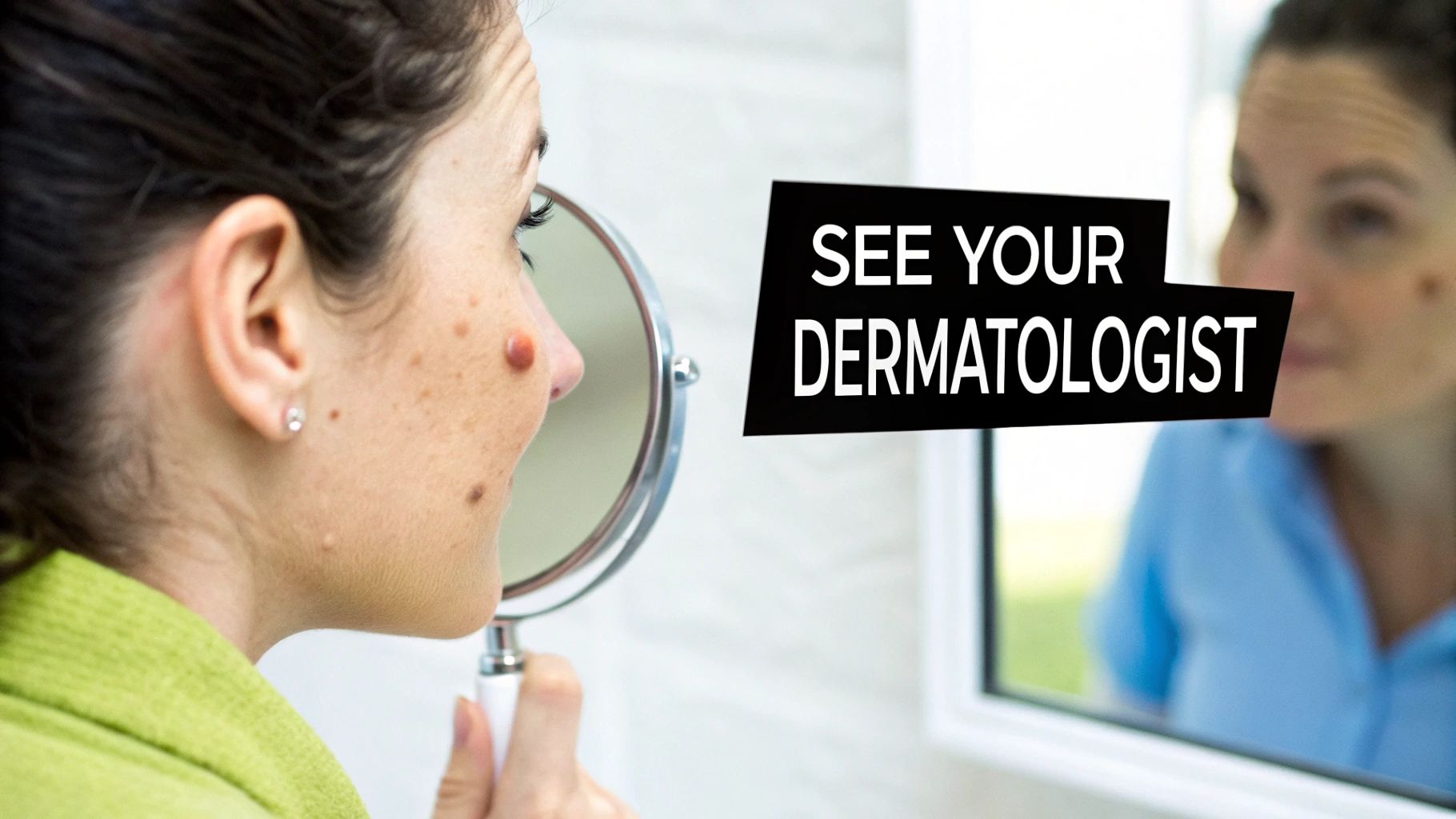
Most of us think of acne as a rite of passage—something you deal with in high school and then happily leave behind. But for many adults, the fight against breakouts can feel like a never-ending battle. It's so frustrating to cycle through countless creams, washes, and spot treatments from the drugstore, only to see little to no change.
If this sounds like you, it's a huge sign that it's time to call in a professional. Those over-the-counter (OTC) products are really just designed to handle mild, surface-level pimples. They simply don't have the muscle to tackle more stubborn or severe acne.
Why Off-the-Shelf Options Fall Short
The acne aisle is packed with products containing ingredients like salicylic acid and benzoyl peroxide. And while these can be great for minor blemishes, their lower concentrations just can't get to the root of more serious acne problems.
This is especially true when you're dealing with painful breakouts that seem to come from deep within the skin.
- Cystic Acne: Think of those deep, painful, and often squishy lumps that form way beneath the surface. They can stick around for weeks and frequently leave a scar behind. OTC products almost never penetrate deep enough to make a real difference here.
- Nodular Acne: Similar to cysts, nodules are hard, painful bumps under the skin. They don't usually form a "head" and are notoriously stubborn against any kind of topical treatment.
- Acne That Scars: If your breakouts are consistently leaving behind dark spots or pitted scars, that's your skin's way of telling you it needs a stronger, more targeted defense to prevent permanent damage.
When your acne starts leaving a lasting mark, you need a professional game plan.
A dermatologist has access to a whole arsenal of prescription-strength treatments you just can't find on a store shelf. Options like topical retinoids, oral antibiotics, or even isotretinoin are designed to attack the underlying causes of severe acne—like bacteria, inflammation, and out-of-control oil production.
Keep in mind, you're not alone in this. It's estimated that 30% to 70% of people around the world deal with some type of skin disorder, which is why professional dermatological care is so essential.
Sometimes, what looks like stubborn acne is actually a different condition entirely. An expert can diagnose whether your symptoms might be caused by rosacea, folliculitis, or a hormonal issue. Just like there are specific causes of male pattern baldness, there are unique triggers for skin conditions that require a proper diagnosis. Knowing when to see a dermatologist is the first step in finally breaking the cycle of failed products and getting on the path to clear, healthy skin.
Spotting Worrisome Moles and Skin Changes
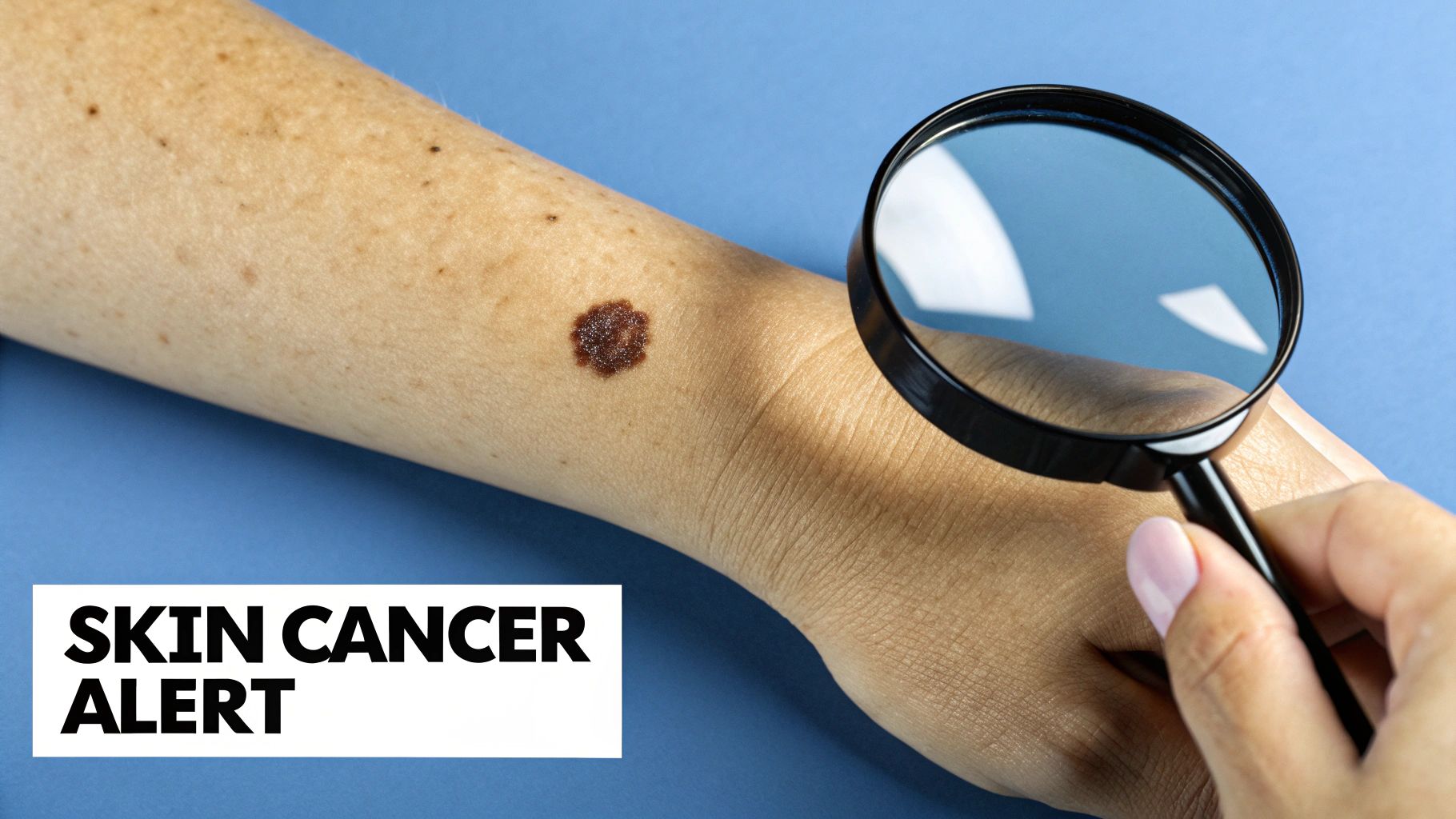
Getting to know your own skin is one of the smartest things you can do for your long-term health. Most of the spots and moles we have are perfectly harmless, but the real power comes from being able to spot something new or different. Catching a change early is everything.
A simple, tried-and-true method for this is the ABCDE checklist. It’s a quick mental scan you can do when checking your skin, helping you pinpoint features that might signal it's time to book a dermatologist appointment.
The ABCDEs of Mole Checking
So, what are you actually looking for? Think of a typical, harmless mole as a small, round, evenly colored brown spot. The ABCDEs help you spot anything that breaks that pattern.
- A is for Asymmetry: Imagine drawing a line right down the middle of a mole. Do the two sides look like mirror images? If the mole is lopsided or one half looks totally different from the other, that's a red flag.
- B is for Border: A normal mole has a nice, smooth, clean edge. You want to watch out for borders that are scalloped, jagged, or blurry—almost like the color is bleeding into the surrounding skin.
- C is for Color: Most moles are just one solid shade of brown. A mole that has multiple colors—think different shades of brown, tan, and black, or even splotches of red, white, or blue—is a definite reason to get it checked out.
- D is for Diameter: Pay attention to any mole that's larger than 6 millimeters across, which is roughly the size of a pencil eraser. While dangerous moles can sometimes be smaller, this size is a classic warning sign.
- E is for Evolving: This is the big one. Any mole that starts changing deserves immediate attention. That means changes in its size, shape, color, or even its height. If a mole starts to itch, bleed, or crust over, don't wait.
This visual guide breaks down the key triggers that should have you calling a dermatologist.
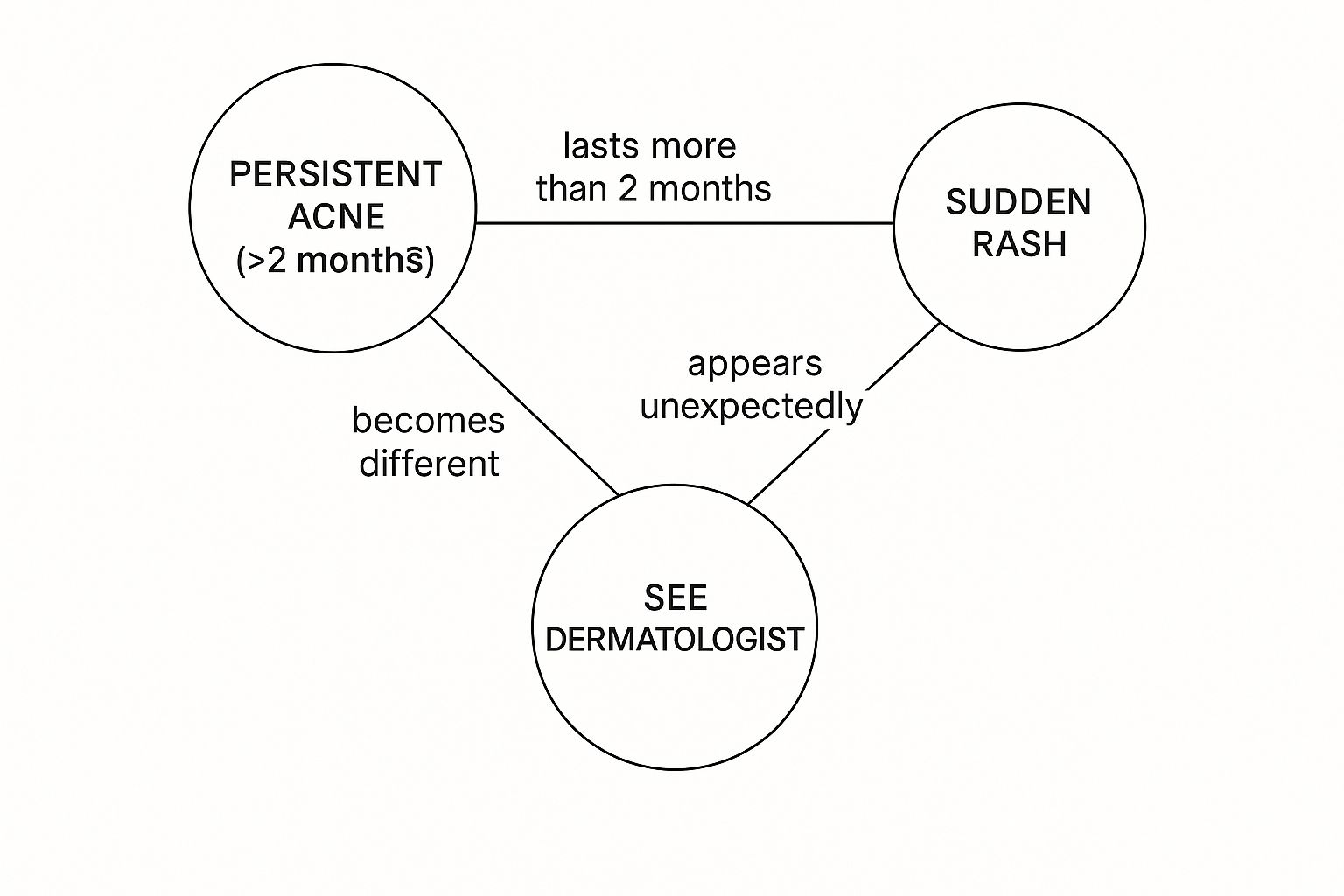
As you can see, mole changes are right up there with stubborn acne and sudden rashes as a primary reason to get an expert opinion.
At the end of the day, nobody knows your skin better than you do. A dermatologist is the expert you need for spotting worrisome moles and skin changes, offering everything from diagnostic checks to specialized procedures for moles and skin.
And while skin health is a huge part of what they do, remember they're also the experts for hair and nail issues. It’s just as important to recognize the early signs of male pattern baldness as it is to know your ABCDEs. If a spot just feels wrong or looks different, trust that instinct. It’s always better to get it checked.
Managing Flare-Ups of Eczema and Psoriasis
For millions of people, problem skin isn’t about a stray pimple here and there. It’s a constant battle with chronic conditions like eczema or psoriasis. These aren’t just simple patches of dry skin; they can be itchy, painful, and genuinely affect your confidence and day-to-day life.
When you're dealing with a persistent skin issue like this, grabbing another over-the-counter lotion can feel like a temporary fix for a much bigger problem. And you’d be right. Conditions like psoriasis, for example, are actually autoimmune disorders where skin cells multiply way too quickly, leading to those familiar thick, scaly patches.
This is the exact moment when to see a dermatologist. A specialist can offer far more than a stronger cream—they'll help you build a real, long-term strategy for managing your specific condition.
Beyond Just Treating Symptoms
Think of a dermatologist as your personal skin coach. Their first step is to figure out what’s actually causing your flare-ups, because everyone's triggers are a little different.
A dermatologist can help you investigate common culprits, such as:
- Environmental Factors: It could be anything from dry winter air and pollen to a new laundry detergent that’s setting off your skin.
- Dietary Connections: For some people, certain foods are a direct line to inflammation and irritation.
- Stress Levels: The link between high stress and skin conditions is undeniable. A stressful period can easily send your immune system into overdrive.
Once you’ve narrowed down your personal triggers, a dermatologist can craft a management plan that actually fits your life. This could include targeted prescription topicals, specialized light therapy, or, in more severe cases, systemic medications that work throughout your body.
The goal shifts from just reacting to flare-ups to actively preventing them. It’s about building a sustainable routine that keeps your skin calm and comfortable, giving you back control.
This proactive mindset is crucial for other concerns, too. For men who are starting to notice hair thinning, finding the right hair loss treatment for men always begins with getting an accurate diagnosis from a specialist. Getting that professional guidance can turn a frustrating struggle into a manageable part of your health journey.
Why a Preventative Skin Exam Should Be on Your Radar
When most of us think about seeing a dermatologist, it’s usually because something is wrong—a rash we can’t kick or a bout of acne that just won’t quit. But honestly, one of the best times to book an appointment is when your skin feels perfectly fine.
Think of it like getting your teeth cleaned. You don't wait for a cavity to see the dentist, right? A preventative skin exam is the same idea, just for the largest organ of your body.
This isn't just a quick look-over. A dermatologist performs a meticulous head-to-toe check, searching for anything out of the ordinary. They’re trained to catch subtle signs and potential trouble spots that you’d likely miss on your own.
So, Who Really Needs a Regular Skin Check?
The short answer? Everyone. But for some people, making it an annual habit is non-negotiable. If any of these sound like you, it’s a good idea to get a yearly exam on the calendar:
- A Family History of Skin Cancer: Genetics are a powerful thing. If a close relative has dealt with skin cancer, your own risk goes up.
- You Have a Lot of Moles: The more moles you have, the more there is to keep an eye on. A professional can track them for tiny changes that might signal a problem.
- A History of Serious Sunburns: If you spent your younger years chasing the sun and got a few blistering burns, that history increases your lifetime risk.
- Fair Skin or Light-Colored Eyes: People with lighter complexions simply have less natural protection from UV damage, making them more vulnerable.
A good dermatologist will make the whole process feel routine and comfortable, turning it into a simple part of staying healthy.
Seeing a dermatologist isn't just for reacting to problems. Think of it as a smart, preventative investment in your long-term health. When it comes to skin, early detection is your best ally.
This move toward proactive care is a growing trend. In fact, non-surgical treatments, which include preventative exams and annual skin checks, now account for the biggest slice of dermatology appointments. You can dig into more stats about this trend over on ibisworld.com.
Using Teledermatology for Convenient Care
Let's be honest, getting an in-person appointment with a dermatologist can sometimes take weeks, if not months. The good news? You don't always have to wait. Teledermatology lets you connect with a specialist right from your phone or laptop, putting expert advice within easy reach.
Think of it as a convenient first step. For many common skin and hair issues, a virtual visit can get you the answers and treatment plan you need without the hassle of travel or taking a day off work.
What Works Best for Virtual Visits
So, what kinds of issues are a good fit for an online consultation? Generally, anything that's easy to see and diagnose from a clear picture is a great candidate.
Teledermatology is particularly effective for things like:
- Acne Follow-Ups: These are perfect for a quick virtual check-in to see how your treatment is progressing or to get a prescription refill.
- Rash Evaluation: Got a new, non-urgent rash? A dermatologist can often identify it and recommend treatment just by looking at high-quality photos.
- Mole Monitoring: For keeping an eye on existing moles that aren't showing any sudden, worrying changes.
- General Skincare Advice: If you're looking for personalized recommendations on products or building a better routine, a virtual chat is ideal.
The secret to a successful virtual visit? It all comes down to your photos. Make sure you take clear, well-lit pictures. Natural daylight from a window is your best friend here. Snap a few shots from different angles to give your doctor the full picture.
Of course, teledermatology isn't a silver bullet. Some things just require a hands-on examination. If your dermatologist needs to feel a lump or take a biopsy of a suspicious-looking spot, you’ll definitely need to go into the office.
Still, the rise of virtual care has been a game-changer. The entire online dermatology market is booming, making expert advice faster and more accessible than ever. Knowing when to see a dermatologist virtually versus in person can save you a ton of time and get you on the path to treatment much sooner.
Common Questions About Seeing a Dermatologist
Deciding to finally book that dermatologist appointment is a big step, but it often brings up some practical questions. Let's clear up a few common hurdles so you can walk into your visit with confidence.
Do You Need a Referral?
This is probably the most common question, and the answer almost always comes down to your insurance. If you have a PPO plan, you can typically just pick up the phone and schedule directly with a specialist. However, most HMO plans require you to get a referral from your primary care physician first.
It’s always a good idea to understand the ins and outs of your coverage. Taking the time upfront when choosing a health insurance plan that fits your needs can save you a lot of headaches later.
How to Prepare for Your First Visit
You'll get a lot more out of your appointment if you show up ready. A little prep work goes a long way.
- Make a List: Jot down all your questions and concerns beforehand. It’s easy to forget things in the moment, whether you're asking about thinning hair or a new spot on your skin.
- Review Your History: Be prepared to discuss your family's medical history, your own health background, and a list of any medications or even supplements you’re currently taking.
- Come as You Are: For skin and nail checks, it's best to arrive with clean, product-free skin and no nail polish. This gives the doctor a clear, unobstructed view.
This prep work is just as important for tracking down the cause of stress-related hair loss as it is for any other skin concern. When you come prepared, you empower your dermatologist to give you the best possible diagnosis and care.
At PRP For HairLoss, we believe that getting accurate information is the first step toward finding the right solution. Explore our resources to learn more about your hair health. Learn more at https://prpforhairloss.com.

 PRP For Hairloss
Leave a comment