When you're ready to tackle hair loss, finding the right "hair loss specialists near me" is the most important first step you can take. Your best bet is to start with a board-certified dermatologist, a medical doctor who specializes in skin, hair, and nails. They can give you a solid medical diagnosis to build your treatment plan on.
Your First Step to Finding a Hair Loss Specialist
Kicking off your search for a hair loss expert can feel overwhelming, but you're definitely not alone in this. The sheer amount of information out there is enough to make anyone's head spin. The key is to break it down and understand who to see first.
Let’s quickly run through the main types of professionals you’ll come across on your journey.
Types of Hair Loss Specialists at a Glance
This table gives you a quick snapshot of the different specialists you might see. It's designed to help you figure out who to book that initial appointment with based on what you're experiencing.
| Specialist Type | Area of Expertise | Best For |
|---|---|---|
| Dermatologist | Skin, hair, and nail conditions | Getting a medical diagnosis, ruling out underlying skin conditions, and creating a treatment plan. The best starting point. |
| Trichologist | Hair and scalp science | Holistic and cosmetic advice, scalp health treatments, and in-depth analysis of hair strands. Good for complementary care. |
| Endocrinologist | Hormones and the endocrine system | Investigating and treating hair loss suspected to be caused by hormonal imbalances, like thyroid issues or PCOS. |
Ultimately, knowing who does what helps you get to the right person faster, saving you time and frustration. A dermatologist is almost always the right first call.
Why Getting to the Root Cause Is Everything
The reason you’re losing hair directly determines the specialist you need. It could be genetic, a reaction to stress, or even a red flag for another health problem.
And you're in good company. Hair loss is incredibly common. Data shows that around 85% of men and 33% of women will experience noticeable hair thinning at some point. That translates to tens of millions of people.
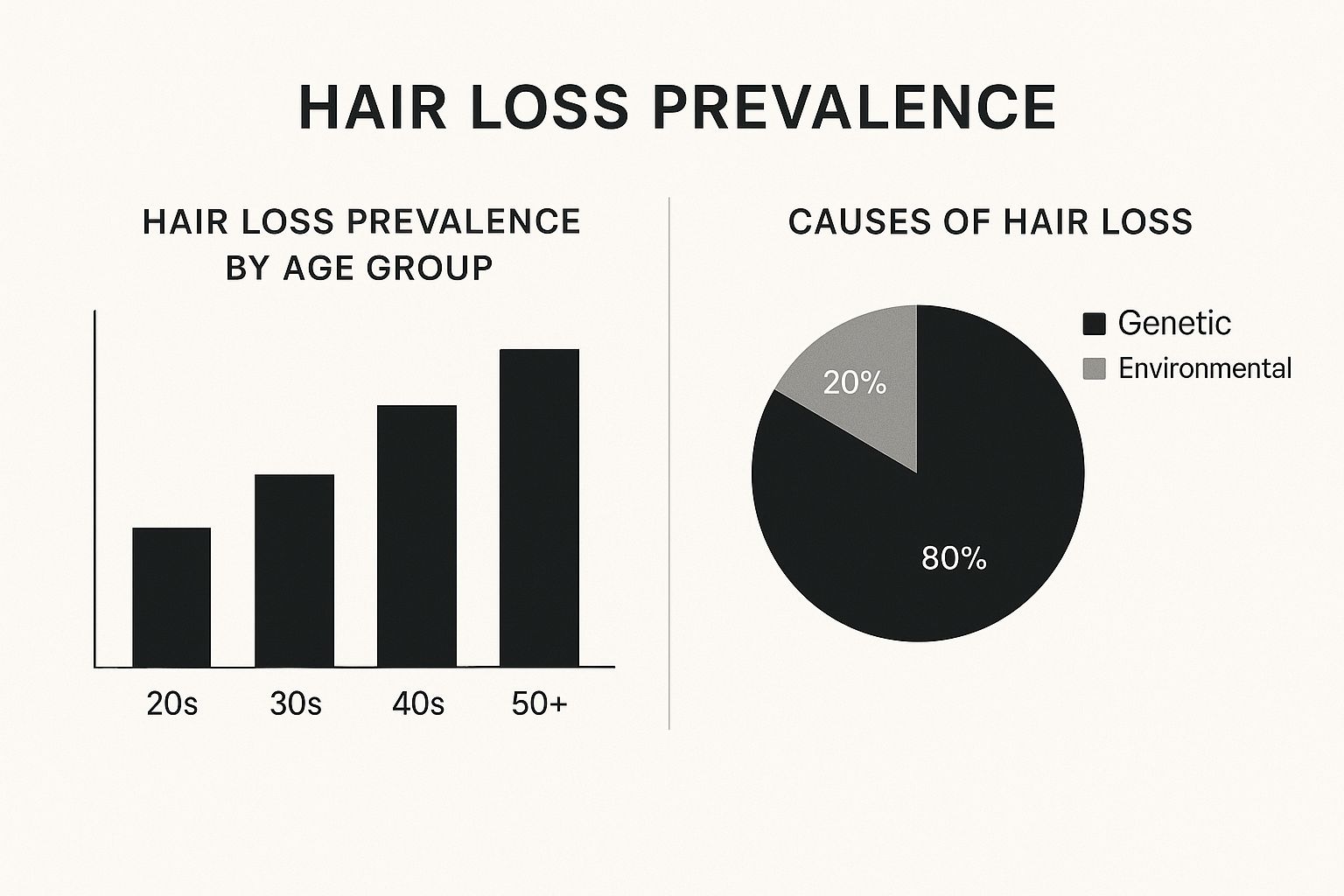
As you can see, while genetics are a huge factor, things like your environment and overall health also play a major role. If the change has been abrupt, you might want to read our guide on the causes of sudden hair loss for more specific insights.
Having this basic knowledge arms you with the information you need to ask the right questions and find the perfect specialist for your situation.
Choosing Between a Dermatologist and a Trichologist
When you start looking for a hair loss expert, you'll quickly run into two main titles: dermatologist and trichologist. They aren't the same, and knowing the difference is your first real step toward getting the right help.
So, who should you see? Let’s break it down.
The Medical Route with a Dermatologist
A dermatologist is a medical doctor (MD) specializing in everything related to skin, hair, and nails. Think of them as the go-to physician for your scalp's health. They have the training and authority to run blood tests, perform scalp biopsies, diagnose underlying medical conditions, and, most importantly, prescribe medication.
For most people struggling with hair loss, a board-certified dermatologist is the best place to start. Their job is to figure out why you're losing hair. Is it an autoimmune issue like alopecia areata? A scalp infection? A hormonal imbalance? They have the diagnostic tools to find out.
Their approach is purely medical. They focus on identifying a root cause and then creating a treatment plan, which might include:
- Prescription Medications: Pills like finasteride or dutasteride.
- Topical Treatments: Professional-strength minoxidil or other custom formulations.
- In-Office Procedures: Things like steroid injections for specific inflammatory conditions.
This medical foundation is absolutely essential for creating a safe and effective plan, especially for common conditions like androgenetic alopecia (male or female pattern baldness). Starting treatment early with a dermatologist can make a huge difference in slowing down the progression. For instance, many now offer advanced therapies; you can see how [PRP therapy treats androgenetic alopecia](https://prpforhairloss.com/prp-for-androgenetic- alopecia) as an example of a medically-supervised option.
The Holistic Angle with a Trichologist
A trichologist, on the other hand, is a hair and scalp specialist. Their focus is laser-sharp on the science of hair health, but here's the key difference: they aren't required to be medical doctors. Their expertise usually leans toward the cosmetic and holistic side of things.
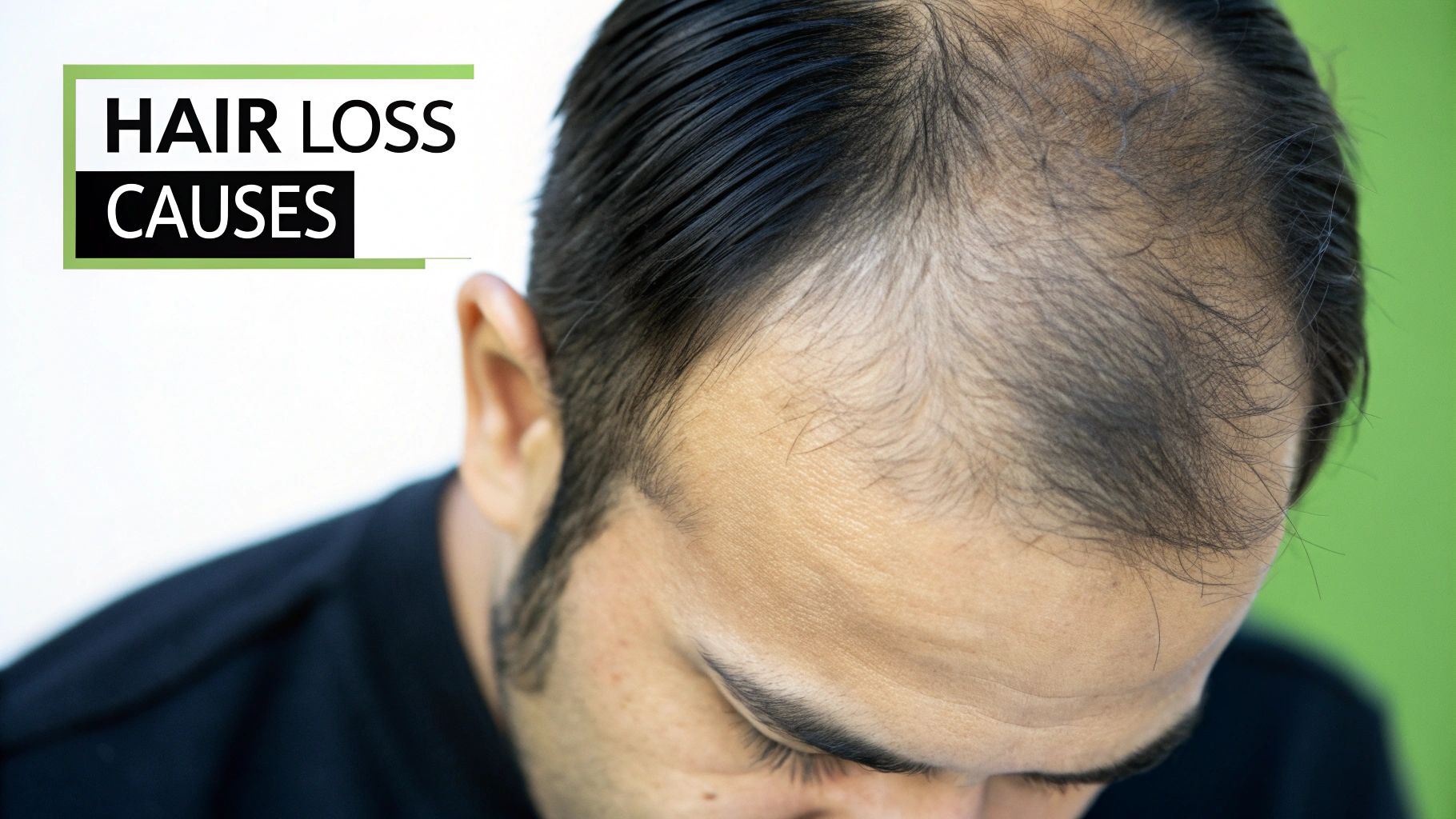
A great trichologist is fantastic at analyzing things like hair breakage patterns, your scalp's overall environment, and how lifestyle factors—like diet, stress, or hair care routines—are contributing to the problem. They offer a valuable, and often complementary, perspective.
Here’s a simple way to look at it: A dermatologist diagnoses and treats the disease causing your hair loss. A trichologist focuses on improving the overall health and condition of the hair and scalp.
Sometimes, the journey doesn't stop with a dermatologist. If they run tests and suspect a deeper hormonal problem is at play, like a thyroid disorder or Polycystic Ovary Syndrome (PCOS), they'll likely refer you to an endocrinologist. This is a doctor who specializes in the endocrine (hormone) system.
By starting with a dermatologist, you ensure you're on the right track from the beginning and get directed to the correct specialist if needed.
How to Find Reputable Specialists in Your Area
Alright, you know what kind of expert you need. Now, how do you actually find them? While plugging "hair loss specialists near me" into a search engine is an obvious first move, you'll get far better results by digging a little deeper.
Think of this part as more of an investigation than a simple search. It’s about finding the right fit, not just the closest clinic.
Use Professional Directories for Vetted Experts
Instead of just trusting Google's top results, a much smarter starting point is the professional organizations that credential these doctors. It's the quickest way to filter out the noise and find properly qualified experts.
These directories essentially give you a pre-screened list of candidates.
- The American Academy of Dermatology (AAD): Use their "Find a Dermatologist" tool. You can search by location and even specify your interest in hair disorders to narrow down the list to true specialists.
- The American Board of Dermatology (ABD): This is where you go to verify a doctor’s credentials. It’s a crucial step for peace of mind, confirming they meet the highest professional standards.
Digging Deeper with Smart Search Tactics
Once you have a shortlist of names from the directories, it's time to do some real-world research. This is where you move beyond the clinic's own marketing and find out what people are really saying.
Try searching for phrases like "[Doctor's Name] reviews hair loss" or "[Clinic Name] patient complaints." This simple trick can uncover patterns in their bedside manner, office wait times, or how satisfied people were with their results.
Don't forget the power of local communities. Check out forums or even Reddit. A quick post asking for "recommendations for a hair loss dermatologist in [Your City]" can give you incredibly honest feedback from people who've walked this path before. Their grassroots insight is often more telling than any polished testimonial on a website.
As you gather this feedback, having a good foundation of knowledge helps. Our article on what causes hair loss is a great resource to help you make sense of the treatments and experiences you'll be reading about.
How to Vet Your Potential Hair Loss Specialist
https://www.youtube.com/embed/yQLD_HZPBwM
Alright, you've narrowed down your search and have a shortlist of potential specialists. Now comes the critical part: shifting from online researcher to in-person interviewer. Vetting a specialist is about more than just checking their credentials; it's about finding out if they’re the right fit for you.
Think of this as finding a partner for your hair restoration journey, not just hiring someone to do a job. The consultation is your chance to see if you can build that trust and rapport.
The Pre-Consultation Homework
Before you book that first appointment, a little bit of final homework can save you a lot of time.
First, and this is non-negotiable, verify their credentials. You're looking for board certification, ideally from a group like the American Board of Dermatology. This isn't just a piece of paper; it’s a guarantee of rigorous training and proven expertise.
Next, dig into their actual work.
- Scrutinize their before-and-after photos. Don't just flip through them. Actively look for patients who have a similar age, hair type, and pattern of loss as you. Do the results look natural? Is the documentation clear?
- Read the patient reviews. Go beyond the cherry-picked testimonials on their official website. Check independent review sites to get a more candid, unfiltered look at what past patients have to say.
Doing this groundwork ensures you're only meeting with pros who are genuinely qualified and have a track record of success.
Questions for Your Consultation
The consultation is where you get a real feel for their expertise and, just as importantly, their communication style. You're the one doing the hiring here, so don't be shy about asking direct questions.
A good specialist will welcome your questions and give you straight, easy-to-understand answers. If they seem rushed, dismissive, or irritated by your inquiries, that’s a huge red flag for what the rest of your experience will be like.
Hair loss is a massive issue. In the United States alone, an estimated 56 million people are dealing with it. The problem is even more significant elsewhere—China reports a staggering 250 million affected individuals.
When you sit down with the specialist, have a few key questions ready:
- How much experience do you have with my specific type of hair loss?
- What tools do you use to diagnose the root cause? (Think dermoscopy, blood tests, or even a scalp biopsy).
- What are all the possible treatments you offer? Be specific. For example, if you're curious about a particular therapy, our guide on PRP injections for hair loss can give you some background to inform your questions.
- What are the realistic outcomes and potential risks for each option you're recommending?
Pay close attention to how they answer. Are they clear and direct, or do they talk in circles? Good doctor-patient communication is absolutely essential. The principles of effective communication in healthcare aren't just buzzwords; they're the foundation for getting the results you want.
What to Expect During Your First Consultation
Walking into your first appointment with a hair loss specialist can feel a little daunting, but knowing what's coming can take a lot of the anxiety out of it. It’s best to think of this visit as a collaborative deep dive—a fact-finding mission where you provide the history and the doctor starts putting the puzzle together.

The first thing you'll do is talk. A lot. The specialist needs to get the full story, so get ready for questions that cover your diet, recent stress, past illnesses, and any medications you’re on. Be prepared to discuss your family’s hair history, too—genetics are a huge factor in many common hair loss conditions.
The Physical Examination
Once you've covered your history, the hands-on part begins. This is more than just a quick look at your part line; the specialist will use specific tools and techniques to get a clear picture of what's happening on your scalp.
- Dermoscopy: Don't be surprised if they pull out a dermatoscope. It's basically a small, powerful magnifying glass for the skin. This lets them see things the naked eye can't, like follicle miniaturization, inflammation, or other subtle clues on your scalp.
- The Pull Test: This one sounds a bit scary, but it's a simple and effective diagnostic. The specialist will gently tug on a small group of about 50-60 hairs. The number of strands that come out gives them a real-time indication of whether your hair is in an active shedding phase.
Your first consultation is the bedrock of your entire treatment plan. The more open and honest you are about your symptoms and lifestyle, the better equipped your specialist will be to pinpoint the real cause of your hair loss.
Depending on what they find, the doctor might suggest more tests to confirm a diagnosis. This isn't uncommon. They may order blood work to rule out things like vitamin deficiencies or hormone imbalances. In some situations, a scalp biopsy—where a tiny skin sample is taken—might be necessary for a closer look at the follicles.
All of this detailed work is crucial for getting the right diagnosis. And it's happening in an industry that's growing incredibly fast. The global market for hair loss treatments is projected to hit $1.64 billion, fueled by exactly these kinds of advanced diagnostic tools and new therapies. You can read more about the innovation boom in hair loss treatments to see what's on the horizon.
Answering Your Top Questions About Finding Hair Loss Help
Even with a solid game plan, a few questions always seem to pop up when you're searching for "hair loss specialists near me." Getting these sorted out early can take a lot of the stress out of the process.
Let's dive into some of the most common concerns I hear from guys just starting their search.
Will My Insurance Cover a Visit?
This is the big one, and the honest answer is… maybe. It really depends on why you're losing your hair.
If your hair loss is a symptom of a documented medical issue—think alopecia areata, a thyroid problem, or even a stubborn scalp infection—your insurance will most likely cover the visit with a dermatologist. In these cases, it’s a necessary medical appointment.
On the other hand, treatments for conditions considered cosmetic, like male pattern baldness, often aren't covered. Your best move is to call your insurance provider directly before booking anything. Ask them specifically about coverage for both the initial consultation and any potential treatments they might recommend.
What's the Typical Cost for a Consultation?
If you're paying out-of-pocket, an initial consultation with a hair loss specialist or dermatologist usually runs anywhere from $150 to over $400. The price tag often comes down to your city and the doctor's level of expertise.
Think of this first visit as a critical investment in getting things right from day one. This is where the specialist does a deep dive, analyzing your scalp, going through your medical history, and maybe running some initial tests to figure out what’s really going on.
Don't get scared off by the upfront cost. An accurate diagnosis from a professional is infinitely more valuable than spending hundreds on over-the-counter products that might not even be right for your type of hair loss.
What if I've Tried Over-the-Counter Products and Nothing Happened?
I see this all the time. You’ve been using minoxidil or another popular product for months with zero results. This is a huge sign that it's time to see a professional.
Most OTC options are really only designed for one specific type of hair loss (androgenetic alopecia). If they aren't working for you, it’s a strong clue that something else is causing your hair to thin. It could be a condition that needs a prescription-strength solution or a completely different treatment path.
A specialist can connect the dots and explain why those products failed, then set you up with a strategy that actually works. While you wait for your appointment, it's a good idea to learn more about how to prevent hair loss so you can have a more informed conversation with your doctor.
At PRP For HairLoss, we believe that understanding your options is the first step toward reclaiming your confidence. We provide clear, straightforward information to help men navigate their hair restoration journey. Find out more on our website.
https://prpforhairloss.com
 PRP For Hairloss
Leave a comment