When people ask me what the best vitamins for hair growth are, I usually point to a core group: Biotin, Vitamin D, Vitamin C, and Iron. These aren't just buzzwords on a supplement bottle; they're essential players in producing keratin, keeping follicles healthy, and getting crucial oxygen to the scalp. Honestly, a balanced diet packed with these nutrients is the real foundation for strong, healthy hair.
The Real Link Between Nutrition and Hair Health
Before you reach for another topical treatment or a pricey shampoo, let's take a look at what’s happening inside your body. The strength, thickness, and even the growth rate of your hair are directly tied to the nutrients you consume day in and day out.
Think of your hair follicles as tiny, highly productive factories. To churn out strong, healthy hair strands, these factories need a steady supply line of specific vitamins and minerals. If that supply chain gets disrupted, production slows down, the quality of the hair weakens, and sometimes, the factory just shuts down altogether. That’s when you start seeing thinning and shedding.
Why Your Diet Is The First Line of Defense
This guide isn’t about some miracle cure in a bottle. It's about getting back to basics and understanding how your diet literally builds your hair from the inside out. When your body is well-nourished, you're creating the perfect environment for your hair to thrive.
The connection between what you eat and the health of your hair is crystal clear. Key nutrients are involved in every part of the process—from cell turnover deep within the follicle to the synthesis of keratin, the very protein that makes up over 90% of each hair strand.
A deficiency in essential vitamins and minerals can throw a wrench in the hair growth cycle. Fixing these nutritional gaps is a critical first step for any effective hair health strategy.
This internal-first approach is gaining some serious momentum. In fact, the global market for hair growth supplements is booming, and it's projected to hit roughly $1.94 billion by 2030. That's a huge number, and it points to a massive shift in how we're thinking about the role nutrition plays in hair health. You can see the full market trend analysis over at GrandViewResearch.com.
Understanding this link is vital, because poor nutrition is a surprisingly common reason for hair problems. You can dive deeper into this topic by reading our detailed article on how a vitamin deficiency can cause hair loss.
Now, let's get into the specifics of which vitamins are the real power players for your hair.
Meet the A-List Vitamins for Hair Growth
Alright, now that we've covered the basics, let's get into the specifics—the actual nutrients your hair follicles are craving. Think of these vitamins as the all-star team for your hair. Each one brings something unique to the table, and they all work together to keep those follicle "factories" running smoothly. Making sure you get enough of these is a total game-changer.
Vitamin A: The Scalp Moisturizer
Every single cell in your body needs Vitamin A to grow, and that absolutely includes your hair cells, which happen to be some of the fastest-growing tissues you have. But where Vitamin A really shines for hair is in its role helping your skin glands produce sebum.
What’s sebum? It's basically your scalp's own natural conditioner. It keeps the scalp moisturized and healthy, which in turn prevents your hair from getting dry and brittle. A dry, itchy scalp and dull, lifeless hair are often tell-tale signs you might be running low.
To get more, focus on foods rich in beta-carotene, which your body cleverly converts into Vitamin A. Good sources include:
- Sweet potatoes
- Carrots
- Spinach and kale
- Pumpkin
B-Vitamins: The Building Blocks
The B-vitamin family is huge, but one member really steals the spotlight when it comes to hair: Biotin (B7). And for good reason. Your body can't produce keratin—the very protein that makes up your hair's structure—without it.
In fact, a biotin deficiency can directly cause hair to thin out, which tells you just how critical it is. Of course, other B-vitamins play a part, too. They help create the red blood cells that transport oxygen and nutrients right to your scalp and follicles, fueling the entire growth process.
Think of Biotin as the lead contractor building a strand of hair. Without it, the whole project grinds to a halt because the main building material, keratin, simply can't be made.
This diagram helps visualize how these key players work together to support your hair's structure and growth cycle.
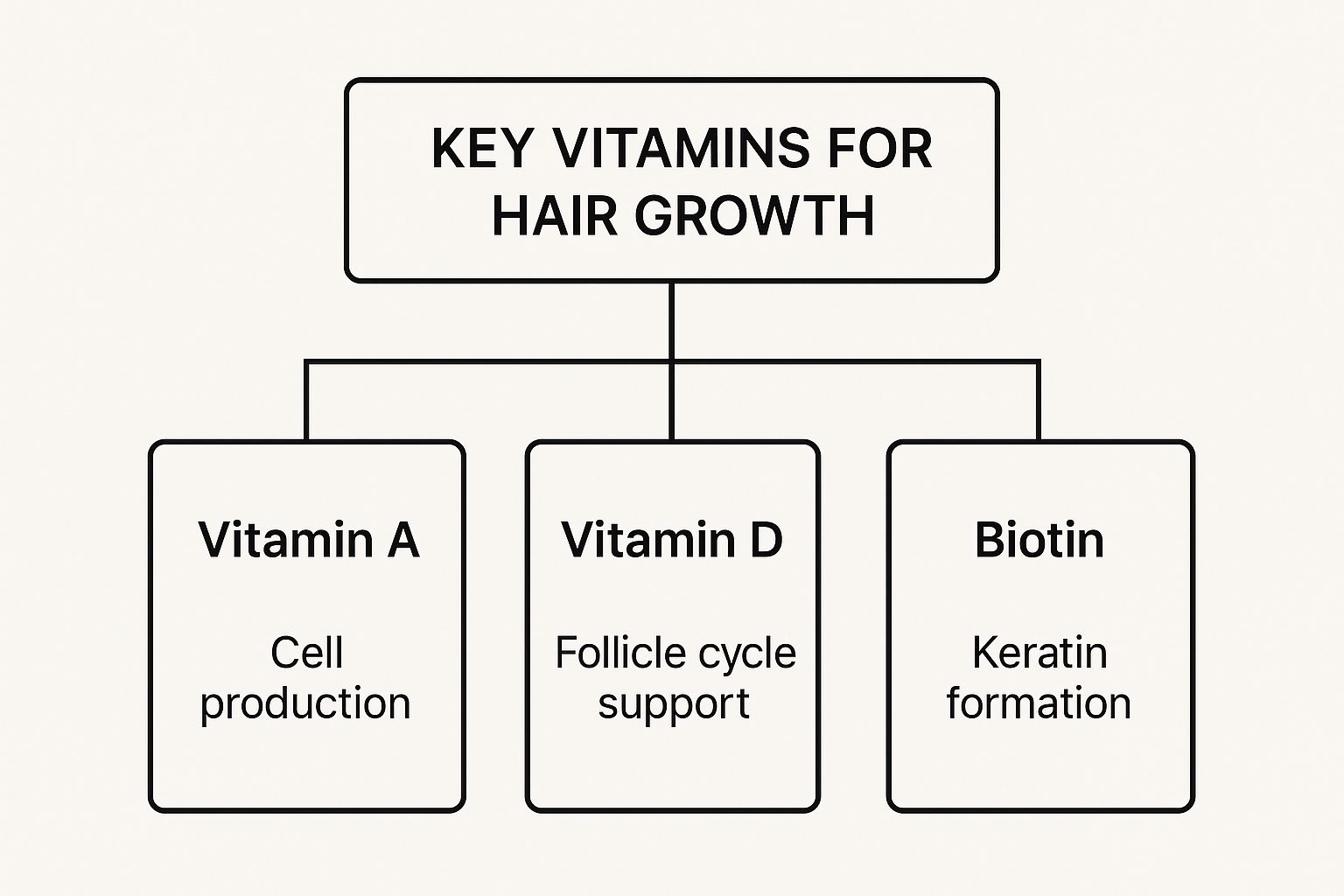
As you can see, Vitamin A is all about driving cell production, Vitamin D helps kickstart the follicle cycle, and Biotin is right at the center of actually forming the keratin protein itself.
Vitamin C: The Protector and Producer
Vitamin C is a powerhouse antioxidant. Its first job is to protect your hair follicles from the damage caused by free radicals—those nasty, unstable molecules that create oxidative stress and can make your hair age faster.
But it doesn't stop there. Your body also relies on Vitamin C to create collagen, a protein that's a vital part of your hair's structure and helps keep strands strong. On top of that, it plays a crucial role in helping your body absorb iron, another mineral that's absolutely essential for hair growth.
These nutrients have become so well-known for their benefits that they've created a massive market. The U.S. hair growth supplement industry alone was valued at roughly $439.1 million, with biotin, Vitamin C, and Vitamin D leading the charge.
Vitamin D: The Follicle Awakener
Most of us connect Vitamin D with strong bones, but new research is showing it has a direct hand in hair production. It’s thought to help create new follicles—those tiny pores in the scalp where new hair actually grows from.
When you're low on Vitamin D, your hair's growth cycle can get thrown off kilter. In fact, low levels have been linked to alopecia areata, a condition that causes patchy hair loss. While a little bit of sunshine is the best source, you can also find it in fatty fish and fortified foods.
Vitamin E: The Circulation Booster
Like Vitamin C, Vitamin E is another potent antioxidant that helps fight off oxidative stress. But its real magic for hair might just be its ability to improve blood circulation.
Think about it: better blood flow to the scalp means your hair follicles get a richer, more consistent supply of oxygen and all the other nutrients they need to grow strong, healthy hair. A healthy scalp is the garden, and healthy hair is what grows there. Vitamin E helps tend that garden.
For a deeper dive into crafting a hair-healthy diet, don't miss our guide on the best foods for hair growth.
For a quick summary of what we just covered, here’s a handy table.
Top Vitamins for Hair and Their Food Sources
This table breaks down the most important vitamins for your hair, explaining exactly what they do and where you can find them.
| Vitamin | How It Helps Your Hair | Top Food Sources |
|---|---|---|
| A | Helps produce sebum to moisturize the scalp. | Sweet potatoes, carrots, spinach, kale, pumpkin |
| Biotin (B7) | Essential for producing keratin, the protein hair is made of. | Eggs, nuts, seeds, salmon, avocados |
| C | Protects follicles and helps create strengthening collagen. | Citrus fruits, bell peppers, strawberries, broccoli |
| D | May help create new hair follicles for new growth. | Fatty fish (salmon, mackerel), fortified milk, sun exposure |
| E | Improves blood circulation to the scalp for nutrient delivery. | Sunflower seeds, almonds, spinach, avocados |
Remember, while supplements can help fill gaps, getting these nutrients from whole foods is always the best first step toward building a healthier head of hair.
Meet the Unsung Heroes: Minerals for Stronger Hair
While vitamins usually steal the spotlight, a few key minerals are the powerhouse support team working behind the scenes. They provide the raw strength and resilience your hair needs to thrive. If you ignore them, you're only getting half the story on hair nutrition.
Let's pull back the curtain on the key players you can't afford to overlook: iron, zinc, and selenium. Each one is fundamental to the hair growth cycle, and a shortage of any of them can bring your progress to a screeching halt.
Iron: The Oxygen Courier
Think of iron as the dedicated courier service for your hair roots. Your body uses iron to create hemoglobin, the protein in red blood cells that ferries oxygen everywhere it needs to go. Without enough iron, this delivery system falters, and your hair follicles are starved of the oxygen they need to grow.
This condition, iron deficiency anemia, is a well-known cause of hair shedding, especially a type called telogen effluvium. If you’ve been seeing more hair than usual circling the shower drain, it's definitely worth checking if your iron levels are where they should be.
Zinc: The Master Builder
If biotin is the lead contractor building your hair, then zinc is the master architect drawing up the blueprints. This essential mineral is a major player in hair tissue growth and repair. It also helps the oil glands around the follicles function correctly, keeping everything lubricated and healthy.
Zinc is absolutely crucial for protein synthesis—and hair is almost entirely protein. When your zinc levels dip, it can directly weaken your hair’s protein structure, leading to brittle strands and increased shedding. In fact, hair loss is one of the classic tell-tale signs of a zinc deficiency.
A truly effective hair health strategy is a balanced one. Both vitamins and minerals must work together to create the right internal environment for strong, sustained growth.
The importance of these minerals isn't a secret. You'll often see iron included alongside vitamins in top-tier hair growth formulas specifically to combat deficiencies linked to thinning. This shows a growing understanding in the market of how science can meet the demand for real solutions. You can dig deeper into these trends with this insightful report on hair growth supplements.
Selenium: The Scalp's Bodyguard
Last but not least, let's talk about selenium. This trace mineral acts as your scalp's personal bodyguard, protecting it from environmental damage. It’s a critical component of enzymes that fight off oxidative stress, a process that can seriously harm hair follicles.
Selenium also has a hand in producing thyroid hormones, and your thyroid is a master regulator of the hair growth cycle. Getting enough selenium helps keep this entire system running smoothly and in balance.
The best way to load up on these essential minerals is through a varied, whole-food diet.
- For Iron: Make friends with red meat, spinach, and lentils.
- For Zinc: Oysters, beef, and pumpkin seeds are fantastic sources.
- For Selenium: Brazil nuts are a true powerhouse, but you can also get a good dose from tuna and sardines.
Food First or Supplements: A Practical Guide
So, you know which vitamins and minerals your hair is hungry for. That's the first step. Now for the practical part: how do you actually get them into your system where they can do some good?
You've got two main routes—your diet and supplements. The best strategy isn't an either/or choice; it’s usually a smart combination of both.
I always tell my clients to start with a "food first" mindset. It just makes sense. Your body is built to recognize and process nutrients from whole foods with incredible efficiency. When you eat a carrot, for instance, you're not just getting a shot of beta-carotene. You're getting a complete package of fiber, enzymes, and other phytonutrients that all work together, helping your body absorb and use everything.
Why Your Plate Comes First
Building your meals around hair-healthy foods doesn’t have to be some complicated chore. It can be as simple as putting together a power-packed salad.
Think about it: a base of spinach (iron and Vitamin A), topped with grilled salmon (biotin and Vitamin D), some colorful bell peppers (Vitamin C), and a sprinkle of sunflower seeds (Vitamin E). Every single ingredient is pulling its weight.
A daily smoothie is another dead-simple strategy. Blend some kale, avocado, and a scoop of protein powder for a quick, nutrient-dense breakfast that directly supports your hair’s structure and growth. These small, consistent habits build a nutritional foundation that no pill can truly replicate.
But let's be realistic—life gets in the way. Busy schedules, dietary restrictions, or even underlying health issues can make it tough to get everything you need from food alone. This is exactly where supplements can play a valuable supporting role.
When Supplements Make Sense
Supplements are not a replacement for a healthy diet. Think of them as a booster shot, not the main fuel. They are particularly useful if you have:
- Diagnosed Deficiencies: If a blood test shows you're low in something specific, like iron or Vitamin D, a targeted supplement is the fastest, most direct way to get your levels back on track.
- Dietary Restrictions: Vegans and vegetarians, for example, often find it harder to get enough iron, zinc, and B12 from their diet. Supplementation is a smart move here.
- Absorption Issues: Some medical conditions can prevent your body from properly absorbing nutrients from food, making a high-quality supplement essential.
When you're shopping for a supplement, you need to learn how to read the label like a pro. Look for products that have been third-party tested by organizations like USP or NSF. This stamp of approval ensures the bottle contains what it claims to and isn't full of contaminants.
It’s also smart to think about how different body systems interact. For instance, poor nutrient absorption often starts in the gut, so looking into gut health supplements can be a game-changer for making sure your body actually uses the vitamins you're taking.
The most important rule of supplementation is this: always consult with your doctor before starting a new regimen. They can help you figure out the right dose and make sure it won’t interfere with any medications you’re on or other health conditions.
This strategic approach—a nutrient-rich diet backed by targeted supplements when needed—is a powerful part of a bigger plan to keep your hair. To see how this fits into the complete picture, check out our guide on how to prevent hair loss.
Common Myths About Hair Growth Vitamins

When you start looking into supplements for hair growth, you’ll quickly find yourself wading through a sea of conflicting advice. It's tough to know what's true and what's just clever marketing. Let's cut through the noise and bust a few of the biggest myths out there.
One of the most persistent—and dangerous—myths is that more is always better. It's easy to think that if a little vitamin A is good, a lot must be great, right? Wrong.
Your body is a finely tuned machine; it can only process so much of a nutrient at once. Overloading on certain vitamins, especially fat-soluble ones like Vitamin A, can backfire spectacularly, leading to toxicity that actually causes more hair shedding. The real goal is achieving the right balance, not just flooding your system.
The Biotin Hype
Biotin is everywhere. It's often pushed as the one-stop-shop miracle cure for thinning hair. While biotin is absolutely vital for producing keratin (the protein that makes up your hair), its role as a magical growth elixir is seriously overblown.
Here's the truth: biotin supplements really only move the needle for people who have a true deficiency, and that's incredibly rare in the developed world. If your levels are already sufficient, popping extra biotin pills won't suddenly sprout a thicker mane. It’s just one piece of a much larger nutritional puzzle. For a more complete picture, check out our guide on how to stop hair loss with a multi-faceted strategy.
The Myth of Instant Results
We all want a quick fix. You start taking a new supplement and find yourself checking the mirror a week later, expecting a dramatic change. Unfortunately, that's not how hair works. Hair grows at a snail's pace, averaging about half an inch per month.
The hair growth cycle has distinct phases: anagen (growth), catagen (transition), and telogen (rest). It can take at least 3-4 months for any nutritional improvements to show visible results in new growth.
This is a long game. Patience isn't just a virtue; it's a necessity. You have to give your body the time it needs to absorb these nutrients, strengthen the follicles from within, and begin pushing out healthier, stronger strands. Consistency is what delivers real, lasting results.
Answering Your Top Questions About Hair Vitamins
Alright, let's tackle some of the most common questions that come up when you start looking into vitamins for hair growth. Getting these practical details straight will give you a solid foundation to build on.
How Long Until I Actually See Results?
This is always the first question, and it's a fair one. The honest answer? You have to be patient. It takes a good while for your body to replenish its nutrient stores and for that to translate into new, healthy hair growth.
As a general rule, you might start noticing subtle changes—less shedding, maybe better hair texture—within about 3 to 4 months. But for more significant improvements in thickness and new growth, you're realistically looking at about six months of consistent supplementation or dietary changes.
Can You Overdo It With Hair Vitamins?
Yes, absolutely. The idea that "more is better" can backfire, sometimes badly. This is especially true with fat-soluble vitamins like Vitamin A. Taking way too much can build up to toxic levels in your body and, ironically, can actually trigger more hair loss.
Always follow the recommended daily allowance (RDA) on the label unless your doctor has specifically told you otherwise. The goal here is to correct a deficiency and maintain balance, not to flood your system.
This is exactly why it's so important to talk to a healthcare professional before you start popping high-dose supplements. They can run tests and figure out what your body truly needs.
Do Men and Women Need Different Hair Vitamins?
While the fundamental vitamins that support healthy hair follicles are the same for everyone, our specific needs can vary. For example, men are generally less likely to be iron deficient than premenopausal women are.
That said, the basic biology of how these nutrients fuel the hair growth cycle is universal. If you feel like your hair growth has hit a wall, understanding the common culprits is a great starting point for anyone. Digging into the reasons why your hair stopped growing can offer some real clarity.
At PRP For HairLoss, we're convinced that understanding the 'why' behind hair health is the first real step toward finding a solution that works. Our mission is to give men straightforward, actionable information on both treatments and the nutritional science that supports them.
Ready to learn more? Check out all of our resources over at https://prpforhairloss.com.

 PRP For Hairloss
Leave a comment