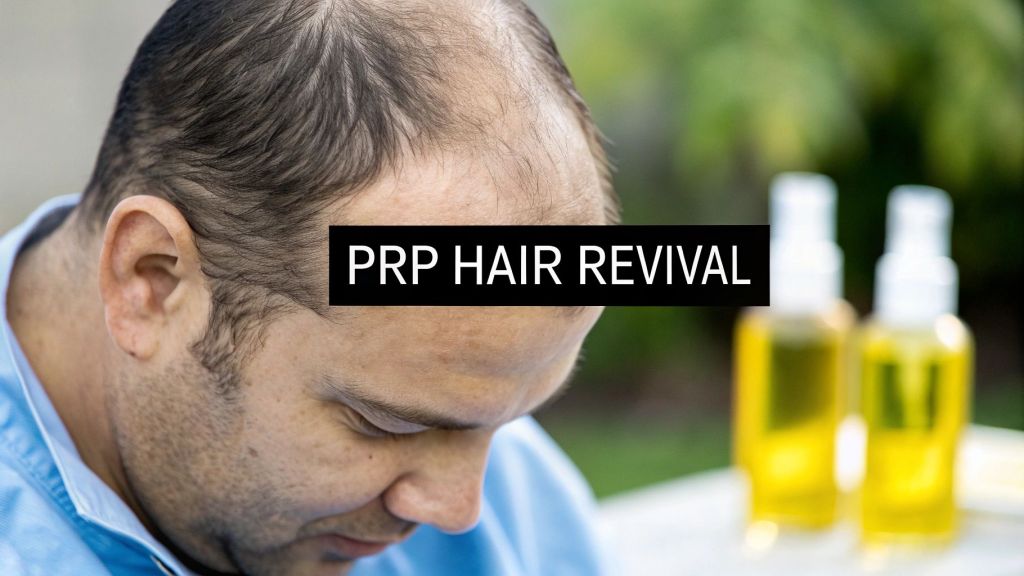
So, let's cut to the chase. You're wondering if PRP can actually help with androgenetic alopecia (AGA), and the short answer is a resounding yes. The best way to think about PRP is as a personalized "super-fertilizer" for your scalp, created from your own blood to wake up tired, dormant hair follicles.
Does PRP Really Work For Androgenetic Alopecia?
When you're dealing with androgenetic alopecia, you're not looking for fluff—you want solutions that get results. The good news is that PRP (Platelet-Rich Plasma) therapy has moved far beyond being just a trend. It's now a well-respected non-surgical treatment that has earned its reputation for improving hair density and thickness.
The process itself is surprisingly straightforward and relies entirely on your body's own powerful healing abilities. It all starts with a simple blood draw, no different than a routine lab test. That blood sample is then placed into a centrifuge, which spins it at high speed to separate it into layers. This clever step lets us isolate a concentrated dose of platelets—the "liquid gold" that’s packed with potent growth factors.
The Science-Backed Evidence
This isn't just wishful thinking. A growing body of scientific evidence backs up PRP's effectiveness for androgenetic alopecia. In fact, one major review that compiled data from multiple studies found that most showed statistically significant increases in both hair density and hair thickness for patients who underwent PRP treatment.
A big part of what makes PRP so compelling is that you aren't introducing anything foreign into your system. You're simply taking your body's natural repair crew and concentrating them right where they’re needed most: your scalp. This makes it a really attractive option for people who are hesitant about synthetic drugs or going under the knife.
The Big Picture: PRP therapy is fundamentally about stimulating weakened follicles, not creating brand new ones. It shines for individuals with thinning hair or early-stage loss, where the follicles are still present but have become dormant or started to shrink.
To give you a quick snapshot, here’s a table summarizing the key aspects of the treatment.
Quick Overview of PRP for Hair Loss
| Aspect | Description |
|---|---|
| Treatment Type | Non-surgical, injectable therapy. |
| Source Material | Your own blood, making it autologous. |
| Primary Goal | Stimulate dormant hair follicles to promote hair growth and thickness. |
| Procedure Time | Typically 30-60 minutes per session. |
| Downtime | Minimal; most patients resume normal activities right away. |
| Best For | Early to moderate androgenetic alopecia (male and female pattern hair loss). |
This overview gives you the core facts, but the benefits go even deeper.
Key Benefits to Consider
The appeal of using PRP for hair loss isn't just about the potential results. Patients are often drawn to this treatment for a few very practical reasons:
- Low Risk of Reaction: Because the plasma comes directly from your own blood, the chance of an allergic reaction or serious side effect is incredibly low.
- Minimal Downtime: This is an in-office procedure. Most people can head right back to their daily routine with very few, if any, restrictions.
- Natural-Looking Results: PRP enhances your own hair. The result is thicker, fuller hair that looks and feels completely natural, because it is natural.
Ultimately, getting a handle on these basics gives you a solid foundation for your journey. To get a better sense of what to expect, you can also explore our guide on how effective is PRP for hair loss. It will help you set realistic expectations as we dive even deeper into the science in the sections ahead.
The Science Behind How PRP Revives Hair Follicles
To really get why PRP works so well for male pattern baldness, we need to go beyond the surface and look at the biology happening on your scalp. It's one thing to hear that it "stimulates growth," but it’s far more powerful to understand how. Think of it like a specialized repair crew showing up to a construction site that’s fallen into disrepair. That's precisely what PRP does for your dormant hair follicles.
The real stars of the show are the platelets. When we concentrate them into PRP, these tiny cell fragments become a rich source of powerful proteins called growth factors. These aren't synthetic drugs; they're the same natural messengers your body uses to heal a wound or mend a bone. When we inject this "liquid gold" into the scalp, they immediately get to work, signaling your hair follicle cells that it's time to wake up and get back to building.
The Key Players in Hair Follicle Regeneration
Imagine this repair crew has different specialists, each with a critical job. The growth factors in PRP work in a similar way, with each one playing a distinct role in reviving your hair.
- Vascular Endothelial Growth Factor (VEGF): This is the crew's plumber. Its primary job is to improve blood flow by building new blood vessels—a process called angiogenesis—around the hair follicle. Better circulation is like upgrading the pipes; more oxygen and nutrients can finally reach the follicle, giving it the fuel it needs to thrive.
- Platelet-Derived Growth Factor (PDGF): Consider this the project manager. PDGF is essential for cell growth and division. It basically gives the order for the cells in and around the follicle to start the repair process and multiply, which is vital for building a stronger, thicker hair shaft.
- Epidermal Growth Factor (EGF): This specialist focuses on strengthening the follicle structure and promoting the health of the surrounding skin cells. A healthier scalp environment is a non-negotiable for healthy hair growth.
Working in concert, this team of growth factors orchestrates a complex biological response that directly pushes back against the effects of androgenetic alopecia.
Key Insight: PRP doesn't magically create brand new hair follicles. What it does is awaken and rejuvenate the miniaturized follicles you already have—the ones that have been weakened and shrunk by DHT (dihydrotestosterone), the hormone at the root of male pattern baldness.
The biological engine driving PRP's success is this targeted blast of growth factors. The PRP solution has a much higher concentration of platelets than what’s normally circulating in your blood. Once injected and activated, they release these crucial proteins right where they’re needed most, sparking cell growth within the follicle. For those who want to get into the nitty-gritty of the science, you can read the full research about these mechanisms on frontiersin.org.
Extending the Growth Phase of Your Hair
Another crucial piece of the puzzle is how PRP affects the hair growth cycle. Every single hair on your head cycles through three phases: anagen (growth), catagen (transition), and telogen (rest). With male pattern baldness, the anagen phase gets shorter and shorter, while the telogen phase gets longer.
What does this mean for you? Your hair spends less time actively growing and more time resting before falling out. Over time, this results in thinner, shorter hairs and the visible thinning we all want to avoid.
PRP's growth factors help turn this situation around. They essentially send a message to the follicles telling them to stay in the anagen (growth) phase for longer. By extending this active growth period, each hair has more time to grow thicker and longer before it naturally sheds, which gradually leads to better density and scalp coverage.
If you're interested in the treatment process itself, you can learn more in our guide on platelet-rich plasma therapy for hair. The whole process is gradual, but it’s powerful because it targets the very cause of hair thinning at a cellular level.
A Step-by-Step Look at Your PRP Treatment
The thought of a medical procedure for hair loss can feel a bit daunting, but a PRP session is surprisingly straightforward and isn't surgery. Knowing exactly what happens from start to finish can help ease any nerves and build your confidence in the process.
Let's break down what a typical session looks like. The whole thing is designed for your comfort and is usually over in about 30 to 60 minutes. It’s a simple, three-stage process that taps into your body's own natural healing abilities.
Step 1: The Blood Draw
First things first, the process kicks off with a simple blood draw. It’s no different from the kind you’d get during a routine check-up. A small vial of blood, typically between 20 and 60 milliliters, is drawn from your arm. For most people, this part is familiar and over in just a few moments.
There's really no special prep needed, though being well-hydrated always helps. This small sample is all that's required to create your personalized treatment—it’s the raw material for stimulating new hair growth.
Step 2: Creating the "Liquid Gold"
Next comes the science. Your blood sample is placed into a machine called a centrifuge. You can think of it as a high-speed spinner that uses G-force to meticulously separate your blood into different layers.
This spinning action isolates the valuable platelets and plasma from the other blood cells. What’s left is a concentrated, golden-colored liquid packed with the growth factors your hair follicles need. This is the Platelet-Rich Plasma (PRP) itself, often nicknamed "liquid gold" for its powerful regenerative potential.
The infographic below shows how this simple, three-step process works, from taking the sample to preparing it for the scalp.
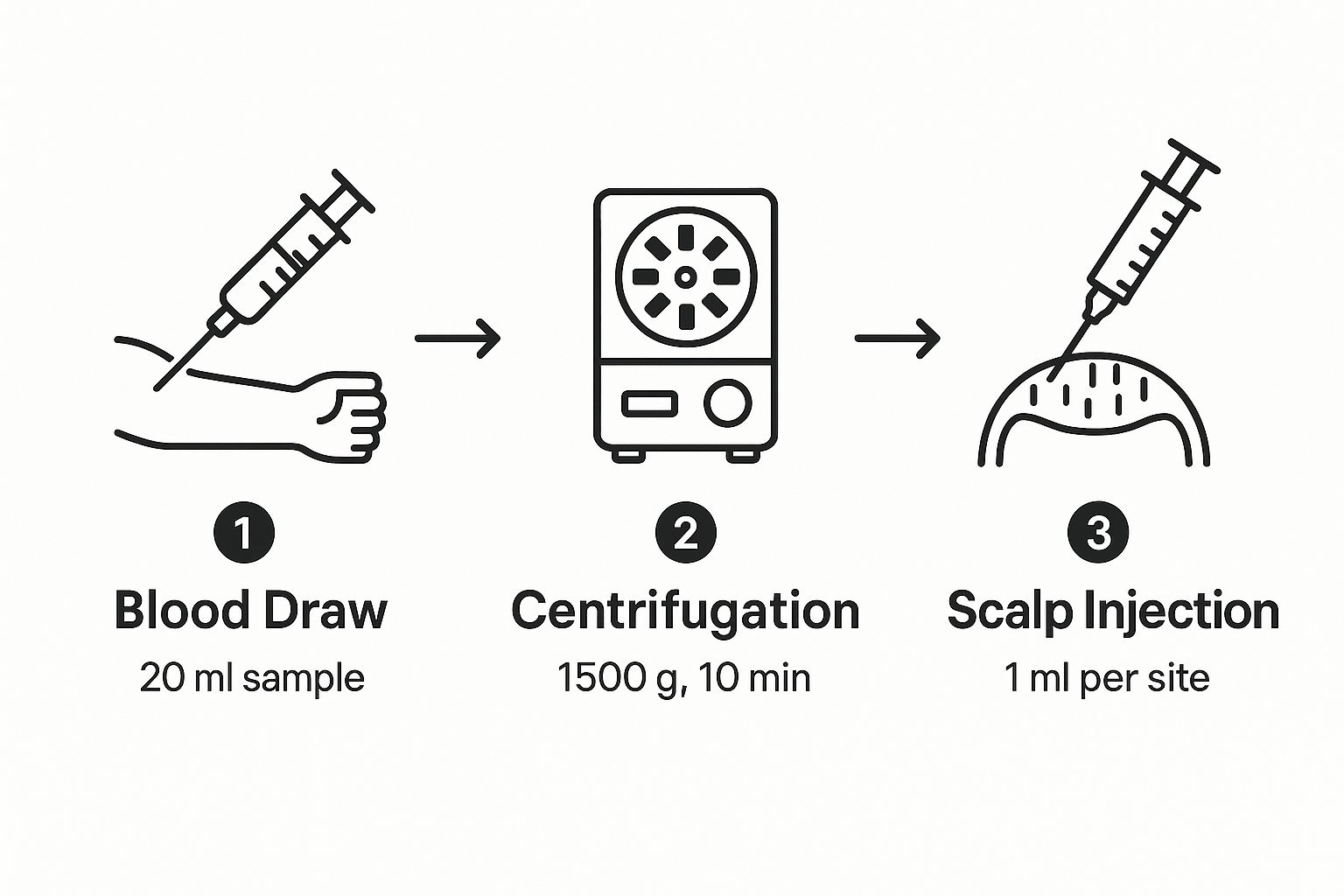
As you can see, it's a very streamlined procedure designed to concentrate your body's healing factors for targeted delivery.
Step 3: The Injection Process
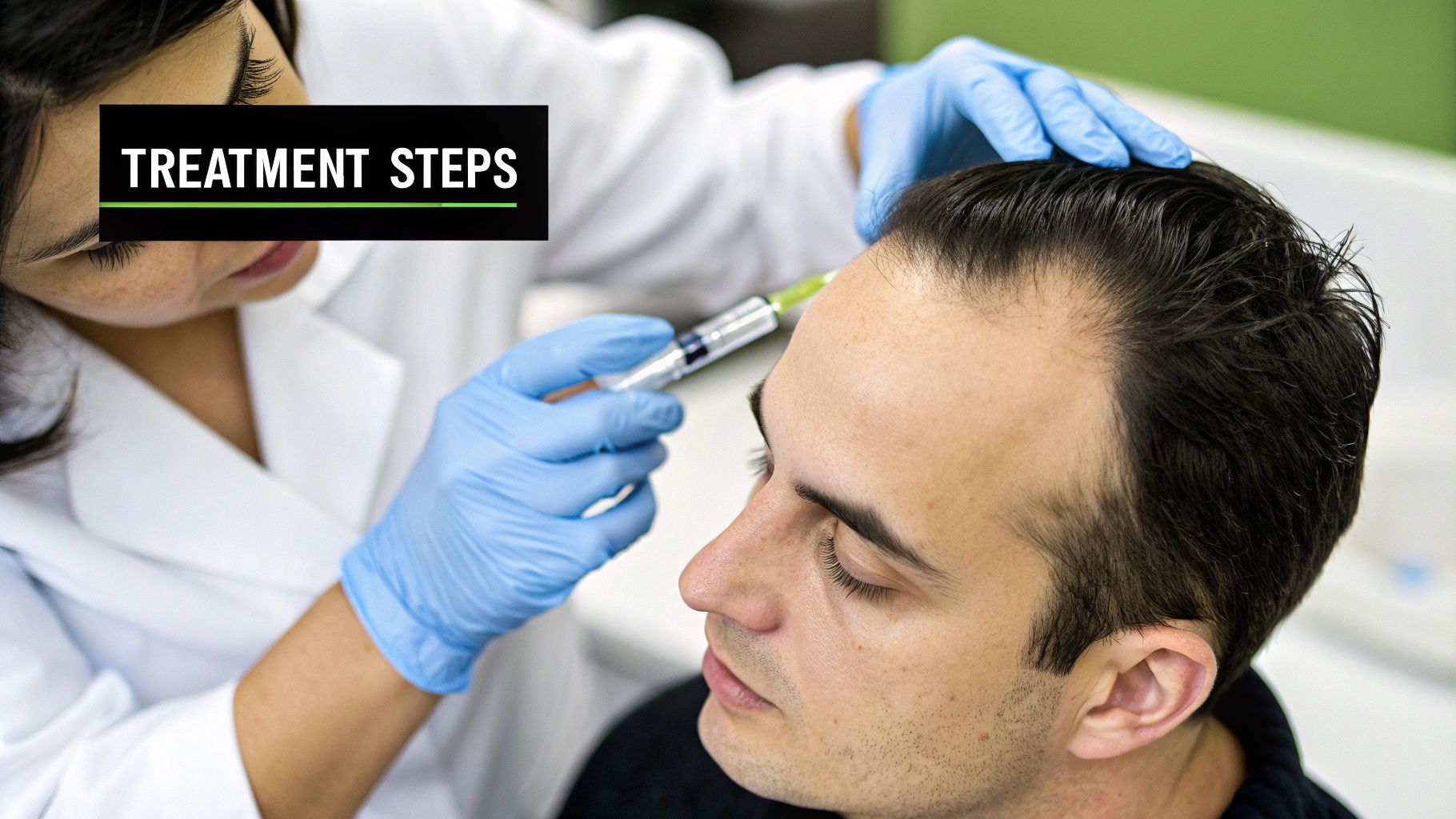
With the PRP ready, the final step is getting it to where it’s needed most—the areas of your scalp where you're experiencing thinning. Your clinician will use a very fine needle to inject small amounts of the PRP directly into the scalp, focusing on the regions affected by hair loss.
Keeping You Comfortable: Your provider will make sure the process is as painless as possible. Many clinics use a topical numbing cream or a cooling device on the scalp beforehand, which significantly minimizes any discomfort from the injections.
The injections are placed strategically, about every half-inch across the thinning areas, to ensure the growth factors are distributed evenly. This approach allows the PRP to start working immediately, helping to wake up dormant hair follicles and improve the overall health of your scalp.
And that's it—you're done. Because PRP for androgenetic alopecia is non-surgical, there’s practically no downtime. Most people head right back to their regular activities after the appointment. You'll just need to follow a few simple after-care instructions, like avoiding harsh hair products for a day or so.
What Results Can You Realistically Expect?
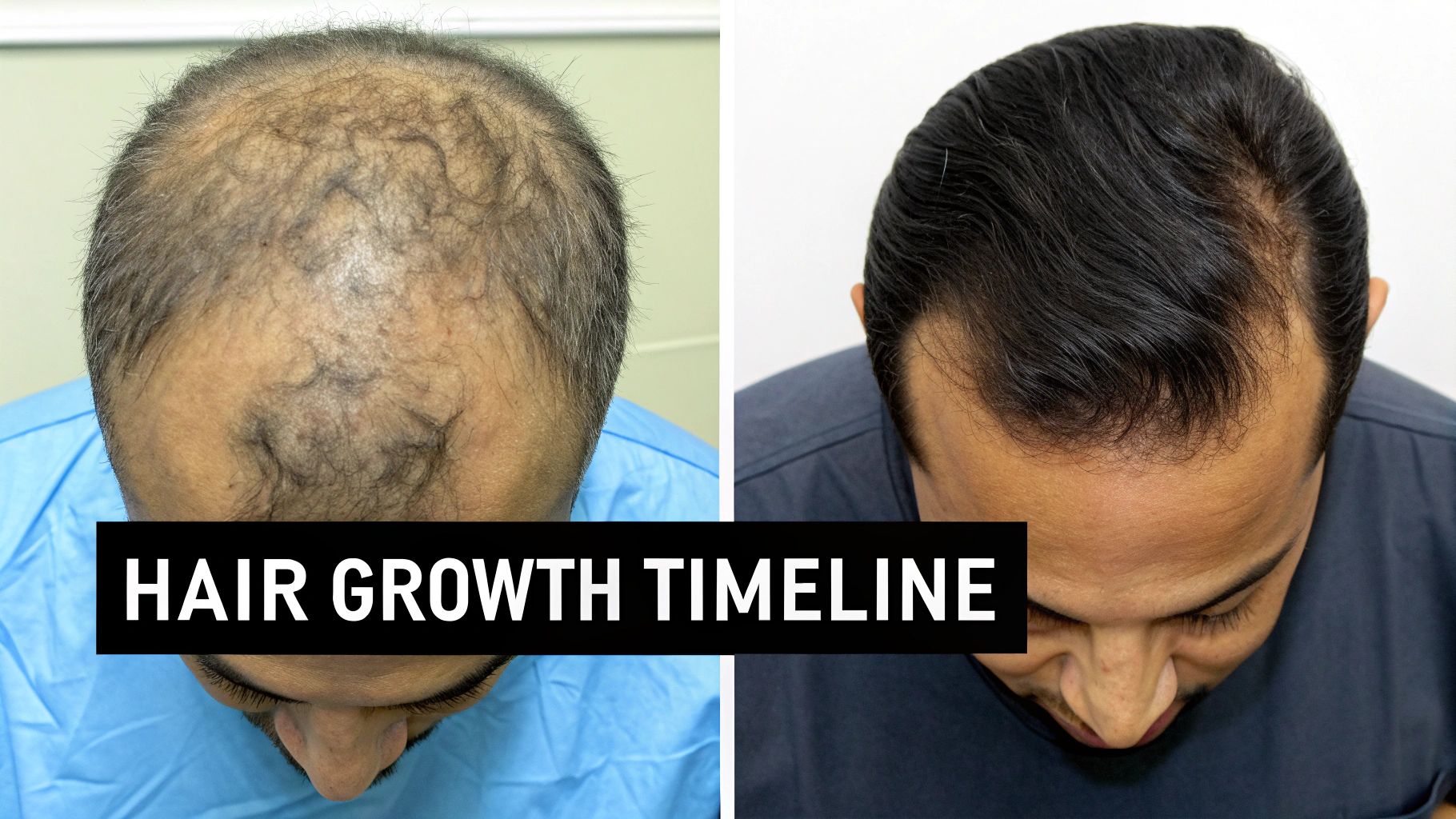
When you're considering a treatment like PRP for hair loss, one of the biggest questions is, "Will this actually work for me?" It’s a fair question. The key is to have realistic expectations from the get-go.
Think of it like tending to a garden. You can’t just plant seeds and expect a lush, thriving lawn the next day. It takes time, patience, and consistent care. PRP works on a similar biological timeline, gradually waking up dormant hair follicles and improving the scalp environment. This isn't an overnight miracle cure, but a process of rebuilding from the ground up.
The Typical Timeline for Seeing Results
So, how long does it take? While everyone's body responds differently based on their specific hair loss pattern and overall health, there's a general progression you can expect.
The very first sign of progress is usually something you feel more than you see. Within the first 2 to 3 months, many people report a significant decrease in hair shedding. Noticing less hair in your brush or the shower drain is a fantastic early indicator that the treatment is taking hold and strengthening your existing hair.
Visible changes, like new growth and better density, tend to follow. Most clinical studies show that noticeable improvements really kick in after about 3 months of consistent treatments. We know that by age 60, roughly 45% of men and 35% of women have some form of androgenetic alopecia, so understanding this timeline is critical. While the results can be substantial, it's also important to know that without maintenance, some of the gains may start to diminish around the 12 to 16-month mark, though hair density typically remains better than when you started.
To give you a clearer picture, here’s a common timeline we see with patients undergoing PRP therapy.
PRP Treatment Timeline and Expected Milestones
| Timeframe | What to Expect |
|---|---|
| Months 1-3 | The primary change is a significant reduction in hair shedding. Hair follicles begin to stabilize. |
| Months 3-6 | This is when new hair growth often becomes visible. Hairs may start as fine, "baby" hairs. |
| Months 6-9 | Existing hairs appear thicker and healthier. You'll notice improved density and scalp coverage. |
| Months 9-12 | Peak results are typically seen. Hair appears fuller, stronger, and healthier overall. |
| 12+ Months | Maintenance sessions (e.g., once every 6-12 months) are needed to sustain the results. |
This table serves as a general guide, but remember, consistency with your initial treatment schedule and follow-up maintenance is the key to achieving and keeping these results.
Defining What Success Looks Like
Success with PRP isn't just about spotting a few new sprouts. It’s about a holistic improvement in your hair's overall health and appearance.
When PRP is working well, you'll see a combination of these improvements:
- Increased Hair Density: More active follicles in a given area lead to better scalp coverage and a fuller look.
- Thicker Hair Strands: The treatment can actually increase the diameter of individual hairs, which makes a huge difference in perceived volume.
- Reduced Shedding: Healthier follicles are anchored more securely, meaning less hair falls out during daily activities.
- Improved Scalp Health: Better blood flow and a nutrient-rich environment create the ideal conditions for strong hair to grow.
The Bottom Line: PRP is fantastic for rejuvenating and strengthening weakened hair follicles. It delivers the best results for people experiencing thinning or who are in the earlier stages of hair loss. It is not designed to regrow hair on a completely bald scalp.
Understanding the investment is also part of the picture. For a complete overview of the financial side, our guide on the PRP hair treatment cost can help you align your expectations with both the potential outcome and the budget.
Who Is an Ideal Candidate for PRP Therapy?
PRP therapy can be a fantastic option for many people struggling with hair loss, but it's not a magic wand for everyone. The key is figuring out if you're the right fit, which starts with understanding who tends to get the best results from PRP for androgenetic alopecia.
Think of PRP as giving a powerful boost to hair follicles that are struggling, not bringing them back from the dead. It works by stimulating what you already have. This is why the timing and the specific type of your hair loss are so important in predicting how well the treatment might work for you.
Catching Hair Loss Early
The best results almost always come when we catch hair loss in its early stages. If you’re just starting to see some thinning on your crown, a bit of recession at the hairline, or a part that looks wider than it used to, you're likely a prime candidate. At this point, your hair follicles are probably still active—they've just gotten smaller and weaker in a process called miniaturization. PRP is designed to reverse this.
By injecting a powerful concentration of your own growth factors right where they're needed, the treatment essentially gives these struggling follicles the wake-up call and nourishment they need to beef back up. The result? Thicker, stronger, healthier hair. On the other hand, for someone with large, smooth bald spots that have been there for years, PRP is far less likely to work because the follicles have likely been gone for too long. For a closer look at different approaches, our guide on how to stop male baldness breaks down what works at different stages.
Key Takeaway: PRP works best on hair follicles that are weakened but still alive. It's meant to energize and thicken existing hair, not create brand-new hair on a completely bald scalp.
Who Might Not Be a Good Candidate
It's just as important to know who PRP is for as it is to know who should probably steer clear. Certain health conditions can get in the way of the treatment’s safety or its ability to deliver results. Since PRP hinges on the quality of your own blood and your body's natural healing ability, anything that compromises those systems can be a problem.
You might not be a good candidate for PRP therapy if you have any of the following:
- Active Scalp Infections: Any kind of infection, rash, or even a flare-up of psoriasis on the scalp needs to be completely cleared up before treatment.
- Blood or Bleeding Disorders: Conditions like a low platelet count (thrombocytopenia) directly undermine the "P" in PRP, making the treatment ineffective.
- Certain Autoimmune Diseases: Some autoimmune disorders can interfere with healing and hair growth, which could impact your results.
- A History of Cancer: This is a major contraindication, especially if you've had skin cancer on the scalp.
Your general health matters, too. Being in good overall health means your body has the resources to respond well to the stimulation PRP provides. A good doctor will always go through your full medical history during a consultation to make sure the procedure is a safe and smart choice for you. That conversation is the perfect time to be open and honest so you can make a decision you feel confident about.
How to Boost Your Results by Combining Treatments
While PRP therapy can certainly work well on its own for androgenetic alopecia, I often tell my patients to think of it as a key player on a much larger team. It's a strong performer, but you get the best results when it's working alongside other proven treatments. When you combine therapies, you're essentially fighting hair loss from multiple directions at once, which can lead to a much better outcome.
This isn't just about throwing a bunch of treatments at the problem and hoping for the best. It's about creating smart, strategic pairings where one therapy supports and enhances the effects of another. This approach gives you a much stronger defense against hair loss and more control over your hair restoration journey.
Creating a Stronger Defense with Finasteride and Minoxidil
The two most common and effective partners for PRP are, without a doubt, oral finasteride and topical minoxidil. These are the foundations of medical hair loss treatment for good reason, and they complement PRP perfectly.
-
Oral Finasteride: This is a prescription pill that works by blocking DHT, the very hormone that shrinks your hair follicles. While PRP is busy stimulating and rejuvenating those weakened follicles, finasteride is tackling the root hormonal cause. It’s like having one person fertilizing the soil while another is pulling the weeds—a powerful one-two punch against hair loss.
-
Topical Minoxidil: You might know this one as Rogaine®. Minoxidil's main job is to boost blood flow to the scalp, which helps kick dormant follicles back into their active growth phase. When you use it with PRP, you're essentially setting the stage for success. Minoxidil creates a more receptive, blood-rich environment, making it much easier for the growth factors from your PRP injections to get in and do their work.
The Power of Combination: The real goal here is to create a result that’s greater than the sum of its parts. You have one treatment stopping further damage (finasteride), another improving the scalp environment (minoxidil), and PRP providing the direct fuel for repair and new growth.
Advanced Pairings for Enhanced Effects
Beyond the big two, a few other therapies can be layered in with PRP to give your results an extra boost. These options work differently, adding another dimension to your treatment plan.
A popular choice is Low-Level Laser Therapy (LLLT). This usually comes in the form of a cap or headband that uses red light to stimulate cellular energy within the hair follicles. Research has shown that LLLT is especially helpful when used consistently with other treatments. Think of it as giving your follicles a gentle, steady energy boost in between your more intensive PRP sessions.
Another technique that's getting more attention is microneedling. This involves using a device with tiny needles to create controlled micro-injuries on the scalp. This process triggers the body's natural wound-healing response and has the added benefit of improving how well topical treatments are absorbed. When you pair microneedling with PRP, you're creating tiny channels that help the platelet-rich plasma penetrate deeper, potentially amplifying its regenerative effects.
The best way forward is to talk through all these options with your doctor. They can help you put together a personalized strategy that targets PRP for androgenetic alopecia from every possible angle, giving you the best shot at getting the thicker, healthier hair you're after.
Common Questions About PRP for Hair Loss
Even after we've walked through the science and the step-by-step process, you probably still have a few practical questions. That’s completely understandable. Getting straight answers to these common queries is the best way to feel truly confident about moving forward with PRP for androgenetic alopecia.
Let's tackle the most frequent questions we hear from patients. My goal is to make sure you have every piece of information you need.
Does The PRP Injection Process Actually Hurt?
This is, without a doubt, one of the first things people ask—and for good reason. The honest answer is that most patients find it very tolerable. The needles used for the injections are incredibly fine, and any good clinician makes your comfort a top priority.
To keep discomfort to a minimum, most practices will apply a strong topical numbing cream to your scalp about 30 to 60 minutes before starting. Some even use a special device that blows cold air on the skin, which does a fantastic job of distracting you from the sensation of the tiny injections. You might feel a little pressure or a quick pinch, but it's typically over before you know it.
What Is The Average Cost Of PRP For Hair Loss?
There isn't a single, fixed price for PRP therapy, as the cost can vary significantly. The final amount really comes down to a few specific factors related to where you are and what you need.
Here’s what influences the overall cost:
- Geographic Location: Clinics in major cities often have higher overhead, which can be reflected in their pricing compared to smaller towns.
- Clinic Reputation: The experience of the practitioner and the quality of their equipment play a role. You're paying for expertise.
- Treatment Protocol: The biggest variable is the number of initial sessions your personalized treatment plan calls for.
Generally, you can expect a single PRP session to cost anywhere from $500 to $1,500. Since a typical starting plan involves three to four treatments, the initial investment is usually between $1,500 and $4,500. The best approach is always to get a firm quote during a direct consultation.
Important Note: PRP for hair loss is almost universally considered a cosmetic procedure. This means you should plan for it to be an out-of-pocket expense, as it is not typically covered by health insurance.
How Many Sessions Will I Need?
PRP isn't a one-and-done solution. The real magic comes from consistency, especially in the beginning. Think of it like a "loading phase" designed to wake up those sleepy hair follicles and get things moving in the right direction.
For most people battling androgenetic alopecia, the initial protocol looks like this:
- An initial series of three to four treatments.
- These are usually spaced about one month apart.
This repeated stimulation is what builds the momentum needed to see noticeable improvements.
Once you’ve completed that initial round and are happy with the results, the strategy shifts from activation to maintenance. To protect your investment and keep your hair healthy, you'll need periodic follow-up sessions. Most patients find that a single booster treatment every 6 to 12 months is perfect for maintaining their results.
These touch-ups are key because, remember, the underlying genetic and hormonal factors causing the hair loss are still there. And while you're weighing your options, it's also smart to read up on any potential PRP hair treatment side effects, which are generally minor and short-lived.
 PRP For Hairloss
Leave a comment