Yes, certain amino acids for hair growth are absolutely essential. Why? Because they are the literal building blocks of keratin, the protein that makes up over 90% of every single hair on your head. Giving your body a rich supply of these nutrients is the very first step to building strong, resilient hair from the inside out.
The Foundation of Strong, Healthy Hair
Think about building a house. You can’t construct a sturdy, weatherproof home with flimsy materials. You need solid bricks, strong steel beams, and high-grade concrete. Without that solid foundation, the entire structure is compromised from day one.
Your hair is no different. Its most crucial building material is a tough, fibrous protein called keratin.
This is where amino acids enter the picture. If keratin is the house, amino acids are the individual bricks and mortar. Your body uses about 20 different types of these "bricks" to build everything it needs, and hair is a top priority. When you have plenty of the right ones available, your body can assemble the long, stable protein chains that create hair that resists breakage and shedding.
Why Amino Acids Are the Ultimate Building Blocks
When you eat protein—whether it's from chicken, beans, or a protein shake—your digestive system breaks it down into individual amino acids. These aminos then enter your bloodstream, creating a pool of resources that your hair follicles can draw from to manufacture new hair.
But what happens if certain key amino acids are in short supply? It's like trying to build that brick house but running out of the right-shaped corner bricks. The whole project stalls, or the final structure ends up weak.
For your hair, this nutritional shortfall can show up in a few obvious ways:
- Weak and Brittle Strands: Hair snaps easily because its internal keratin structure is weak.
- Increased Shedding: Without the right fuel, follicles can’t sustain a healthy growth cycle.
- Slower Growth: The entire hair production line slows down when it's missing raw materials.
- Dull, Lifeless Appearance: The smooth, light-reflecting outer layer of a hair strand depends on a solid protein core.
At its heart, growing healthy hair is a biological manufacturing process. The most direct way you can support it is by providing a steady stream of high-quality raw materials—and the right amino acids are at the top of that list.
To give you a clearer picture, here’s a quick rundown of the most important amino acids for hair, what they do, and where you can find them.
Quick Guide to Key Amino Acids for Hair
| Amino Acid | Primary Role in Hair Health | Common Food Sources |
|---|---|---|
| L-Cysteine | A major component of keratin; provides sulfur for strength and structure. | Poultry, eggs, dairy, red peppers, garlic, broccoli, oats. |
| L-Methionine | Another sulfur-containing amino; essential for keratin synthesis and antioxidant defense. | Eggs, fish, sesame seeds, Brazil nuts, cereals. |
| L-Lysine | Helps with collagen production and iron absorption, both vital for hair follicles. | Meat, eggs, cheese, cod, sardines, nuts, soybeans, spirulina. |
| L-Arginine | Improves blood flow to the scalp by producing nitric oxide, delivering nutrients. | Red meat, fish, poultry, soy, whole grains, beans, dairy. |
| L-Proline | A key component of collagen, which anchors hair follicles in the scalp. | Bone broth, gelatin, cabbage, chives, dairy, meat. |
| Glycine | Also critical for collagen production and helps protect follicles from damage. | Meat, fish, dairy, legumes, spinach, kale. |
This table is just a starting point, but it highlights the "all-stars" your hair follicles are constantly looking for in your diet.
Setting the Stage for Better Hair
Understanding this foundational link between nutrition and hair is empowering. While things like genetics and hormones are major players in hair health, your diet is one of the most powerful factors you have direct control over.
Making sure you're getting enough of these specific amino acids can truly make a noticeable difference over time. Of course, they don't work in a vacuum; they're just as crucial as other well-known nutrients. You can learn more in our guide to the best vitamins for hair growth to see how it all fits together.
Next, we’ll dive deeper into these "power player" amino acids and explore exactly how each one contributes to building exceptional hair.
Meet The Six Power Players For Hair Growth
While dozens of amino acids contribute to our overall health, a handful are the real heavy hitters when it comes to building strong, healthy hair. Think of them as the elite special forces unit for your follicles. Getting to know this starting lineup is the first step to understanding how to support your hair right down to the cellular level.
Let's skip the dry, textbook definitions and dive into how these six key players actually work together to build better hair from the inside out.
Cysteine: The Structural Engineer
Imagine a master welder forging the steel frame of a skyscraper. That’s Cysteine for your hair. As the most abundant amino acid in keratin, its true genius lies in its unique ability to form incredibly strong disulfide bonds.
These bonds act like powerful cross-braces that lock keratin proteins together, giving each strand its core strength, structure, and shape. Without enough Cysteine, the entire hair shaft becomes fragile and prone to breaking—like a building made with shoddy materials.
Methionine: The Essential Supplier
Every big project needs a reliable supply chain, and for hair, that role belongs to Methionine. It's an "essential" amino acid, meaning your body can't make it; you have to get it from your diet. Its main job is delivering one critical element: sulfur.
Sulfur is the raw material Cysteine needs to create those tough disulfide bonds that fortify hair. In short, Methionine makes sure the "structural engineer" has what it needs to get the job done, making it a non-negotiable nutrient for building resilient hair.
This visual map breaks down how amino acids are the fundamental bricks used to construct keratin, which in turn forms each strand of hair.
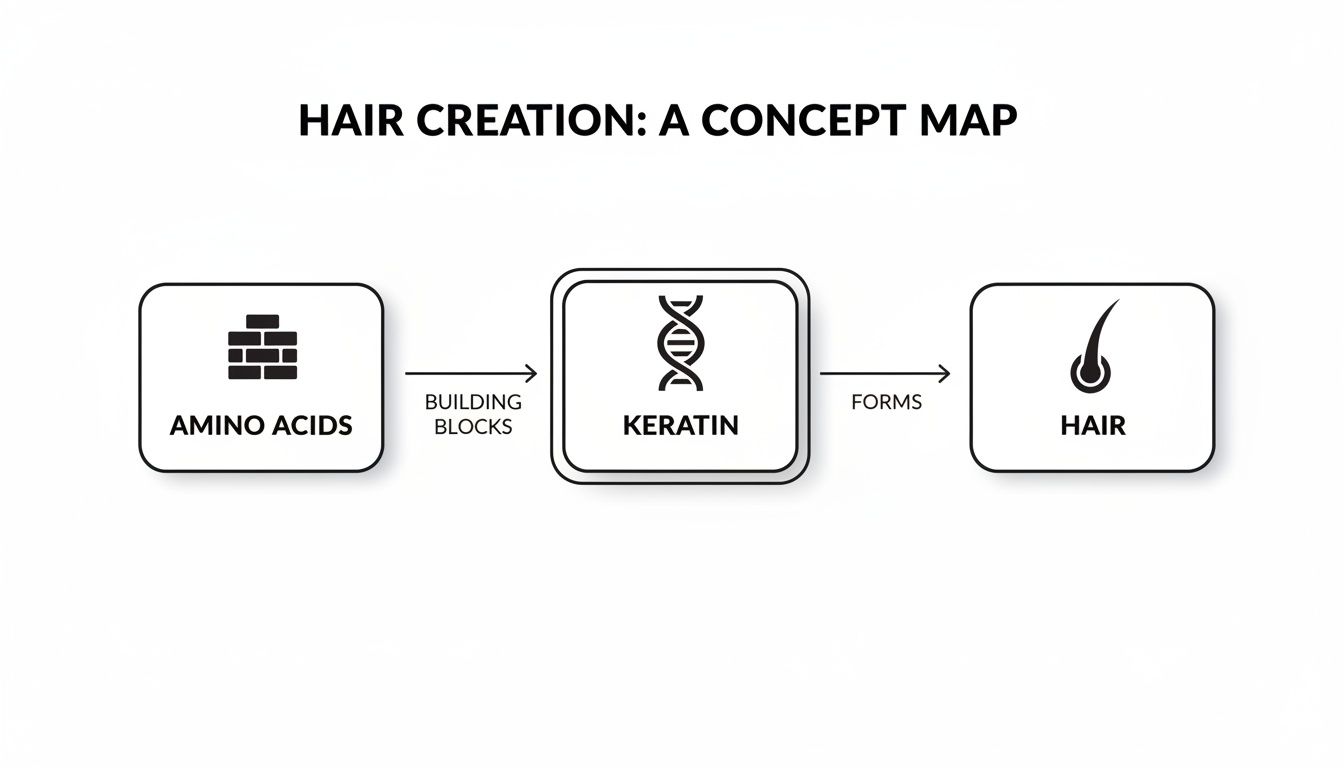
It’s a simple but powerful illustration: without a steady stream of these building blocks, the entire process of growing healthy hair grinds to a halt before it even starts.
Lysine: The Foundation Layer
Next in the lineup is Lysine, another essential amino acid that works behind the scenes to set the stage for growth. Its job is twofold. First, Lysine is crucial for creating collagen, the protein that provides structure to the scalp and anchors each hair follicle firmly in place.
Second, Lysine is a huge help in absorbing iron—a mineral so vital for hair that even minor deficiencies are a well-known trigger for shedding. By helping your body make the most of the iron you consume, Lysine supports a healthy growth cycle. The research backs this up; one study showed that supplementing with amino acids, including L-lysine, resulted in a 9.5% reduction in the shedding phase of the hair cycle in just 84 days.
Arginine: The Circulation Manager
You can have the best building materials in the world, but they’re worthless if they can't get to the construction site. This is where Arginine comes in. This amino acid is a precursor to nitric oxide, a compound that helps relax and widen blood vessels.
This process, called vasodilation, boosts blood flow directly to your scalp and hair follicles. Better blood flow means a richer delivery of oxygen and all the other key nutrients—including our other amino acid players—right where they're needed most. Simply put, better circulation means better-fed follicles.
Glycine And Proline: The Collagen Weavers
Finally, we have the dynamic duo of Glycine and Proline. These two amino acids are the main components of collagen, the most abundant protein in the human body. You can think of them as the expert weavers who create the strong, flexible fabric of your scalp.
Collagen is what forms the connective tissue that houses each hair follicle, giving it a healthy and secure environment to thrive in.
A well-structured collagen matrix in the dermis not only secures the hair root but also helps protect the follicle from damage. By providing the building blocks for this crucial protein, Glycine and Proline ensure the very ground your hair grows from remains robust and healthy.
Of course, these amino acids are just one piece of the puzzle. For a complete picture of nutritional support, check out our guide on the best hair vitamins for men to see how everything works together. Understanding these six key amino acids for hair growth gives you a clear roadmap to better nutrition for your hair.
How Amino Acids Influence Your Hair Growth Cycle
To really get a handle on how amino acids work for hair growth, you have to stop thinking of your hair as a static feature. It's not. Every single strand on your head is constantly moving through a predictable, three-phase cycle. By making sure your body has a steady supply of amino acids, you can actually influence this cycle for the better—encouraging longer, stronger hair.
Think of it this way: your hair’s life is a constant loop of growing, resting, and shedding. Giving it the right nutrients at the right time is like giving a marathon runner fuel and water mid-race. It simply helps them perform better and go the distance.
Tipping the Scales in Favor of Growth
The hair growth cycle is a fascinating process that ultimately dictates how long and thick your hair can get. When you understand the distinct phases, you can see exactly how the right nutrition makes a real-world difference.
Every single one of your hair follicles cycles through three main stages:
- The Anagen (Growth) Phase: This is the main event—the active growth stage where your hair follicle is hard at work producing new hair fiber. This phase can last anywhere from 2 to 7 years, and a longer anagen phase is what allows your hair to grow longer.
- The Catagen (Transition) Phase: This is a brief pit stop, lasting only a few weeks. The hair follicle shrinks and detaches from the blood supply, which is the signal that active growth is over for that strand.
- The Telogen (Shedding) Phase: Finally, the resting and shedding phase, which usually lasts about 3 months. The old hair is pushed out by a brand-new hair growing in underneath it, and the entire cycle kicks off again.
The secret to thicker, fuller hair isn’t just about growing new strands. It’s about keeping more of your existing hair in the growth phase for as long as humanly possible. Amino acids are the fuel that helps your follicles sustain that crucial anagen stage.
So, when you read a scientific study that mentions a "decrease in telogen hairs," it's just a clinical way of saying fewer hairs are in the shedding phase. For you, that translates to less hair in your shower drain or on your brush—a tangible sign that your hair cycle is becoming much more efficient. You can dive deeper into the mechanics of the hair growth cycle to learn more about how it all works.
From the Lab to Your Hairbrush
And this isn't just a theory; we have clinical evidence showing how impactful this kind of targeted nutrition can be. When follicles get a steady stream of amino acids, they have the resources they need to stay in the anagen phase longer and bounce back from the telogen phase more quickly.
Take, for example, a landmark study published in the Journal of Clinical and Aesthetic Dermatology. Researchers gave a supplement containing key amino acids to women experiencing hair thinning. After 168 days, the results were pretty striking: the supplement group saw a 10.1% increase in hair density. Meanwhile, those on the placebo actually saw their hair density decline by 2%. You can read the full research on this dietary supplement for hair growth to see the detailed findings for yourself.
Essential vs Non-Essential Amino Acids For Hair
To properly fuel this cycle, you need to know where your "building blocks" are coming from. Some amino acids can be produced by your body, but others—the "essential" ones—absolutely must come from your diet.
Table: Essential vs Non-Essential Amino Acids For Hair
| Amino Acid | Category | Why It Matters For Hair |
|---|---|---|
| L-Lysine | Essential | Cannot be made by the body; it's crucial for iron absorption and collagen synthesis, which anchors the hair follicle. |
| L-Methionine | Essential | Must come from food; it supplies the sulfur needed to build strong keratin chains, preventing brittle hair. |
| L-Cysteine | Non-Essential* | Your body can make it from Methionine, but a direct supply ensures there's enough to form strong structural bonds in hair. |
| L-Arginine | Non-Essential* | Can be produced internally, but dietary intake helps boost nitric oxide for better scalp circulation and nutrient delivery. |
| L-Proline | Non-Essential | Your body creates it, but it’s a primary component of collagen, vital for the structural integrity of the follicle. |
| Glycine | Non-Essential | Like Proline, it's a collagen powerhouse that your body makes to help maintain a healthy scalp environment. |
Just a quick note: Some "non-essential" amino acids are considered "conditionally essential." This means that during times of high stress or illness, your body's demand might outpace its ability to produce them, making dietary intake much more important.
By understanding how these amino acids directly influence the growth and shedding phases, you can start to see why consistent, targeted nutrition is such a powerful strategy for improving your hair's health from the inside out.
Fueling Your Hair Growth Through Your Diet
Knowing that amino acids are the building blocks of hair is one thing. Actually putting that knowledge to work is another thing entirely, and it’s where you’ll see the biggest difference. The path to stronger, thicker hair really starts on your plate. By choosing the right foods, you create a deep, internal reservoir of the raw materials your hair follicles are desperate for.
Making the leap from theory to practice is all about focusing your diet on high-quality protein. That’s the most direct and reliable way to feed your body a steady supply of the amino acids for hair growth. The goal is simple: keep the production line running smoothly so your follicles never face a shortage.
Building Your Hair-Healthy Plate
Crafting a diet that champions hair growth doesn’t need to be over-the-top or complicated. It all comes down to prioritizing whole foods that are naturally loaded with protein and those key amino acids we’ve been talking about. And the good news is, there are fantastic options no matter your dietary style.
For Meat-Eaters:
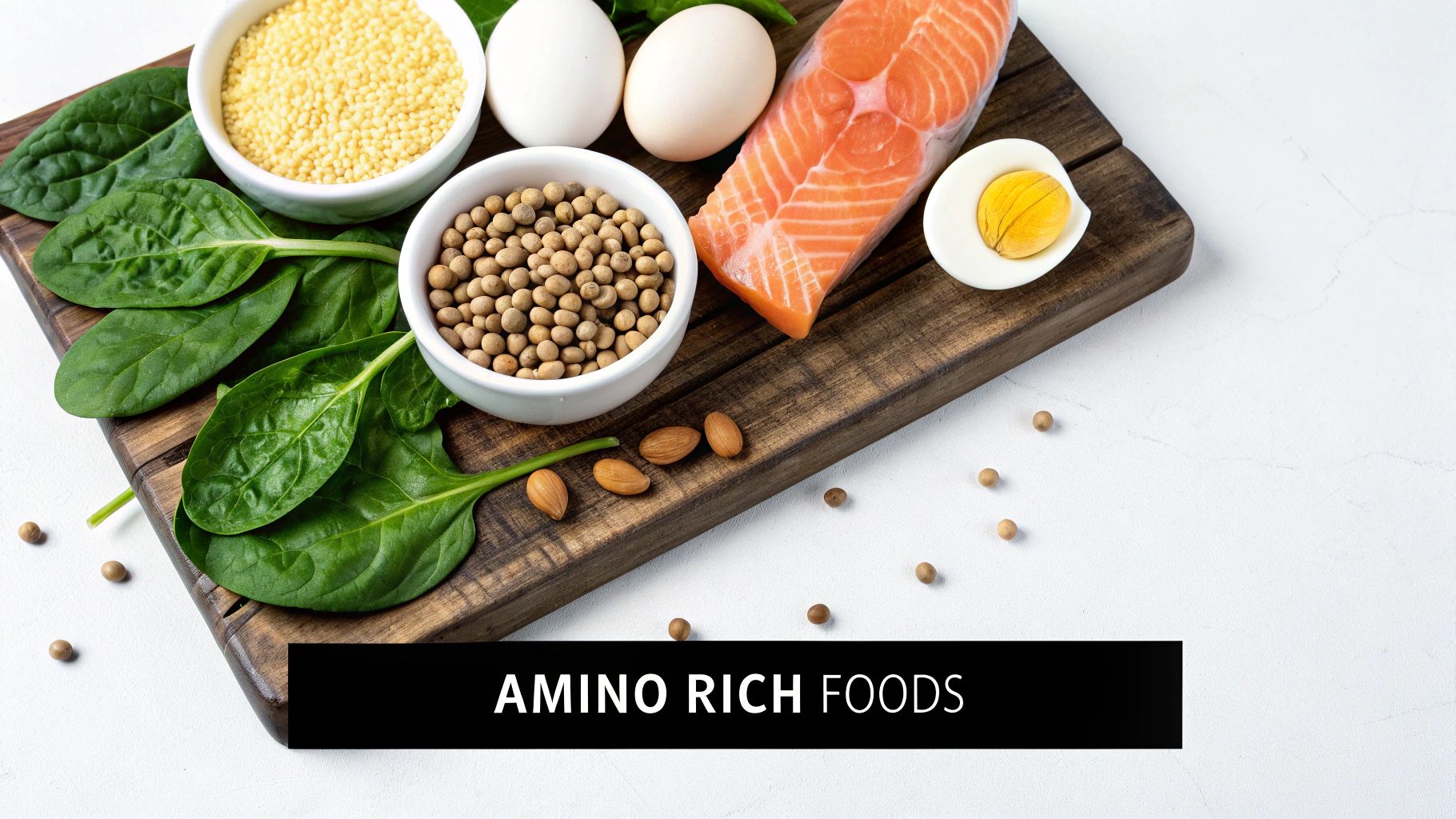
- Eggs: Often called nature's multivitamin, eggs are a complete protein powerhouse, packed with Cysteine, Methionine, and Biotin.
- Lean Poultry: Chicken and turkey offer a lean, easily digestible protein that’s essential for keratin synthesis.
- Fatty Fish: Salmon, mackerel, and other fatty fish deliver not only top-tier protein but also anti-inflammatory omega-3s to support a healthy scalp.
- Red Meat: Eaten in moderation, lean red meat provides a potent dose of iron and Lysine, both of which are critical for staving off hair shedding.
For Vegetarians and Vegans:
- Lentils and Beans: These are plant-based staples for a reason—they're brimming with protein, iron, and Lysine.
- Quinoa: A true standout in the plant kingdom, quinoa is a complete protein, which means it contains all nine essential amino acids.
- Nuts and Seeds: Almonds, Brazil nuts, and pumpkin seeds are great for getting Methionine, zinc, and other hair-supportive minerals.
- Soy Products: Tofu, edamame, and tempeh are excellent sources of high-quality, complete protein. If you're exploring specific ways to incorporate more plant-based meals, you can find great ideas in various low carb vegetarian diet meal plans.
To get an even more detailed grocery list, check out our guide on the best foods for hair growth. It’s full of practical ideas to get you started.
Navigating the World of Supplements
While getting your nutrients from food is always the best first step, supplements can offer powerful support. This is especially true if you have dietary restrictions, a demanding lifestyle, or are already dealing with noticeable thinning. Think of a targeted supplement as an insurance policy—it fills in any gaps and delivers a concentrated dose of the most vital amino acids.
When you're looking at a supplement bottle, it's not just about what's inside; it's about how easily your body can actually put it to use.
Look for supplements that feature "free-form" or "hydrolyzed" amino acids. This is just a technical way of saying the amino acids are already broken down, which makes them incredibly easy for your body to absorb and shuttle straight to your hair follicles.
Also, scan the full ingredient list for a well-rounded formula. A quality supplement won't just have L-Lysine and L-Methionine. It will often include synergistic nutrients like B-vitamins, zinc, and iron, which all work as a team to support the entire hair growth cycle.
The Most Important Final Step
Before you add any new supplement to your daily routine, there's one non-negotiable step: talk to your doctor. A quick conversation with a healthcare professional can help identify any true deficiencies and ensure a new supplement won’t interfere with medications or other health conditions. This professional gut-check makes sure your plan is not only effective but, most importantly, safe for you.
Combining Internal Nutrition With External Support
While fueling your hair follicles from the inside is by far the most effective strategy, you can amplify your results by pairing it with smart external care. It’s like owning a high-performance car. You fill it with the best fuel (internal nutrition), but you also wash and wax it to protect the paint and keep it looking its best.
This inside-out, outside-in approach ensures your hair isn't just growing—it's thriving. You’re nourishing the new hair as it forms while simultaneously protecting the hair you already have from daily wear and tear.
Topical Amino Acids for Surface-Level Strength
You’ve likely seen shampoos, conditioners, and hair masks on the shelf boasting about their amino acid content. It's important to understand what they can—and can't—do. These topical products can't reach deep into the scalp to feed the follicle, but they do offer some great cosmetic benefits for the hair shaft itself.
When you apply them directly to your hair, amino acids can:
- Fill in Gaps: They act like a temporary spackle, patching up little damaged spots along the hair’s outer cuticle. This leaves your hair feeling smoother and looking shinier.
- Boost Hydration: Some amino acids are excellent at attracting and holding onto moisture, which helps improve elasticity and combat dryness.
- Reduce Breakage: By smoothing the cuticle and adding a bit of reinforcement, these products can help your hair better withstand the stress of brushing and styling.
Keep in mind, this is all cosmetic and temporary—it washes out the next time you shampoo. Still, it’s a fantastic way to protect your hair and keep it looking healthy while you’re doing the more important work internally.
The Ultimate Synergy: PRP and Amino Acid Supplementation
For men battling male pattern hair loss, the combination of a solid nutritional foundation and a professional treatment like Platelet-Rich Plasma (PRP) therapy can be a real game-changer. This is where the powerful synergy between amino acids for hair growth and PRP really comes to life.
Think of it like trying to build a house on a vacant lot. PRP therapy is the expert construction crew showing up ready to work, waking up dormant follicles with a concentrated dose of your body's own growth factors. But if there’s no lumber, bricks, or mortar delivered to the site (i.e., amino acids and other key nutrients), that crew can’t actually build anything.
PRP acts as the powerful "wake-up call" for your hair follicles. A steady, internal supply of amino acids provides the high-quality building materials those newly awakened follicles need to construct strong, healthy hair.
This one-two punch creates the ideal environment for hair restoration. The PRP kickstarts the process, and the steady stream of amino acids ensures the "construction site" is fully stocked with the premium materials needed to get the job done right.
By nourishing your follicles from within and stimulating them with proven treatments, you’re tackling hair loss from every angle. If you're ready to get those follicles firing on all cylinders, dive into our guide on how to stimulate hair follicles for more powerful strategies.
Common Questions About Using Amino Acids For Hair
Once you start connecting the dots between nutrition and hair health, practical questions are bound to pop up. You might be wondering about timelines, safety, and what kind of results you can realistically expect from adding amino acids to your routine. Let's cut through the noise and get you some clear, straightforward answers.
My goal here is to tackle the most common questions I hear, from how long it takes to see changes to whether diet alone is enough. This should clear up any doubts and give you the practical info you need to decide if this is the right approach for your hair.
How Long Does It Take To See Results From Amino Acid Supplements?
Patience is the name of the game here. Your hair only grows about half an inch per month on average, so you won't see a dramatic difference overnight. Think of it less as a quick fix and more as a long-term investment in your hair's future.
Most studies and real-world experiences point to a similar timeline. You can usually expect to notice the first subtle improvements—like less shedding and hair that just feels stronger—within 3 to 6 months of consistent use. More visible changes in thickness and density typically show up after the six-month mark, once new, healthier hair has had time to grow in.
Consistency is everything. You have to give your follicles a steady, uninterrupted supply of these building blocks. That’s what allows them to shift into a healthier, more productive growth cycle over time.
Can I Get Enough Amino Acids For Hair Growth From Diet Alone?
For a lot of people, the answer is yes. A balanced, protein-rich diet filled with things like eggs, fish, lean meats, beans, and nuts provides a great foundation of the amino acids your body needs for healthy hair.
However, a targeted supplement can be a powerful ally in certain situations. If you're on a restrictive diet (like veganism), dealing with high stress, have nutrient absorption issues, or are already seeing significant thinning, a supplement can make a huge difference. It delivers a concentrated, reliable dose of the specific amino acids most critical for hair, like Lysine and Methionine, taking the guesswork out of it.
Are There Any Side Effects To Taking Amino Acid Supplements?
When you stick to the recommended dosages, amino acid supplements are generally very safe for most healthy people. After all, these are just the natural components of the protein you eat every day, so your body knows exactly what to do with them.
That said, you can have too much of a good thing. Taking extremely high doses of any single amino acid could create a nutritional imbalance or cause some mild digestive upset. Beyond the benefits, readers often have questions about the potential side effects of supplements, such as creatine, on hair health. The simplest way to stay safe is to follow the dosage on the product label and buy from reputable brands with good reviews.
And, of course, it's always smart to talk to your doctor before starting any new supplement, especially if you have pre-existing kidney or liver conditions, are pregnant, or are taking other medications.
Will Amino Acids Help With Genetic Hair Loss?
This is a crucial question, and the distinction is important. Amino acids are not a cure for genetic conditions like male pattern baldness, which is driven by hormones and your DNA.
But they do play an incredibly valuable supportive role. Think of amino acids as a tool to help your hair reach its maximum potential within its genetic limits. While they can't stop the underlying process of androgenetic alopecia, they can ensure that the hair you have is as strong, thick, and resilient as it can possibly be.
They work best as part of a multi-pronged attack. For guys with genetic hair loss, amino acids provide the nutritional foundation that helps other proven treatments—like those you'd get from a dermatologist—work much more effectively. They make sure that when follicles are stimulated to grow, they have the premium fuel they need to produce the best results possible.
At PRP For HairLoss, we believe that understanding all aspects of hair health is key to achieving your goals. From foundational nutrition to advanced treatments, our goal is to provide men with the clear, reliable information they need to navigate their hair loss journey. Explore more resources and insights at https://prpforhairloss.com.


Leave a Reply