A lot of men first notice it in bad bathroom lighting.
You lean toward the mirror, push your hair back with your fingers, and wonder if your temples always looked like that. Maybe the front corners seem a little higher. Maybe the hair at the very front isn’t gone, but it’s softer, thinner, less convincing. You take a photo. Then another from a different angle. Then you compare it to a picture from last year and start doing what most men do next. You worry in silence.
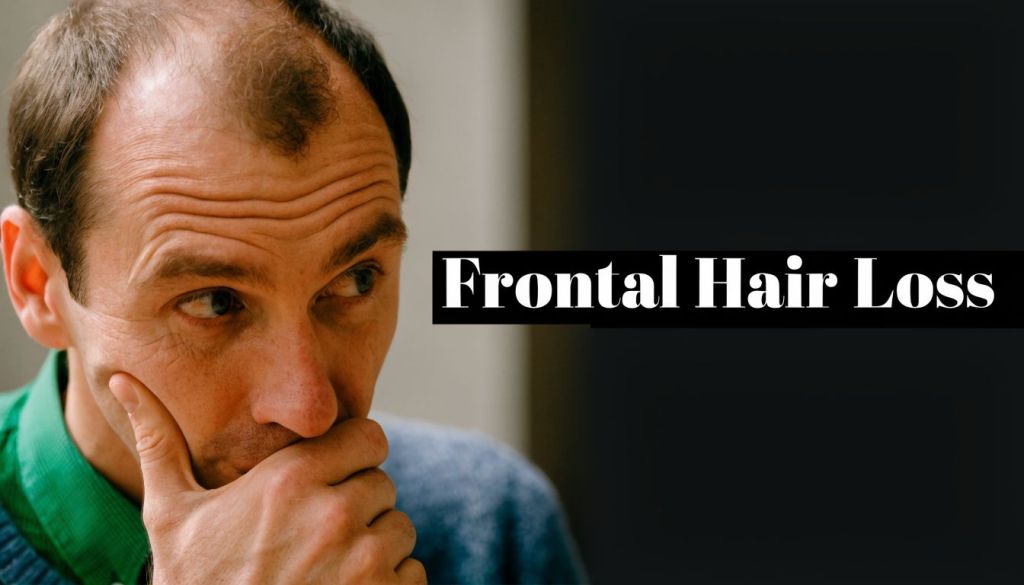
That reaction makes sense. Hair loss in front of head feels different from thinning at the crown because you see it every day. Other people see it too. A slight change at the hairline can make your whole face look older, even when the change is small.
The good news is that frontal hair loss is something you can think through clearly. Not every receding hairline means the same thing. Not every treatment fits every stage. And the best decisions usually come from understanding three things: what’s causing the loss, how far along it is, and whether the follicles are still viable enough to respond.
That Moment in the Mirror Understanding Your First Reaction
Most men don’t react to frontal thinning like a doctor. They react like a person. They zoom in, compare photos, wear their hair differently, and ask themselves if they’re overthinking it.
You might notice the front looks a bit see-through when your hair is wet. Or your barber trims the temples and suddenly the recession looks more obvious than it did a month ago. I’ve had patients tell me the moment that pushed them into action wasn’t a major shed. It was seeing the early outline of an “M” shape that hadn’t been there before.
That first reaction usually swings between two extremes. One is denial. “It’s probably just a mature hairline.” The other is panic. “I’m going bald fast.” Neither is useful on its own.
Hair loss is easier to manage when you stop guessing and start observing.
A better first move is simple. Take clear photos in the same lighting every few weeks. Front view, both temples, and a slightly raised angle showing the hairline. That turns anxiety into evidence.
Why the front of the scalp feels so personal
Frontal loss changes how your face is framed. That’s why even mild recession can feel dramatic. You’re not being vain if it bothers you. You’re responding to a visible change in a visible place.
What matters now isn’t whether you “should” care. What matters is what kind of hair loss you’re seeing, how active it is, and whether you’re early enough to treat it effectively.
Why Your Hairline Is Receding The Three Main Culprits
The front hairline usually doesn’t thin randomly. In men, there are a few recurring patterns. One is by far the most common. Another comes from mechanical stress. A third is less common but important because it can scar follicles permanently.

Male pattern baldness
Male androgenetic alopecia, also called male pattern baldness, is responsible for over 95% of hair loss in men and affects 30 to 50% of men by age 50 according to the NCBI overview of male androgenetic alopecia. It commonly shows up as frontal hair loss, and 25% of affected men show signs before age 21 in that same source.
The simplest way to understand it is this. Some hair follicles at the front of the scalp are genetically sensitive to dihydrotestosterone, or DHT. DHT isn’t a bad hormone in itself. The problem is how certain follicles react to it. Think of DHT like a key and the follicle’s androgen receptor like a lock. In a susceptible scalp, that key turns too easily.
Over time, those frontal follicles miniaturize. Thick terminal hairs become finer, shorter, and weaker. The sides and back often hold up better because those follicles usually aren’t as sensitive.
Common clues include:
- Temple recession: The corners move back first.
- Mid-frontal thinning: The very front loses density and styling gets harder.
- Predictable pattern: The recession often follows the familiar Norwood progression.
If you want a plain-English companion read on this topic, this guide on understanding receding hairlines is useful because it helps separate normal hairline change from active pattern loss.
For a more focused discussion of the front zone specifically, you can also read about frontal hair thinning in men.
Traction alopecia
This cause gets missed because many men assume hairstyles only matter for women. That’s not true.
Traction alopecia happens when hair is pulled repeatedly in the same direction. Tight braids, tight buns, glued systems, aggressive brushing back, and even some helmet or headwear habits can create chronic tension along the frontal margin. In the beginning, the follicles are irritated. If the pulling continues long enough, the loss can become much harder to reverse.
A patient example I often think of is the man who always wore his hair tied tightly for training and work. He assumed his temple thinning was genetic. But the recession was uneven, the hairline edge looked stressed, and there were many short broken hairs. That pattern points your thinking in a different direction.
Look for these signs:
- Uneven loss: One side may be worse.
- Breakage: Short snapped hairs along the front edge.
- History of tension: Styles or habits that pull the same area again and again.
Frontal fibrosing alopecia and other medical causes
This is the category men shouldn’t ignore just because it’s less common.
Frontal fibrosing alopecia, or FFA, is a scarring form of hair loss. In women, 80% to 90% experience eyebrow loss, and that can come before obvious scalp loss, according to the Cleveland Clinic overview of frontal fibrosing alopecia. In men, beard or sideburn loss can also be a clue.
That matters because FFA doesn’t behave like standard male pattern baldness. It involves inflammation that can destroy follicles. Once scarring develops, regrowth becomes far more difficult.
If frontal loss comes with eyebrow thinning, beard patchiness, burning, itching, or a smooth shiny hairline edge, don’t assume it’s routine male pattern baldness.
Other medical causes can affect the front too, but the practical point is this. If the pattern is unusual, rapid, patchy, inflamed, or associated with facial hair loss, you need a proper diagnosis rather than a self-diagnosed plan.
How Severe Is It Assessing Your Hair Loss and When to Act
A lot of men ask the wrong first question. They ask, “Am I going bald?” A better question is, “What stage am I at right now?”
That change in thinking matters because treatment decisions depend less on drama and more on stage, speed, and follicle health.

A simple way to use the Norwood scale
The Norwood-Hamilton scale is the standard way doctors describe male pattern hair loss. According to the American Hair Loss Association’s overview of men’s hair loss, 16% of men aged 18 to 29 have moderate to extensive loss, and that rises to 53% in men aged 40 to 49. The same source notes that stage 3 is where the frontal recession forms a clear “M” shape, and that’s often when men start seeking treatment.
You don’t need to memorize the scale. You just need a working sense of where you fit:
- Stage 1: Little to no visible recession.
- Stage 2: Mild temple recession. You notice it, but others may not.
- Stage 3: Definite “M” shape. The corners have moved back clearly.
- Stage 4 and beyond: Frontal loss becomes more established and may connect with thinning farther back.
If you want a visual explanation of that framework, this guide to the Norwood scale for hair loss helps men match what they see in the mirror to a more objective stage.
When concern becomes a reason to book an appointment
Not every receding hairline is an emergency. But waiting too long is one of the biggest mistakes men make.
A good rule is to get evaluated if you notice any of the following:
- Progression over time: Your comparison photos show the temples moving back or the front becoming more transparent.
- Texture change: The hairline hairs feel finer and weaker than the hair farther back.
- Asymmetry or irritation: One side is receding faster, or the scalp looks inflamed.
- Facial hair changes: Eyebrow, beard, or sideburn thinning raises a different set of questions.
What the doctor is actually trying to find out
A proper hair loss consultation isn’t just someone glancing at your hairline and naming a treatment. The clinician is trying to answer three practical questions.
First, is this standard androgenetic alopecia or something else?
Second, are the follicles miniaturized but still alive?
Third, is there enough active hair left in the area for medical or regenerative treatment to help?
That assessment usually includes a close scalp exam, history taking, and sometimes tools such as trichoscopy. In selected cases, blood work or even a biopsy may be considered, especially if the pattern is unusual.
Practical rule: The earlier you assess frontal loss, the more options you usually have.
Men often think action starts when there’s obvious baldness. In reality, the best time to act is often when the front still has hair, but that hair has become finer and less reliable. That’s the stage where medical treatment and regenerative approaches tend to make the most sense.
Your First Line of Defense Against Frontal Thinning
Most men do best when they think in categories rather than miracle cures. For hair loss in front of head, the main tools fall into three groups: medication, surgery, and regenerative treatment.
Each one plays a different role. One slows the process. Another redistributes hair. Another tries to improve the performance of weakened follicles.
Medications that address the process
If male pattern baldness is driving the recession, medication is usually the first serious intervention.
Finasteride is used to lower DHT activity. According to Clinikally’s review of frontal hair loss treatments, 5-alpha-reductase inhibitors like finasteride can reduce scalp DHT by 60 to 70% and stabilize frontal hair loss in approximately 86% of men after two years. That same source notes that combining such therapy with PRP has shown an additional increase in frontal hair density of 25 to 30% at 6 months.
Minoxidil works differently. It doesn’t target DHT. Instead, it supports follicles more directly and is commonly used topically. For men weighing that route, this explanation of minoxidil for frontal baldness can help you understand where it fits.
If you want a broader consumer-friendly overview of daily hair care and treatment thinking, Morfose's comprehensive hair loss guide is a useful reference.
Surgery for established recession
Hair transplantation has a clear role, especially when the frontal hairline has already receded beyond what medication is likely to restore.
The key thing patients often misunderstand is this. A transplant moves existing follicles from donor areas, usually the back or sides. It doesn’t stop future loss in the native frontal hair around those grafts. That’s why surgery without a long-term stabilization plan can create awkward outcomes later.
Regenerative treatment and where PRP fits
Platelet-rich plasma, or PRP, is a non-surgical treatment that uses a concentrated portion of your own blood and injects it into the scalp. The basic idea is to support struggling follicles rather than replacing them.
PRP is often most relevant when the frontal area still has miniaturized hairs. In other words, the zone isn’t fully gone. It’s underperforming.
Comparing top hair loss treatments
| Treatment | How It Works | Best For | Avg. Annual Cost | Commitment |
|---|---|---|---|---|
| Finasteride | Lowers DHT activity to help slow follicle miniaturization | Men with ongoing male pattern frontal recession | Varies by prescription and provider | Ongoing daily use |
| Minoxidil | Supports follicles in the thinning area, commonly as a topical treatment | Men with early to moderate thinning who can stick with routine application | Varies by product and purchase frequency | Ongoing daily or prescribed use |
| PRP | Uses concentrated platelets from your own blood to stimulate weakened follicles | Men with thinning, miniaturized hair in the frontal scalp | Varies widely by clinic and treatment schedule | In-office series plus maintenance |
| Hair transplant | Moves permanent donor follicles into thinning or bald areas | Men with more established recession and adequate donor supply | Higher upfront surgical cost | Procedure plus long-term planning |
The table leaves out exact pricing because fees differ a lot by clinic and region. What matters more is fit. The right choice depends on whether you need to slow loss, stimulate remaining follicles, rebuild a hairline, or combine all three.
A Deep Dive into PRP for Frontal Hair Restoration
PRP is often misunderstood. Some men hear “plasma injection” and think it sounds futuristic or vague. It’s a fairly straightforward process.
The treatment starts with your own blood. A small sample is drawn, processed to concentrate the platelet-rich portion, and then injected into targeted areas of the scalp. Those platelets contain signaling molecules and growth factors that may help support weakened follicles.

Why PRP makes sense at the hairline
The front of the scalp is often where miniaturization becomes obvious first. You still have hair, but it’s losing caliber. The styling gets fussier. Bright light exposes more scalp. That’s the type of situation where PRP is often discussed.
I explain it to patients like this. Think of the follicle as a factory that’s still open but badly understaffed. PRP isn’t building a brand-new factory. It’s more like sending a repair crew and better instructions to a struggling one. If the structure is still there, support may help. If the factory has shut down completely, the result is far less predictable.
For men trying to decide whether that approach fits their pattern, this article on whether PRP works for frontal hair loss is a helpful companion.
What happens during the procedure
PRP visits are usually simpler than patients expect.
A standard appointment commonly includes:
- Blood draw: A small sample is taken from your arm.
- Processing: The sample is spun to separate and concentrate the platelet-rich portion.
- Scalp preparation: The treatment zone is cleaned, and some clinics use comfort measures to reduce sensitivity.
- Injection: The PRP is placed into thinning areas across the frontal scalp and hairline.
Most men tolerate the procedure well, though the frontal hairline can be a sensitive area. You may have soreness, tightness, or mild tenderness afterward. Usually, the larger issue isn’t danger. It’s expectations.
PRP works best as a plan, not as a one-time rescue attempt.
What kind of result is realistic
Honest framing is particularly important.
PRP is not the same thing as a transplant. It does not create brand-new follicles in a shiny bald zone. It aims to improve the function of follicles that are weakened but still present. The best candidates usually have visible thinning rather than a completely smooth, bare frontal scalp.
Realistic goals often include:
- Better hair caliber: Existing hairs may grow thicker.
- Improved density appearance: The front can look fuller even without dramatic regrowth.
- Slower decline when combined well: PRP often fits best alongside treatments that control the underlying process.
That combination point matters. If DHT is still actively shrinking follicles, regenerative stimulation alone may not be enough for durable improvement.
A practical explainer many patients find useful is this piece that lets you explore hair restoration with PRP in more everyday language.
PRP in scarring versus non-scarring loss
Not all frontal loss is the same, and PRP’s role changes depending on the diagnosis.
In frontal fibrosing alopecia, PRP is generally considered an adjunct rather than a standalone answer. According to Ubie Health’s doctor note on front hair thinning reasons, adjunct PRP can deliver anti-inflammatory factors such as IL-10 and TGF-beta, and pilot data suggests it may reduce FFA inflammation scores by 40% and help preserve 20 to 25% of hair count at the frontal margin after four sessions.
That’s very different from classic male pattern baldness. In non-scarring loss, the conversation is usually about stimulation and support. In scarring loss, the first concern is controlling inflammation and preserving what remains.
Here’s a short visual walkthrough for readers who want to see the treatment setting and technique more concretely.
Who tends to be a strong candidate
PRP tends to make the most sense for men who have:
- Early to moderate frontal thinning: Especially when miniaturized hairs are still visible.
- A confirmed diagnosis: Usually androgenetic alopecia, sometimes as part of a broader combination plan.
- Realistic expectations: Improvement, support, and thickening are more realistic than total reversal of advanced baldness.
- Willingness to maintain: PRP usually works best as part of ongoing management.
The men who are least satisfied are often those who wait until the front is nearly slick bald and then expect regenerative treatment to function like surgery. That’s not what PRP is built for.
Building Your Personal Hair Restoration Strategy
The smartest hair loss plan usually isn’t a single treatment. It’s a coordinated one.
I like the old sports analogy here because it works. Some treatments play defense. They help stop further loss. Others play offense. They try to improve density and quality in the hair you still have. If you only play offense, you may stimulate hair that continues to be attacked by the underlying process. If you only play defense, you may preserve hair that already looks weak.

Match the plan to the stage
A man with mild temple recession and visible miniaturization at the front usually needs a different plan from a man with deep recession and long-standing loss.
That’s why broad statements like “PRP works” or “just get a transplant” don’t help much. Good strategy starts with matching the tool to the state of the follicle.
According to Manual’s discussion of frontal hair thinning, if frontal hair becomes too thin, follicles may enter a terminal state of miniaturization and eventually become inactive, making treatment significantly more difficult. The same source stresses that the window to reverse the process is limited, and acting while follicles are still viable is important for regenerative treatments like PRP.
A practical framework for combining treatments
Here’s how many effective plans are built in real life:
- Defense with medication: If androgenetic alopecia is the diagnosis, long-term medical stabilization is often the backbone.
- Offense with PRP: Useful when the front still contains weakened, miniaturized hairs that may respond to stimulation.
- Structural repair with transplant: Reserved for areas that are too far gone for medical improvement alone.
- Behavior changes: If traction or harsh grooming is contributing, removing the trigger is part of treatment, not an optional extra.
For men comparing broader approaches, this overview of male pattern baldness treatment options is a practical next read.
Think in time horizons
Patients often think in weeks. Hair restoration works better when you think in phases.
Short term is about diagnosis and stopping avoidable damage.
Medium term is about seeing whether medical treatment and PRP improve the quality of existing hair.
Long term is about whether you’ll need maintenance, escalation, or surgical design later.
The best plan is the one you can actually continue, not the one that sounds most impressive on day one.
Questions worth asking before you commit
A strong consultation should leave you with clear answers to questions like these:
- What exactly is my diagnosis
- Are the follicles in the frontal zone still viable
- Am I trying to preserve, thicken, or rebuild
- What part of my plan is for maintenance
- What would make me a poor candidate for PRP or a better candidate for surgery
Those questions protect you from chasing random treatments one by one. They also shift you from a reactive mindset to a strategic one.
Making an Informed Decision About Your Hair Health
If you’ve made it this far, you already know more than most men do when they first notice frontal thinning.
You know that hair loss in front of head isn’t one single problem. It can be male pattern baldness, traction, or a less common inflammatory condition that needs a very different response. You know stage matters. You know early action matters even more. And you know that treatments work best when they’re part of a plan instead of a string of hopeful experiments.
That’s the part I want to leave you with. You do not need to solve your hairline in one night. You do need to stop letting uncertainty make the decision for you.
Take photos. Compare them objectively. Book a proper assessment if the pattern is changing, if the front looks finer, or if anything about the loss seems uneven or inflamed. If you’re a candidate for medical treatment, use that knowledge well. If PRP fits, think of it as one tool in a long-term strategy. If the area is too advanced for regenerative help alone, that’s useful information too.
Worry keeps men stuck. A diagnosis gives you options. A plan gives you control.
If you’re looking for practical, plain-English guidance on PRP and male pattern hair loss, PRP For HairLoss is a strong place to continue your research. The site focuses on helping men understand frontal thinning, treatment options, and how PRP fits into a realistic long-term hair restoration strategy.


Leave a Reply