You run your hand through your hair after a shower and notice it again. More strands on your palm. More scalp under the bathroom light. The hairline looks a little weaker than it did a year ago, and the crown never seems to style the same way twice.
That is usually the point where guys start digging through every forum thread, every “natural fix,” and every bottle with the word growth on it. Somewhere in that search, black tea rinse for hair keeps popping up. It sounds almost too simple. Brew tea, put it on your scalp, hope for less shedding.
For men dealing with androgenetic alopecia, that hope is understandable. Dihydrotestosterone, or DHT, is a primary hormone behind male pattern baldness, affecting up to 50% of men by age 50 and over 80% by age 70 according to CurlyNikki’s summary on black tea rinses. That process gradually miniaturizes follicles, which means hair grows back thinner, shorter, and weaker over time.
The primary question is not whether black tea makes hair shiny. It is whether it does anything useful for a man who is actively trying to slow hair loss.
If you are in that spot, this is the straight answer. Black tea rinse is not a miracle, and it is not a replacement for medical treatment. But it may have a place as a supporting tool if you understand what it can do, what it cannot do, and where it fits in a bigger plan. If you are also wondering whether lost density can recover at all, this guide on can thinning hair grow back is worth reading alongside this one.
Is a Black Tea Rinse the Answer to Your Hair Thinning
A lot of men try black tea when they hit that awkward middle stage of hair loss. Not slick bald. Not fine either. Just enough thinning that every mirror feels slightly hostile.
The appeal is obvious. It is cheap, easy to make, and tied to one of the biggest targets in male hair loss, DHT. That matters because men with androgenetic alopecia are not chasing cosmetic fluff. They want less shedding, better retention, and a routine that does not feel ridiculous.
Why this remedy gets so much attention
Black tea has become popular because it sits in the sweet spot between grooming and treatment. It feels natural, but the conversation around it is not purely cosmetic. The talk is about caffeine, tannins, scalp contact, and blocking the hormone activity that drives miniaturization.
That sounds a lot more serious than “adds shine.”
Still, most of the online hype skips the hard part. Men read “DHT blocker” and assume they have found a home version of finasteride. That is where expectations go off the rails.
Key takeaway: Black tea rinse makes the most sense as a support move for men trying to protect existing hair, not as a standalone answer for aggressive male pattern baldness.
What a realistic guy should want from it
A fair goal is not “grow back a teenage hairline.” A fair goal is this:
- Reduce extra shedding: especially if wash day or styling seems to pull out more hair than it used to.
- Improve hair feel and appearance: thicker-looking hair often starts with less breakage and a better cuticle surface.
- Support scalp health: a calmer scalp gives fragile hair a better environment.
That is the lens to use for the rest of this article. Not hype. Not doom. Just where a black tea rinse for hair fits when the issue is male pattern loss.
The Science Behind Black Tea and Hair Follicles
Male pattern baldness is a follicle problem before it becomes a styling problem. By the time your part looks wider or your temples look softer, the process has already been underway below the skin.
The main trigger is DHT. In susceptible follicles, DHT binds to receptors and gradually shrinks them. Over time, those follicles produce weaker hairs. The growth phase gets less productive. Hair shafts come out finer. Coverage drops.

What black tea may be doing
The reason black tea rinse for hair gets traction is not random. Black tea contains caffeine and tannins, and both are discussed in relation to DHT signaling and follicle behavior.
One of the more attention-grabbing findings comes from a review of research summarized at Hair Loss Research. In that write-up, black tea extract lowered serum DHT levels by 72% in rat studies, compared with 65% DHT reduction often achieved by Propecia, or 1 mg finasteride, with a mechanism tied to estrogen receptor modulation.
That sounds huge. It also needs context.
First, this was rat data, not proof that a topical black tea rinse on a human scalp will do the same thing. Second, serum DHT and scalp follicle response are not interchangeable. Third, a rinse is not the same as a standardized pharmaceutical dose.
So yes, the mechanism is interesting. No, that does not mean your shower routine just became a medical equivalent.
Why caffeine keeps coming up
Caffeine is the compound many focus on, and not without reason. It is discussed as something that may interfere with DHT’s negative effects on follicles and help maintain a healthier growth environment. Some sources also note that direct scalp application may reach follicles more efficiently than drinking tea.
That topical angle is what makes a rinse attractive. Men are not applying black tea because they want the benefits of a beverage. They want the active compounds sitting where the problem lives.
If you have looked into other tea-based options, this breakdown of green tea benefits for hair helps clarify why black tea and green tea often get discussed together but not used for exactly the same purpose.
The part most guys miss
Even if black tea helps with DHT blocking, that is not the same thing as actively forcing dead or dormant follicles into major regrowth. Prevention and stimulation are different jobs.
Think of it this way:
| Focus | What black tea may help with | What it does not prove |
|---|---|---|
| Hormone interference | May help reduce DHT-related pressure on follicles | Does not prove pharmaceutical-level scalp results in men |
| Scalp environment | Antioxidants may support a healthier scalp surface | Does not guarantee visible regrowth |
| Hair appearance | Can improve how existing strands look and behave | Does not reverse advanced baldness on its own |
Why this matters in real life
A man with early thinning may notice black tea as “helpful” because he still has many active follicles worth protecting. A man with a shiny bald spot may try the same rinse and feel nothing happened. Both experiences can be real.
Practical read on the science: Black tea makes more sense as a follicle-protection idea than a hairline-resurrection plan.
That is the honest frame. The biology is interesting enough to justify a trial. It is not strong enough to justify fantasy.
A Practical Guide to Your First Black Tea Rinse
You brew a strong cup, pour it over your head, wait a while, and hope your hairline thanks you. That loose approach is why a lot of first attempts feel pointless. If you are using black tea as a support tool while managing androgenetic alopecia, application matters. The goal is scalp contact, especially across the hairline, mid-scalp, and crown where miniaturization usually shows up first.

What to make
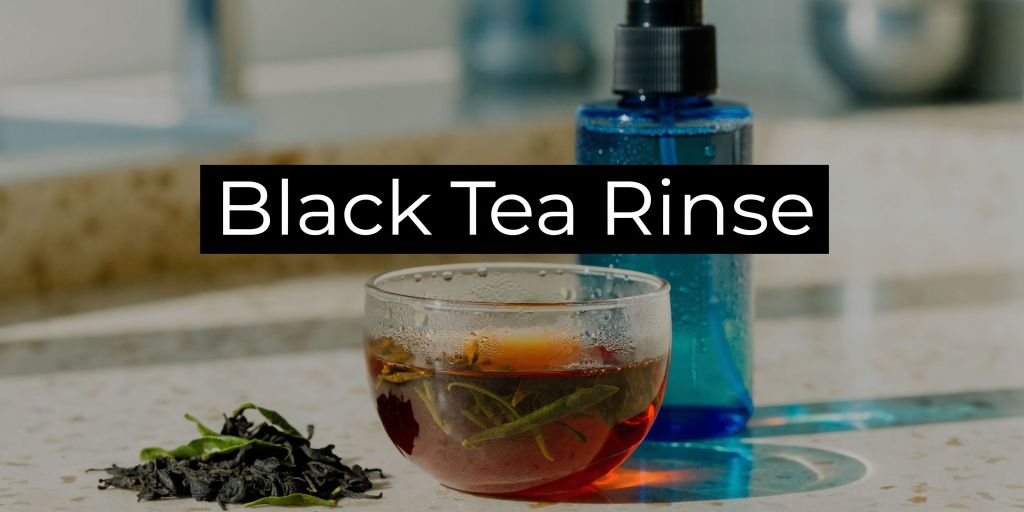
Start simple. Use 3 to 4 black tea bags in hot water and let it steep until the brew is dark and strong. Then let it cool fully before it goes anywhere near your scalp.
A strong brew gives you a practical rinse without turning this into a kitchen chemistry project. Black tea is mildly acidic, which can help the hair shaft feel smoother after rinsing. That cosmetic effect is useful if thinning hair also feels rough or frays easily during styling, but the main target here is still the scalp.
Why a spray bottle works better than a cup
A spray bottle gives you control. You can part the hair and place the tea where follicle support matters instead of flooding the lengths and the bathroom floor.
Use this order:
- Wash first: Start with a clean scalp so oil and product buildup do not block contact.
- Towel dry lightly: Damp hair is easier to section than soaking wet hair.
- Part and apply: Hit the frontal hairline, temples, top, crown, and any thinning zone you are tracking.
- Massage with fingertips: Use light pressure for about a minute. Nails just irritate the scalp.
- Let it sit: Keep the contact time controlled.
- Condition the hair lengths after: This helps offset the dryness some men get from tea rinses.
If you are cleaning up the rest of your routine at the same time, this guide on scalp care for men fits well with a rinse-first approach.
How long to leave it on
For a first session, 15 to 30 minutes is a sensible range. You do not need to prove toughness here. Longer contact raises the chance of dryness, stiffness, or an itchy scalp, especially if you already use ketoconazole shampoo, a strong cleanser, or heat tools.
That trade-off matters. Black tea may be worth testing as a low-cost add-on, but it does not earn extra points for making the scalp angry.
If your scalp feels comfortable after the first few tries, you can test a longer window. If it feels tight, dry, or flaky, cut the time down or stop.
How often to use it
Once a week is a good starting point for men dealing with pattern thinning. It is enough to test whether your scalp tolerates it and whether your hair looks better between washes. More frequent use can backfire if your scalp already runs dry or sensitive.
I would treat it the same way I treat many supportive hair habits. Start with the lowest effective dose, then adjust based on response.
What to pair with it
Black tea makes the most sense beside treatments that have clinical weight. If you are on finasteride, minoxidil, microneedling, or weighing PRP, the rinse belongs in the support category. It may help scalp condition and hair feel. It does not replace DHT control or growth stimulation.
Some men also like to pair it with other topical habits. Rosemary comes up a lot, but sloppy application creates its own irritation problems. If you want a practical walkthrough, read how to use rosemary oil for hair growth.
A short visual demo can also help if you have never done a rinse before:
What a good first session looks like
A good first session is controlled and uneventful. The scalp stays calm. The hair does not feel brittle after it dries. You know exactly how long it sat, where you applied it, and how your scalp responded over the next day.
That is how to test a rinse.
Do not judge it by one dramatic mirror check. Judge it by repeatability, scalp tolerance, and whether it fits alongside the treatments that do the heavy lifting for male pattern baldness.
Benefits Versus Limitations for Male Pattern Baldness
A lot of men reach this point after the same frustrating week. More hair in the sink. More scalp showing under bathroom light. Then a simple rinse pops up online and starts sounding bigger than it is.
For male pattern baldness, black tea rinse has a place. It just needs to be put in the right place.

Where it can help
The main upside is cosmetic support with some possible scalp benefits. That matters more than men think, especially in early androgenetic alopecia where better texture and less breakage can make thinning look less obvious.
A black tea rinse may help in a few practical ways:
- Hair can feel stronger and look denser: darker staining, a smoother cuticle, and a slightly stiffer feel can give fine hair more visual presence.
- Shedding during handling may look lower: not because the rinse is fixing DHT, but because brittle, miniaturized strands may snap less or tangle less during washing.
- Some scalps tolerate it well: for men trying to keep irritation under control, that can make the rest of the routine easier to stick with.
There is also a strand-coating effect that some men notice after a few uses. As noted earlier, black tea contains amino acid and protein components, which helps explain why it can behave more like a light strengthening rinse than plain water.
Where it falls short
Black tea does not address the core driver of androgenetic alopecia. It does not lower DHT the way finasteride can. It does not push follicles into a growth phase the way minoxidil is designed to do. It does not create the procedural stimulus that men pursue with PRP.
That distinction matters.
The best current way to describe black tea for MPB is supportive care. It may improve the condition of the scalp and the appearance of existing hair. It should not be sold as a regrowth treatment.
That is also why results can feel confusing. A man may see less roughness, less puffiness, or a darker, slightly fuller look after styling and assume the follicles are recovering. Sometimes the hair just looks better managed. Those are not the same outcome.
A side by side reality check
| Option | Main role | Strength | Limitation |
|---|---|---|---|
| Black tea rinse | Scalp and strand support | Cheap, simple, easy to test | Does not treat the hormonal cause of MPB |
| Finasteride | DHT reduction | Directly targets a key driver of male pattern baldness | Requires a medical decision and side effect review |
| Minoxidil | Growth support | Widely used to maintain and improve density | Can dry or irritate some scalps |
| PRP and other procedures | In-office follicle support | Appeals to men who want a clinical add-on | Cost, scheduling, and variable response |
If you are comparing broader non-drug options, this roundup of natural hair growth products for men helps place black tea in context. It belongs near the supportive end of the spectrum, not the treatment end.
The right expectation for a man with MPB
Use black tea rinse if your goal is to make existing hair behave better while your real anti-hair-loss strategy handles the biology.
Skip the fantasy that it will fill in a slick temple or reverse a thinning crown on its own.
One more trade-off is scalp sensitivity. Black tea can feel calming for one guy and drying for another, especially if the scalp is already irritated from hard water, harsh shampoo, or alcohol-heavy topicals. Men dealing with chronic redness, itch, or flaking should also look at the bigger picture around inflammation and hair loss, because a stressed scalp usually responds poorly to extra experimentation.
Bottom line: Black tea rinse can improve hair feel, appearance, and routine compliance. For androgenetic alopecia, it stays in the support role, well behind finasteride, minoxidil, and procedure-based options like PRP.
Pairing Black Tea Rinses with Clinical Hair Treatments
A lot of men do not choose between DIY and clinical care. They use both. That is where black tea rinse gets more interesting.
On its own, it is limited. Inside a bigger plan, it can make more sense.

Where it fits with PRP
Men who pursue PRP usually care about preserving active follicles and creating the best possible scalp environment. A black tea rinse may fit that mindset because it is not trying to replace the treatment. It is trying to keep the scalp cleaner, calmer, and easier to manage between sessions.
That is the right way to think about it. Supportive, not primary.
Use common sense around timing. If your scalp feels tender after an in-office procedure, do not throw every home remedy at it. Let your clinician’s guidance lead.
Where it gets tricky with topical treatments
A key trade-off shows up when men combine black tea with drying topicals.
Minoxidil can already leave some scalps irritated or flaky, especially in alcohol-based formulas. Black tea can also lean drying if you overdo contact time or skip conditioning. Stack those carelessly and your scalp may feel worse, not better.
A better setup looks like this:
- Use black tea on a separate wash day: not when your scalp is already irritated.
- Keep the rinse short and targeted: do not soak your lengths for no reason.
- Follow with hydration: conditioner matters here.
- Watch your response: if itching, stiffness, or brittleness rise, pull back.
What it can and cannot complement
It can complement a plan aimed at lowering stress on vulnerable follicles. It cannot compensate for a plan that is missing a strategy for androgenetic alopecia.
That distinction matters. If a man is losing ground fast, a rinse does not solve that. It might make the scalp feel better and the hair look slightly stronger, but it does not take over the role of treatment.
For men thinking specifically in terms of DHT management, this explainer on how to remove DHT from scalp helps frame where topical ideas end and broader treatment planning begins.
A simple pairing mindset
Use black tea if it helps you maintain the terrain. Do not ask it to carry the whole fight.
That mindset saves a lot of disappointment.
Advanced Tips and Common Pitfalls to Avoid
The most common mistake with black tea rinse for hair is assuming that if some is good, more must be better. That is how men turn a reasonable experiment into dry, stiff hair and a flaky scalp.
The dryness issue is real
One of the more overlooked concerns comes from Healthline’s discussion of black tea for hair. It notes that black tea rinses can exacerbate dryness in aging, low-porosity scalps, which matters because those conditions are common in male pattern baldness, where sebum production may already be reduced. Repeated use without proper conditioning can increase brittleness.
That lines up with what many guys notice in practice. The hair may feel stronger at first, then rougher if they get aggressive with frequency or leave the rinse on too long.
Signs you are overdoing it
Watch for these clues:
- Hair feels stiff after drying: not stronger. Just harder.
- Your scalp feels tight: especially around the hairline or crown.
- You see more short broken hairs: that points to brittleness, not improved retention.
- Conditioner suddenly feels mandatory just to get a comb through: that is your warning.
Tip: If your hair is already coarse, graying, or chemically treated, start gentler than you think you need to.
How to adapt the rinse to your scalp
Not every guy should use the same routine.
If your scalp runs dry:
- Cut back frequency.
- Stay closer to the shorter contact window.
- Deep condition afterward.
If your scalp runs oily:
- You may tolerate the rinse better, but that does not mean daily use becomes smart.
- Keep the focus on roots, not lengths.
If your hair is low porosity:
- Do not chase saturation for its own sake.
- A lighter application often beats a heavy soak.
The color question
Black tea can temporarily deepen or enrich darker hair tones, but that effect does not last. The verified data notes that color enhancement lasts for a few washes. That means it is a cosmetic side effect, not a long-term change.
For some men, that is a bonus. For others, especially with gray or lighter hair, it is something to test carefully before a big event or photo-heavy weekend.
Keep your method boring
The best black tea routine is not the most creative one. It is the one you can tolerate, repeat, and recover from. Plain tea. Controlled timing. Conditioner after. No overnight experiments.
That approach usually beats the kitchen-sink version.
Frequently Asked Questions From Men
How soon will I know if a black tea rinse is helping
A realistic first win is lower shedding in the shower and less hair snapping during styling. Men who respond often notice that before they notice anything in the mirror.
Give it about a month of consistent use before you judge it. If you are dealing with androgenetic alopecia, that timeline matters because black tea is not changing the biology the way finasteride can. It is a support tool. If your scalp tolerates it and your hair feels stronger, it may have a place in the routine. If nothing improves after a fair trial, stop treating it like hidden gold.
Can I leave black tea on overnight
No.
Long contact time raises the chance of dryness, rough texture, and irritation. That is a bad trade if you are already using minoxidil, a ketoconazole shampoo, or anything else that can leave the scalp touchy. Short, controlled contact works better than turning a rinse into an overnight experiment.
Will black tea stain gray hair or make my hair look darker
It can slightly deepen darker hair for a few washes. That is a cosmetic effect, not a treatment effect.
If you have a lot of gray, light brown hair, or a beard that blends into the temple area, test it first on a small spot. The bigger question for most men with thinning is not color. It is whether the rinse leaves the hair manageable enough to keep using.
Is black tea better than green tea for male pattern baldness
They serve different purposes.
Black tea gets attention because its compounds may help reduce some DHT-related stress around the follicle. Green tea is more often discussed for broader antioxidant activity and possible follicle support. Neither one matches the evidence behind finasteride for DHT control or minoxidil for growth support. For men fighting male pattern baldness, black tea makes more sense as a side option than a primary treatment.
Should I use the rinse before or after shampoo
Use it after shampoo.
That gives you a cleaner scalp and better contact at the roots, which is the only place that matters if your goal is thinning management. Follow with conditioner if your hair tends to dry out. Men with longer hair or coarse texture usually need that step more than they expect.
Can I use black tea rinse if I am already on finasteride or minoxidil
Usually yes, as long as your scalp handles it well.
The practical question is irritation load. Finasteride works systemically, so there is usually no direct conflict there. Topical minoxidil is different. If your scalp already feels dry, tight, or itchy, adding black tea too fast can push you into a routine you quit within two weeks. Start once weekly and adjust based on how your scalp responds.
Is this worth trying if my crown is thinning but my hairline is still okay
That is one of the better situations to test it.
Men with early thinning and still-active follicles have more room for supportive strategies. Men with slick bald areas usually do not. Black tea may help the environment around vulnerable hairs, but it does not rebuild a long-dead hairline. Keep your expectations in the same universe as the treatment.
What is the best way to judge whether it is working
Use the same standard you would use for any serious hair-loss intervention. Track repeatable changes, not hope.
Watch these three markers for four to six weeks:
- Shed count during washing and drying
- Hair breakage during combing or styling
- Scalp comfort, especially itch, tightness, or flaking
Photos still matter, especially for the crown. So does honesty. If black tea makes your hair feel better but your density keeps sliding, that means it is helping cosmetically, not altering the course of androgenetic alopecia. That distinction matters.
If you want a more grounded view of male pattern baldness treatments beyond DIY fixes, PRP For HairLoss is a strong place to keep reading. The site focuses on practical education for men dealing with thinning, shedding, DHT-driven loss, and PRP, without pretending every home remedy is a cure.
 PRP For Hairloss
Leave a comment