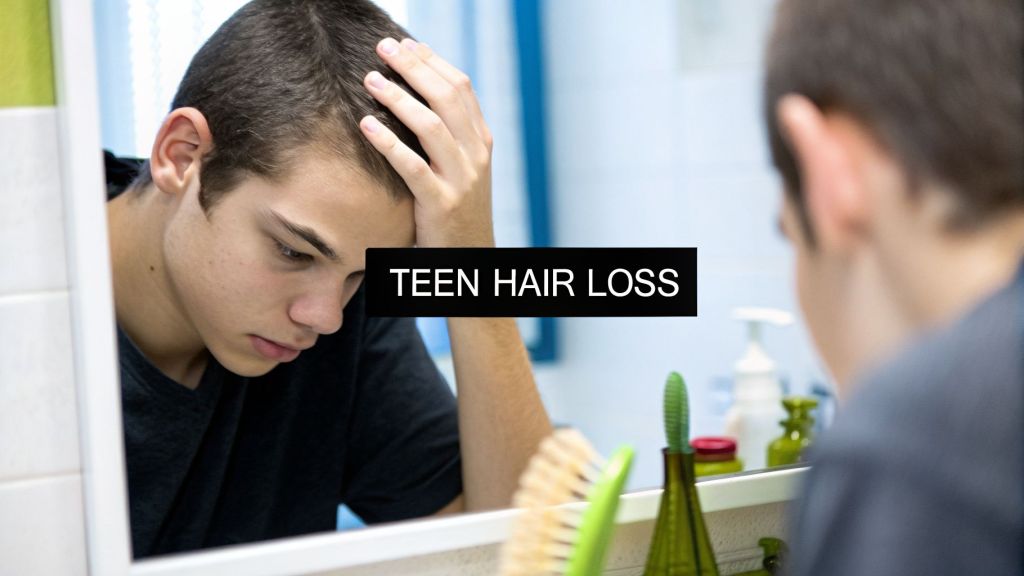
Finding extra hair in your brush or seeing your hairline start to change at 16 can be a huge shock. The first thing you need to know is that you are not alone. It’s a lot more common than most guys think, and figuring out what’s behind it is the first real step toward taking back control.
Why Am I Losing Hair at 16?

If you're noticing your hair thinning, it's natural to assume the worst. But losing hair as a teenager doesn't mean you're on a one-way track to permanent baldness. In many situations, it’s a temporary issue caused by specific, and often fixable, triggers.
The trick is to get past that initial wave of panic and start looking at the real possibilities. Think of yourself as a detective for your own body—the clues will almost always point to one of a few main culprits.
The Usual Suspects
For many young men, the answer lies in their genes. It's called androgenetic alopecia, but most people know it as male pattern baldness. It's an inherited trait that, believe it or not, can show up way earlier than you’d expect.
Another big one is stress. Juggling school, exams, a social life, and just the general pressure of being a teenager can sometimes push your body's hair follicles into a temporary shedding phase. This is a real condition called telogen effluvium. It's your body's version of hitting an emergency stop button, but the good news is that the hair usually grows back once the stress is under control.
"I would see an in-person dermatologist for a workup to rule out other causes of hair loss first." – Dr. Knox Beasley, Dermatologist
To help you get a clearer picture, here’s a quick breakdown of what could be going on.
Quick Guide to Teen Hair Loss Causes
| Cause | What It Looks Like | Is It Common at 16? |
|---|---|---|
| Genetics | Thinning at the crown, receding hairline (M-shape) | Yes, this is a very common reason. |
| Stress (Telogen Effluvium) | Diffuse, all-over shedding, not in one spot | Yes, especially during high-stress periods. |
| Traction Alopecia | Thinning along the hairline from tight hairstyles | Yes, if you often wear tight man-buns or braids. |
| Nutritional Deficiencies | General thinning and brittle, weak hair | Possible, particularly with restrictive diets. |
| Medical Issues | Patchy loss or sudden, widespread shedding | Less common, but needs to be ruled out by a doctor. |
This table is a starting point. Digging a little deeper can help you connect the dots.
Other potential causes include:
- Nutritional Gaps: Your hair is made of protein and needs vitamins and minerals to thrive. Not getting enough iron, zinc, or protein can seriously weaken your hair.
- Hairstyles: That tight man-bun or those sharp braids might look cool, but constantly pulling on your hair can cause traction alopecia. It's hair loss caused by physical stress on the follicles.
- Medical Conditions: In rarer cases, an underlying issue like a thyroid problem or an autoimmune condition could be the real reason for your hair loss.
If you keep asking yourself, "Why is my hair falling out?", looking into these possibilities is the most productive thing you can do.
And the numbers back this up. One study found that the average age for noticing the first signs of early-onset baldness was just over 16. It's estimated that about 25% of men who experience male pattern baldness start seeing it before they even hit 21.
Understanding the typical timeline for hair loss can also give you some much-needed perspective. You can check out our guide on when hair loss begins for a deeper dive. Consider this guide your starting point—once you figure out the "why," you'll have the power to decide on the right "what's next."
The Real Reasons Teens Lose Their Hair

Trying to figure out why you’re losing hair at 16 can feel like a total mystery. Is it something you did? Is it normal? The truth is, there are a handful of common culprits, and understanding them is the first step to getting some real answers.
Let’s get right to it and break down the science behind what's going on, starting with the number one reason for hair loss in teen guys: your own family tree.
Androgenetic Alopecia: The Genetic Blueprint
That’s a mouthful, I know. Androgenetic alopecia is simply the clinical term for what most people call male pattern baldness. And yes, it is by far the most common reason for hair thinning, even in your teens.
Think of it this way: your genes load the gun, but the hormonal surge of puberty is what pulls the trigger. It all boils down to a powerful hormone called dihydrotestosterone (DHT) and how sensitive your hair follicles are to it. As your body ramps up testosterone production during puberty, some of that gets converted into DHT. If you've inherited a sensitivity to it, DHT latches onto your hair follicles and begins a process called miniaturization.
This means the follicle itself actually shrinks. With each new growth cycle, the hair it produces becomes thinner, shorter, and weaker. Eventually, the follicle can just give up and stop producing hair altogether. It’s almost like a specific key (DHT) fits a lock on your follicles, triggering a pre-programmed command to shut down.
This genetic trait can be passed down from either side of your family. So if you look at your uncles, grandfathers, or your dad and see a history of hair loss, there’s a good chance that’s what’s at play. In fact, androgenetic alopecia accounts for over 95% of hair loss in men. For many, the first signs show up early—about 25% of men with this condition start noticing thinning before they even hit 21.
If this sounds familiar, it's worth getting the full story. You can learn more about what causes hair loss in our complete guide to get a clearer picture.
Telogen Effluvium: When Stress Shows Up on Your Head
Have you been under a ton of stress lately? Think final exams, a big move, a sudden illness, or even a drastic change in diet. An intense physical or emotional shock can trigger a temporary form of hair loss called telogen effluvium.
Here’s how it works. Your hair naturally goes through cycles of growing, resting, and shedding. A major stress event can suddenly push a huge number of your hair follicles—way more than usual—into the resting (or "telogen") phase at the same time. Then, a few months down the line, all those hairs that went dormant start to shed. The result is a sudden, diffuse thinning all over your head.
This is very different from pattern baldness, which tends to be localized at the hairline and crown. The good news? It’s almost always temporary. Once the stressor is removed and your body gets back in balance, the follicles wake up and your hair starts growing normally again.
Other Potential Culprits You Should Know
While genetics and stress are the two big players, a few other things can contribute to hair loss in your teens. It’s important to have these on your radar.
- Alopecia Areata: This is an autoimmune issue where your body's own immune system gets confused and attacks your hair follicles. It usually shows up as distinct, smooth, round patches of hair loss on the scalp.
- Traction Alopecia: Are you a fan of tight hairstyles like man buns, braids, or dreadlocks? That constant pulling and tension can physically damage the hair follicles over time, causing thinning, especially around the hairline where the strain is greatest.
- Nutritional Deficiencies: Your hair is built from the nutrients you eat. If your diet is seriously lacking in things like iron, zinc, protein, or key vitamins, your body will ration them for essential functions, and your hair will be one of the first things to suffer.
- Medical Conditions: While less common for teenagers, certain underlying health issues like thyroid problems or specific skin disorders can also manifest as hair loss.
Getting a handle on these possible causes is your first move. Even though androgenetic alopecia is the prime suspect for a teenage guy with a receding hairline, only a professional can give you a definite diagnosis. This is the crucial step to finding the right path forward.
Your Action Plan: What to Do Right Now
Alright, so you've noticed you might be losing some hair, maybe around 16, and you're probably feeling a mix of confusion and concern. First thing's first: take a breath. Panicking won’t help, but taking a few smart, measured steps absolutely will.
Your first move is simple but crucial: start documenting what's happening. Think of yourself as a detective gathering clues. Grab your phone and take clear, well-lit pictures of your hairline and the top of your head. Do this every few weeks. This visual timeline is incredibly valuable for tracking changes and will be a huge help when you eventually talk to a doctor.
Start with a Gentle Lifestyle Check-In
Before jumping to worst-case scenarios, it's worth taking a look at your daily life. Sometimes, the answers to hair thinning are hidden in our habits. This isn't about placing blame; it's about connecting the dots.
Think back over the last few months. Has anything major changed? Are you under a mountain of stress from exams or your social life? Did your diet take a nosedive into junk food territory? These things can genuinely affect your hair.
- Stress Levels: Constant stress can literally tell your hair to start shedding. Finding an outlet—whether it's working out, gaming, or just talking things through—is good for your head in more ways than one.
- Nutrition: Your hair is built from the protein, vitamins, and minerals you eat. If your diet is mostly empty calories, your hair is going to feel it. Things like iron and zinc are non-negotiable for strong growth.
- Hairstyles: Rocking a tight man-bun, braids, or even a baseball cap every single day? That constant pulling can cause something called traction alopecia. Give your scalp a break and let it breathe.
This initial review gives you and your doctor important context. For more immediate tips, this practical guide to stopping hair loss has some solid, actionable advice.
The Most Important Step: Talk to Someone
Trying to figure this out on your own is tough and can feel pretty isolating. The single best thing you can do right now is talk to a parent or guardian. It might feel a little awkward, but they are your best ally in getting real, professional help.
Just be straightforward. You could say something like, "Hey, I've noticed my hair has been thinning lately, and I'm a bit worried. I think I should probably see a doctor to find out what's going on."
The goal here is simple: get an appointment with a family doctor or, even better, a dermatologist. They are the only people who can give you a real diagnosis. Don't waste your time or money on online gimmicks or "miracle" shampoos that promise the world.
A professional can run tests to see if it’s a nutritional issue or something else, and they can properly determine if you’re dealing with early-onset genetic hair loss. To get a better sense of this process, you can learn more about when to see a dermatologist for hair loss. Taking this one step is how you move from worrying to taking control.
Modern Treatment Options For Teenage Hair Loss
When you're dealing with hair loss as a teen, it feels like every corner of the internet is pushing a "miracle cure." It's easy to get overwhelmed. The goal isn't to chase a magic bullet, but to build a smart, safe strategy that's right for your age, always with a doctor's input.
This is about taking a layered approach—addressing the issue from multiple angles to get the best possible outcome.
Foundations First: Lifestyle And Nutrition
Before we even talk about medical treatments, we have to look at the basics. Think of it like this: you can't build a strong house on a shaky foundation. Your lifestyle and diet are that foundation for healthy hair.
A balanced diet is completely non-negotiable. Your hair follicles are tiny factories that churn out hair strands, but they need the right raw materials—proteins, vitamins, and minerals. A diet heavy on junk food literally starves them of the fuel they need to work properly.
The same goes for stress. The constant pressure from school, social life, and just being a teenager can throw your hair's growth cycle into chaos. Finding a healthy outlet, whether it’s sports, music, or just talking things out, is just as important as any topical treatment.
This decision tree perfectly illustrates the first, most critical step you should take.

The message is loud and clear: don't try to figure this out on your own. A professional diagnosis is the only reliable place to start.
Comparing Hair Loss Treatments For Teens
When you're ready to explore medical options, it helps to see how they stack up. The table below breaks down some common approaches a doctor might discuss with you.
| Treatment | How It Works | Best For… | Key Consideration |
|---|---|---|---|
| Minoxidil (Topical) | Increases blood flow to the scalp, prolonging the hair's growth phase. | Early-stage genetic hair loss, when recommended by a doctor. | It's FDA-approved for adults. Use in teens is "off-label" and requires strict medical supervision. |
| PRP Therapy | Uses your own blood's concentrated platelets to stimulate dormant or weak hair follicles with growth factors. | Teens with early thinning, or those whose hair loss is worsened by stress or nutritional issues. | It's very safe since it uses your own biological material, but it's not a one-time fix and requires a series of treatments. |
| Lifestyle & Diet | Provides follicles with the essential nutrients and reduces stress hormones that can disrupt the hair cycle. | Everyone. This is the baseline for any treatment plan to be successful. | This won't reverse genetic hair loss on its own, but it's crucial for maximizing the results of other treatments. |
Remember, this isn't about picking one off a menu. It's about having an informed conversation with your dermatologist to build a plan that's tailored to you.
Proven Medical Options
What happens when a healthy lifestyle isn't enough, especially if genetics are the main driver? That's when you and your doctor can explore medical treatments. It's crucial that this conversation happens with a professional who can weigh the pros and cons for someone under 18.
One of the most common starting points is Minoxidil, an over-the-counter topical foam or solution. While it's officially approved for adults, a dermatologist may recommend it "off-label" for a teenager if they determine the benefits outweigh the risks. It works by boosting blood flow to the scalp, helping to keep follicles in their active growth phase for longer.
"As with every case of male pattern hair loss, the earlier you start treatment the better the results." – Dr. Knox Beasley, Dermatologist
This is why a "wait and see" approach is often a mistake. Acting decisively, under a doctor's care, gives you the best odds of holding onto your hair. You can learn more about the different options in our guide to FDA-approved hair loss treatments.
PRP Therapy: A Modern Approach For Young Hair Loss
One of the most promising options for young guys with early-stage hair loss is Platelet-Rich Plasma (PRP) therapy. This is a non-surgical procedure that harnesses your body's own natural healing abilities to kickstart hair growth.
Here’s a simple way to think about it: your blood contains tiny cells called platelets, which are your body’s emergency response team. When you get a cut, platelets rush in to stop the bleeding and trigger the repair process. PRP therapy isolates these powerful cells from a small blood sample and concentrates them into a serum.
This powerful, platelet-rich serum is then meticulously injected into the areas of your scalp where hair is thinning. The growth factors released by the platelets act like a wake-up call for sluggish or dormant follicles, encouraging them to get back to work producing thicker, healthier hair.
Because PRP uses your own biological material, it's considered extremely safe and doesn't carry the risk of systemic side effects that can come with some medications. This makes it a compelling choice for early intervention in teenagers.
Navigating the Emotional Toll of Hair Loss

Okay, let's cut to the chase. Dealing with hair loss as a teenager isn't just about what's happening on your scalp. It's a massive head game, and it can knock your confidence right off its feet. How you feel about yourself can take a serious hit.
It's totally normal to feel a mix of anxiety, frustration, or self-consciousness. Maybe you've started avoiding mirrors, wearing a hat 24/7, or even ducking out of social events. Those feelings are 100% valid, but they don't have to run your life.
The first step is just admitting that it sucks. Once you do that, you can start building a plan to manage it.
Your Mental Health Is Your Priority
Look, your well-being has to come first. The crazy thing is that stressing out about your hair can actually make some types of hair loss worse—it’s a vicious cycle. Taking care of your mental state is one of the most proactive things you can do for your hair and for yourself.
Think about what makes you, you. The things that have absolutely zero to do with your hair. Are you a killer on the soccer field? A creative artist? The friend everyone can count on? Maybe you dominate in your favorite video game. Focusing your energy on your strengths and passions is an incredible way to remind yourself that your value goes way beyond your appearance.
It's all about shifting where you put your focus. Your hair is a part of who you are, but it isn't the whole story.
Remember this: Your worth as a person has nothing to do with how thick your hair is. It’s about your character, how you treat people, and the things you’re passionate about. The real power is in focusing on what you can actually control—your skills, your friendships, and your attitude.
Getting into that mindset is a process, but it's probably the single most important thing you can do for yourself.
Finding Your Support System
You really don't have to figure this out on your own. Trying to ignore or bottle up feelings of anxiety just makes them bigger and heavier. The best move you can make is to find people you trust and start talking.
Opening up isn't weak; it's a sign that you're taking control of the situation. Here’s how to build that support network:
- Talk to a Trusted Friend or Family Member: Find that one person you can be real with. Sometimes just saying what's on your mind out loud makes a world of difference. They don't need to have the answers; they just need to be a good listener.
- Connect with Online Communities: You are definitely not the only one losing hair at 16. There are tons of forums and social media groups where guys are sharing their own stories. Seeing that you're not alone can be a huge relief.
- Consider Professional Support: If the anxiety feels like it's getting too big to handle, talking to a school counselor or a therapist can be a game-changer. They're trained to give you practical tools to manage stress and build confidence.
Practical Steps for Building Confidence
While you’re working on the emotional side of things, taking a few small, practical steps can give you a major confidence boost day-to-day.
One of the easiest wins is to find a haircut that works with you, not against you. A good barber is your best friend here. They can suggest modern cuts that use texture and smart styling to make thin spots less obvious. A textured crop, a clean side-part, or even a sharp buzz cut can look confident and intentional.
It’s about owning your look. Confidence is all in how you carry yourself, and a style you feel good in is a huge piece of that puzzle. Instead of trying to hide your hair, find a way to rock it.
Frequently Asked Questions About Teen Hair Loss
When you're a teenager dealing with hair loss, the internet can be a confusing place full of myths and bad advice. Let's cut through all that noise. Here are some real, straightforward answers to the questions I hear most often from guys your age and their families.
Will I Go Completely Bald If I'm Losing Hair at 16?
This is the big fear, right? Let’s tackle it head-on. The short answer is: almost certainly not.
If you’re seeing signs of male pattern baldness at 16, it simply means your genetic timeline for hair loss has started earlier than average. It absolutely does not mean you'll be completely bald by your 20s. Think of it this way: everyone's journey with this is different. For some guys, it's a very slow, gradual thinning over decades. For others, it might be a bit faster.
The key is that you've noticed it early. That's your single biggest advantage. By taking action now, you can focus on slowing the process way down and holding onto the hair you have.
Can Special Shampoos or Vitamins Actually Regrow My Hair?
This is where it’s crucial to set realistic expectations. Shampoos marketed for "hair growth" can definitely help your hair look and feel fuller and support a healthy scalp, which is a great starting point. But they can't stop or reverse a genetic condition like male pattern baldness on their own.
The same goes for vitamins. If a blood test shows you’re seriously low in something like iron or vitamin D, then taking a supplement will absolutely help your hair health. But if your levels are normal, popping extra vitamins won't act as a magic bullet against genetic thinning.
Think of them as your supporting cast, not the star of the show. They create the best possible environment for your hair but aren't the primary treatment for androgenetic alopecia.
Is PRP a Safe and Good Option for a Teenager?
Yes, Platelet-Rich Plasma (PRP) is an incredibly safe treatment, and that's because it comes from you. The process uses a concentrated sample of your own blood, so there's virtually no risk of an allergic reaction or serious side effects.
For a teen who's just starting to notice genetic thinning, PRP can be a really effective, proactive option. The goal is to use the powerful growth factors already in your blood to "wake up" and strengthen hair follicles that are starting to shrink but haven't completely shut down yet. It's a non-surgical way to help improve density and slow down thinning.
Of course, it's not a one-size-fits-all solution. You’ll need a proper consultation with a specialist to make sure it’s the right fit for your specific type of hair loss. To get a better sense of what's possible, you can read more about whether hair can truly grow back and understand the science behind it.
How Do I Even Talk to My Parents About This?
Bringing this up can feel awkward, but your parents are your biggest allies in getting real medical help. The best strategy is to approach it calmly as a health issue you want to handle responsibly.
Try to find a quiet moment when no one is rushed or distracted. You could start with something simple and direct:
- "Hey, can I talk to you for a minute? I've been pretty worried about my hair lately—it seems to be thinning out."
- "I wanted to show you something. I've noticed my hairline is changing, and I think it's something we should probably get checked out."
From there, you can explain that you've done a little research and think seeing a doctor or a dermatologist is the right next step. When you frame it as a proactive step for your health, it helps them see it's not about vanity but about well-being. They want what's best for you, and getting a professional diagnosis is always the right call.
At PRP For HairLoss, we believe that good information is the first step toward taking control. By understanding your options and seeking professional advice, you can build a smart plan to manage your hair loss with confidence. Learn more at https://prpforhairloss.com.
 PRP For Hairloss
Leave a comment