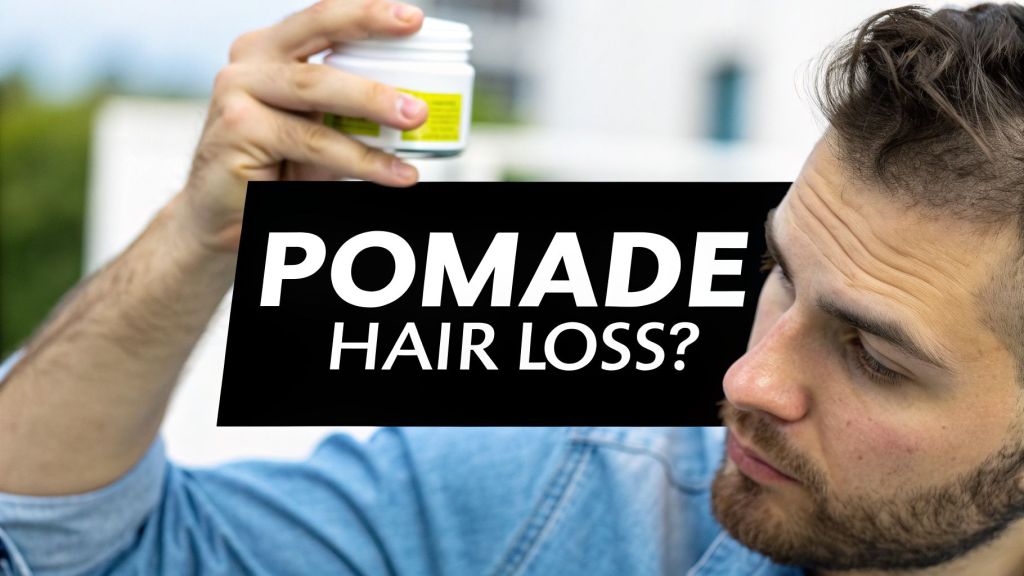
If you’re staring at a tub of your favorite pomade and wondering if it’s the culprit behind your thinning hair, let’s get straight to it. The short answer is no—your styling product is almost certainly not causing permanent, genetic hair loss.
However, the way you use it could be causing some temporary trouble. Think breakage and shedding. That's a different beast entirely, and luckily, it's one you can control.
The Honest Answer On Pomade And Hair Loss

When you see more hair in the drain, it’s natural to point a finger at the one thing you put in your hair every day. But the fear that pomade causes baldness usually comes from mixing up two very different things: temporary shedding caused by styling habits and permanent thinning driven by your genes.
Let’s be clear: your pomade is not the villain behind male pattern baldness.
That condition, known as androgenetic alopecia, is all about genetics and hormones. There’s just no scientific evidence linking the ingredients in your go-to pomade to this type of permanent hair loss. It’s also incredibly common, affecting 16% of men aged 18-29 and jumping to 53% of men in their 40s. As you can see from the broader hair loss statistics, this is a widespread issue that has nothing to do with your styling routine.
Where The Real Problem Lies
So, if the pomade itself isn't the problem, why does it get such a bad rap? It all comes down to how you use it. The problem isn't the product, but the habits that go along with it.
Think of it this way: a single greasy meal won't hurt you, but a daily diet of junk food without any exercise will eventually cause problems. It’s the same concept with hair products. Over time, poor application and removal can absolutely take a toll.
The real conversation should be about a few key things:
- Product Buildup: Not washing pomade out thoroughly can clog your hair follicles. This often leads to an irritated, inflamed scalp that isn't a healthy environment for hair to grow.
- Traction and Tension: Constantly pulling your hair back into tight styles, especially with a heavy product weighing it down, puts a ton of physical stress on the hair roots.
- Ingredient Sensitivity: While not super common, some guys react to certain fragrances, preservatives, or oils in their pomade, which can cause redness, itchiness, and inflammation.
The key takeaway is this: Your pomade isn't making you go bald. But your styling habits might be causing some preventable damage.
These factors can lead to temporary shedding or breakage—which can be alarming, but is almost always reversible once you adjust your routine. Now, let’s dig into how to spot the difference and what you can do about it.
Pomade-Related Shedding vs Genetic Hair Loss At A Glance
It can be tough to tell what's really going on just by looking in the mirror. This quick comparison can help you identify the potential source of your hair concerns.
| Symptom | Potential Pomade-Related Cause | Typical Genetic Hair Loss (MPB) |
|---|---|---|
| Location of Thinning | Diffuse thinning or breakage all over. | A receding hairline (at the temples) and/or thinning at the crown. |
| Scalp Condition | Often itchy, red, flaky, or has small bumps (folliculitis). | The scalp usually looks healthy, just with less hair. |
| Type of Hair Fall | You might see broken hair shafts or full strands with bulbs. | You'll see miniaturized, finer hairs alongside normal ones. |
| Onset | Tends to start suddenly after changing a product or styling habit. | Gradual, progressive thinning that happens over many years. |
Remember, this table is just a guide, not a diagnosis. If your hair thinning is gradual and follows a distinct pattern, it’s far more likely to be genetic. But if it came on suddenly and your scalp feels irritated, your styling routine is a great place to start investigating.
How Product Buildup Can Harm Your Scalp Health

Let's get one thing straight: your favorite pomade isn't going to cause genetic hair loss like male pattern baldness. It can, however, become a major accomplice in creating a scalp environment where hair just can't thrive.
Think of your scalp like a garden. For healthy plants to grow, the soil needs to be clean, get plenty of air, and be free of junk. When you keep piling on heavy, waxy products without a deep clean, you're essentially choking out the soil. This prevents your hair follicles—the very roots of your hair—from getting the oxygen and nutrients they need, which is the starting point for a lot of preventable hair shedding and breakage.
Suffocating Follicles and Product Buildup
The biggest problem you'll run into with heavy pomade use is product buildup. This is especially true for those classic oil-based pomades, which are designed to resist water. That’s what gives them their legendary hold, but it also makes them a real pain to wash out completely.
Day after day, leftover product mixes with your scalp's natural oils (sebum) and dead skin cells, forming a stubborn, waxy film. This gunk can physically plug the opening of your hair follicles.
This blockage is called follicular occlusion, and it’s like putting a cap over a chimney. It traps oil, sweat, and bacteria right at the hair's root, creating the perfect storm for irritation and inflammation.
This constant buildup doesn't just sit there; it weakens the hair shaft over time, making your hair brittle and much more likely to snap. Worse, it can set the stage for more serious scalp issues. A healthy scalp is non-negotiable for healthy hair, a topic covered in this guide on Scalp Health and Hair Growth: Proven Tips for Strong Locks.
The Risk of Folliculitis and Irritation
When your follicles get clogged, they don’t just have trouble breathing. That trapped mix of old pomade, oil, and skin cells becomes a feast for the bacteria and yeast that naturally live on your scalp.
This can kick your body's immune system into gear, leading to an inflammatory condition known as folliculitis. It usually shows up as an annoying breakout of small, red, itchy bumps around the hair follicles. While it’s usually harmless, a bad or persistent case can damage the follicles enough to cause patches of temporary hair loss. You can find more details on this and other issues in our overview of scalp conditions that cause hair loss.
Traction Alopecia: The Pulling Problem
Finally, there’s the physical stress that some hairstyles put on your hair, which pomade can make much worse. Traction alopecia is a specific type of hair loss that happens from constant, long-term pulling on the hair follicles.
You’ve probably heard about it in relation to tight braids, buns, or ponytails. But here's the kicker: using a heavy, sticky pomade to lock in a sharp, slicked-back style adds significant weight and tension. The product’s grip intensifies the pull on your hairline every single day.
So, while pomade itself isn't pulling your hair out, it's a key partner in crime with tight styling. This is a well-known condition that dermatologists see all the time, and it almost always affects the frontal and temporal hairlines where the strain is the greatest.
Reading The Label: What To Look For In Your Pomade
Staring at a wall of men's hair products can feel a little overwhelming. The jars all promise the perfect hold, but the ingredient lists on the back often read like a foreign language. The good news is, you don't need a degree in chemistry to figure out which one is right for you.
Knowing what to look for—and more importantly, what to avoid—is the first step in taking charge of your scalp health. It all starts with flipping that jar over and reading the label.
The first and most important distinction you'll find is between water-based and oil-based pomades. This single difference changes everything about how the product performs and how it affects your scalp.
Think of oil-based pomades as the old-school classics. They’re built with ingredients like petroleum, mineral oil, or petrolatum that deliver an incredible, long-lasting hold and shine. The catch? These ingredients are designed to repel water, which makes washing them out completely a real challenge. This is what leads directly to the stubborn product buildup that can clog your follicles.
Water-based pomades are the modern solution to that exact problem. As the name implies, their main ingredient is water (you'll see "aqua" listed first). This means they break down easily and rinse out with a simple shampoo wash, giving your scalp a chance to breathe. This one quality is your best defense against buildup and irritation.
The Good Guys And The Bad Guys
When you're scanning an ingredient list, you can quickly get a feel for the product by spotting a few key players. It helps to have a mental checklist of what you want to see versus what should raise a red flag.
Here's a simple cheat sheet to make it easier:
-
Ingredients to Favor: Look for water-based pomades that feature natural ingredients high up on the list. Things like shea butter, jojoba oil, argan oil, and beeswax offer nourishment and hold without suffocating your scalp.
-
Ingredients to Approach with Caution: Certain short-chain alcohols, like SD alcohol, denatured alcohol, or isopropyl alcohol, can be incredibly drying. They help a product set faster, but over time they can strip your hair's natural moisture, leading to brittleness and breakage.
-
Ingredients to Avoid for Scalp Health: The main culprits behind heavy buildup are ingredients that don't dissolve in water. If you have a sensitive or acne-prone scalp, be wary of products that list petrolatum, mineral oil, or lanolin as one of the first few ingredients.
Remember, the goal isn't to demonize every chemical but to choose products that respect your scalp's natural balance. An easy-to-wash-out formula is your best bet to prevent the kind of product buildup that can indirectly contribute to hair loss issues.
If you're already dealing with a flaky or irritated scalp, switching pomades might not be enough. Using a medicated shampoo can make a huge difference. You can learn more about how specific ingredients work in our guide on ketoconazole shampoo for hair loss. A good shampoo is the perfect partner to a scalp-friendly pomade.
Warning Signs Your Styling Routine Needs a Change
Your body has a way of telling you when something's off, and your scalp is no exception. Learning to read these early signals can be the difference between a minor irritation and noticeable hair shedding down the road.
First, let's get one thing straight: losing hair every day is normal. Most of us shed between 50 to 100 hairs a day as part of a healthy hair growth cycle. Seeing a few strands on your pillow or in the shower drain isn't a cause for alarm.
The real red flag is a sudden change. Are you seeing way more hair in your brush than usual? Finding clumps in the shower? If this is happening and your scalp is also sending out an S.O.S., it's time to take a hard look at your styling products.
Common Red Flags to Watch For
An unhappy scalp will almost always let you know. If your pomade or styling habits are the culprits, you'll likely feel the effects soon after applying the product or by the end of the day.
Keep an eye out for these tell-tale signs:
- Persistent Itchiness or Redness: A healthy scalp shouldn't feel itchy. If you're constantly fighting the urge to scratch, it's a classic sign of inflammation. This could be a reaction to a specific ingredient or your pores getting clogged.
- Small, Pimple-Like Bumps: Seeing little bumps that look like acne? That's often folliculitis. This happens when heavy, waxy pomades trap bacteria on the skin, leading to inflamed or infected hair follicles.
- A Sudden Increase in Dandruff: While lots of things can trigger flakes, a sudden flare-up might be your scalp reacting to a new product. It could also mean your current pomade isn't washing out completely, causing buildup that irritates the skin.
This flowchart can give you a quick mental checklist for picking a pomade that's less likely to cause these problems.

The big takeaway here is that water-based pomades are generally a safer bet. They rinse out cleanly, which is key to preventing the product buildup that often kickstarts these scalp issues.
If you're experiencing these symptoms and noticing more shedding, it's a strong signal that your styling routine needs an immediate overhaul. It’s crucial to connect the dots: while pomade itself doesn’t cause permanent baldness, the scalp problems it can trigger can absolutely lead to temporary hair thinning.
If you’re worried the hair fall you're seeing is more than just a temporary styling issue, it helps to know how to tell if your hair is thinning due to underlying factors. Understanding the difference will help you take the right steps to protect your hair.
A Practical Guide to Healthy Hair Styling
Knowing which ingredients to avoid is a great first step, but how you actually use your styling products day-to-day is what really makes or breaks your hair health. This isn't about swearing off pomade for good. It's about being smarter and more intentional with your routine.
Think of these tips as the simple, ground-level habits that prevent the very buildup, irritation, and stress that can lead to thinning hair.
The Non-Negotiable Styling Rules
To keep your scalp in great shape and your hair strong, a few daily practices are absolutely essential. These are your first line of defense against clogged follicles and product buildup. They’re incredibly easy to do and make a huge difference over the long haul.
Here are the three big ones:
- Always Apply With Clean Hands: It sounds obvious, but it’s critical. Your hands accumulate oils, dirt, and bacteria all day. Dipping them into a pomade jar and running them through your hair is like giving that grime a direct route to your scalp. A quick hand wash is a simple but powerful way to keep unwanted bacteria away from your hair follicles.
- Focus on Hair, Not the Scalp: When you're working the pomade in, make a conscious effort to apply it to the strands of your hair, not directly onto your scalp. It’s a subtle shift in technique, but it dramatically reduces the amount of product that can clog pores and cause irritation right from the start.
- Wash It Out Every Single Night: This is probably the most important rule of all. Never, ever go to bed with pomade in your hair. Leaving product in overnight is the number one cause of the waxy buildup that can suffocate follicles. A thorough wash before you sleep gives your scalp the 8 or so hours it needs to breathe, reset, and recover.
Give Your Hair and Scalp a Break
Your hair and scalp need rest days, just like your muscles need time off from the gym to repair and get stronger. Constant styling, especially with those heavy-duty, high-hold pomades, puts your hair and follicles under a steady state of stress.
This doesn't mean you have to walk around with messy hair. A rest day can be as simple as going product-free or switching to a much lighter, more natural product. The point is to give your follicles a much-needed break from chemical exposure and physical tension.
Try working these ideas into your weekly schedule:
- Schedule Product-Free Days: Set aside at least one or two days a week to let your hair just be. No heavy products, no intense styling.
- Alternate Your Hairstyles: If your go-to look is a tight, slicked-back style, you're putting constant tension on your hairline. Try mixing it up with looser, more relaxed styles to relieve that pull. If you need some ideas, check out our guide on how to style thinning hair without adding extra stress.
- Opt for Lighter Products: On days when you don't need maximum hold, reach for a lightweight cream or a simple leave-in conditioner. You'll still get some control, but without the heavy, waxy residue of a classic pomade.
By building these simple habits into your routine, you can keep using the products you like without putting your hair's health on the back burner. It's all about styling smarter, not harder.
When It's Not The Pomade: Understanding Genetic Hair Loss
So, you've done everything by the book. You switched to a water-based pomade, you’re washing it out religiously every night, and you've even started giving your hair styling breaks.
But when you look in the mirror, you’re still seeing more scalp than you'd like.
If you’ve ruled out every styling-related culprit and are still noticing a classic receding hairline or that thinning spot on your crown, it's time to consider a different possibility. The problem might not be what's on your hair, but what's in your DNA.
When The Real Cause Is Your DNA
For the vast majority of men, hair loss is simply hereditary. It's a tough pill to swallow, but understanding the science behind male pattern baldness genetics can actually be empowering. No amount of changing your pomade will stop a process that's hardwired into your genes.
This is where the conversation has to shift from styling habits to proactive treatments. When your follicles are genetically programmed to shrink and eventually stop growing, you need a solution that addresses the root biological cause. While bad styling can definitely make things worse, it isn't the underlying driver. Learning how to stop hair loss from a bigger-picture perspective becomes the crucial next step.
This is where powerful, non-surgical options come into play. Once you have accepted that the problem is genetic, you can begin exploring effective treatments that directly target the issue.
One of the most promising and effective approaches today is Platelet-Rich Plasma (PRP) therapy. Forget creams and pills for a moment; this treatment taps into the natural healing and regenerative power already inside your own body.
Put simply, a small amount of your blood is drawn and placed in a centrifuge to concentrate the platelets, which are loaded with powerful growth factors. This "liquid gold" is then injected back into your scalp. Think of these growth factors as a wake-up call for tired, shrinking hair follicles, stimulating them to get back to work producing thicker, healthier hair.
When you've exhausted all the external factors, PRP is the logical next step to address the real, genetic cause of your hair loss head-on.
Got More Questions About Pomade And Hair?
You're not alone. Let's clear up a few of the most common questions that pop up when talking about pomade and hair health.
Can I Use Pomade Every Day?
Absolutely, but there's one non-negotiable catch: you have to wash it out completely every night. Daily use is perfectly fine as long as you're starting with a clean slate each morning.
Leaving pomade in overnight is asking for trouble. It leads to product buildup that can clog your hair follicles and irritate your scalp—much like you wouldn't go to bed without washing your face.
Does Pomade Thin Your Hair?
Let's be clear: pomade itself doesn't contain ingredients that biologically thin your hair. The product isn't going to change your hair's natural thickness.
However, the way you use it can definitely create problems that lead to the appearance of thinning. Constant inflammation from product buildup or the physical stress from tight hairstyles (traction alopecia) can weaken the follicles over time. This can cause shedding that makes your hair feel less dense.
The key takeaway here is that pomade-related thinning is almost always reversible. Once you stop the habit that's causing the stress—be it poor washing or tight styling—the hair can recover. This is a world away from genetic thinning, which is a progressive condition.
 PRP For Hairloss
Leave a comment