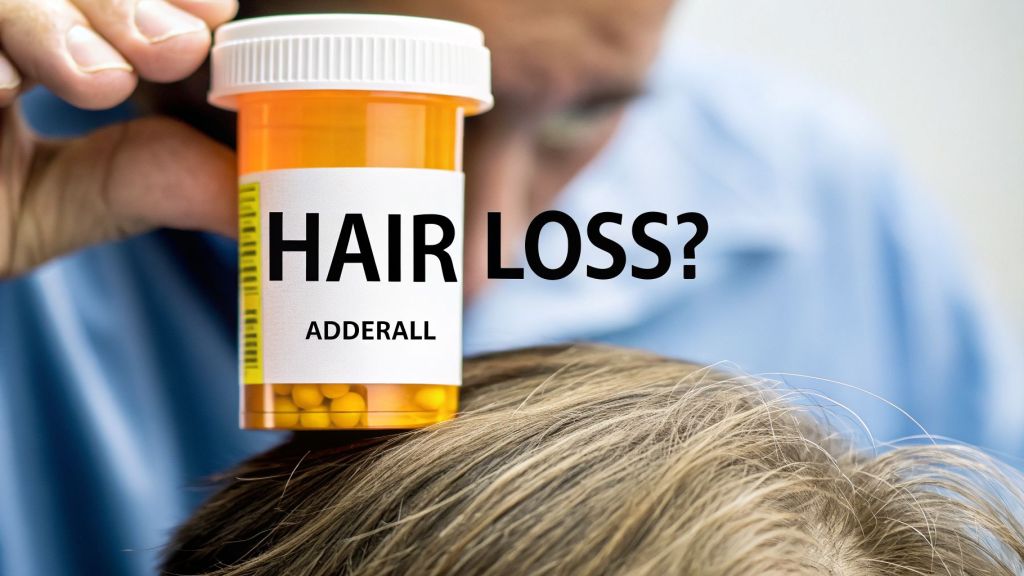
Let's cut right to it. If you've started taking Adderall and now you're noticing more hair in your shower drain, you're not imagining things. The short answer is yes, hair loss from Adderall is possible.
But here's the good news: this kind of shedding is almost always temporary. We're talking about a condition called Telogen Effluvium, which is a widespread, temporary hair fall, not permanent baldness.
The Link Between Adderall and Hair Loss Explained
So, what's really going on here? When you introduce a powerful central nervous system stimulant like Adderall, it can be a shock to your system. Imagine your body is constantly managing a budget of energy and resources. Suddenly, it has a new, high-priority job: processing this medication.
To cope, your body starts diverting resources away from what it considers "non-essential" background tasks, and unfortunately, hair growth falls into that category. This shock can push a large number of your hair follicles from their active growing phase (anagen) straight into the resting and shedding phase (telogen).
"The most important thing for men to understand is that this isn't permanent baldness. It's your body's reaction to a significant change, and once the trigger is managed, the hair growth cycle can get back on track."
This is why the shedding shows up as a diffuse, all-over thinning, which looks very different from the classic receding hairline or bald spot you might associate with genetic hair loss.
Distinguishing Adderall Hair Loss from Male Pattern Baldness
One of the biggest anxieties men face is trying to figure out if this shedding is temporary or the start of male pattern baldness. While both lead to less hair on your head, their patterns and timelines are completely different.
It's crucial to know the difference so you can find the right path forward. And anytime you're taking a new medication, it’s just smart to understand the full picture, including all potential ADHD medication side effects.
To help you tell them apart, here’s a quick side-by-side comparison of the key signs.
Adderall Hair Loss vs. Male Pattern Baldness At A Glance
This table breaks down the distinct characteristics of shedding caused by medication-induced stress versus classic genetic hair loss.
| Symptom | Adderall-Induced Hair Loss (Telogen Effluvium) | Male Pattern Baldness (Androgenetic Alopecia) |
|---|---|---|
| Onset | Sudden and noticeable, usually 2-4 months after starting or changing a dose. | Gradual, often developing over years without a clear starting point. |
| Pattern | Diffuse thinning all over the scalp; you might notice a lighter ponytail or see more scalp everywhere. | A specific, recognizable pattern, such as a receding hairline (M-shape) or thinning at the crown. |
| Shedding | Significant increase in daily hair fall on pillows, in the shower drain, and on clothes. | Shedding is typically not as dramatic or sudden; it's a slow miniaturization of follicles. |
| Scalp | The scalp itself usually appears healthy, with no signs of inflammation or scarring. | The scalp is typically healthy, though the affected areas show progressively finer, shorter hairs. |
| Reversibility | Generally reversible once the trigger (the medication) is addressed with a doctor's guidance. | A progressive condition that is not reversible without ongoing medical treatment. |
Recognizing these differences should give you some clarity and peace of mind. As you'll see in our other guides, many different drugs can affect your hair. You can get a broader view by reading our list of other https://prpforhairloss.com/medications-causing-hair-loss. Understanding this is a key first step before we dive into how to fix it.
How Stimulants Can Disrupt Your Hair's Growth Cycle
To really get why a medication like Adderall might cause hair loss, it helps to first understand how your hair grows. Every single hair on your head goes through a three-phase cycle: growing, transitioning, and finally, shedding. In a healthy state, about 85-90% of your hair is actively growing at any given time.
When you introduce a powerful stimulant into your system, it can throw a wrench into this finely-tuned biological machine. It's not a direct attack on the hair itself, but more of a system-wide shock that knocks the whole process off-kilter.
The Shock of Telogen Effluvium
The most common reason for hair loss from Adderall is a condition known as Telogen Effluvium. Think of your hair follicles as being on a very strict schedule. They have a long growing phase, followed by a short resting period before the hair is shed.
A major physiological stressor—like starting a potent new medication—can sound an internal alarm. This shockwave tells a huge percentage of your hair follicles to clock out early, all at once. Instead of finishing their growth phase, they get pushed prematurely into the resting (telogen) phase.
This diagram helps show how a stimulant can trigger this temporary shedding and how it differs from genetic pattern baldness.

As you can see, the stimulant directly contributes to shedding, which is a different mechanism from hereditary hair loss (though one can certainly make the other look worse). The most important thing to remember is that this shedding isn't immediate. It typically happens 2-4 months after the initial trigger, which is why a lot of people don't immediately connect their thinning hair with the medication they recently started.
Nutritional Gaps From a Suppressed Appetite
Another huge piece of the puzzle is nutrition. Adderall is a powerful stimulant, and one of its most common side effects is appetite suppression. While this often leads to weight loss, it can also unintentionally starve your hair of the critical nutrients it needs to grow.
It's like trying to build a house with a shortage of bricks and mortar. Your hair follicles need a constant supply of protein, vitamins (like D and B12), and minerals (like iron) to construct strong, healthy hair strands. When your diet takes a nosedive, so does the quality of your hair.
This creates a domino effect where the delicate hair growth cycle is disrupted.
The Role of Stress and Anxiety
Finally, we can't ignore the mental and hormonal impact. For some people, stimulants can dial up feelings of stress and anxiety, which in turn spikes the body's production of cortisol.
Cortisol is a known enemy of healthy hair. Elevated levels can disrupt follicular function and push more hairs into the shedding phase, compounding the effects of Telogen Effluvium.
This isn't just a hormonal issue; it can become physical, too.
- Increased Anxiety: Stimulants can sometimes trigger fidgety behaviors or a general feeling of unease.
- Subconscious Habits: This anxiety might show up as subconscious habits like trichotillomania (a compulsive hair-pulling disorder) or even just absentmindedly running hands through your hair, which causes breakage and mechanical stress over time.
When you mix physiological shock, nutritional gaps, and heightened stress, you've got the perfect storm for hair shedding. It's important to remember that hair loss is just one of many potential issues; for a broader look at what to watch for, this guide on ADHD medication side effects is a valuable resource.
How to Tell If Adderall Is the Real Culprit
When you start noticing more hair in the drain, it’s natural to suspect the newest thing in your daily routine—especially a medication as potent as Adderall. But before you jump to conclusions, you need to do a little detective work. Several things can trigger hair loss, and figuring out the real cause is the only way to find a solution that actually works.
The most important clue is always the timing. Drug-induced shedding, also known as Telogen Effluvium, doesn't happen overnight. It almost always kicks in 2 to 4 months after you start a medication or your doctor changes your dose. Think back: did your shedding start a few months after you began taking Adderall? If the calendar lines up, that's a huge clue.
Look at the Pattern of Shedding
Next, take a close look at how the hair is falling out. Are you seeing a general, all-over thinning? Maybe your part seems wider or you can see more of your scalp from every angle. Or is the loss focused in specific areas, like a receding M-shaped hairline or a bald patch on the crown of your head?
- Diffuse Thinning: This is the tell-tale sign of Telogen Effluvium, the kind of shedding we see with medications, major stress, or nutritional deficiencies. The entire scalp is affected pretty evenly.
- Patterned Thinning: A receding hairline and thinning at the crown are the classic calling cards of male pattern baldness (androgenetic alopecia), which is mostly driven by genetics and hormones.
If your shedding is diffuse, Adderall becomes a more likely suspect. If it looks more like classic male pattern loss, the medication might just be speeding up or "unmasking" a genetic tendency you already had. You can learn more about telling these two apart in our guide on Telogen Effluvium vs. male pattern baldness.
Consider Other Contributing Factors
Adderall rarely acts in a vacuum. Its own side effects can create a perfect storm for hair loss, and other stressors in your life might be playing a role, too. Ask yourself about these common triggers:
- Significant Stress: Have you been through a major life event lately? Things like losing a job, a tough breakup, or even just a period of intense pressure at school or work are well-known causes of Telogen Effluvium.
- Nutritional Changes: Has your appetite tanked since you started Adderall? Sudden weight loss or a diet low in key nutrients like protein, iron, and zinc can literally starve your hair follicles.
- Sleep Disruption: Is insomnia a new issue for you? Bad sleep is a huge physical stressor that can easily throw your body's hair growth cycle out of whack.
While you won't see "hair loss" listed as a top side effect for Adderall, it is a recognized possibility among medical experts. Stimulants are a known, though uncommon, cause of shedding. The good news is that most cases are the reversible Telogen Effluvium type, where hair grows back after the trigger is managed. You can find more on this link from the experts at Vegamour.com.
By thinking through the timeline, the pattern of loss, and these other factors, you can build a much clearer picture of what's really going on. Walking into your doctor's office with this information is incredibly helpful and sets you up for a much more productive conversation about the right diagnosis and an effective plan to get your hair back on track.
Alright, let's switch from understanding the why to tackling the how. Knowing what might be causing your hair to shed is one thing, but building a solid game plan is what truly makes a difference. Think of this as your personal roadmap to stopping the shed and getting your hair back on a healthy growth track.
Don't feel overwhelmed. These are practical steps you can start taking right away.

The first, most critical conversation you need to have is with the doctor who prescribes your Adderall. This is absolutely non-negotiable. Trying to self-diagnose or, even worse, changing your medication on your own is not just ineffective—it can be genuinely dangerous.
Your doctor is your partner in this. Show up to the appointment ready to talk about when the shedding started, what it looks like, and any other side effects you’ve noticed, even things that seem unrelated like a loss of appetite or trouble sleeping.
Discussing Medication with Your Doctor
This conversation isn't about blaming the medication; it's about finding a sustainable balance between your mental focus and your physical health. Your doctor is the only one who can help you figure out if Adderall is the likely trigger and map out the safest path forward.
There are a few ways this conversation might go:
- Dose Adjustment: In some cases, hair loss is tied to the dosage. Your doctor might suggest carefully lowering your dose to see if the shedding eases up while still keeping your ADHD symptoms in check.
- Exploring Alternatives: If the hair loss is severe or really bothering you, it might be time to discuss other medications. There are non-stimulant options, for instance, that don't have the same reputation for this particular side effect.
Getting this professional guidance is the foundation of your plan. It makes sure everything you do next is safe, informed, and effective.
Lifestyle Changes to Support Hair Health
While you and your doctor figure out the medication side of things, there's a lot you can do to take back control. Adderall can sometimes mess with your appetite and sleep, and actively pushing back against those effects can make a huge difference for your hair.
Think of your hair follicles as tiny, high-energy factories. To run properly, they need a steady stream of fuel (nutrients) and a low-stress work environment. Your lifestyle choices can provide both.
First up, let's talk nutrition. If your appetite is low, forget about three big meals. Instead, focus on smaller, nutrient-packed meals or snacks throughout the day. You want to prioritize foods that are known to build strong hair.
Your shopping list should be full of things like:
- High-Quality Protein: The literal building blocks of hair. Think eggs, fish, and lean meats.
- Iron-Rich Foods: Iron helps deliver oxygen to your follicles. Load up on spinach, lentils, and red meat.
- Essential Vitamins and Minerals: Foods like avocados, nuts, and carrots are packed with zinc, vitamin D, and other nutrients crucial for a healthy scalp.
At the same time, try to lock in a consistent sleep schedule and find ways to manage stress, whether it's through exercise, yoga, or just taking 15 minutes to unwind. These habits help lower cortisol, the stress hormone that can push more hair into the shedding phase. For a deeper dive on this, check out our guide on how to stop hair loss.
Introducing Professional Treatment Options
For many guys, a mix of medication management and smart lifestyle changes is enough to stop the shedding and kickstart regrowth. But what if the thinning is stubborn, or if it has revealed an underlying genetic tendency toward hair loss? That’s when it’s time to think about professional treatments.
Simple, over-the-counter options like topical minoxidil can help stimulate blood flow to the scalp, waking up dormant follicles and nudging them back into the growth phase. This can be a great bridge between your at-home efforts and more powerful clinical therapies.
And speaking of powerful therapies, in the next section, we’re going to look at one of the most effective restorative treatments available today.
Why PRP Therapy Is a Game-Changer for Rejuvenating Hair
When you’ve tried adjusting your diet and lifestyle but still aren't seeing the results you want, it might be time to bring in a more direct approach. For guys dealing with thinning hair—whether it’s from medication-induced shedding or the familiar creep of genetic hair loss—Platelet-Rich Plasma (PRP) therapy has become a powerful tool in modern hair restoration. It’s a way to use your body's own healing mechanisms to wake up dormant follicles and boost your hair's overall density.

Think of your hair follicles as a construction site where work has suddenly ground to a halt. The workers are there, but they’ve run out of critical supplies and clear instructions. PRP therapy is like air-dropping a specialized project manager and a rush delivery of premium materials directly onto the site to get things moving again.
What Is PRP and How Does It Work?
PRP therapy taps into the incredible regenerative power that’s already inside you. The whole process is remarkably simple but delivers sophisticated results. It all starts with a standard blood draw, no different than one you'd get during a routine physical.
That blood sample is then spun in a centrifuge, a machine that separates the blood into its different parts. This step is crucial, as it allows us to isolate the platelets and concentrate them into a potent serum we call platelet-rich plasma. Because of its color and value, some people call it "liquid gold."
This concentrated plasma is packed with growth factors—natural proteins that act like dispatchers, sending signals to your cells to start repairing and regenerating tissue. A clinician then carefully injects this PRP serum directly into the areas of your scalp where the hair is thinning.
The fundamental principle of PRP is to deliver a hyper-concentrated dose of your body's own healing agents right where they're needed most. This encourages dormant hair follicles to kick back into their active growth phase.
Since the treatment uses your own biological material, the risk of allergic reactions or other side effects is incredibly low. It’s a completely autologous procedure, which is just a technical way of saying the donor and the recipient are the same person: you.
The Benefits for Hair Loss from Adderall and Beyond
For those experiencing hair loss from Adderall, PRP provides a direct way to counteract the shedding. While managing your medication and improving your nutrition helps solve the underlying issue, PRP gets to work right away repairing the follicles and speeding up your recovery. It doesn't just wait for your hair to get better on its own; it gives it a powerful nudge.
The benefits really come from two different angles:
- Waking Up Dormant Follicles: The growth factors can essentially "reboot" follicles that have been pushed prematurely into the resting phase, prompting them to begin producing new hair again.
- Improving Hair Thickness: PRP doesn't just create new hair; it can also strengthen and thicken existing hair strands. This improves the overall caliber of your hair, leading to a fuller appearance and better scalp coverage.
This one-two punch is what makes PRP can be so effective. You're not just getting more hair, you're getting healthier hair. If you want to get into the nitty-gritty of the science, you can learn more about how platelet-rich plasma therapy for hair works on our in-depth resource page.
Even better, PRP is also effective for those who have an underlying genetic tendency toward male pattern baldness. In many cases, medication-induced shedding can "unmask" or speed up this genetic thinning. PRP gives you a way to fight back on both fronts at the same time, addressing the temporary shed while reinforcing your hair's long-term health.
What to Expect: A Typical PRP Treatment Plan
Starting PRP therapy involves a structured series of treatments designed to build on each other. While every patient's plan is personalized, most follow a similar protocol to get the best results. The following table breaks down a typical treatment schedule and what you can expect at each stage.
| Phase | Timeline | What Happens | Expected Outcome |
|---|---|---|---|
| Initial Phase | Months 1-3 | An initial series of 3-4 treatments, spaced about 4-6 weeks apart. | Stimulation of dormant follicles begins. Minimal visible change, but the foundation for new growth is being laid. |
| Growth Phase | Months 3-6 | Growth factors are actively repairing follicles. New, fine hairs may start to appear. | Patients often notice reduced shedding and the first signs of "peach fuzz" or early regrowth in treated areas. |
| Maturation Phase | Months 6-12 | New hairs continue to grow and thicken, improving density and coverage. | Significant improvements in hair thickness and volume become much more noticeable. Hair appears fuller and healthier. |
| Maintenance Phase | Every 6-12 months | Single maintenance sessions are performed to sustain the results. | The effects of PRP are maintained, keeping follicles active and preserving the gains in density and thickness. |
This phased approach ensures that the follicles get a consistent supply of growth factors, helping you not only regrow hair but also maintain it for the long haul. Consistency is the key to seeing the powerful results PRP can deliver.
Common Questions About Adderall and Hair Loss
Even after understanding the link between Adderall and hair thinning, you probably still have some specific questions on your mind. Let's tackle the most common ones we hear to give you some clear, practical answers.
How Long Does It Take for Hair to Grow Back?
This is the part that requires some patience. Once you and your doctor have nailed down the trigger—whether that means adjusting your dose, focusing on nutrition, or managing stress—the excessive shedding itself should calm down within 3 to 6 months. That’s the typical timeframe for your hair follicles to get the message, reset their cycle, and stop pushing hairs out prematurely.
Actually seeing new growth is a longer game. Hair grows about half an inch per month, on average. So, you'll likely start to notice a real, visible improvement in your hair's density and fullness around the 6 to 12-month mark. It’s a slow and steady process, but as those new, healthy hairs start to come in and mature, you will see a difference.
Will a Lower Dose of Adderall Stop Hair Loss?
It's a definite possibility. For many people, side effects like hair loss are what's called "dose-dependent"—they get more noticeable at higher doses. Dropping to a lower dose might be all it takes to keep your ADHD symptoms under control without putting your body under the kind of stress that triggers telogen effluvium.
Important: Never try to adjust your medication on your own. Changing your dose without your doctor's guidance can be ineffective or even risky, and could lead to a rebound of your ADHD symptoms. The goal is to work with your doctor to find the lowest dose that works for you.
This is a conversation to have with your prescribing physician. Together, you can find that sweet spot that balances your mental health needs with your physical well-being.
Can Adderall Worsen My Male Pattern Baldness?
This is a really important distinction to make. Adderall does not cause classic male pattern baldness (androgenetic alopecia). That condition is driven by your genetics and your follicles' sensitivity to the hormone DHT. They operate on completely different biological tracks.
However, the widespread, temporary shedding from Adderall-induced telogen effluvium can absolutely "unmask" or speed up the appearance of the genetic thinning you already have.
Think of it this way: imagine your hair was already destined to thin out slowly over many years, so gradually you hadn't even noticed it yet. A sudden, diffuse shed all over your scalp can slash your overall density, making that underlying genetic pattern at your hairline and crown look much more obvious, almost overnight. This is a big reason why treatments like PRP are so effective, as they help counter the temporary shed while also strengthening the follicles that are vulnerable to genetic hair loss.
Are There ADHD Meds That Do Not Cause Hair Loss?
Yes, and this is a fantastic question to bring up with your doctor. If you're really concerned about hair loss from Adderall, exploring other medications is a smart, proactive move.
Stimulants aren't the only tool in the toolbox for managing ADHD.
- Non-Stimulant Medications: Drugs like atomoxetine (Strattera) or guanfacine (Intuniv) work through different mechanisms in the brain. Hair loss is a much less common side effect with these options.
- Different Stimulant Formulations: Sometimes, simply switching to a different class of stimulant, like one based on methylphenidate (Ritalin, Concerta) instead of amphetamine, can solve the problem. Everybody's body chemistry is different, and you might tolerate one far better than the other.
Having this conversation with your doctor empowers you to find a treatment that keeps you focused without forcing you to sacrifice your hair. It’s all about finding the right fit for your body and feeling good about your treatment plan from every angle.
At PRP For HairLoss, our mission is to provide you with the most accurate and helpful information on hair restoration. If you're exploring powerful solutions to combat thinning hair, we invite you to learn more about your options.
 PRP For Hairloss
Leave a comment