Yes, scalp exfoliation for hair growth is a real and effective strategy, especially for guys starting to notice some thinning on top. It’s all about creating a healthier environment for your hair to grow by getting rid of the gunk that can clog and suffocate your hair follicles.
Think of it like tending to a garden. You wouldn't just toss fertilizer onto soil that's choked with weeds and compacted dirt, would you? Of course not. You’d clear it out first. That's exactly what you're doing for your scalp.
The Hidden Link Between Your Scalp and Hair Health
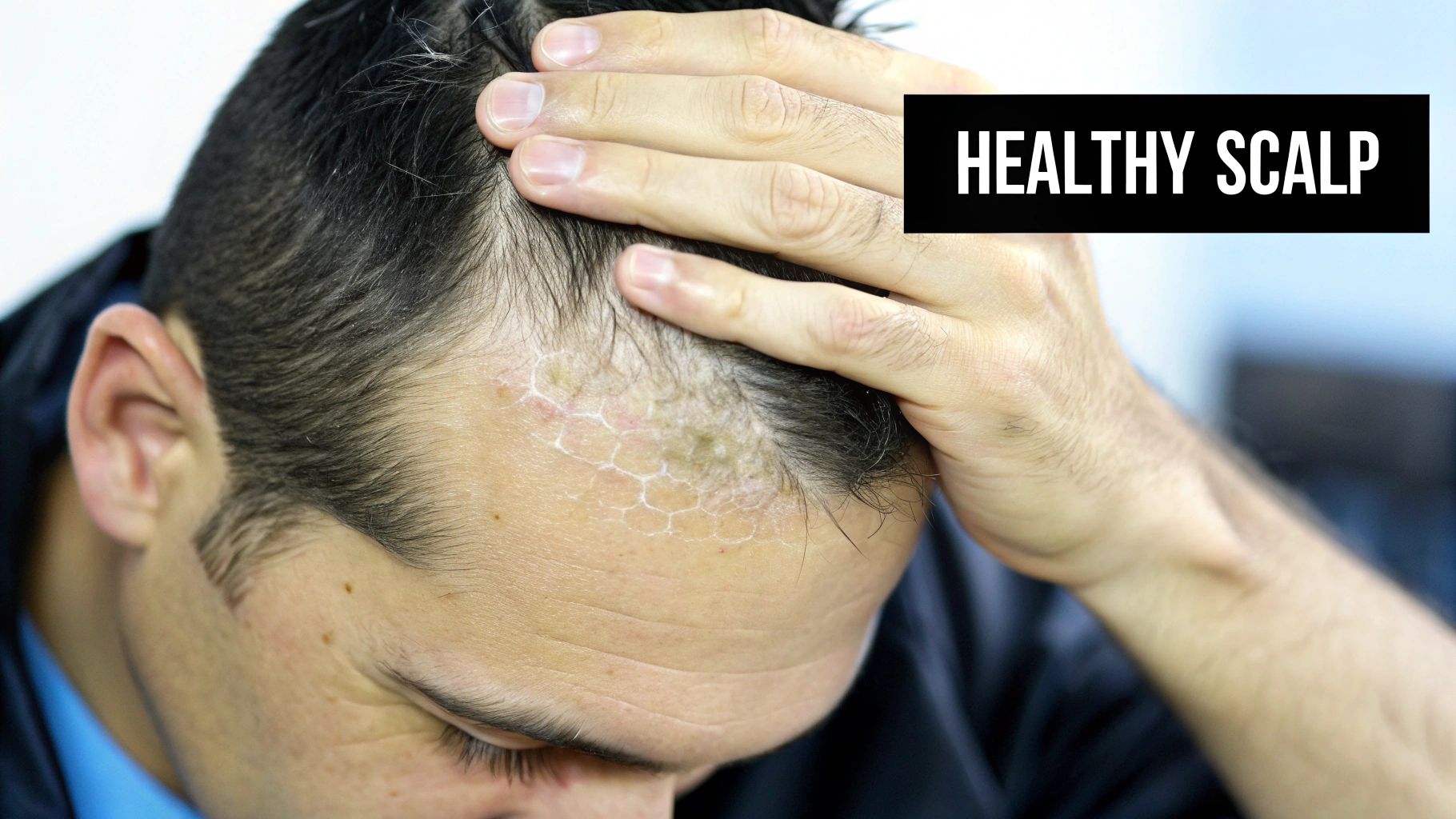
Most of us tend to fixate on the hair itself—the strands we see, style, and unfortunately, watch thin out over time. But the real command center for hair growth is hiding in plain sight: the scalp. If your scalp isn't healthy, your hair simply doesn't stand a chance.
Over time, your scalp accumulates a stubborn mix of dead skin cells, excess oil (sebum), and residue from styling products. This isn't just a bit of dandruff; it's a layer of buildup that can create a hostile environment for your hair follicles.
How Buildup Sabotages Your Hair Follicles
This layer of gunk doesn't just sit there. It actively smothers your hair follicles, kicking off a cascade of problems that can accelerate hair thinning:
- Micro-inflammation: All that buildup can trigger a low-grade, chronic inflammation around the follicle, a known factor that can worsen male pattern baldness.
- Restricted Blood Flow: A congested scalp can physically impede circulation, choking off the oxygen and nutrients your follicles desperately need to produce healthy, strong hair.
- Follicular Occlusion: Just like pores on your face, the pores on your scalp can get clogged. This can physically block new hairs from breaking through or cause them to grow in weaker and thinner.
This isn't just some niche corner of the grooming world anymore. The global scalp care market, which is packed with exfoliation products, is expected to reach a staggering $20.79 billion by 2030. A huge driver of that growth is men who now understand that an unhealthy scalp can sabotage any other hair loss treatment they might be trying.
Hitting the Reset Button with Exfoliation
This is where scalp exfoliation comes into play. It’s not a magic cure, but it’s a powerful "reset" that gives your scalp a clean slate.
By systematically clearing away the debris, exfoliation essentially lifts a suffocating blanket off your hair follicles. It's a direct intervention that restores a clean, balanced environment where hair can actually grow.
This simple act of deep cleaning clears the runway for better nutrient delivery from your bloodstream and helps reduce the low-level inflammation that's working against you. It gives your follicles the breathing room they need. If you'd like to learn more, our guide on scalp conditions that cause hair loss is a great resource.
Ultimately, consistent exfoliation builds the best possible foundation for healthier, more resilient hair growth.
How Exfoliation Creates a Better Environment for Hair Growth
To truly get why scalp exfoliation for hair growth is more than just a passing trend, you have to picture what’s happening on a microscopic level. Think of each hair follicle like a tiny garden bed where a plant is trying to grow. If that soil is packed down, full of weeds, and starved of water, you’re not going to get a healthy plant. The very same principle applies to your scalp.
Exfoliation isn't about suddenly sprouting a new head of hair. It's about systematically cleaning up that "soil" so your follicles have the best possible chance to thrive. It does this by tackling three of the biggest roadblocks to healthy hair: buildup, poor circulation, and inflammation.
Unclogging the Follicles for Healthier Hair
The most immediate and obvious benefit of exfoliating is clearing out follicular occlusion—a fancy term for clogged pores. Day in and day out, your scalp is busy. It's shedding dead skin cells, producing its natural oil (sebum), and collecting residue from every product you put in your hair.
Left unchecked, this gunk can harden into a stubborn layer that literally plugs up the opening of your hair follicles. This makes it a real struggle for new hairs to break through the surface. And when they finally do, they're often thinner and weaker than they should be.
Think of scalp exfoliation as a deep-cleansing facial for your head. It breaks down and sweeps away the debris that's suffocating your follicles, giving each hair a clear path to grow strong.
By removing these blockages, you’re doing more than just getting a deep clean. You're giving your hair the freedom to grow to its full, natural potential without having to fight its way out.
Boosting Circulation to Feed Your Follicles
Here’s another key piece of the puzzle: improved blood flow. The gentle, massaging motion you use to work in a scalp scrub or use an exfoliating brush feels great for a reason—it’s kickstarting microcirculation right at the skin's surface.
Think of this increased blood flow as upgrading the delivery service to your follicles. It brings a rush of two critical resources right where they're needed most:
- Oxygen: This is the fuel for cellular energy, which is essential for building strong hair fibers.
- Nutrients: The vitamins and minerals from your diet get a direct route to the hair root to support healthy growth.
This boost in circulation is fundamental. A well-nourished follicle is a happy, productive follicle. It's better equipped to stay in the growth (anagen) phase longer and produce a thicker, more resilient strand of hair.
Reducing Scalp Inflammation
Low-grade, chronic inflammation is a known enemy of hair growth, especially for anyone dealing with androgenetic alopecia (male pattern baldness). That layer of dead skin and sebum doesn't just block follicles; it creates the perfect environment for yeast and bacteria to flourish.
This microbial overgrowth can trigger your immune system, leading to itching, redness, and constant irritation around the hair follicle. This inflammatory stress can disrupt the hair's natural growth cycle and may even speed up shedding. In fact, stubborn issues like dandruff are often tied to this cycle, and you can explore how dandruff can be related to hair loss in our guide on the topic.
Regularly using scalp exfoliation for hair growth helps break this cycle by removing the fuel for the fire. By keeping the scalp clean and balanced, you reduce the source of irritation. A calmer scalp gives your follicles a much-needed break and a far better shot at producing healthy hair.
Choosing Between Physical and Chemical Exfoliation
When you're trying to improve your scalp health, especially with thinning hair in the mix, it's easy to get overwhelmed. The two main paths for exfoliation are physical and chemical, and understanding the difference is crucial. Getting this choice right means you’ll be helping, not hurting, your scalp.
Think of it like cleaning a delicate surface. Physical exfoliation is like using a soft brush to gently sweep away dust, while chemical exfoliation is more like using a specialized cleaner to dissolve grime without any scrubbing. Both work, but the best one for you really depends on your scalp’s current condition.
The Hands-On Approach: Physical Exfoliation
Physical exfoliation is the classic method that relies on friction to manually lift away dead skin cells, oil, and product gunk. It’s what most people picture when they hear “exfoliate,” and it gives you that satisfying, deep-cleaned feeling right away.
You’ll typically find two kinds of physical exfoliants:
- Scalp Scrubs: These are products with tiny, gritty particles—like sugar, salt, or fine jojoba beads—mixed into a creamy base. You massage it in, and the granules do the work of buffing the scalp clean.
- Scalp Brushes: These are usually made with soft, flexible silicone bristles. You use them in the shower while shampooing to massage your scalp, which helps dislodge flakes and gets the blood flowing.
The big win with physical exfoliation is that immediate clean feeling and the bonus of a circulation-boosting massage. The downside? It’s easy to overdo it. Scrubbing too aggressively or using a product with sharp, jagged particles can create tiny scratches (micro-tears) on the skin, leading to irritation—the exact opposite of what you want for a sensitive scalp.
The Smart Approach: Chemical Exfoliation
Don't let the word "chemical" scare you. This method is often much gentler than scrubbing. Instead of using friction, chemical exfoliants use mild acids to dissolve the bonds holding dead skin cells together, letting them rinse away effortlessly. This process provides a more even, thorough cleanse without any physical abrasion.
The key ingredients doing the work here are hydroxy acids:
- Salicylic Acid (BHA): This acid is oil-soluble, which is a game-changer. It can get past the scalp’s natural oils to clean deep down inside the hair follicle. This makes it a fantastic choice for anyone with an oily, congested scalp, or conditions like seborrheic dermatitis.
- Glycolic and Lactic Acids (AHAs): These are water-soluble, so they work their magic right on the scalp's surface. They are great for sweeping away dead skin on drier, more sensitive scalps and even help with hydration.
By dissolving buildup at a molecular level, chemical exfoliants get the job done without any harsh scrubbing. This makes them a much safer bet for men with tender or inflamed scalps from ongoing hair loss.
Making the Right Choice for Your Scalp
So, which one is for you? It really boils down to your specific scalp type.
To make it easier, let's compare them side-by-side. Think about your scalp's tendencies—is it oily and flaky, or dry and sensitive? This table breaks down which method is likely a better fit.
Comparing Scalp Exfoliation Methods
| Attribute | Physical Exfoliation (Scrubs & Brushes) | Chemical Exfoliation (Serums & Shampoos) |
|---|---|---|
| Mechanism | Uses friction from particles or bristles to manually remove dead skin. | Uses gentle acids (AHAs/BHAs) to dissolve the bonds holding dead skin cells. |
| Best For | Normal to oily scalps with mild, non-inflamed buildup. | Oily, dry, sensitive, or inflamed scalps. Especially effective for dandruff. |
| Risk of Irritation | Moderate to High. Can cause micro-tears if used too aggressively. | Low. Generally much gentler, but patch testing is still wise. |
| Control | User-dependent; pressure and technique determine the intensity. | More consistent; the product's formulation does the work. |
| Example Scenario | A man with a healthy scalp but some product buildup from styling gels. | A man with an oily, flaky scalp and sensitivity from male pattern baldness. |
In short, a man with a greasy, flaky scalp will see much better results from a salicylic acid serum that can cut through the oil and clear out follicles. On the other hand, trying to scrub an already inflamed scalp could just make things angrier.
If your scalp is just a bit dry and sensitive, a very gentle sugar scrub or a mild lactic acid treatment could be perfect for removing flakes without stripping away moisture. For those dealing with significant inflammation or flaking, it's also worth looking into products like a ketoconazole shampoo for hair loss, which targets the underlying fungal issues that often cause buildup in the first place.
This chart shows a simple way to think about it. If you've got clogged follicles, exfoliation is your next move.
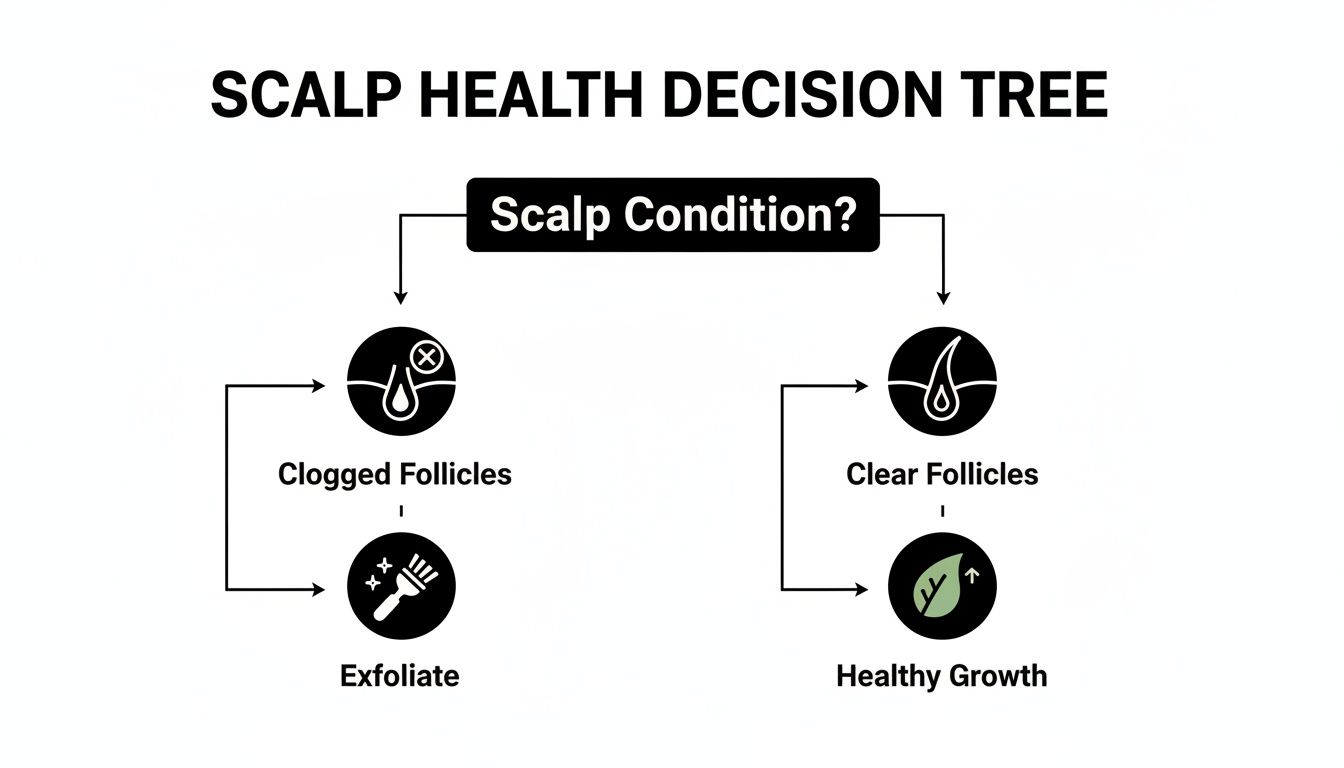
Ultimately, clearing away the blockages is the goal. The best exfoliation method is the one that respects your scalp’s limits and creates a healthier, cleaner foundation for whatever hair you have to thrive.
Your Step-by-Step Guide to Safe Scalp Exfoliation
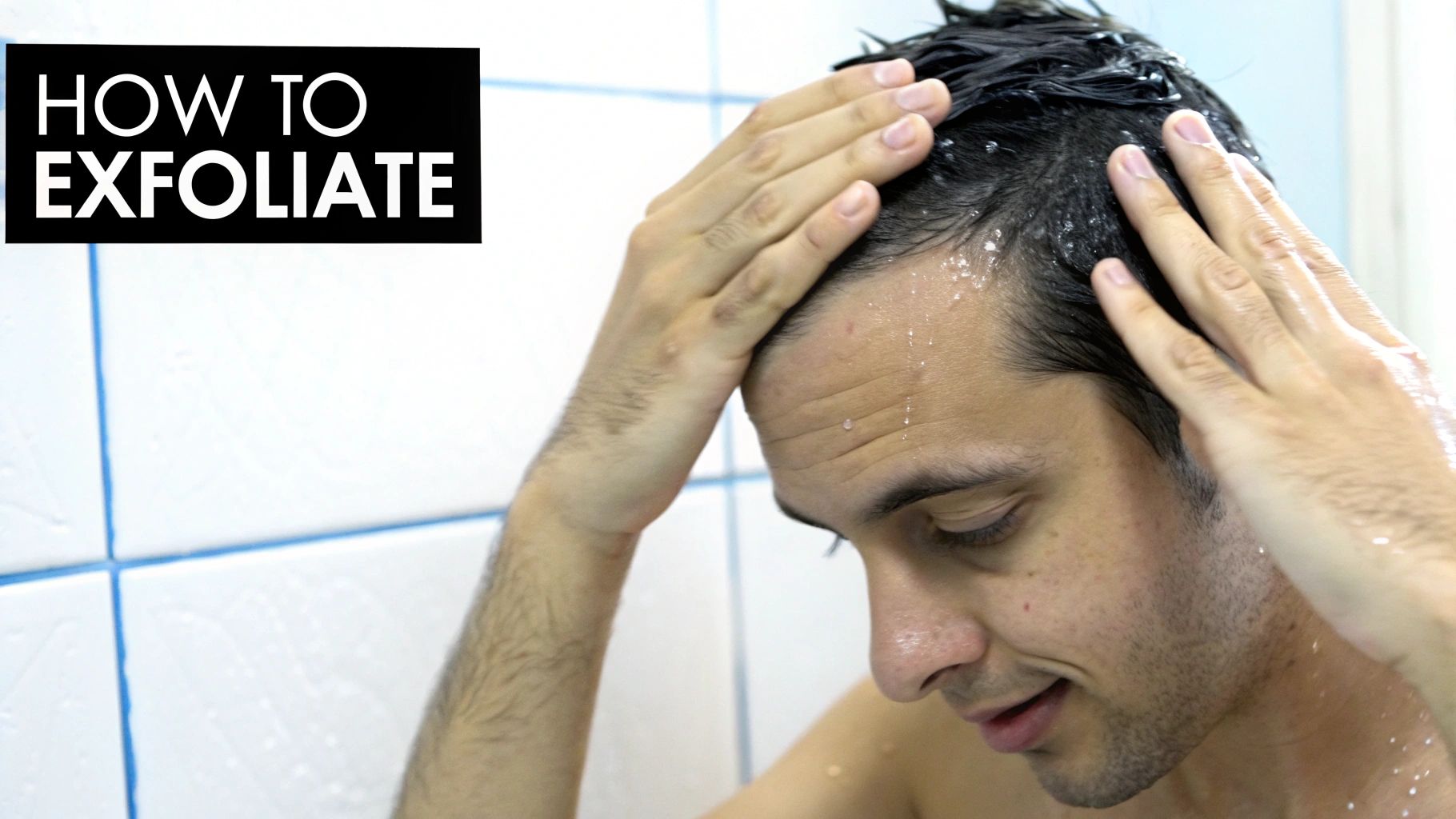
Knowing why you should exfoliate is one thing, but getting the technique right is what actually delivers results. For men dealing with thinning hair, the scalp is already under a lot of stress. That’s why a gentle, measured approach isn't just a suggestion—it's essential to ensure you're helping, not hurting, your hair follicles.
This is your practical, step-by-step routine. Think of it less as an aggressive scrub-down and more like a methodical reset for your scalp. The philosophy here is simple: less is more.
The Right Way to Exfoliate Your Scalp
Forget everything you know about scrubbing floors. When it comes to your scalp, finesse beats force every single time. Here’s the exact process to follow to get the benefits of scalp exfoliation for hair growth without causing irritation.
Start with a Damp Scalp: Never apply product to a dry head, but don't do it on soaking wet hair either. The sweet spot is right after you hop in the shower and gently towel-dry your hair until it's just damp. This gives you the perfect canvas for the product to work effectively.
Apply Product in Sections: Whether you’re using a gritty scrub or a liquid chemical exfoliant, part your hair in a few different places. Apply the product directly onto the scalp along these part lines. This ensures you’re treating the skin, not just slathering it all over your hair.
Use Your Fingertips, Never Your Nails: This is a hard and fast rule. Use the soft pads of your fingertips to massage the product in, using slow, gentle, circular motions. Your fingernails can create micro-tears on the scalp, opening the door to inflammation and infection.
Massage for 60 to 90 Seconds: Set a mental timer. A minute to a minute and a half is all you need. It’s just long enough to loosen up buildup and get the blood flowing, but not so long that you risk irritating the skin.
Rinse Thoroughly: This last step is crucial. Rinse your hair with lukewarm water until you’re positive every last bit of product is gone. Any leftover residue, especially from a physical scrub, can clog the very pores you just worked so hard to clear out.
Think of this process like detailing a car. You don’t just blast the paint with a pressure washer from an inch away. You use the right products, a gentle touch, and a methodical approach to get the best finish without causing damage.
How Often Should You Exfoliate for Hair Growth?
Consistency is important, but going overboard is one of the biggest mistakes you can make. When you're dealing with the sensitivities of hair loss, moderation is your best friend.
- Stick to a Schedule: For most guys, exfoliating 1-2 times per week is the ideal frequency.
- Listen to Your Scalp: If you're trying a stronger product, like one with salicylic acid, maybe start with just once a week to see how your skin handles it before doing more.
This consistent-but-gentle schedule is more than enough to keep buildup from taking over without stripping your scalp of its natural, protective oils. It's all about balance. Finding that balance is a big reason why the exfoliating scalp scrub market is expected to be worth $500 million in 2025 and is projected to hit nearly $900 million by 2033. This boom is largely fueled by men realizing a healthy scalp is the first line of defense in the fight for hair retention. You can read more on these market insights from Data Insights Market.
How to Know If You Are Overdoing It
Your scalp will absolutely let you know when you’ve gone too far. The key is to recognize the signs of over-exfoliation so you can pull back right away.
Be on the lookout for these red flags:
- Redness or Persistent Irritation: A little pinkness right after you’re done is normal, but if your scalp stays red for hours, it’s a clear sign of inflammation.
- Increased Itchiness or Tightness: This usually means you’ve compromised your skin's moisture barrier, leaving it feeling tight, dry, and uncomfortable.
- Excessive Oiliness: It sounds backward, but when you strip the scalp, your oil glands can go into overdrive to compensate, making your hair greasier than before.
- New or Worsened Flaking: Aggressive scrubbing can damage the skin, leading to more flaking, not less.
If you spot any of these signs, hit the brakes. Stop exfoliating completely for a week or two to let your scalp recover. When you start back up, reduce the frequency or switch to a gentler product. Remember, the goal is a calm, clean scalp—not an angry, inflamed one. For a deeper understanding of other tools that can enhance scalp health, check out our guide on how to use a derma roller for hair.
Combining Scalp Exfoliation with PRP Therapy for Maximum Impact
For any man serious about restoring his hair, the real wins come from combining a smart at-home routine with powerful professional treatments. If you're investing in something like Platelet-Rich Plasma (PRP) therapy, think of scalp exfoliation for hair growth as the essential prep work. It's a simple, foundational step that can genuinely amplify the results of your treatment.
The logic is simple. You wouldn't paint a dirty, dusty wall, right? If you just slap a coat of paint over grime, it won’t stick, and the finish will look terrible. Your scalp works the same way.
PRP therapy involves injecting a potent concentration of your own blood's growth factors directly into the scalp to wake up dormant hair follicles. But if those injections have to push through a layer of dead skin cells, hardened oil, and product residue, their journey to the follicles gets blocked.
Priming Your Scalp for Professional Treatment
A clean, clear scalp is the ideal canvas for any professional hair loss treatment. When you exfoliate in the days leading up to your session, you're essentially clearing the landing strip for those growth factors to get straight to work.
This one preparatory step helps ensure you get the maximum impact from your investment. By removing that surface-level junk, you allow the PRP to reach its target follicles with far less interference, paving the way for a much better outcome. To get a better grasp of the procedure itself, you can learn more about what PRP for hair is and how it functions.
By preparing your scalp with exfoliation, you're not just cleaning it—you're optimizing the treatment area. This allows the powerful growth factors in PRP to penetrate more efficiently, giving your hair follicles the direct stimulation they need.
The Right Timing for Pre-Treatment Exfoliation
Getting the timing right is absolutely critical. If you exfoliate too close to your appointment, you can do more harm than good by leaving your scalp sensitive and inflamed just when it needs to be calm.
Here’s a safe and effective timeline to follow:
- Exfoliate 2-3 Days Before Your Session: This is the sweet spot. It gives you plenty of time to clear away buildup without leaving your scalp raw or tender on the day of the procedure. A gentle chemical exfoliant or a very light physical scrub is perfect for this.
- NEVER Exfoliate the Day Of or the Day Before: Your skin needs time to settle down. Exfoliating right before your appointment can create micro-tears and inflammation—the last thing you want before a treatment that involves injections.
- Post-Treatment Care Is Key: Your scalp will be tender after a PRP session. Hold off on any kind of exfoliation for at least a week, or until your clinician says it's okay. For now, stick to gentle, soothing shampoos and just let your scalp heal.
This powerful synergy between a consistent home routine and clinical treatments is where you’ll see the most significant change. Beyond what you can do at home, some professional venues offer advanced scalp care that can complement your efforts. For instance, a guide on finding professional spa services can point you toward places that might offer these kinds of specialized therapies. Taking a well-rounded approach like this gives you the best possible shot in the fight for hair regrowth.
Decoding Product Labels: What to Look For and What to Avoid
Walking down the hair care aisle can be overwhelming. Every bottle seems to promise the world, but the real story is always on the back, in the ingredient list. Let's cut through the marketing fluff and figure out how to choose a product that actually helps your scalp and supports your hair growth goals.
Your first decision is whether you're looking for a chemical or a physical exfoliant. Once you've got that figured out, you can start hunting for the specific ingredients that will work best for your scalp.
The Good Guys: Ingredients to Seek Out
A truly effective product isn't about fancy packaging; it's about the powerhouse compounds doing the heavy lifting. When you're trying to find the best scalp exfoliation for hair growth, flip the bottle over and look for these key players.
- For Oily or Flaky Scalps (Chemical): Your best bet is Salicylic Acid (BHA). It’s oil-soluble, which is a fancy way of saying it can dive deep into clogged, oily follicles and clear them out from the inside.
- For Drier or Sensitive Scalps (Chemical): Keep an eye out for Glycolic Acid or Lactic Acid (AHAs). These are gentler and work right on the surface, dissolving that layer of dead skin without stripping away the moisture your scalp needs.
- For a Gentle Scrub (Physical): Look for fine, rounded particles that won't cause damage. Things like sugar (which dissolves) or smooth, biodegradable jojoba beads are perfect for polishing the scalp without creating tiny scratches.
Beyond the main active ingredient, a top-notch product will also include ingredients that calm and nourish the scalp. Tea tree oil is a great addition for its antimicrobial benefits, peppermint oil can give a nice tingle that helps with circulation, and aloe vera is a classic for soothing any inflammation.
The Red Flags: Ingredients to Avoid
Knowing what to steer clear of is just as crucial as knowing what to look for. Some common ingredients can actually set you back, especially if your scalp is already dealing with the stress of hair thinning.
One of the biggest offenders to watch out for is Sodium Lauryl Sulfate (SLS). It's what makes many shampoos super foamy, but it's also a harsh detergent that can strip your scalp of its natural oils, leading to irritation, dryness, and sometimes even causing your scalp to overproduce oil to compensate.
You'll also want to pass on any physical scrubs made with sharp, jagged particles like crushed nutshells or fruit pits. These are simply too abrasive for the delicate skin on your head and can easily cause inflammation—the exact opposite of what you want when you're trying to encourage hair growth.
Interestingly, some ingredients show real clinical promise. Studies have found that exfoliating agents like 0.25% octopirox can lead to a significant drop in self-reported hair loss for men. Even more compelling, shampoos with 2% ketoconazole, which target the Malassezia yeast responsible for buildup in up to 70% of cases, have shown results comparable to minoxidil in improving hair density and follicle size. You can read more about industry trends on Future Market Insights. It just goes to show that the right ingredients can do a lot more than just make your scalp feel clean.
Common Questions About Scalp Exfoliation and Hair Loss
Jumping into a new routine always comes with a few questions. Even when you see the potential upside, it’s smart to be thorough. Let’s tackle some of the most common things men wonder about when it comes to exfoliating their scalp for better hair.
Can Scalp Exfoliation Make Hair Loss Worse?
This is the biggest concern for most guys, and it's completely understandable. The short answer is no—as long as you do it right.
You might see a few extra hairs in the drain after your first couple of sessions. Don't panic. Those were hairs already in the telogen, or shedding, phase. They were on their way out anyway. Proper, gentle exfoliation won't dislodge healthy, growing hair. What it will do is clear out the gunk suffocating the follicles and calm inflammation, paving the way for healthier hair to emerge. The golden rules are to be gentle and not overdo it. Sticking to a 1-2 times per week schedule is the sweet spot.
Think of it like a gardener clearing away dead leaves from the soil. You're not uprooting the healthy plants; you're just giving them room to breathe and grow.
How Soon Will I See Hair Growth Results?
This is a long game, so patience is key. You'll feel some immediate wins, like a less itchy, cleaner-feeling scalp, right off the bat. But actually influencing the hair growth cycle itself takes time. You’re essentially improving the "soil" so your hair can thrive down the line.
By consistently exfoliating, you're setting the stage for healthier growth over the long haul. Most people start to see a real difference in hair health and thickness within 3 to 6 months, which lines up perfectly with the natural phases of the hair growth cycle.
Is It Safe to Exfoliate While Using Minoxidil or Finasteride?
Yes, not only is it generally safe, but it can actually be a smart move. A clean, debris-free scalp can absorb topical treatments like Minoxidil much more effectively. When you remove that barrier of dead skin and oil, the active ingredients have a clearer path to the follicles where they need to work.
The trick is all in the timing. You don't want to irritate the scalp.
- Don't do them back-to-back. Never apply a topical treatment right after you've exfoliated.
- Split them up. A simple and effective routine is to exfoliate in your morning shower and then apply Minoxidil or other treatments at night. This gives your scalp hours to settle down.
And, as with anything, pay attention to your scalp. If you notice any unusual redness or sensitivity, pull back for a bit. It’s always a good idea to chat with your doctor to make sure your routine is right for you.
At PRP For HairLoss, we know that a healthy scalp is the absolute foundation of any successful hair restoration plan. Take a look at our other resources to learn how to create the best possible environment for hair growth.
Find out more at https://prpforhairloss.com.
 PRP For Hairloss
Leave a comment