If you're thinking about grabbing a biotin supplement for hair loss, it pays to look past the marketing hype. While it’s generally considered safe, the most significant biotin side effects men need to know about have nothing to do with skin rashes or an upset stomach. The real risk is its sneaky ability to interfere with critical lab tests. High doses can skew the results for your heart and thyroid function, which could lead to a serious—and even life-threatening—misdiagnosis.
The Truth About Biotin for Men's Hair Loss

You see a bottle of biotin on the shelf and think, "It's just a vitamin for better hair, what's the harm?" For any guy dealing with thinning hair, it feels like a simple, proactive step—an easy way to fight back against the strands you keep finding in the sink or on your pillow.
But there's a critical catch that most brands conveniently forget to mention on the label.
While countless men grab it hoping it’s the magic bullet for reversing hair loss, the biggest risk isn't an upset stomach or a skin reaction. It's biotin's stealthy ability to throw a wrench into crucial medical tests.
Why This Supplement Deserves a Closer Look
This interference isn't just a minor headache; it can completely mask serious health problems or send your doctor down the entirely wrong diagnostic path. For example, high levels of supplemental biotin in your system can create falsely low readings for troponin, a key protein doctors check to diagnose a heart attack. A missed diagnosis here could be catastrophic.
The problem is so serious that the U.S. Food and Drug Administration (FDA) has issued official warnings about this exact issue, pointing to real-world cases where biotin interference led to adverse patient events.
It doesn't stop there. Biotin can also mess with thyroid hormone tests, potentially leading to a misdiagnosis of Graves' disease or other thyroid disorders. Getting the wrong diagnosis could mean you end up on powerful medications you never needed, which come with their own set of risks.
Understanding the real biotin side effects men face is about recognizing how this popular supplement can silently complicate your overall health.
So, let's unpack what you really need to know:
- The science-backed side effects, especially the ones that fly under the radar.
- Why men are so drawn to biotin for hair loss in the first place.
- How to use it safely if you still decide it's right for you.
- Smarter, more effective alternatives that actually target the root causes of male pattern baldness.
We'll cut through the noise and look at the evidence, so you can make a decision that protects both your hair and your health.
Why Men Trust Biotin for Thinning Hair
It’s easy to see why biotin has become the go-to supplement for guys worried about thinning hair. When you start noticing more hair in the shower drain or on your pillow, your first instinct is to do something. Taking biotin feels like a simple, proactive step—an easy defense against hair loss.
The link between biotin and hair isn't just marketing fluff; there's a real biological reason for its reputation. Think of your hair like a brick wall. Each brick is made of a protein called keratin, which is the fundamental structural component of every single hair on your head.
So, where does biotin fit in?
The Building Blocks of Healthy Hair
Biotin, also known as Vitamin B7, essentially acts like the foreman on a construction site. It's a crucial coenzyme in protein synthesis, which means it helps your body properly assemble those keratin "bricks." If you don't have a good foreman, the whole construction process can slow down or result in a weak, poorly built wall.
This analogy gets right to the heart of why biotin is so closely tied to hair health. It plays a legitimate, functional role in building the very thing your hair is made of. That connection makes it a very appealing and logical-sounding solution when you're trying to shore up the hair you have.
But here's the real question: it’s not whether biotin is important—it's whether you actually need more of it. For the vast majority of men, a true biotin deficiency is incredibly rare. Their diet already supplies all the foremen needed for the job site.
The Hope in a Bottle
The hard truth is that most male pattern baldness isn't caused by a shortage of building materials. It's almost always driven by genetics and hormones—specifically DHT, which actively shrinks the hair follicles themselves. Sticking with our analogy, if the architectural plans for the wall are designed to get smaller and smaller, hiring more foremen won't make the wall any taller or stronger.
Even so, reaching for a bottle of biotin can feel empowering. It gives you a sense of control in a situation that often feels completely out of your hands. It’s prominently featured as a star ingredient in many of the best hair vitamins for men, which only reinforces the idea that it's a must-have in the fight against hair loss.
While it might not tackle the root hormonal cause for most guys, biotin's foundational role in keratin production is what keeps its trusted reputation alive. This sets the stage for a more realistic look at its actual effectiveness versus the potential biotin side effects men might run into.
The Critical Risk Hiding in Your Blood Work
While things like acne or an upset stomach are annoying, the single biggest risk from taking biotin is completely invisible. It's a stealth problem that won’t make you feel sick, but it can quietly sabotage your medical results and lead to a disastrous misdiagnosis. Honestly, it’s one of the most serious biotin side effects men can run into, and almost nobody talks about it.
Think of it like trying to tune an old radio. You’re twisting the dial to find your favorite station, but some pirate signal is blasting static across all the frequencies. You can’t hear the music because the interference is just too loud. That's exactly what high levels of biotin do in your bloodstream—it creates a ton of "noise" that completely throws off sensitive lab equipment.
And this isn't a small hiccup. This interference can warp the results of tests doctors use to make life-or-death calls.
Which Medical Tests Are at Risk?
The two areas where this gets really scary are cardiac and thyroid health. It turns out that a lot of modern lab tests rely on a technology that uses biotin as part of the process, which makes them highly vulnerable when there's too much of it floating around in your blood.
Here’s how that plays out in a real-world scenario:
- Heart Attack Markers: If a doctor thinks you're having a heart attack, they'll immediately test for a protein called troponin. The problem is, high biotin levels can artificially suppress this reading, making it look like your troponin is normal even while you're in the middle of a major cardiac event. A false negative here could mean a doctor sends you home when you desperately need to be admitted.
- Thyroid Function Tests: Biotin can also completely mess up your thyroid panel, skewing results for Thyroid Stimulating Hormone (TSH) and other key markers. This can easily lead to a misdiagnosis of something like Graves' disease, a serious autoimmune disorder that causes an overactive thyroid. You could end up on powerful medications you don't need, which opens up a whole new can of worms.
Knowing how to interpret your own lab work is a big part of staying on top of your health. Taking biotin adds a tricky new variable, so if you're taking it, you have to be extra careful when you learn more about reading your blood test results and, most importantly, tell your doctor.
The Widespread Lack of Awareness
Even with such high stakes, this risk is still flying under the radar. Guys trying to stop hair loss grab a bottle of biotin thinking it’s a harmless fix, completely unaware that it could derail their routine health screenings.
The FDA has even issued warnings about this. There have been documented cases where biotin interference made thyroid tests look exactly like Graves' disease, almost leading to patients getting unnecessary surgery. While you see major interference with massive doses (think 100-300 mg a day), even the standard amounts in most supplements are enough to require you to stop taking them before a blood test.
What’s truly shocking is how few people know. One survey found that only 6.6% of people taking biotin had even heard of the FDA alert. Worse, an incredible 19.5% of physicians weren't aware of the risk either. If you want to dive into the science, you can read the full findings on biotin for hair loss and its risks.
The takeaway is clear: Biotin's ability to interfere with lab tests is not a theoretical problem—it's a documented danger that can have severe consequences for your health.
This hidden danger is exactly why you need to look past the marketing hype. The potential for a missed heart attack diagnosis or an incorrect thyroid prescription is a powerful reason to be extremely careful with high-dose biotin.
Skin Rashes, Acne, and Other Physical Reactions
Beyond the invisible risk of skewed blood work, let's talk about the more immediate, physical ways biotin might affect you. While not as dangerous as the lab test interference we just covered, some of the most common biotin side effects men report are frustrating skin reactions and digestive discomfort.
These issues are far from guaranteed, and they’re often tied to the mega-doses found in many popular hair supplements. Still, for some guys, starting a new biotin regimen coincides with an unwelcome acne flare-up.
This can happen because a flood of biotin can potentially disrupt the delicate balance of other essential B vitamins in your system. In particular, it can throw off pantothenic acid (Vitamin B5), a key nutrient that helps regulate your skin's surface and overall function.
From Breakouts to Stomach Troubles
It’s not just your standard-issue pimples, either. While a lot of the evidence is anecdotal, a noticeable number of users report other physical reactions when taking high-dose biotin. These can range from mild annoyances to more persistent problems that make it hard to stick with the supplement.
The most commonly mentioned physical reactions include:
- Cystic Acne: Unlike typical zits, some men report deeper, more painful acne breakouts, especially along the jawline and chin, after starting biotin.
- Skin Rashes: A general, sometimes itchy, skin rash can be a clear sign that your body isn't reacting well to the high dosage.
- Digestive Upset: Nausea, cramping, and an upset stomach are also potential side effects, though these are generally considered less common.
If you start noticing persistent skin issues after adding biotin to your daily routine, it's a good idea to pay attention. You can find more specific guidance on when to see a dermatologist for skin concerns to get a professional opinion.
This conceptual map illustrates how biotin's main risk flows from the supplement itself to interfering with critical lab tests.
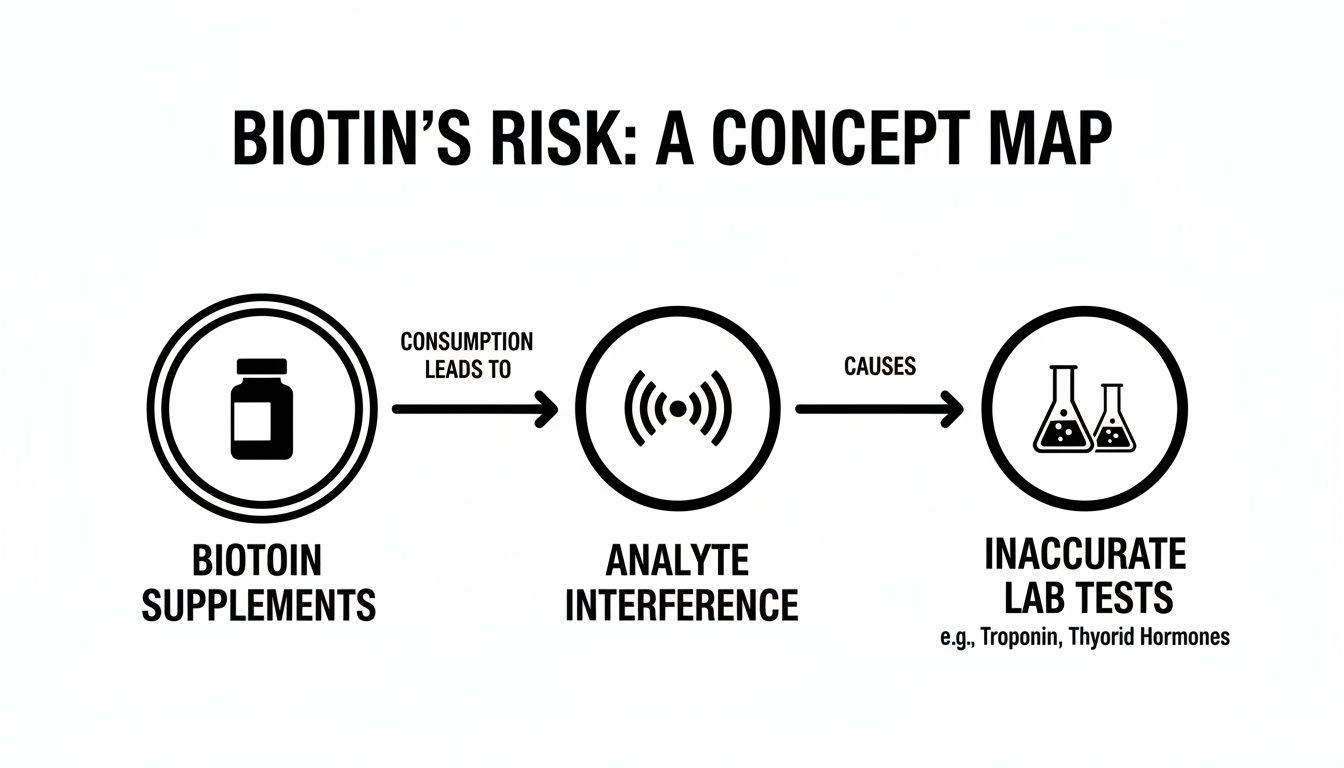
The key takeaway? The most significant danger isn't necessarily physical but a silent disruption of your medical diagnostics.
The Irony of Supplementing
Here’s the frustrating part: for most men, these side effects are a completely needless risk. True biotin deficiency is exceptionally rare. In a strange twist of irony, one of its main symptoms is hair loss—the very thing people are supplementing to prevent, often without actually needing it.
A genuine deficiency, which can cause skin rashes and even alopecia, typically stems from specific genetic disorders or major gastrointestinal surgeries, not from a normal diet.
For the average man, the body already has all the biotin it needs to support healthy hair function. Adding thousands of micrograms more won't build a stronger foundation; it just increases the odds of experiencing unnecessary side effects, from acne breakouts to skewed lab results.
How to Use Biotin Safely and When to Stop

When you're dealing with supplements, a little know-how goes a long way. This is especially true for biotin. The first step to using it safely—and avoiding the biotin side effects men can run into—is understanding the huge difference between what your body actually needs and what's in the bottle.
Let’s talk numbers for a second. Your body only requires about 30 micrograms (mcg) of biotin a day, which most of us get easily from food. Compare that to what's in a typical hair supplement: often a whopping 5,000 mcg or even 10,000 mcg per pill.
That's not a small difference; it's a massive gap. Seeing those figures side-by-side really puts the dosage into perspective.
Understanding Dosage and Your Body
So, what happens to all that extra biotin? Because it’s a water-soluble vitamin, your body doesn't hang onto it. Whatever isn't used gets flushed out through your urine. This is why so many people assume that taking giant doses is totally harmless, buying into the "more is better" idea.
But that’s a big misconception. Even though your body gets rid of the excess, the incredibly high levels floating around in your system before it's flushed out are precisely what causes the problems—especially the dangerous interference with lab tests.
Bottom line: for men who aren't actually deficient, overwhelming your system with thousands of extra micrograms doesn't offer any extra hair benefits, but it absolutely introduces real risks. To get a better handle on this, you can learn more about the proper biotin dosage for hair and see how it stacks up against these mega-doses.
The most critical rule for safe biotin use is simple: pause your supplement before any medical appointment that involves a blood draw. This single action protects you from the risk of a serious misdiagnosis.
Clear Guidelines for Stopping Biotin
Knowing exactly when to hit pause or stop taking biotin altogether is crucial for your health. Whether it's for a routine check-up or because you're noticing strange symptoms, these guidelines will help you make the right call.
You should stop taking biotin if:
- You have an upcoming blood test. This is non-negotiable. The FDA and medical experts recommend stopping all biotin supplements for at least 72 hours (3 days) before your lab appointment. This gives your system enough time to clear the excess, ensuring your test results are accurate.
- You develop a new skin rash or persistent acne. If you start breaking out in unusual ways not long after starting biotin, the supplement is a likely culprit.
- You experience ongoing stomach pain or cramping. It's less common, but digestive issues can be a clear sign that your body just isn't handling the high dose well.
If any of these things happen, the smartest move is to stop the supplement and have a chat with your doctor. They can help you figure out what’s causing the symptoms and make sure you’re not putting your health at risk.
Smarter Hair Loss Solutions Beyond the Hype
After digging into the realities of biotin—its limited benefits for most men and potential side effects—it becomes pretty clear that we need a better game plan for tackling hair loss. The real conversation shouldn't just be about avoiding biotin side effects men might experience; it should be about shifting our focus to what actually works.
For decades, guys have relied on proven treatments like minoxidil (Rogaine) and finasteride (Propecia), and for good reason. They have a track record. Finasteride gets to the hormonal root of the problem by reducing DHT, the key culprit behind shrinking follicles, while minoxidil works to boost blood flow and awaken the scalp.
A Modern Approach to Hair Regrowth
But the science hasn't stopped there. Newer, more advanced therapies are changing the game, and one of the most exciting is Platelet-Rich Plasma (PRP) therapy. This isn't just another pill or topical solution. It's a procedure that uses your body's own healing power to fight back against hair loss.
Here’s the simple idea behind it: your blood is packed with platelets, which are little powerhouses full of growth factors meant to heal and regenerate tissue. PRP therapy takes a small sample of your blood, concentrates these platelets, and then injects that powerful serum right back into the areas of your scalp that need it most.
Think of PRP as a targeted wake-up call for dormant hair follicles. It delivers a concentrated dose of your own natural growth signals directly to the source, encouraging them to start producing thicker, healthier hair again.
This approach is about more than just slowing down hair loss; it’s about actively stimulating regrowth. For men looking for a solution that’s more in tune with their own biology, PRP represents a major leap forward.
While supplements can play a supporting role, and some guys explore things like natural remedies like aloe vera for healthy hair, they aren't the heavy hitters. If you're serious about reversing male pattern baldness, it’s time to look at the full spectrum of proven options. To get a better handle on what’s out there, check out this complete guide to the best hair loss treatments for men.
Ultimately, making a smart choice means moving past the supplement hype and investing your time and energy in therapies backed by real science.
Common Questions About Biotin for Men
Diving into the world of supplements can feel a bit overwhelming. Let's cut through the noise and get straight to the point on the most common questions men have about taking biotin.
Can Taking Biotin Cause Acne in Men?
Yes, it's possible, and it’s one of the most common biotin side effects men talk about. While it doesn’t happen to everyone, popping high-dose biotin supplements can sometimes throw your system out of whack.
Here’s what happens: your skin needs a healthy balance of B vitamins, especially pantothenic acid (vitamin B5). When you flood your body with too much biotin, it can interfere with how your body absorbs B5. Since B5 helps regulate your skin's natural barrier, this imbalance can lead to clogged pores and those frustrating, unexpected breakouts.
Think of it as a signal from your body. If you start a high-dose biotin regimen and your skin suddenly takes a turn for the worse, the supplement is the most likely suspect.
Will My Hair Fall Out Faster If I Stop?
This is a huge concern for many guys, but for almost everyone, the answer is a clear no. Male pattern baldness is a game of genetics and hormones, specifically DHT. It has nothing to do with your biotin intake.
Since a true, clinical biotin deficiency is extremely rare, stopping the supplement won’t suddenly speed up your hair loss. Your hair will simply return to its normal growth cycle, which, for guys with male pattern baldness, is dictated by their genes.
The only exception is for the tiny fraction of people with a medically confirmed deficiency. For them, stopping could reverse any progress. But for the average guy, you can stop biotin without worrying about your hair.
How Long Before a Blood Test Should I Stop?
This one is critical. You need to stop taking any biotin supplements for at least 72 hours (3 days) before you get any blood work done.
This gives your body enough time to flush out the excess biotin so it doesn't skew your results. More importantly, always tell your doctor and the person drawing your blood that you've been taking biotin. It’s a simple step that ensures your lab tests are accurate and prevents any potential misdiagnosis.
At PRP For HairLoss, our goal is to give you clear, science-backed information for your hair restoration journey. We focus on proven treatments that deliver real results, not just hype. Find out more about your options by visiting us at https://prpforhairloss.com.
 PRP For Hairloss
Leave a comment